

Time Transitions Installation: A Landmark of Adaptive Reuse Architecture
Explore how the Time Transitions Installation exemplifies adaptive reuse architecture, blending sustainability, cultural heritage, and modern urban design.


A New Perspective on Architectural Adaptability
In an era where sustainable and adaptive solutions are imperative, the Time Transitions Installation by RUÍNA showcases the power of adaptive reuse architecture. This innovative installation, unveiled at the second edition of the Sharjah Architecture Triennial, redefines urban space by merging tradition with modernity.
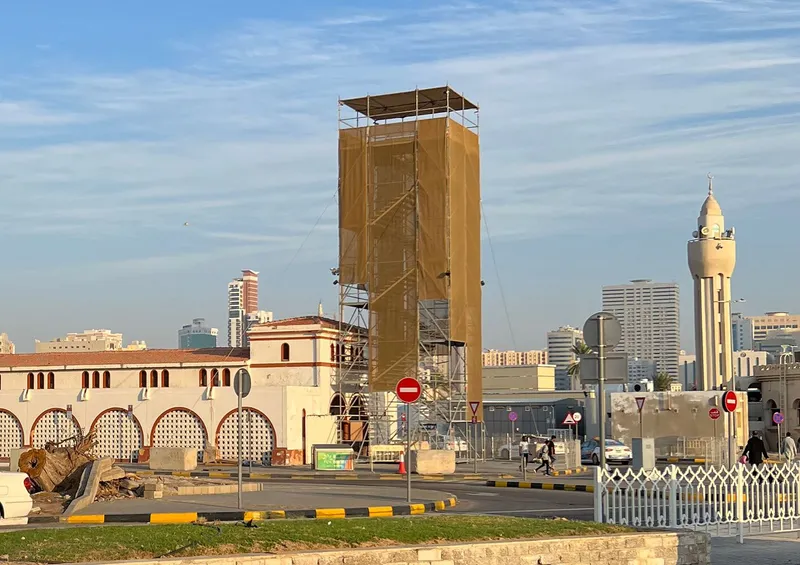
Located at the historic Al Jubail Vegetable Market in Sharjah, UAE, the project draws attention to the beauty of impermanence and the necessity of reimagining abandoned structures.

What is Adaptive Reuse Architecture?
Adaptive reuse architecture involves repurposing existing buildings or materials to serve new functions while preserving their historical or cultural essence. This approach minimizes environmental impact, conserves resources, and celebrates architectural heritage.
The Time Transitions Installation serves as a beacon of this philosophy, transforming an obsolete site into a culturally significant observatory.

Key Design Elements of Time Transitions Installation
1. Location and Cultural Significance
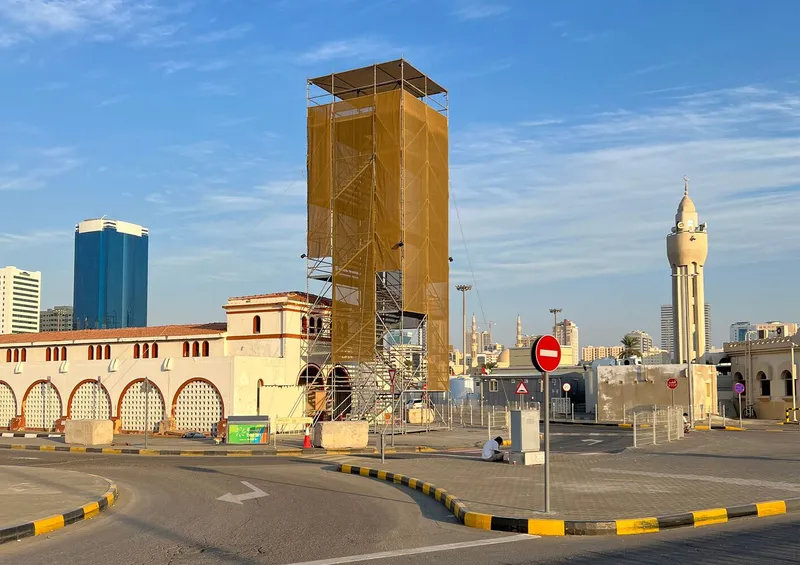
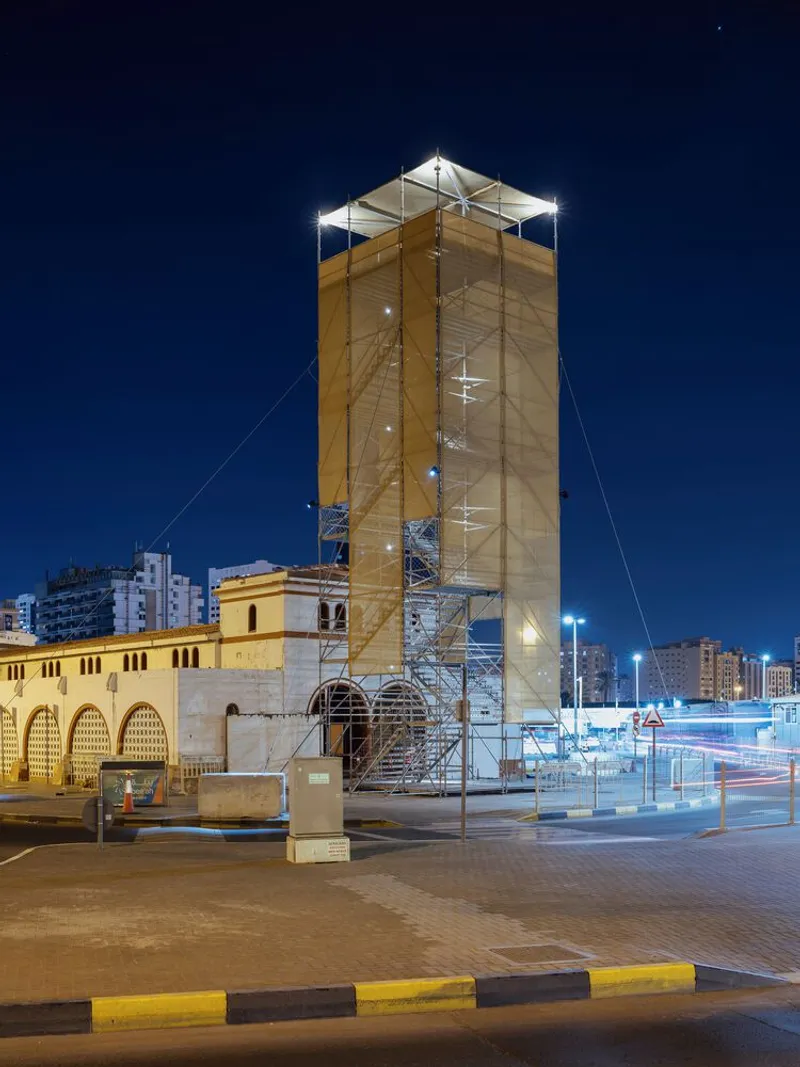
The installation is situated at the entrance of the decommissioned Al Jubail Vegetable Market, a landmark built in 1980 and considered a specimen of modern architecture in Sharjah. Once a bustling hub, the market's relocation and subsequent demolition plans threatened its legacy.
By integrating the installation into this historic site, RUÍNA reconnects the market's identity with the city's evolving landscape.
2. A Nod to Vernacular Architecture
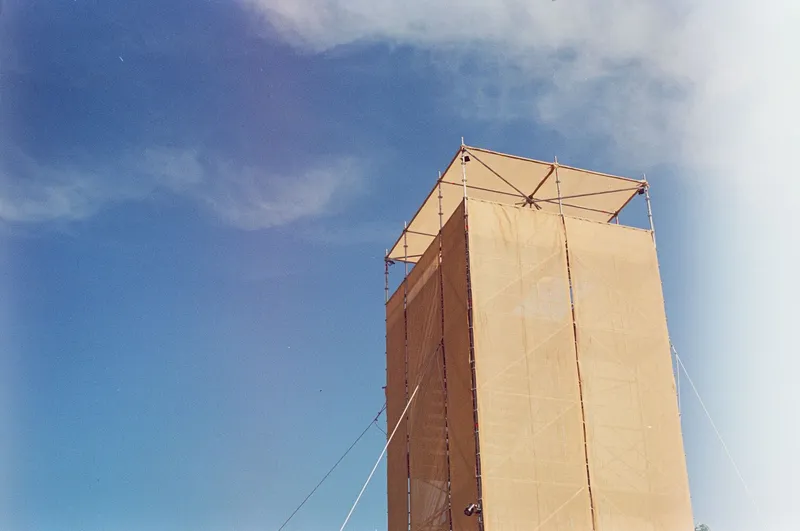
The installation's towering design references traditional wind towers, an iconic feature of Gulf architecture used for passive cooling. This choice not only honors regional traditions but also symbolizes a breath of fresh air into the space, juxtaposing old and new architectural paradigms.
3. Sustainable Design with Scaffolding
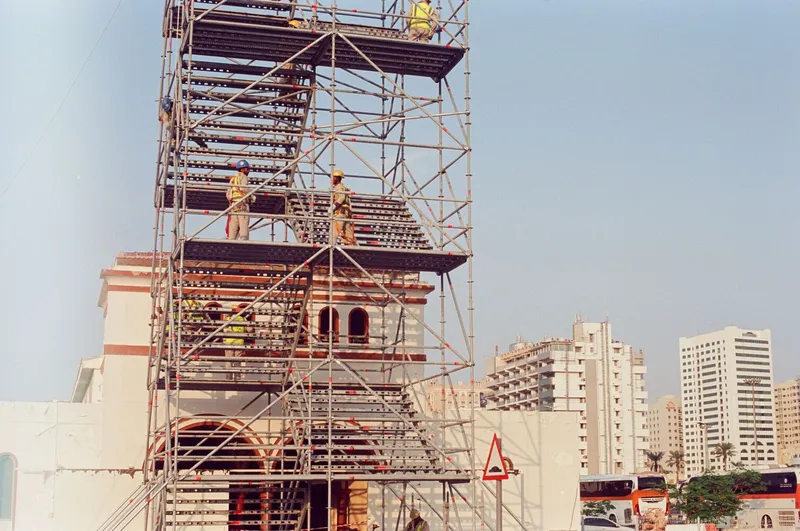
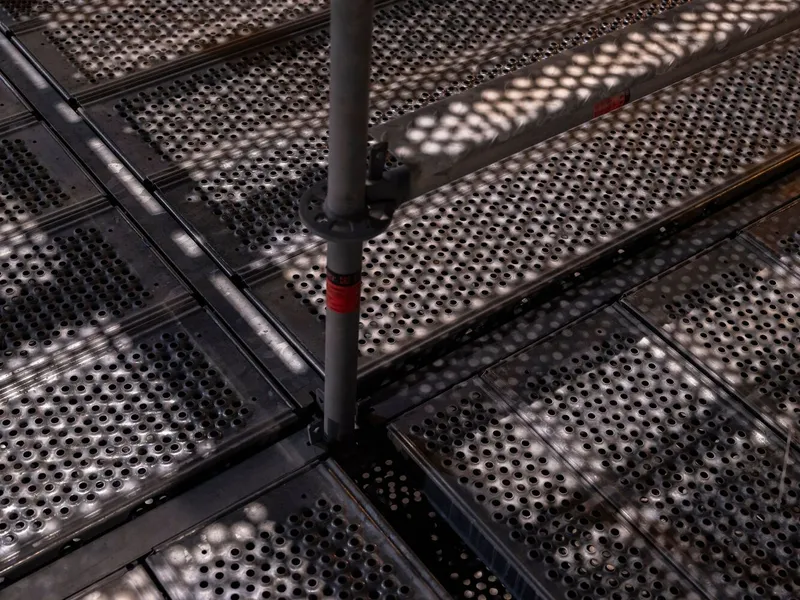
At the heart of the installation lies its scaffolding framework, chosen for its quick assembly, flexibility, and sustainability. The structure embodies the principles of adaptive reuse by ensuring that its components can be disassembled and repurposed after the Sharjah Architecture Triennial.
4. Integration of Demolition Waste
Demolition debris from the original market was incorporated into the installation as counterweights. These materials, illuminated at night, elevate discarded elements to the status of archaeological artifacts, encouraging visitors to reflect on time, impermanence, and value.
5. Shading and Visitor Experience
Partially covered by a shading screen, the structure ensures thermal comfort during the day. The screen subtly overlays the surrounding urban landscape, inviting visitors to interact with the space and experience architecture as a living, evolving entity.


The Role of Adaptive Reuse in Urban Development
Revitalizing Abandoned Spaces
The Time Transitions Installation exemplifies how adaptive reuse architecture can breathe new life into neglected urban areas. By transforming the old Al Jubail Market into a site of cultural and architectural dialogue, the project demonstrates the potential for reintegrating forgotten spaces into the city's fabric.

Reducing Environmental Impact
Through its sustainable design practices—reuse of materials, minimal waste generation, and passive cooling strategies—the installation addresses critical environmental challenges associated with urban development.

Preserving Heritage While Embracing Modernity
In a rapidly modernizing Sharjah, the installation bridges past and present by celebrating the old market’s cultural significance while introducing contemporary design elements.
Lessons from Time Transitions: Redefining Architectural Possibilities
The Time Transitions Installation is more than just a public observatory—it is a manifesto for adaptive reuse architecture. It urges architects and urban planners to consider:
- Sustainability: How can materials and resources be reused efficiently?
- Cultural Relevance: How can heritage and modernity coexist?
- Community Impact: How can abandoned spaces be reintegrated to benefit the city?


A Vision for the Future of Architecture
As cities continue to grow and evolve, projects like the Time Transitions Installation offer a blueprint for the future. They showcase how adaptive reuse architecture can transform urban spaces into sustainable, culturally resonant landmarks.
By valuing impermanence and adaptation, the installation not only preserves history but also inspires forward-thinking architectural solutions.
All Photographs are work of Miguel Falci, Danko Stjepanovic


Popular Articles
Popular articles from the community


Cube Design Draws an Ecological Corridor Between Two Shenzhen Hills with the Nankai Building
Beside Shenzhen's container docks, the Nankai Building pairs stacked balconies with a climbing green screen to connect two hillsides across its height.

FCC Arquitectura Expands a Portuguese Granite House with a Board-Marked Concrete Wing
In Portugal, JV House pairs a cleaned-up whitewashed and granite dwelling with a timber-shuttered concrete extension, courtyards and a garden pool.


Aquadapt: An Underwater Habitat That Rewrites Its Rooms by the Hour
Curved modules ring the seabed while one shell shifts from breakfast room to cinema, farm and football pitch as residents' needs change.

The Amber Palace Opera: A Geological Fiction Surfaces on Tallinn's Baltic Waterfront
Pierre Brillard reimagines a Baltic legend as a public landscape, opera house, and waterfront promenade rooted in Tallinn's coastal identity.

Similar Reads
You might also enjoy these articles


Hodi-Mandai Geram
Project Function: Preservation and revitalization of the Intangible heritage and socio-spatial identity of the Hodi by Housing, Cultural Memory Center, Sacred Grove, landscape, local tourism economy


Olio Towers: A Mid-Rise for Performers That Fuses Housing, Rehearsal, and Stage
Located blocks from Houston's Theater District, this modular tower stacks living units around a central performance atrium.

Oasis: Modular Green Housing Carved into Dhaka's Urban Fabric
A shortlisted Plugin Housing entry reclaims unauthorized settlements in Dhaka with stepped concrete volumes, green roofs, and ventilation-driven design.

Black Hole: A Floating Megastructure for the Post-Physical Era
Emiliano Mazzarotto envisions a spherical, self-scaling arena where e-sports, digital hotels, and holographic stadiums replace traditional public space.

Explore Timeless Architecture Competitions
Discover active competitions in this discipline

Challenge to design locus for the upliftment of human rights

Challenge to reimagine the Iron Throne

Photograph architecture without architects

Illustrate the lost glory of Angkor Wat - Render Challenge
Comments (0)
Please login or sign up to add comments
No comments yet. Be the first to comment!