

Vision for tomorrow
Documentation of city and its influences
Context
Cities, in the past, used to grow on their own. Sure, the position was usually defensive, such as on a hill or an island, or near an extractable resource or the intersection of two transportation lines. But what transpired after that was impromptu. People working in the fort, the mines, the port, and the warehouses needed places to eat, sleep, and worship. Water, sewage, roads, trolleys, gas, and electricity were all threaded through the commotion in huge networks of improvisation.
That was, at least, how things worked for the most of human history. Things began to alter in the second decade of the twentieth century. Cities began to form on purpose. Beginning in 1916, when New York City's zoning laws were enacted, development began by commission rather than omission. The envelope's shape was dictated by laws and regulations. Aesthetic consequences were decided by functional considerations, which were not always favourable.
Things are getting better a century, plus or minus, after humans began devoting their thoughts to constructing cities as a whole. Architects, designers, and planners may now work smarter and more accurately thanks to high-tech materials, sensor networks, new science, and improved data. Cities are becoming more environmentally friendly, enjoyable, and beautiful. And it's just in time, because cities now house more people than rural areas.
The cities of the future may still self-assemble in a halting manner, but if done correctly, the process will not be accidental. A city shouldn't just appear out of nowhere. Every block, building, and brick represents a multitude of choices. Cities may be magical if you make the right decisions.
The city condition today
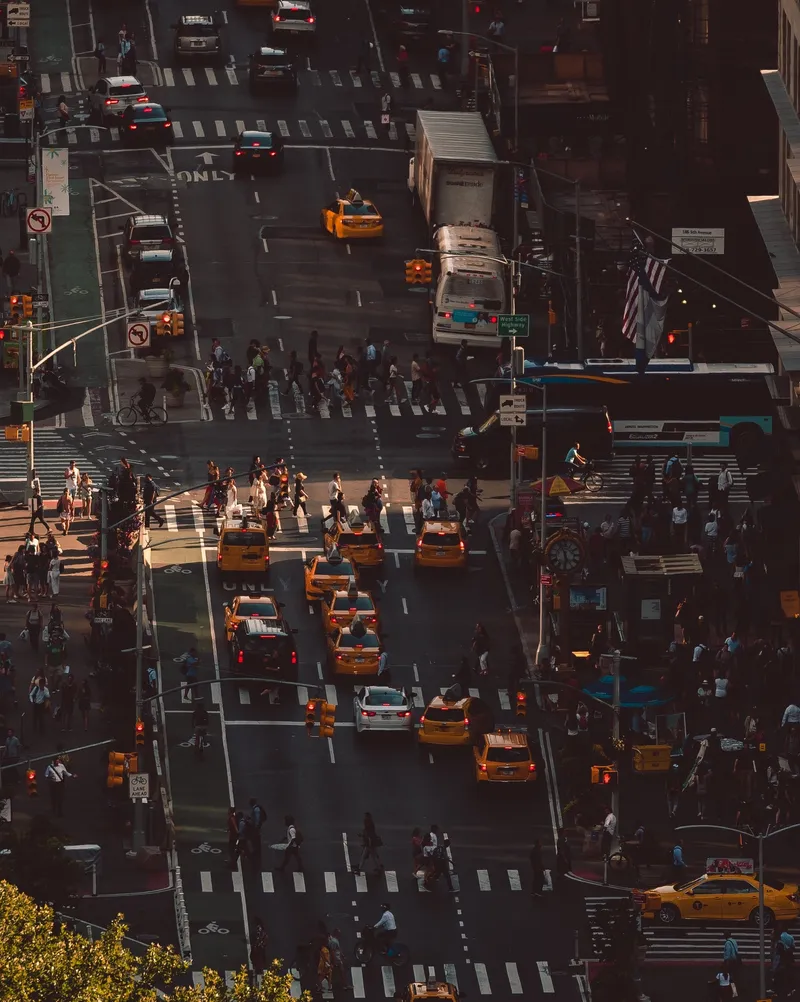
The world is experiencing unprecedented rates of urbanisation. According to the United Nations, cities now house 55 percent of the world's population. By 2050, that percentage is predicted to rise to 68 percent, implying that 2.5 billion more people will live in cities. A astounding 900 million people will live in China's cities alone.
Despite the fact that cities appear to be growing at a constant rate, population growth has historically occurred in cycles. In general, innovations have addressed the issues posed by growing populations, only to be replaced by new challenges. The vehicle, for example, was invented in the early twentieth century to alleviate some of the problems associated with long commutes. Sedentary lifestyles have become prevalent, and health risks have proliferated, as cities are increasingly constructed to support cars rather than people.
New and complicated concerns are surfacing, and today's cities are possibly on the verge of the most significant global economic transformation in history. Governments would be wise to consider the following as they guide cities into the future:
- The city context will be shaped by talent, technology, climate, and globalisation.
- The success metric will be citizen well-being.
- Cities and residents must work together to design important programmes.
Factors shaping the future city
The globe is in the midst of its most dramatic period of transition in history. The struggle for talent, an increasingly connected world, the age of human dominance, and technology's ever-expanding role are all set to have a significant impact on how cities grow.
Talent search...
...Changes in population will, in our opinion, have a significant impact on the battle for talent in metropolitan areas. While cities must recruit enterprises that will increase job creation, they must also develop dynamic, liveable environments that attract top talent. Migration has blurred geographic boundaries during the last two decades. While some cities are already cosmopolitan, others are working hard to develop policies and infrastructure that will attract foreign visitors.
Interconnectivity...
...Globalization, according to conventional thought, has come to a halt. Globalization is not going backwards, despite the fact that global commodities trade has flattened and cross-border financial flows have dramatically decreased. Rather, it is entering a new phase characterised by massive data and information fluxes. Surprisingly, digital flows, which were virtually non-existent only 15 years ago, now have a greater impact on GDP growth than centuries-old goods commerce. The globe is more connected than it has ever been, yet the nature of those ties has shifted dramatically. Data flows facilitate the movement of commodities, services, finance, and people, in addition to sending important streams of information and ideas in and of themselves.
Human dominance...
...In terms of resources, urbanisation has put cities all over the world at risk. Three types of resource stress are a threat to cities: Chronic, acute and social.
C: Water, energy, and food scarcity, which is endemic in some parts of the world, is fast spreading.
A: Stress caused by exposure to weather-related occurrences. Floods and hurricanes are particularly dangerous in coastal regions, whereas droughts threaten dry, poor places.
S: Poor governance, excessively rapid urbanisation, unbalanced economic distribution, and youth unemployment can all cause social stress. In the vast majority of cities, social stress appears to be decreasing as GDP rises.
There are three trends that are expected to amplify the impact of these pressures:
- A growing number of people are experiencing extreme stress. Natural calamities are becoming more common. Food and water shortages have worsened as a result.
- Multiple pressures have a compounding impact. Acute stressors are becoming more intense at a time when cities are simultaneously experiencing more severe chronic issues. Low-income populations are being pushed into slums and informal settlements, which are prone to floods, landslides, and other natural disasters as economic and social stressors develop.
- Stress may be contagious. Cities are more vulnerable to remote events as a result of increasing global interconnectedness than they were previously. Stress in one region of the world, such as a political war, can cause ripple effects such as asylum seekers and supply chain disruptions in other parts of the world.
Tech taking over...
The sharing revolution has begun. Peer-to-peer business models and shared entrepreneurial ventures are becoming more common as the usage of digital platforms and consumer desire to use mobile apps has accelerated the development of the sharing economy. Ride sharing, public bicycle sharing, and smart parking are just a few examples of how urban mobility has changed.
Cities that are more intelligent. Smart cities are likewise entering a new phase after a decade of research. Despite the fact that digital solutions are only one of the instruments required to make a city great, they are the most powerful and cost-effective additions in many years. For example, real-time crime mapping uses statistical analysis to show patterns, whereas predictive policing goes a step further by anticipating crime to prevent instances before they happen. Internet of Things sensors on existing infrastructure systems are another example of these technologies, which can assist personnel in resolving issues before they become breakdowns and delays.
The term "circular economy" refers to a system in which cities currently work within a global economic system built on the linear production and consumption model of "take-make-dispose." Cities may be able to move to a circular economy, in which things are made to last and resources are valued. Virtualization, dematerialization, openness on product use and material flows, as well as feedback-driven intelligence, will all be made feasible by digital technology. Simultaneously, these technologies will make it possible to collect and analyse data about materials, people, and environmental situations. As a result, digital technologies are crucial for identifying the issues of urban material flows, locating key regions where structural waste occurs, and finding effective long-term solutions.
Digital technologies, on the other hand, pose a huge threat: Breach of personal information.

The citizens' requirements must be met in the future city. People frequently mention a variety of shortcomings, including crime, traffic, fire emergency response, waste management, active mobility options, police security, a lack of essential utilities, public transportation, and bad housing and government services. Dissatisfied city dwellers are likely to migrate and leave for more appealing locations, given the severe rivalry for talent among cities.
To thrive, city leaders must emphasise the well-being, sustainability, and other essential demands of their citizens. Future cities will have lively, fluid, and flexible ecosystems that build on new opportunities while limiting risks and obstacles, similar to the "live, work, and play" model.
References (4)

Popular Articles
Popular articles from the community


GROUP A Strips a 1969 Rotterdam Harbor Headquarters to Its Frame and Wraps It in Timber Louvers
In Rotterdam's M4H harbor district, Ferro Offices reuses a 1969 frame, adds one timber storey and reaches BREEAM-NL Outstanding.

David Ortega Stacks a Two-Story Mexico City Penthouse Around a Steel Stair and a Pergola-Shaded Roof Terrace
In Colonia Roma, a 300 m² penthouse uses oak joinery, a planted steel stair and a slatted roof pergola to make a new-build apartment feel like a house.

Cube Design Draws an Ecological Corridor Between Two Shenzhen Hills with the Nankai Building
Beside Shenzhen's container docks, the Nankai Building pairs stacked balconies with a climbing green screen to connect two hillsides across its height.

David Macias Steps a Doorless Stone and Plaster House Down a Tropical Colombian Hillside
In the humid hills of Colombia, Threshold House replaces the front door with an open void and terraces its 850 m² down the slope instead of fighting it.

Similar Reads
You might also enjoy these articles

Gil Mello Arquitetura Tilts a Single Roof Toward the Waterfalls on a Plateau Above Aiuruoca, Brazil
In Aiuruoca, Minas Gerais, a 200 m² house of local labor and reclaimed poles pairs a low valley veranda with a tall mountain one.

U.GA Architects Wraps an Oval Rooftop Pool in Curved Board-Formed Concrete on Busan's Jeollidan-gil
In Busan's Jeonpo-dong, a 454 m² mixed-use block stacks a neighborhood facility, guest rooms and an oval rooftop pool inside spiraling concrete walls.

Felipe Hess Arquitetos Turns a Blind Stone Wall to the Street and Opens a Brazilian House onto a Courtyard and Canal
A canal-front house in Brazil hides behind painted stone and planting, then opens to an olive-tree courtyard, a reed-ceilinged porch and a curving pool.
David Macias Steps a Doorless Stone and Plaster House Down a Tropical Colombian Hillside
In the humid hills of Colombia, Threshold House replaces the front door with an open void and terraces its 850 m² down the slope instead of fighting it.

Explore Future City Competitions
Discover active competitions in this discipline


Challenge to design a shop stop sunk in the city

Render competition to represent the city as a machine

Design challenge to equip cities with modern furniture
Comments (0)
Please login or sign up to add comments
No comments yet. Be the first to comment!