

Town Hall and Community Center by Bez+Kock Architekten – A Harmonious Blend of History and Modernity
The Town Hall and Community Center blends historic preservation with modern design, creating a vibrant, sustainable civic space in Holzwickede, Germany.


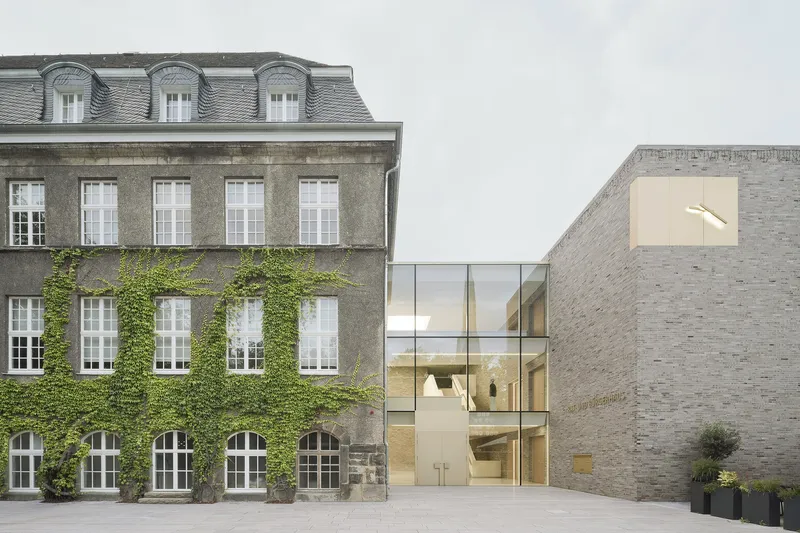
The Town Hall and Community Center in Holzwickede, Germany, designed by Bez+Kock Architekten, is a remarkable example of architectural preservation and contemporary urban development. The project seamlessly integrates the historic 1915 town hall with a modern extension, creating a cohesive civic space that enhances functionality while respecting its architectural heritage.

A Contemporary Extension to a Historic Landmark
The new 5,503 m² town hall development was designed to unify the market square, reinforcing its role as a central gathering space. The angular extension forms a new urban landmark, merging old and new with architectural sensitivity. The original heritage-listed structure remains a focal point, preserved in its historical integrity, while the extension complements it with a striking yet harmonious presence.


Architectural Design and Materiality
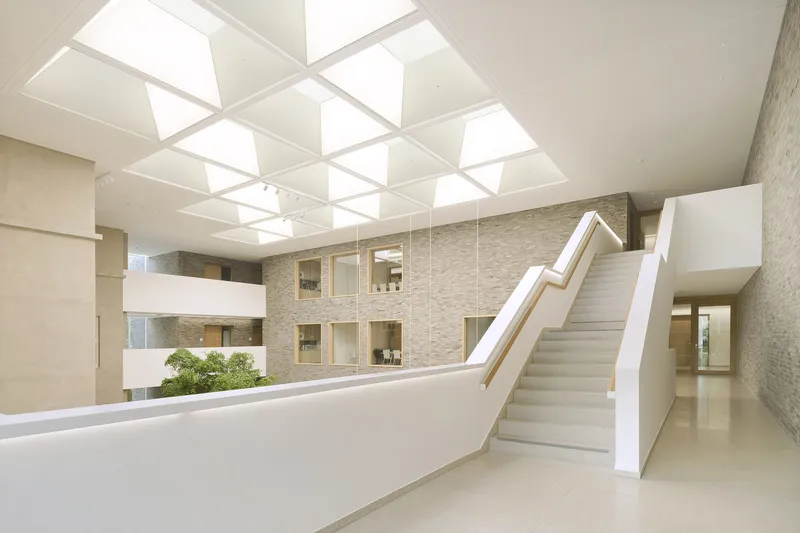
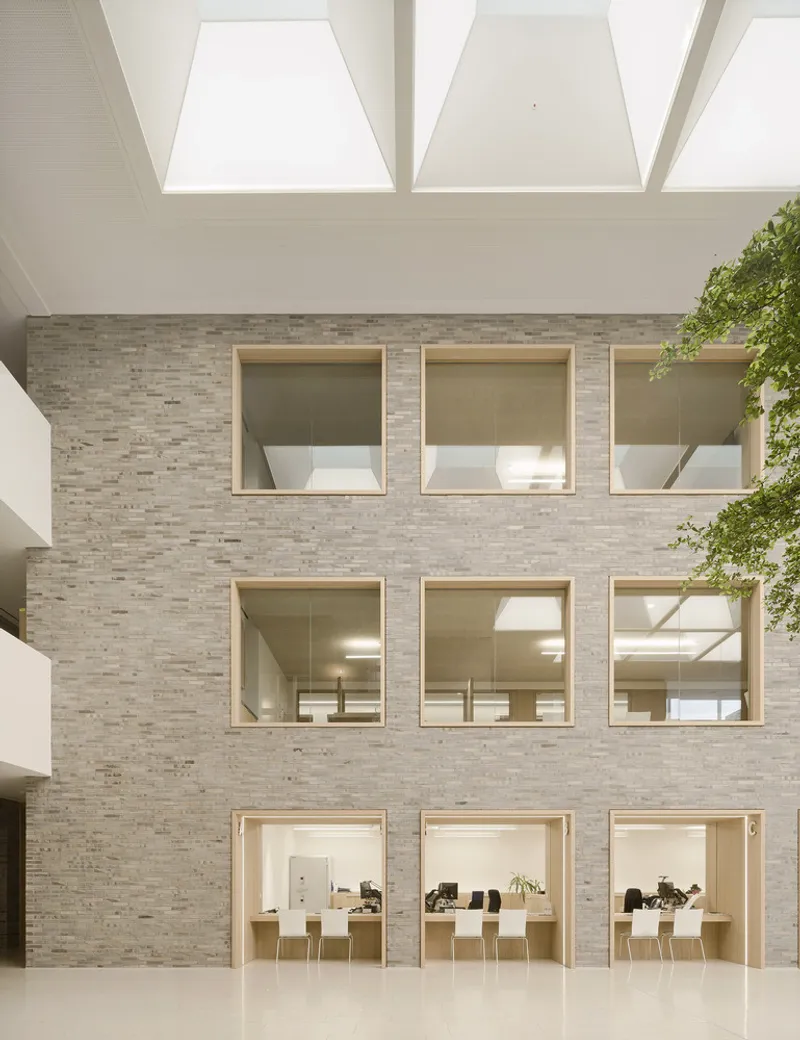
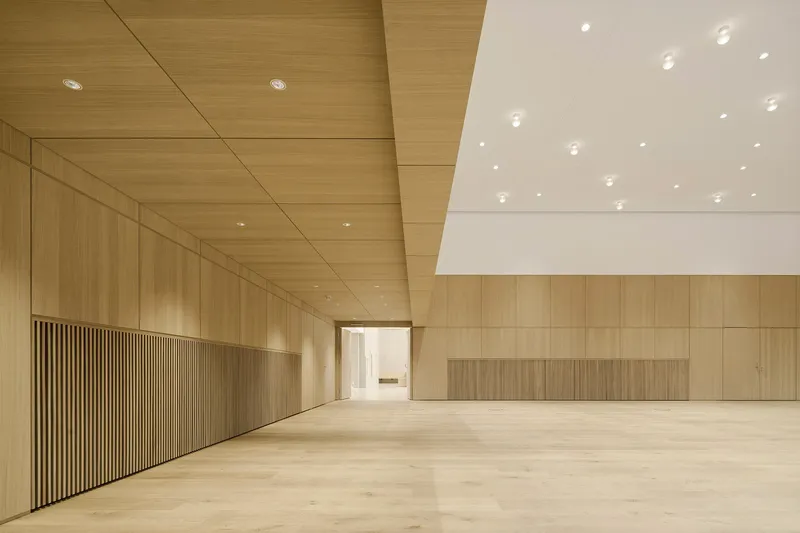
At the heart of the new town hall is a central hall featuring sculptural walls and square skylights, enhancing natural daylight and creating an inviting civic space. This area serves multiple functions:
- Foyer for the citizens' hall
- Service center for public administration
- Museum-like exhibition space showcasing the historic building
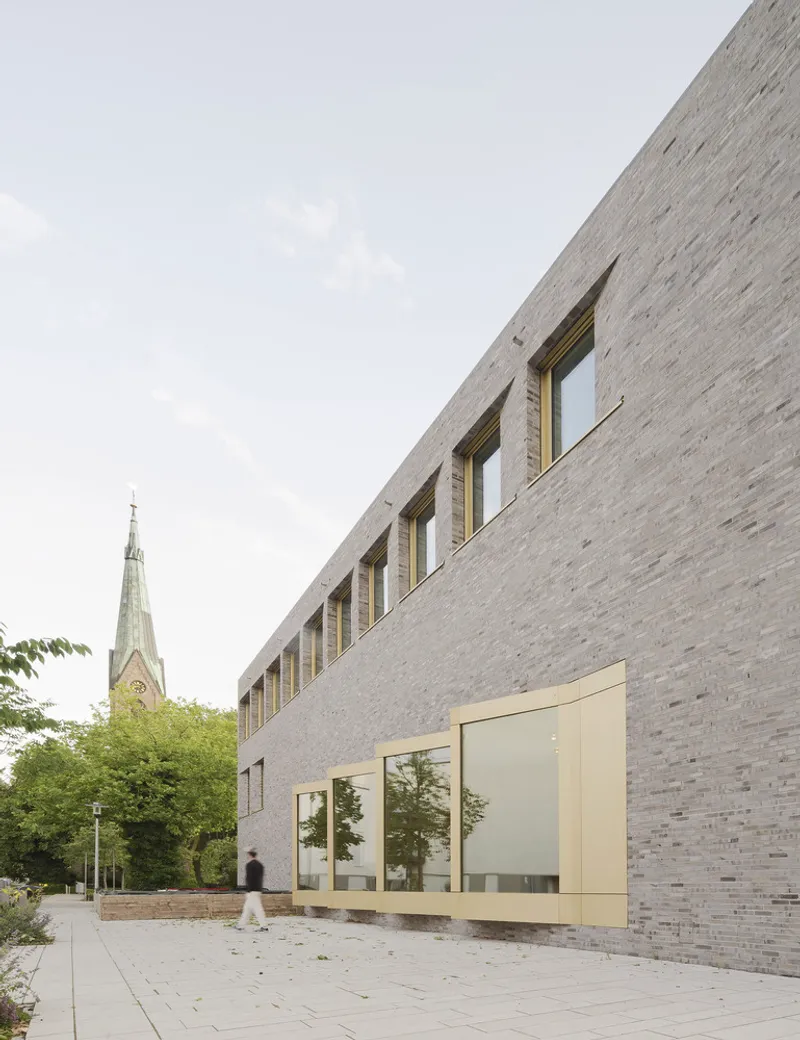
A key design feature is the color-changing clinker brick facade, carefully selected to match the original town hall's palette. The exposed brickwork extends into the interior, ensuring a seamless transition between exterior and interior spaces. Inside, oak finishes add warmth, contrasting with the bold masonry to create a welcoming environment.
Sustainability and Urban Engagement
The design fosters energy efficiency and sustainability by incorporating natural light optimization and durable materials. Additionally, the revitalized interiors of the historic building were restored with traditional craftsmanship, preserving its original character while enhancing modern usability.
The open-plan circulation system improves accessibility and wayfinding, transforming formerly dead-end corridors into interconnected pathways. A new staircase within the central hall serves as a social hub, fostering daily interactions among visitors and staff.
Beyond administration, the new civic hall has become a vibrant public space, hosting community events, exhibitions, and municipal meetings. A small bistro by the main entrance enlivens the market square, offering outdoor seating and catering for events, further strengthening the town center’s role as a social hub.
Project Team and Materials
- Architects: Bez+Kock Architekten
- Project Management: Drees & Sommer
- Structural Engineering: R&P Ruffert Ingenieurgesellschaft
- Landscape Design: Planungsbüro DTP
- Manufacturers: Kingspan Insulated Panels, dormakaba, FSB Franz Schneider Brakel, Casalgrande Padana, Cinca, Forbo Flooring, and more
This project exemplifies heritage conservation, modern functionality, and urban connectivity, setting a precedent for adaptive reuse and civic architecture in contemporary city planning.
All Photographs are works of Brigida González



Popular Articles
Popular articles from the community


Hill & Cross Opera: Sculptural Opera House Architecture Shaped by Tallinn’s Landscape and Identity
Hill & Cross Opera reimagines opera house architecture in Tallinn through its sculptural hill, civic plaza, glass wave and a luminous cross.

The Earth Pod: 3D Printed Homes for Resilient Refugee Communities
The Earth Pod reimagines refugee housing through 3D printed homes made from clay, combining resilience, self-sufficiency, and rapid shelter.

The Ocean Hive: Sustainable Architecture for a Self-Sufficient Civilization at Sea
The Ocean Hive imagines sustainable architecture at sea, where modular habitats, algae, wave power and ocean waste sustain a growing colony.
AL-JANNAH: Sustainable Architecture and Permaculture for Afghan Widows
AL-JANNAH uses sustainable architecture and permaculture to create resilient oasis of housing, learning, work and renewal for Afghan widows.

Similar Reads
You might also enjoy these articles


Hodi-Mandai Geram
Project Function: Preservation and revitalization of the Intangible heritage and socio-spatial identity of the Hodi by Housing, Cultural Memory Center, Sacred Grove, landscape, local tourism economy


Olio Towers: A Mid-Rise for Performers That Fuses Housing, Rehearsal, and Stage
Located blocks from Houston's Theater District, this modular tower stacks living units around a central performance atrium.

Oasis: Modular Green Housing Carved into Dhaka's Urban Fabric
A shortlisted Plugin Housing entry reclaims unauthorized settlements in Dhaka with stepped concrete volumes, green roofs, and ventilation-driven design.

Black Hole: A Floating Megastructure for the Post-Physical Era
Emiliano Mazzarotto envisions a spherical, self-scaling arena where e-sports, digital hotels, and holographic stadiums replace traditional public space.


Explore B19 Architekten Bda – Weimar Competitions
Discover active competitions in this discipline



Challenge to reimagine the Iron Throne


Photograph architecture without architects


Illustrate the lost glory of Angkor Wat - Render Challenge


Design challenge to reuse E-waste
Comments (0)
Please login or sign up to add comments
No comments yet. Be the first to comment!