

Tree House by Studio ACTE: A Sustainable Urban Pavilion Rooted in Circular Design
Sustainable tree house pavilion in Amsterdam using reused materials, circular design, and modular construction, blending architecture seamlessly with nature.


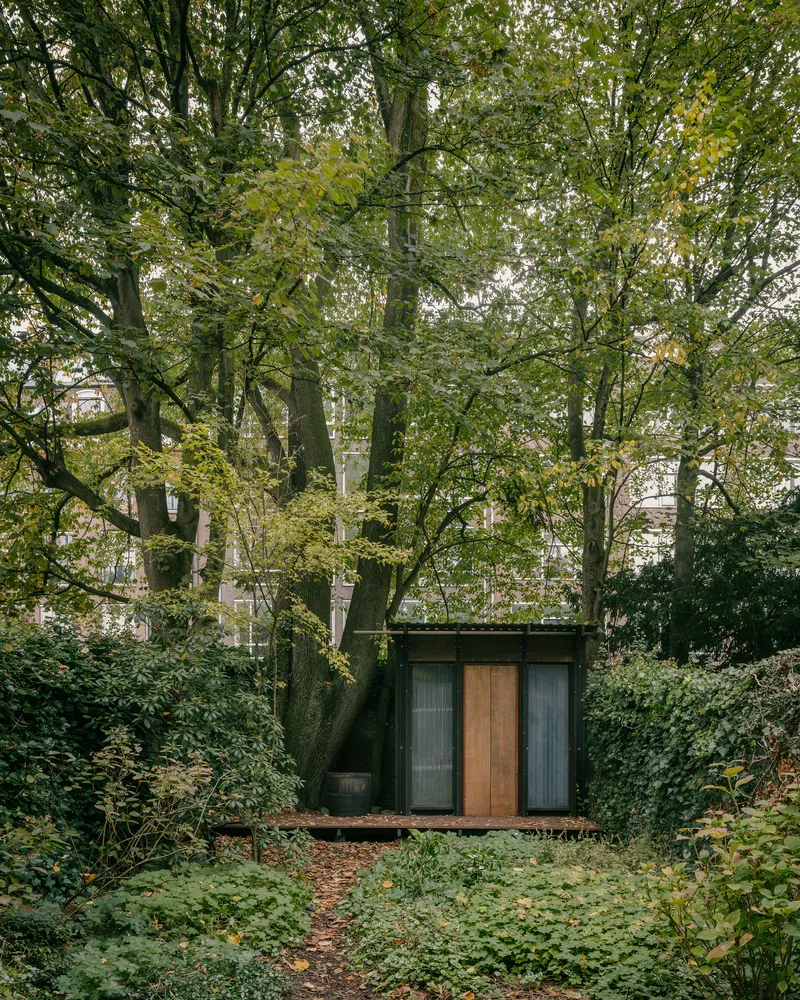
The Tree House by Studio ACTE is a compact yet highly innovative pavilion located in the historic center of Amsterdam. Designed in 2022 within the serene garden of the Iona Foundation, this 20 m² structure redefines small-scale architecture through sustainability, reuse, and deep environmental integration.
This project exemplifies how tree house architecture, urban pavilions, and sustainable design strategies can merge into a cohesive spatial experience that responds to both nature and urban context.
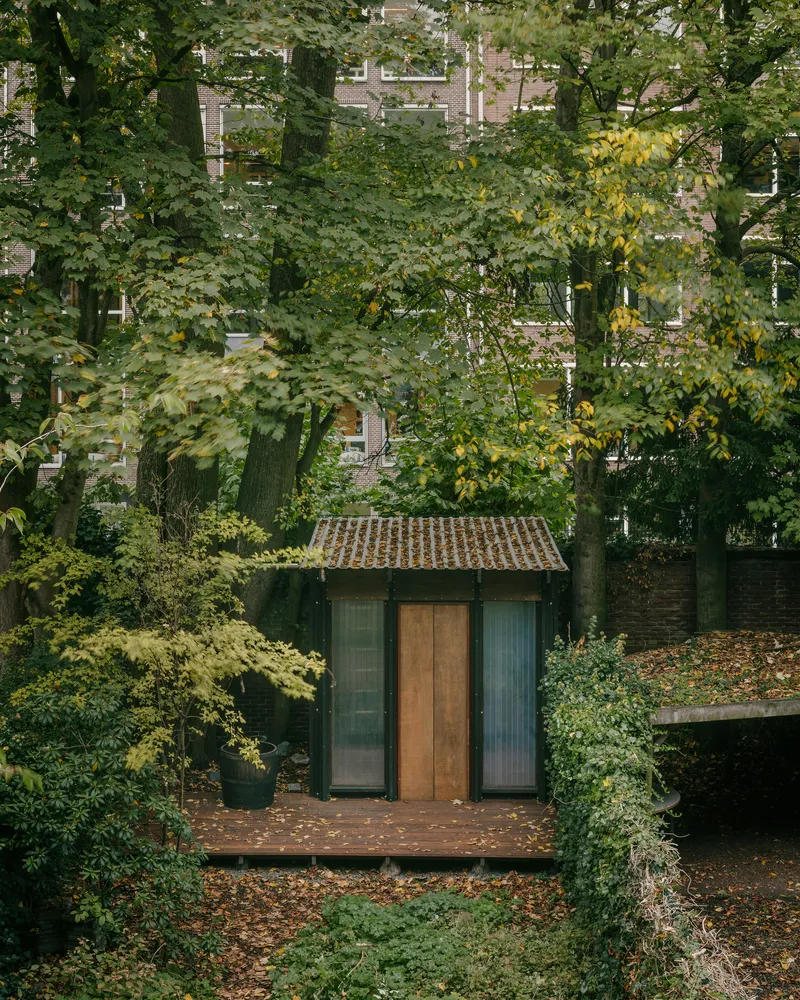
Contextual Design: Blending Nature with Architecture
Positioned beside a century-old tree, the pavilion establishes a strong dialogue between the built environment and the surrounding greenery. The design prioritizes transparency, openness, and visual permeability, allowing the interior space to feel continuously connected to the garden.
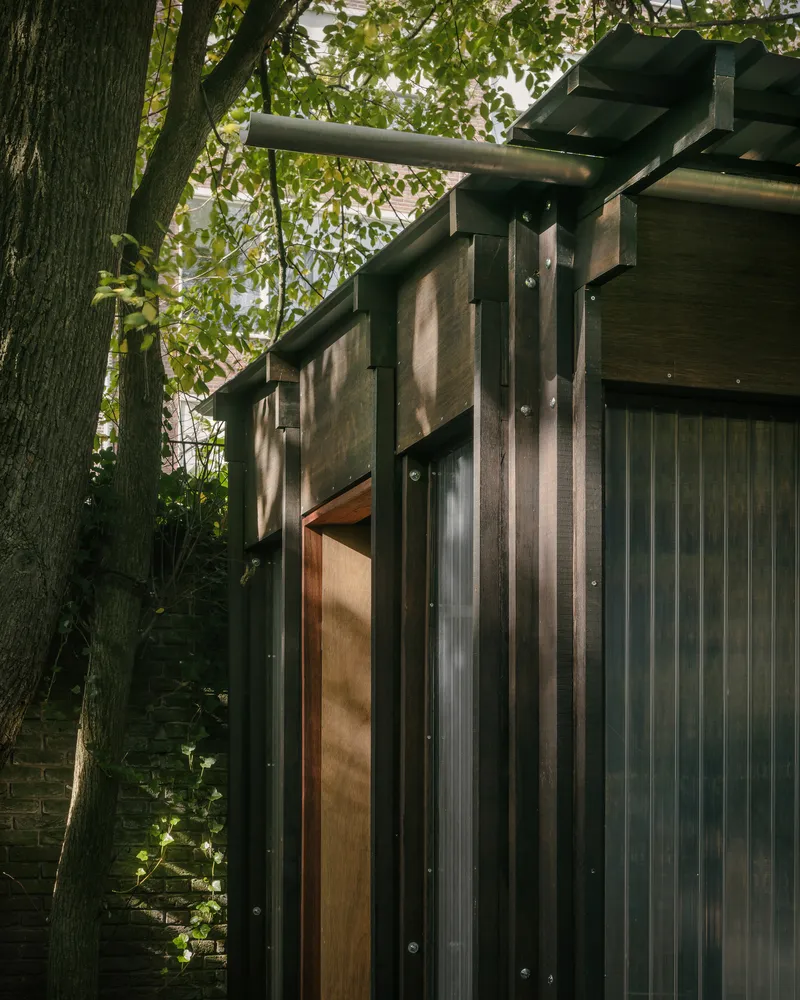
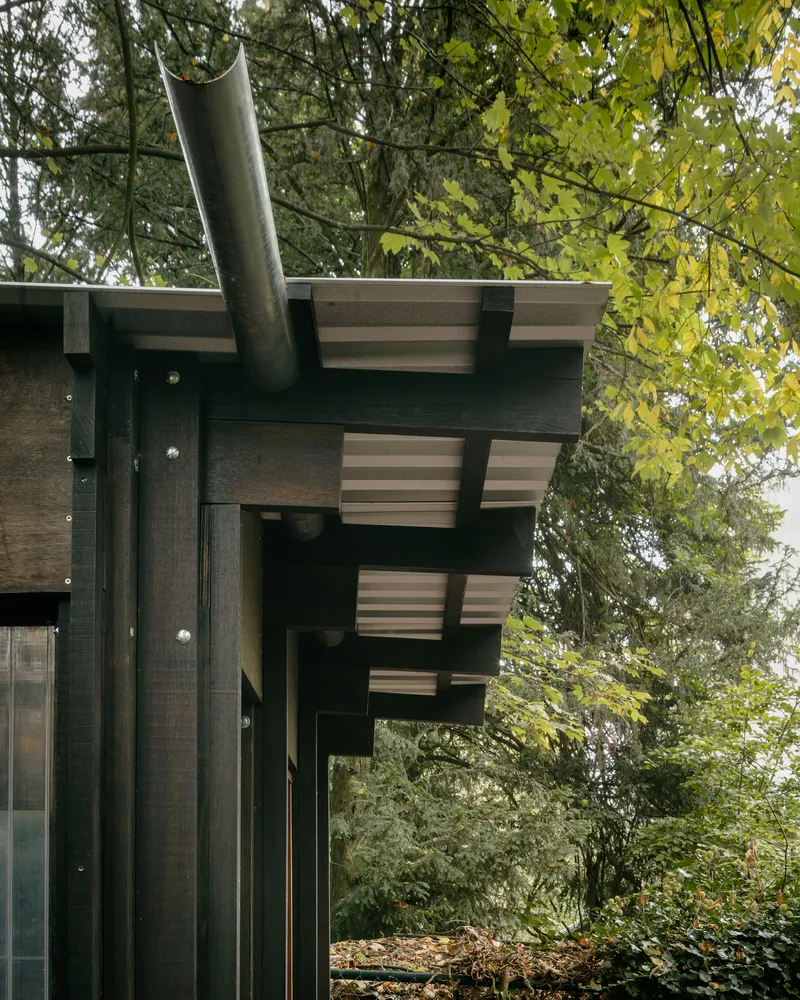
The architectural language reflects the morphology of tree branches, with slender wooden columns rising organically. This biomimetic approach enhances the spatial identity while reinforcing the pavilion’s integration into Amsterdam’s historic canal garden landscape.
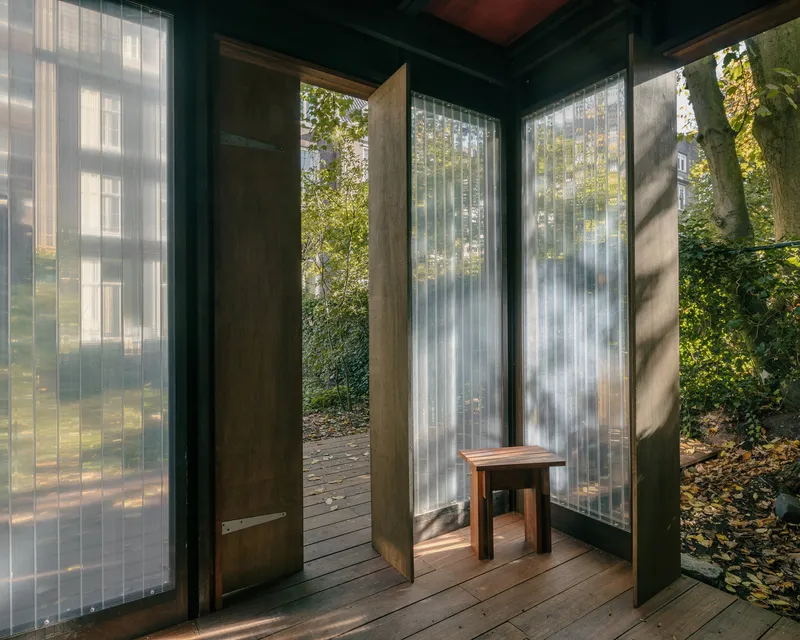
Material Strategy: Circular Construction and Urban Mining
A defining feature of the Tree House is its commitment to circular architecture and urban mining. The structure is almost entirely built from locally sourced reused materials, demonstrating an innovative approach to sustainable construction.
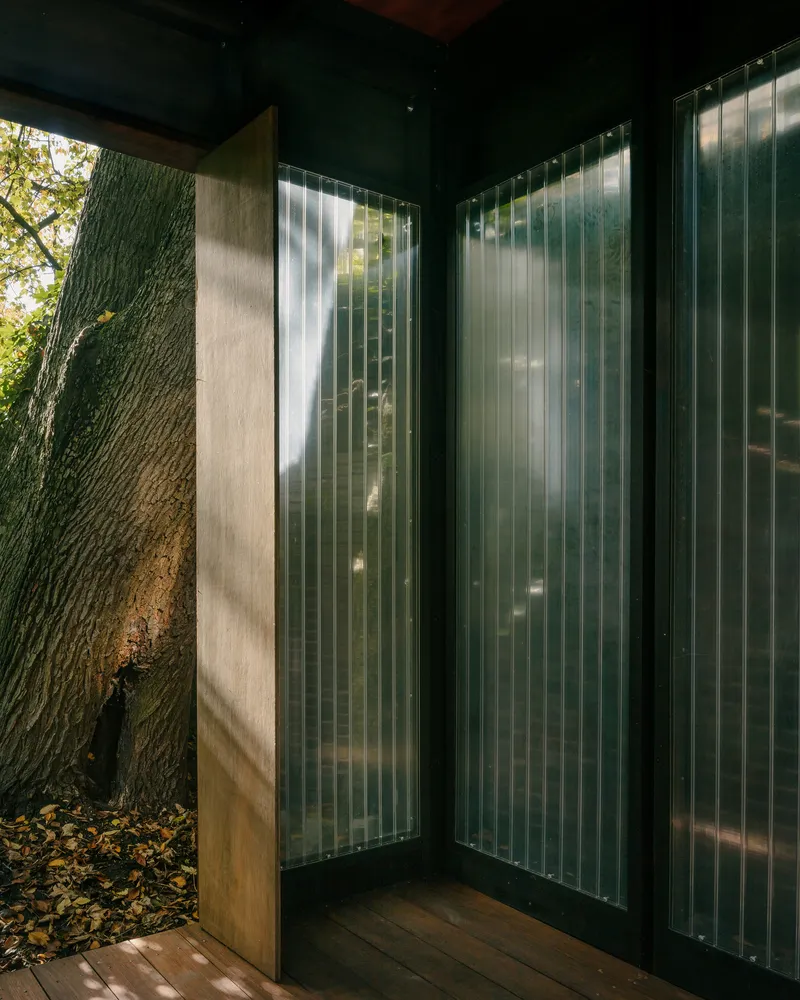
The darkened wood façade references the brick textures of nearby historic buildings, creating contextual harmony. At the same time, the materials carry layered histories: reclaimed wood, repurposed acrylic panels, and salvaged structural elements all contribute to a narrative of reuse.
The use of prefabrication techniques combined with on-site assembly ensures efficiency while minimizing environmental impact. This method also supports adaptability, allowing components to be replaced or reused in future cycles.
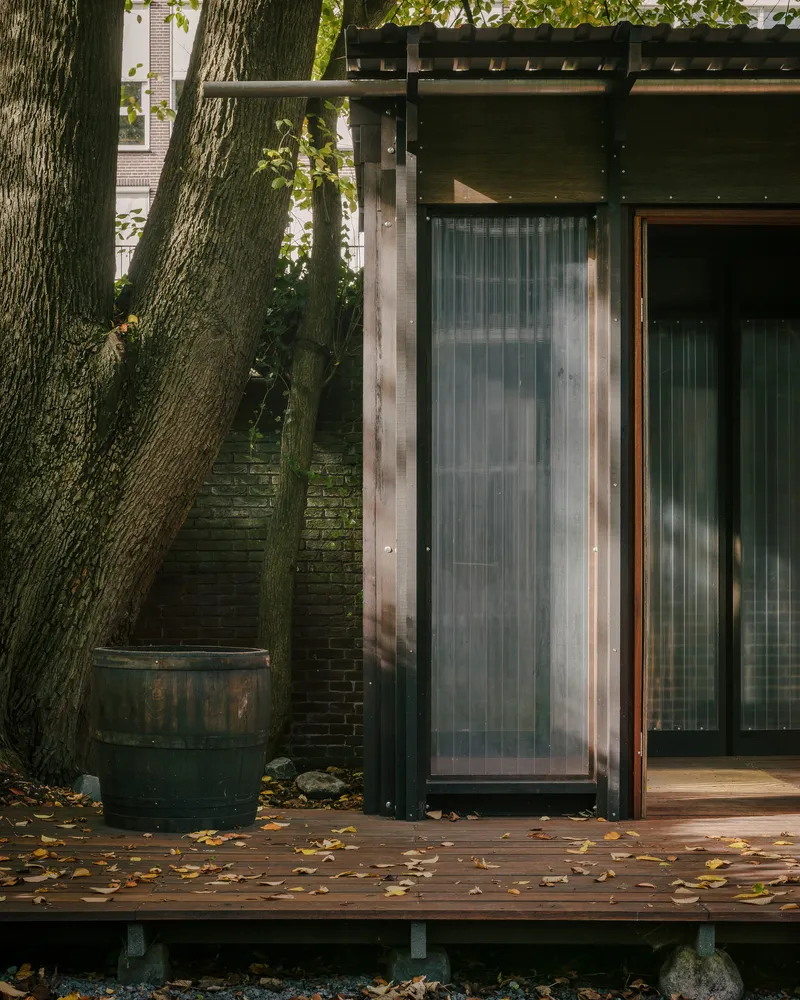
Structural Innovation and Flexible Assembly
The pavilion is conceived as a flexible system rather than a fixed object. Its dry assembly construction method: based on bolting, screwing, and embedding, ensures that each element can be disassembled and reused.
Temporary foundations made from natural stones and cement blocks support a lightweight beam-floor system. This approach not only reduces ground impact but also aligns with principles of reversible architecture and low-carbon construction.
The design process itself was guided by material availability, showcasing how constraints can inspire innovation in sustainable architecture.
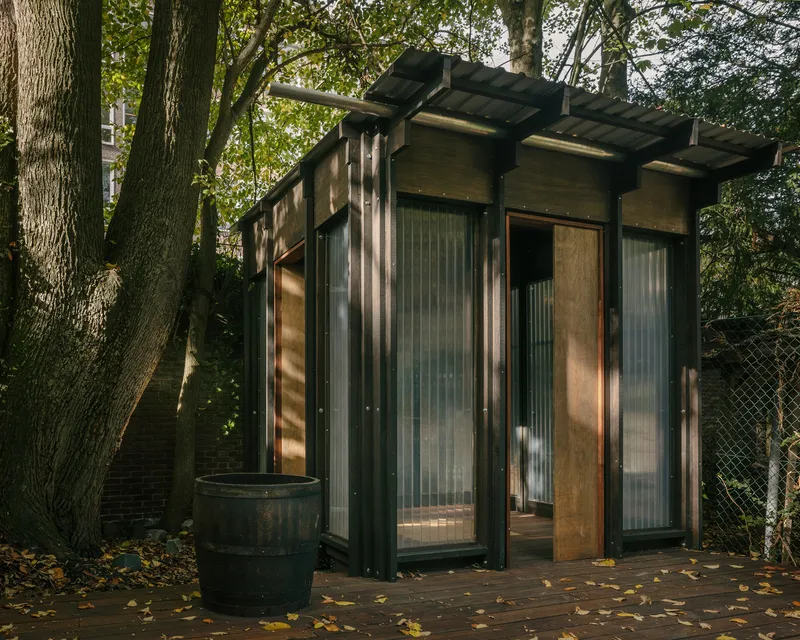
Interior Experience and Spatial Functionality
Inside, the Tree House offers a multifunctional workspace for users of the Iona Foundation. The interior is defined by a semi-polished raw earth floor, reclaimed from a previous circular pavilion, reinforcing the project’s commitment to reuse.
Large openings and transparent panels blur the boundary between inside and outside, creating a continuous spatial flow. The terrace extends into the garden, offering a sheltered yet open environment that adapts to seasonal changes.
This fluid spatial arrangement supports activities ranging from quiet reflection to collaborative work, making the pavilion a versatile and user-centered space.
Material Narratives and Cultural Significance
Every material used in the pavilion tells a story. The wooden structure, sourced from old mooring piles in Rotterdam’s harbor, reflects historical trade routes and colonial histories. Other elements: such as reclaimed plywood, acrylic panels from agricultural buildings, and repurposed oak barrels, highlight the hidden potential of discarded materials.
Through this approach, the project transforms waste into a meaningful architectural language, emphasizing the cultural and environmental value of material reuse.
Sustainable Architecture and Future Implications
The Tree House by Studio ACTE is more than a small pavilion, it is a prototype for future sustainable urban architecture. By combining circular design principles, local sourcing, and flexible construction systems, it demonstrates how architecture can reduce its environmental footprint while enhancing spatial quality.
This project serves as a model for architects exploring adaptive reuse, modular construction, and eco-conscious design, particularly in dense urban environments.
The Tree House stands as a powerful example of how small-scale interventions can create meaningful architectural impact. Through its integration with nature, innovative use of materials, and commitment to circular design, it reimagines the possibilities of sustainable living in the city.
All photographs are works of
Stijn Bollaert


Popular Articles
Popular articles from the community


David Macias Steps a Doorless Stone and Plaster House Down a Tropical Colombian Hillside
In the humid hills of Colombia, Threshold House replaces the front door with an open void and terraces its 850 m² down the slope instead of fighting it.

LT2A and OPEN Architectes Thread a Brick and Glass High School Through a Wooded Belgian Campus
In Braine-l'Alleud, a 3,000 m² wing for Collège Cardinal Mercier pairs pale brick with a glazed colonnade, deferring to a small chapel and a dense wood.

Juan García Correa, John González and Claudia Rueda Sink a Circular Amphitheater into a Manizales Engineering Building
On the La Nubia campus in Manizales, Colombia, the S1 Building folds labs and offices into a hillside of ramped lawns that double as a campus route.

Cube Design Draws an Ecological Corridor Between Two Shenzhen Hills with the Nankai Building
Beside Shenzhen's container docks, the Nankai Building pairs stacked balconies with a climbing green screen to connect two hillsides across its height.

Similar Reads
You might also enjoy these articles

Bamboo Housing Challenge 2026: Design Affordable, Sustainable Homes Using Bamboo
An international design competition by Bamboo U and IBUKU inviting architects and designers to reimagine affordable housing using bamboo — with the winning design built full-scale in Bali.

Computational Design & Education: Beegraphy Design Awards Introduces 7th Category (Featuring Jiyun's Innovative Approach)
Dive into Beegraphy’s 7th Design Awards category, where computational design meets education to create immersive, interactive learning tools, inspired by Jiyun’s work.
From Parametric Lighting to Urban Furniture: Join the 2nd Workshop in Beegraphy’s Computational Design Series
Dive into Cutting-Edge Design Techniques and Practical Applications with Industry Experts

Last Call: Unleash Your Architectural Genius in SHAK's Kindergarten Design Competition
Urgent call for architects to join SHAK's kindergarten design competition before the looming deadline

Explore Architecture Competitions
Discover active competitions in this discipline

Challenge to reimagine the Iron Throne

Photograph architecture without architects

Illustrate the lost glory of Angkor Wat - Render Challenge

Design challenge to reuse E-waste
Comments (0)
Please login or sign up to add comments
No comments yet. Be the first to comment!