
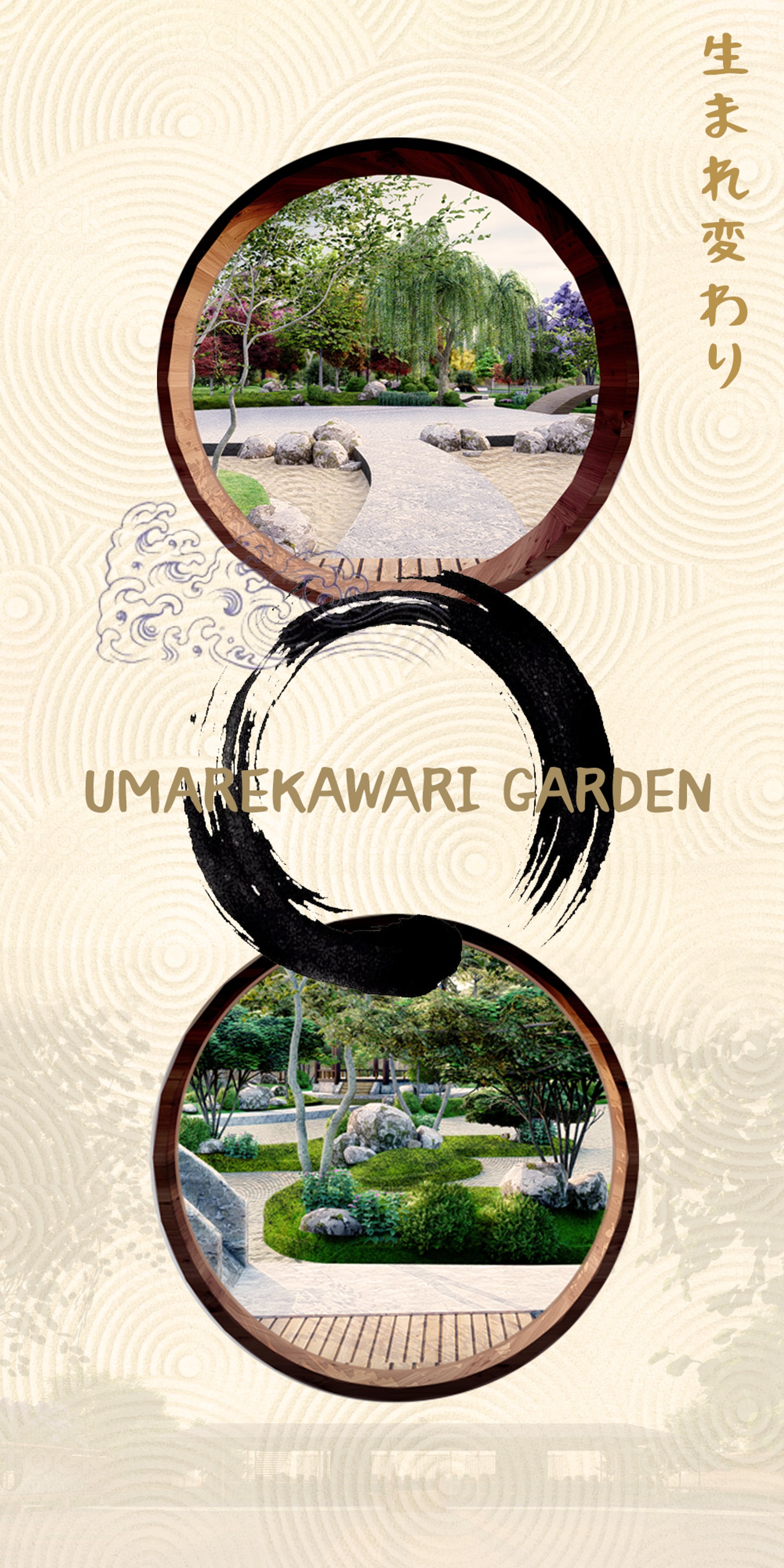
Umarekwawari garden
The Japanese garden at Edgewater, Chiacgo, Illinois, United States

The Umarekawari garden comes in the category of park with the Japanese style where located in the area of 15,000 square meters at Edgewater, Chicago, Illinois. From the site analysis, we found that there are mostly multi-family residence and commercial in the area of 400 meters around the site. However, the site is on the edge of Lake Michigan and it was separated from the city by N Lakeshore drive road which is the city's main road, but we can not access the site with this road. We could access the site with the Lakefront trail which is site’s main accessibility.
The Chicago Lakefront Trail is an 18 miles or 29.8 kilometers long track which havemore than 30,000 people a day use it during the high season. Moreover, the user who use this track will include pedestrians, runners, skateboarders, and bicycles. From the user analysis, the main user in this areas can be defined as tourists (as a main user), cyclists and runners (users from lakefront trail) and employee, single-family, multi-family, student (a users from building use analysis).
In terms of site strength, as the site is nearby the Lake Michigan, it make the site havethe beautiful view when look out from the site and could easily access from the Lakefront trail.
In terms of site problems, site have a conflict problem between the context and concept. However, there are no unique usage and also hard to access with car.
In terms of problem solving and site strength highlighting, We came up with the concept of the main idea which is Miegakure garden, a combination of Chinese garden and Japanese garden in the framework of hide and seek to create a peaceful space. From the interpretation of the concepts in each area of the site is different for the difference so that to create give uniqueness to the site, we create a sub concept, Enso, the Zen’s wheel of life drawing, based on the concept of Zen which means life cycle and simplicity. Nevertheless, the name Umarekawari refers to the wheel of life in Japanese language. Another sub concept is Wabi-Sabi which means imperfections, contradictions and differences. When we look into the site context, a designed peaceful garden could located in the midst of chaos which can support this concept directly.
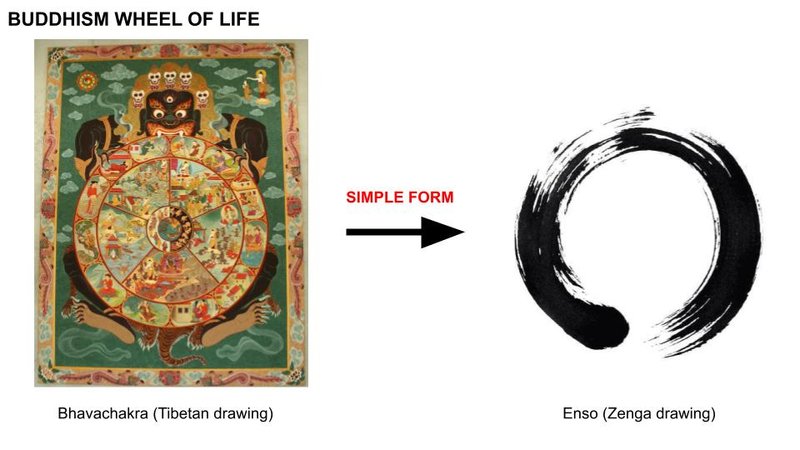
Both concepts will be used in the design of the space. The Umarekawari garden is divided into 3 zones along the horizontal line. There are the reincarnation garden in the upper part, the gathering courtyard in the middle part and the activity sand garden in the lower part. However, the middle court is a closed court which separated the other 2 zones to give a sense of peaceful, the other 2 zones is conflicting. The reincarnation garden or the colored tree zone will supports passive activities and we use colored tree to make the user enjoy when experiencing and it will change the color through the season according to the Enso concept. However, when we view on the building use map in the urban scale, we saw that there are 12 green cemetery within 10 kilometers from the site and also nearby St. Andrew Greek Orthodox Church. From that analysis, we aim this garden to become the space that Chicago citizen to realize about the fact of life and how important our life is according to the meaning of Enso, the Zenga drawing. The activity sand pit zone will support active activities and we use green plants according to the original Japanese garden to give the peaceful sense.
At the front entrance area, Bicycle parking area is available to accommodate users that coming from the Lakefront trail. Moreover, the entrances in the gathering courtyard could walk along the corridors on both sides to access the other 2 zones.
The Reincarnation garden or deciduous zone mainly has 4 courtyards, which means the cycle of life which is birth, aging, illness, and death to support passive activities with connecting paths through the sand pit instead of the river as one of the element in Japanese garden. We intent to make this zone bound with the colored tree for fun, Wabi-Sabi concept and seasonal according to the Enso concept. At the middle green isle, it is a highly enclosures natural moss area for privacy and protection from sight and also to create the privacy for each courtyard. However, the landmark in this area is a large Japanese sculpture lantern used at an angling point. Since the site is at the corner of N Lakeshore drive and the Lakefront trail runs through it, it serves as a symbol of the area to create identity for this garden as the terminal of the Lakefront trail. However, we want the user realize how important our life is and realize the fact of life through these 4 courtyards in this reincarnation garden.
Interpretation of the concept : a large central enclosed space and the area that
structure like an island like hide and seek.
The gathering or the middle courtyard is the first zone that can be accessed from the entrance. It is a large central courtyard that use to do activities and gathering people flanked by the corridors to create privacy and peaceful to all 3 zones. At the edge of the courtyard there is a main pavilion which is a large viewing building that use to view the Lake Michigan. However, we lifted up the building and planted shrubs around the edges in order to block the view from Kathy Osterman beach users which also have the view from the rooftop. Moreover, the pavilion is also a calming element in this area.
Interpretation of the concept : Hiding from the chaotic in order to reach peaceful
moment.
Sand pit zone is a distinctive feature of the Japanese garden and a Chinese garden. As there are water around the site, sand garden will be another option. However, a large sand pit in the middle was create peaceful which surrounded by active activities such as flower arrangements, Japanese tea ceremony, yoga, meditation, etc.
Interpretation of the concept : Picturesque and accessing the sequence of vision at each step walking in this zone which have the main landmark is middle viewing pavilion and sand pit.
All design is to solve the problem that we mentioned before and encouraged the site strength. The main goal is to be a Lakefront trail stopover by creating a space for users and create a landmark in the angling point area at the corner of the road to let users know that this is the terminal of the Lakefront trail that create peaceful among the chaotic area.
The intent behind the organization of elements across various levels of architecture scale is that we have conceived this project in many layers : architecture, landscape and urban like what is on the site is both architecture and landscape, but what we try to convey is continuity on the scale of urban whether it is connected to surrounding and try to make a landmark to be the highlight of the project and people can see it and access the project.
In case of method of design investigation, we will divide the project into 2 phases. In the first phase, we will do the project by starting within this site and then we try to check the feedback of the users whether it is ok or not. If it's ok, we'll start Phase 2, which will be in the left and right areas of the project.
The materials used in this project are readily available in Chicago and wood material that we use, we will use the local wood because it is suitable for the terrain and climate of the project.
In terms of expansion plan, at first, we’ll try and see how successful it is. If there is great success, it may expand the project area indefinitely to support the use of users. And we also see the potential of the Lake Michigan area that can be developed further. But development must try not to lose the original ecosystem of the area. Yet, our vision in 20 years is to expand the Reincarnation garden through the United States in order to make the citizen realize about the fact of life and how important our life is.
Projects will change over time and appropriately because our project is flexible to use in a variety of applications, whether it is a green pocket or for the activities of urban needs and is one of the greenest projects in Chicago. When the time passing, the project will change according to the era how the park in that era is because the interpretation of the project is that the city people say that the what the project should be?



Popular Articles
Popular articles from the community

On the Brooks House by Monsoon Collective – A Contemporary Kerala Home Rooted in Tradition
Kerala home blending tradition and modernity with water-inspired design, brick architecture, courtyard planning, and sustainable rainwater harvesting strategies.
Atelier Macri Concept Store Interior Design by CASE-REAL
Atelier Macri store features a "ko" counter, walnut wood details, cork displays, blending retail, gallery, and seamless customer experiences.
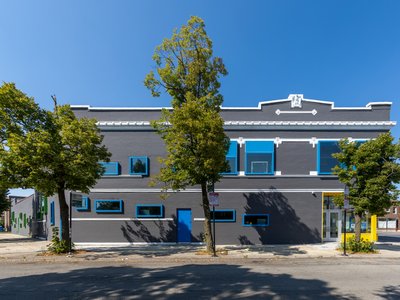
Gads Hill Early Learning Center by JGMA: Adaptive Reuse Shaping Community-Focused Educational Architecture
Adaptive reuse transforms fragmented structure into vibrant early learning center with playful façade, natural light, and community-focused sustainable design.

Solar Steam: A Climate-Responsive Architecture That Redefines the Monument
A climate-responsive memorial architecture that transforms heat, decay, and time into a living system reflecting humanity’s ecological impact.

Similar Reads
You might also enjoy these articles


The Ken Roberts Memorial Delineation Competition (Krob)
As the most senior architectural drawing competition currently in operation anywhere in the world, it draws hundreds of entries each year, awarding the very best submissions in a series of medium-based categories.
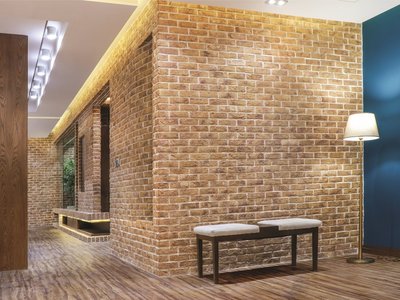
A Contemporary Take on Iranian Residential Architecture
A modern interior design in Mashhad that reinterprets brick, light, and spatial flow to create a warm, contemporary residential architecture.
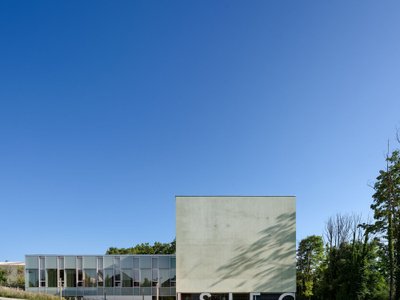
Franche-Comté Advanced School of Engineering by Dominique Coulon & associés, Besançon
A flexible engineering school immersed in woodland, combining concrete minimalism, adaptable spaces, and natural light to support evolving educational environments.


Waterfront Redevelopment and Urban Revitalization in Mumbai: Forging a New Dawn for Darukhana
A transformative waterfront redevelopment project reimagining Darukhana’s shipbreaking heritage into an inclusive urban future.

Explore Sustainable Design Competitions
Discover active competitions in this discipline





Comments (0)
Please login or sign up to add comments
No comments yet. Be the first to comment!