
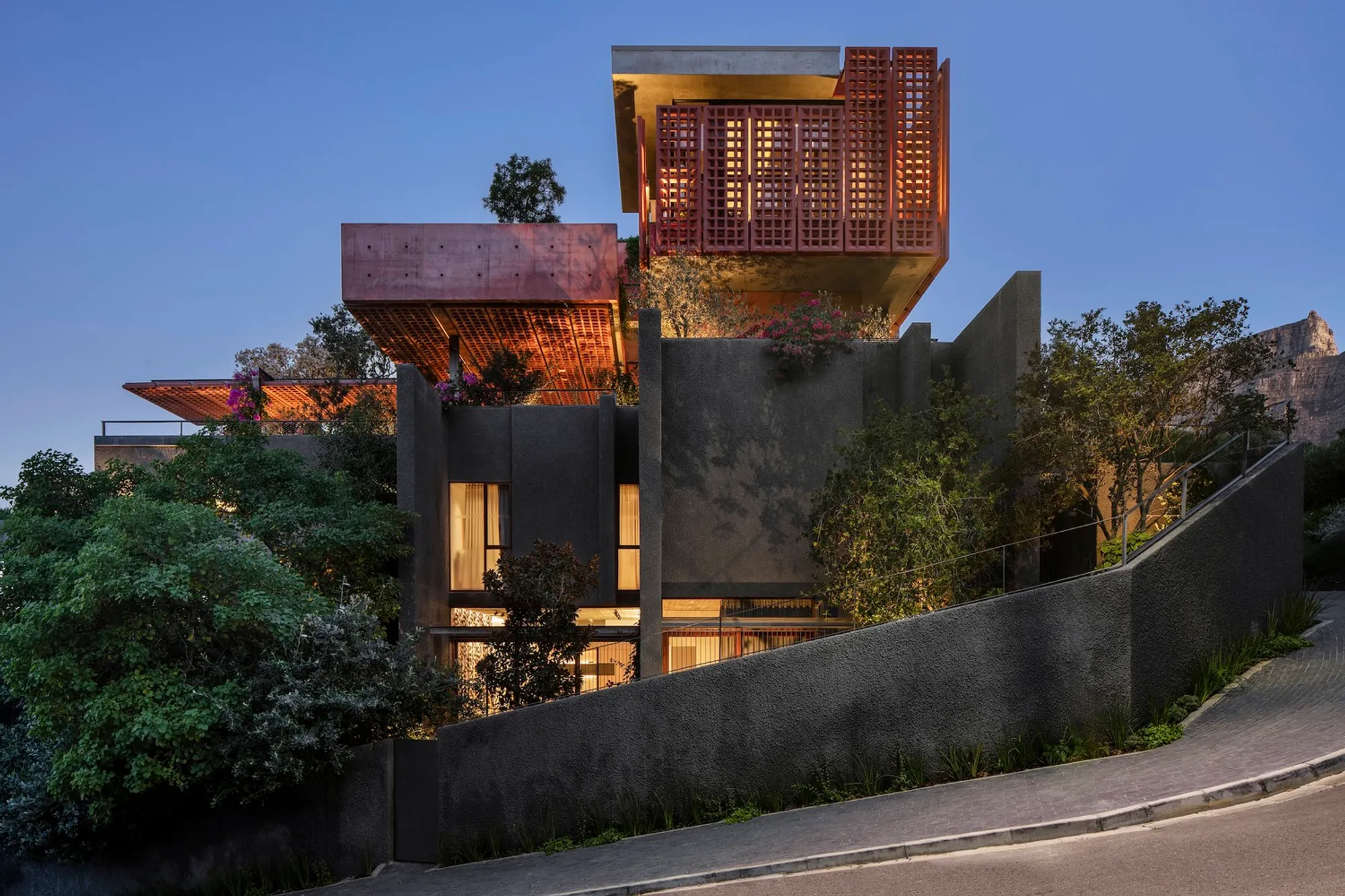
Upper Albert Residence by SAOTA: A Sculptural Urban Retreat in Cape Town
Upper Albert Residence blends bold concrete forms, natural materials, and lush landscaping to create a modern, expressive urban family home.


Project Location: Cape Town, South Africa Architect: SAOTA Interior Design: ARRCC Completion Year: 2021 Area: 942 m² Photography: © Adam Letch Structural Engineer: Moroff & Khune Main Contractor: Red Sky Projects Lighting Consultant: Martin Doller Design Landscape Design: Reto Mani Garden Services
A Personal Architectural Journey
The Upper Albert Residence is a deeply personal project by architect Philip Olmesdahl, principal at renowned Cape Town-based architecture studio SAOTA. Located on a dramatic hillside site in Cape Town’s City Bowl, this residence is both an experimental laboratory and a family home, crafted with architectural precision and bold materiality.
After admiring the site for over 15 years, Olmesdahl finally acquired it when his own family required a more spacious living environment. Designing his own home gave him the rare opportunity to blend professional expertise with creative freedom, resulting in a residence that is both structurally refined and emotionally resonant.
Site Transformation & Urban Context
The original plot housed a modest 1960s ranch-style home typical of the surrounding garden suburb. In response to Cape Town’s urban densification strategy, Olmesdahl subdivided the steep plot along a natural contour line. The upper portion now hosts the family residence, while two four-bedroom rental apartments were constructed on the lower section.
This strategy reflects a reinterpretation of traditional single-family homes, adapted to a contemporary, high-density context. The home is designed to engage with the city’s energy while maintaining the intimacy and privacy of a suburban retreat.
Stacked Design & Elevated Living
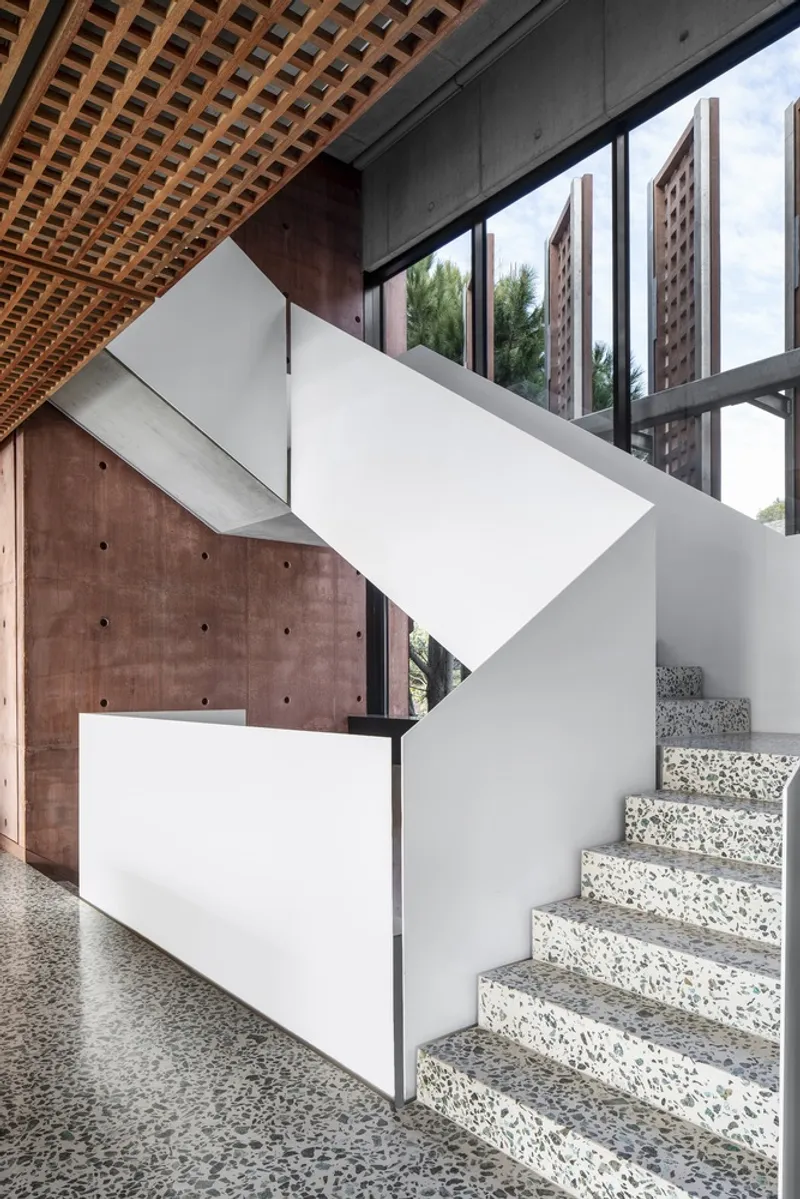
Instead of placing the garden at ground level, Olmesdahl inverted the concept—elevating the landscape to create a garden in the sky. The house is organized over four levels: the lower podium contains garages, a gym, guest quarters, staff rooms, and utilities. The two upper levels host living spaces and private family quarters, all oriented to capture panoramic views of Cape Town.
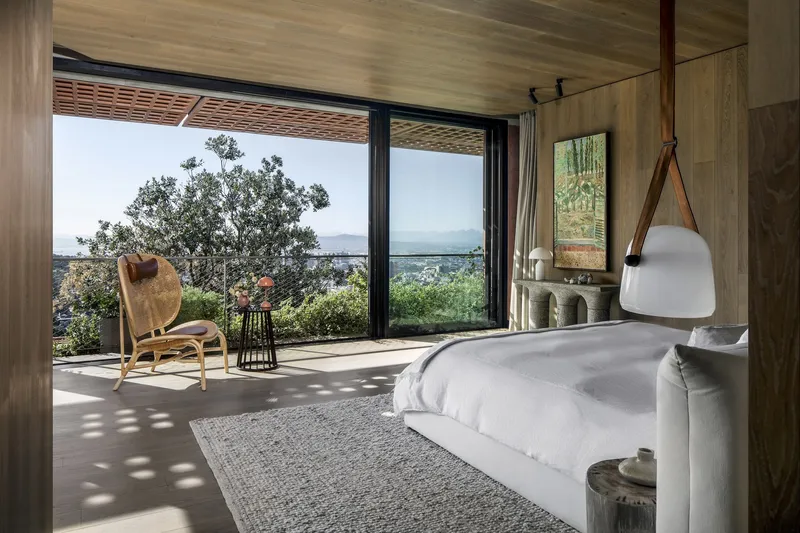
The third floor comprises an open-plan living, kitchen, and dining area connected to a covered outdoor terrace. On the top floor, four ensuite bedrooms, a study lounge, a home office, and a yoga studio for his wife create a private sanctuary above the city.
Expressive Materiality & Warm Minimalism
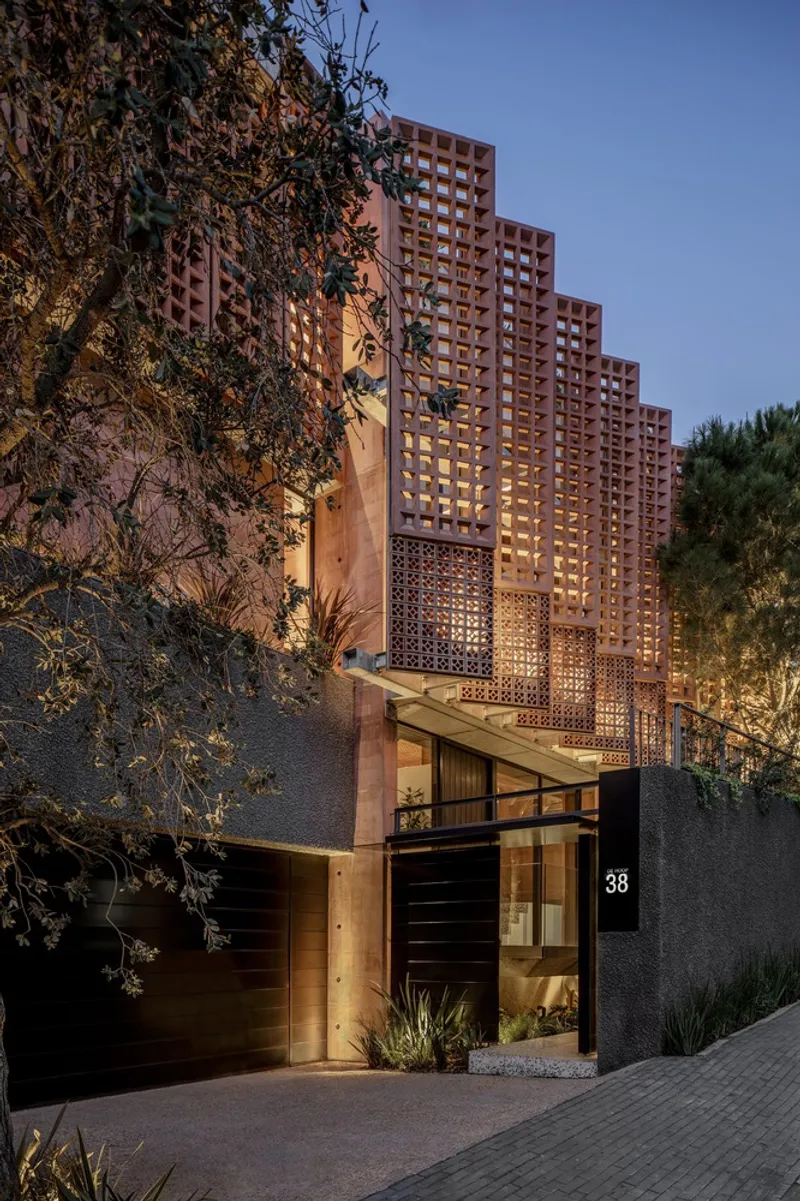
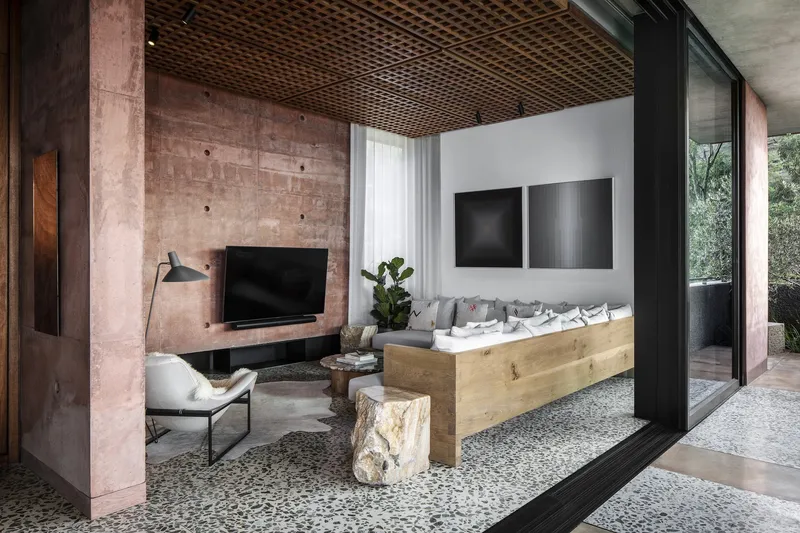
From the street, the house appears as a bold urban sculpture. The base is finished in grey stipple plaster—referencing Cape Town’s mid-century residential palette. Above, the red-pigmented off-shutter concrete of the upper floors commands attention, punctuated by pre-cast, angular concrete screens that provide privacy and sun protection while recalling Latin American modernism—a nod to Olmesdahl’s travels in Mexico.
Repurposed terracotta breezeblocks from the original boundary wall were meticulously sandblasted and reintegrated into the façade, reinforcing the project's commitment to material continuity and architectural memory.
Interior Architecture: A Dialogue of Texture and Space
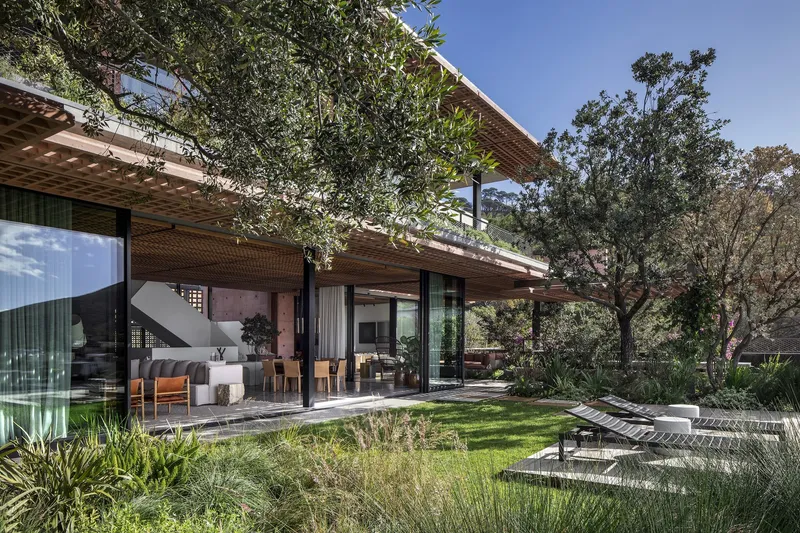
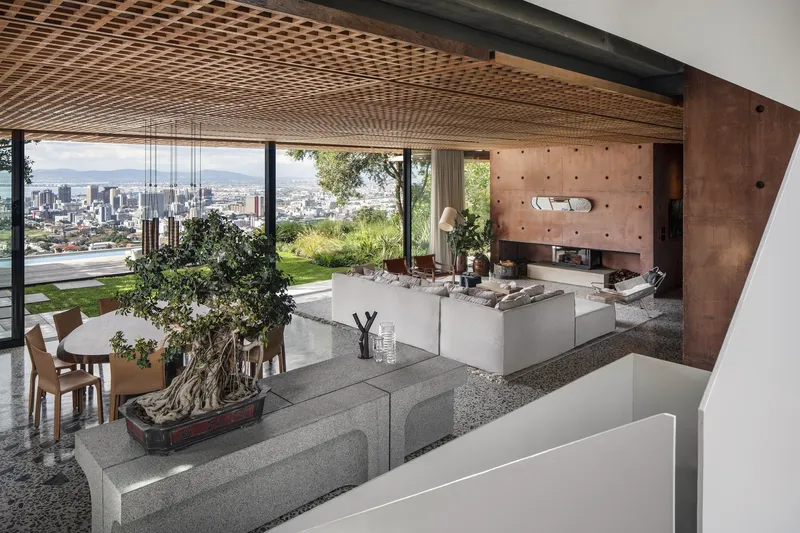
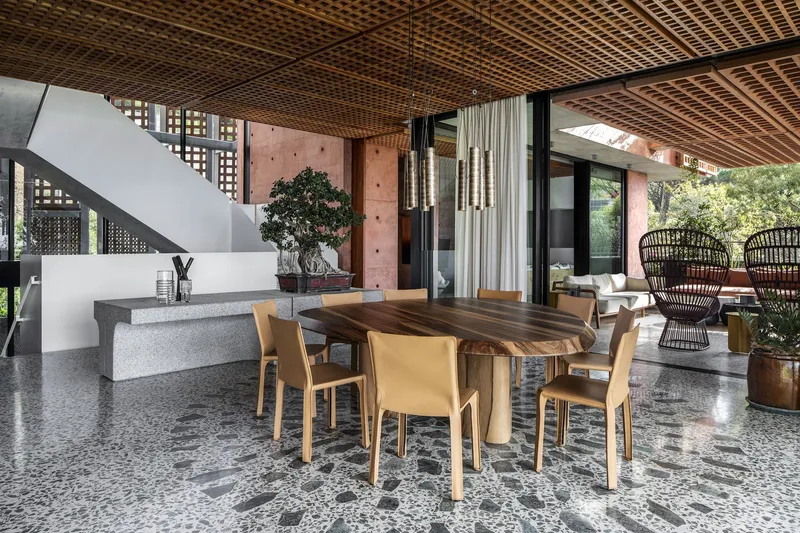
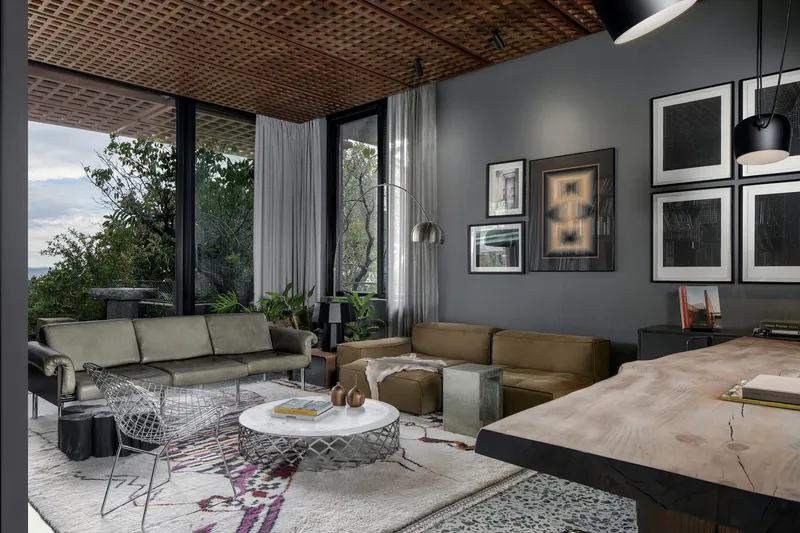
Inside, the home reveals a rich interplay of materials and volumes. The open-plan main living space—characteristic of SAOTA’s architectural language—features fluid transitions between kitchen, dining, and lounge areas. Floor-to-ceiling glass doors disappear to dissolve boundaries between interior and exterior.
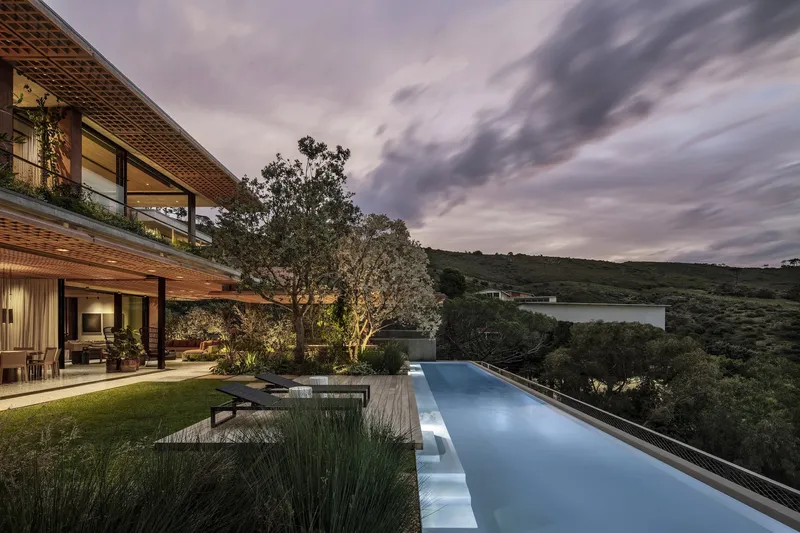
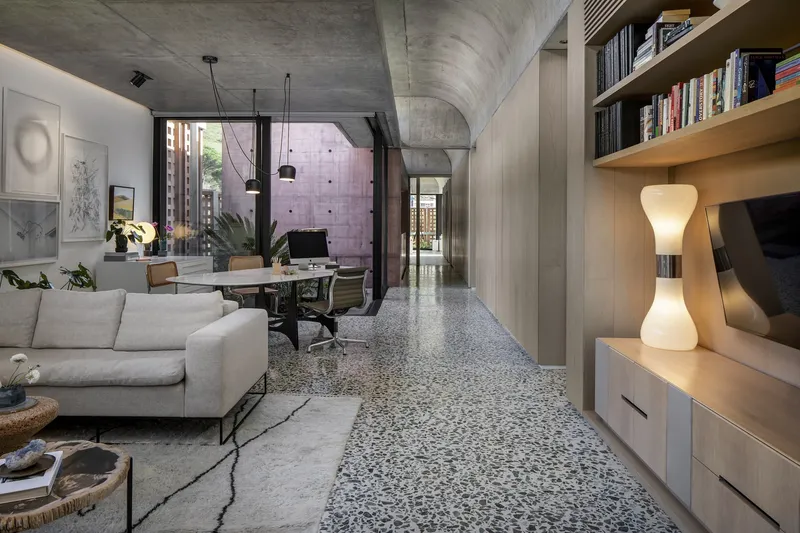
A signature of SAOTA’s design approach is the integration of natural materials with crisp geometries. The polished polymer concrete floor, embedded with green stone aggregate from Namaqualand’s historic copper mines, offers a seamless flow from interior to exterior. Around the pool and outdoor dining areas, local sandstone and Rustenburg granite enhance the tactile experience.
Craftsmanship and Heritage
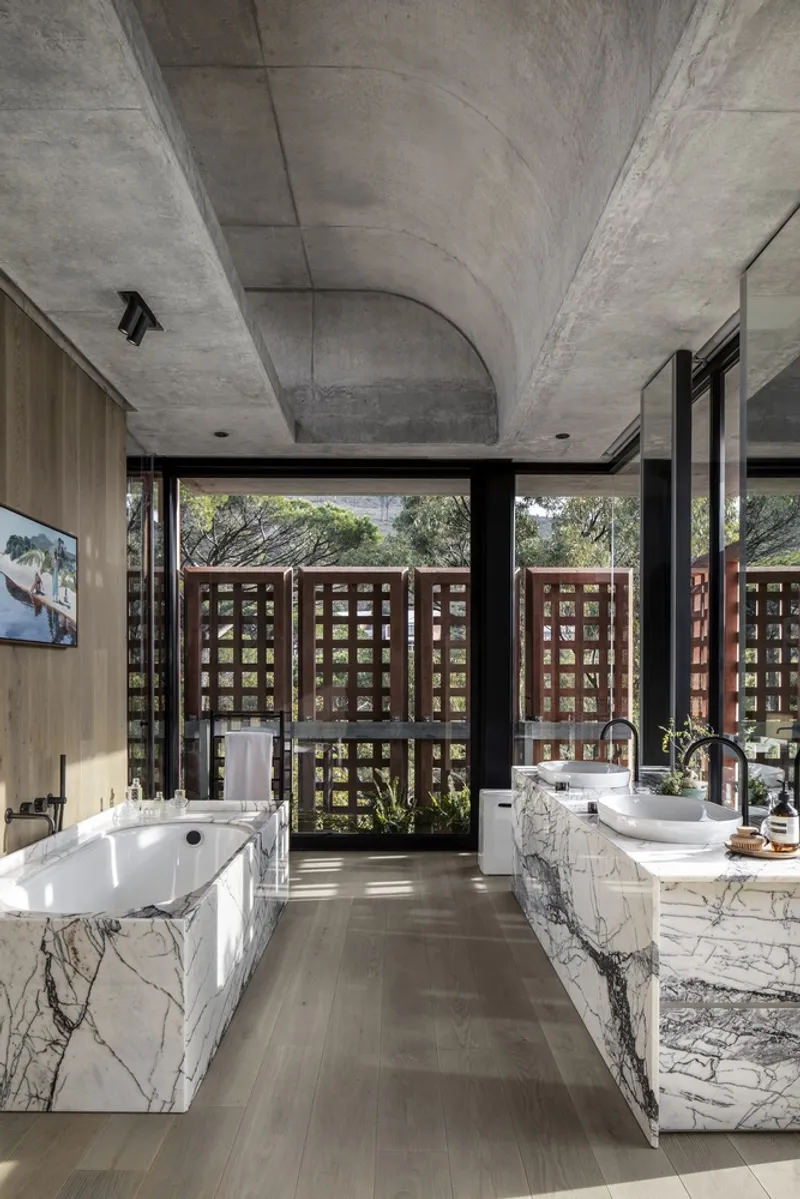
The interiors showcase a curated selection of handcrafted stone and timber elements. Notably, JA Clift—a third-generation stone mason from Paarl—crafted custom furniture pieces using Paarl granite, including a striking four-piece server in the living room, and bespoke bathroom basins.
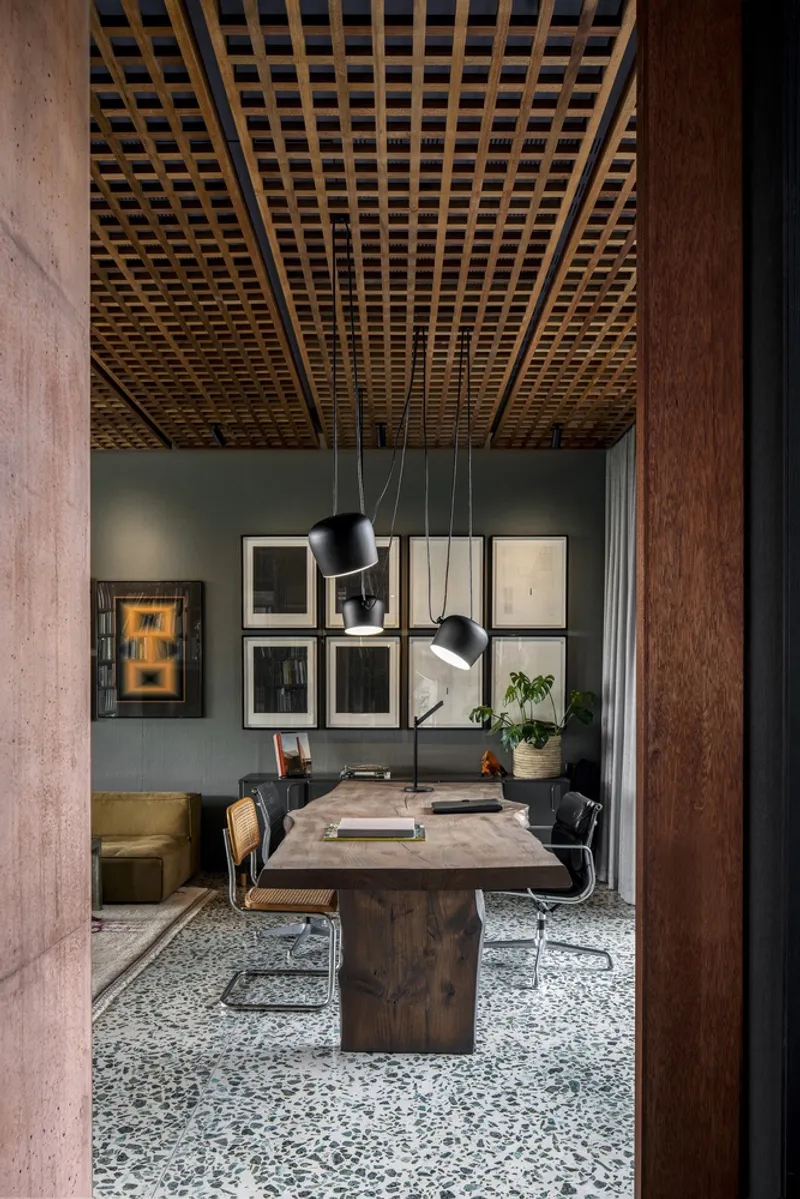
A Meranti timber lattice ceiling references 1950s and 60s residential design, adding warmth and texture while visually connecting spaces. Heritage finishes such as hessian wall coverings and repurposed elements like an old dining table-turned-breakfast counter express both nostalgia and sustainability.
Daylight Design & Atmospheric Lighting
Lighting is masterfully orchestrated. Thoughtfully positioned skylights, south-facing clerestory windows, and stairwell apertures bathe the interiors in soft, natural light throughout the day. At night, warm-toned, freestanding lights create gentle pockets of illumination that enhance the home's tactile character.
A Garden That Invades the Architecture
Inspired by Spanish architect Ricardo Bofill’s iconic cement factory residence, Olmesdahl embraced a landscaping strategy that blurs boundaries between architecture and nature. Wild vegetation appears to “invade” the built form, resulting in intimate outdoor spaces that evoke mystery and serenity.
A Modern Home Rooted in Context and Creativity
The Upper Albert Residence is a compelling response to urban transformation in Cape Town—fusing architectural experimentation with deep material awareness. Designed with a sculptural eye and a personal sensibility, this SAOTA residence is both a landmark in its hillside neighborhood and a serene family home in the sky.




Popular Articles
Popular articles from the community

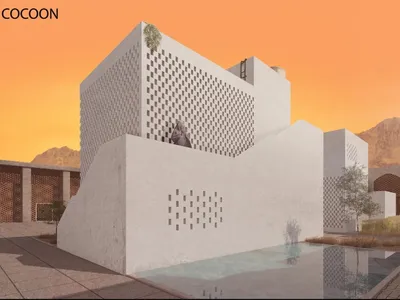
A Reinforced Cocoon: Vernacular Architecture for Security, Healing and Community in Qandahar
A Reinforced Cocoon reimagines Afghan vernacular architecture as secure community space for widowed women, families, healing and resilience.

Pangolin Can Help Mining: Biomimicry Architecture for an Asteroid Mining Habitat
Pangolin Can Help Mining explores biomimicry architecture through a modular 3D-printed habitat designed for asteroid mining and future life.

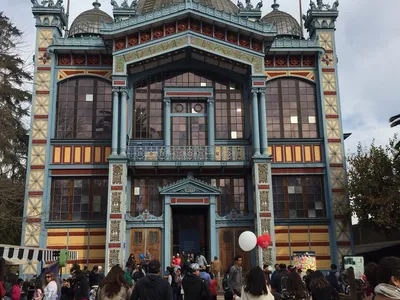
How Henri Picq's 1889 Paris Pavilion Traveled 11,000 Kilometers to Become Santiago's Artequín Museum
A prefabricated iron and glass pavilion built for the Paris Universal Exposition found a second life as a children's art museum in Chile.

Riyadh For All: Intergenerational Urban Design for Active Aging in Rabat
Riyadh For All reimagines urban design in Rabat with intergenerational co-living, adaptive courtyards, and Moroccan cultural exchange today.

Similar Reads
You might also enjoy these articles


Hodi-Mandai Geram
Project Function: Preservation and revitalization of the Intangible heritage and socio-spatial identity of the Hodi by Housing, Cultural Memory Center, Sacred Grove, landscape, local tourism economy


Olio Towers: A Mid-Rise for Performers That Fuses Housing, Rehearsal, and Stage
Located blocks from Houston's Theater District, this modular tower stacks living units around a central performance atrium.

Oasis: Modular Green Housing Carved into Dhaka's Urban Fabric
A shortlisted Plugin Housing entry reclaims unauthorized settlements in Dhaka with stepped concrete volumes, green roofs, and ventilation-driven design.

Black Hole: A Floating Megastructure for the Post-Physical Era
Emiliano Mazzarotto envisions a spherical, self-scaling arena where e-sports, digital hotels, and holographic stadiums replace traditional public space.


Explore African Architecture Competitions
Discover active competitions in this discipline



The International Standard for Design Portfolios


The Global Benchmark for Architecture Dissertation Awards

The Global Benchmark for Graduation Excellence


Challenge to reimagine the Iron Throne
Comments (0)
Please login or sign up to add comments
No comments yet. Be the first to comment!