
UR Architects Carve a Split-Level Family Home into a Belgian Sand Ridge
House WVV fills the last gap in a Lievegem ribbon development with raw concrete block, plywood, and a quiet sense of inevitability.


Ribbon development is one of the most stubborn patterns in Flemish suburbia. Houses line up along roads like teeth in a jaw, each one shouldering the next, and every gap feels like a missing molar. House WVV by UR architects fills precisely one of those gaps, occupying the last open plot on a minor subdivision at the edge of Lievegem, Belgium. The site sits on a sand ridge where a windmill once stood, a fact that explains the gentle elevation and the accidental vistas over fields that the architects clearly decided to exploit.
What makes this 326-square-meter semi-detached house worth studying is not its position in the streetscape, which is deliberately understated, but its interior logic. Lead architects Regis Verplaetse and Nikolaas Vande Keere, with architectural design by Ana Pontinha, have organized the house as a series of split levels stepping up the ridge. Concrete block walls, exposed timber joists, and plywood surfaces do all the spatial work without pretending to be anything other than what they are. The result is a house that feels both modest and generous, a rare combination in Belgian residential architecture.
Filling the Gap
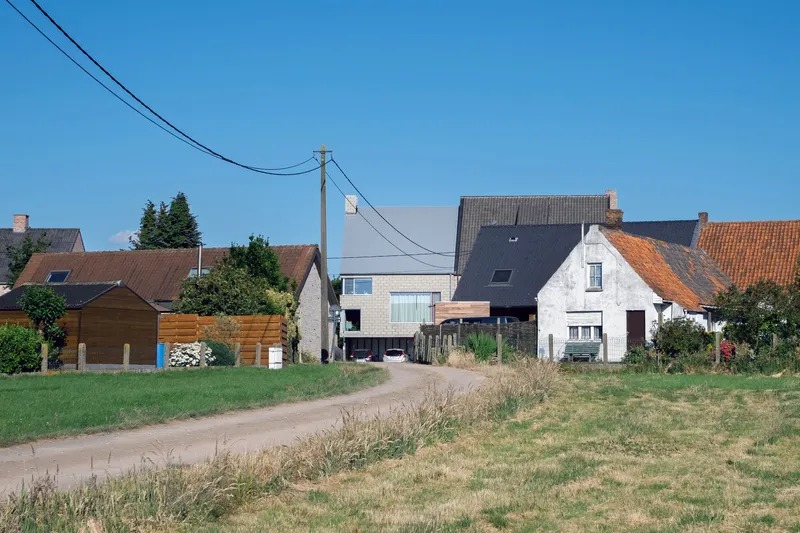
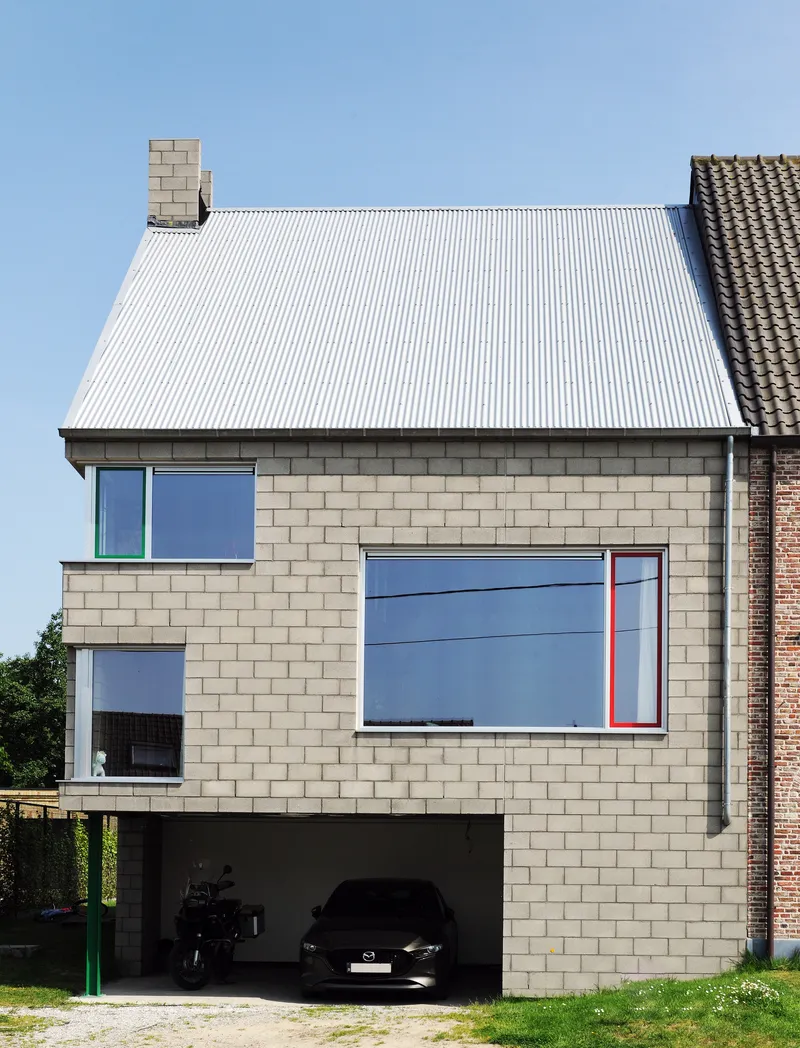
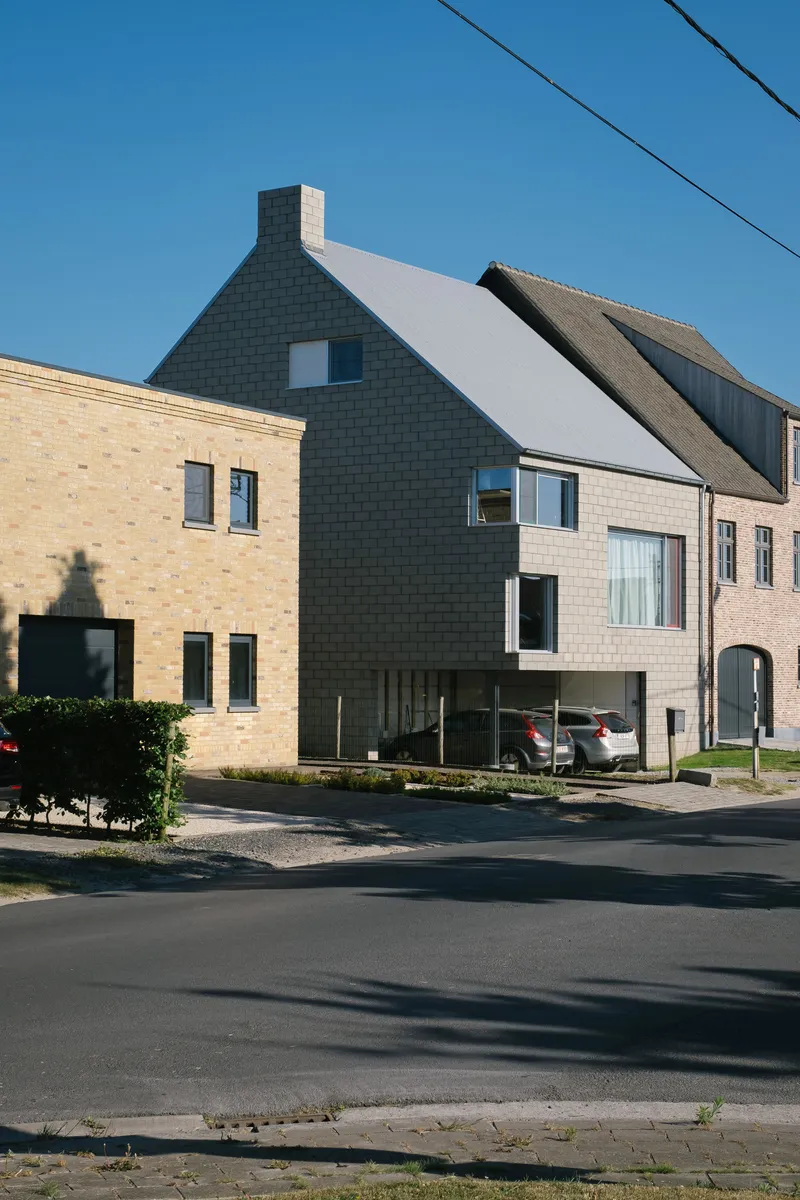
From the street, House WVV reads as a pale brick volume slipped between traditional pitched-roof neighbors. The gable proportions are familiar enough to avoid provocation, but the details reveal a different ambition. The corrugated metal roof, the ground-level carport punched through the mass, and the stacked window openings all signal a house that takes its context seriously without mimicking it. One side presents a dark grey masonry gable to the corner, a tonal shift that distinguishes the house from its cream-colored neighbor while maintaining the street wall.
The restraint is intentional. In a ribbon of houses that were never planned as an ensemble, the best move is often to complete the line without drawing attention. House WVV does this while quietly asserting its own material logic: brick and corrugated metal on the outside, concrete block and timber on the inside. The two palettes never bleed into each other.
Concrete Block as Spatial Scaffold
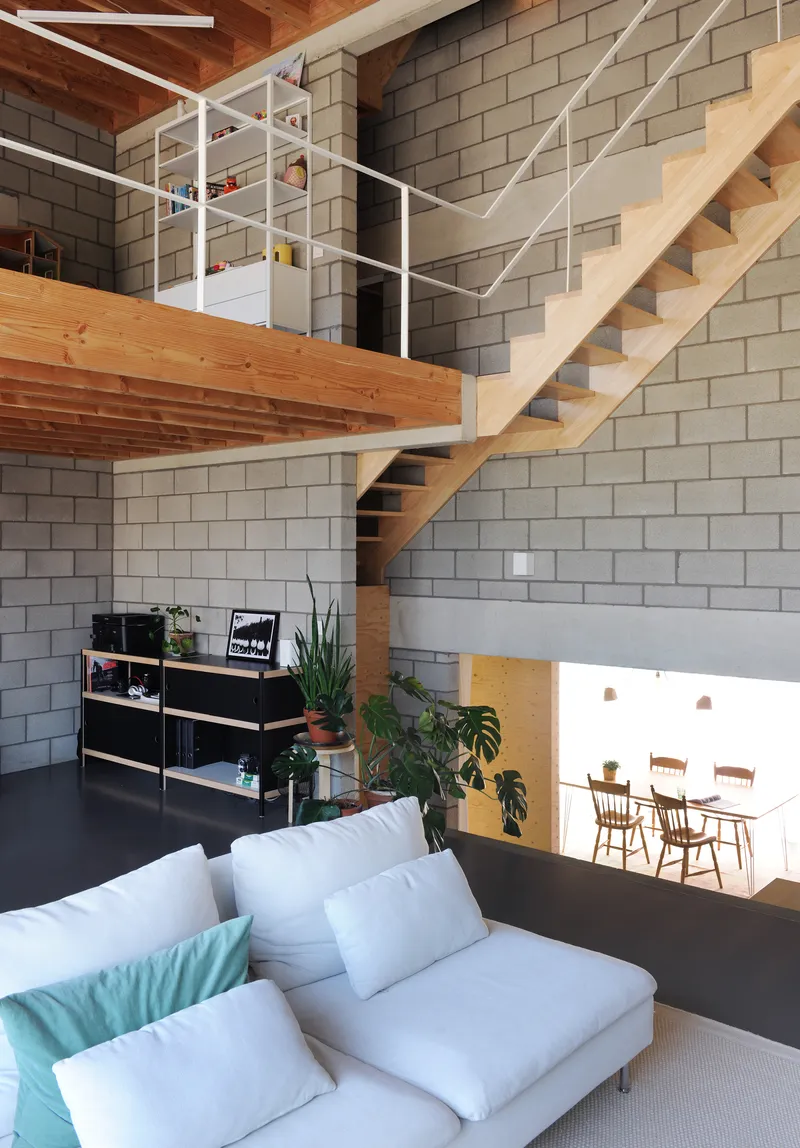
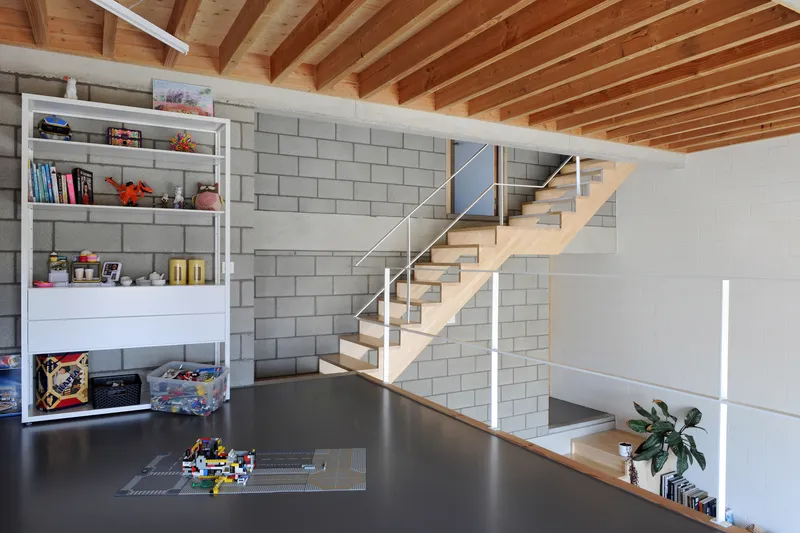
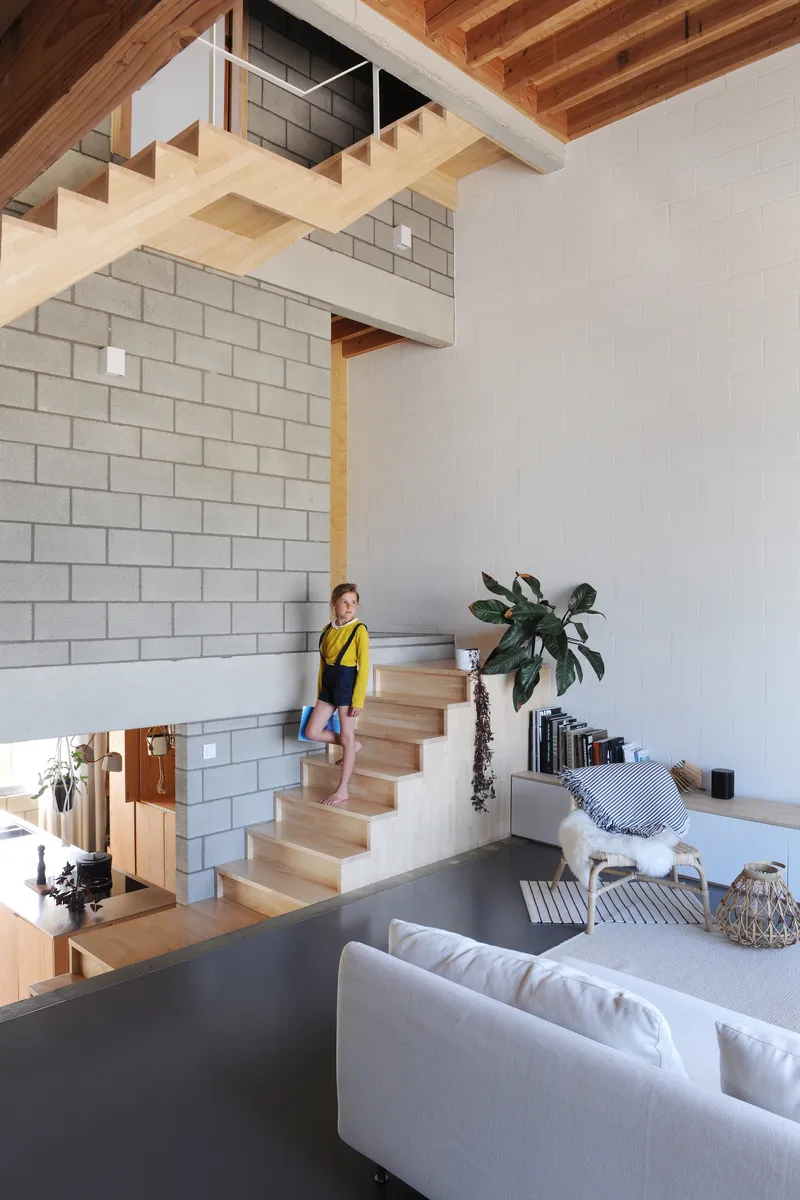
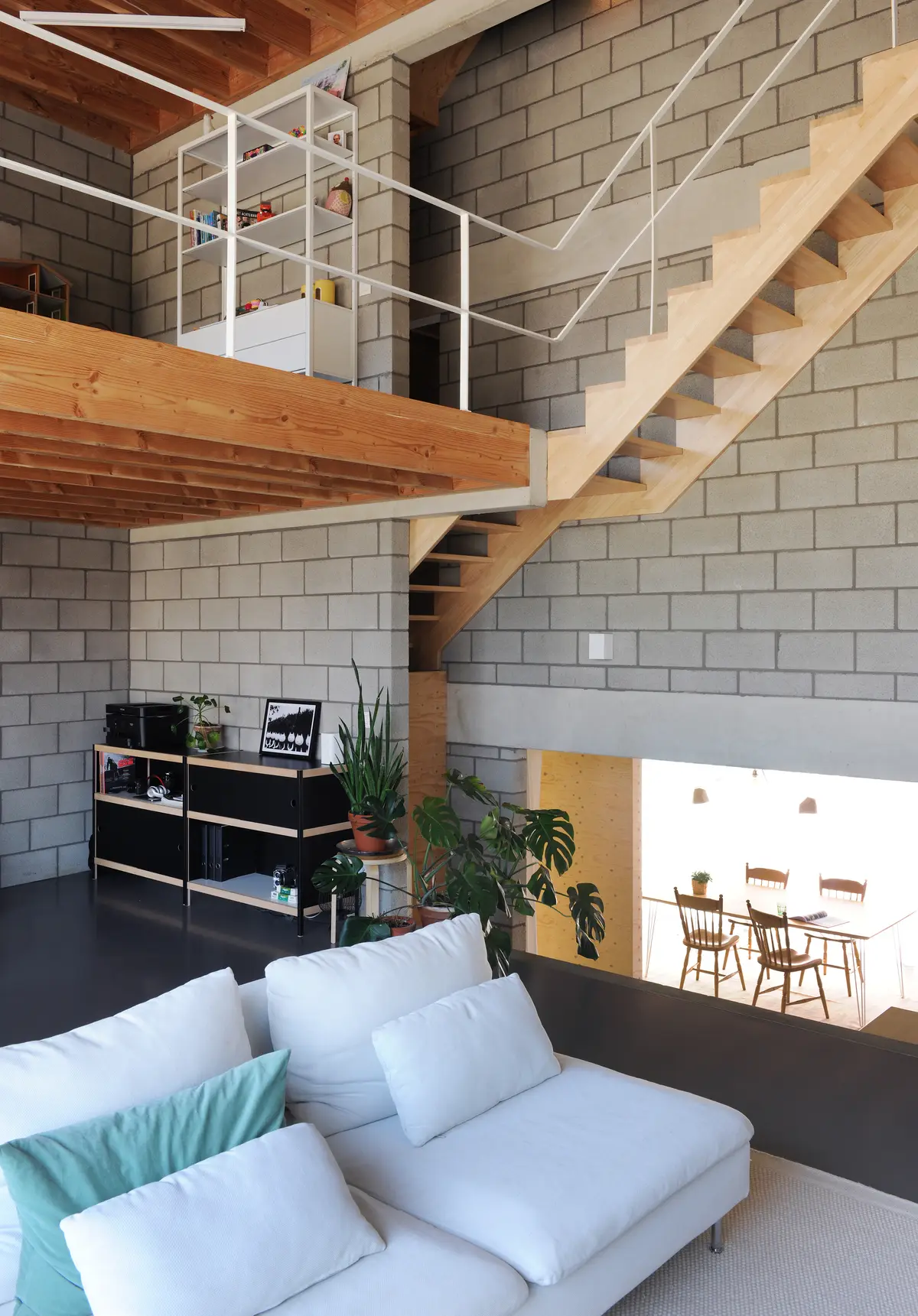
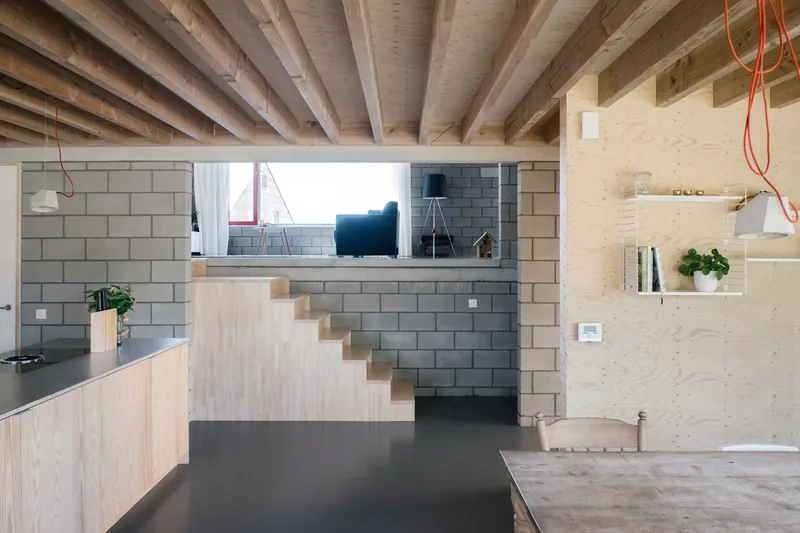
The interior is organized around a concrete block wall that runs vertically through the house, anchoring the floating timber staircase and dividing the plan into served and servant zones. This wall is the building's spine. It is left exposed, its grey surface providing a raw counterpoint to the warmth of the plywood and timber that line the living spaces. The double-height volume beside the stair gives the house its spatial drama, allowing light to cascade down from upper levels and creating sightlines between floors.
The stair itself is a piece of carpentry, not cabinetry. Open timber treads float against the block wall with no visible stringers, lending a lightness that the concrete would otherwise absorb. Watching a child climb these stairs, as one image captures, reminds you that this is not a gallery. It is a house built for daily life, and the robustness of the materials is a deliberate response to that reality.
Framing the Landscape
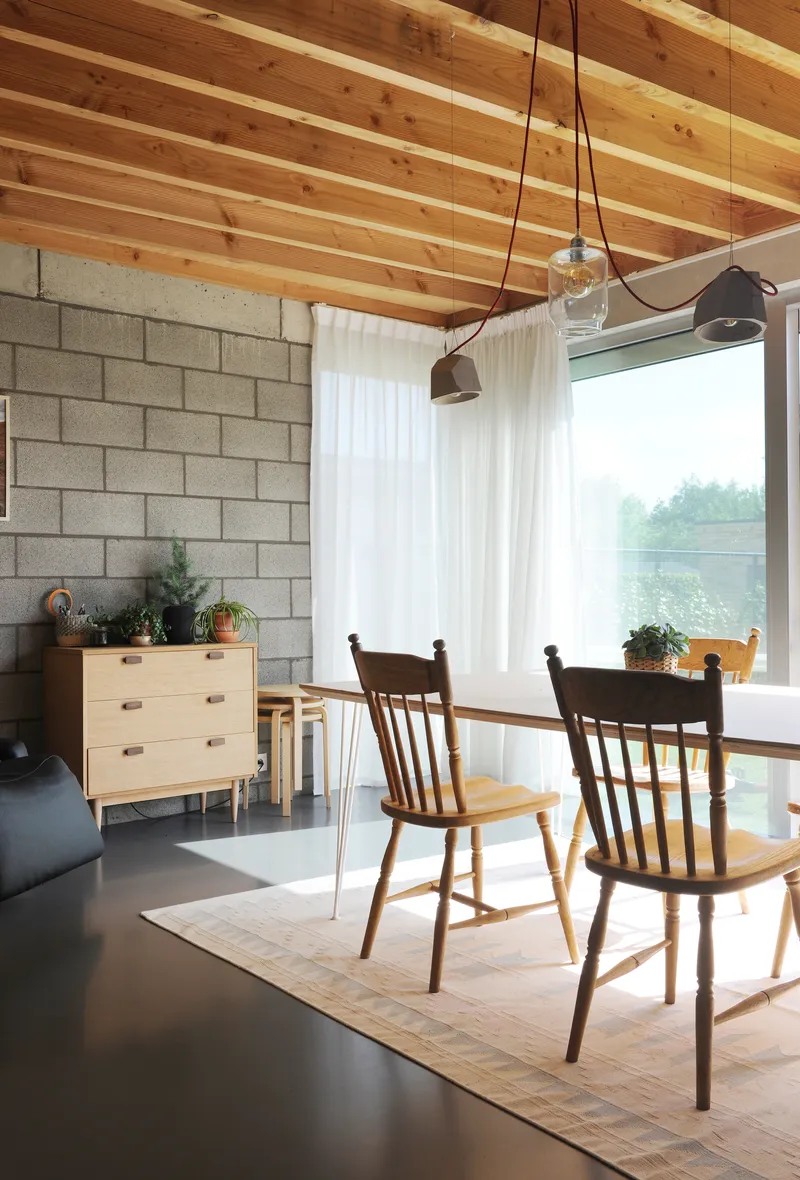
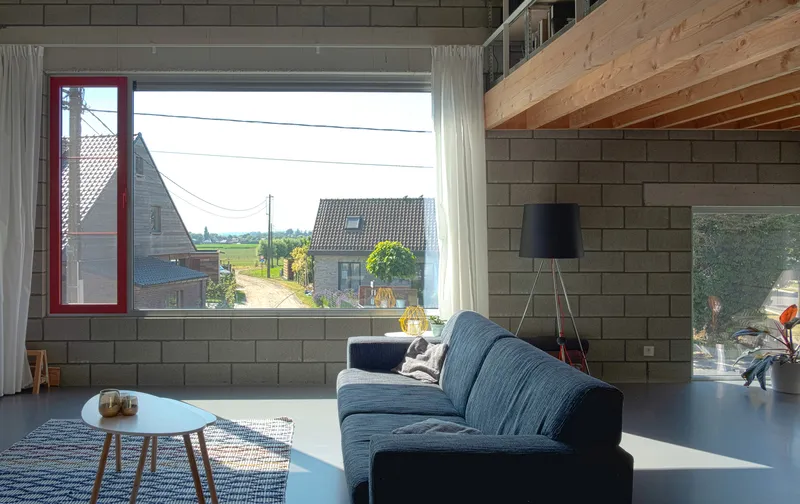
The site's position on the former windmill ridge gives the upper rooms something rare in ribbon development: actual views. The architects exploit this through carefully sized openings. A large corner window in the dining area frames the green landscape beyond white curtains, while a horizontal strip window in the living room captures neighboring rooftops and the fields that stretch behind them. These are not panoramic gestures. They are precise incisions that select what you see.
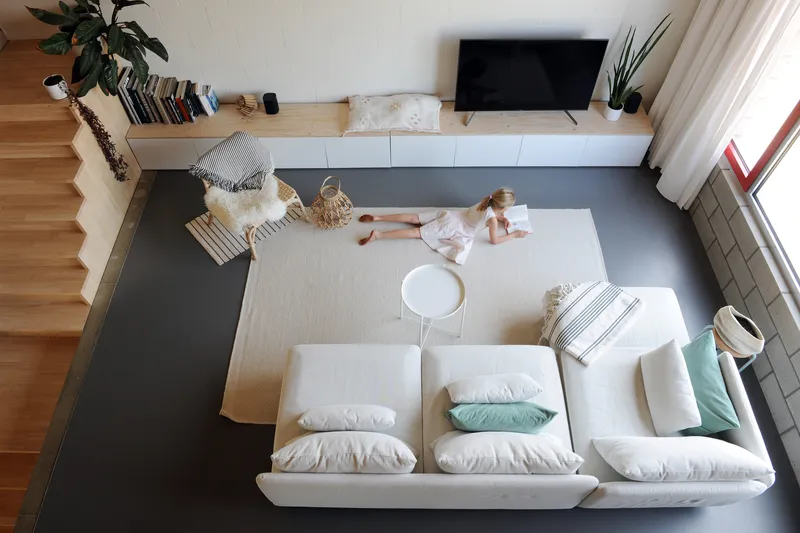
Beneath the exposed timber ceiling joists, the living spaces feel grounded and domestic. The overhead view of the living room, with its built-in media console and a child playing on the rug, reveals a floor plan that prioritizes open continuity over defined rooms. The split-level arrangement means you are always slightly above or below the adjacent space, creating intimacy without walls.
The Plywood Rooms
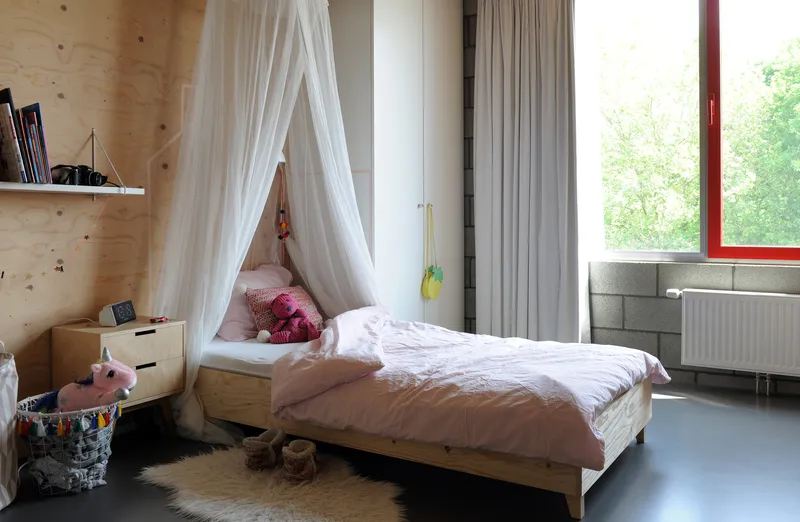
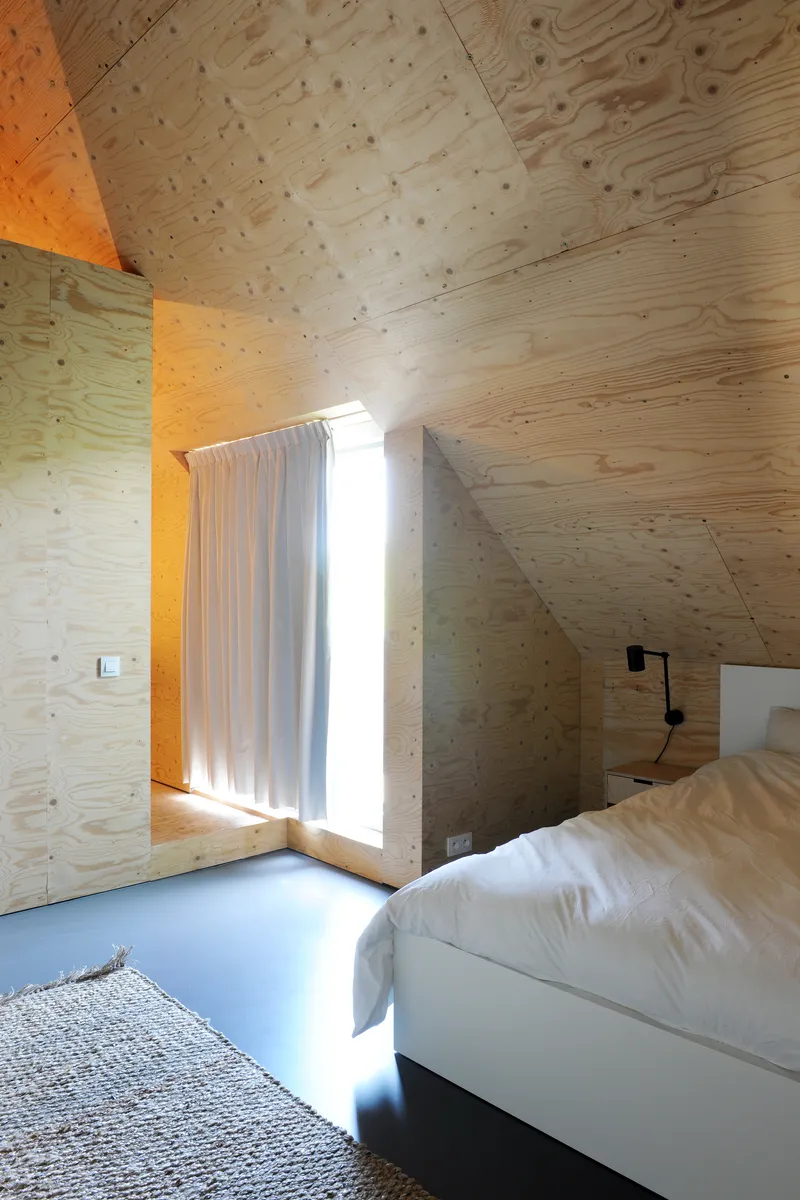
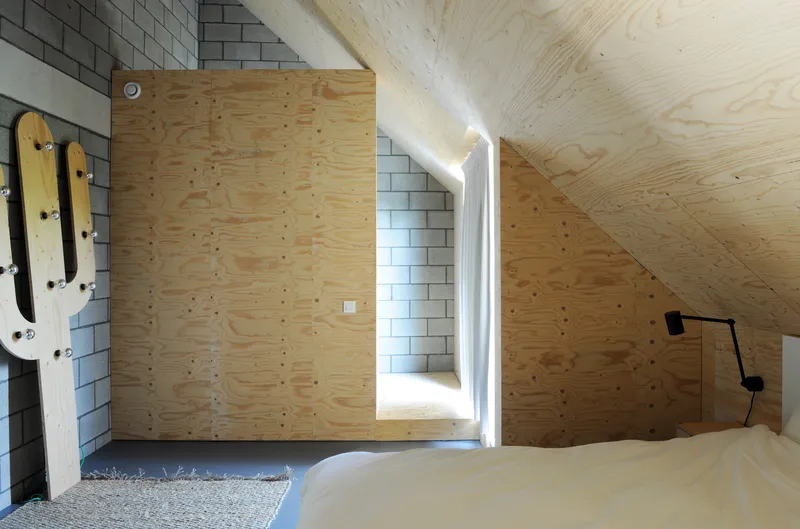
Upstairs, the material palette shifts. Concrete block gives way to plywood, which lines the walls and ceilings of the bedrooms in continuous surfaces that follow the pitch of the roof. These rooms feel warmer and more contained than the open living areas below. A child's bedroom features a red-framed window overlooking greenery, a deliberate pop of color in an otherwise restrained interior. Angled plywood ceilings create unexpected geometries under the roofline, turning what could be leftover attic space into rooms with real character.
The deep-set windows in the bedrooms control light and privacy simultaneously. Set into the thick masonry walls, they create window seats and ledges that become part of the furniture of each room. The interplay between the white concrete block partition and the warm plywood shell produces a tension that keeps the upper floor from feeling like a simple loft conversion.
Material Honesty in the Details
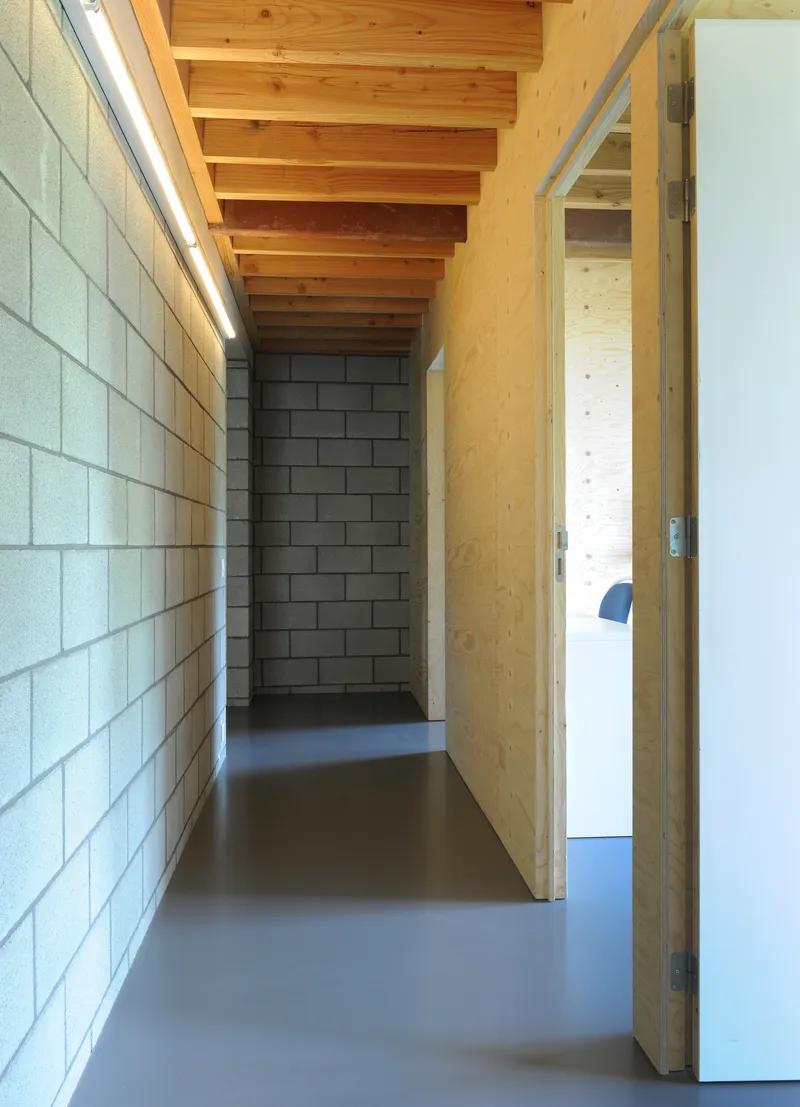
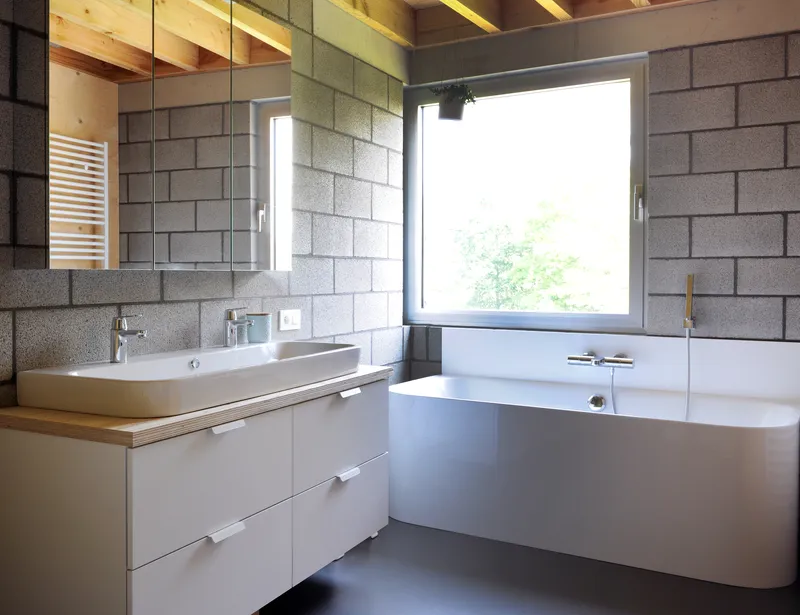
A narrow hallway on the upper level distills the house's material strategy into a single corridor: white concrete block walls, plywood partitions, exposed timber beams, polished concrete floor. Nothing is clad or concealed. The bathroom follows the same logic, pairing exposed concrete block with a simple white vanity and a freestanding tub placed below a window. There is no attempt to soften these surfaces with tile or plaster. The architects trust the materials to do the work.
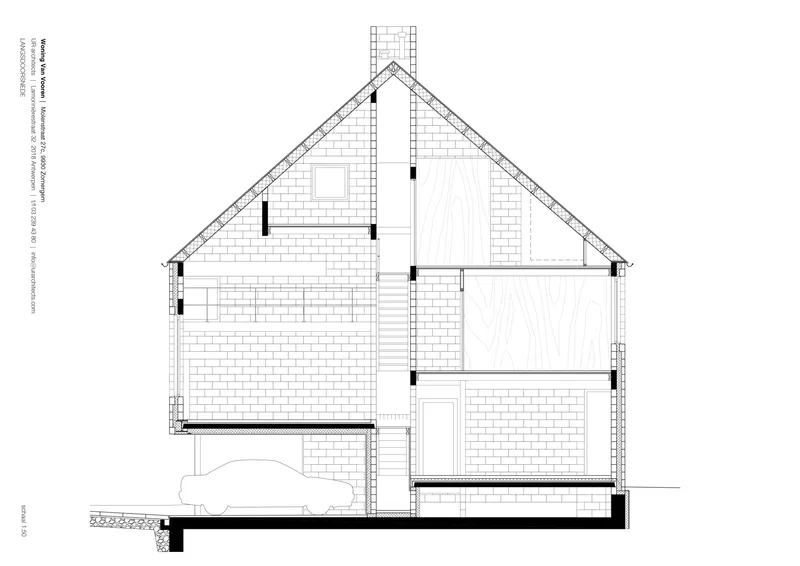
The split-level arrangement visible in the section through the living spaces shows how the timber joists and concrete block partitions collaborate structurally. UTIL Struktuurstudies handled the engineering, and the clarity of the structural expression suggests a close dialogue between architect and engineer. Every beam is where it needs to be, and nothing more.
Facade Composition
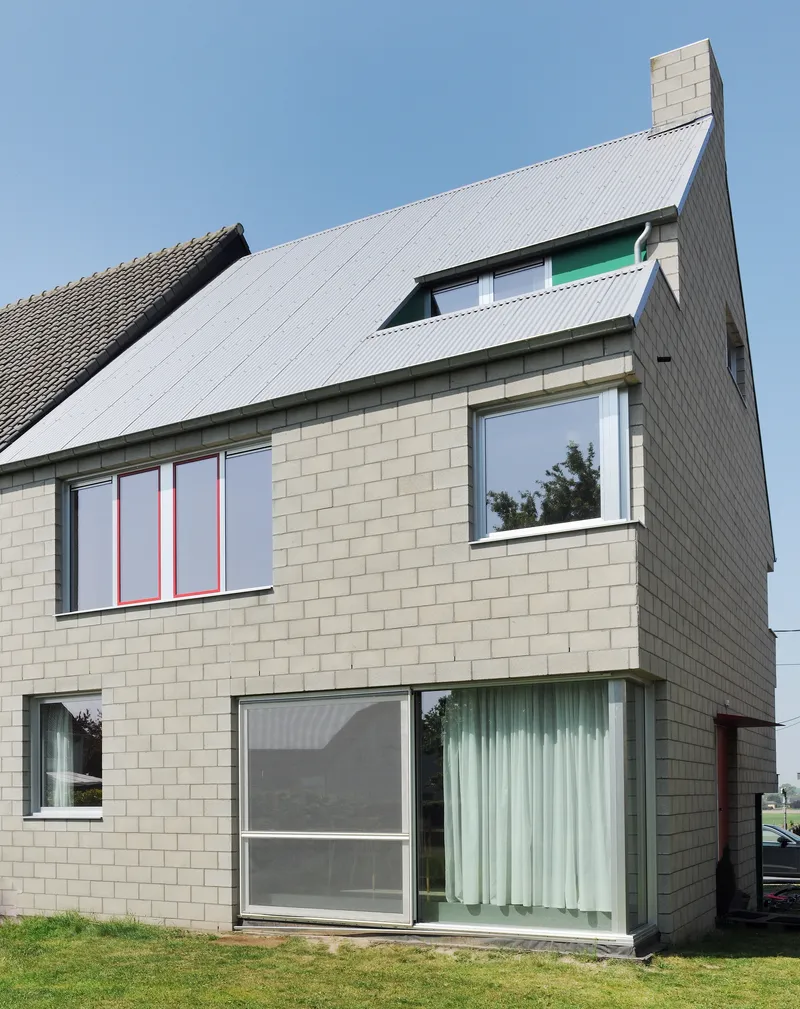
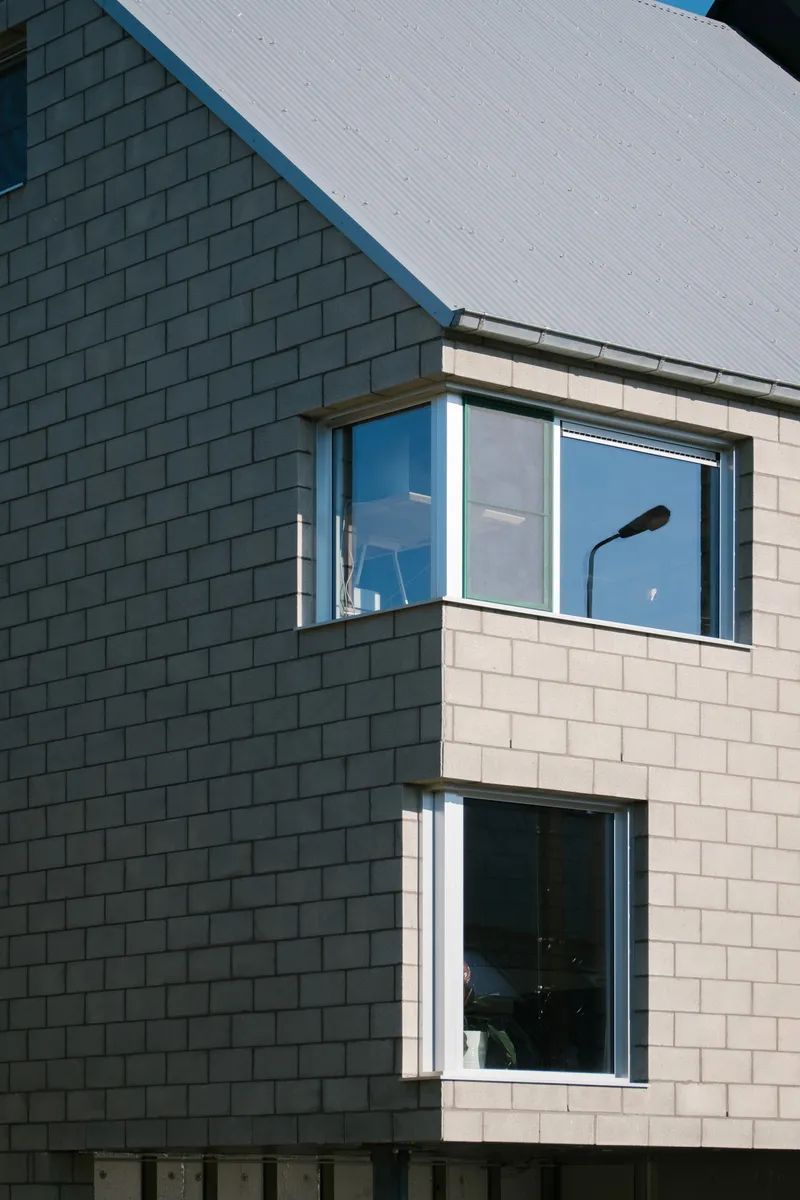
The side facade reveals the house's section in elevation: stacked window openings at different heights trace the split levels within. A detail at the corner shows dark green tile cladding meeting cream panels under the corrugated roof, a material junction handled with precision. These small moves accumulate into a facade that rewards close reading. The green accents around certain openings hint at an interior color strategy that surfaces in the children's bedroom window frames, tying outside to inside without being literal about it.
Plans and Drawings
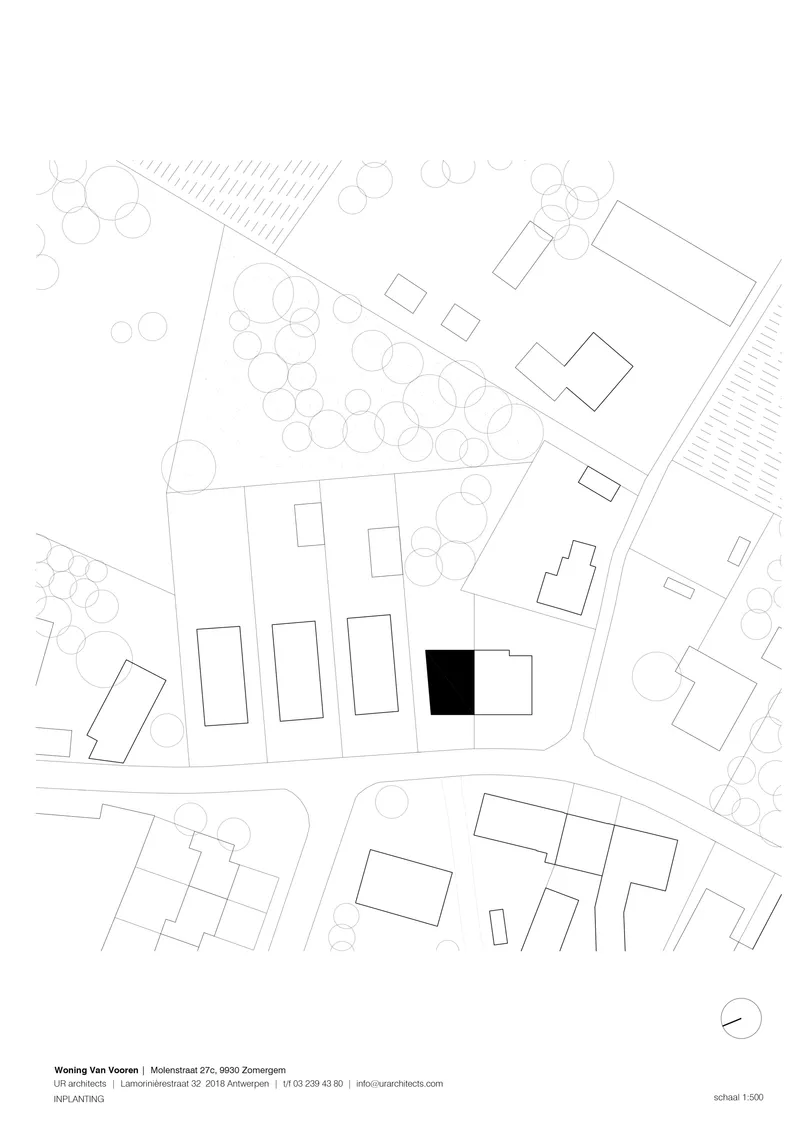
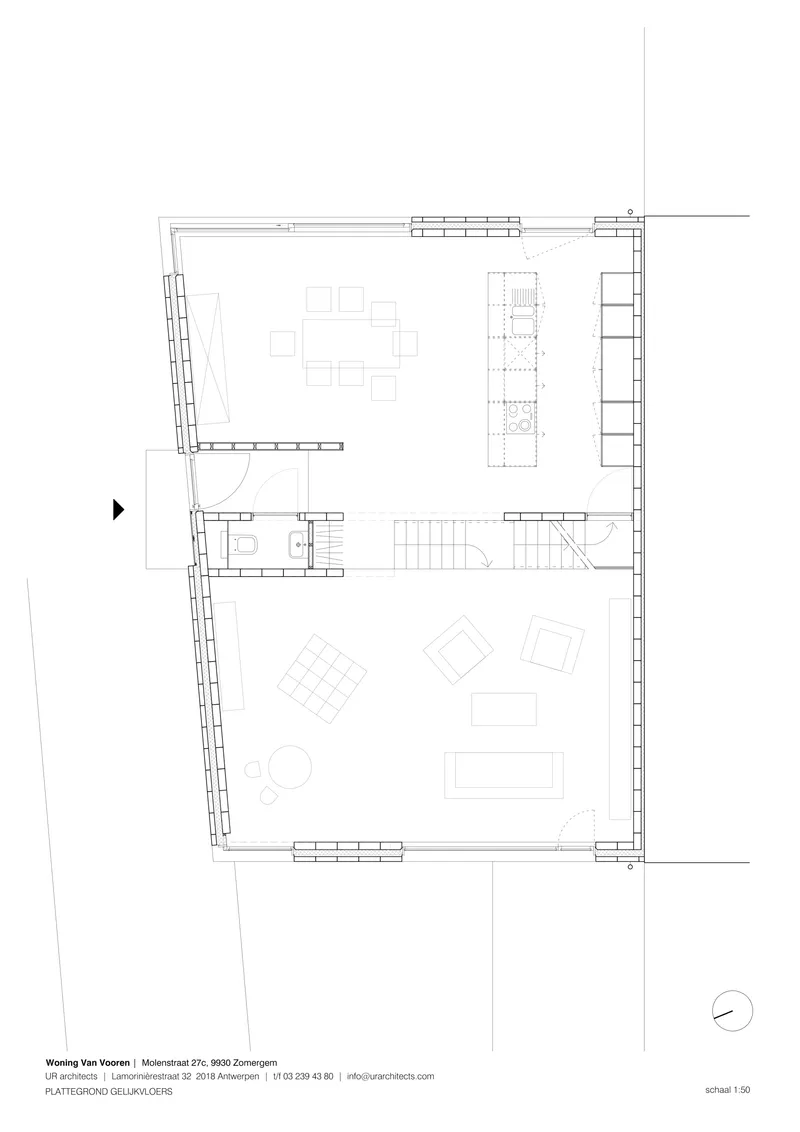
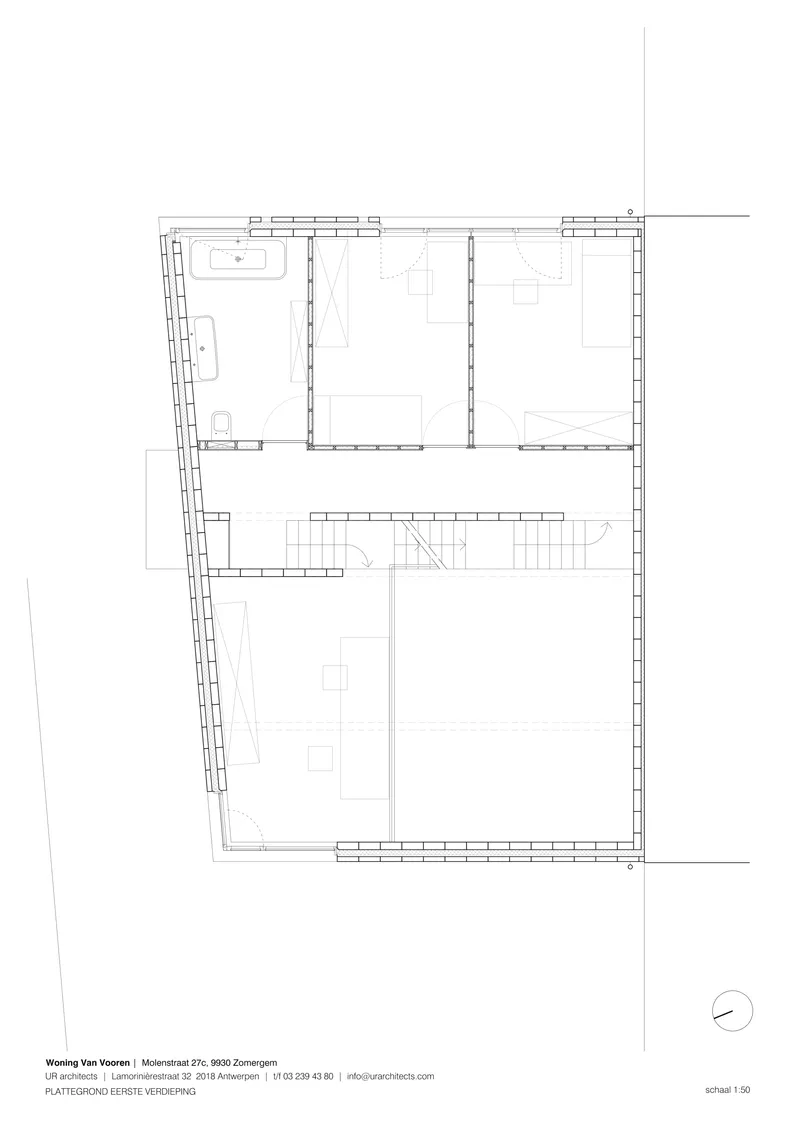
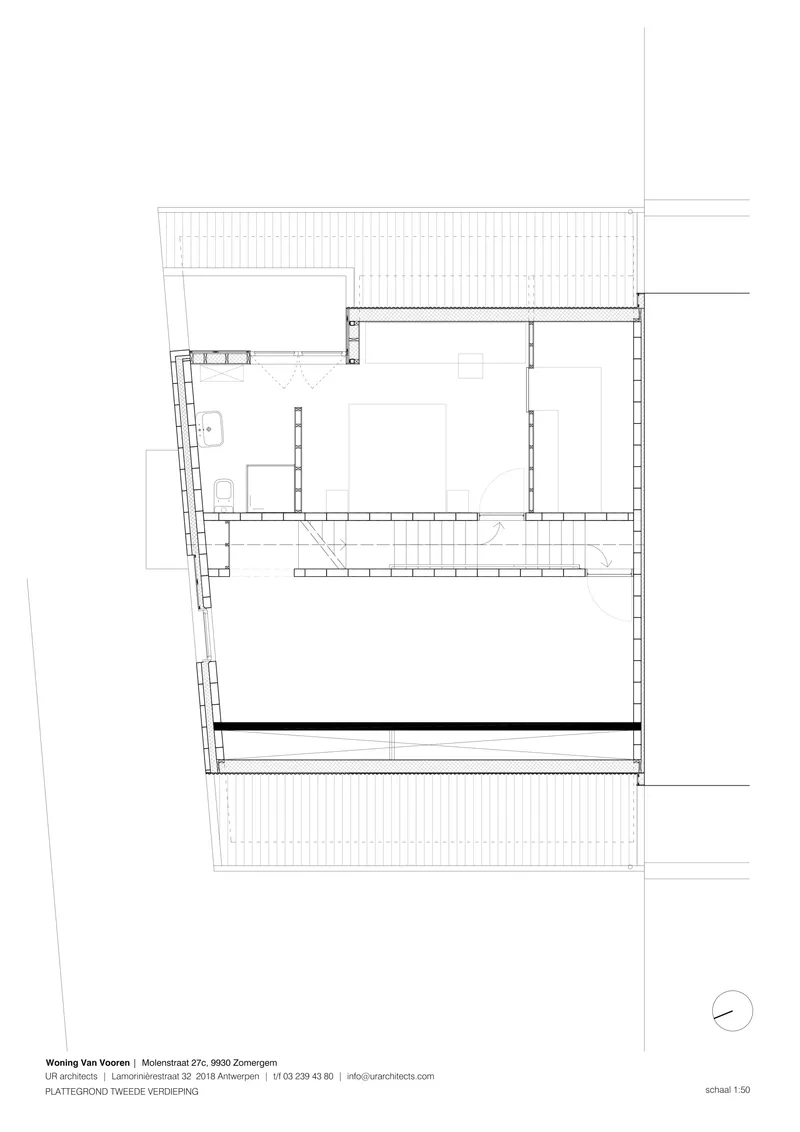
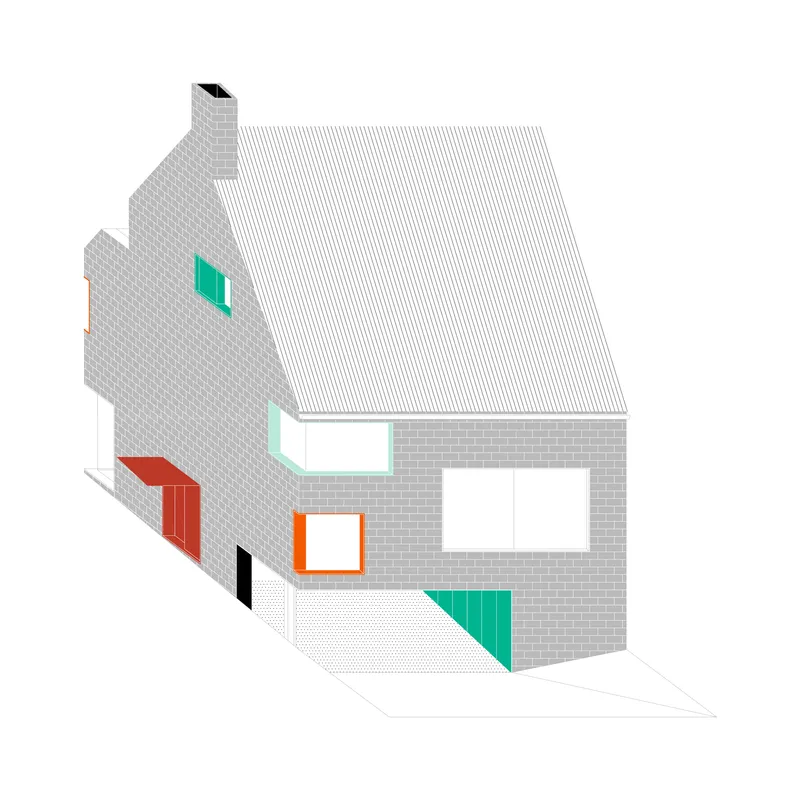
The site plan shows House WVV completing the street wall, its footprint highlighted against the surrounding context of gardens and tree canopies. The ground floor plan reveals the carport leading to an open living sequence of dining area, kitchen island, and living room, all stepping up the ridge. The upper level accommodates bedrooms and a bathroom around the central stair, while the top level opens to terrace spaces flanking a central room under the roof peak.
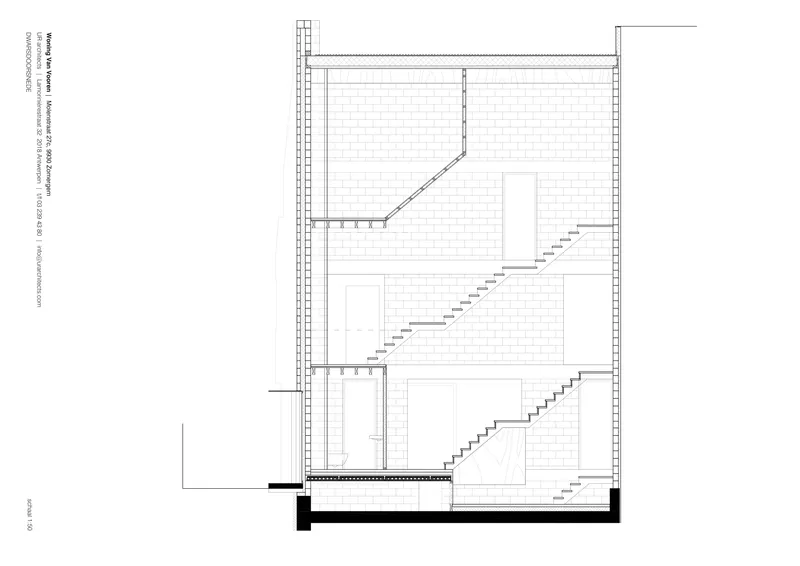
Two section drawings expose the vertical logic most clearly. The pitched roof accommodates three distinct levels, with the staircase threading through the concrete block core. A car sits below at grade, the chimney rises through the apex, and each level occupies a half-story shift from the one below. The axonometric drawing, with its color-coded window openings, confirms that every aperture was placed for a reason: views out, light in, and privacy maintained on the street sides.
Why This Project Matters
House WVV belongs to a growing body of Flemish residential work that refuses both pastiche and spectacle. It does not replicate the pitched-roof vernacular, nor does it break from it. Instead, it inhabits the gap with intelligence, using a limited palette of concrete block, plywood, timber, and brick to produce spaces that feel specific to their site and their inhabitants. The split-level section, so often a source of awkward half-stairs and wasted corridors, is handled here with economy and spatial generosity.
For architects working in suburban infill conditions, this house offers a useful lesson: context does not mean copying. The windmill is gone, the ribbon is nearly complete, and the fragments of rural landscape, the old footpaths, the farmsteads, the field views, persist only in glimpses. House WVV captures those glimpses through its windows and lets the rest of the street carry on without interruption. That kind of quiet confidence is harder to achieve than it looks.
House WVV by UR architects (lead architects Regis Verplaetse and Nikolaas Vande Keere, architectural design by Ana Pontinha). Lievegem, Belgium. 326 m². Completed 2018. Photography by Wouter Van Vooren and Eddy Vangroenderbeek.
About the Studio
Share Your Own Work on uni.xyz
If projects like this are the kind of work you want to make, uni.xyz is a place to publish your own, find collaborators, and enter design competitions.


Popular Articles
Popular articles from the community


The Amber Palace Opera: A Geological Fiction Surfaces on Tallinn's Baltic Waterfront
Pierre Brillard reimagines a Baltic legend as a public landscape, opera house, and waterfront promenade rooted in Tallinn's coastal identity.
Temporary Home for Dogs: A Reversed Zoo Rethinks Animal Shelter Architecture
In Bucharest, a sinuous corridor and freed landscape flip the logic of containment, designing a shelter that works to make itself unnecessary.

Singing Woman: Contemporary Architecture Inspired by Estonia’s Voice and the Sea
Singing Woman turns Estonia’s song culture into flowing opera house architecture, blending public life, landscape, sea, and national memory.
Opera by the Sea Estonia: Three Shells Dissolving Architecture into Tallinn's Coastline
A winning opera house proposal replaces monumental form with interconnected shells that blur the boundary between building, park and Baltic Sea.

Similar Reads
You might also enjoy these articles

Bao Huynh Watercolor Atelier: A Serene Art Retreat in Hội An
Bao Huynh Watercolor Atelier in Hội An blends multifunctional art spaces, sustainable design, local materials, and family-friendly living in a serene environment.

Atelier Macri Concept Store Interior Design by CASE-REAL
Atelier Macri store features a "ko" counter, walnut wood details, cork displays, blending retail, gallery, and seamless customer experiences.

Manuel Vargas Izquierdo Stadium and High-Performance Sports Center: Architectural Excellence in Jalpa de Méndez
The Manuel Vargas Izquierdo Stadium blends sustainable design, inclusive sports facilities, and cultural-inspired architecture, revitalizing Jalpa de Méndez’s public spaces.

KAKR Buluh Awar Hall: Revitalizing Community and Ecology Through Bamboo Architecture
Community built bamboo hall revitalizes Buluh Awar village, empowering youth, restoring ecology, celebrating vernacular craftsmanship through sustainable architecture and culture.

Explore Power Generation Competitions
Discover active competitions in this discipline

Challenge to design mud housing for contemporary communities

Challenge to reimagine the Iron Throne

Photograph architecture without architects

Illustrate the lost glory of Angkor Wat - Render Challenge
Comments (0)
Please login or sign up to add comments
No comments yet. Be the first to comment!