

Veiled Building by KUN Studio: Weaving Tradition with Contemporary Indian Architecture in Patna
Veiled Building blends tradition and modernity through a latticed facade, connecting Patna’s urban edge with a sacred kund.


Located in the heart of Patna, Bihar, the Veiled Building by KUN Studio is a powerful architectural statement that artfully merges the realms of tradition and modernity. Serving as a contemporary retail and cultural space, the 11,000-square-foot building acts as both a spatial and cultural mediator between a bustling state highway and a sacred kund (traditional Indian water body), crafting an immersive urban experience grounded in India’s evolving architectural narrative.


A Threshold Between the Urban and the Spiritual
At its core, the Veiled Building is a transitional space—one that negotiates between contrasting energies: the fast-paced chaos of the city and the contemplative serenity of the kund. This duality is embedded in every design decision. The material palette, composed of exposed concrete, marble, and Kota stone, is tactile, grounding, and rich in Indian architectural history. These materials enhance not only the building’s textural and sensory appeal, but also reflect the philosophy of material honesty and regional relevance.


The Latticed Veil: Light, Mystery, and Urban Presence
What makes the structure instantly recognizable is its iconic latticed facade, which serves as the architectural “veil” from which the project takes its name. This screen operates on multiple levels:
- Functionally, it filters light, offers privacy, and provides thermal comfort.
- Aesthetically, it creates a mesmerizing dance of light and shadow throughout the day.
- Symbolically, it fosters intrigue and curiosity, allowing passersby on the adjacent highway fleeting glimpses of the cultural kund within.
The veil transforms the building from a static object into a living presence within the urban context, engaging with onlookers and shifting with the movement of the sun.


Cultural Narratives Embedded in Design
Designed to respect traditional Indian spatial typologies, the layout offers a seamless progression from public to private, material to spiritual, opaque to transparent. The architecture becomes a metaphorical journey, echoing the rituals of Indian spaces where movement leads to discovery and revelation. The veil, the kund, and the public-facing facade are more than architectural devices—they are cultural symbols rendered in contemporary form.


Sustainable Urbanism and Contextual Response
The Veiled Building is deeply rooted in its local climate and urban conditions. Passive design strategies such as natural ventilation, solar shading, and the use of regionally sourced materials contribute to the project’s sustainability. The veil not only reduces heat gain but also limits visual noise, creating a calm interior environment despite its proximity to a major road.
The Veiled Building by KUN Studio is more than just a retail space—it is a built narrative of India’s architectural evolution, representing the fusion of heritage with innovation. Its design challenges conventional typologies while remaining respectful of cultural memory. It invites viewers and users alike to contemplate the beauty of thresholds, duality, and the complexity of urban life in India.


All the photographs are works of Vivek Eadara


Popular Articles
Popular articles from the community


Cube Design Draws an Ecological Corridor Between Two Shenzhen Hills with the Nankai Building
Beside Shenzhen's container docks, the Nankai Building pairs stacked balconies with a climbing green screen to connect two hillsides across its height.

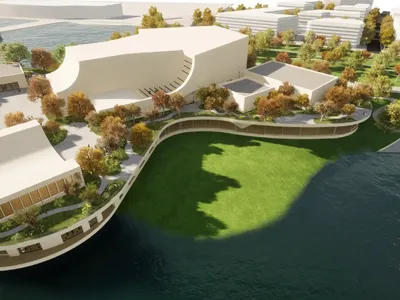
The Amber Palace Opera: A Geological Fiction Surfaces on Tallinn's Baltic Waterfront
Pierre Brillard reimagines a Baltic legend as a public landscape, opera house, and waterfront promenade rooted in Tallinn's coastal identity.

graciastudio Turns a Viewless Tijuana Lot Inward Around a Courtyard of Concrete, Timber and Trees
In Tijuana, Jorge Gracia's GA2 House stacks a timber-clad private floor over exposed concrete and replaces a missing view with a planted interior patio.

Juan García Correa, John González and Claudia Rueda Sink a Circular Amphitheater into a Manizales Engineering Building
On the La Nubia campus in Manizales, Colombia, the S1 Building folds labs and offices into a hillside of ramped lawns that double as a campus route.

Similar Reads
You might also enjoy these articles


Hodi-Mandai Geram
Project Function: Preservation and revitalization of the Intangible heritage and socio-spatial identity of the Hodi by Housing, Cultural Memory Center, Sacred Grove, landscape, local tourism economy

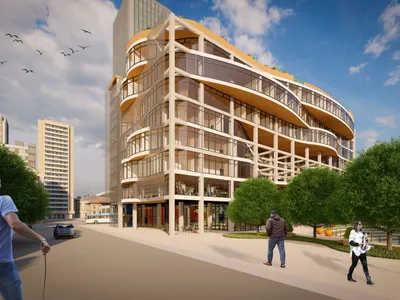
Olio Towers: A Mid-Rise for Performers That Fuses Housing, Rehearsal, and Stage
Located blocks from Houston's Theater District, this modular tower stacks living units around a central performance atrium.
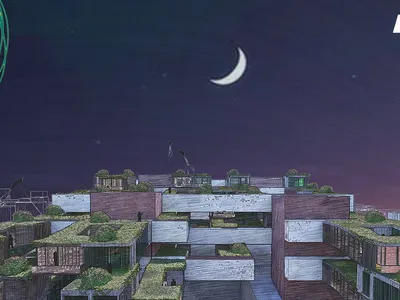
Oasis: Modular Green Housing Carved into Dhaka's Urban Fabric
A shortlisted Plugin Housing entry reclaims unauthorized settlements in Dhaka with stepped concrete volumes, green roofs, and ventilation-driven design.

Black Hole: A Floating Megastructure for the Post-Physical Era
Emiliano Mazzarotto envisions a spherical, self-scaling arena where e-sports, digital hotels, and holographic stadiums replace traditional public space.

Explore Uttarakhand Architecture Competitions
Discover active competitions in this discipline

Challenge to reimagine the Iron Throne

Photograph architecture without architects

Illustrate the lost glory of Angkor Wat - Render Challenge

Design challenge to reuse E-waste
Comments (0)
Please login or sign up to add comments
No comments yet. Be the first to comment!