
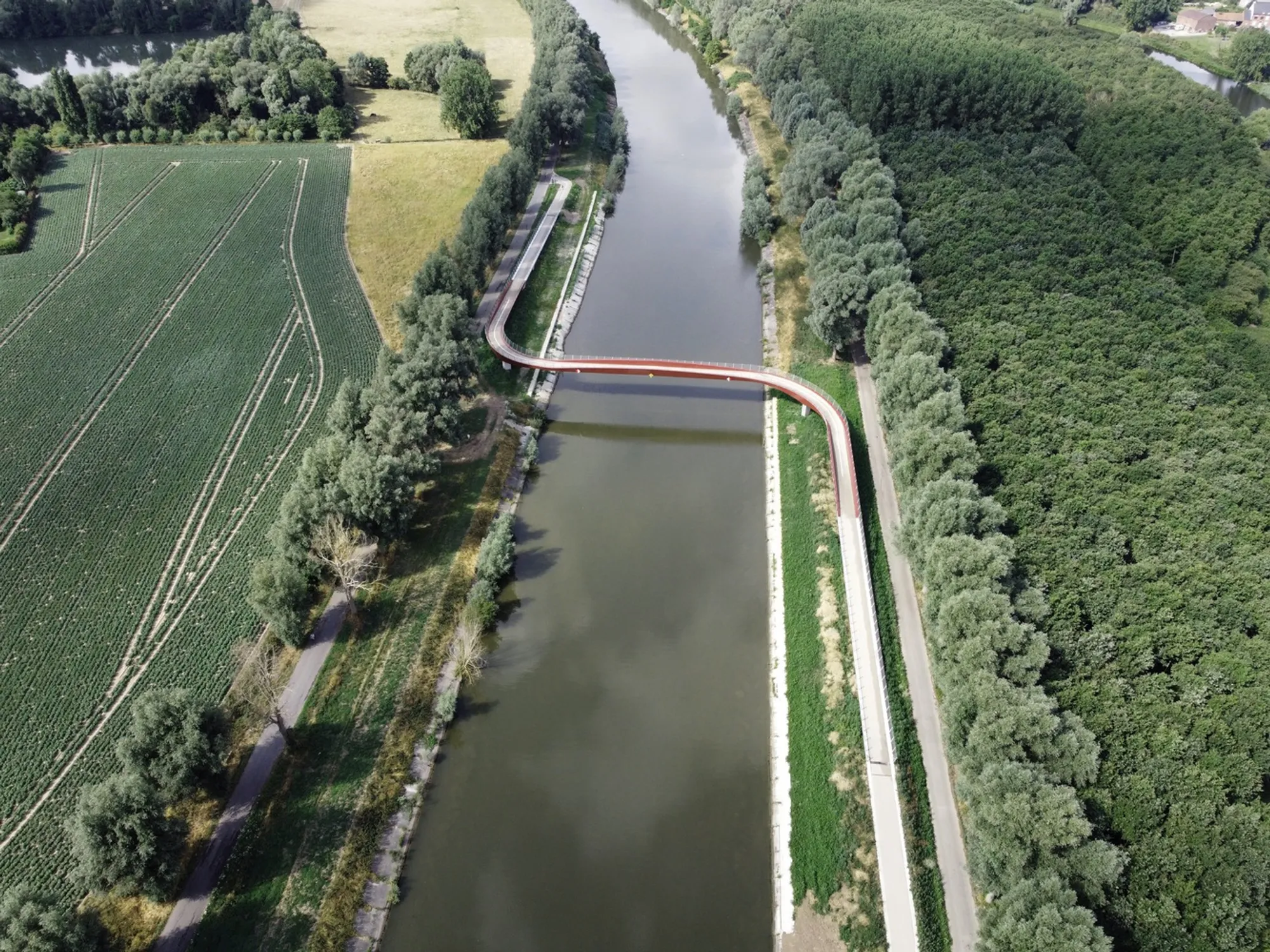
Vlasbrug Bridge by SBE nv: A Seamless Connection Across the River Lys in Belgium
Vlasbrug Bridge by SBE nv elegantly connects towpaths over the River Lys, blending sustainable design, natural curves, and structural harmony.


Located between the municipalities of Wielsbeke and Waregem, the Vlasbrug Bridge is a newly completed pedestrian and cyclist bridge designed by SBE nv in 2023. Commissioned by De Vlaamse Waterweg nv, the infrastructure arm of the Flemish administration, this bridge reflects a holistic vision of mobility, ecology, and landscape integration—enhancing both the functional and experiential quality of Belgium’s waterways.
Strengthening Regional Connectivity Through Sustainable Design
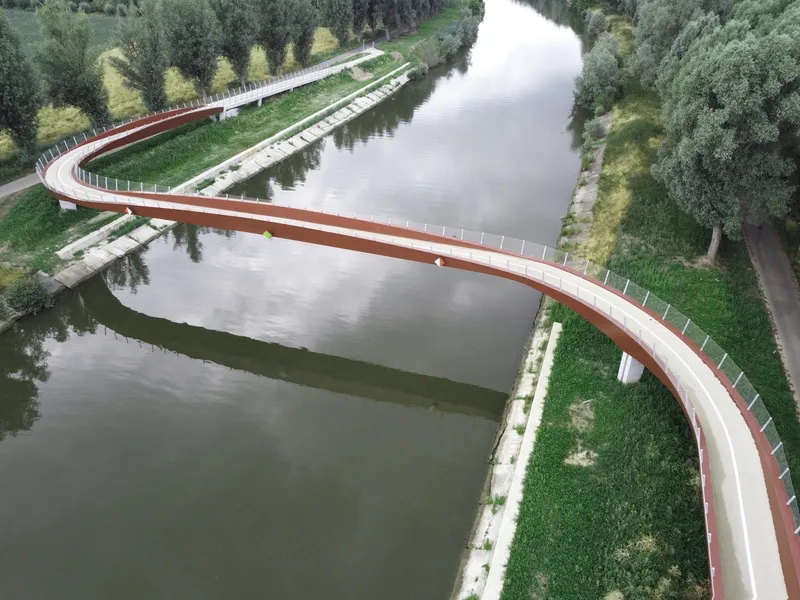
Towpaths along rivers and canals are vital corridors for cyclists and pedestrians. In this context, the Vlasbrug Bridge plays a pivotal role by connecting the towpaths across the River Lys, strengthening daily mobility and recreational access between neighboring towns. This new link enhances both community interaction and sustainable transport options in the region.
SBE nv approached the design with a strong emphasis on minimizing visual and ecological disruption, opting for a low-impact bridge that nestles naturally within the landscape. Rather than imposing on the riverfront, the structure blends organically into the environment, reinforcing the canal’s scenic and ecological integrity.
An S-Shaped Route in Harmony with Nature
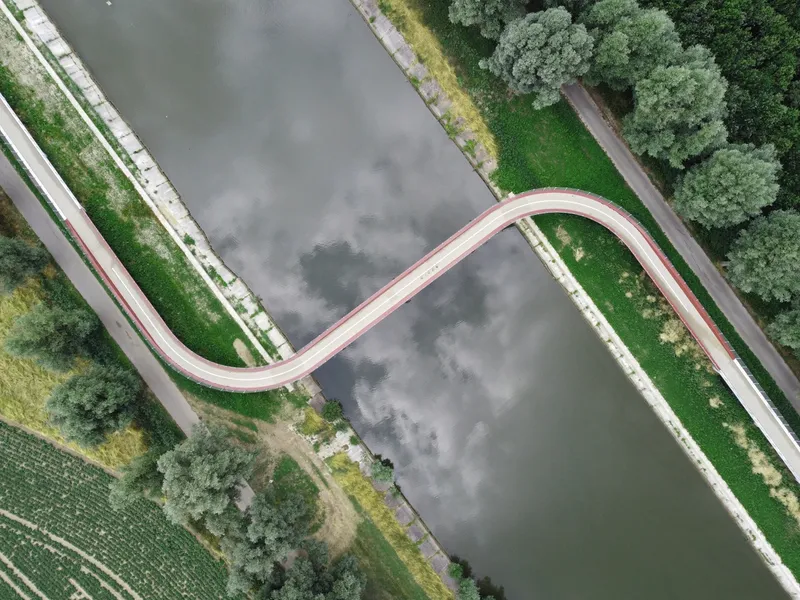
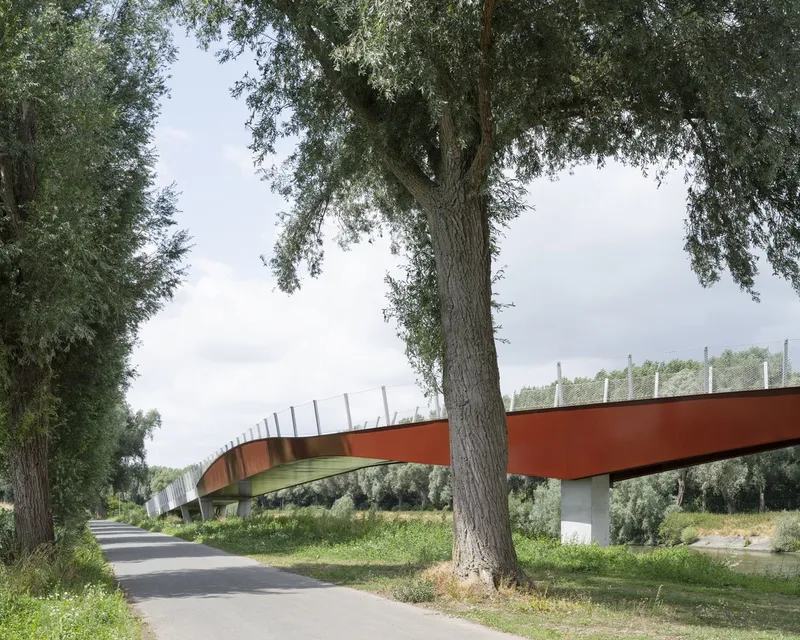
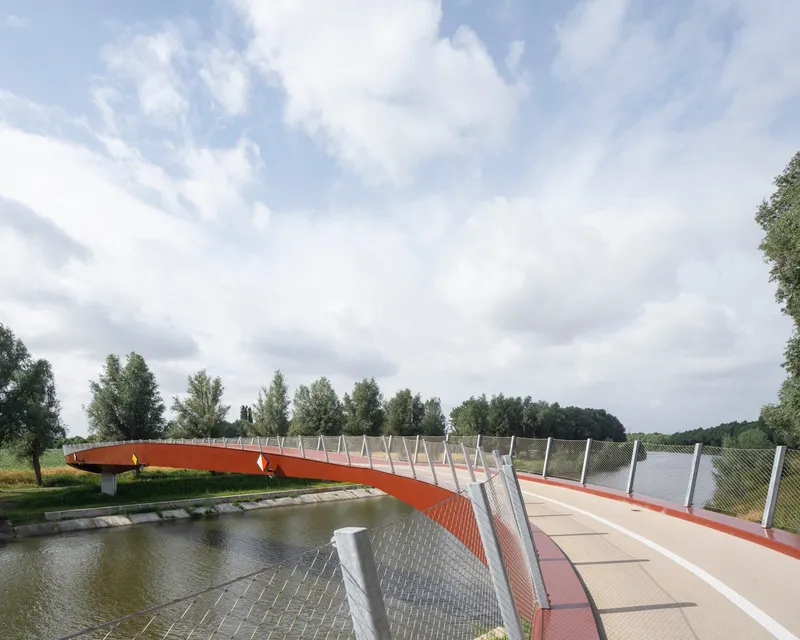
The bridge’s route takes on an elegant S-curve, strategically aligned with existing traffic flows, towpaths, and tree rows. This flowing form respects the natural lines of the landscape and avoids the need to divert existing pedestrian or cyclist routes. The decision to construct the bridge on the inside of the riverbanks ensures all components stay within the public domain.
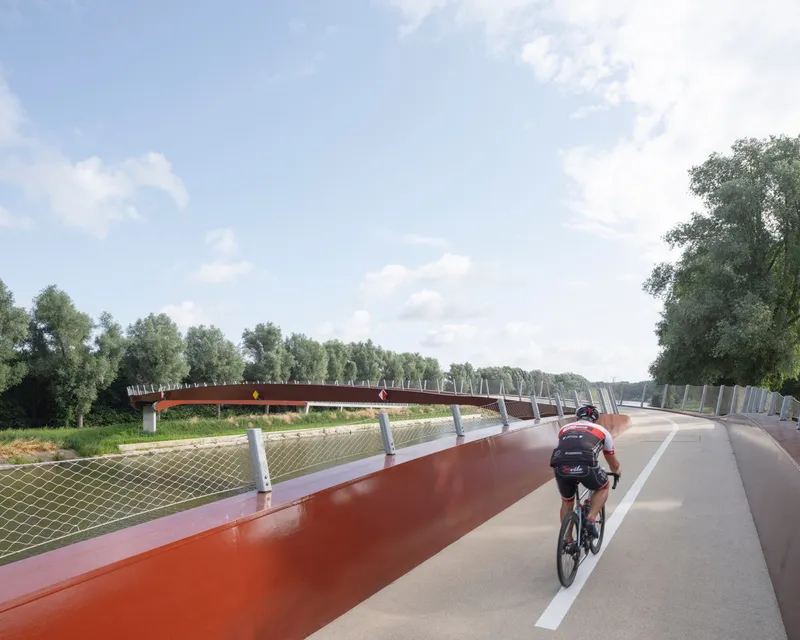
A Structural Symphony: Steel, Concrete, and Earth
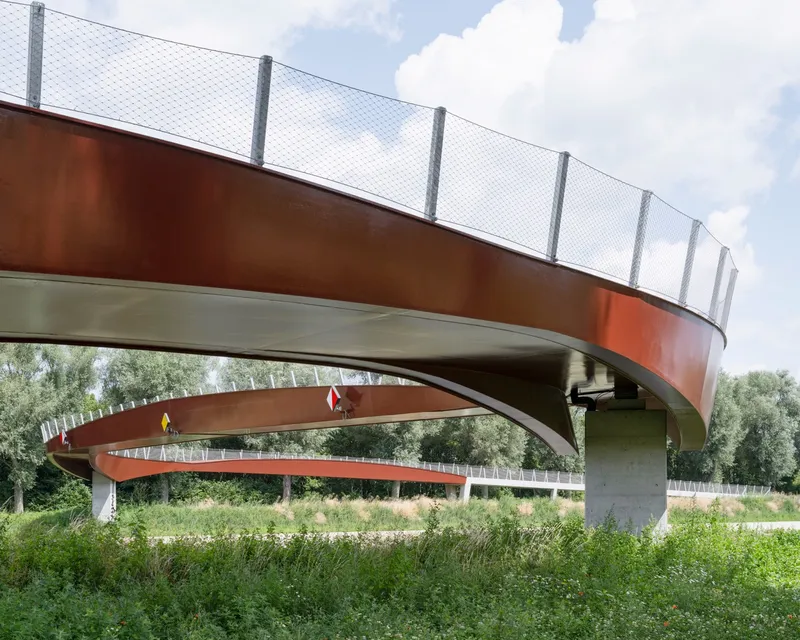
The Vlasbrug Bridge is composed of three primary materials: steel, concrete, and earth, each playing a distinct role in the architectural narrative.
At its heart, a symmetrical steel arch spans the width of the river, shaped according to inverse bending moment logic. This results in a visually slender, organic form that complements its natural setting while offering structural clarity. The smooth curvature gives the bridge an elegant silhouette, while gently guiding users along a continuous path of rising and descending motion.
On either side of the arch, straight concrete ramps link the steel span with the adjacent towpaths. These ramps are embedded into earthen embankments, giving the structure a grounded appearance, as if it emerges from the terrain itself. The transitions between earth, concrete, and steel are seamless, crafting an experiential gradient that enhances the journey for each passerby.
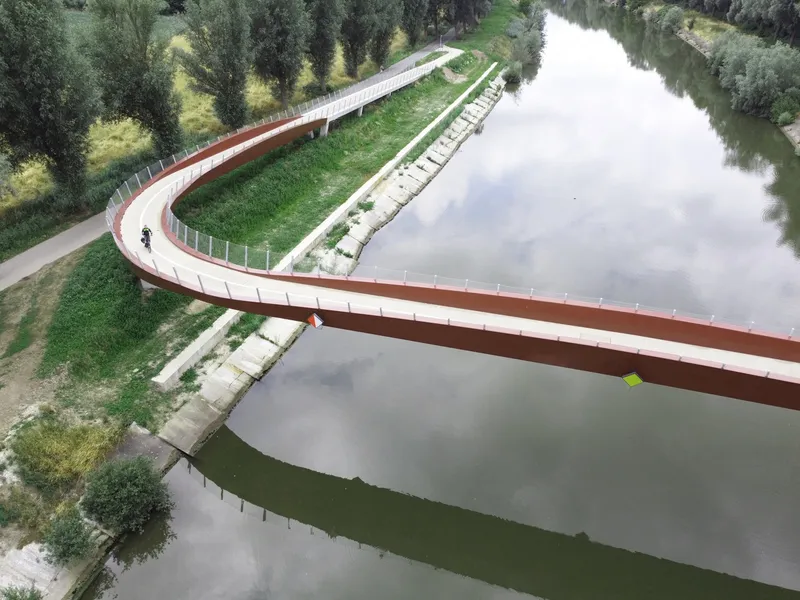
Sculpting User Experience Through Form and Perspective
The architectural ambition behind Vlasbrug was to offer more than just a crossing—it aimed to create an immersive spatial experience. The bridge’s sloped and outward-tilting uprights were deliberately designed to open up the deck space at steering height, ensuring comfort without requiring a wider span. This inclination also plays with light and shadow, introducing dynamic visual lines that change with the angle of the sun and the user's position.
From the ground, the bridge appears delicate yet robust. As users approach via the embankments, they encounter a gradual transition into the sculptural steel element. Walking across, the elevation shift creates a fluid motion—from low to high and back again—offering a constantly evolving perspective of the landscape and water below.
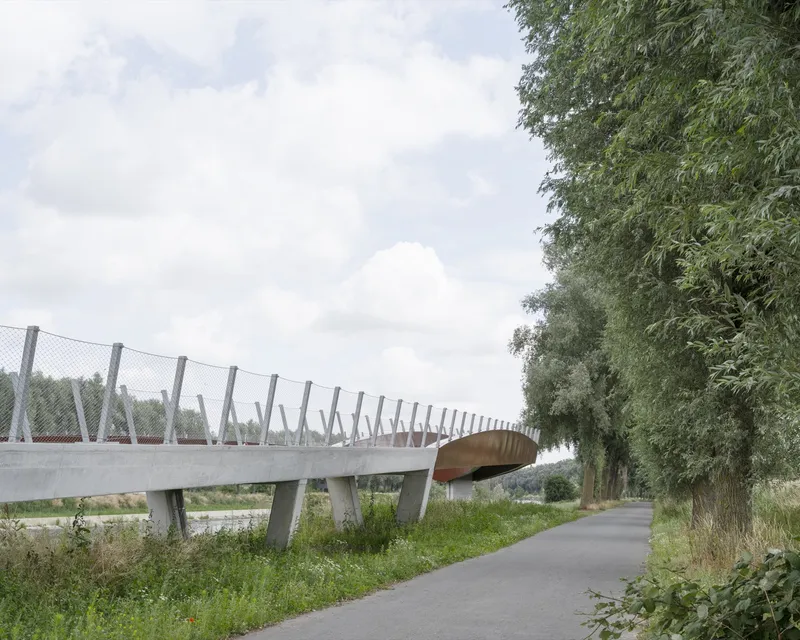
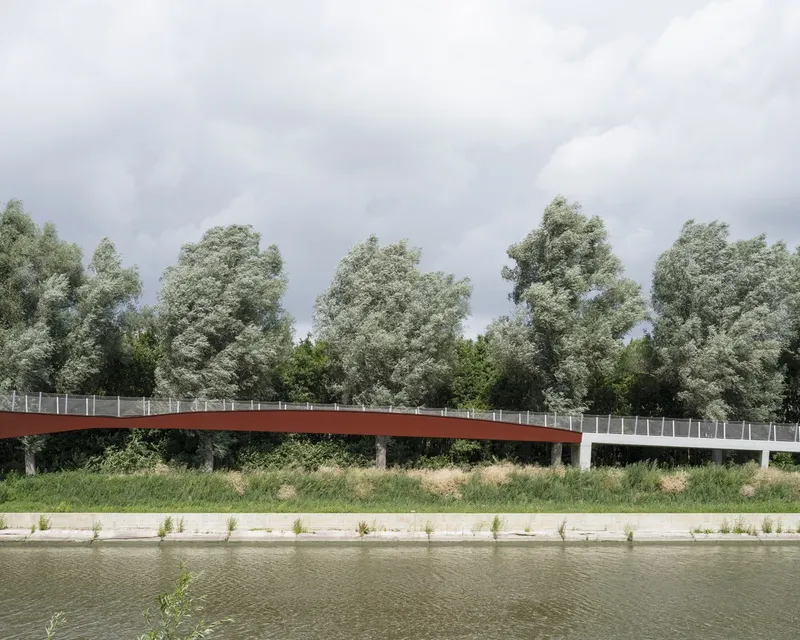
A Model for Future Infrastructure
The Vlasbrug Bridge is a model of how contemporary infrastructure can be minimal, ecological, and user-centered. Through thoughtful material use, elegant geometry, and respect for site context, SBE nv has created more than a piece of infrastructure—it’s a landmark of regional sustainability and architectural restraint.
All Photographs are works of Johnny Umans



Popular Articles
Popular articles from the community


Hill & Cross Opera: Sculptural Opera House Architecture Shaped by Tallinn’s Landscape and Identity
Hill & Cross Opera reimagines opera house architecture in Tallinn through its sculptural hill, civic plaza, glass wave and a luminous cross.

Co-life: Sustainable Architecture for Age-Friendly Community Living
Co-life reimagines sustainable architecture for seniors through courtyards, rammed earth, shared gardens, and spaces designed for belonging.

Play: Fragments of Their World
Familiar architecture becomes modular playground design, creating safe spaces where displaced children can learn, connect, imagine and play.

The Ocean Hive: Sustainable Architecture for a Self-Sufficient Civilization at Sea
The Ocean Hive imagines sustainable architecture at sea, where modular habitats, algae, wave power and ocean waste sustain a growing colony.

Similar Reads
You might also enjoy these articles


Hodi-Mandai Geram
Project Function: Preservation and revitalization of the Intangible heritage and socio-spatial identity of the Hodi by Housing, Cultural Memory Center, Sacred Grove, landscape, local tourism economy


Olio Towers: A Mid-Rise for Performers That Fuses Housing, Rehearsal, and Stage
Located blocks from Houston's Theater District, this modular tower stacks living units around a central performance atrium.

Oasis: Modular Green Housing Carved into Dhaka's Urban Fabric
A shortlisted Plugin Housing entry reclaims unauthorized settlements in Dhaka with stepped concrete volumes, green roofs, and ventilation-driven design.

Black Hole: A Floating Megastructure for the Post-Physical Era
Emiliano Mazzarotto envisions a spherical, self-scaling arena where e-sports, digital hotels, and holographic stadiums replace traditional public space.
Explore Cycling Bridge Competitions
Discover active competitions in this discipline



Challenge to reimagine the Iron Throne


Photograph architecture without architects


Illustrate the lost glory of Angkor Wat - Render Challenge


Design challenge to reuse E-waste
Comments (0)
Please login or sign up to add comments
No comments yet. Be the first to comment!