
Waste to Warmth - Journal
Background Information

Each member of this team is an MA student at Leeds Beckett University, United Kingdom. Two members are MA Architecture part-time and one member is MA Urban Design full-time.
Throughout this project, we have each been uploading blog posts about the process and what we have achieved each week for the 7 weeks we have been running this project.
I have added the link to the blog below:
https://mhoward2499.wixsite.com/mhdesign
Concept
The concept behind our scheme was derived from looking into the wider context of Osage city and what materials were available to use with a minimal travel distance from the site. After researching the local area, we discovered that many farms are situated right on the outskirts of the city.
With an ultimate focus on sustainability, we began to research how agricultural waste can be used within the construction of our scheme. This led to the development of using wheat straw (a by-product of wheat) to create panels to insulate the silos.
After further research into Osage City, we came across a community center based in Osage City called ECKAN. One of ECKAN’s community action programs is ‘Weatherisation’ which focuses on providing low-income families with the means to improve the energy efficiency of their homes.
By tapping into ECKAN's existing networks and relationships with residents in the City, a vast number of people of Osage City could be taught how to develop wheat straw insulation panels for their own homes, which is a cheap, sustainable, and efficient method of insulation.
After identifying a series of buildings in the city that could be transformed into factories, where residents could construct wheat insulation panels, we developed the idea of introducing ‘flying factories’ in Osage City. This would result in carbon emissions being kept to a minimum as materials would not have to travel over long distances. Jobs would also be created for residents not only within the proposal but also in the proposed factories.
The scheme intends to be beneficial for a wide range of people in Osage city. Residents could insulate their homes with a cheap and sustainable solution. Farmers would also receive a greater income from exchanging waste products from their farms, which would otherwise be burnt, therefore decreasing carbon emissions into the environment.
Design
To take full advantage materials available, we decided to maximize the materials reused in our scheme. 8 Silos have been used in the main construction of the spaces. The remaining 4 silos have been cut down and used to create staircase banisters and furniture within the lodges.
We aimed to create our building solely with reusable materials sourced within the city. The insulated panels are manufactured from a combination of wheat straw (a by-product of growing wheat) and recycled timber. Osage county grows an average of 13,000 acres of wheat each year, resulting in 26,000 tonnes of wheat straw material. The main structure of the building requires timber framing. This will be made from recycled boards and runners supplied by a recycled timber yard in Kansas City. Recycled bricks have been reclaimed from dilapidated buildings in the city to create brick strip foundations. The windows have been created with upcycled glazing from car windscreens from local scrapyards. We have tried to reuse materials in every aspect of the design where possible.
After going through various design iterations, we decided to situate the 10 individual apartments on the first and second floors to separate private and public spaces within the building. Living spaces on the first and second floor are interconnected through bending corridors leading to open spaces with soft furnishings. Breakout spaces were introduced into the scheme to allow the lodgers a space to eat, relax and allow the other farmers to interact, emphasizing communication. Terraces have also been integrated into the design on each floor of the living quarters. These outdoor areas allow the lodgers a quiet yet synergetic space with panoramic views around the city.
The scheme aims to be an exemplary design for communal living and learning. The intention of this complex is that farmers can build a relationship with other local farmers, residents and visiting enthusiasts.
Objectives
Setting and Meeting Objectives
Our main objective throughout the project is to work in an environmentally conscious and sustainable way. We have been researching and exploring potential designs and processes that will enhance our ideas in terms of sustainability and the impact on the environment. To achieve our objectives, we have chosen to use locally available, recycled materials to reduce carbon emissions and embedded carbon. we are opting to utilize sustainable methods of practice like reusing waste farming products and recycled materials as standard, whilst also introducing sustainable energy generation and water conservation methods to further reduce the impact our proposal will have on the environment. The ideas expressed towards our objective of sustainability and environment consciousness align heavily with the contacts we attempted to make with the East Central Kansas Economic Opportunity Corporation which we believed to be a good match to ground our proposal in Osage City.
Urban Strategy
Future in Osage
Our proposal, from the beginning, will be centered around the community of Osage City as we are proposing to work alongside community action network ECKAN. As it will be a community-centered approach to the design and outcome of this project our urban strategy has had to reflect this. The initial construction of our project will take place within the community at a flying factory, set up for use by a local workforce in the city as the basis for construction and assembly, once complete the flying factory can be closed. However, we believe there is a possibility for the flying factory to visit each of the ECKAN partner counties and used to create a similar educational facility for each of the communities using the weatherization program. Over time we could see this type of project across all 16 partner counties, expanding the potential for ECKAN and for the communities through Kansas.
Timescale
Transformation
Over the lifetime of the building, it is likely to be reused as a community center for ECKAN and a potential new educational facility for the Osage City Schools, teaching practical building and design skills and creating potential to expand this project even more into the city, taking over derelict buildings for flying factories and production centers. However, at the end of the building’s lifetime, it will need to be recycled or reused. The construction methods we have chosen will allow for the building to be easily dismantled into its component pieces and sent for recycling or to be reused again somewhere else. The grain store exterior can be shelled and reused again, the insulation frames can be dismantled and reused, the only material used in the construction process that may not be able to be reused is the wheat insulation if the panels are taken apart if they are kept intact and reused there would be reduced waste. Overall, the project should stand the test of time because it has been designed using sustainable methods and practices, generates its own energy, and is extremely efficient. furthermore, the building layout is capable of being redesigned and used in different ways due to the open-plan, public ground floor, and the more private setting on the first and second floors creating the opportunity for a variety of possible uses.


Popular Articles
Popular articles from the community

The Ken Roberts Memorial Delineation Competition (Krob)
As the most senior architectural drawing competition currently in operation anywhere in the world, it draws hundreds of entries each year, awarding the very best submissions in a series of medium-based categories.


Solar Steam: A Climate-Responsive Architecture That Redefines the Monument
A climate-responsive memorial architecture that transforms heat, decay, and time into a living system reflecting humanity’s ecological impact.
Gads Hill Early Learning Center by JGMA: Adaptive Reuse Shaping Community-Focused Educational Architecture
Adaptive reuse transforms fragmented structure into vibrant early learning center with playful façade, natural light, and community-focused sustainable design.
Louis Malle Cinema: A Limestone Cultural Landmark Revitalizing Community Life in Prayssac
Limestone cinema extension with public forecourt, blending heritage and modern design to create flexible cultural spaces and strengthen community interaction.


Similar Reads
You might also enjoy these articles
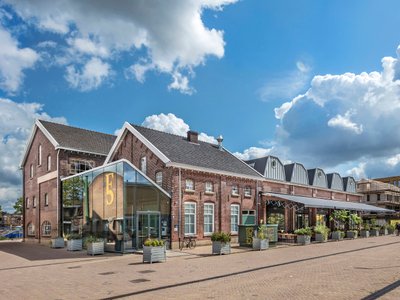
Fifth NRE Jazz Club – De Bever Architecten: Eindhoven’s Revitalized Cultural Hub
Historic gas factory transformed into Fifth NRE Jazz Club blending modern sustainability, jazz culture, dining, and heritage architecture seamlessly.
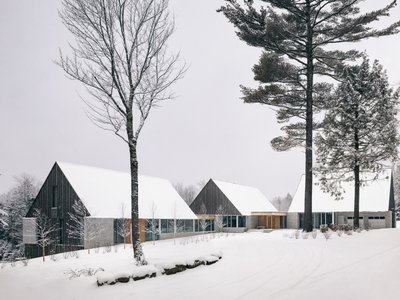
Three Summits Residence by NÓS: A Multigenerational Mountain Retreat Rooted in Landscape and Architectural Primitivism
Multigenerational mountain residence in Vermont featuring three pavilions, granite bases, dramatic roofs, and seamless integration with forested landscape.
Gads Hill Early Learning Center by JGMA: Adaptive Reuse Shaping Community-Focused Educational Architecture
Adaptive reuse transforms fragmented structure into vibrant early learning center with playful façade, natural light, and community-focused sustainable design.


Top 15 Architecture Competitions to Enter in 2026
From student-friendly idea competitions to prestigious international awards, here are the best architecture competitions open for entries in 2026. Updated regularly.


Explore Architecture Competitions
Discover active competitions in this discipline




The International Standard for Design Portfolios


The Global Benchmark for Architecture Dissertation Awards


The Global Benchmark for Graduation Excellence


Challenge to reimagine the Iron Throne
Comments (0)
Please login or sign up to add comments
No comments yet. Be the first to comment!