

WH Studio Packs a Museum, Archive, and Planning Hall into One Courtyard Complex in Song County
A compact three-program civic building in Luoyang draws on classical Chinese proportions and the poetics of local mountain-and-river landscapes.


How do you fit a museum, a city archive, and an urban planning exhibition hall onto a site smaller than 9,000 square meters? WH studio, led by Hui Wang, answered that question in Song County, Luoyang, by stacking programs into a cluster of pale limestone volumes organized around two courtyards. The result is Song County's first comprehensive cultural facility, and it manages to feel monumental without sprawling, with an above-ground construction area of 10,000 square meters achieved at a floor area ratio of just 1.14.
What makes the project worth studying is not just the programmatic density but the cultural logic that shapes it. The massing abstracts the Eight Scenes of Song County, local landscape motifs including mountain peaks and flowing streams. Glass roofs between volumes are conceived as water running down from hillsides. The ground floor pulls back to form a continuous colonnade whose column proportions reference Fujiezhouza, a classical Chinese bracketing pattern, with a width-to-height ratio close to √2. The building speaks two languages at once: contemporary civic architecture and regional tradition.
Massing as Landscape
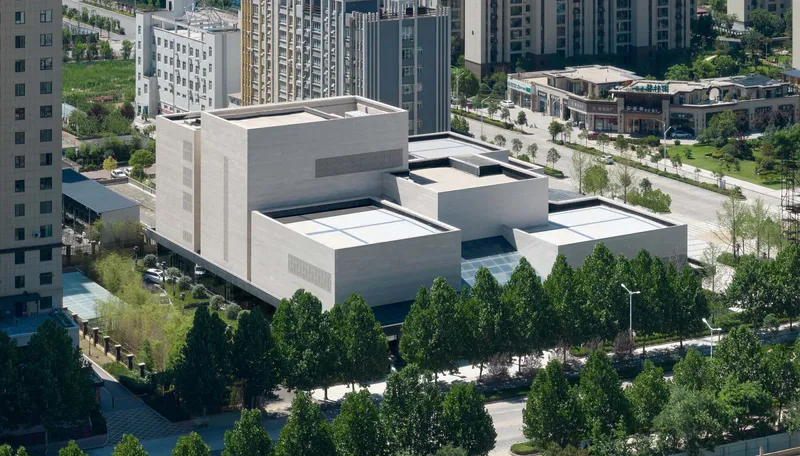
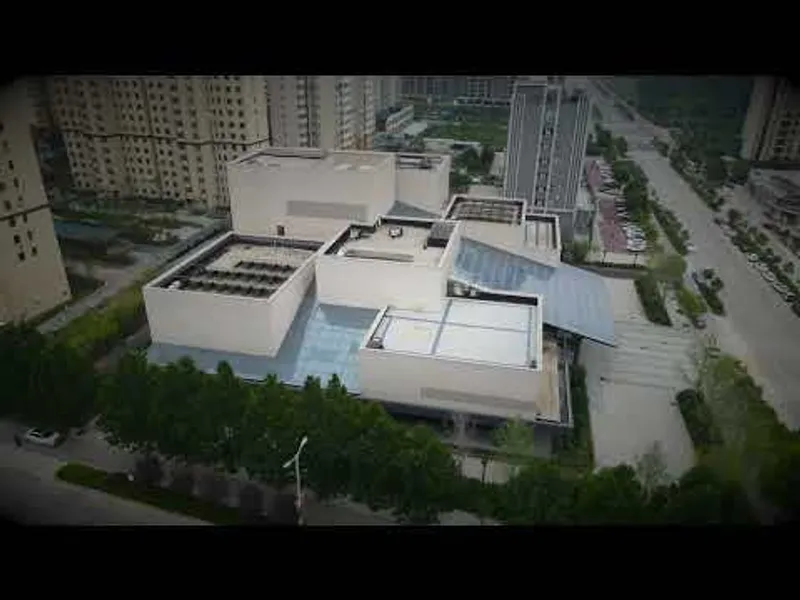
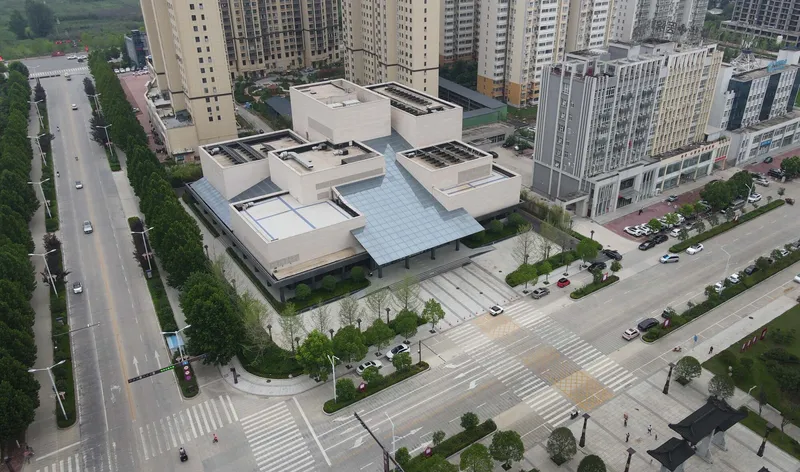
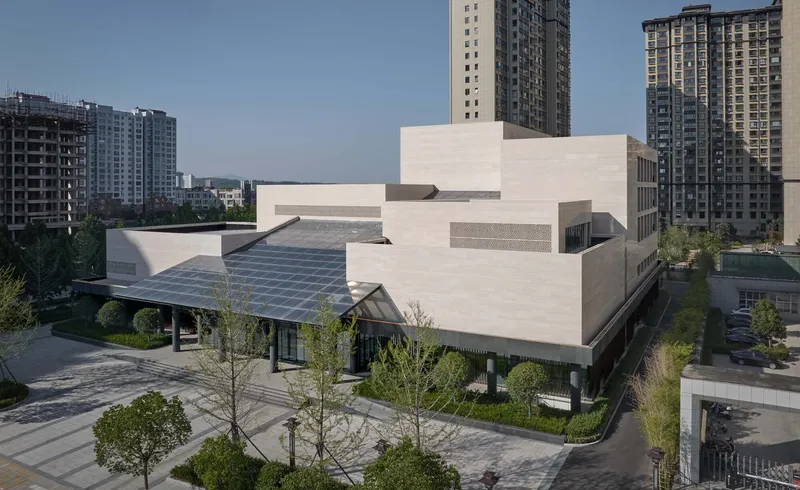
Seen from above, the complex reads as a miniature topography. Stepped white volumes of different heights create a profile that deliberately echoes the Seven Peaks, one of the Eight Scenes of Song County. Between these solid masses, glass roofs trace the lines of streams. The duality of mountain and river is not a decorative theme but a generator of form: the solid volumes house enclosed galleries and offices, while the transparent gaps between them become daylit public halls.
The clustered arrangement also works pragmatically. By breaking the program into distinct but connected blocks, WH studio avoided the single-mass bulk that typifies civic projects squeezed onto tight urban lots. Each volume has its own scale relationship to the surrounding residential towers, and the courtyards between them let daylight and air into what could easily have been a deep, dark floor plate.
The Ground Floor Colonnade
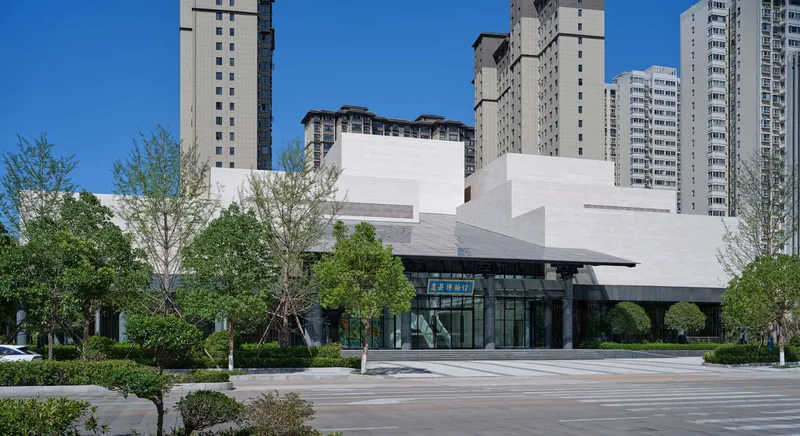
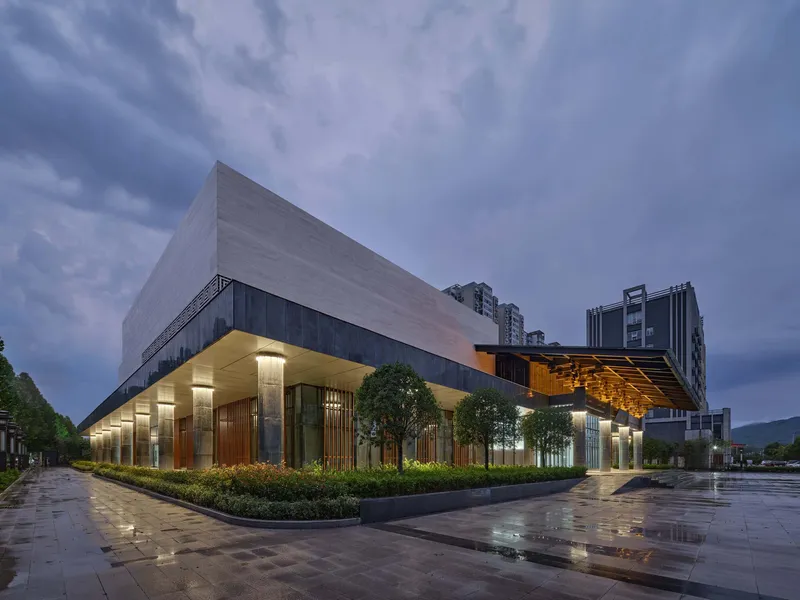
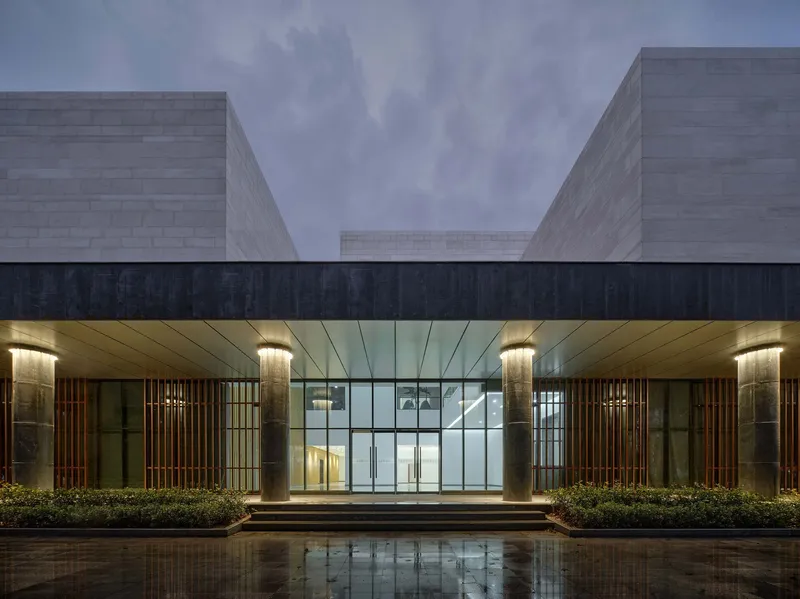
The building's most emphatic gesture at street level is its setback. The upper limestone volumes overhang a ground floor wrapped in glass and structured by concrete-filled steel tubular columns, forming a continuous colonnade along two street frontages. The move converts a mandatory setback into an inhabitable threshold: shelter from rain, a place to pause, and a transition zone between the city grid and the building's interior courtyards.
The proportioning of these columns is deliberate. WH studio calibrated their width-to-height ratio to match classical Chinese architectural norms, specifically the √2 proportion found in traditional Fujiezhouza colonnades. It is a subtle reference, unlikely to register consciously with most visitors, but it gives the colonnade a visual rightness that purely structural sizing would not. At night, illuminated timber screens behind the glass walls turn the base into a lantern, its warm glow contrasting with the cool stone above.
Stone Surfaces and Horizontal Logic
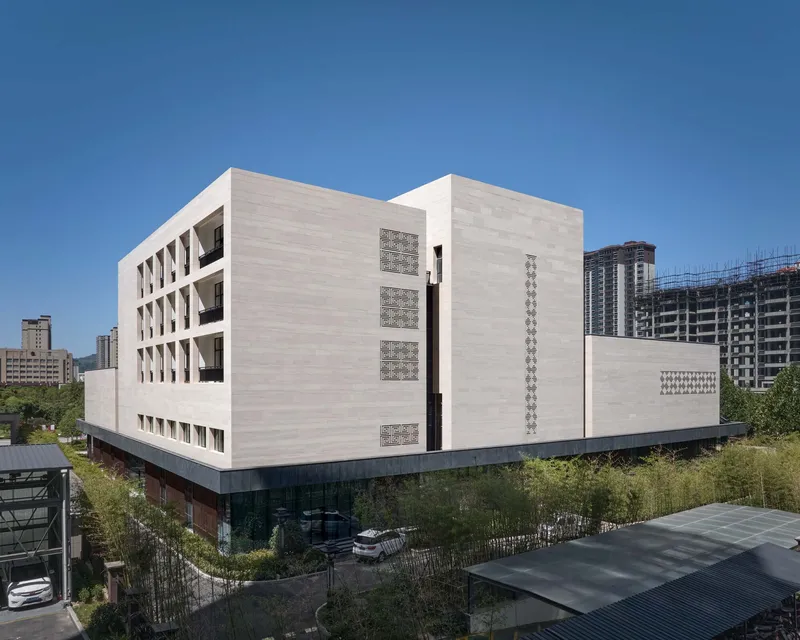
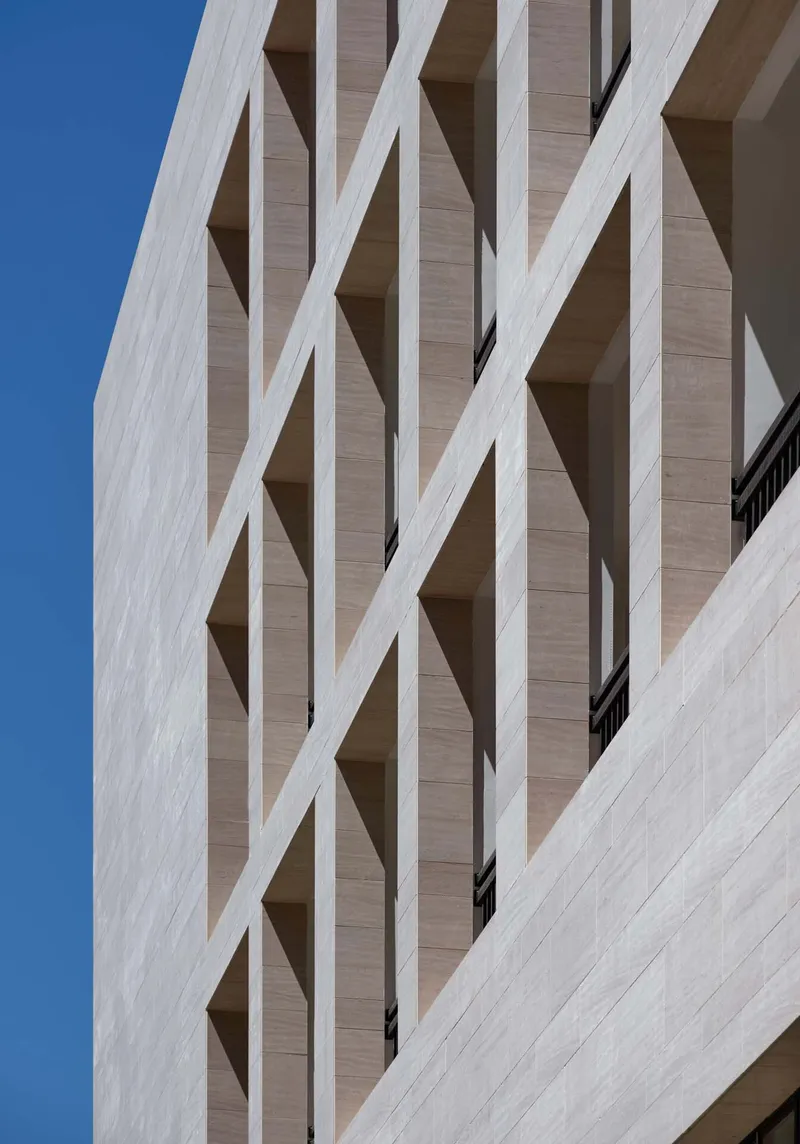
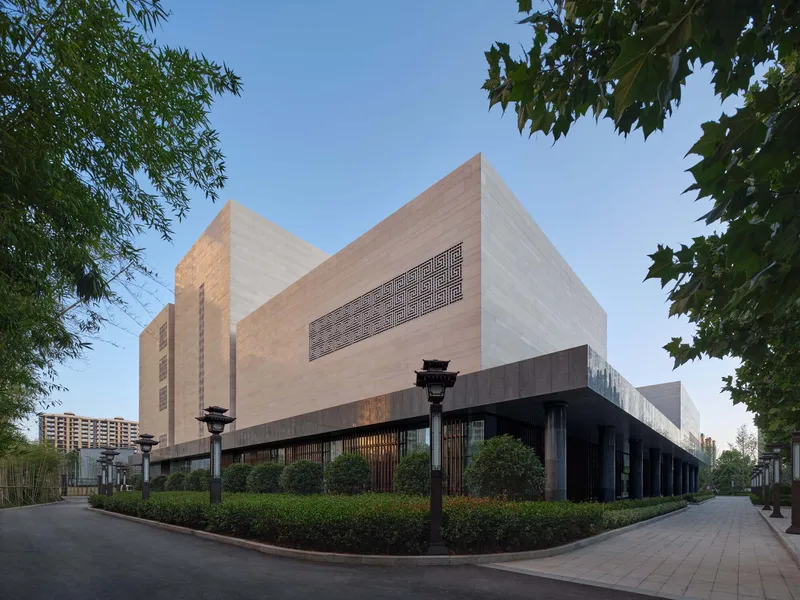
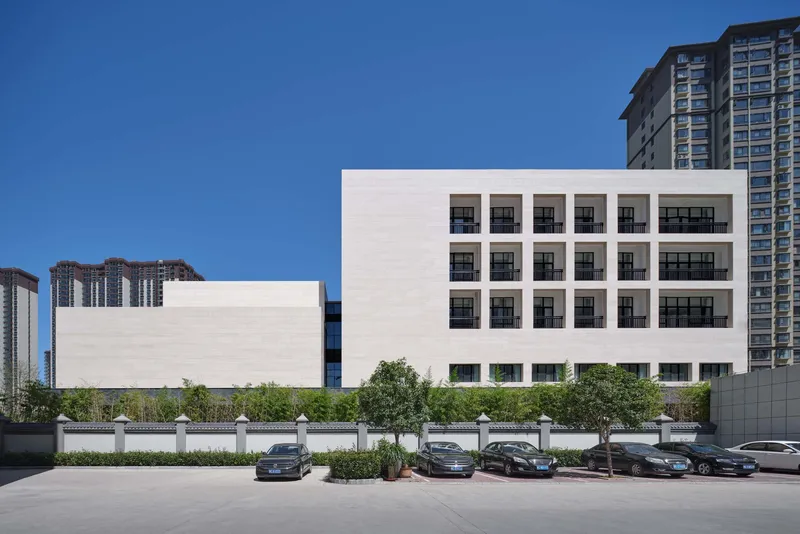
The material palette splits cleanly along a datum line. Dark granite clads the gable walls and the colonnade at ground level, anchoring the building to its base. Above, light-colored limestone slabs take over, laid in three different sizes to emphasize horizontality and to introduce a natural, almost geological texture. The variation in slab dimensions prevents the facades from reading as wallpaper; instead, they suggest the stratified layers of sedimentary rock, reinforcing the mountain metaphor embedded in the massing.
Details like the diagonal bracing patterns visible in the upper facade panels and the lattice vent screens break the stone surface into readable episodes. Each facade has its own rhythm, responding to what lies behind it: archive storage demands few openings, the museum requires controlled daylight, and the planning hall calls for transparency. The material is consistent, but its deployment is anything but uniform.
Glass Roofs and Climate Control
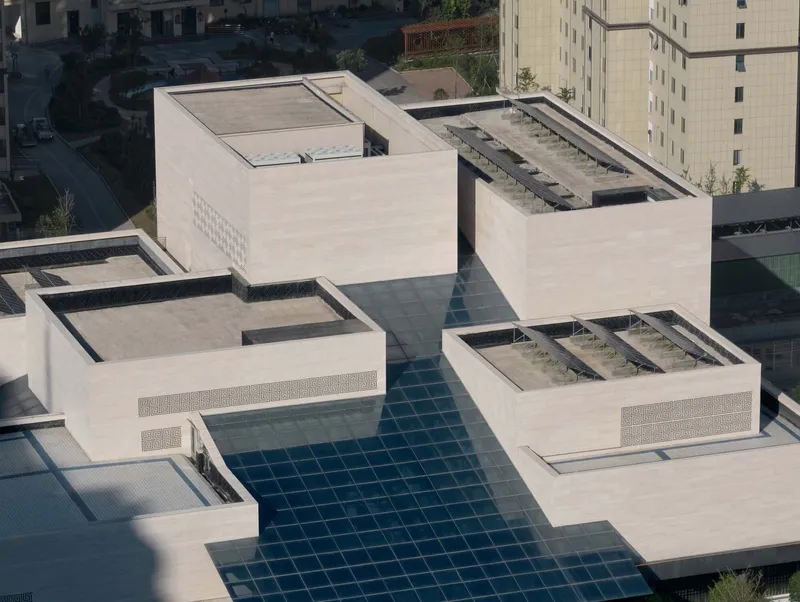
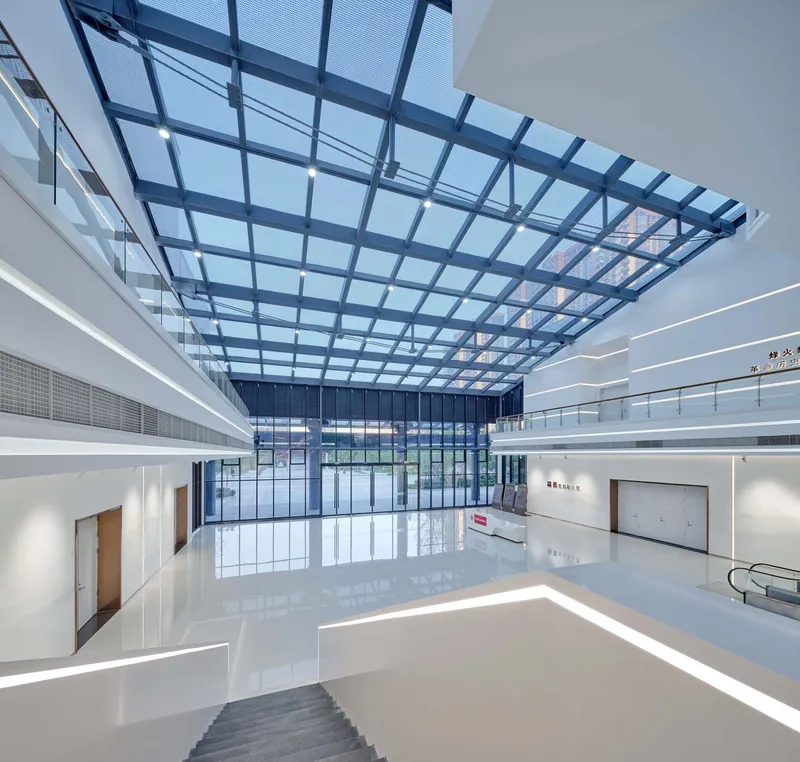
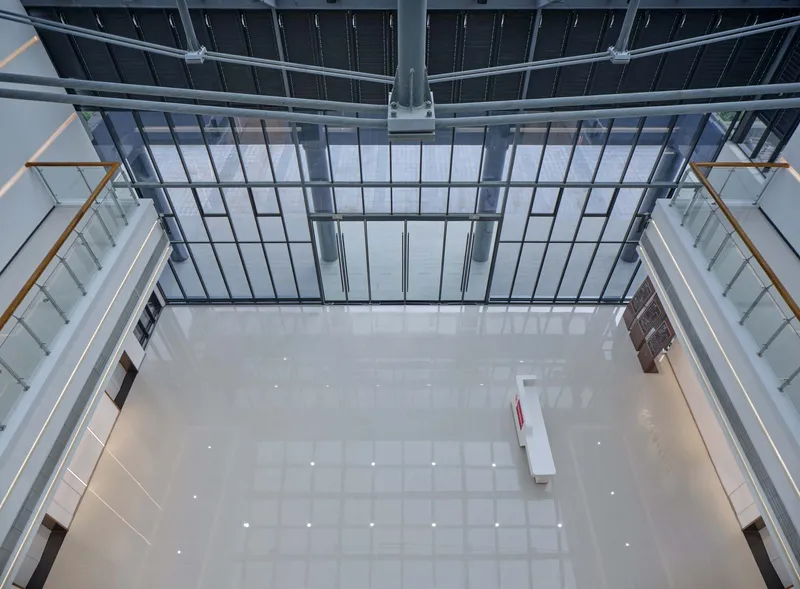
The two glass-roofed halls are the spatial heart of the complex. Both open directly to the outside, functioning as semi-public covered courtyards rather than sealed atriums. The roofs use three layers of Low-E insulating glass with plated dots, a strategy aimed at reducing the greenhouse effect in summer while still delivering generous daylight to the floors below. Electric openable louvers sit beneath the glass, enabling natural ventilation to flush heat upward and out.
The courtyard layout itself is a passive strategy borrowed from local residential traditions. Song County's vernacular dwellings orient their main houses and flanking wings to optimize winter solar gain. WH studio translated that principle to an institutional scale: the courtyards channel light deep into the plan, and the stepped massing ensures that no single volume casts a permanent shadow on its neighbor during the heating season.
Interior Circulation and Atmosphere
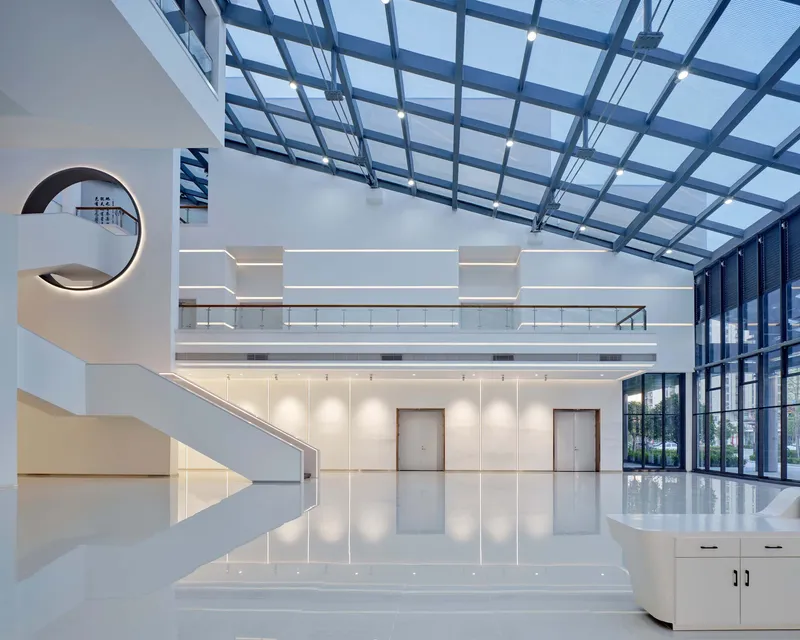
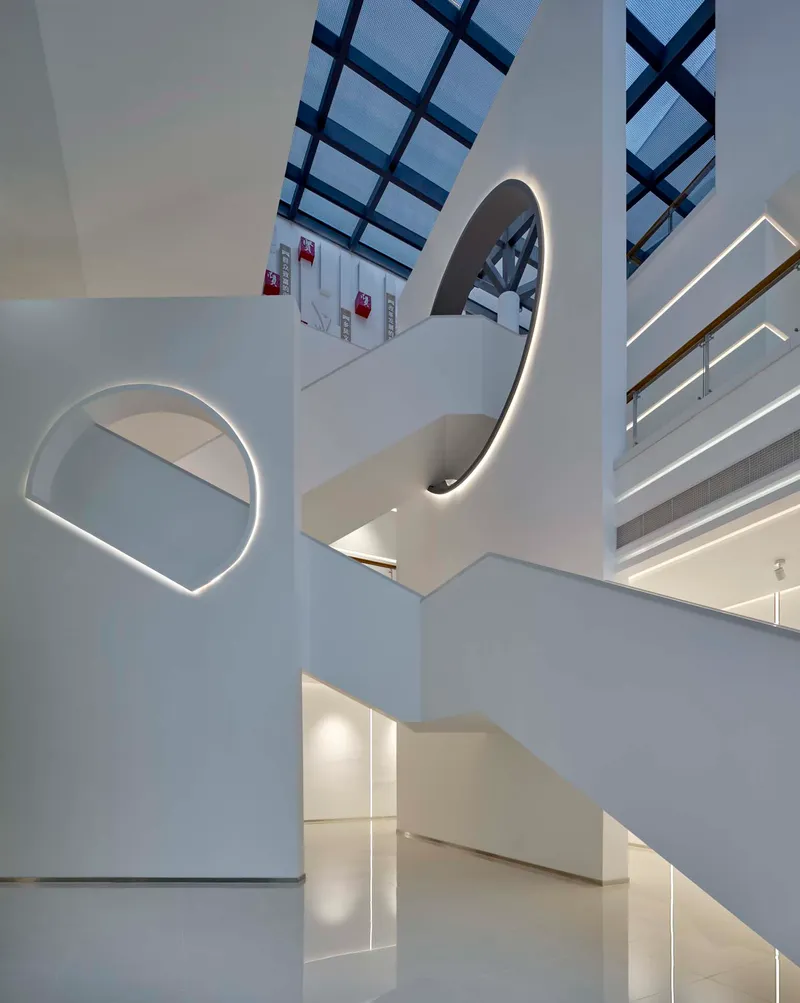
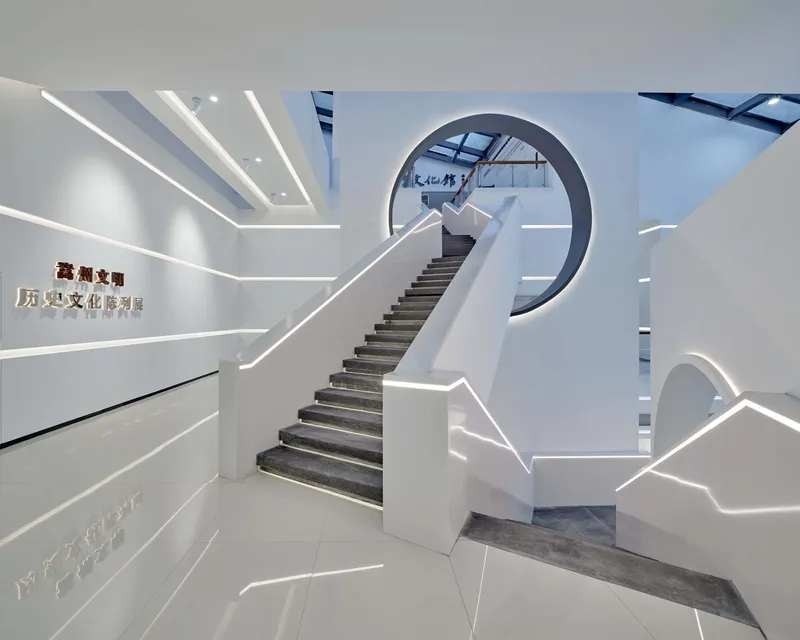
Inside, the dominant experience is vertical movement through light. The main atrium is organized around a curved white staircase with integrated LED edge lighting, a sculptural element that guides visitors upward through multiple gallery levels. The beam string structure overhead keeps the ceiling slender and open, allowing the glass roof to feel close and luminous rather than heavy. White surfaces throughout the circulation zones amplify available daylight and give the interiors a gallery-grade neutrality.
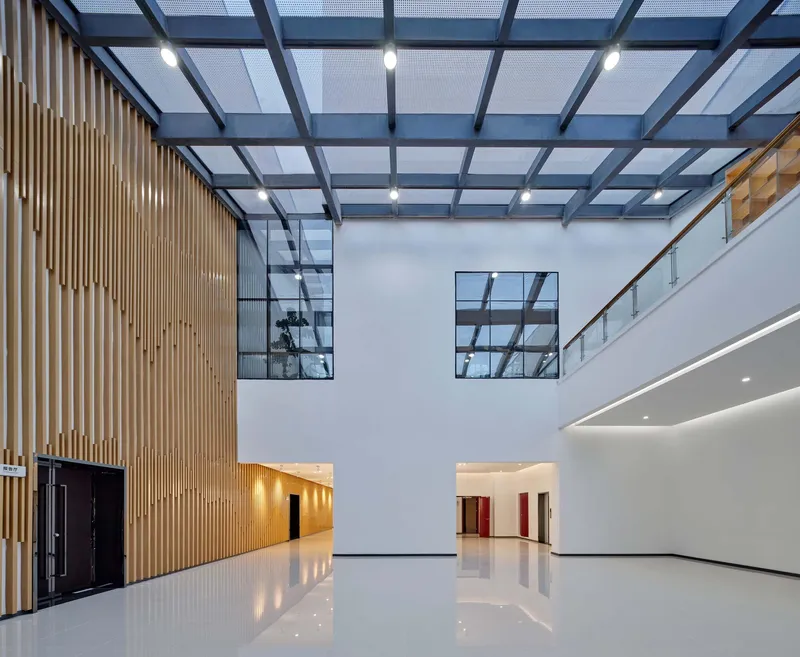
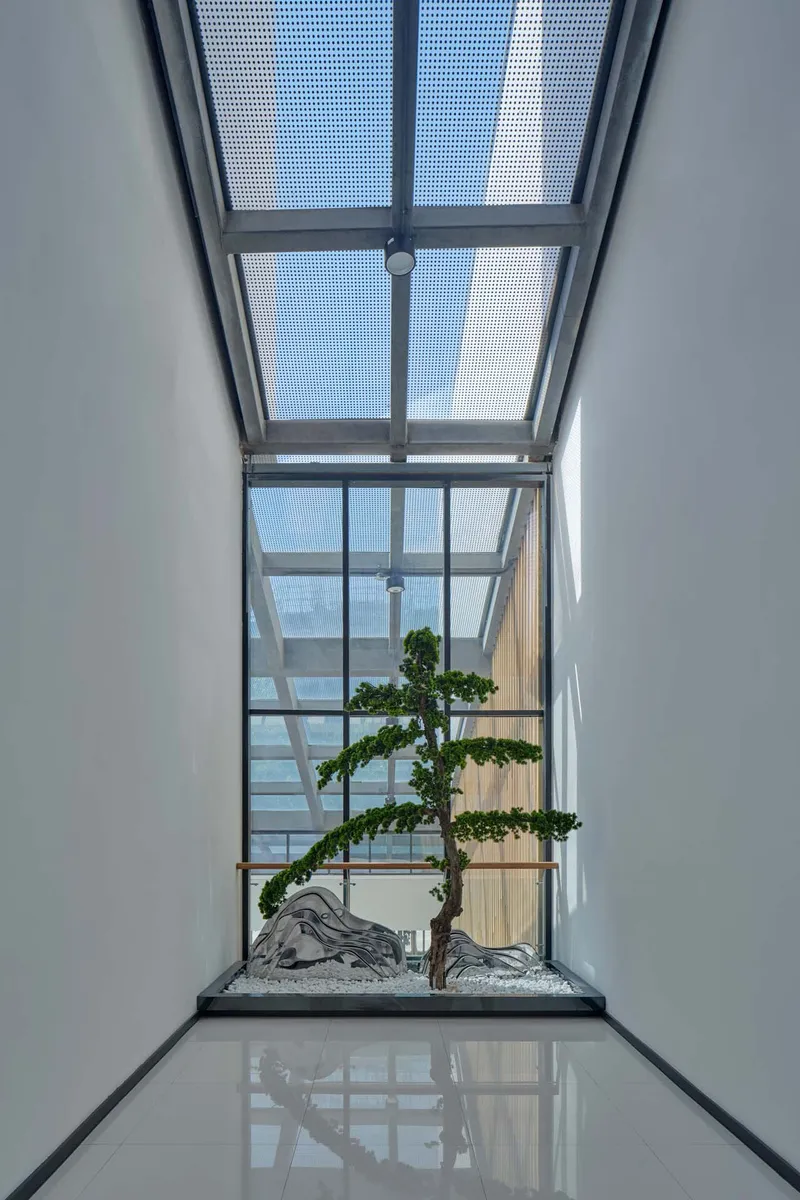
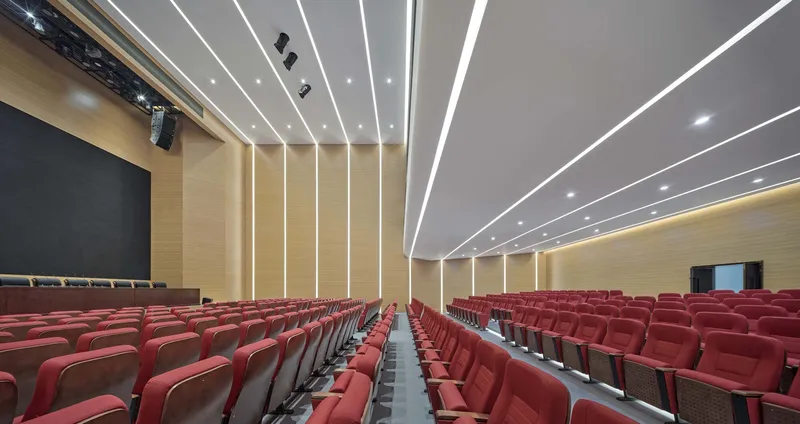
Not every space aims for the same brightness. The timber slat wall in one hall introduces warmth and acoustic absorption, creating a distinct atmosphere suited to exhibition or event use. An interior courtyard centered on a single bonsai tree, framed by white walls and a skylight, offers a moment of stillness between programmatic zones. And the auditorium, with its red seating and linear ceiling lights, makes no apology for being theatrical. The building accommodates a real range of moods within a disciplined material vocabulary.
Urban Context and the Night Profile
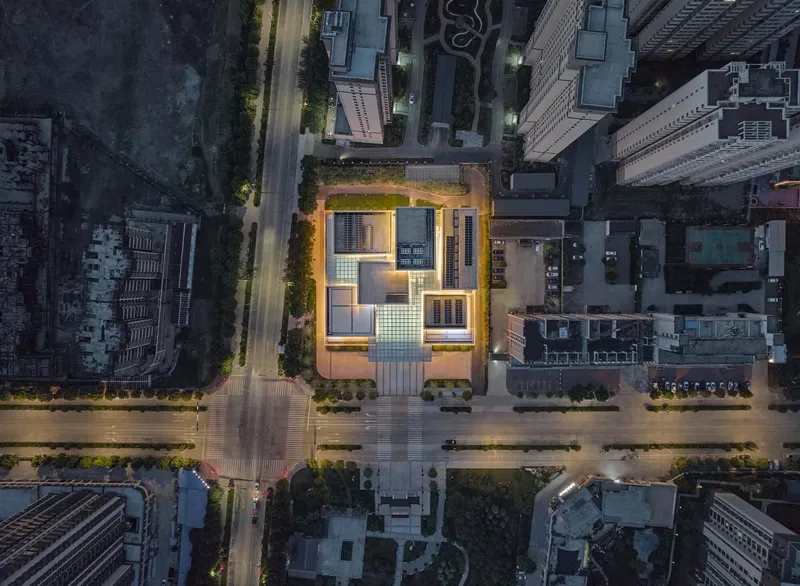
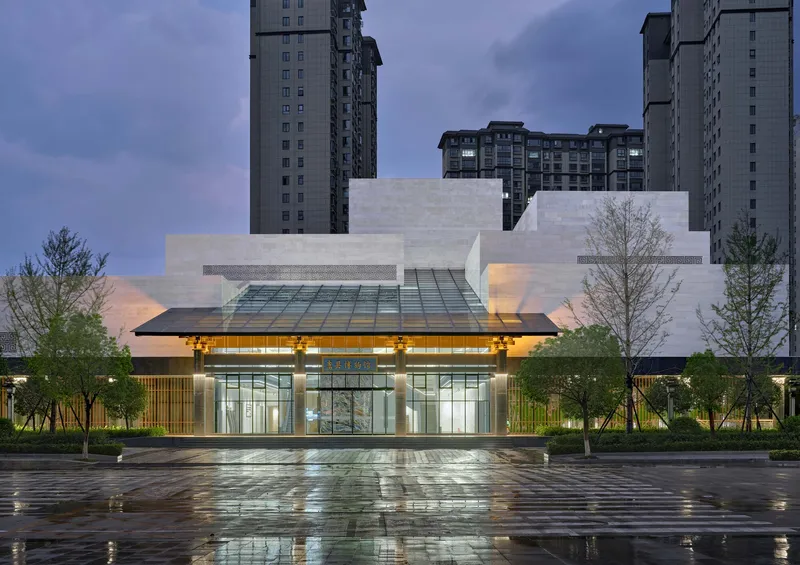
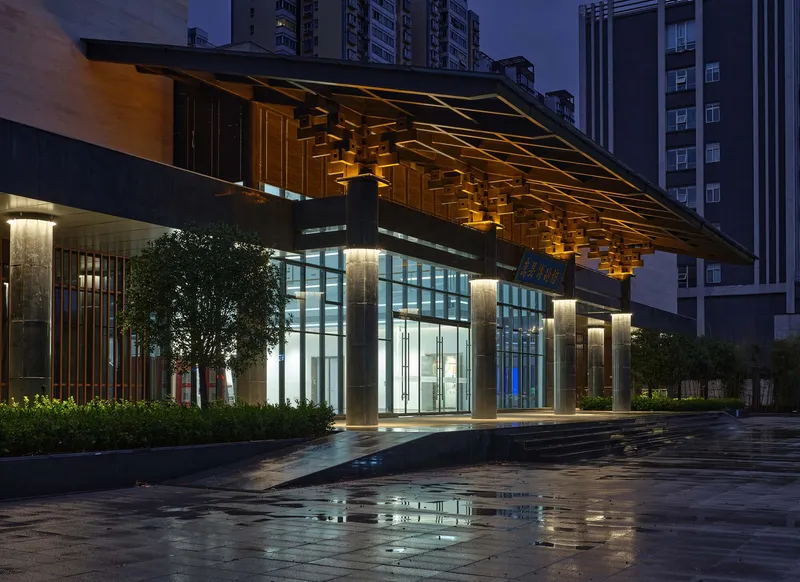
Song County's new city district across the Yi River is defined by residential towers, the kind of context that often overwhelms low-rise civic buildings. WH studio's response is not to compete in height but to assert presence through luminosity. At dusk, the building's edges glow, the glass roofs become lit seams, and the colonnade radiates warmth. The night profile is arguably the building's strongest public face, making the cultural facility legible from the surrounding apartment blocks in a way that daytime stone facades alone cannot.
The landscaped perimeter of young trees and bamboo softens the transition between the civic precinct and the residential grid. From the aerial views, the complex reads as a deliberate void in the urban fabric, a low, luminous object surrounded by vertical towers. That contrast is its urban strategy: it does not need height to claim significance.
Plans and Drawings
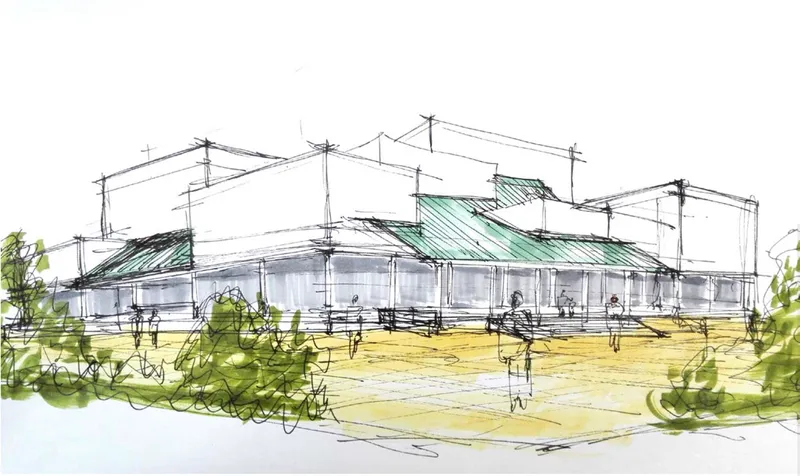
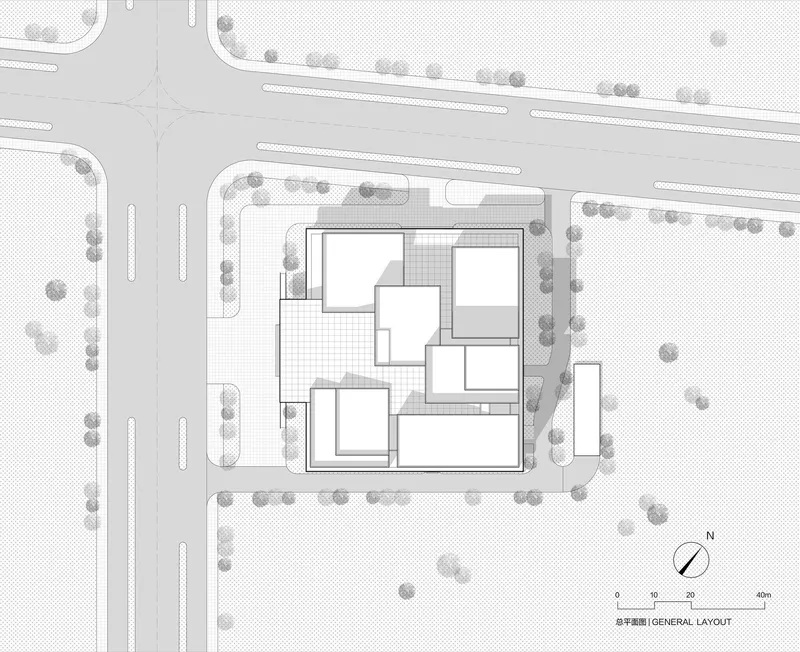
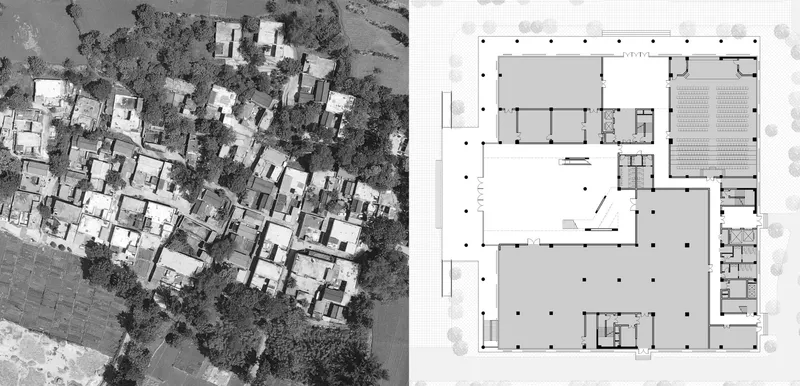
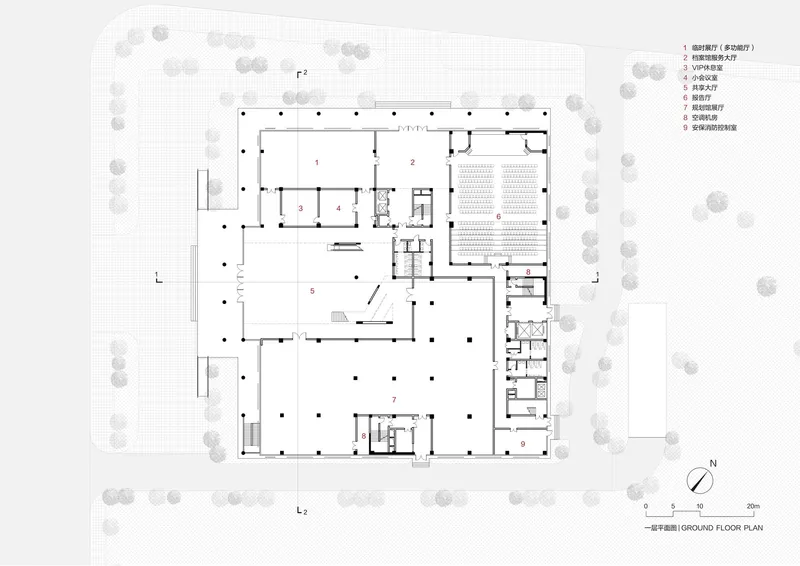
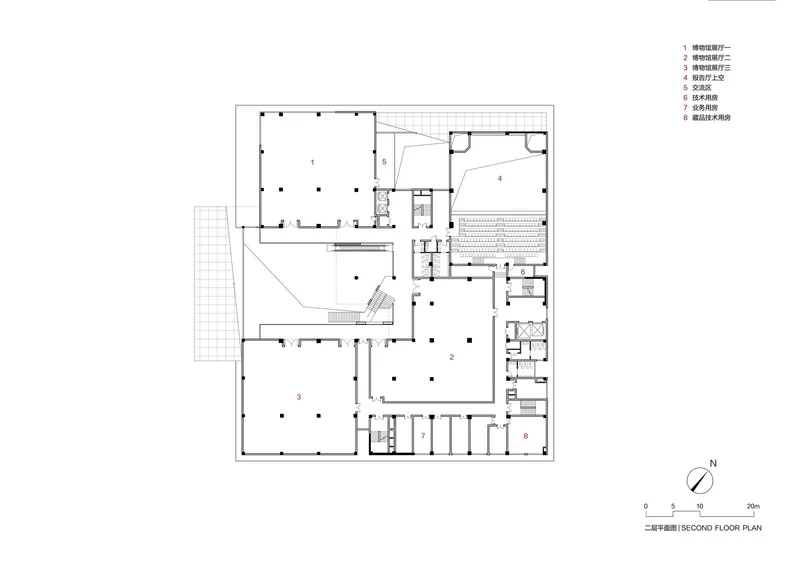
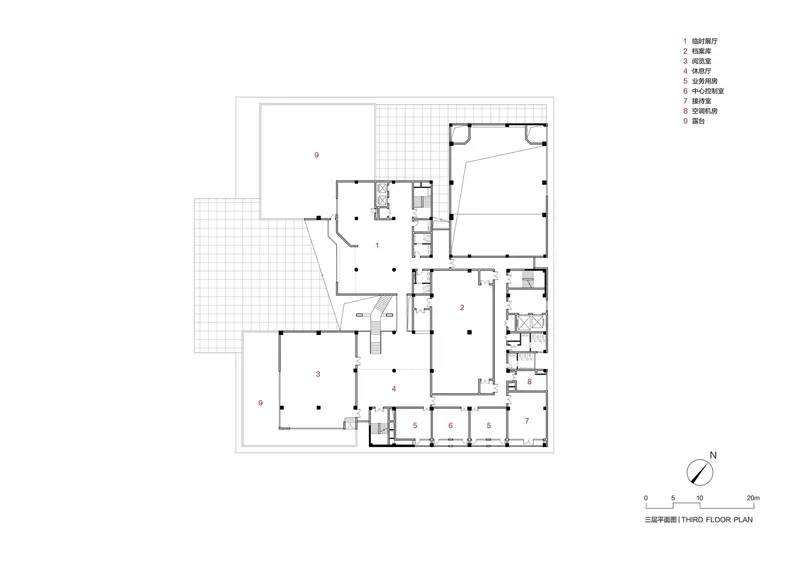
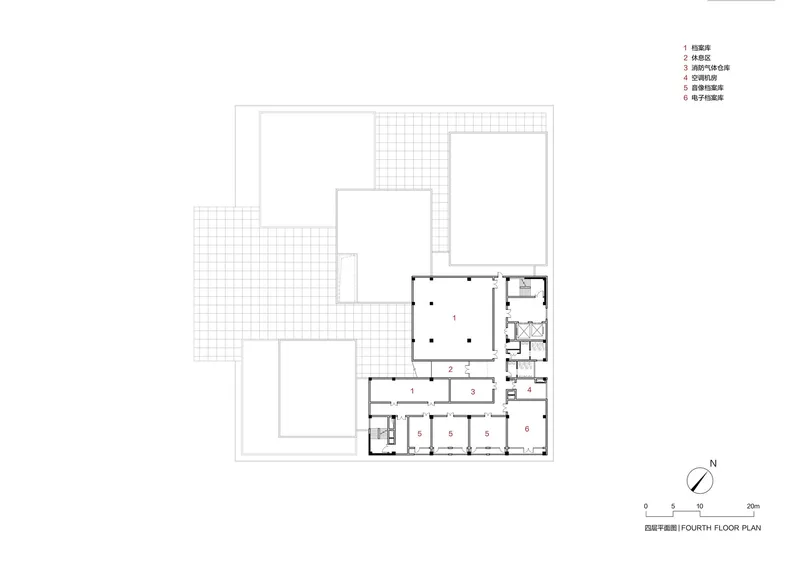
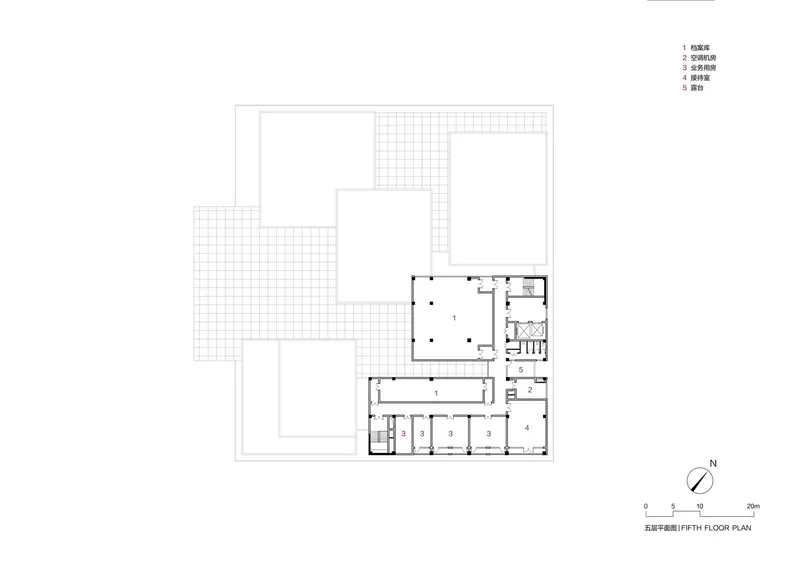
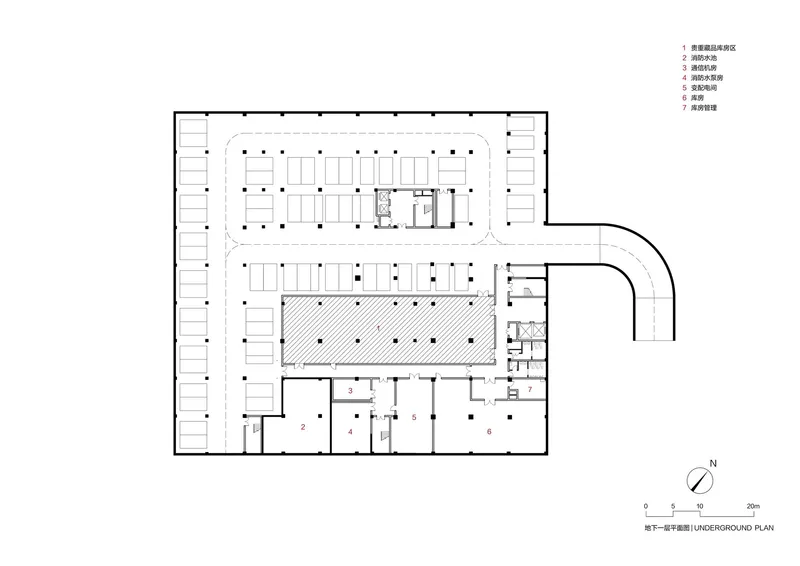
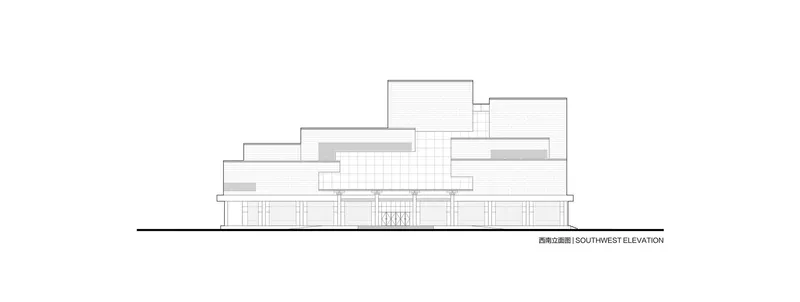
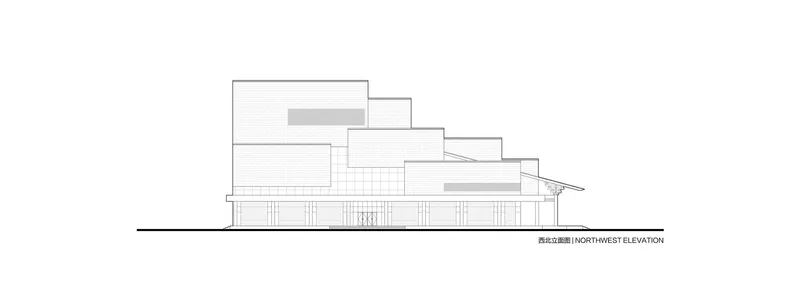
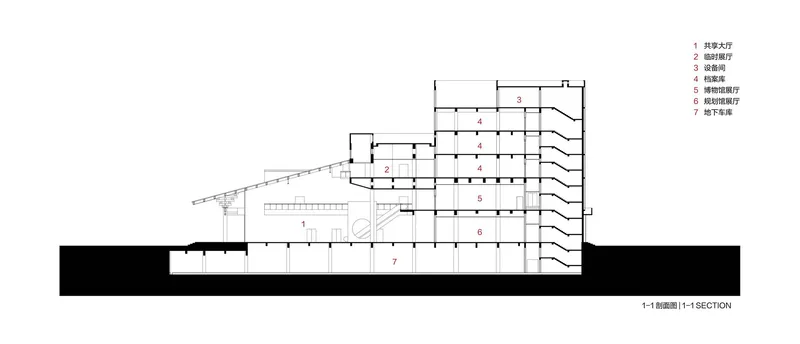
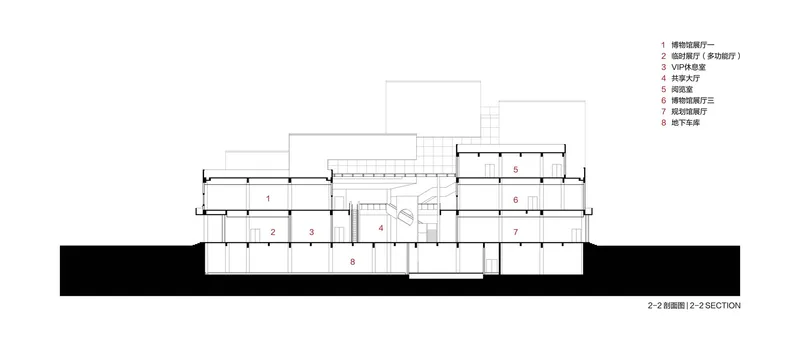
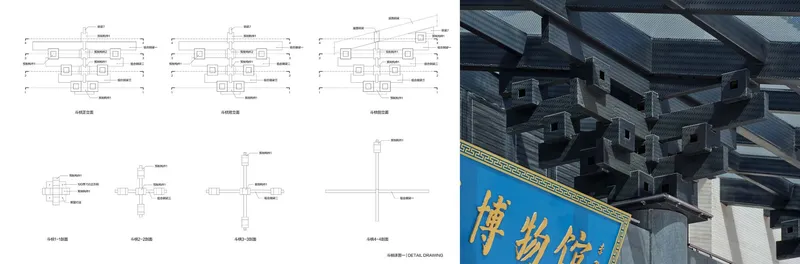
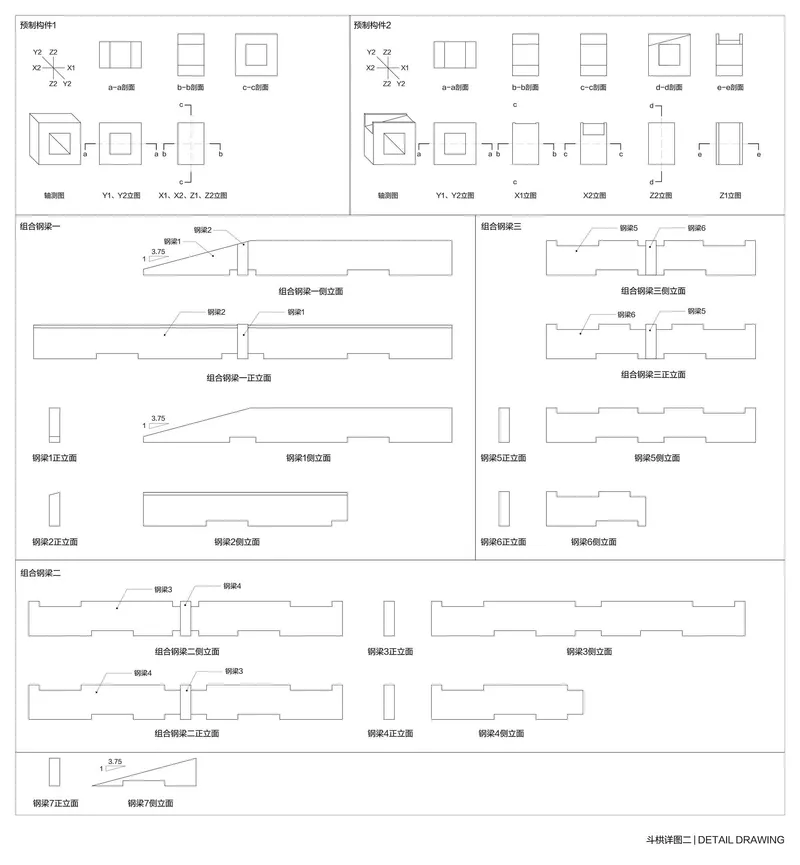
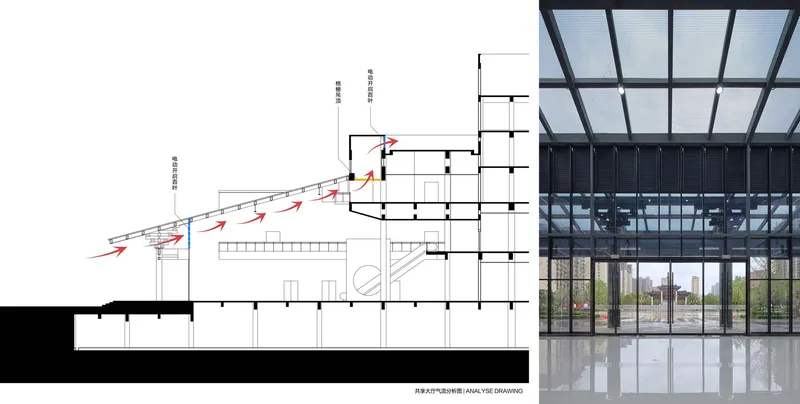
The floor plans reveal how three distinct programs, the museum, the archive, and the urban planning exhibition hall, share service cores and circulation without merging into a single undifferentiated mass. The underground level is given almost entirely to parking, freeing the ground floor for public use. Sections show the beam string structure spanning the glass-roofed halls and the stepped massing descending to subgrade. The construction detail drawings of bracket connections are particularly telling: they document WH studio's effort to translate classical Chinese joinery logic into steel, a structural ambition that goes beyond stylistic quotation.
Why This Project Matters
Chinese cities are producing civic buildings at a pace that rewards spectacle over specificity. What sets the Song County Three-in-One project apart is its refusal to be generic. Every major decision, from the courtyard typology to the column proportions to the massing profile, is rooted in something local: the vernacular dwelling pattern, the classical proportioning system, the landscape mythology of the Eight Scenes. The building does not announce these references with signage or literal imitation. It absorbs them into a contemporary language that holds up on its own formal terms.
The pragmatic achievement is equally important. Fitting three public institutions onto a site this constrained, while delivering courtyards, a colonnade, and generous daylit interiors, required genuine design intelligence. WH studio demonstrated that density and civic generosity are not opposites. For a county receiving its first major cultural facility, that is a meaningful gift.
Three-in-One Construction Project of Song County by WH studio (lead architect: Hui Wang Interior). Located in Luoyang, China. 8,796 m². Completed in 2022. Photography by ZY Studio.
About the Studio
Share Your Own Work on uni.xyz
If projects like this are the kind of work you want to make, uni.xyz is a place to publish your own, find collaborators, and enter design competitions.


Popular Articles
Popular articles from the community

Temporary Home for Dogs: A Reversed Zoo Rethinks Animal Shelter Architecture
In Bucharest, a sinuous corridor and freed landscape flip the logic of containment, designing a shelter that works to make itself unnecessary.

Tsunami Convergenics: Turning Catastrophic Ocean Forces into Underwater Housing Infrastructure
A speculative underwater settlement off the coast of Onagawa, Japan, treats tsunamis and typhoons as energy sources rather than threats.

The Amber Palace Opera: A Geological Fiction Surfaces on Tallinn's Baltic Waterfront
Pierre Brillard reimagines a Baltic legend as a public landscape, opera house, and waterfront promenade rooted in Tallinn's coastal identity.
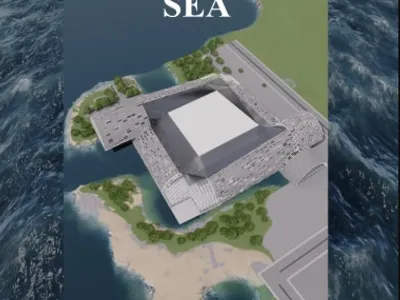
Opera on the Sea: Driftwood Logic Shapes a Timber Opera House on Estonia's Coast
Trevor Orgill's opera house translates the entangled drift of floating timber into a civic building where wood, water, and music converge.

Similar Reads
You might also enjoy these articles

Bao Huynh Watercolor Atelier: A Serene Art Retreat in Hội An
Bao Huynh Watercolor Atelier in Hội An blends multifunctional art spaces, sustainable design, local materials, and family-friendly living in a serene environment.

Atelier Macri Concept Store Interior Design by CASE-REAL
Atelier Macri store features a "ko" counter, walnut wood details, cork displays, blending retail, gallery, and seamless customer experiences.

Manuel Vargas Izquierdo Stadium and High-Performance Sports Center: Architectural Excellence in Jalpa de Méndez
The Manuel Vargas Izquierdo Stadium blends sustainable design, inclusive sports facilities, and cultural-inspired architecture, revitalizing Jalpa de Méndez’s public spaces.

KAKR Buluh Awar Hall: Revitalizing Community and Ecology Through Bamboo Architecture
Community built bamboo hall revitalizes Buluh Awar village, empowering youth, restoring ecology, celebrating vernacular craftsmanship through sustainable architecture and culture.

Explore Chinese Small Scale Architecture Competitions
Discover active competitions in this discipline

Challenge to design mud housing for contemporary communities

Bring back Drive In's
Comments (0)
Please login or sign up to add comments
No comments yet. Be the first to comment!