
Wim Heylen Designs a Belgian Live-Work House Where White Brick and Timber Frame Daily Life
House DD in Belgium merges home and office into a single cohesive volume of white brick, exposed timber, and terracotta warmth.


The live-work brief is one of architecture's most deceptive challenges. Clients ask for two programs under one roof, then insist it feel like neither a house with an office tacked on nor an office that happens to have a bed. Wim Heylen Architect confronts that tension head-on with House DD, a 240-square-meter new build in Belgium completed in 2022. Rather than splitting the program into clearly labeled zones, the practice shapes a single continuous envelope out of white and grey brick volumes, then uses material consistency, exposed timber structure, and terracotta flooring to stitch every room into one domestic register.
What makes House DD worth studying is not the brief itself but how the architecture dissolves the boundary between productive and domestic space without resorting to open-plan cliché. Walls exist. Doors close. Yet the material palette and structural rhythm repeat so faithfully from kitchen to workspace to bedroom that you move through the house without ever feeling you have crossed a threshold into a different building. It is a lesson in restraint: the fewer materials you use, the harder each one works.
Street Presence and Entry Sequence
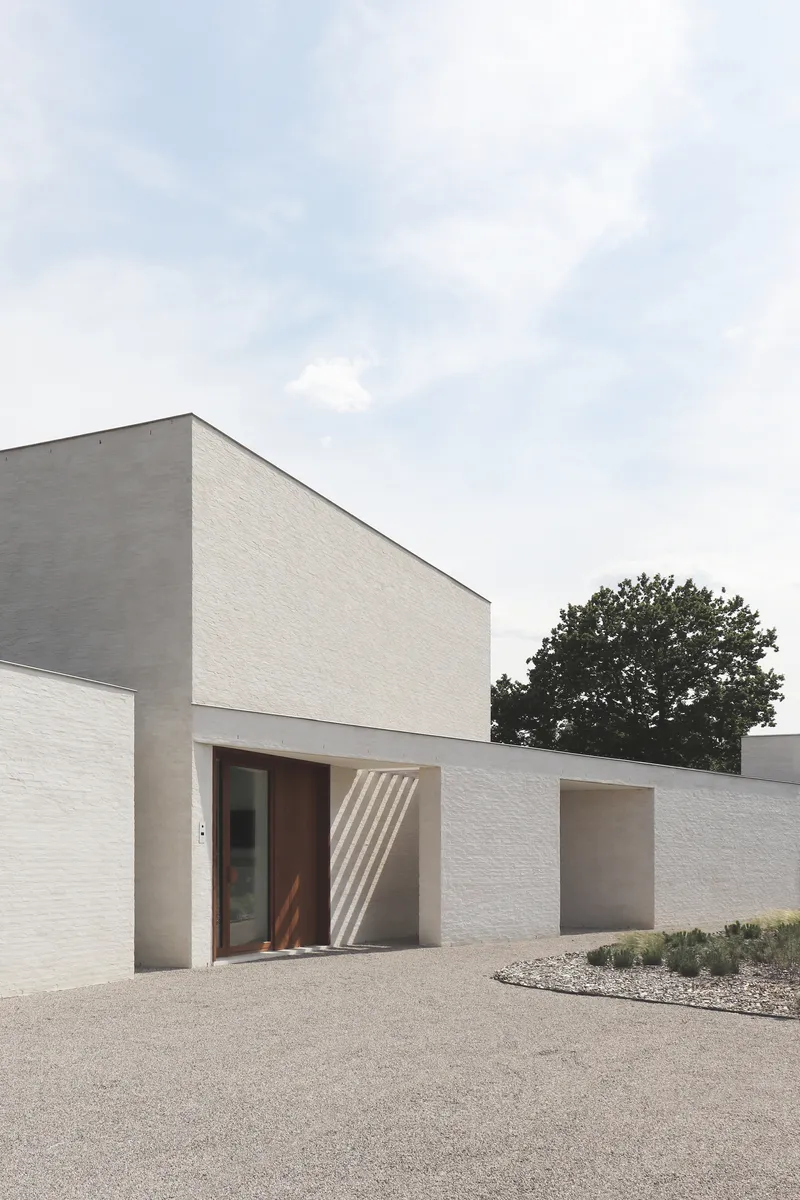
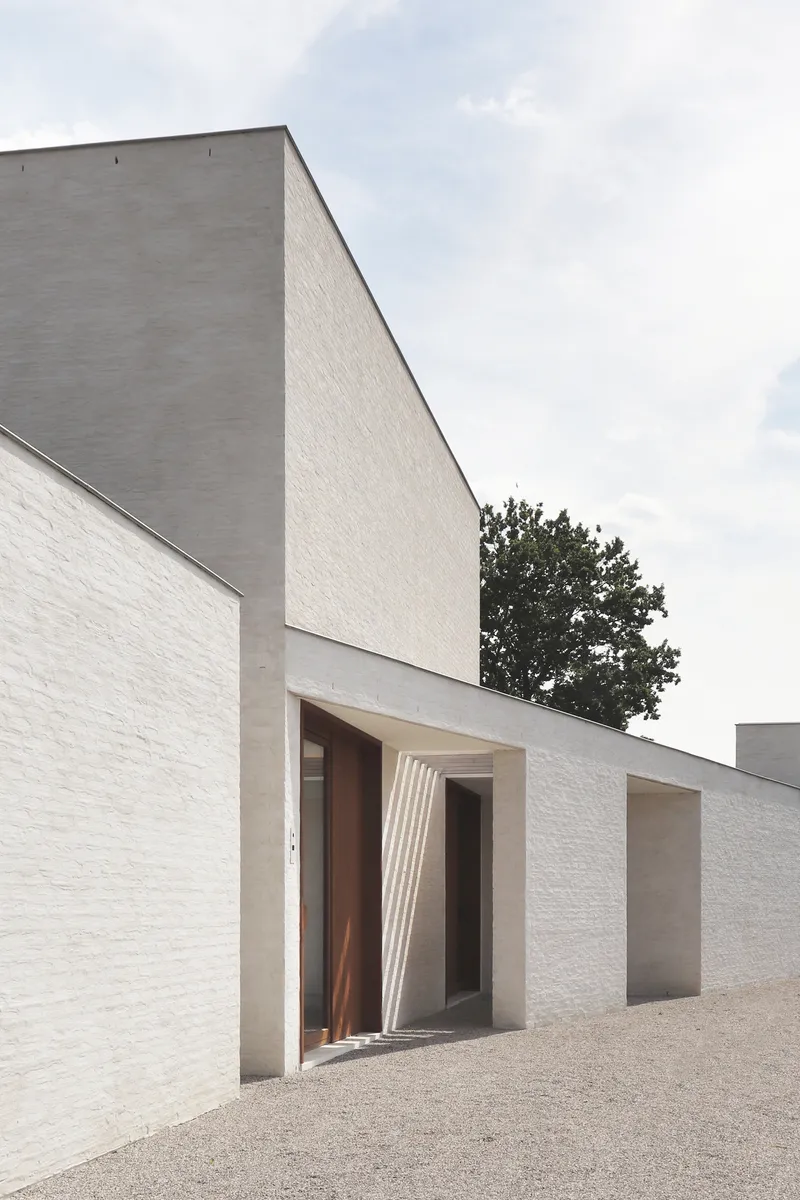
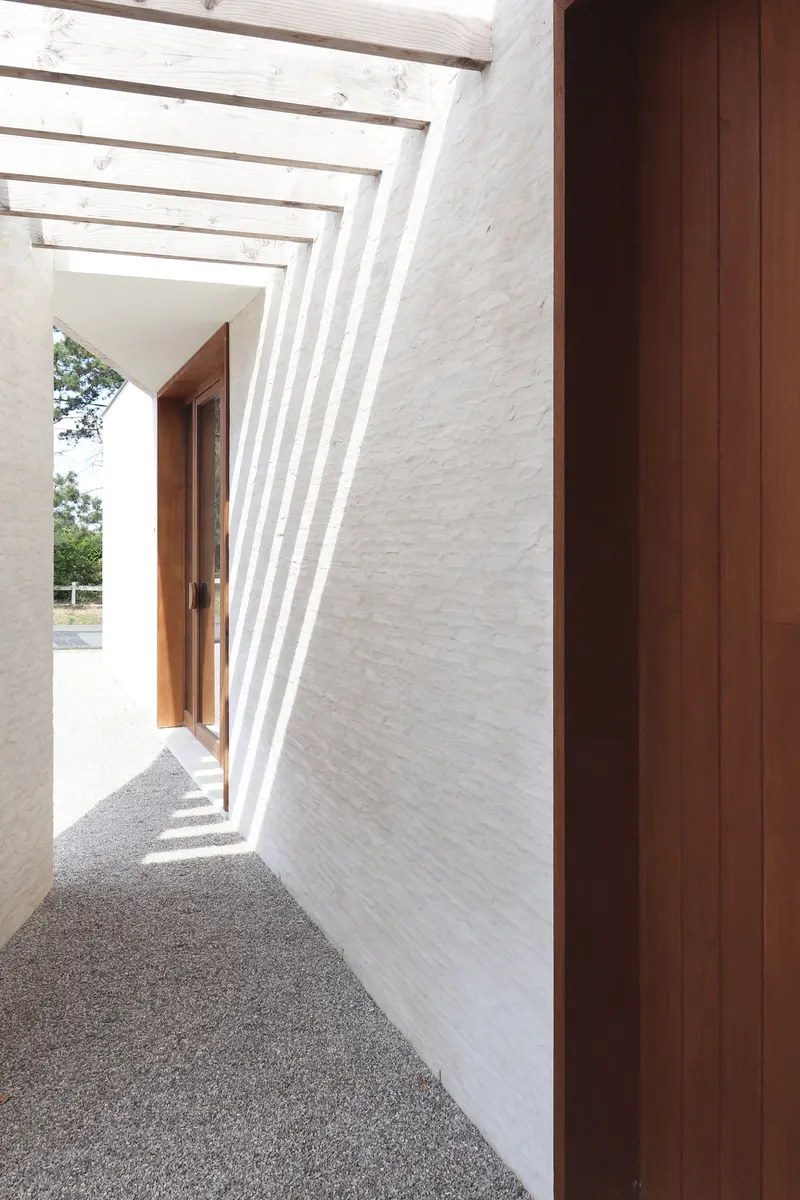
From the street, House DD reads as a carefully composed arrangement of white and grey brick planes punctuated by a single timber door. A ribbed concrete canopy marks the entrance, projecting from the facade with enough depth to create a moment of shelter and shadow before you step inside. The canopy's angled ribs cast linear shadows across the white brick wall, giving the threshold a graphic quality that is handsome without being theatrical.
Heylen uses the entry as a compression device. The deep-set door, the low canopy, and the relatively opaque street facade all conspire to slow you down before the house opens up on the garden side. It is a classical trick, but the execution, relying on the interplay of concrete ribs and flat brickwork rather than on scale or ornament, feels genuinely contemporary.
The Courtyard and Brick Volumes
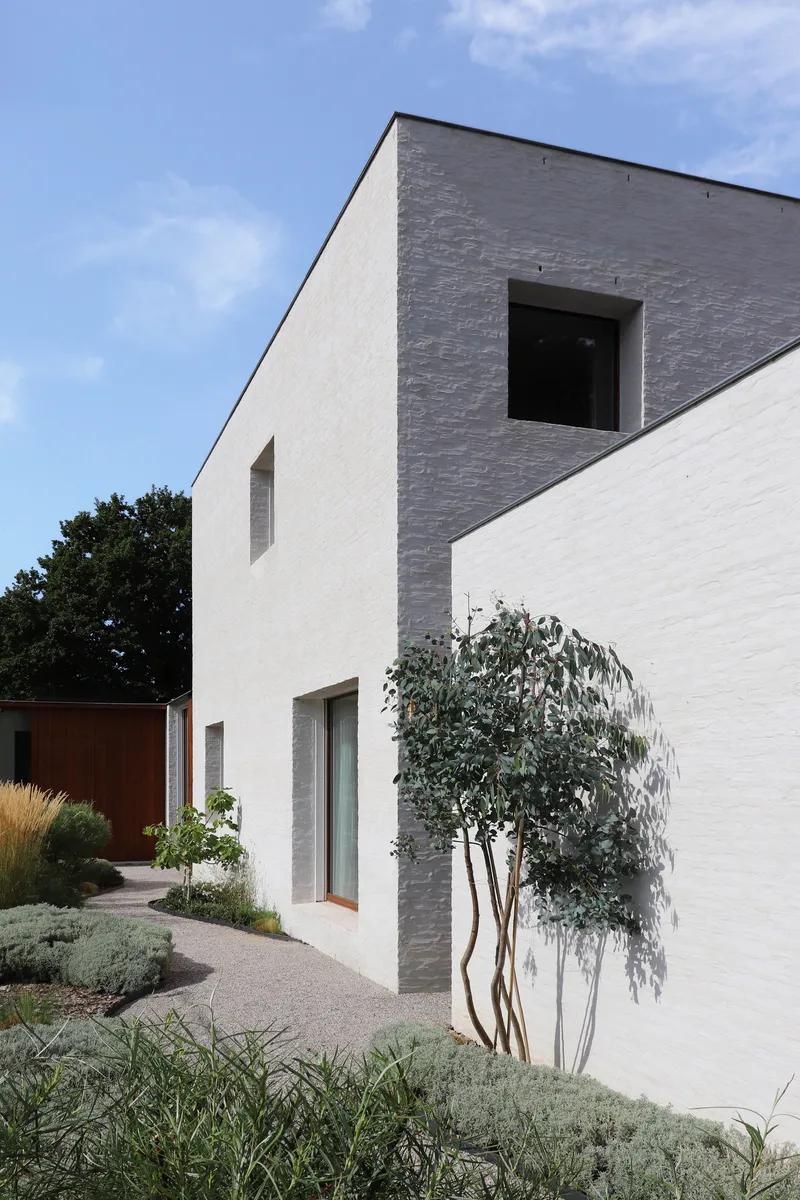
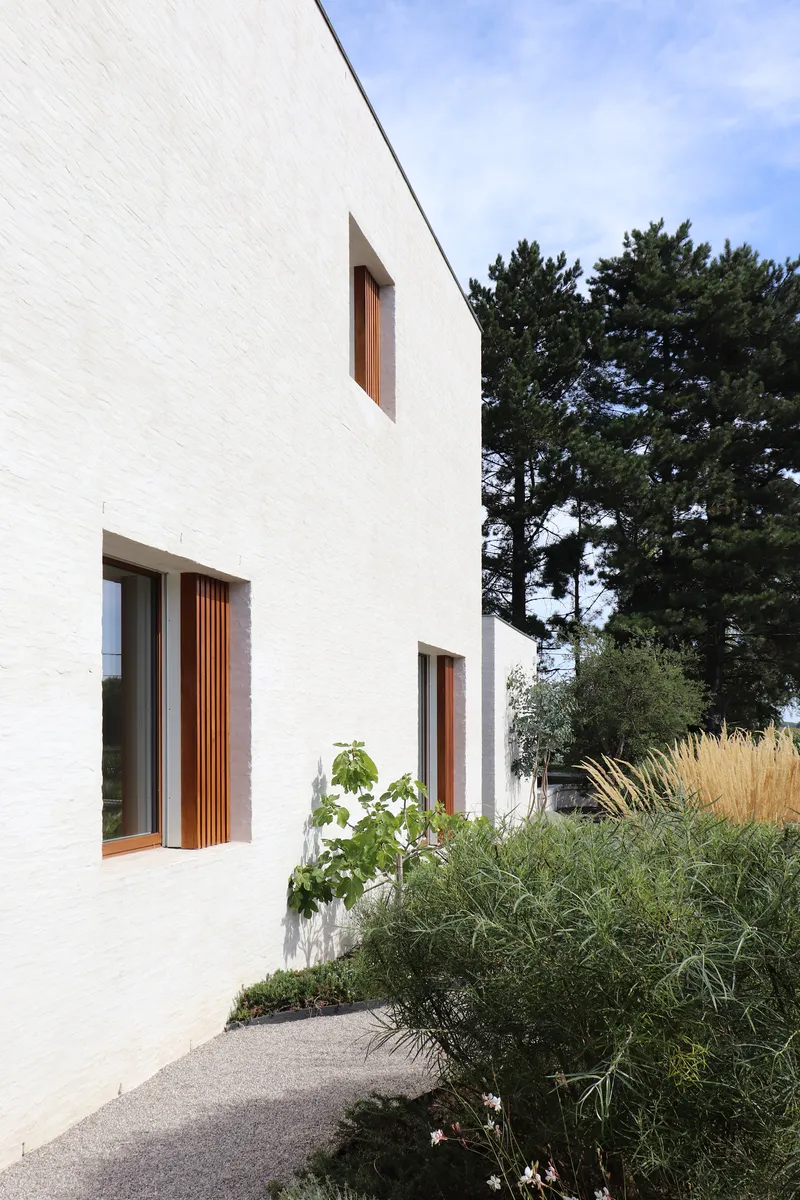
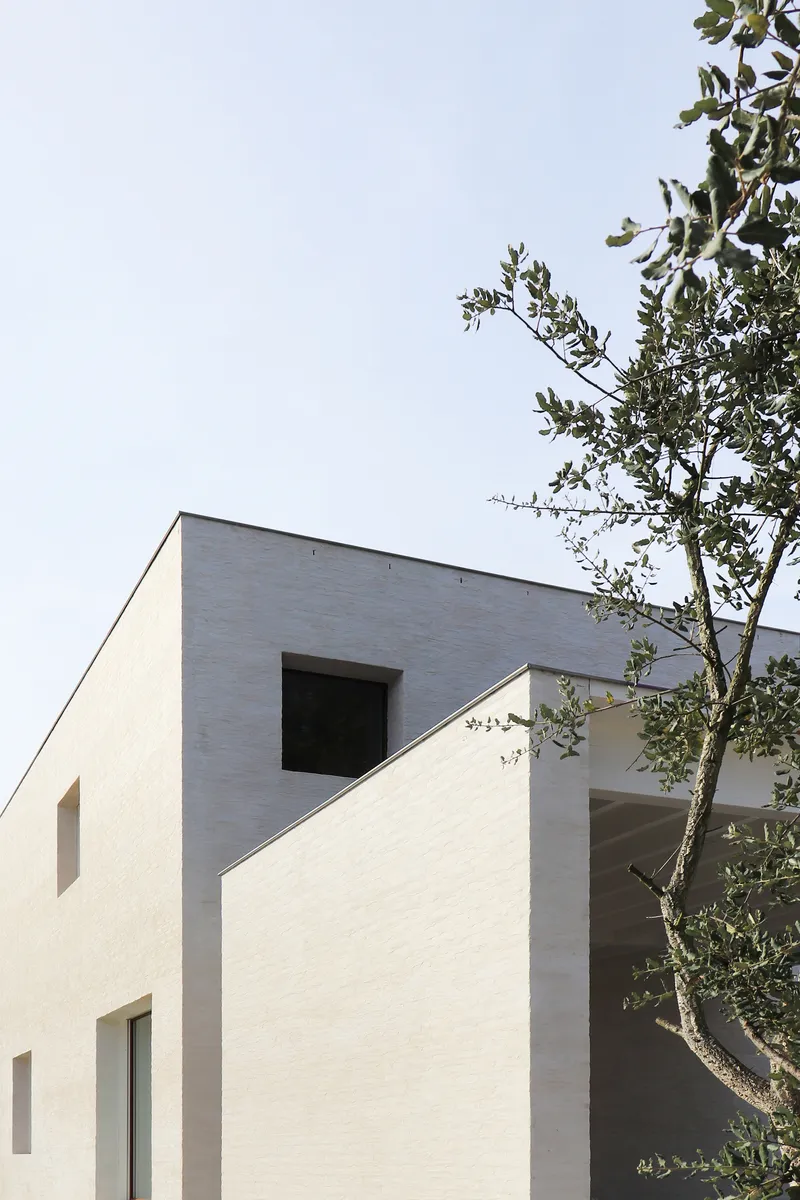
Beyond the entrance, a courtyard introduces the house's organizational logic. White and grey brick volumes define edges, and a multi-stemmed tree occupies the center, softening the geometry without masking it. The interplay of stacked plaster masses and punched window openings gives the composition a sculptural weight that changes character as you walk around it.
Vertical timber shutters appear along the courtyard-facing elevations, flanking deep-set windows. These shutters serve a dual purpose: they regulate light and privacy for the work zones inside, and they introduce a warmer grain to the otherwise mineral exterior. Planted beds at the base of the walls blur the hard line between building and ground, a small move that pays outsized dividends in making the house feel rooted.
Garden Facade and Outdoor Living
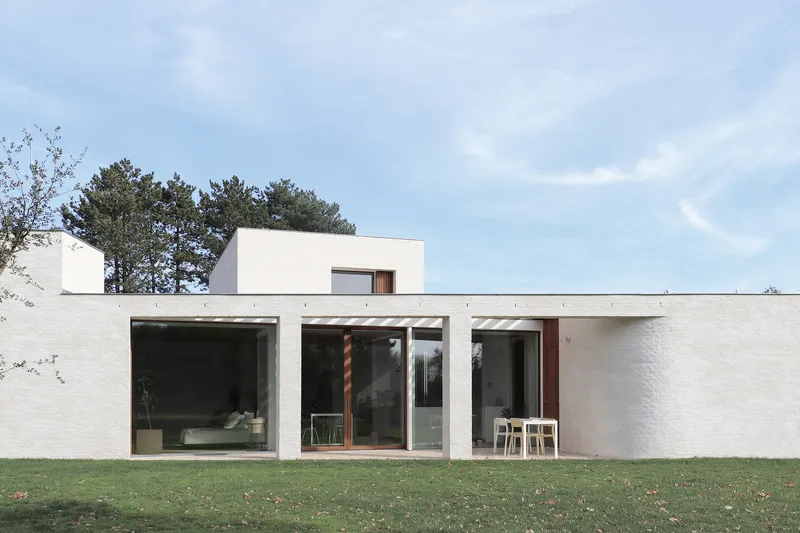
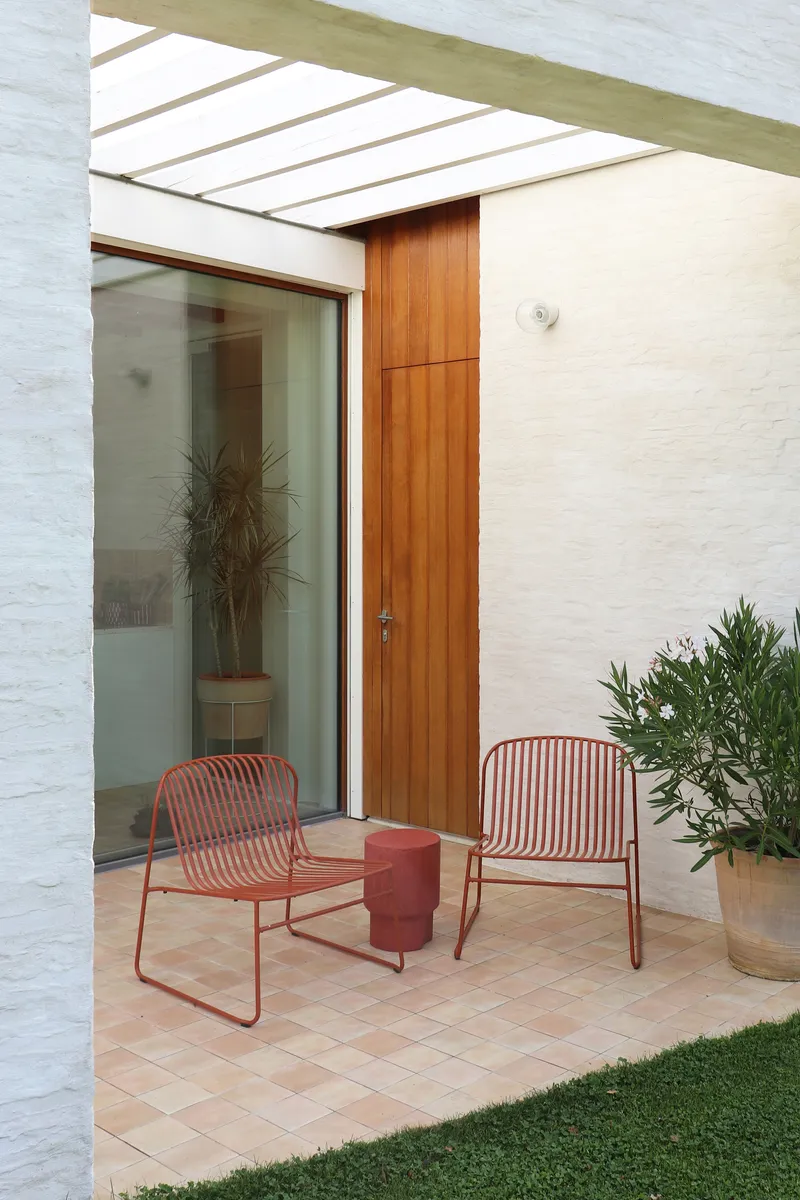
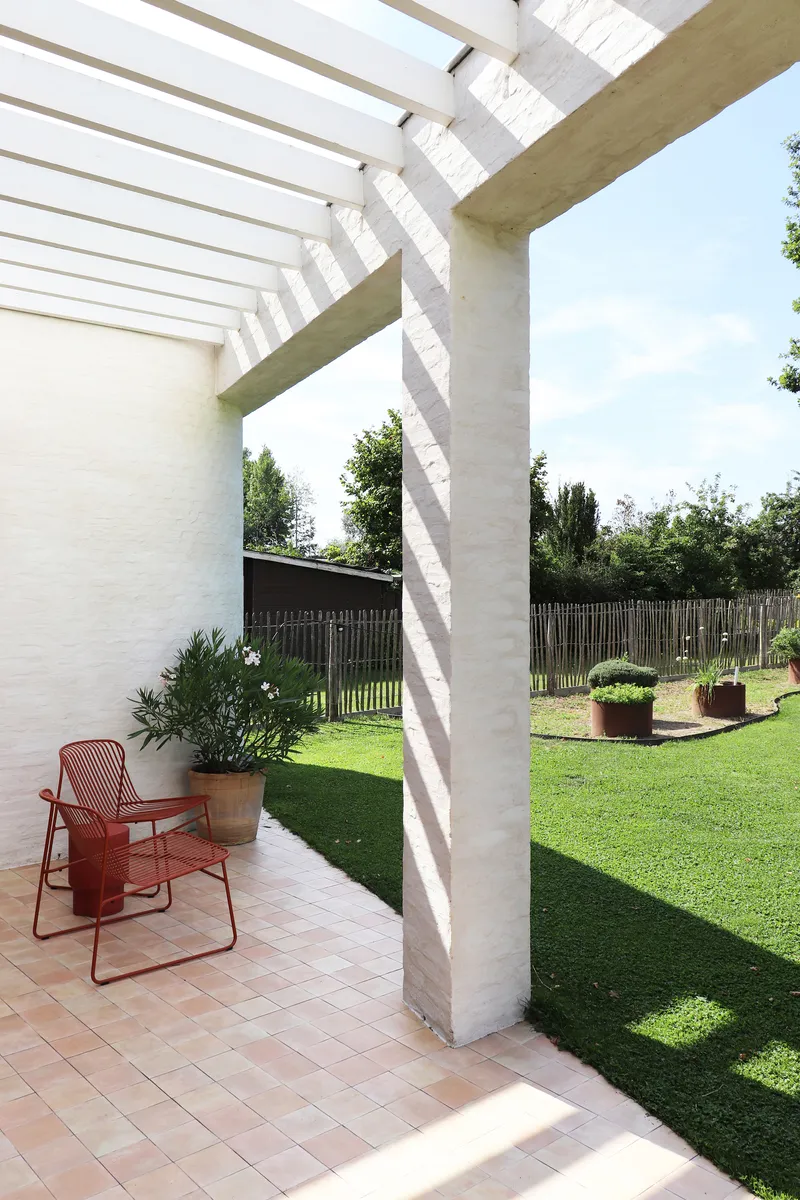
If the street side is guarded, the garden side is generous. Full-height glazed openings dissolve the wall between interior and lawn, and a covered terrace with terracotta paving, a timber door, and a set of red metal chairs extends the living space outdoors. A pergola with white slat roof and a concrete column casts striped shadows onto the paving, creating a filtered-light zone that functions as an outdoor room through much of the year.
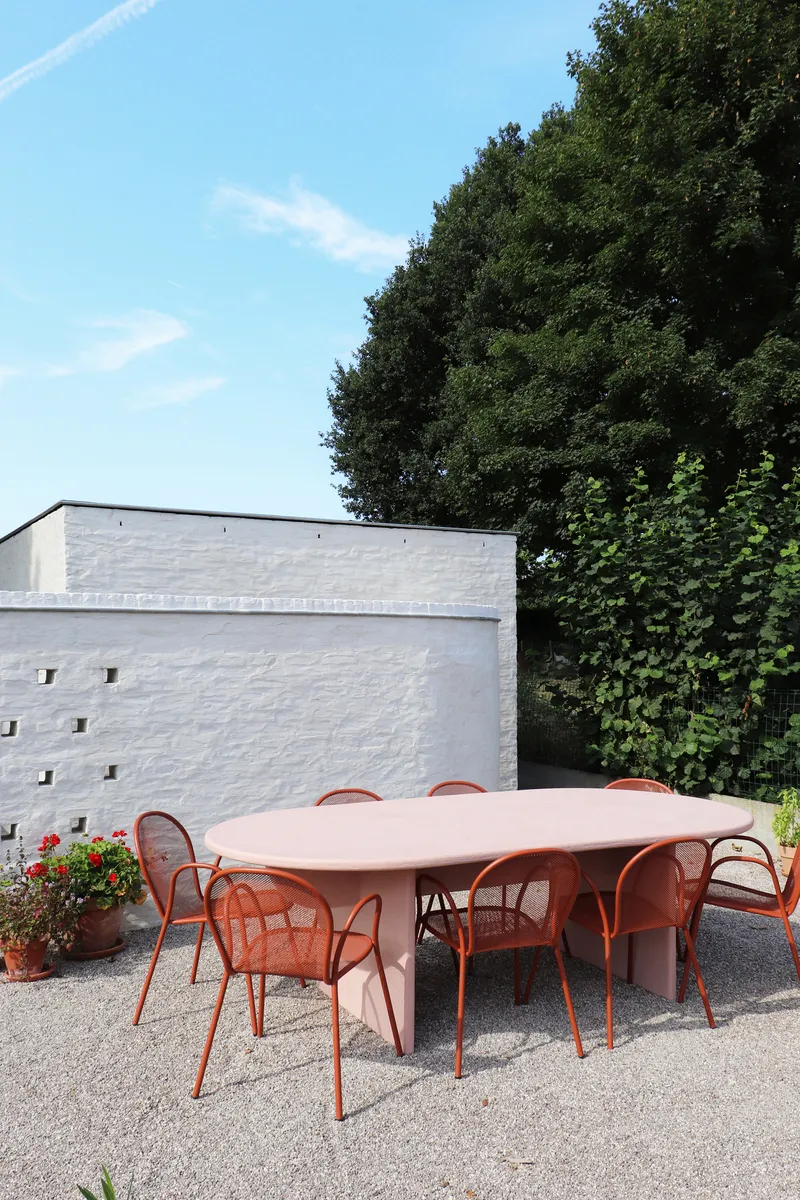
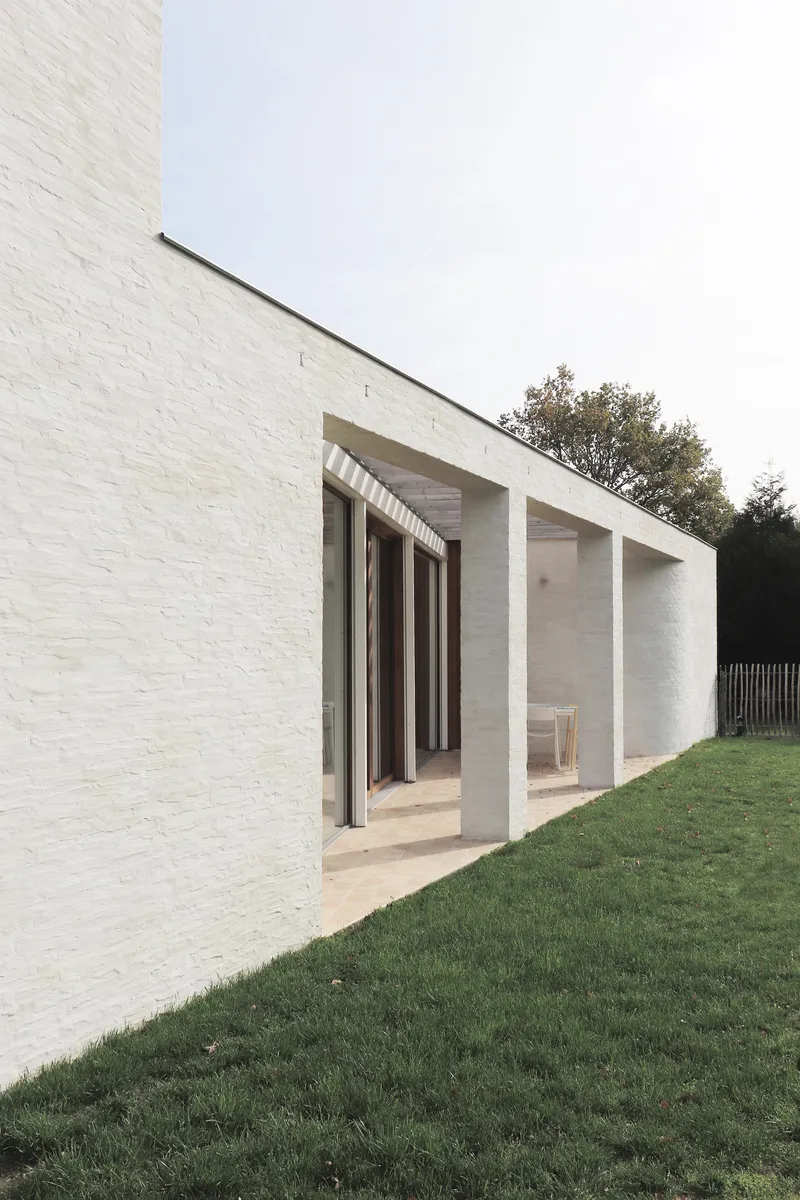
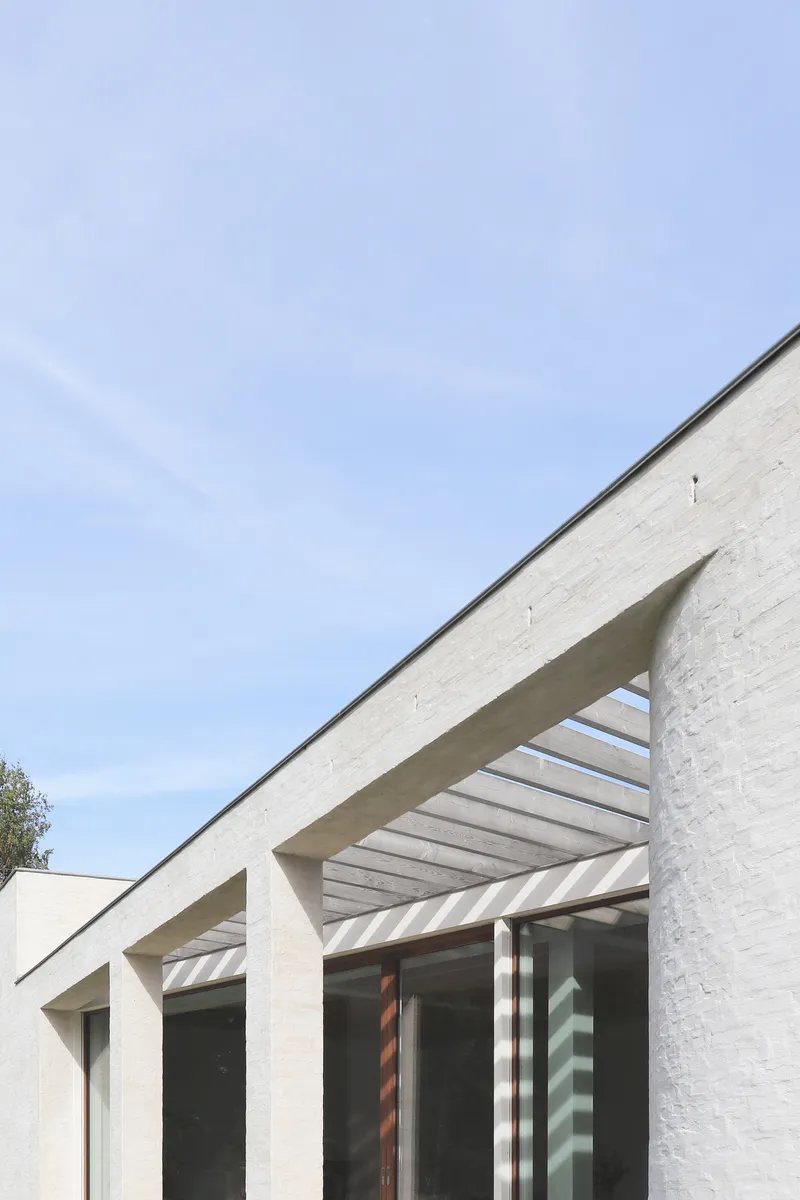
A gravel terrace with a pink oval table and red chairs against a white brick wall adds a note of playfulness that the house earns by being so disciplined everywhere else. A recessed porch with concrete columns and a deep overhang reinforces the idea that shelter here comes in degrees: fully enclosed, partially covered, lightly shaded, fully open. The transitions are gradual rather than abrupt, and each threshold invites you a little further into the landscape.
The Kitchen as Civic Heart
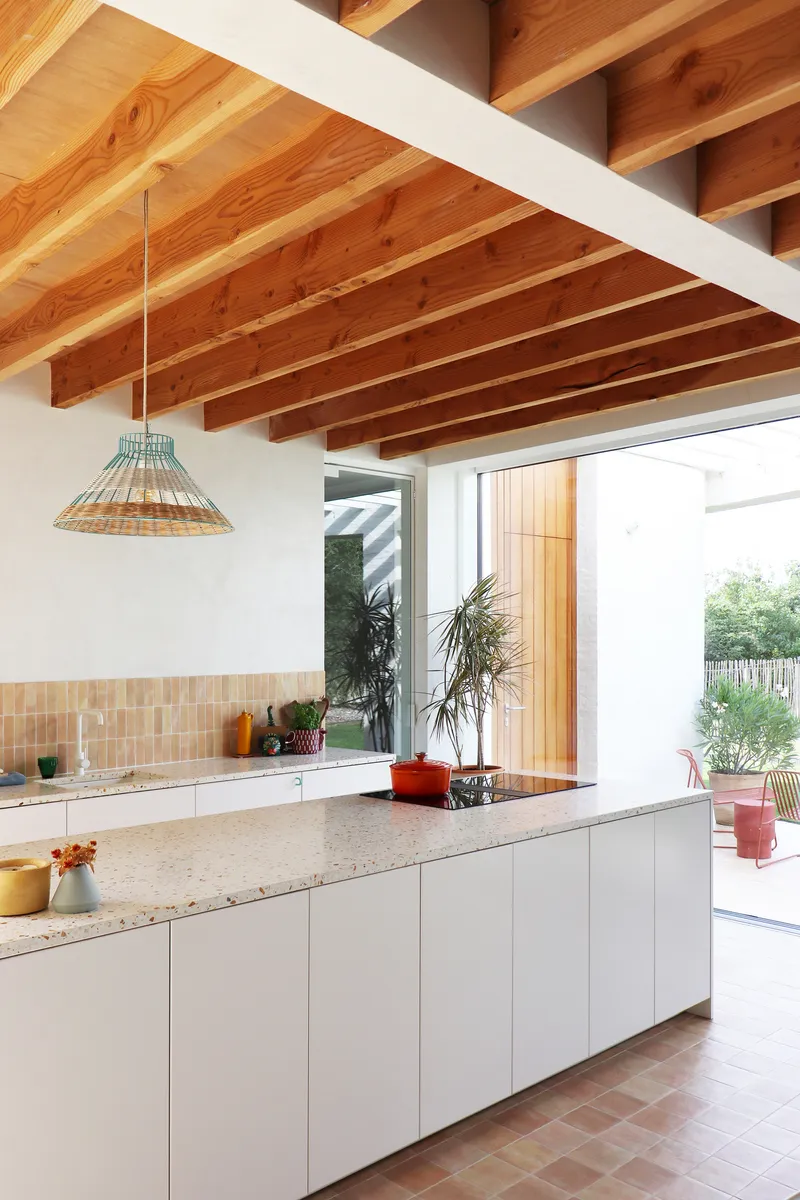
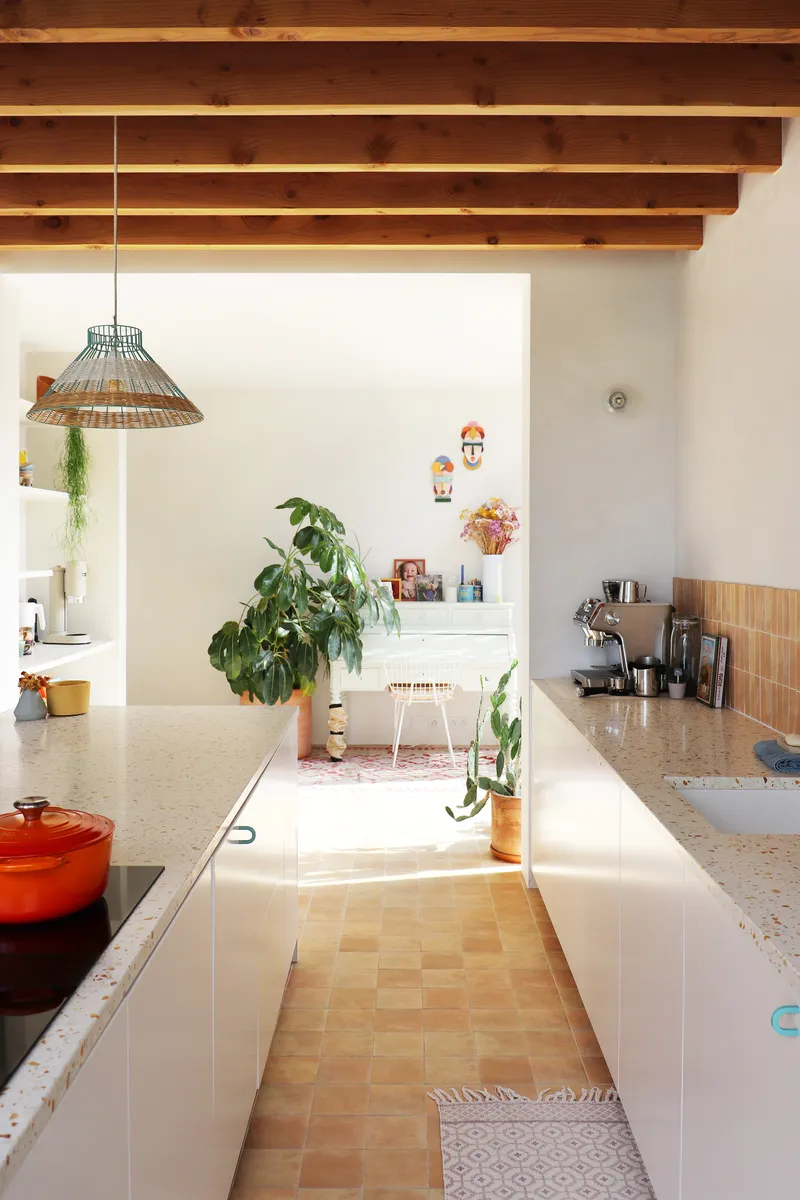
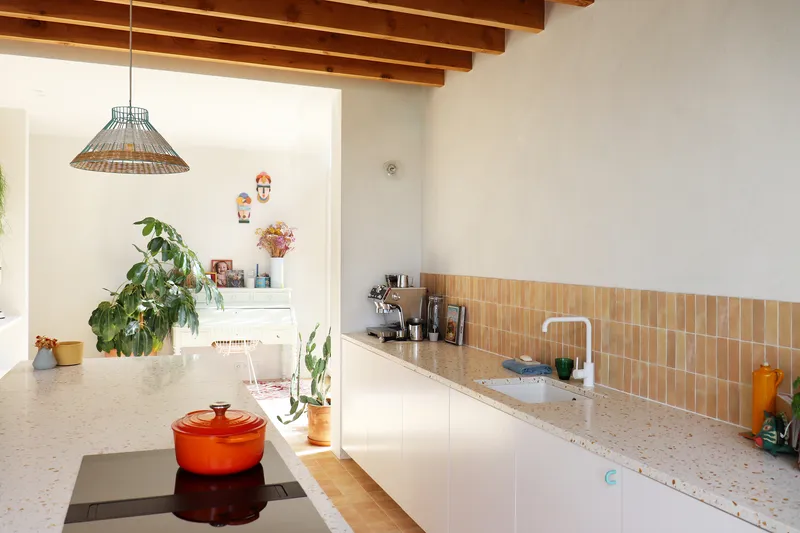
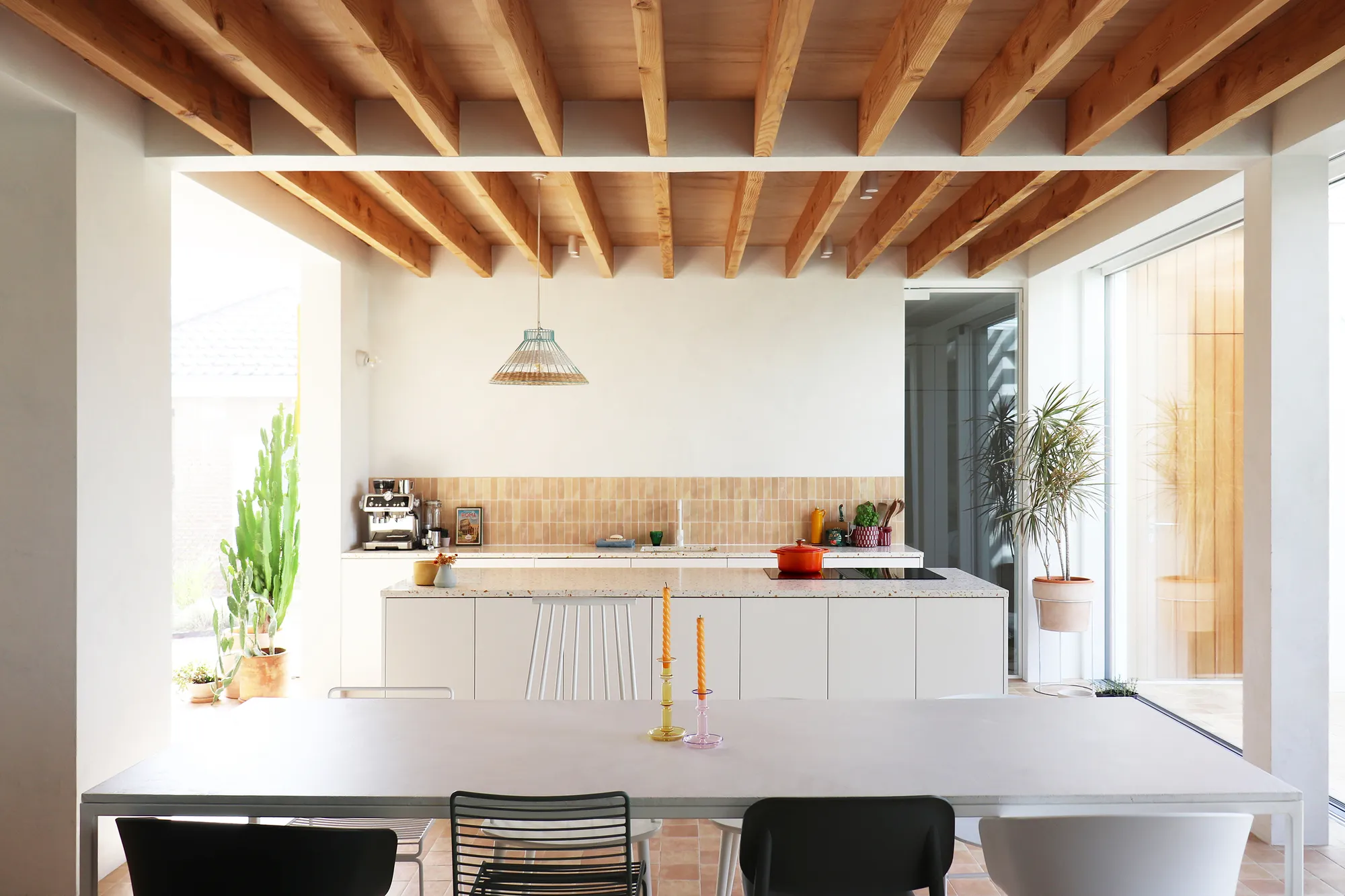
In a house that merges living and working, the kitchen ends up doing the heaviest social lifting. Heylen treats it accordingly. A terrazzo countertop island sits beneath exposed timber joists and recessed lighting, flanked by white cabinetry and a terracotta tile backsplash. The terrazzo introduces a finer-grained texture that contrasts with the broad planks of the timber ceiling, and the terracotta floor tiles tie the room to the rest of the ground level.
A galley-style working run extends toward a planted workspace, making the kitchen a passage between domestic and productive zones rather than a cul-de-sac. A woven pendant light and the soft patina of terracotta keep the space from feeling clinical, even as the clean lines and minimal hardware push it toward precision. The result is a room you could cook in, hold a meeting in, or simply stand around in without feeling out of place.
Living Spaces Under Exposed Timber
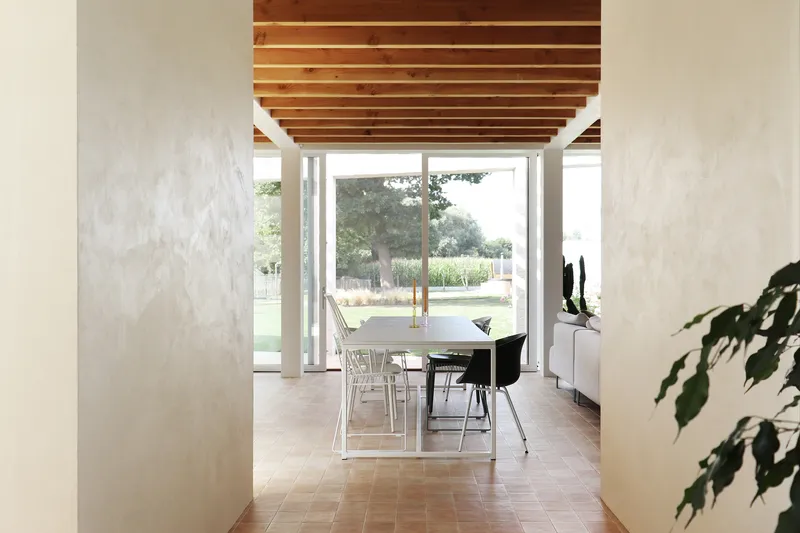
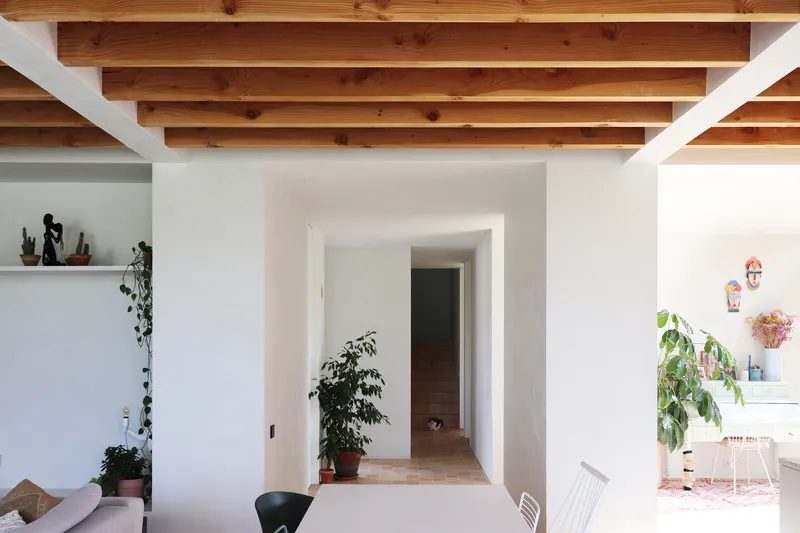
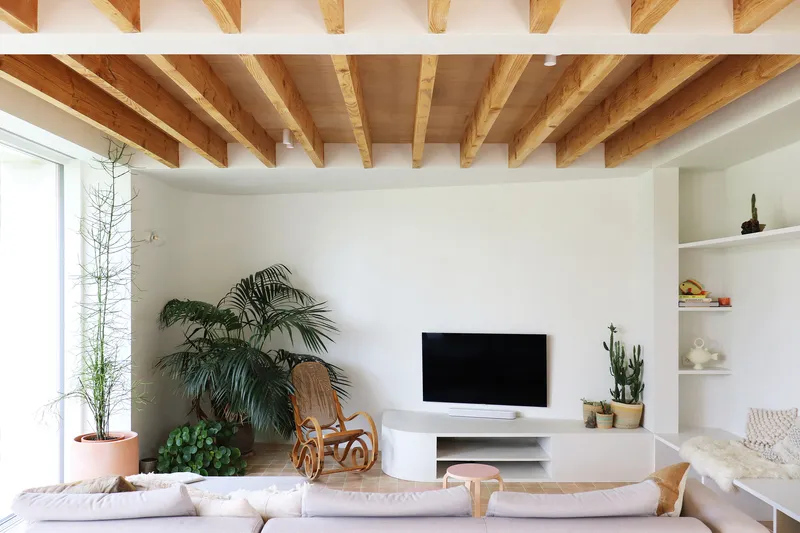
The exposed timber beam and joist ceiling is the house's most legible structural gesture. It runs continuously through the dining room, living spaces, and corridors, binding rooms together the way a shared floor finish might do underfoot. The beams are honestly expressed, not decorative add-ons, and their warm honey tone against white plaster walls creates a layered depth that would be impossible with a flat drywall ceiling.
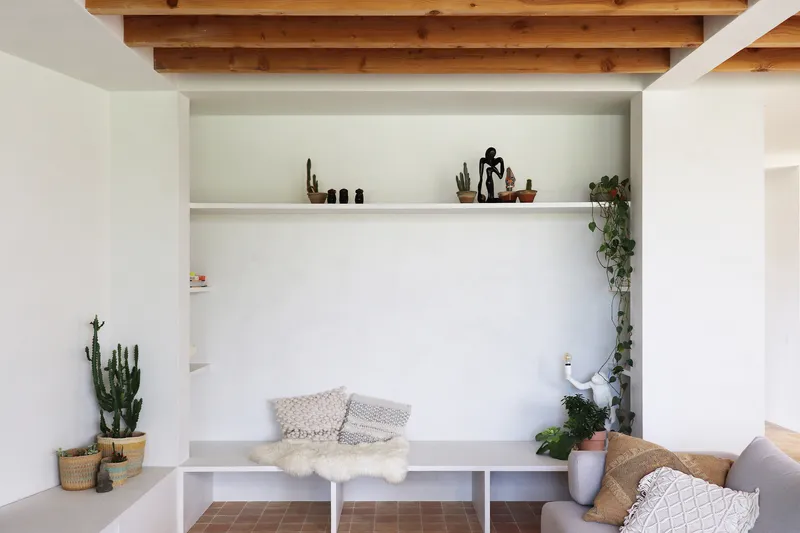
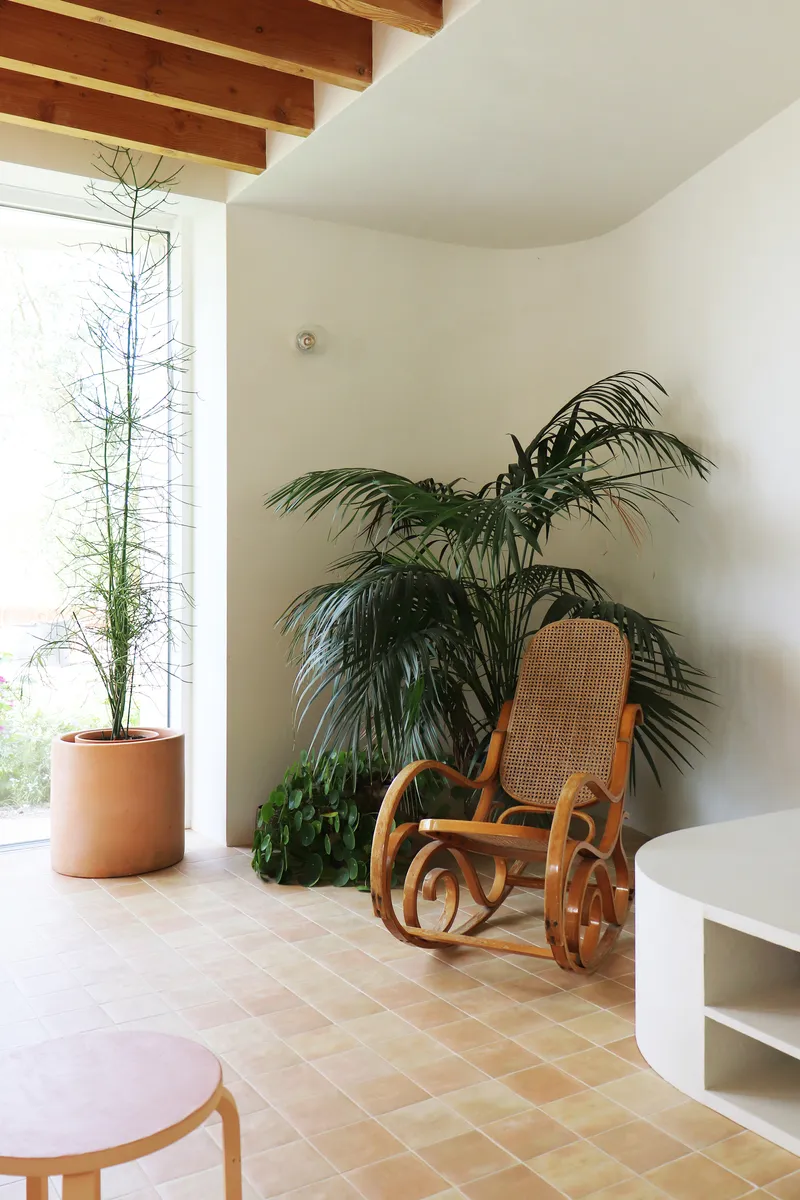
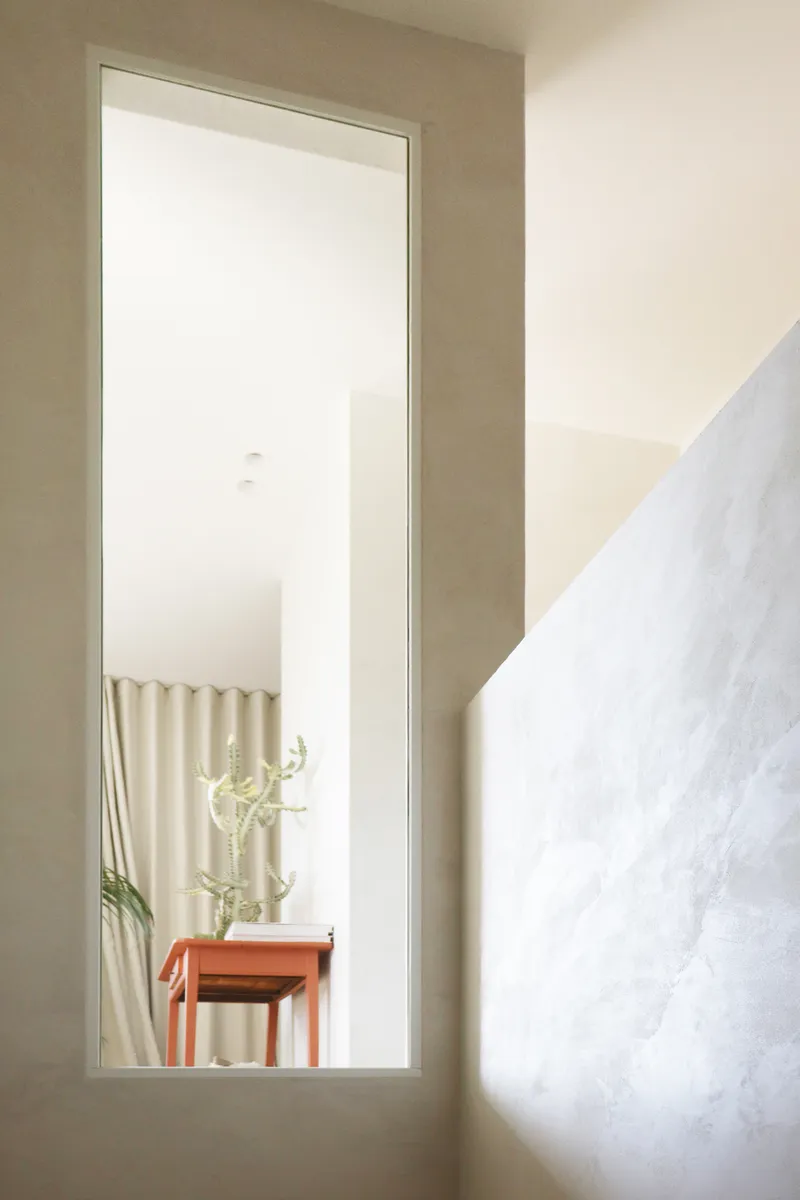
Furnishing choices reinforce the material logic. A built-in white bench with open shelving, a bentwood rocking chair beside potted palms, and a writing desk with a wire chair all sit comfortably beneath the timber canopy. The rooms are lived-in rather than staged, and the photography, taken by Heylen himself, captures that quality with candor. Tall narrow windows frame deliberate views of consoles, plants, and wall hangings, turning sightlines into composed moments.
Bedrooms and Bathrooms
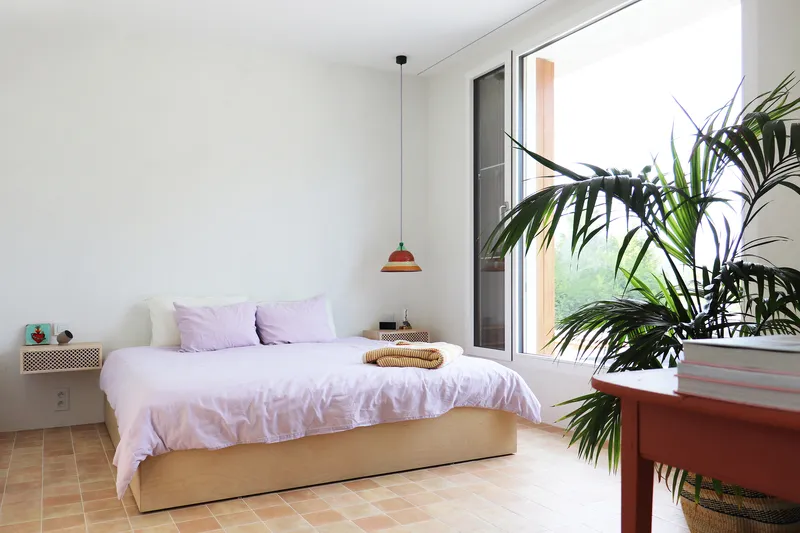
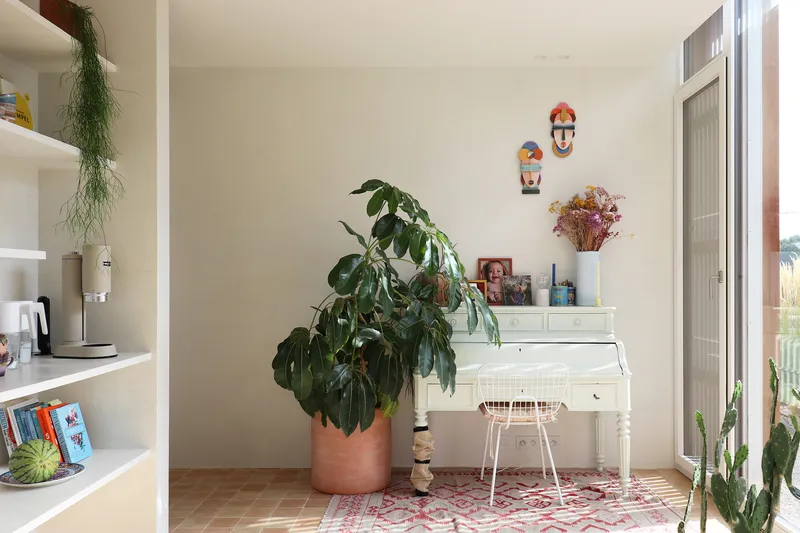
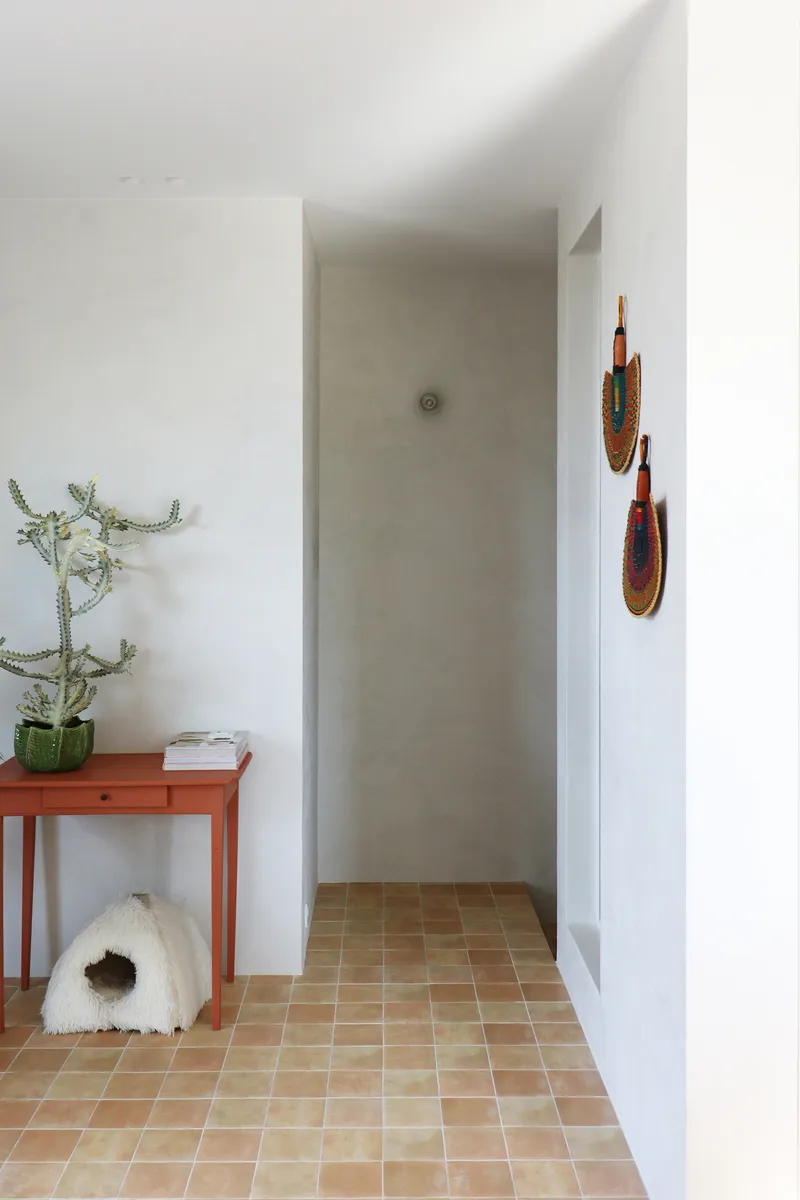
The bedrooms continue the terracotta-and-timber palette without variation, which is precisely the point. A bedroom with full-height glazing framed by potted palm fronds opens to the garden, collapsing the distance between sleep and landscape. The entrance corridor, paved in the same terracotta tiles, leads through a textured plaster wall to the private quarters, maintaining continuity while signaling a shift in register.
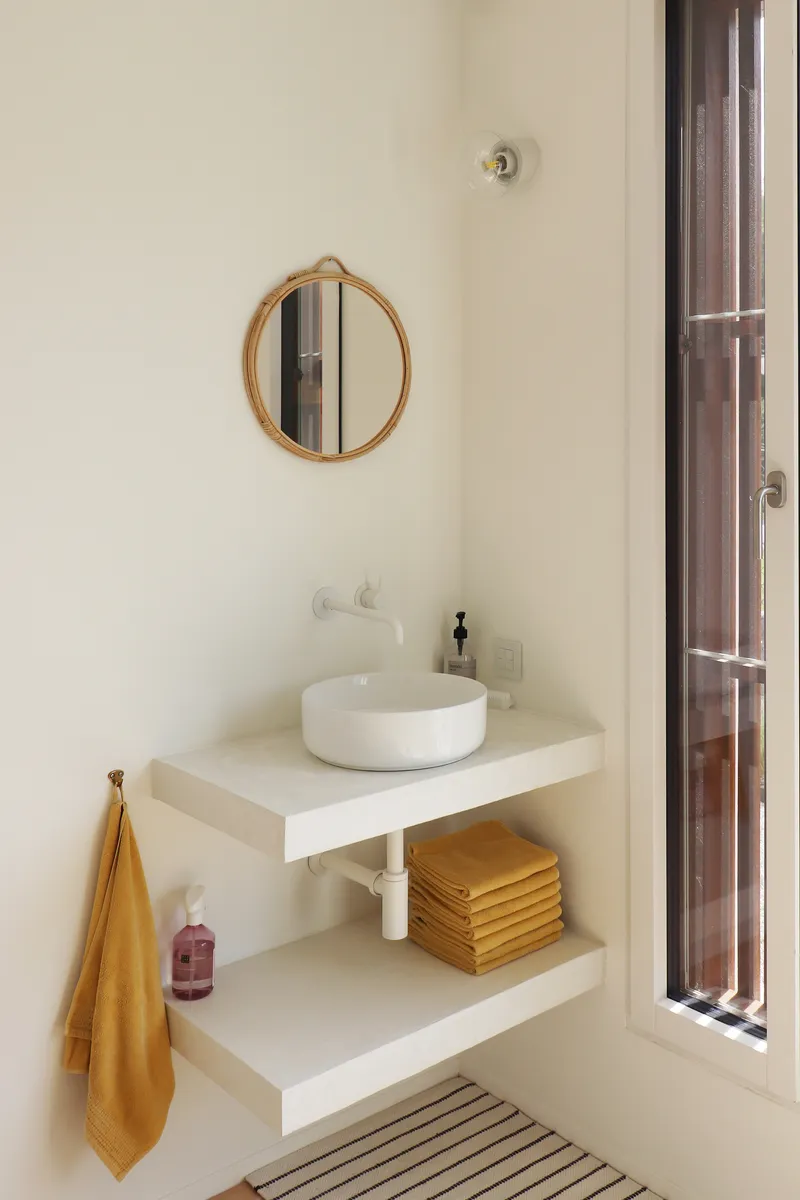
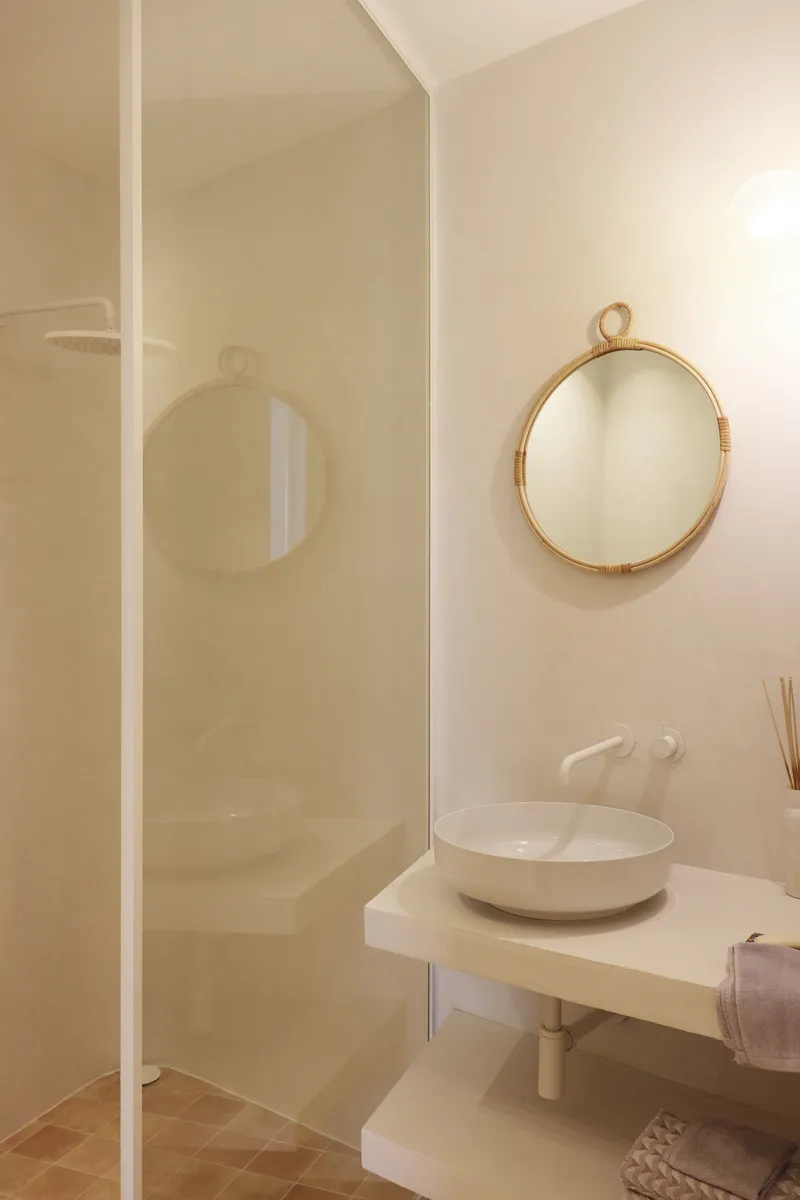
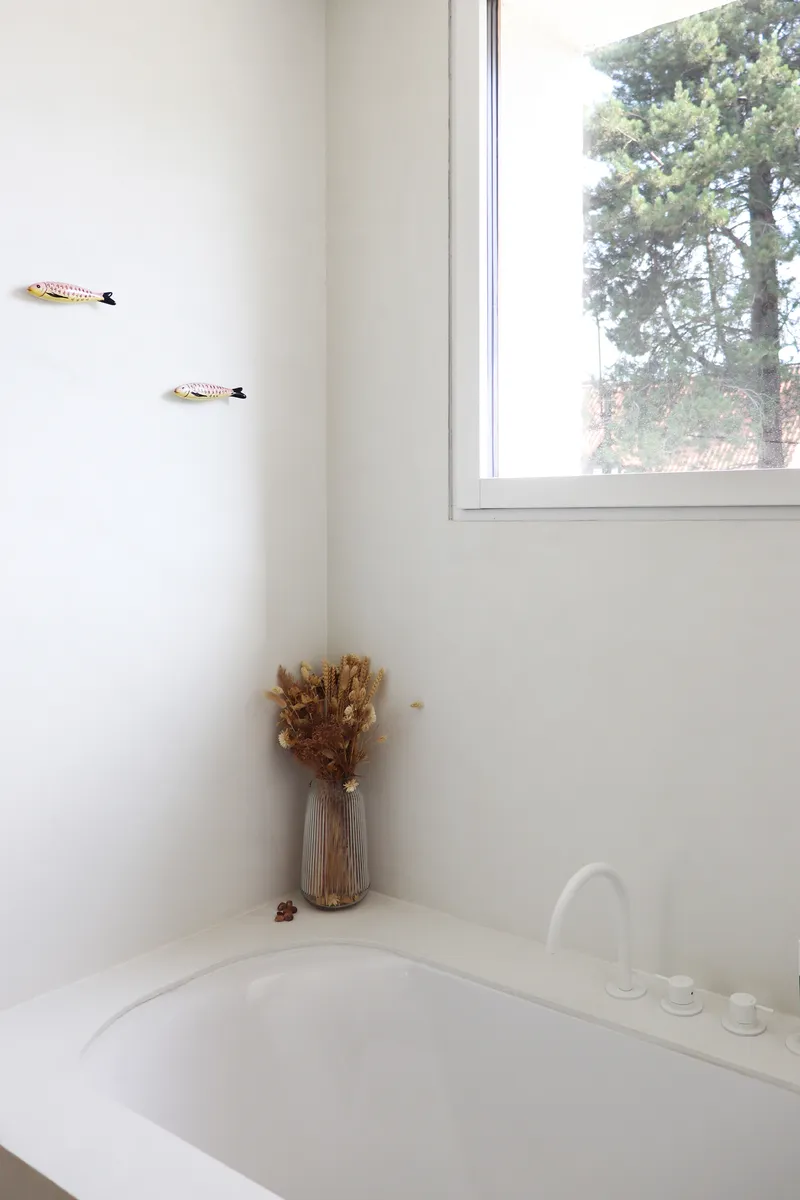
Bathrooms are handled with the same economy. Floating shelves, round vessel sinks, circular or oval mirrors, and tall louvered timber doors recur in slightly different configurations across multiple rooms. A bathtub corner with dried florals under a window overlooking mature trees is the most overtly atmospheric moment in the house, but even here the palette stays disciplined. Nothing screams for attention; everything earns it.
Plans and Drawings
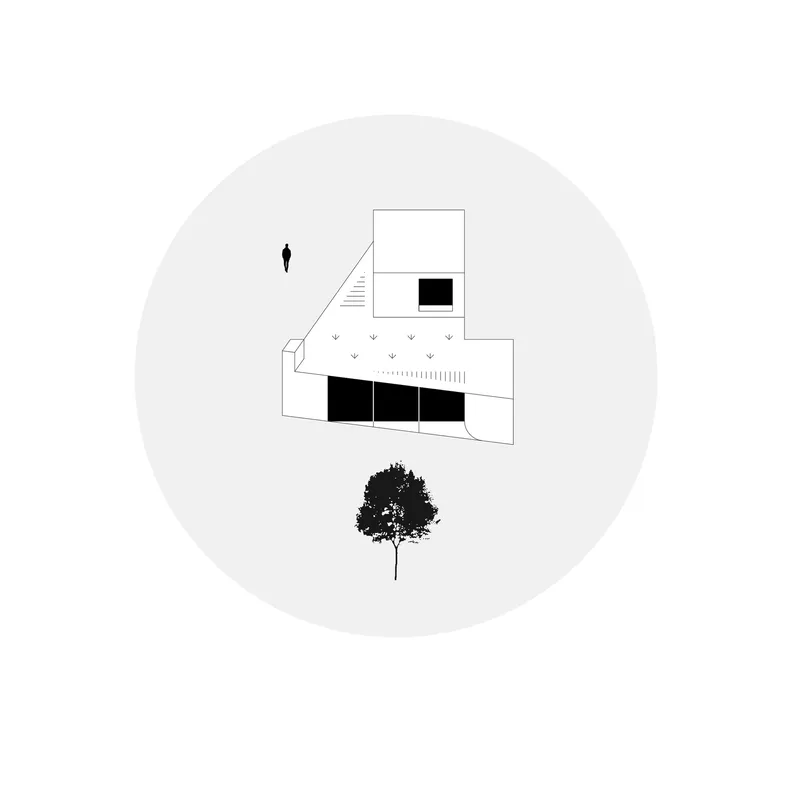
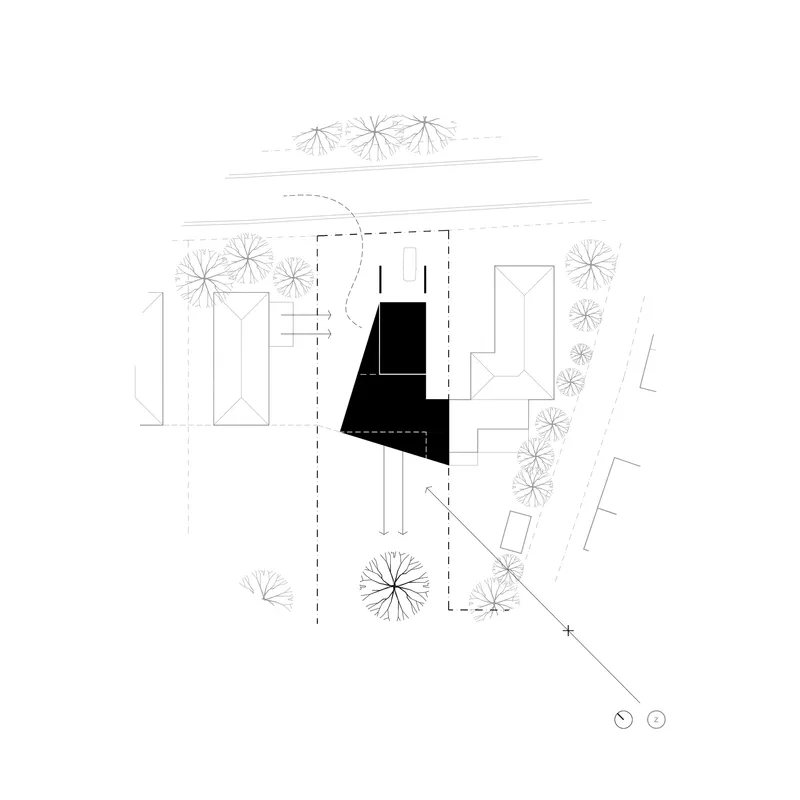
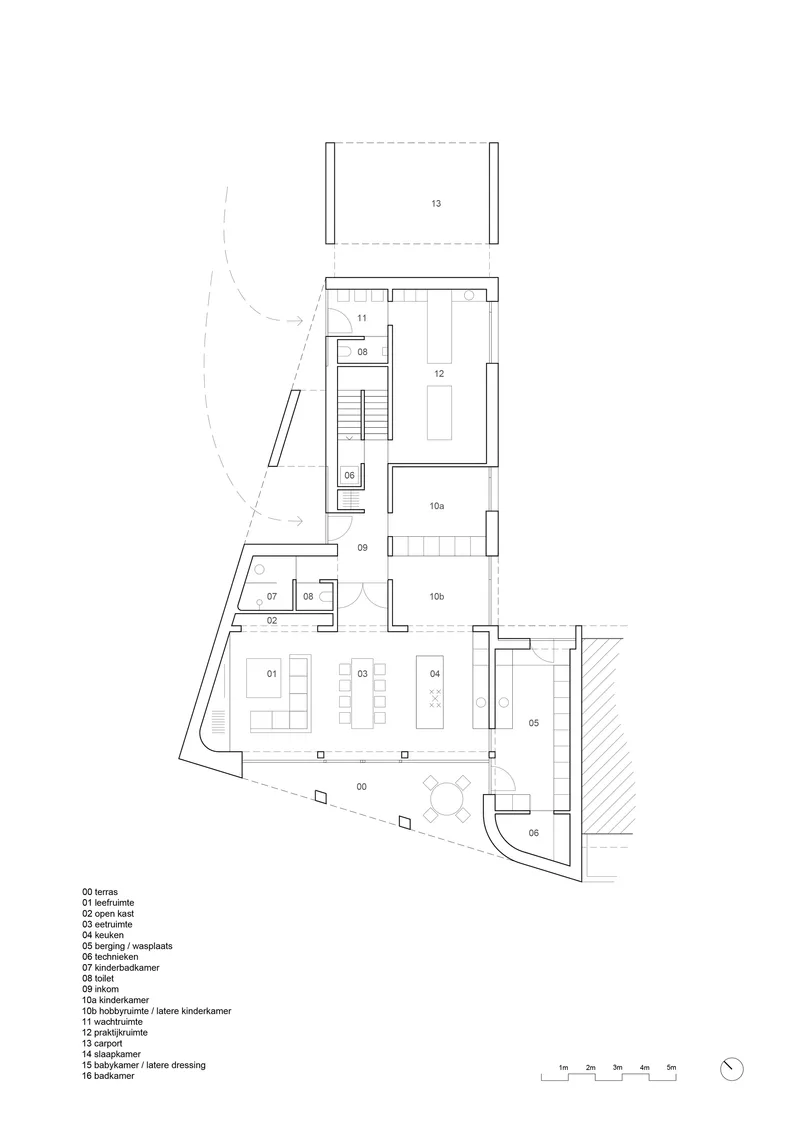
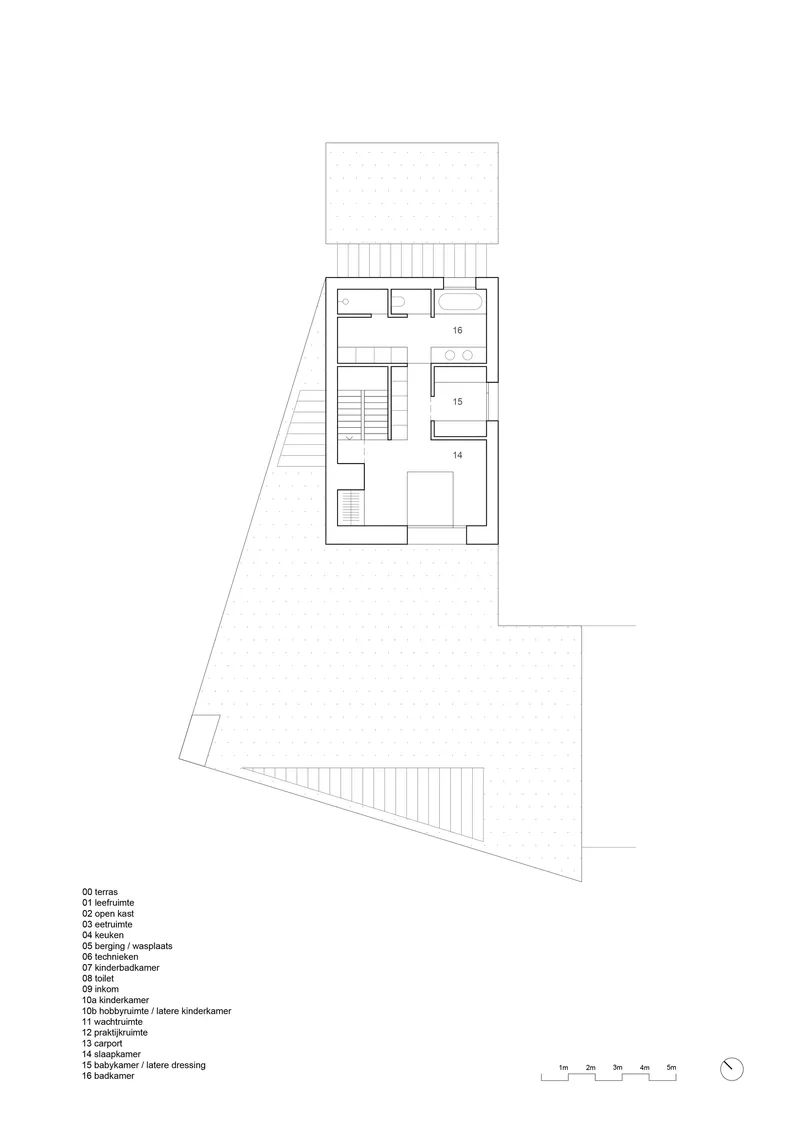
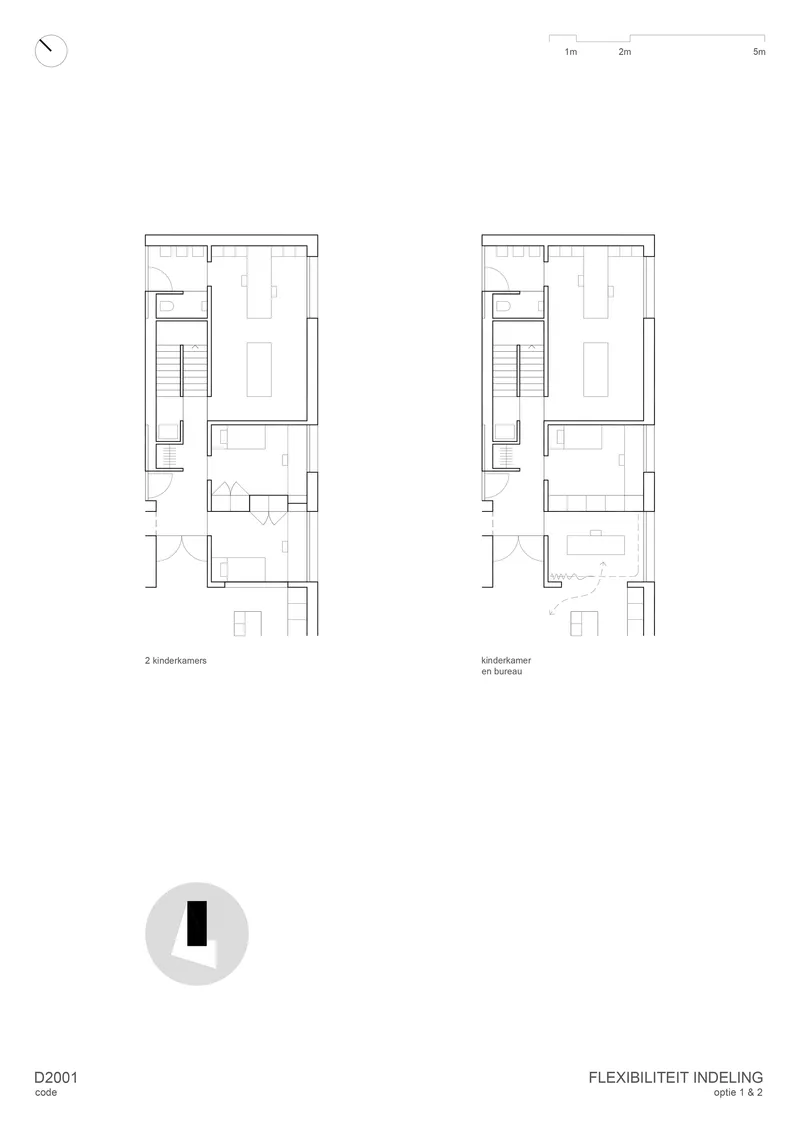
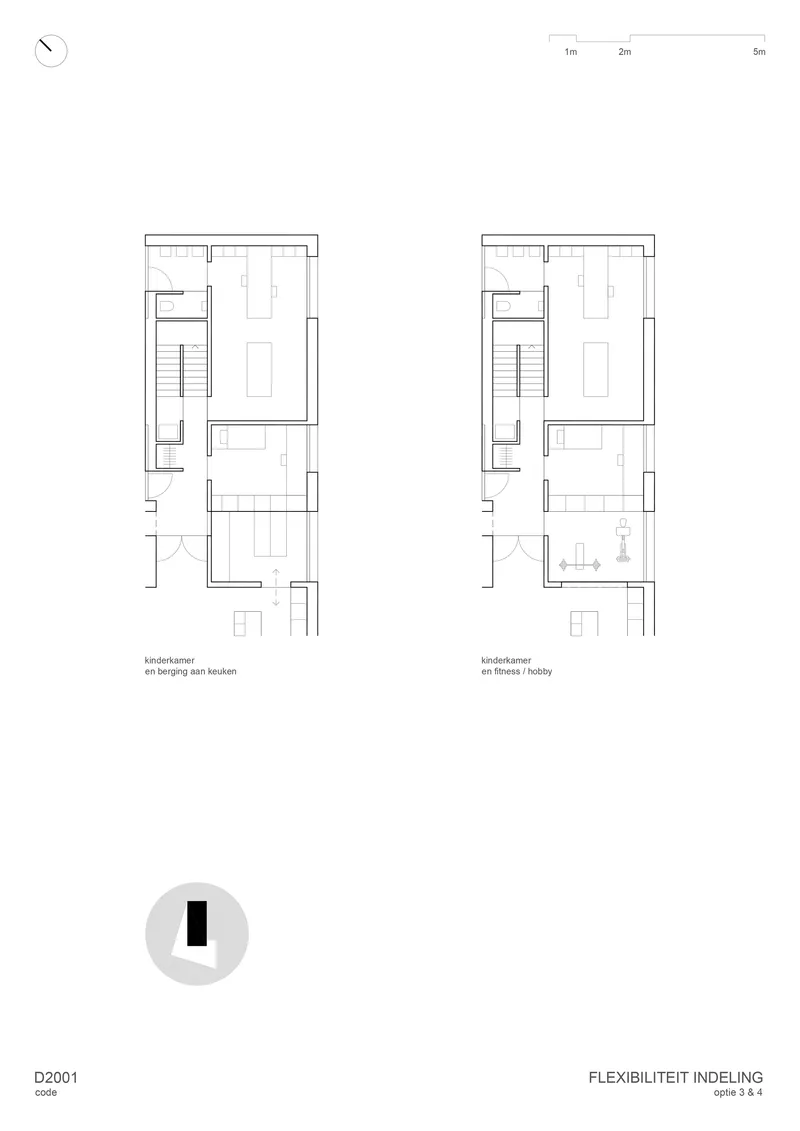
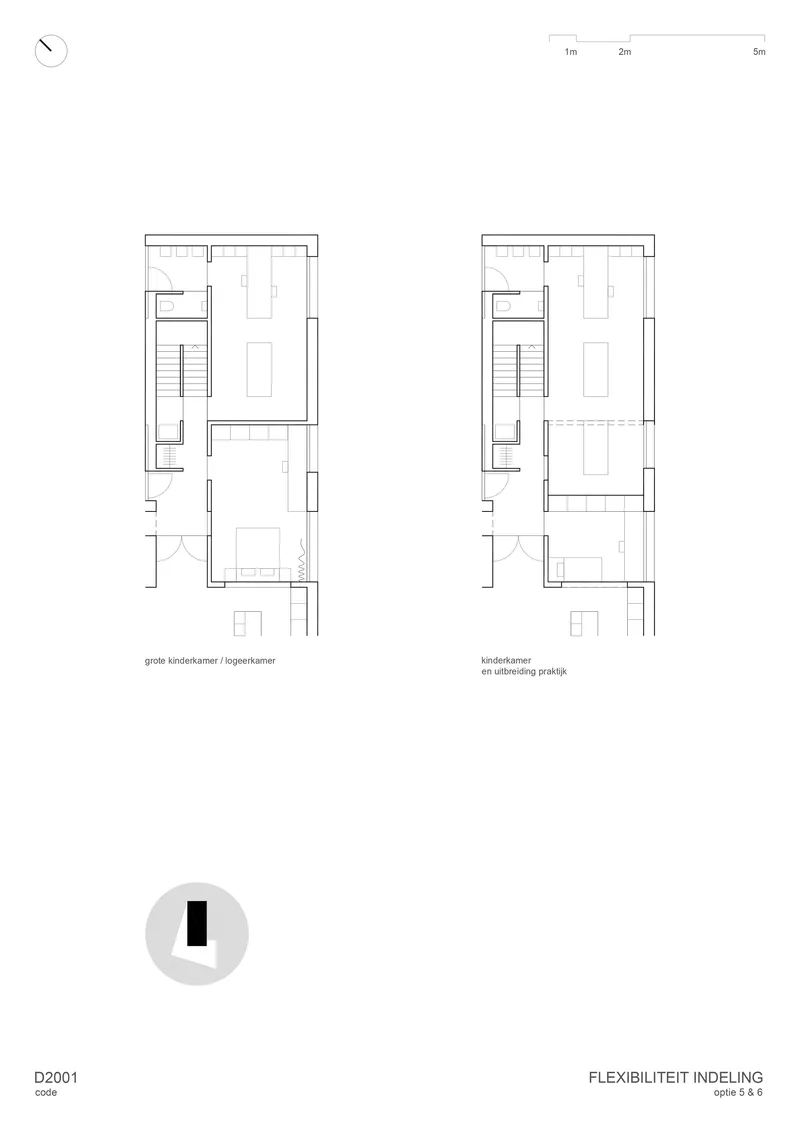
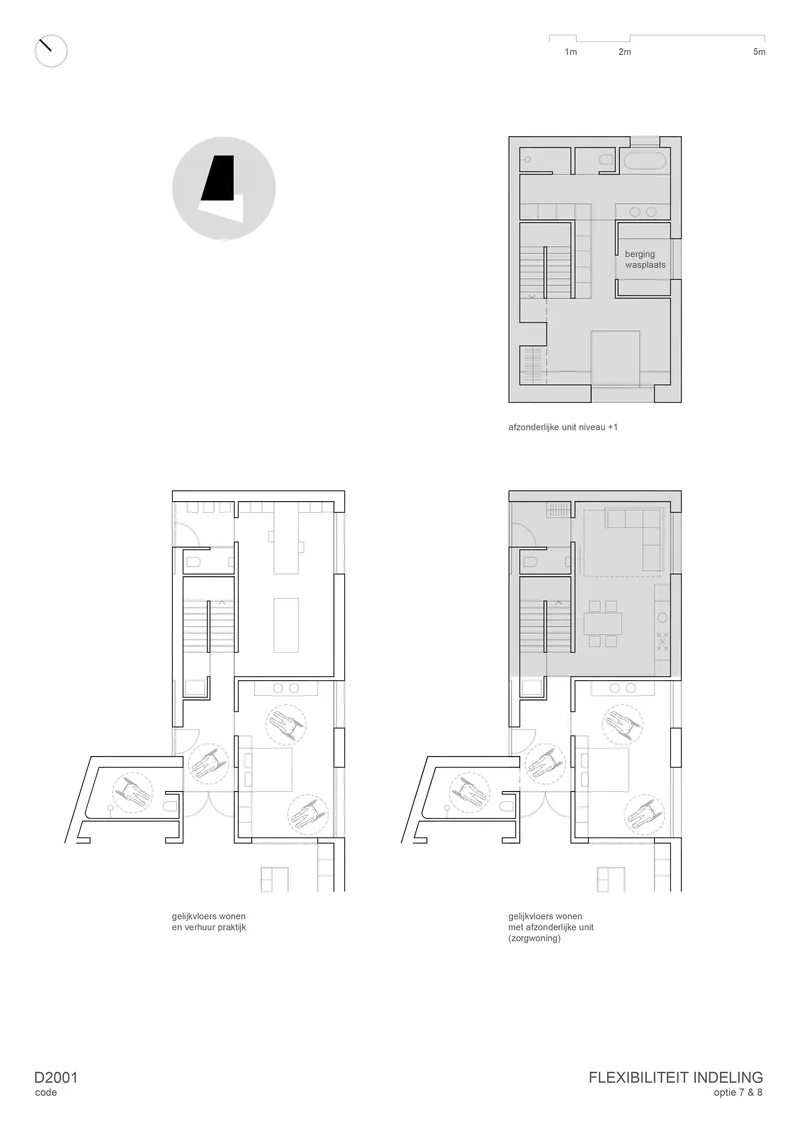
The axonometric reveals an angular two-story volume that reads as a single sculpted mass from above, its faceted plan generating the courtyard and garden relationships that define the house at ground level. The site plan shows the building tucked among existing structures and landscaping, a tight urban condition that makes the interior sense of openness all the more impressive.
Ground and upper floor plans confirm an open living sequence on the lower level with an angled terrace, while bedrooms and a roof terrace occupy the upper level. What the plan variations reveal is Heylen's interest in flexibility: two- and three-bedroom configurations, alternative kitchen and living room arrangements, and multiple layout options with a central staircase demonstrate that the structural shell was designed to accommodate different family sizes and work patterns over time. That kind of long-term thinking is rare in a 240-square-meter house.
Why This Project Matters
House DD is not trying to reinvent domestic architecture. It is trying to do something harder: prove that a limited palette, deployed with genuine care, can make a live-work house feel unified rather than compromised. White brick, exposed timber, terracotta, and terrazzo do nearly all the work, and the fact that you barely notice the transition from office to kitchen to bedroom is evidence of how well they do it.
The project also offers a quiet argument for adaptability. The plan variations show a house that can be reconfigured as lives change, which means the architecture outlasts any single domestic arrangement. In a building culture that too often treats the live-work brief as a marketing gimmick, Wim Heylen treats it as a genuine design problem and solves it with craft, repetition, and structural honesty. That deserves attention.
House DD by Wim Heylen Architect, Belgium. 240 m², completed 2022. Photography by Wim Heylen.
About the Studio
Share Your Own Work on uni.xyz
If projects like this are the kind of work you want to make, uni.xyz is a place to publish your own, find collaborators, and enter design competitions.




Popular Articles
Popular articles from the community


Co-Life: Senior Housing Design That Reconnects Older Adults With the City
Co-Life reimagines senior housing design through healing gardens, shared streets, workshops, and a sustainable community across generations.

Hill & Cross Opera: Sculptural Opera House Architecture Shaped by Tallinn’s Landscape and Identity
Hill & Cross Opera reimagines opera house architecture in Tallinn through its sculptural hill, civic plaza, glass wave and a luminous cross.

The Earth Pod: 3D Printed Homes for Resilient Refugee Communities
The Earth Pod reimagines refugee housing through 3D printed homes made from clay, combining resilience, self-sufficiency, and rapid shelter.

Co-life: Sustainable Architecture for Age-Friendly Community Living
Co-life reimagines sustainable architecture for seniors through courtyards, rammed earth, shared gardens, and spaces designed for belonging.


Similar Reads
You might also enjoy these articles

Bao Huynh Watercolor Atelier: A Serene Art Retreat in Hội An
Bao Huynh Watercolor Atelier in Hội An blends multifunctional art spaces, sustainable design, local materials, and family-friendly living in a serene environment.

Atelier Macri Concept Store Interior Design by CASE-REAL
Atelier Macri store features a "ko" counter, walnut wood details, cork displays, blending retail, gallery, and seamless customer experiences.

Manuel Vargas Izquierdo Stadium and High-Performance Sports Center: Architectural Excellence in Jalpa de Méndez
The Manuel Vargas Izquierdo Stadium blends sustainable design, inclusive sports facilities, and cultural-inspired architecture, revitalizing Jalpa de Méndez’s public spaces.

KAKR Buluh Awar Hall: Revitalizing Community and Ecology Through Bamboo Architecture
Community built bamboo hall revitalizes Buluh Awar village, empowering youth, restoring ecology, celebrating vernacular craftsmanship through sustainable architecture and culture.



Comments (0)
Please login or sign up to add comments
No comments yet. Be the first to comment!