

Wright Inspires Wraps a Bengaluru Home Around a Curvilinear Staircase and Three Skylights
Wire-cut brick, vaulted ceilings, and allegorical references to Lord Shiva shape a serene family house on a narrow Bengaluru plot.


On a 60' x 40' linear plot hemmed in by neighbors on three sides and a quiet park to the west, Wright Inspires had to build upward and inward rather than outward. The result, Shiva Stuthi Residence, is a house organized almost entirely around a single curvilinear staircase that threads through every level, pulling daylight down through three eye-shaped skylights. Named metaphorically after Lord Shiva, the residence treats the three skylights as allegorical third eyes: openings that illuminate not just the interior but the conceptual ambition of the project.
What makes the house genuinely interesting is its commitment to wire-cut brick as both structure and finish. Lead architect Prathima Seethur kept the concrete volume to a minimum by using brick and country tile fillers in the slabs, creating a doubly insulated envelope that handles Bengaluru's heat without relying heavily on mechanical cooling. The entire structure sits elevated five feet above approach level, tucking a multi-activity basement underneath and establishing a threshold sequence from garden to foyer to sunken seating area that recalls the verandas of ancestral South Indian homes.
The Staircase as Spine
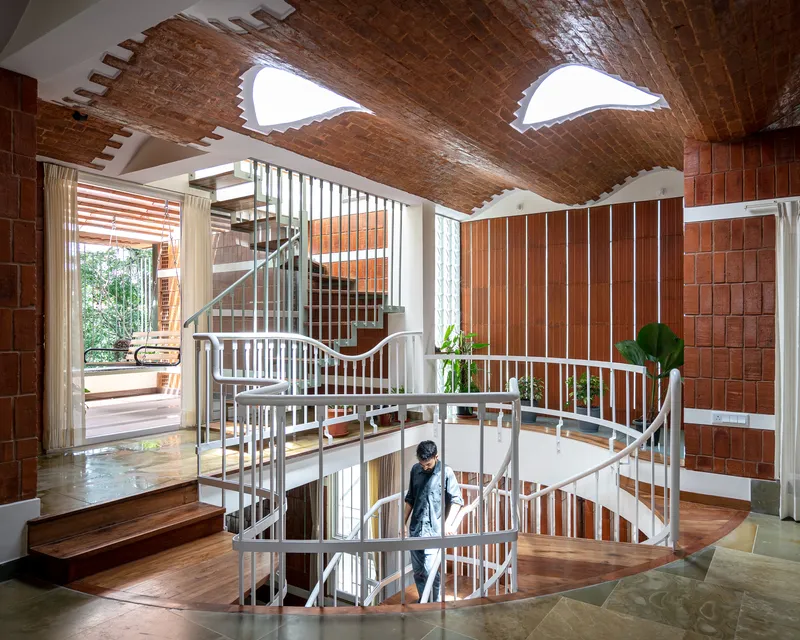
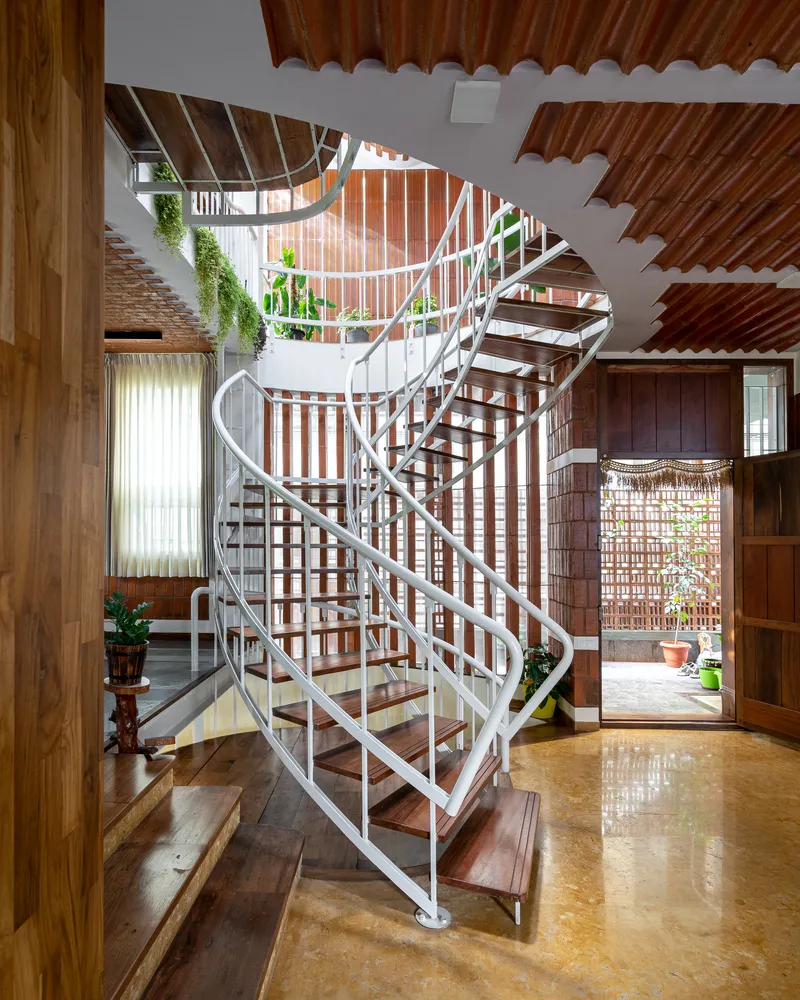
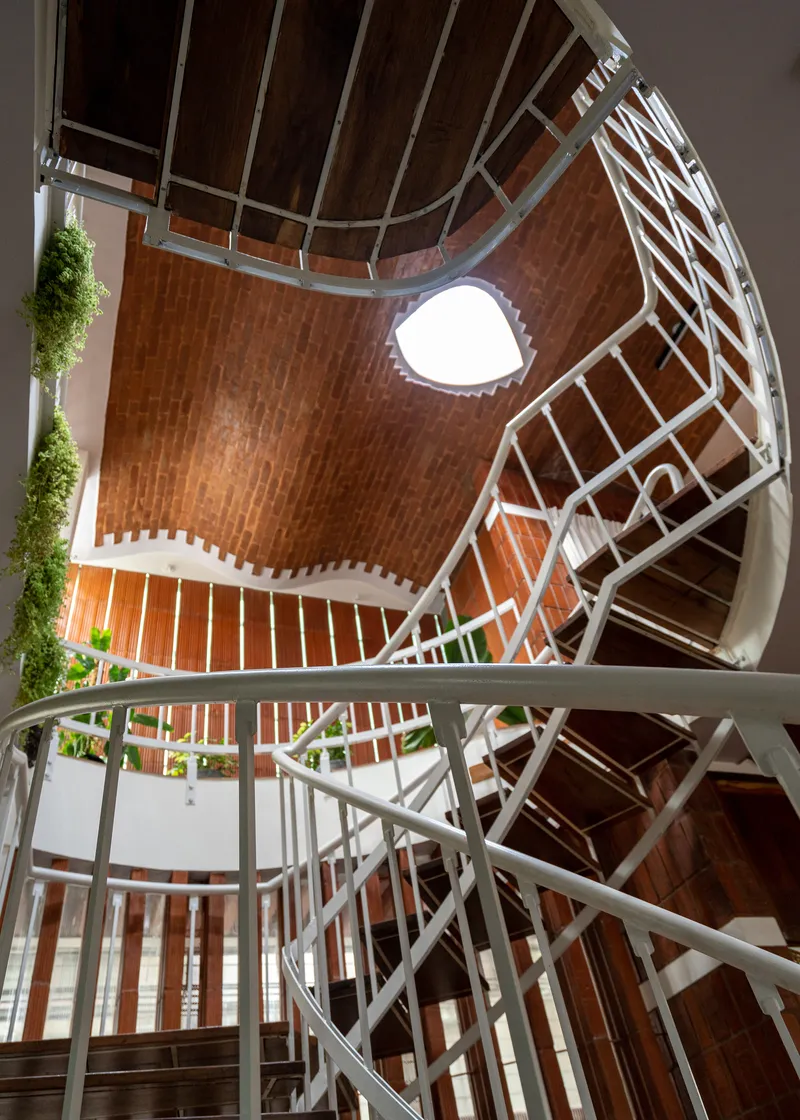
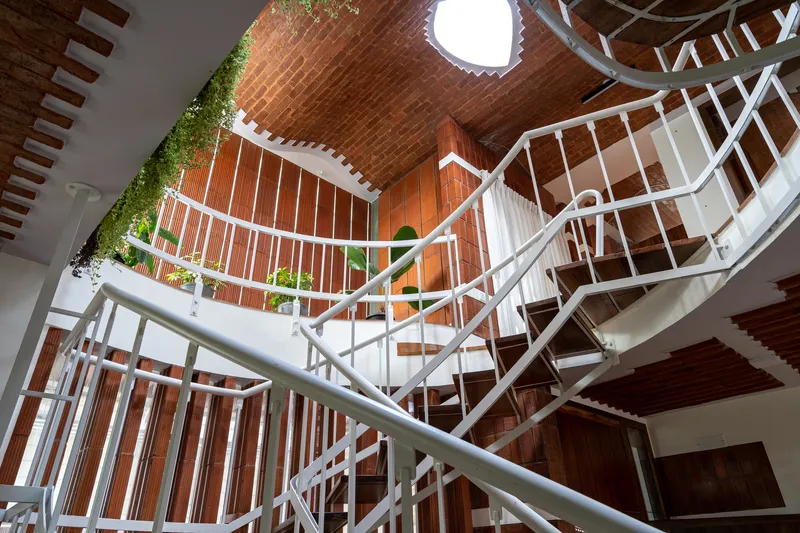
The curvilinear staircase is not merely circulation; it is the organizing principle of the entire house. Running the full height of the building, its white steel frame and timber treads spiral upward through a barrel-vaulted brick ceiling, creating a vertical core that every room references. The stairwell doubles as a light well, with the three skylights feeding natural light deep into the plan.
Looking up from any level, the stair void reveals a layered composition of white railings, terracotta surfaces, and hanging plants. Looking down, the geometry tightens into a nautilus-like spiral. The decision to paint the steel white against the warm brick is critical: it gives the staircase visual autonomy, making it read as an inserted object rather than something that grew from the walls.
Brick as Envelope and Expression
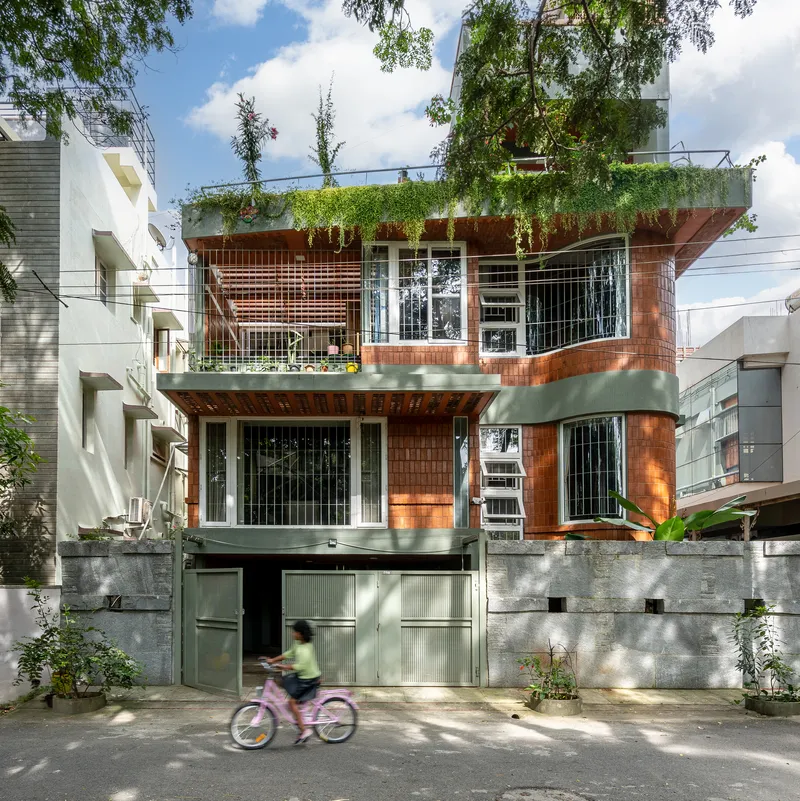
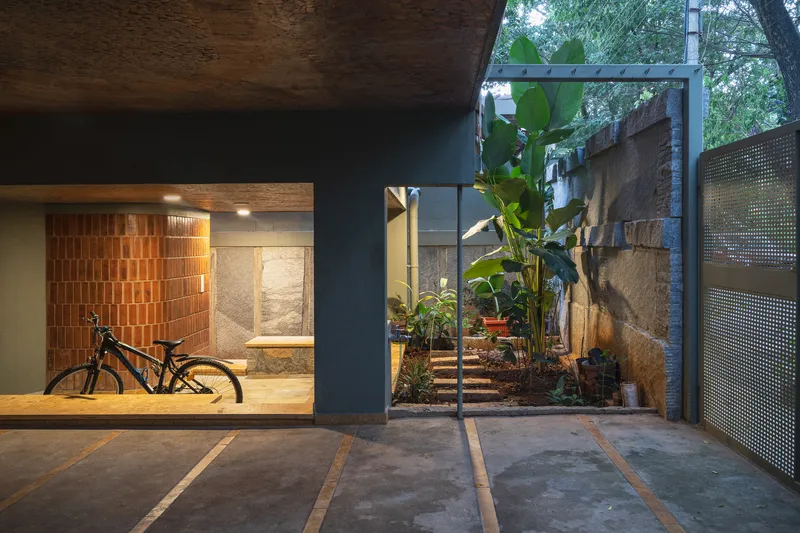
From the street, the house presents itself as a series of terracotta-clad volumes stacked below a planted terrace. The wire-cut brick creates a consistent texture that reads as monolithic from a distance but reveals material grain up close. At ground level, a perforated metal gate and banana plants soften the transition between public sidewalk and private courtyard, while a bicycle storage niche nods to the everyday life of the family inside.
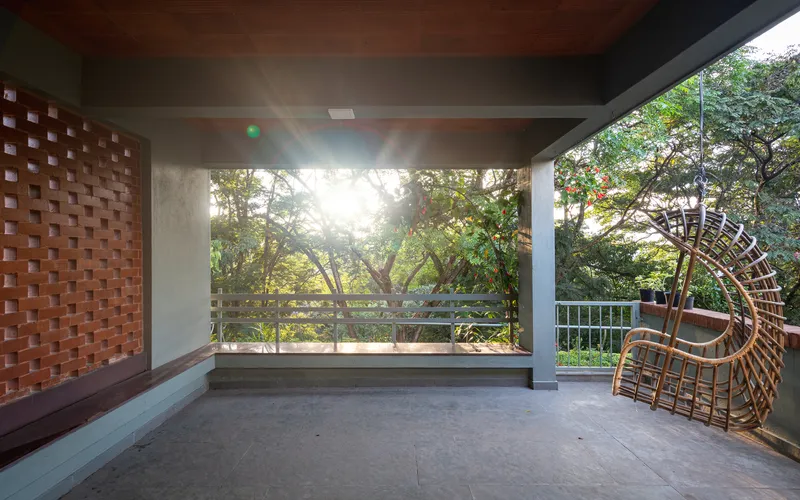
On the upper terrace, a chequered brick screen wall filters western light from the park while framing views of treetops. The screen is not decorative: oriented toward the park-facing shorter side of the plot, it mediates the strongest solar exposure while maintaining visual connection to the only open edge of the site. Concrete soffits overhead keep rain off the seating area without blocking the breeze.
Vaulted Ceilings and the Logic of Insulation
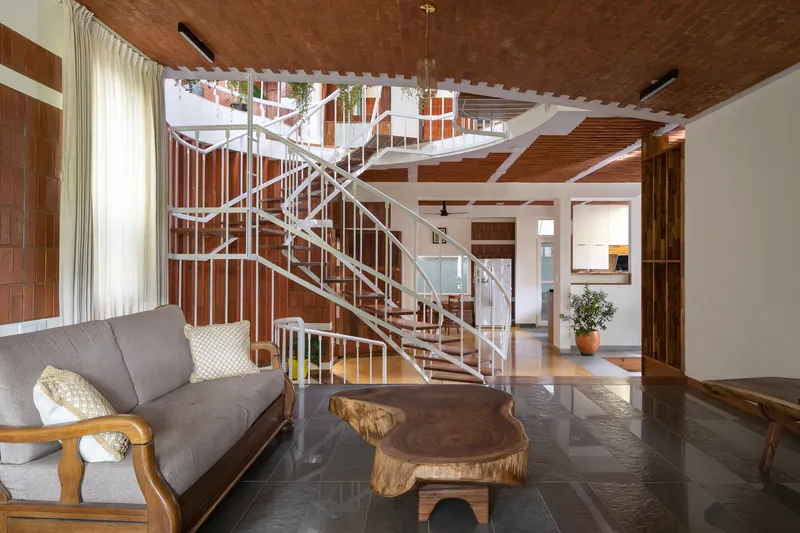
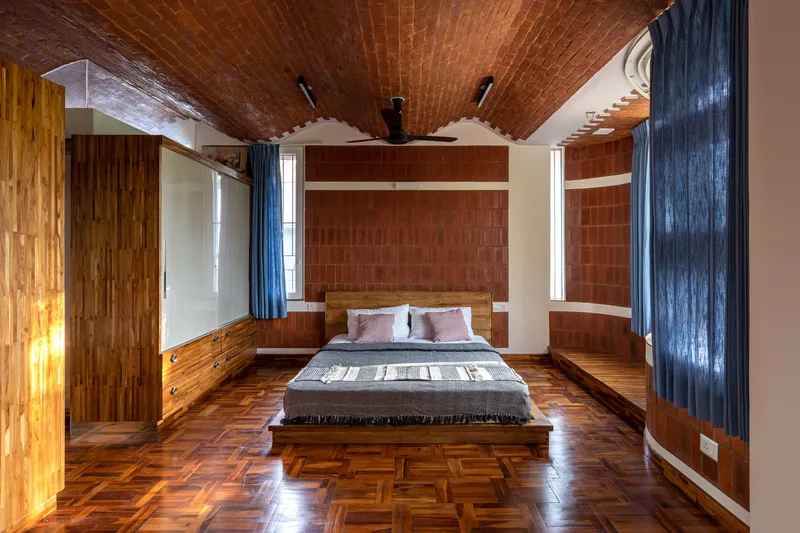
The vaulted brick ceilings that appear throughout the house are not aesthetic indulgences. They are the visible underside of the doubly insulated slab system, where country tile fillers sit between structural elements to reduce concrete use and minimize heat transfer. Exposed timber beams span the living area, while the barrel-vaulted profile in the stairwell and bedrooms creates a sense of volume that the compact plan would not otherwise permit.
In the bedrooms, this system produces rooms that feel generous despite modest floor areas. The herringbone wood flooring, red clay tile walls, and vaulted ceiling in the upper bedroom work together to establish a material coherence that runs from floor to ceiling without interruption. There are no false ceilings here, no dropped gypsum panels. What you see is what holds the building up.
Living Spaces That Flow Without Dissolving
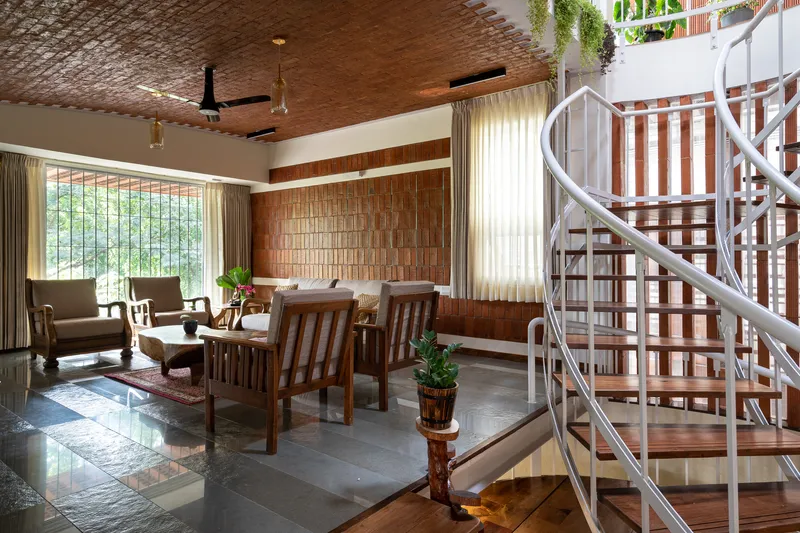
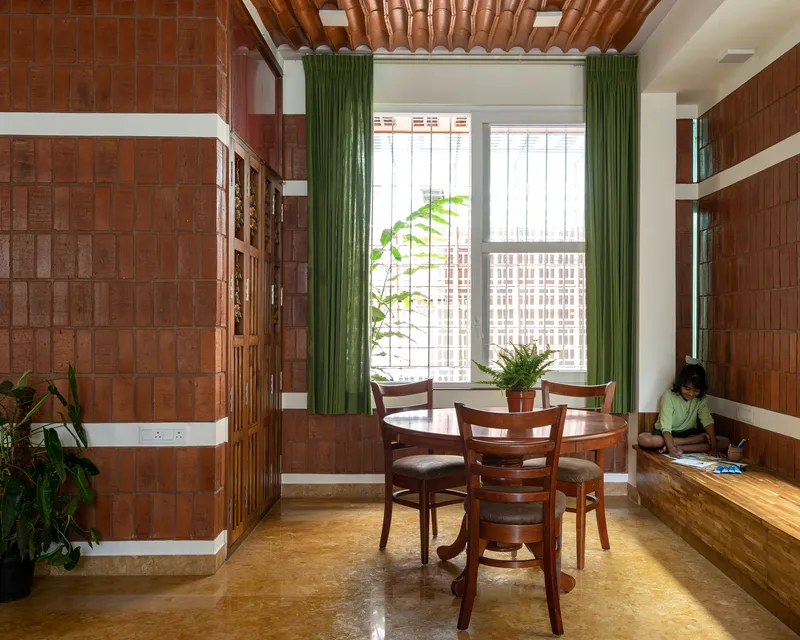
The ground floor connects living, dining, and kitchen through visual alignment rather than open-plan erasure. Brick walls run continuously but shift in curvature, creating moments of partial enclosure that differentiate zones without doors. The sunken seating area near the foyer pulls from the region's tradition of threshold verandas, offering a social space that is neither fully inside nor fully outside.
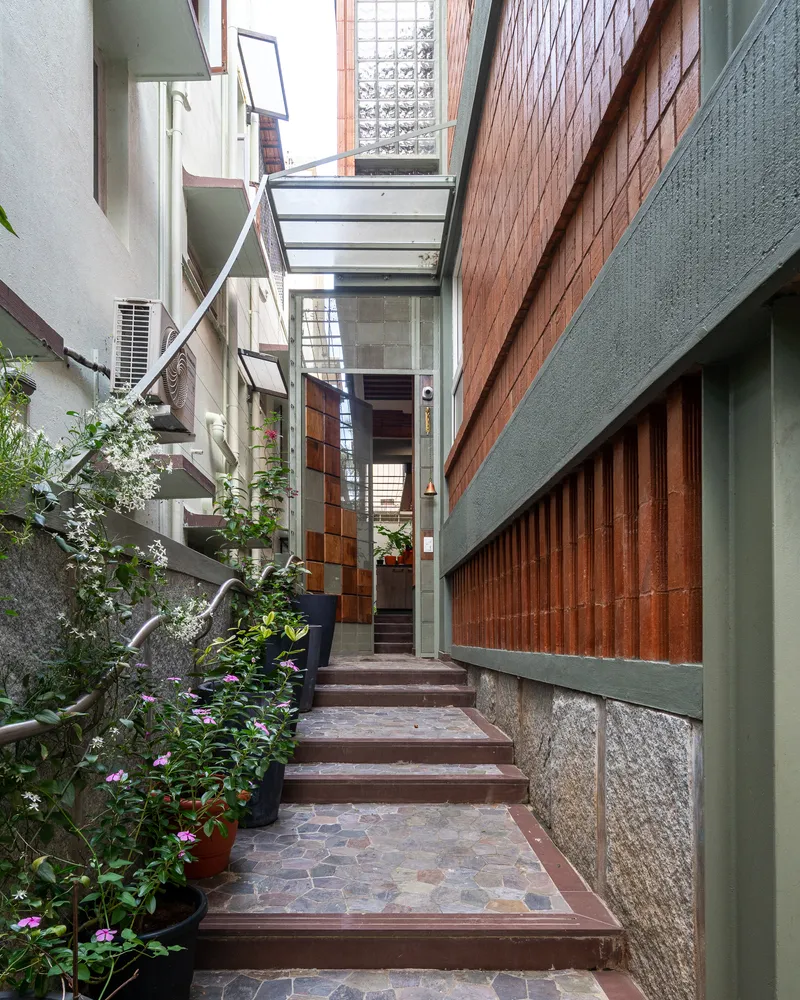
The narrow entrance passage sets the tone. Timber-framed steps, terracotta pavers, and potted plants lead visitors through a compressed, garden-scented corridor before releasing them into the taller volumes of the living area. It is a deliberate compression-release sequence, and it works because the entrance is genuinely tight, not merely suggested.
Private Rooms and Curved Geometries
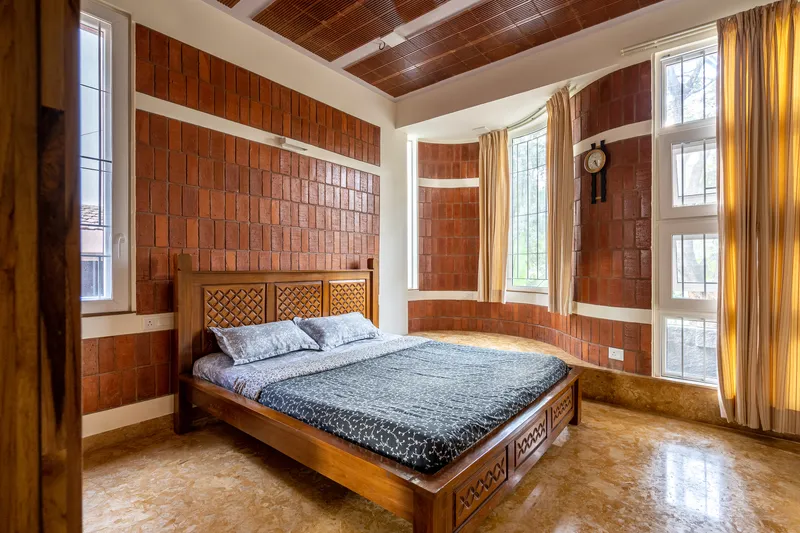
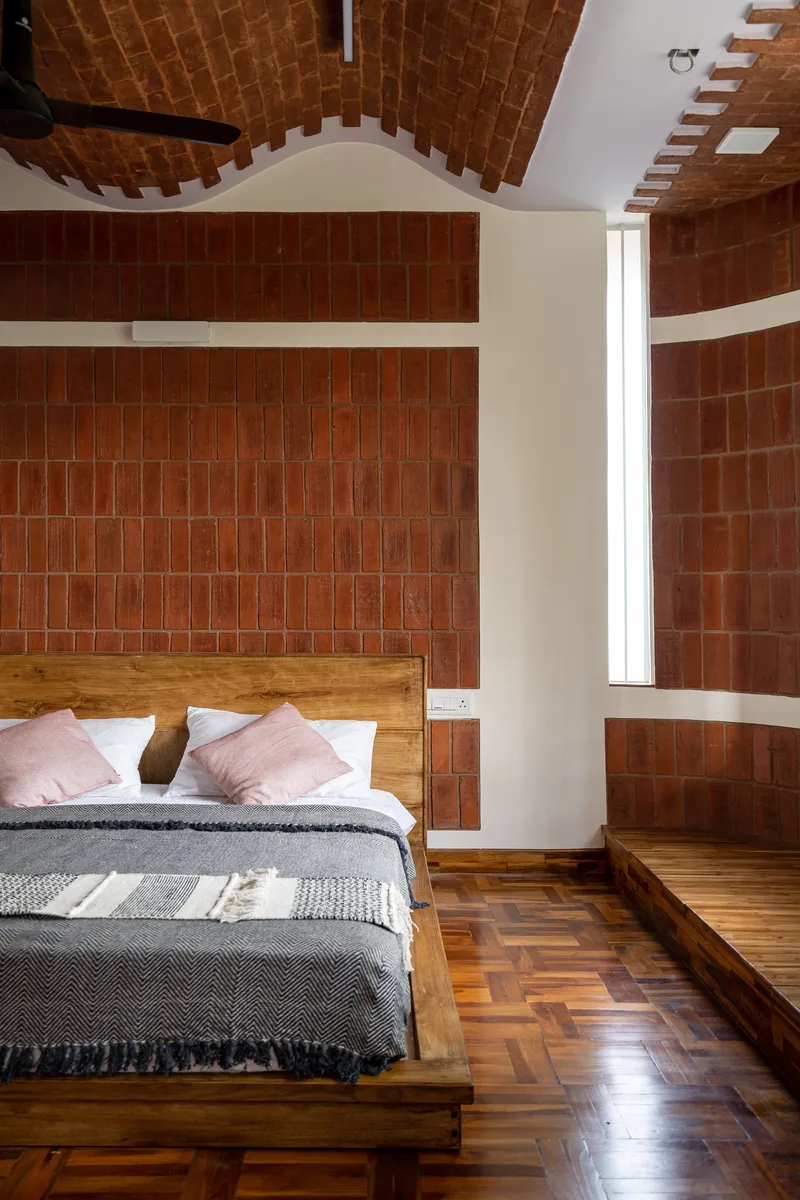
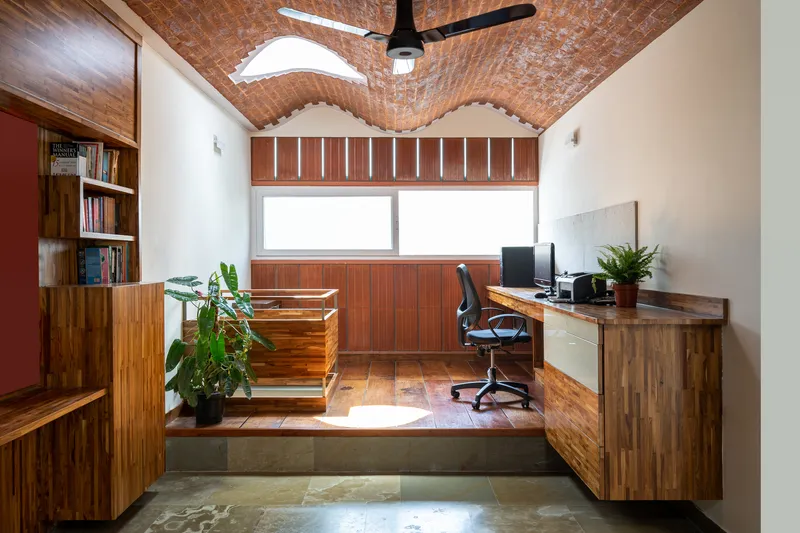
The parents' room at the front of the house extends into a curved bay window that forms a cozy reading nook, catching morning light through its arc. Upstairs, the daughter's bedroom and master room branch off either side of a study space that sits at the stair landing. Each room receives its own relationship to the exterior through carefully sized openings rather than floor-to-ceiling glazing.
The home office, tucked under a vaulted brick ceiling with a single horizontal window, is one of the quieter successes of the plan. It is a room that feels monastic in its simplicity: a timber desk, a few plants, and controlled natural light. The brick ceiling overhead is close enough to register as an enclosing presence without feeling oppressive.
Vertical Landscapes and Planted Edges
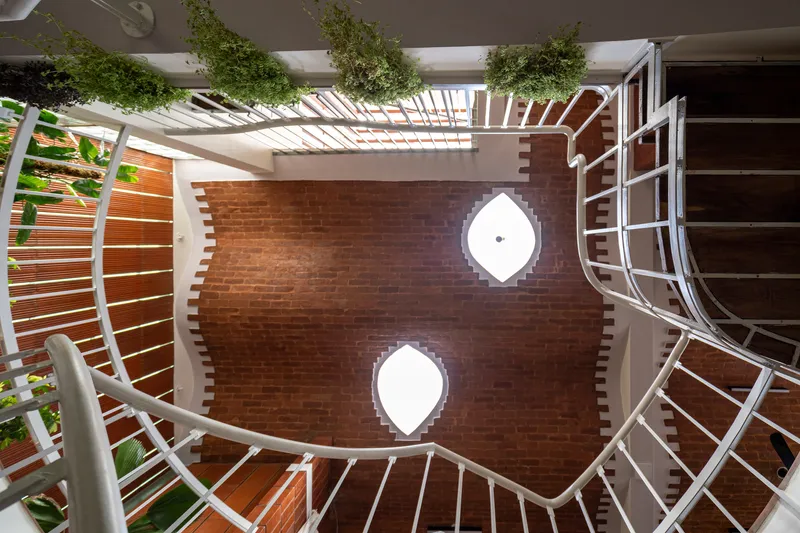
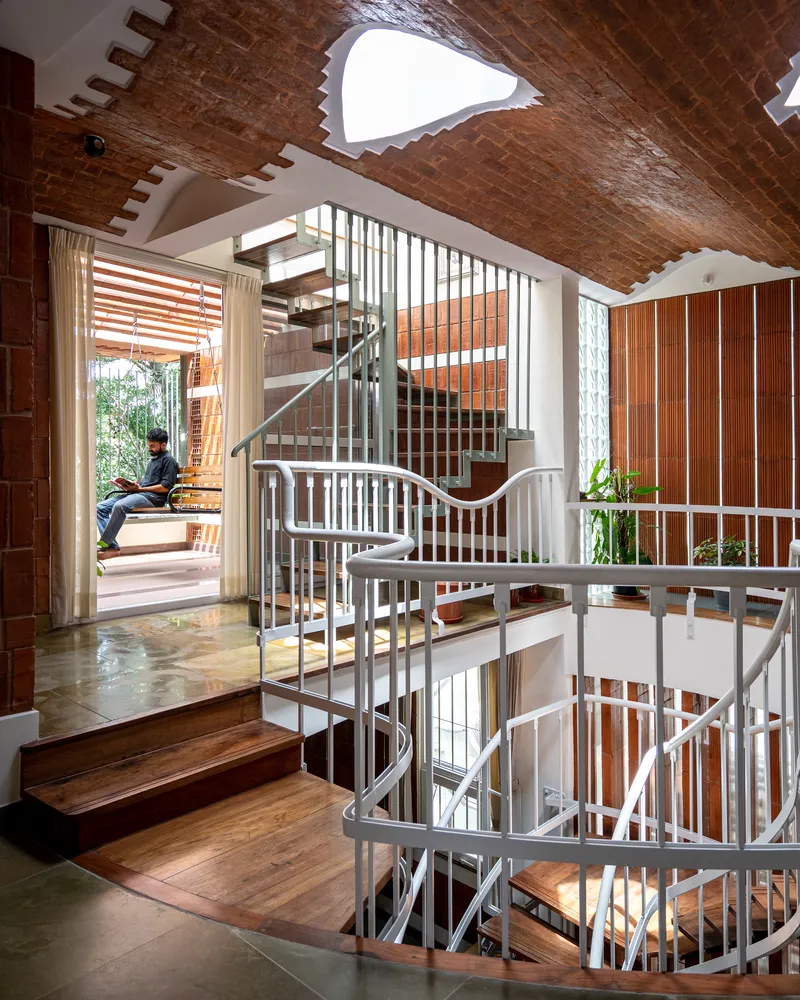
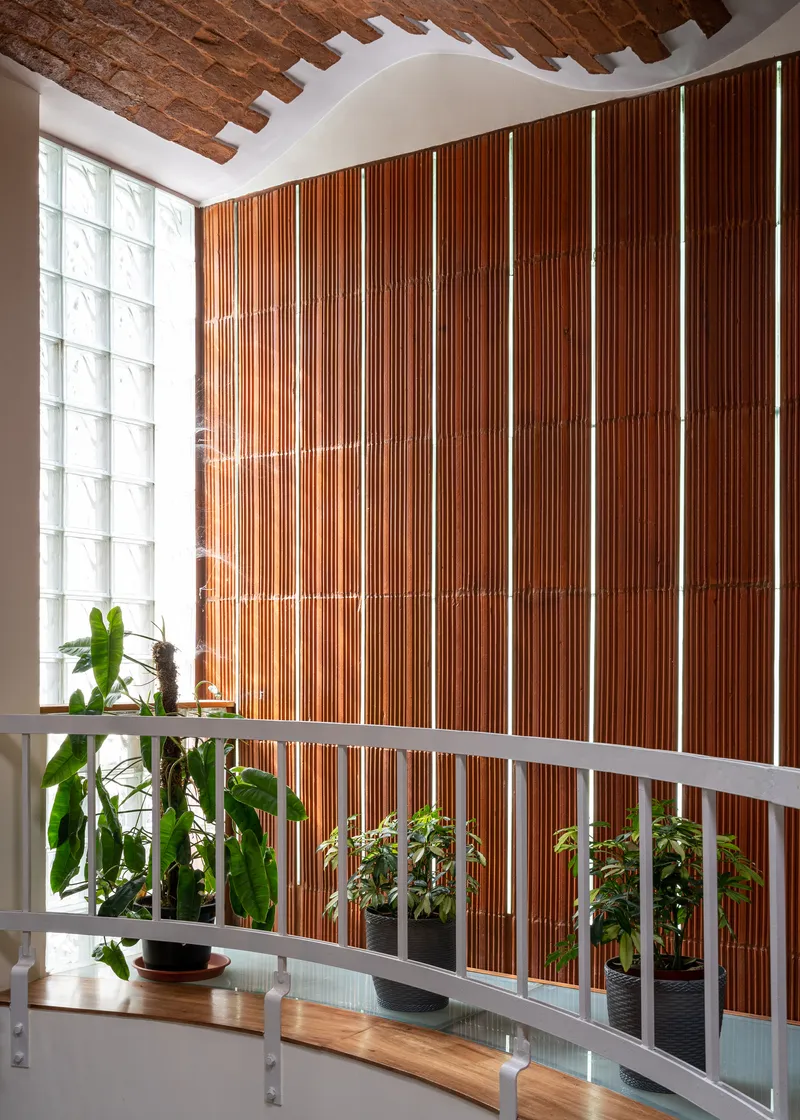
Greenery is threaded through the house vertically. Hanging plants cascade down the stair void, vertical wood slat walls support potted plants at landings, and the rooftop terrace hosts a waved pergola that frames planting beds. On a constrained urban plot, the decision to distribute landscape vertically rather than concentrating it in a single ground-level garden is both practical and atmospheric.
The stair void becomes a kind of indoor garden shaft, where the plants benefit from the same skylight openings that illuminate the circulation. At the threshold between staircase and terrace, where a person sits framed by the opening, the line between interior and exterior genuinely blurs. It is one of the few moments in the house where the architecture steps back and lets the planting do the spatial work.
Plans and Drawings
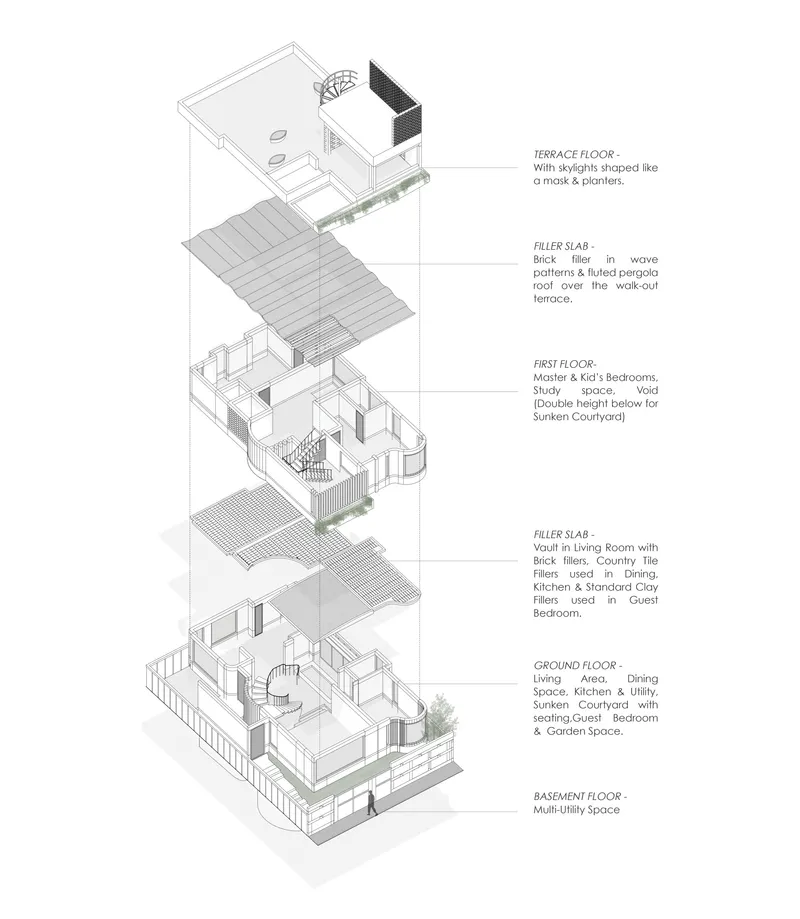
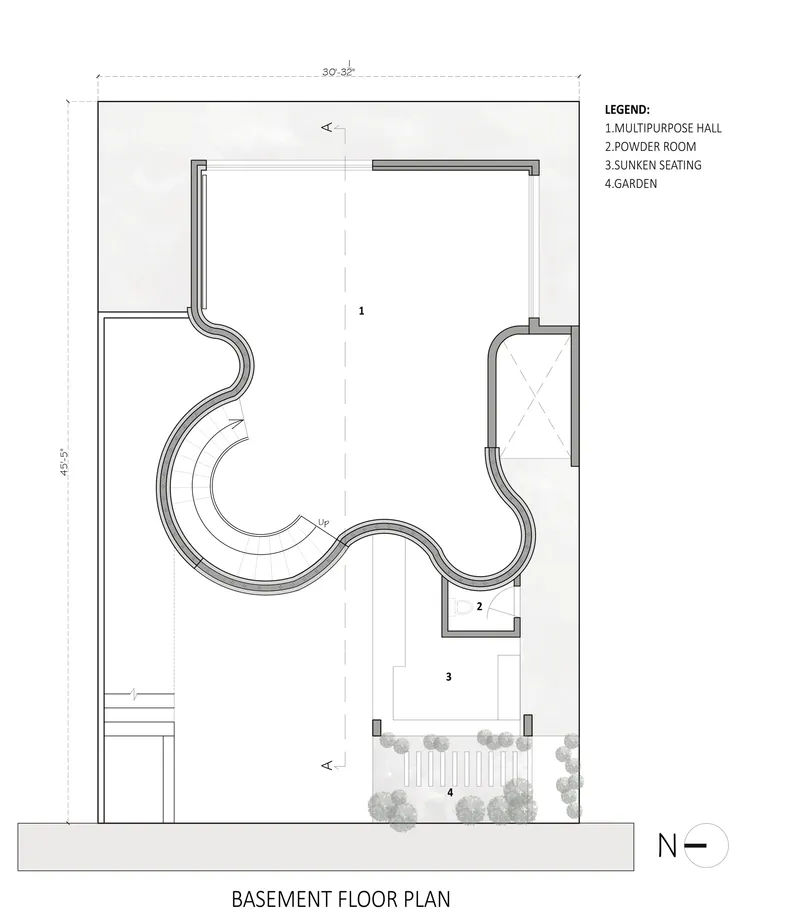
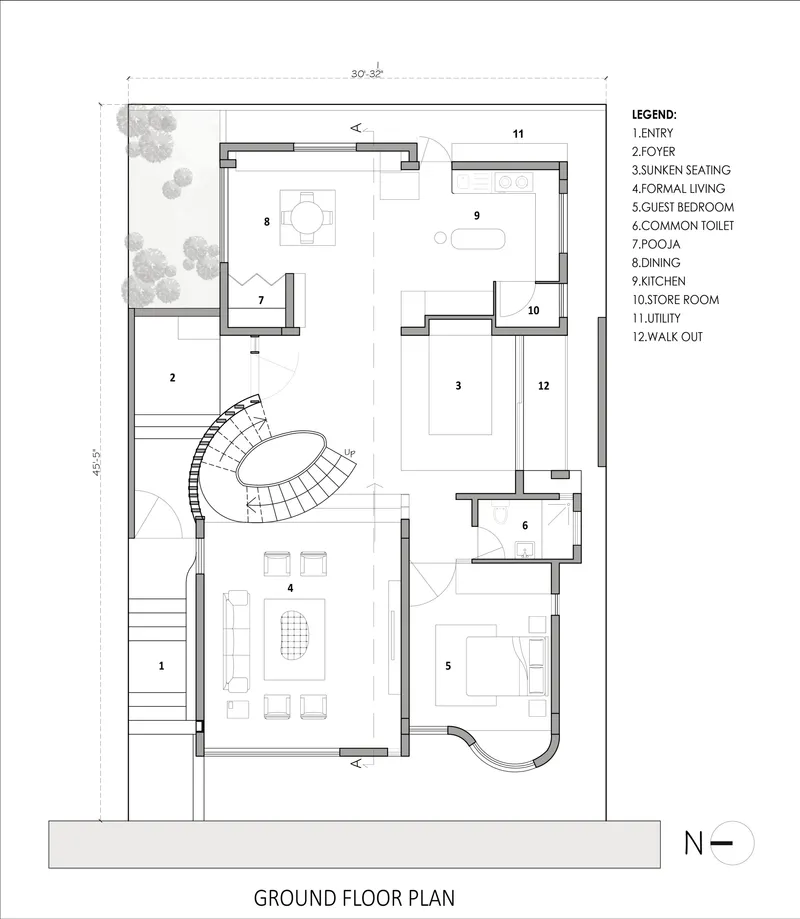
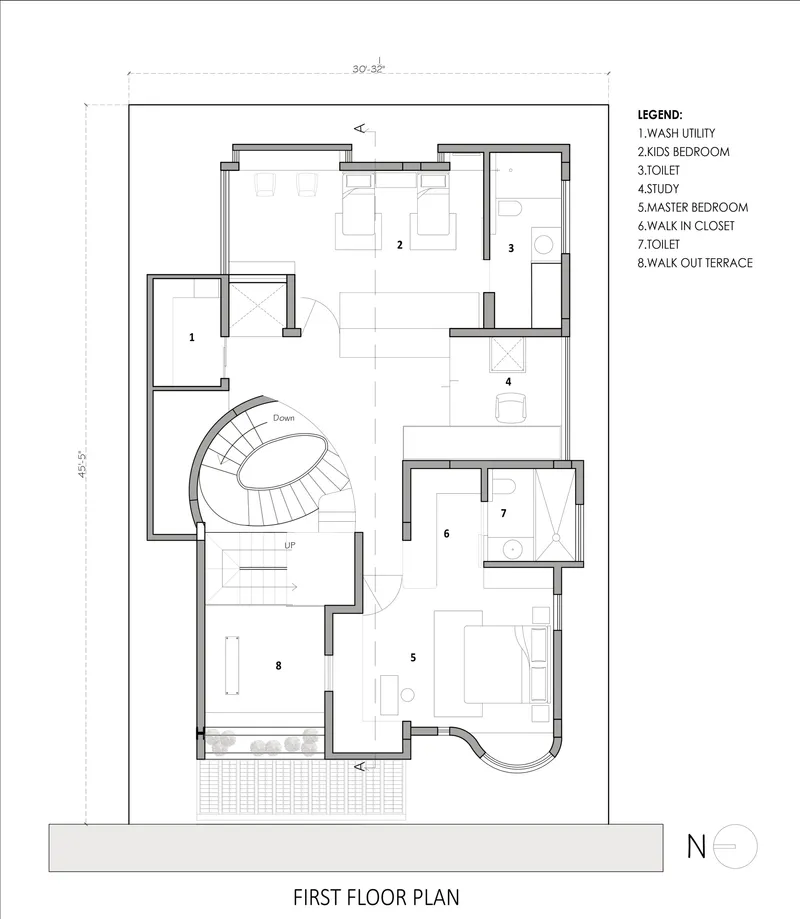
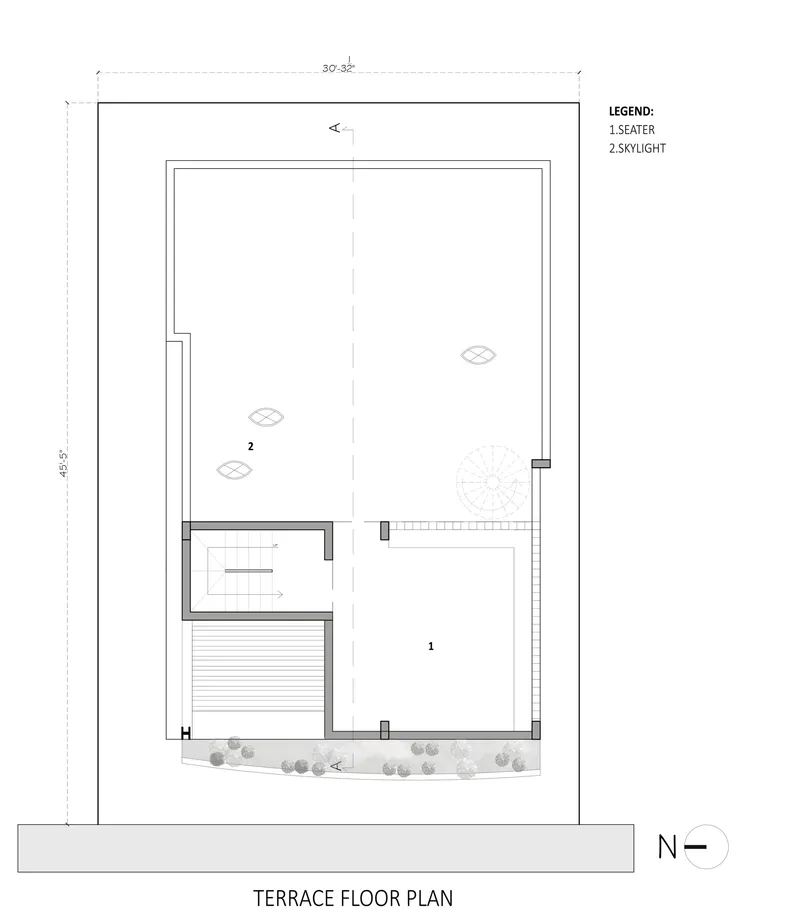
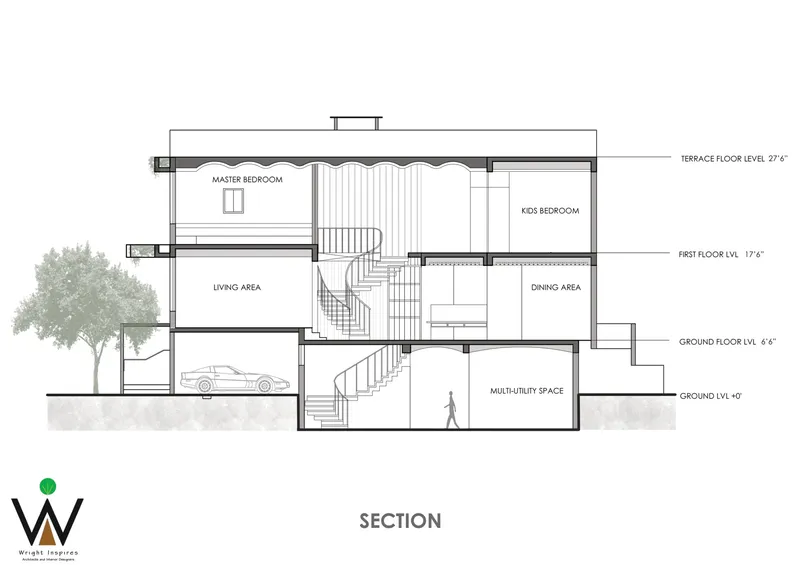
The exploded axonometric reveals the vertical stacking clearly: basement multi-activity hall, ground floor living and parents' suite, first floor bedrooms and study, and an open terrace capped by the waved pergola. Each level is organized around the central curved staircase, which the plan drawings show as a consistent anchor point. The section drawing makes the five-foot elevation from street level legible, showing how the basement is only partially buried and receives light from the entrance garden.
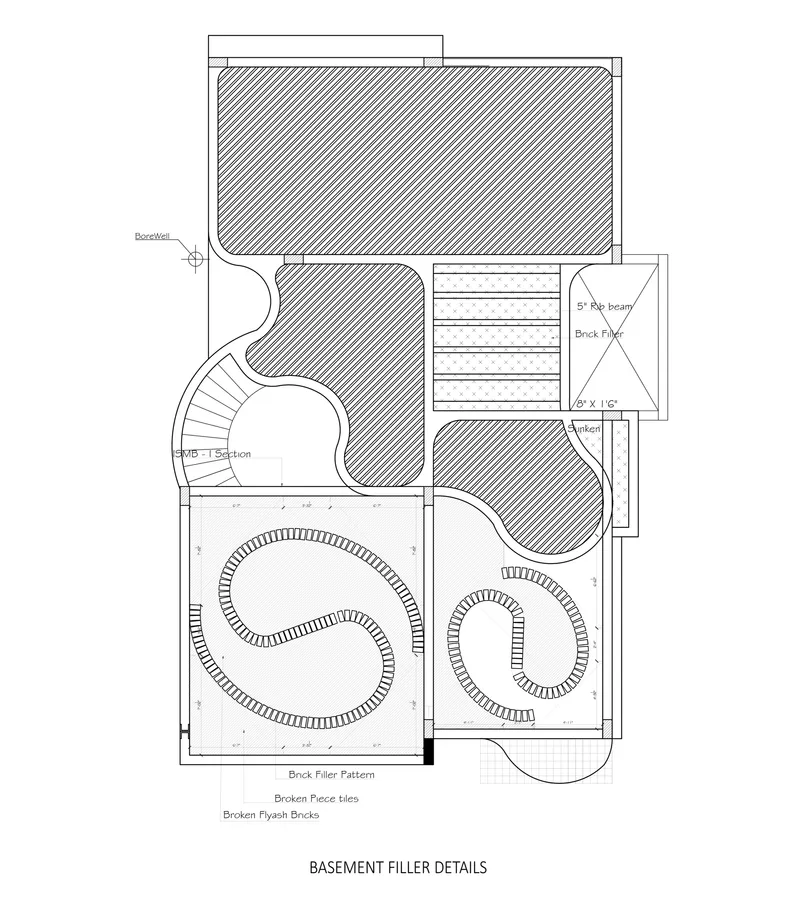
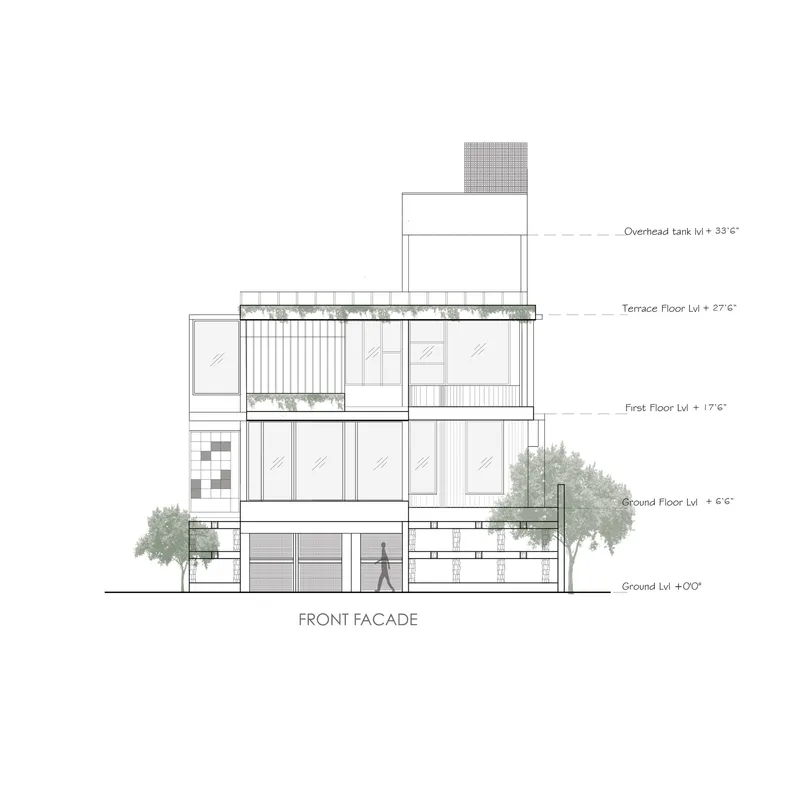
The plan detail of the curved brick filler pattern in the basement slab is worth examining. It documents the construction technique that gives the vaulted ceilings their profile, showing how the country tile and brick infill reduces the concrete required at each floor level. The front elevation confirms the layered composition visible from the street: glazed living levels, planted terrace above, and flanking trees that will eventually screen the house further as they mature.
Why This Project Matters
Shiva Stuthi Residence demonstrates that a constrained urban plot does not have to produce a constrained house. By committing to a single organizing element, the curvilinear staircase, and a single dominant material, wire-cut brick, the design achieves a spatial richness that many houses on far larger sites fail to produce. The passive insulation strategy, Vaastu-aligned planning, and allegorical program are layered without competing, which suggests a confident practice that knows when to let material do the talking.
More broadly, the project is a case study in how local materials and construction techniques can produce architecture that is climatically responsive, structurally honest, and culturally grounded without resorting to nostalgia. The vaulted brick ceilings are not a revival; they are a direct consequence of minimizing concrete. The three skylights are not decoration; they are the primary daylighting strategy. When form follows both climate and conviction, the results tend to hold up.
Shiva Stuthi Residence by Wright Inspires, led by Prathima Seethur. Bengaluru, India. 2400 sqft plot. Completed 2021. Photography by Yash R Jain.
About the Studio
Share Your Own Work on uni.xyz
If projects like this are the kind of work you want to make, uni.xyz is a place to publish your own, find collaborators, and enter design competitions.


Popular Articles
Popular articles from the community


Temporary Home for Dogs: A Reversed Zoo Rethinks Animal Shelter Architecture
In Bucharest, a sinuous corridor and freed landscape flip the logic of containment, designing a shelter that works to make itself unnecessary.

Opera on the Sea: Driftwood Logic Shapes a Timber Opera House on Estonia's Coast
Trevor Orgill's opera house translates the entangled drift of floating timber into a civic building where wood, water, and music converge.

Singing Woman: Contemporary Architecture Inspired by Estonia’s Voice and the Sea
Singing Woman turns Estonia’s song culture into flowing opera house architecture, blending public life, landscape, sea, and national memory.

Opera by the Sea Estonia: Three Shells Dissolving Architecture into Tallinn's Coastline
A winning opera house proposal replaces monumental form with interconnected shells that blur the boundary between building, park and Baltic Sea.

Similar Reads
You might also enjoy these articles

Bao Huynh Watercolor Atelier: A Serene Art Retreat in Hội An
Bao Huynh Watercolor Atelier in Hội An blends multifunctional art spaces, sustainable design, local materials, and family-friendly living in a serene environment.

Atelier Macri Concept Store Interior Design by CASE-REAL
Atelier Macri store features a "ko" counter, walnut wood details, cork displays, blending retail, gallery, and seamless customer experiences.

Manuel Vargas Izquierdo Stadium and High-Performance Sports Center: Architectural Excellence in Jalpa de Méndez
The Manuel Vargas Izquierdo Stadium blends sustainable design, inclusive sports facilities, and cultural-inspired architecture, revitalizing Jalpa de Méndez’s public spaces.

KAKR Buluh Awar Hall: Revitalizing Community and Ecology Through Bamboo Architecture
Community built bamboo hall revitalizes Buluh Awar village, empowering youth, restoring ecology, celebrating vernacular craftsmanship through sustainable architecture and culture.


Comments (0)
Please login or sign up to add comments
No comments yet. Be the first to comment!