

Xuefeng Literature Museum by TJAD Atelier L+: A Poetic Tribute Rooted in Place and Memory
A poetic, climate-responsive museum in rural China honoring Xuefeng Feng through minimalist architecture, courtyards, and contextual integration.


Honoring Literary Legacy through Contemporary Architecture
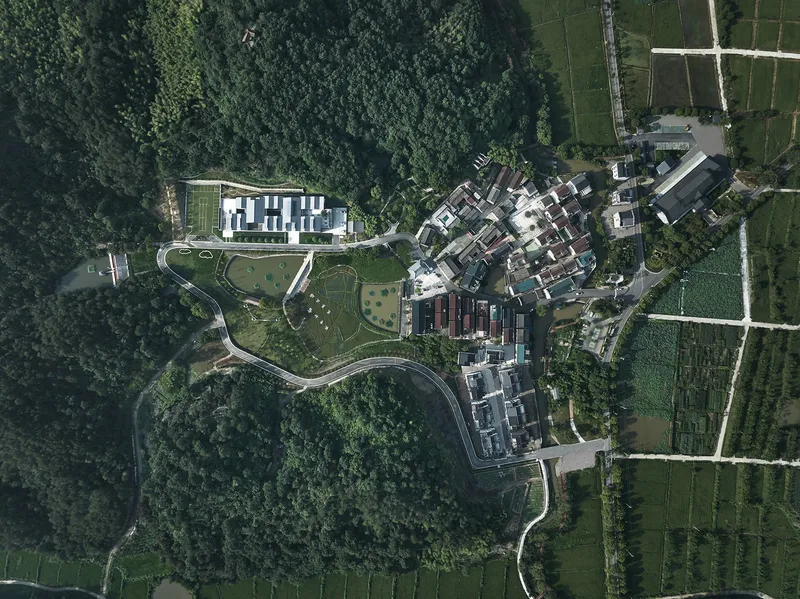
Nestled at the foot of a quiet mountain in Shentan Village, Jinhua, the Xuefeng Literature Museum by TJAD Atelier L+ is a powerful architectural homage to the life and legacy of Xuefeng Feng — a pioneering modern poet, literary theorist, and founder of the League of the Left-Wing Writers. Completed in 2022, this 4,015-square-meter structure redefines how contemporary museums engage with place, memory, and natural context.

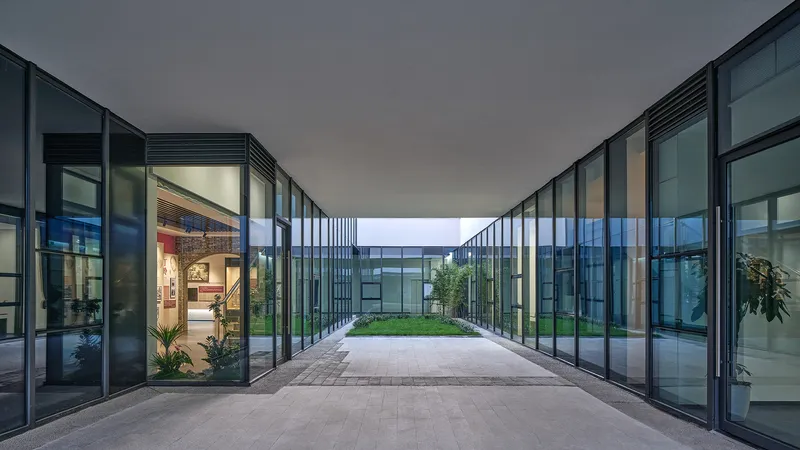
A Museum Embedded in the Landscape
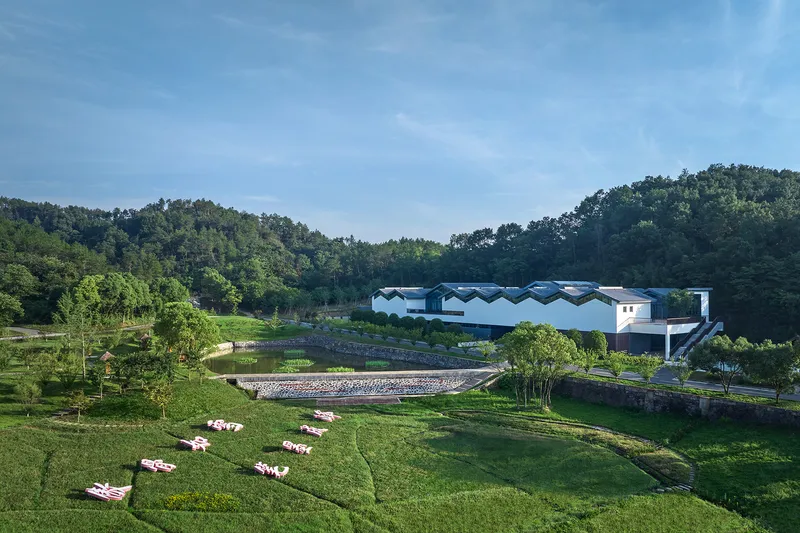
Located in a village of just around 60 households, the site of the Xuefeng Literature Museum is steeped in cultural heritage. The building sits in an excavated open area at the mountain’s base, responding sensitively to its rural environment. Rather than imposing itself, the architecture seeks integration — both formally and thermally — through strategic design choices that facilitate natural ventilation, lighting, and environmental connectivity.

A Spatial Narrative of Voids and Courtyards
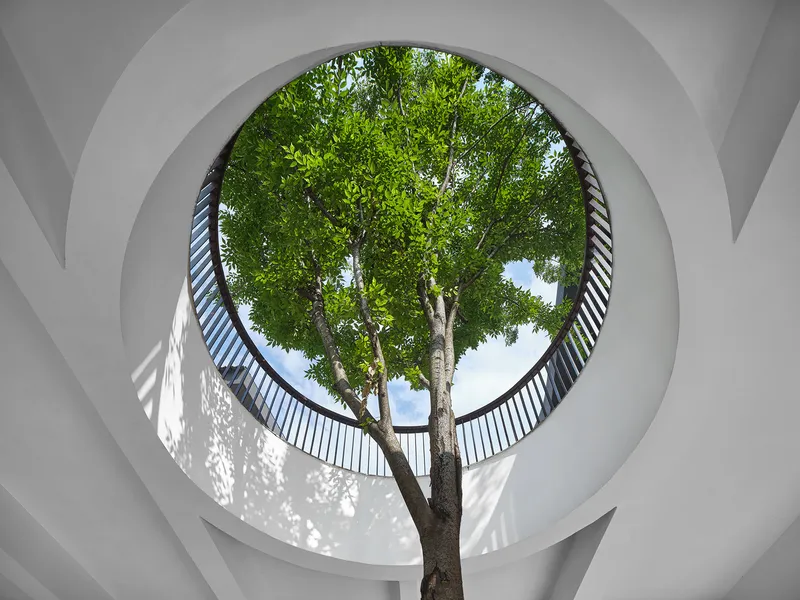
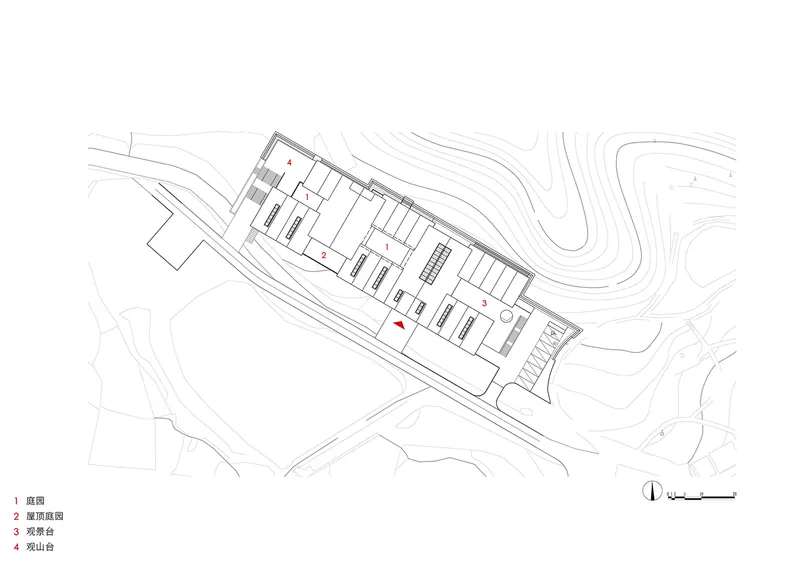
TJAD Atelier L+ employed a courtyard typology, using a concept of “void and solid alternation with three-dimensional spatial connections” to break down the museum’s scale. Four internal courtyards and platform spaces punctuate the overall form, turning a monolithic structure into a village-like ensemble. These interventions strengthen the museum’s “in-situ” character, echoing the organic rhythms of the surrounding landscape and the vernacular fabric of Shentan Village.
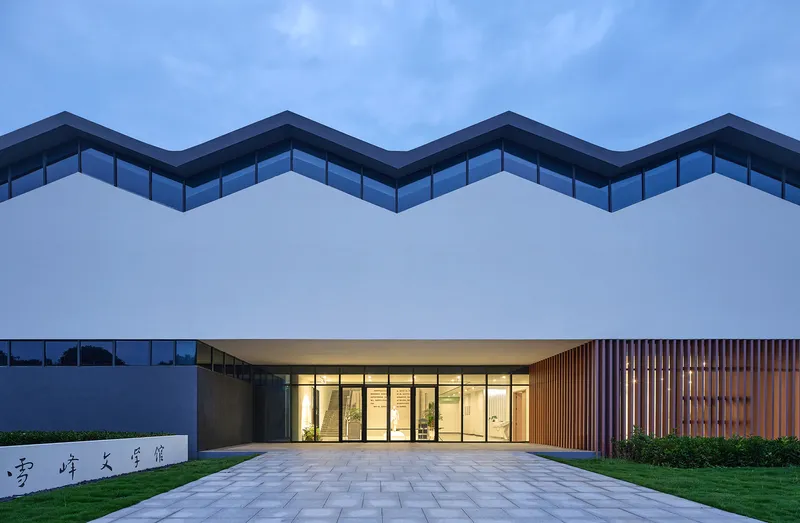
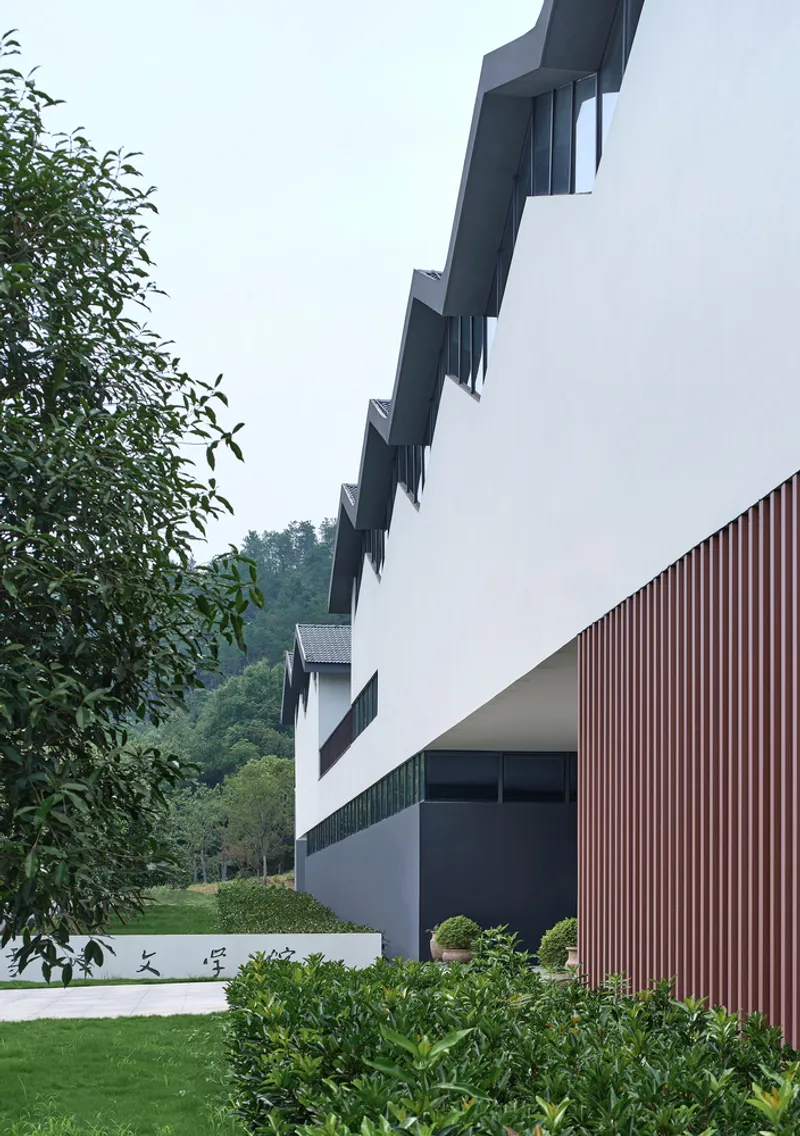
Vertical Stratification and Floating Volumes
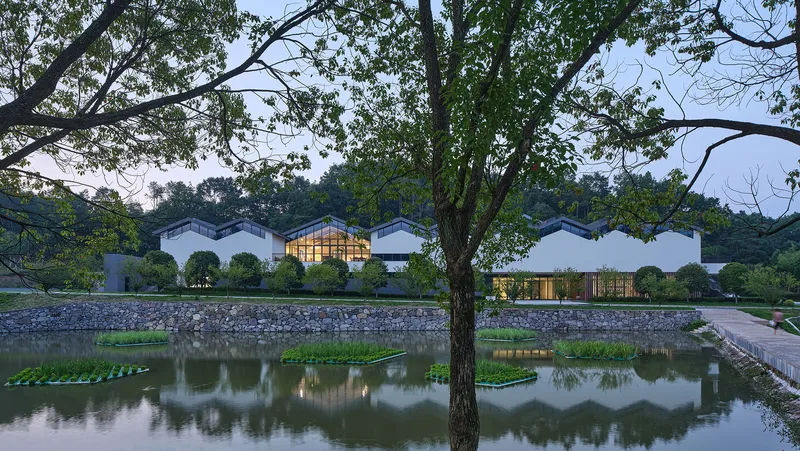
The museum’s massing is vertically layered to articulate hierarchy and procession. Visitors enter through an elevated ground floor that leads onto a roof platform, from which a seamless transition to the second level is made. The white plastered volumes, cantilevered over shaded voids, evoke a sensation of floating and lightness. In contrast, a dark grey folded roof references the undulating silhouette of the nearby mountains and traditional village rooftops, creating a subtle yet potent dialogue between built and natural form.

Climate-Conscious Design and Passive Strategies
The building’s longitudinal axis aligns with the dominant southeast wind direction, enabling a passive airflow system that cools and ventilates the interior naturally. Courtyards, ventilation skylights, and interwoven terraces support this thermodynamic performance, making the museum not only a cultural landmark but also an exemplar of climate-responsive design.
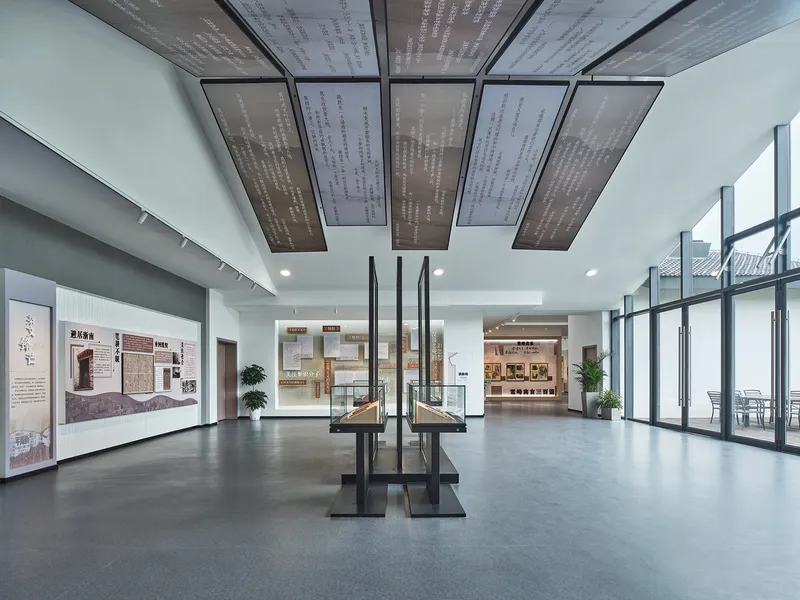
Interior Flow and Curated Spatial Experience
At the heart of the museum is a dramatic two-story central hall that orchestrates circulation and spatial experience. On one side, lecture halls and a café animate the public zone, while on the opposite side, exhibition halls and offices fulfill the museum's core functions. A sculptural staircase spirals around this central volume, offering visitors multiple vantage points and leading them to the second floor — home to writer residences, additional gallery spaces, and intimate reading nooks.
Views Framed by Architecture
The design curates moments of visual connection to the village and surrounding nature. Roof terraces and courtyards serve not only climatic purposes but also as strategic viewing platforms. From the southeastern terrace, visitors enjoy expansive vistas of Shentan Village and the tranquil lake — a “distant view” that metaphorically reconnects them with Xuefeng Feng’s former residence, anchoring past and present through sightlines and silence.

All Photographs are works of ZY Architectural photography


Popular Articles
Popular articles from the community


Juan García Correa, John González and Claudia Rueda Sink a Circular Amphitheater into a Manizales Engineering Building
On the La Nubia campus in Manizales, Colombia, the S1 Building folds labs and offices into a hillside of ramped lawns that double as a campus route.

longwave studio Reorganizes a 112 m² Tainan Apartment Around the Daily Routines of a Family and Two Cats
In Tainan, Taiwan, birch plywood, rust-red furniture and a freestanding plaster wall link arrival, storage, work and family life in one apartment.

LT2A and OPEN Architectes Thread a Brick and Glass High School Through a Wooded Belgian Campus
In Braine-l'Alleud, a 3,000 m² wing for Collège Cardinal Mercier pairs pale brick with a glazed colonnade, deferring to a small chapel and a dense wood.

GROUP A Strips a 1969 Rotterdam Harbor Headquarters to Its Frame and Wraps It in Timber Louvers
In Rotterdam's M4H harbor district, Ferro Offices reuses a 1969 frame, adds one timber storey and reaches BREEAM-NL Outstanding.

Similar Reads
You might also enjoy these articles


Hodi-Mandai Geram
Project Function: Preservation and revitalization of the Intangible heritage and socio-spatial identity of the Hodi by Housing, Cultural Memory Center, Sacred Grove, landscape, local tourism economy


Olio Towers: A Mid-Rise for Performers That Fuses Housing, Rehearsal, and Stage
Located blocks from Houston's Theater District, this modular tower stacks living units around a central performance atrium.

Oasis: Modular Green Housing Carved into Dhaka's Urban Fabric
A shortlisted Plugin Housing entry reclaims unauthorized settlements in Dhaka with stepped concrete volumes, green roofs, and ventilation-driven design.

Black Hole: A Floating Megastructure for the Post-Physical Era
Emiliano Mazzarotto envisions a spherical, self-scaling arena where e-sports, digital hotels, and holographic stadiums replace traditional public space.

Explore Poetic Architecture Competitions
Discover active competitions in this discipline

Challenge to reimagine the Iron Throne

Photograph architecture without architects

Illustrate the lost glory of Angkor Wat - Render Challenge

Bring back Drive In's
Comments (0)
Please login or sign up to add comments
No comments yet. Be the first to comment!