
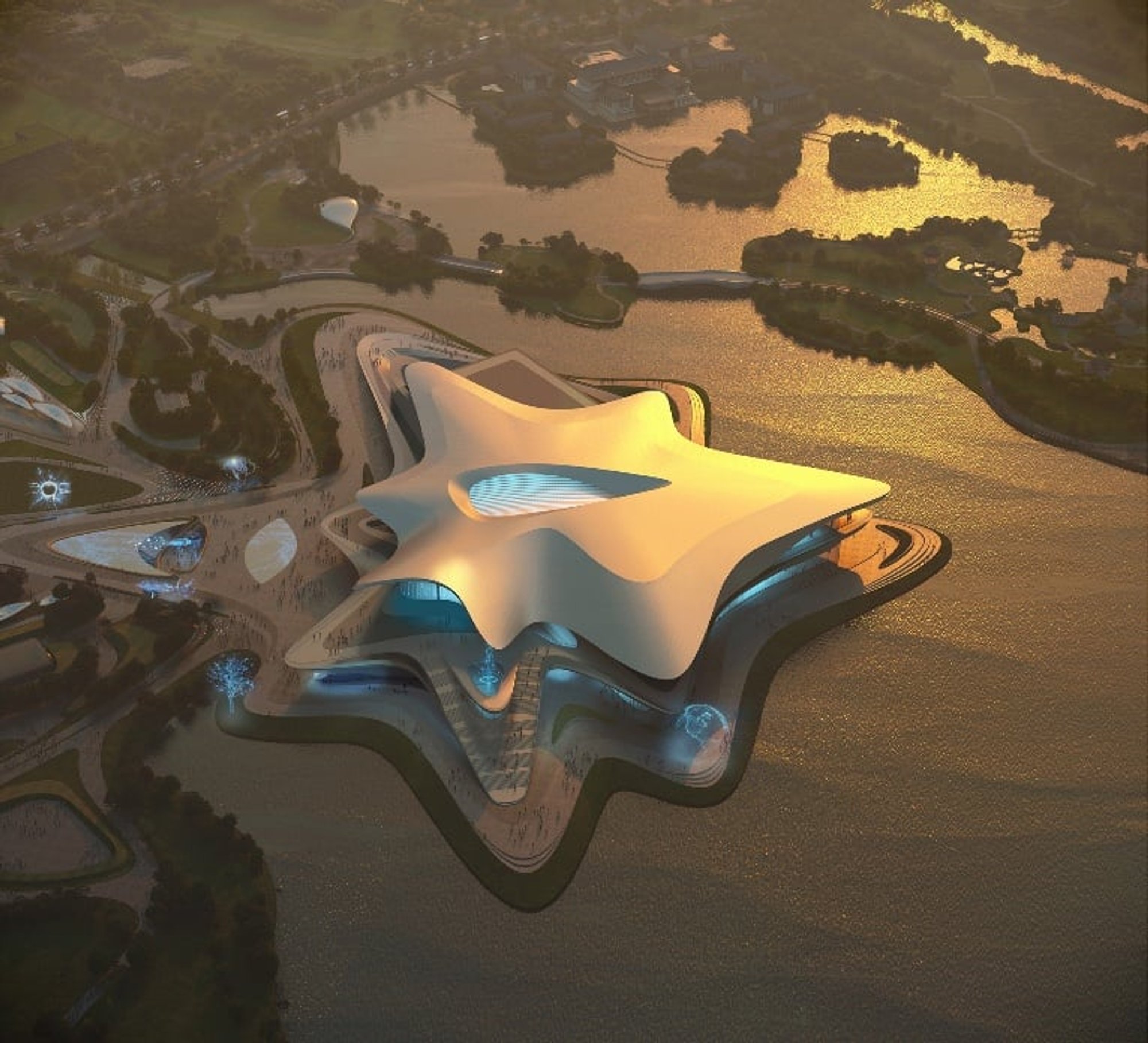
Zaha Hadid Architects' Chengdu Science Fiction Museum to host Worldcon 2023
International sci-fi event to take place at the futuristic museum in Chengdu, China

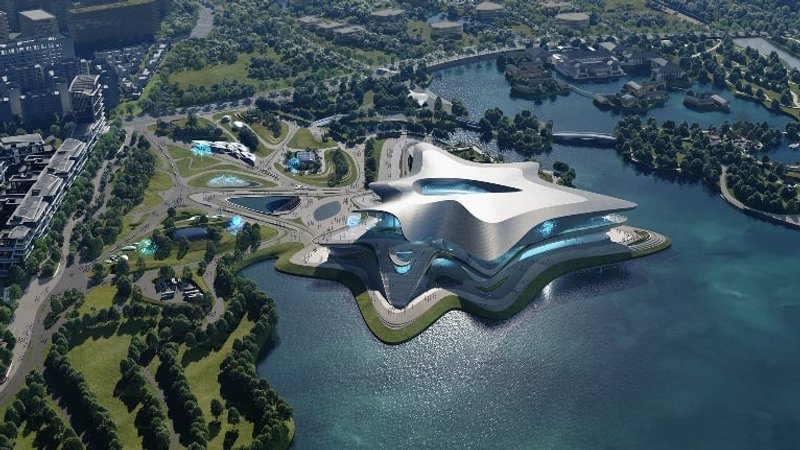
The Chengdu Science Fiction Museum, designed by Zaha Hadid Architects, is currently under construction and will serve as the main venue for the 81st annual World Science Fiction Convention (Worldcon) and Hugo Awards later this year. Chengdu is a leading hub for science fiction writing in China and has launched the careers of many of the country's most renowned authors. The city is also home to 'Science Fiction World magazine, which has been published since 1979 and is the genre's most popular periodical worldwide. The city's unique culture is deeply rooted in its rich history, including the mystical visions and extraterrestrial forms found in the carvings and masks of the Bronze Age Sanxingdui civilization. As the capital of Sichuan province in Southwest China, Chengdu has grown to a city of over 20 million residents and has become an important global centre for scientific innovation and research.
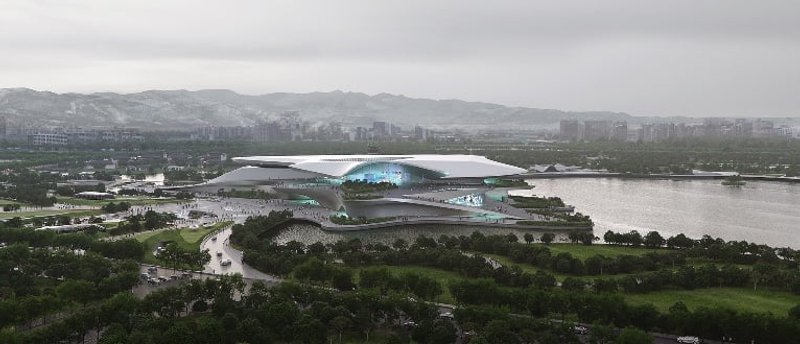
The Chengdu Science Fiction Museum, located in the Science & Innovation New City of Chengdu's Pidu District, is situated on the picturesque Jingrong Lake. The museum's design seamlessly blends into the natural landscape along the lakeshore, with nodes of activity connected by pedestrian routes that lead from the city and nearby metro station, through the surrounding parkland and into the heart of the building. Visitors can experience a journey of discovery that seamlessly transitions between indoor and outdoor plazas at different levels, linking the museum's exhibition galleries, educational facilities, cafes, and other amenities.
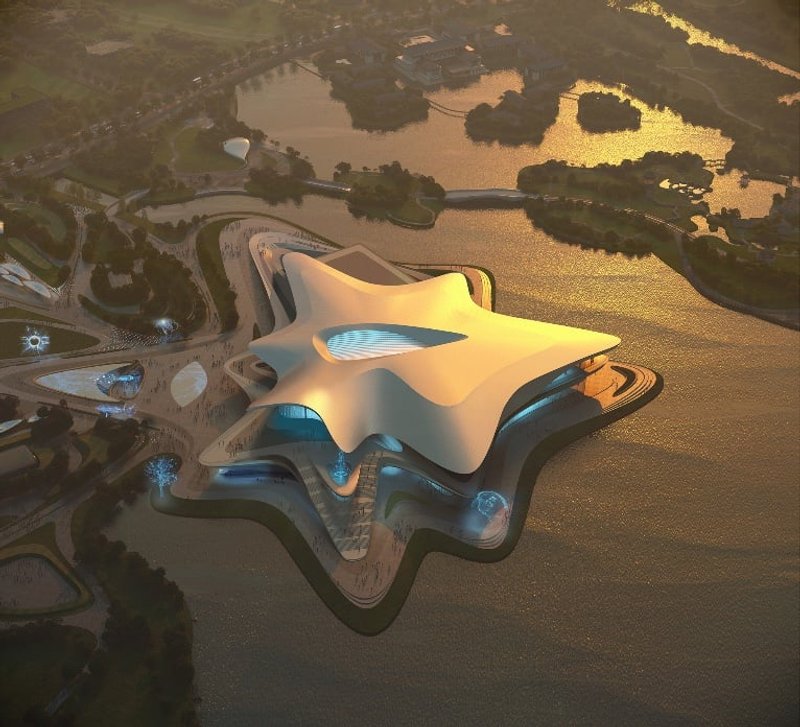
The Chengdu Science Fiction Museum seamlessly combines programmatic and functional design, creating a unique and dynamic structure that appears to float above the surface of a lake. The fluid forms of the roof radiate from a central point, reminiscent of an expanding nebula cloud with a star at its centre. This "star cloud" concept disperses energy fields throughout the various zones of the museum, guiding visitors on a journey that connects the real world with imagination.
With a total area of 59,000 sq. m, the museum offers maximum flexibility to accommodate a wide range of exhibitions, conferences, and events. It features exhibition galleries, a theatre, a conference hall, and various ancillary spaces. The central atrium, with its skylights and large window facing the breathtaking Xiling Mountain, seamlessly connects the interior of the museum with its natural surroundings.
The Chengdu Science Fiction Museum has been designed to meet the highest standards of China's Green Building Program, with detailed digital modelling analysis used to optimize the building's composition, site conditions, solar irradiation, and structure. The natural hybrid ventilation system takes advantage of Chengdu's mild subtropical climate to provide comfort for visitors and staff all year round. Additionally, photovoltaics embedded in the museum's large roof canopy help to meet the building's energy demands, while the roof's dimensions have been calculated to provide shade to the glazed facades in the summer.
The museum's design also incorporates landscaping with plants native to the region, which collect and store rainwater for natural filtration and reuse. This will help to make Jingrong Lake an integral part of Chengdu's sustainable drainage system, mitigating flooding and increasing biodiversity throughout the city.
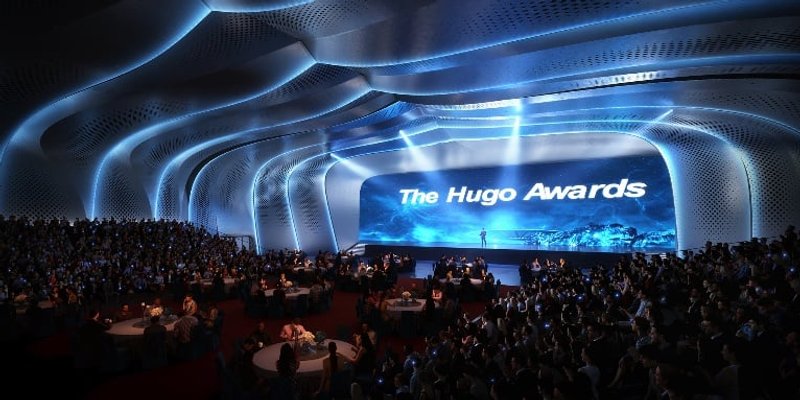
The new Chengdu Science Fiction Museum will be a vibrant centre of innovation and a gathering place for the city, connecting the past, present, and future. Later this year, the museum will be the main venue for the World Science Fiction Convention (Worldcon) and host The Hugo Awards.
The annual Hugo Awards convention, established in 1939, is the largest science fiction event in the world. Named after Hugo Gernsback, the founder of the groundbreaking magazine "Amazing Stories," the awards have been presented by the World Science Fiction Association at Worldcon since 1955.
They are considered the highest honour for science fiction and fantasy literature, as well as other forms of media. In 2015, Chinese author Liu Cixin's "The Three-Body Problem" won the 73rd Hugo Award for Best Novel, and in 2016, author Hao Jingfang's work "Folding Beijing" received the Hugo Award for Best Novelette. This has made the Hugo Awards a well-known name in China. Hosting Worldcon and the Hugo Awards at the Chengdu Science Fiction Museum will be the first time these events have been held in China.
References (1)



Popular Articles
Popular articles from the community

On the Brooks House by Monsoon Collective – A Contemporary Kerala Home Rooted in Tradition
Kerala home blending tradition and modernity with water-inspired design, brick architecture, courtyard planning, and sustainable rainwater harvesting strategies.
Flamboyant House by Juliana Camargo + Prumo Projetos
Modern Brazilian house integrating existing tree, pool, and volumes with glass, wood, and transitional spaces blending interior, exterior, and landscape seamlessly.
Inverted Architecture Installation by Studio Link-Arc: Exploring the Intersection of Architecture and Living Organisms
Inverted Architecture Installation by Studio Link-Arc blends mycelium, sustainability, inverted design, ecological cycles, and urban adaptive architecture in Shenzhen.
A Contemporary Take on Iranian Residential Architecture
A modern interior design in Mashhad that reinterprets brick, light, and spatial flow to create a warm, contemporary residential architecture.


Similar Reads
You might also enjoy these articles
Zhuxi Wonderland: Reimagining Traditional Chinese Gardens by Doarchi Architects
Zhuxi Wonderland by Doarchi Architects reinterprets traditional Yangzhou gardens, integrating courtyards, pavilions, and tea houses in modern cultural design.
Doble Soga House: A Contemporary Brick Residence Rooted in Landscape in Quito, Ecuador
Brick house in Quito integrating nature, flexible living spaces, exposed materials, and rooftop terrace, creating warm contemporary architecture for modern family life.
Al Gharra Mosque in Medina Redefining Contemporary Islamic Architecture
Minimalist Medina mosque using concrete, light, and landscape to reinterpret Islamic worship spaces through symbolic spiritual transitions and contemporary architecture.
Viczonecode Villa by DDconcept – Tropical Family Living in Ho Chi Minh City
Tropical family villa in Ho Chi Minh City featuring courtyards, skylights, natural ventilation, elevated flooring, and seamless indoor–outdoor living surrounded by greenery.


Explore Architecture Competitions
Discover active competitions in this discipline




The International Standard for Design Portfolios


The Global Benchmark for Architecture Dissertation Awards


The Global Benchmark for Graduation Excellence


Challenge to design an urban locus of culture and heritage
Comments (0)
Please login or sign up to add comments
No comments yet. Be the first to comment!