

ZHANGYU Gallery by Atelier Zeros: A Fusion of Art and Computational Design in Shanghai
ZHANGYU Gallery in Shanghai blends immersive art, computational design, and prefabricated architecture, creating a dreamlike exhibition space for millennials and professionals.


ZHANGYU Gallery, designed byAtelier Zeros, represents a bold exploration of art, architecture, and technology within a commercial environment. Located inside the bustling CITIC Pacific Plaza on Nanjing West Road, one of Shanghai’s prime commercial districts, the gallery introduces a unique fusion of exhibition space and interactive experience for office workers, art enthusiasts, and millennials alike.

Transforming Commercial Spaces with Artistic Identity
Situated above two office towers, the CITIC Pacific Plaza sought to enhance its appeal for midday and after-work visitors. Unlike traditional retail outlets, ZHANGYU Gallery functions primarily as a public exhibition space for the artist Zhang Yu, offering an immersive cultural experience rather than a conventional shopping environment. The gallery bridges dining and art, creating a reflective space for white-collar professionals to rest, engage, and interact with contemporary artworks.

Experimental Design Meets Functional Flexibility
Working within strict budgetary and spatial constraints, the design team created a multi-functional gallery featuring a private tea room, storage areas, and a section for selling artist merchandise. The entrance was conceived to hint at the gallery’s interior without fully revealing it, capturing the curiosity of passersby while maintaining a distinct artistic identity. Zhang Yu’s signature style, blending traditional ink painting with vivid colors, finds a counterpoint in the computational design techniques applied by Atelier Zeros. This contrast between hand-drawn artistry and algorithm-driven architecture results in a dynamic, visually compelling space.
Immersive Spatial Experience
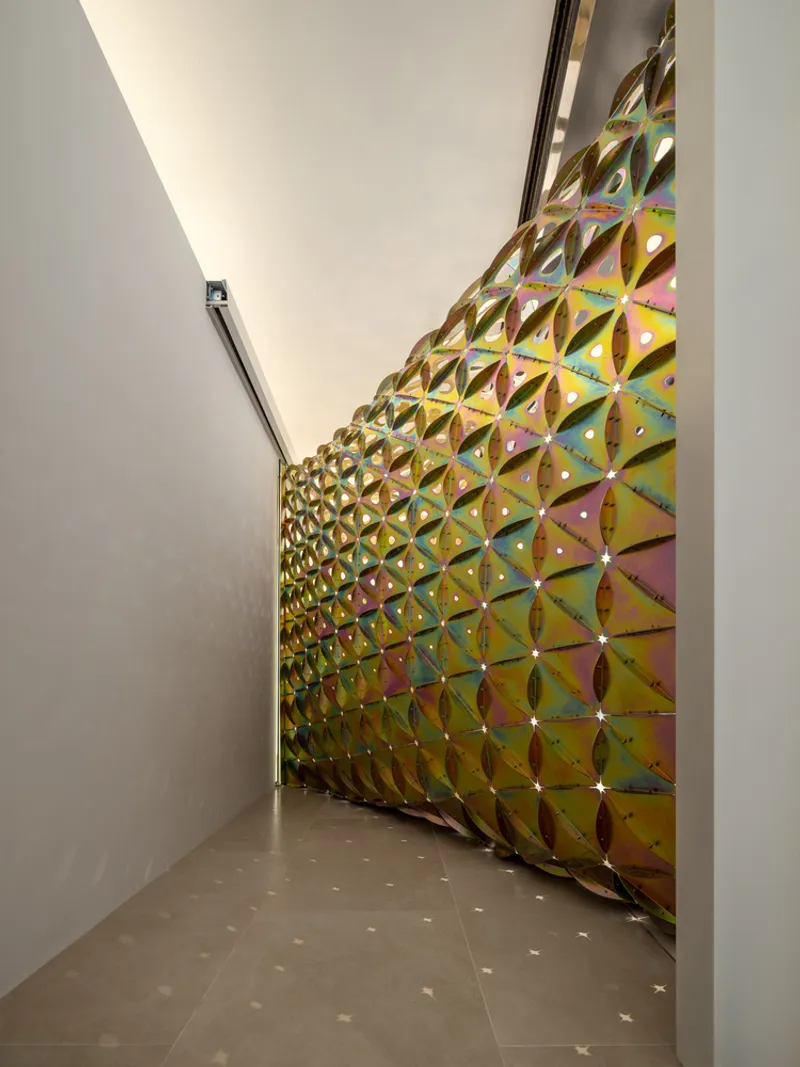
The gallery interior is designed to provide a dreamlike, immersive atmosphere that contrasts sharply with the surrounding commercial monotony. Consumption is framed as the final stage of experiencing art, emphasizing engagement over mere acquisition. The space resonates particularly with millennial audiences, who are drawn to the gallery not only for its artworks but also for the emotional and sensory journey it offers. Visitors encounter Zhang Yu’s works in a way that encourages exploration, reflection, and connection.
Iconic Entrance: A Technical and Artistic Marvel
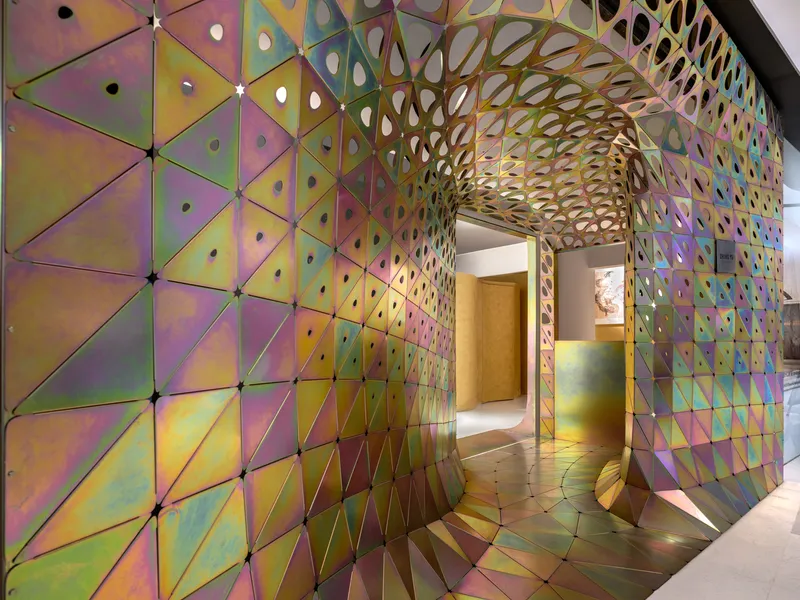
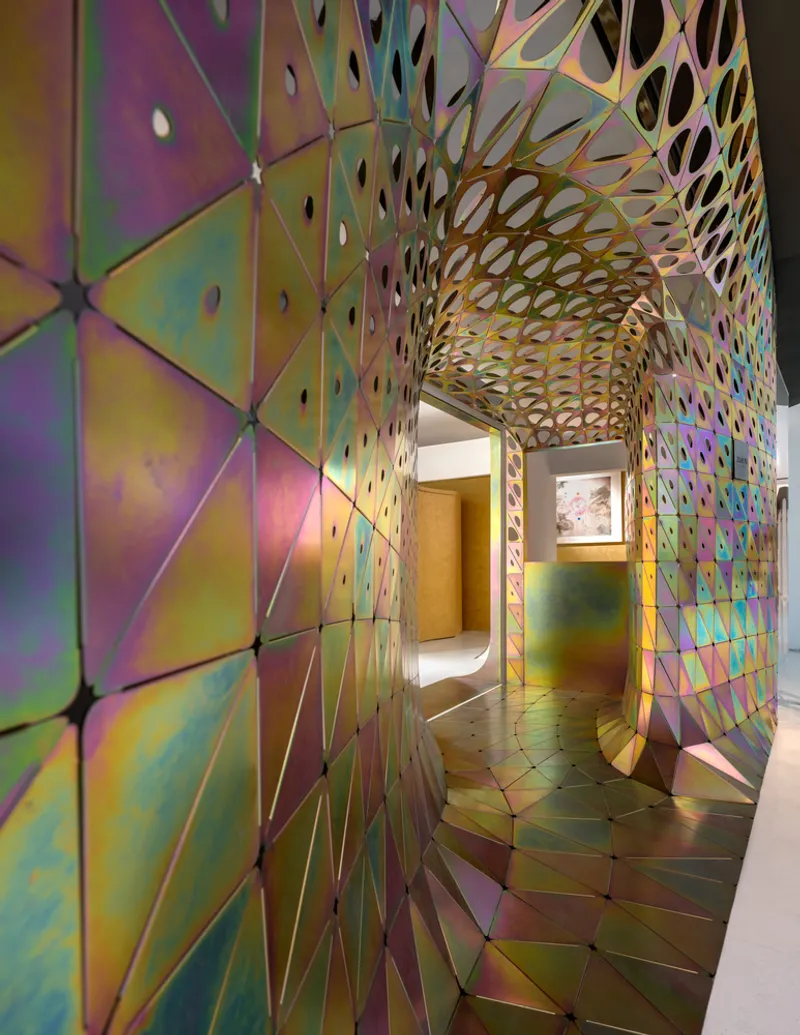
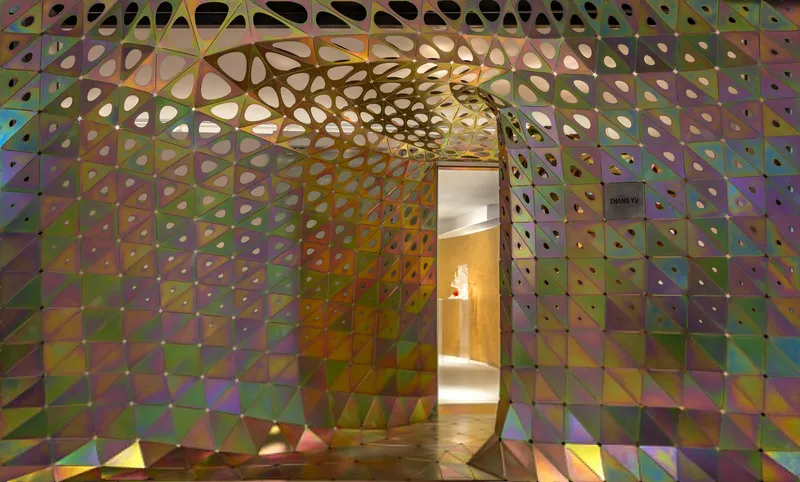
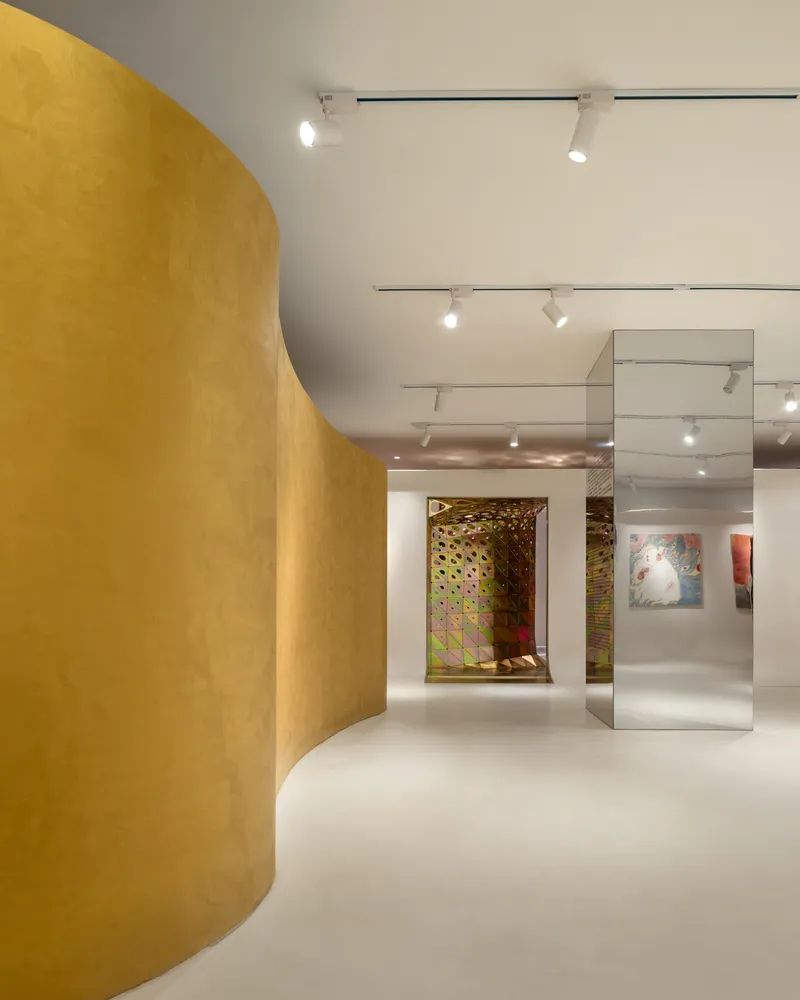
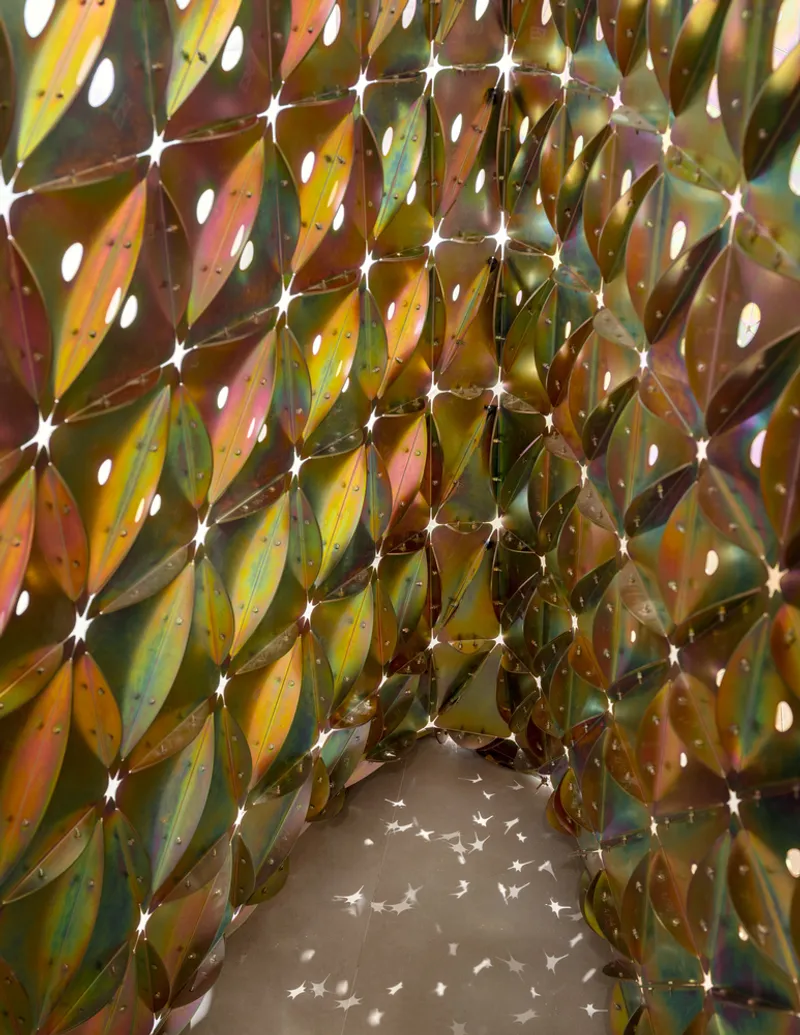
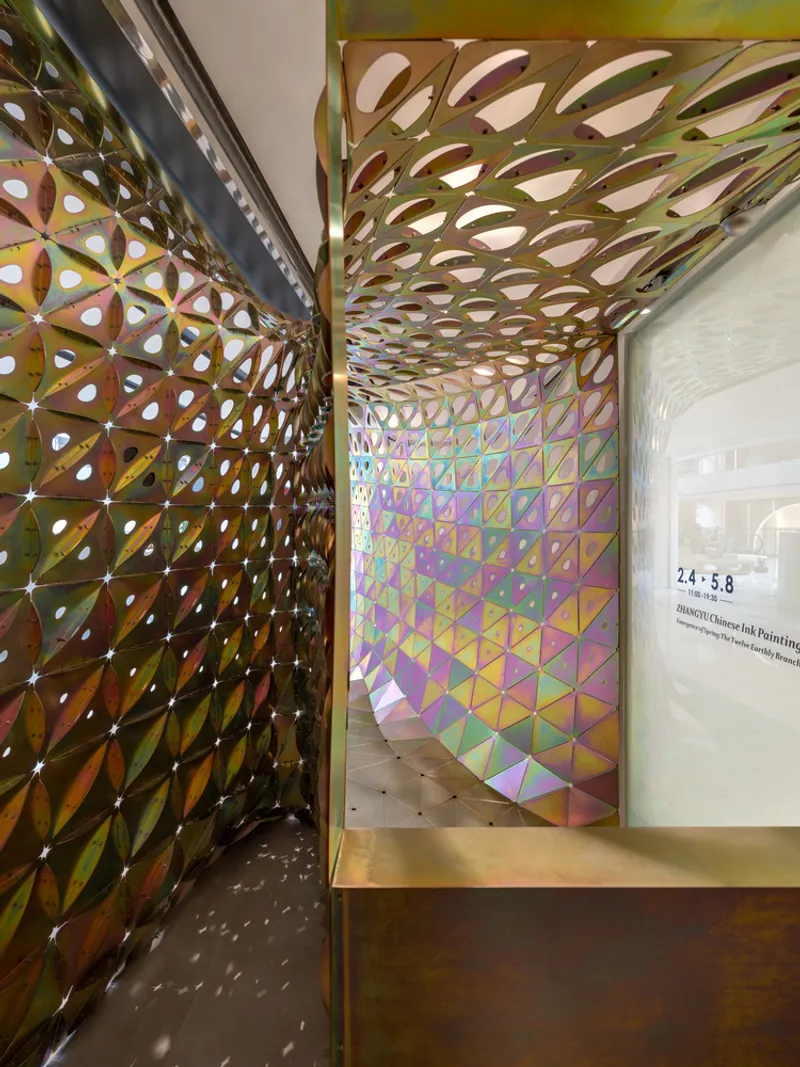
The gallery entrance exemplifies the synergy between design innovation and artistic expression. Comprising 1,000 colorful galvanized steel panels, each 1.5mm thick, the installation evokes the texture and motion of rice paper, echoing the artist’s stretched paint strokes. Prefabricated off-site and assembled on location without welding, the panels ensure rapid construction while meeting fire safety regulations. The entrance’s design, inspired by the “Butterfly Dream” motif, immerses visitors in a fantastical environment from the moment they enter, transforming the mundane commercial mall experience into a surreal journey into art.
Technology as an Artistic Medium
Computational design and CNC fabrication played a crucial role in realizing the gallery’s architectural vision. CNC machines enabled precise material processing, while hot-dip galvanization gave the steel a luminous metallic sheen that complements the golden accents in Zhang Yu’s paintings. The result is a seamless integration of contemporary technology with traditional artistic aesthetics, enhancing the gallery’s immersive, otherworldly character.
A Boundless Interior for Contemplation
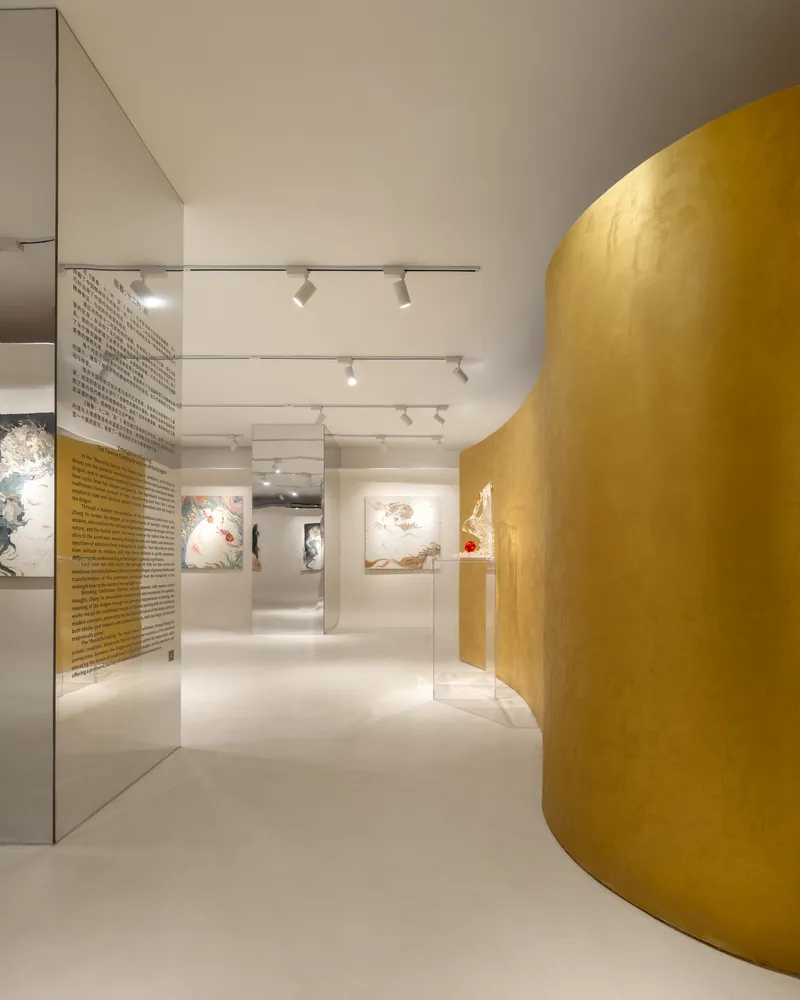
Inside, the gallery employs a minimalist, boundless white-wall design, inspired by artist Doug Wheeler and echoing the concept of blank space in Zhang Yu’s paintings. This approach isolates visitors from the surrounding shopping environment, creating a meditative setting where art can be experienced at a slower, more introspective pace. The combination of thoughtful spatial layout, lighting, and materiality ensures that each visit offers a unique, sensory-rich engagement with contemporary Chinese art.
All photographs are works of Sicong Sui


Popular Articles
Popular articles from the community


Juan García Correa, John González and Claudia Rueda Sink a Circular Amphitheater into a Manizales Engineering Building
On the La Nubia campus in Manizales, Colombia, the S1 Building folds labs and offices into a hillside of ramped lawns that double as a campus route.

Cube Design Draws an Ecological Corridor Between Two Shenzhen Hills with the Nankai Building
Beside Shenzhen's container docks, the Nankai Building pairs stacked balconies with a climbing green screen to connect two hillsides across its height.

LT2A and OPEN Architectes Thread a Brick and Glass High School Through a Wooded Belgian Campus
In Braine-l'Alleud, a 3,000 m² wing for Collège Cardinal Mercier pairs pale brick with a glazed colonnade, deferring to a small chapel and a dense wood.

Architekt Andreas Gruber Scatters 23 Dark Timber Chalets Across a South Tyrolean Forest Edge
In Molini di Tures, Amonti Chalets breaks a resort into a hamlet of gabled timber houses, with parking, storage and services pushed into the slope.

Similar Reads
You might also enjoy these articles


Hodi-Mandai Geram
Project Function: Preservation and revitalization of the Intangible heritage and socio-spatial identity of the Hodi by Housing, Cultural Memory Center, Sacred Grove, landscape, local tourism economy


Olio Towers: A Mid-Rise for Performers That Fuses Housing, Rehearsal, and Stage
Located blocks from Houston's Theater District, this modular tower stacks living units around a central performance atrium.

Oasis: Modular Green Housing Carved into Dhaka's Urban Fabric
A shortlisted Plugin Housing entry reclaims unauthorized settlements in Dhaka with stepped concrete volumes, green roofs, and ventilation-driven design.

Black Hole: A Floating Megastructure for the Post-Physical Era
Emiliano Mazzarotto envisions a spherical, self-scaling arena where e-sports, digital hotels, and holographic stadiums replace traditional public space.

Explore Art Gallery Competitions
Discover active competitions in this discipline

Challenge to reimagine the Iron Throne

Photograph architecture without architects

Illustrate the lost glory of Angkor Wat - Render Challenge

Bring back Drive In's
Comments (0)
Please login or sign up to add comments
No comments yet. Be the first to comment!