


Spatial Experience
How people perceive, move through, and emotionally register built and designed environments, from public buildings to educational and communal spaces.
Spatial experience concerns how the physical form of a building or place shapes perception, movement, memory, and behaviour. Designers working in this area treat circulation, light, sound, scale, and material as tools for producing particular feelings and patterns of use rather than as neutral containers.
Work in this topic often examines the relationship between architecture and its surroundings, including coastlines, water, and public or memorial space. Members have explored themes such as sensory sequencing, the staging of performance and arrival, play and learning environments, and communal living, asking how spatial decisions affect the people who inhabit them.


Popular projects
View all 97 projects


Latest journals
View all 101 journals
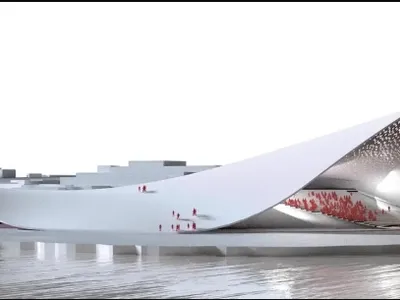
Sound Waves: An Opera House That Opens Its Stage to the Baltic Sea
A shortlisted proposal for Tallinn's waterfront dissolves the boundary between auditorium, public hill, and Baltic horizon.
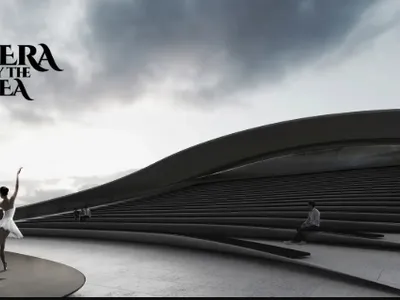
Opera by the Sea Estonia: Three Shells Dissolving Architecture into Tallinn's Coastline
A winning opera house proposal replaces monumental form with interconnected shells that blur the boundary between building, park and Baltic Sea.
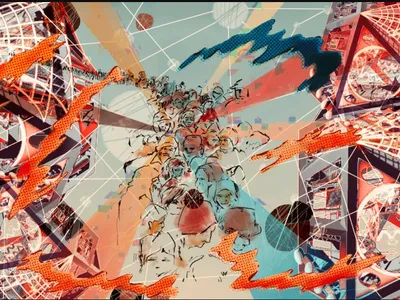
Playducation: Modular Geometry That Embeds Learning Inside Refugee Play Spaces
A polyhedral exoskeleton system positions climbing, building, and exploration around existing open ground within refugee settlements.
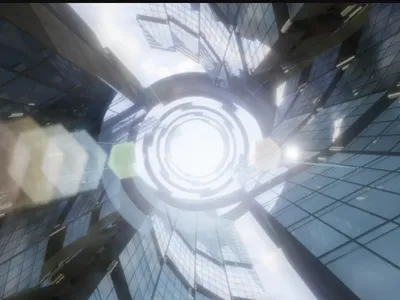
VORTEX: A Shortlisted NomadHouse 2020 Co-Living Hub That Spirals Around Water and Shared Life
Designed for Singapore's Greater Southern Waterfront, VORTEX pulls digital nomads inward, threading green terraces and blue waterways into one spiral.


