
Snøhetta Drapes a Former Airport Site in Hong Kong with a Textile-Inspired Mixed-Use Tower
AIRSIDE transforms the old Kai Tak Airport grounds into a 177,670-square-meter landmark anchoring Hong Kong's emerging second CBD.

Kai Tak Airport closed in 1998, leaving behind one of the most storied parcels in Hong Kong. For decades the site drifted between masterplans and political ambitions. Now, with AIRSIDE, Snøhetta has planted a 213-meter tower and its companion volumes squarely on top of the Kai Tak MTR station, declaring that what was once a runway threshold is now the front door to the city's second Central Business District. The project opened in September 2023, and its scale alone is staggering: 177,670 square meters of office, retail, hospitality, and public landscape compressed onto a 17,000-square-meter footprint.
What makes the building genuinely unusual, though, is not its size but its conceptual backbone. The Nan Fung Group, AIRSIDE's developer, began life as a textile manufacturer. Snøhetta seized on that lineage. The entire project is organized around the logic of fabric: folds generate the landscaped plazas, chamfered cuts carve the massing into five stepped volumes, and gently curved fluted glass panels ripple across the facade in a sine-wave cadence that recalls draped cloth. It is a rare case of a narrative device actually producing spatial consequences rather than just decorative ones.
Five Volumes, One Continuous Form
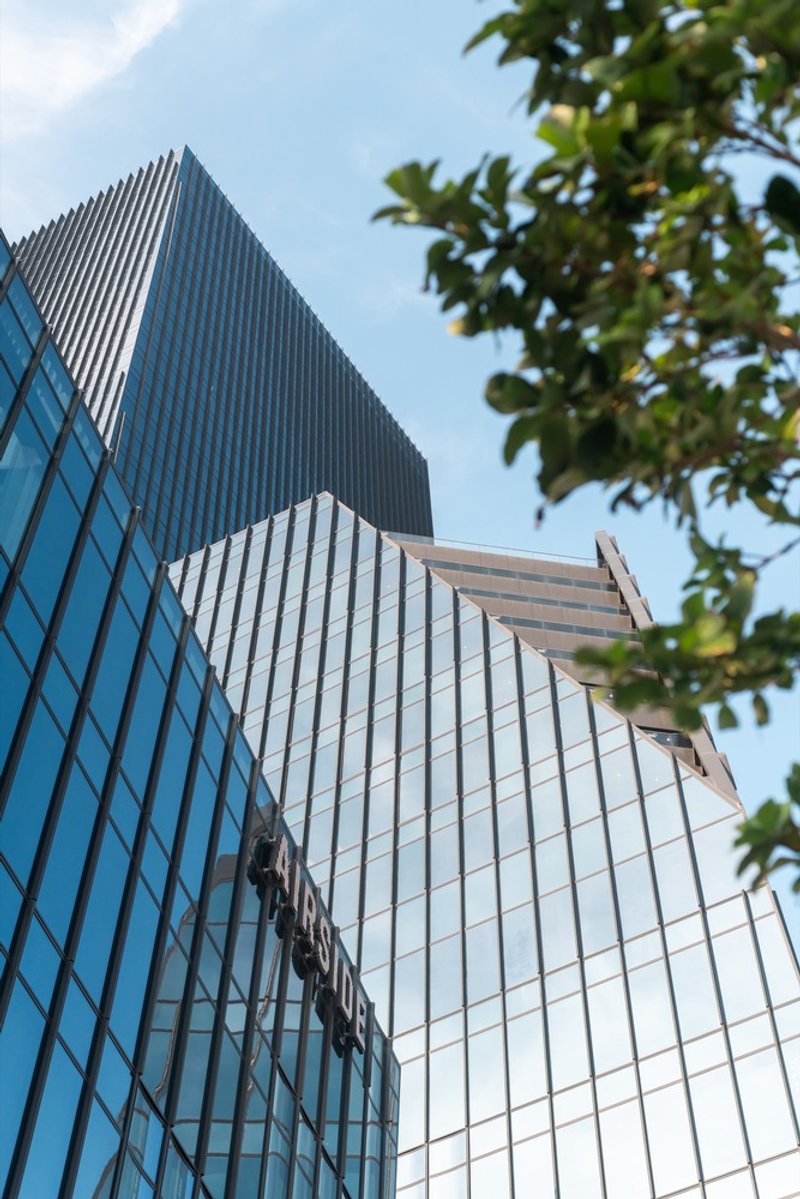
Seen from the street, AIRSIDE reads as a single organism rather than a tower on a podium. Five interconnected volumes step up from the Kai Tak River, increasing in height until they culminate in the main office tower. The chamfered slices that define each mass are not arbitrary: they open sight lines to Victoria Harbour and the river below while reducing the building's solar profile at the upper levels. The curved glass panels vary in curvature as they descend, tapering off near the ground and intensifying higher up, a subtle trick that gives the facade a kinetic quality when viewed from different angles.
A glazed pedestrian bridge, spanning roughly 50 meters, and a network of underground tunnels stitch the development into its neighborhood and the MTR station below. Connectivity here is not an afterthought: it is the primary urban move. Snøhetta understands that a building sitting on top of a metro node has obligations beyond its own lobby, and the circulation strategy reflects that ambition.
The Retail Atrium as Urban Interior
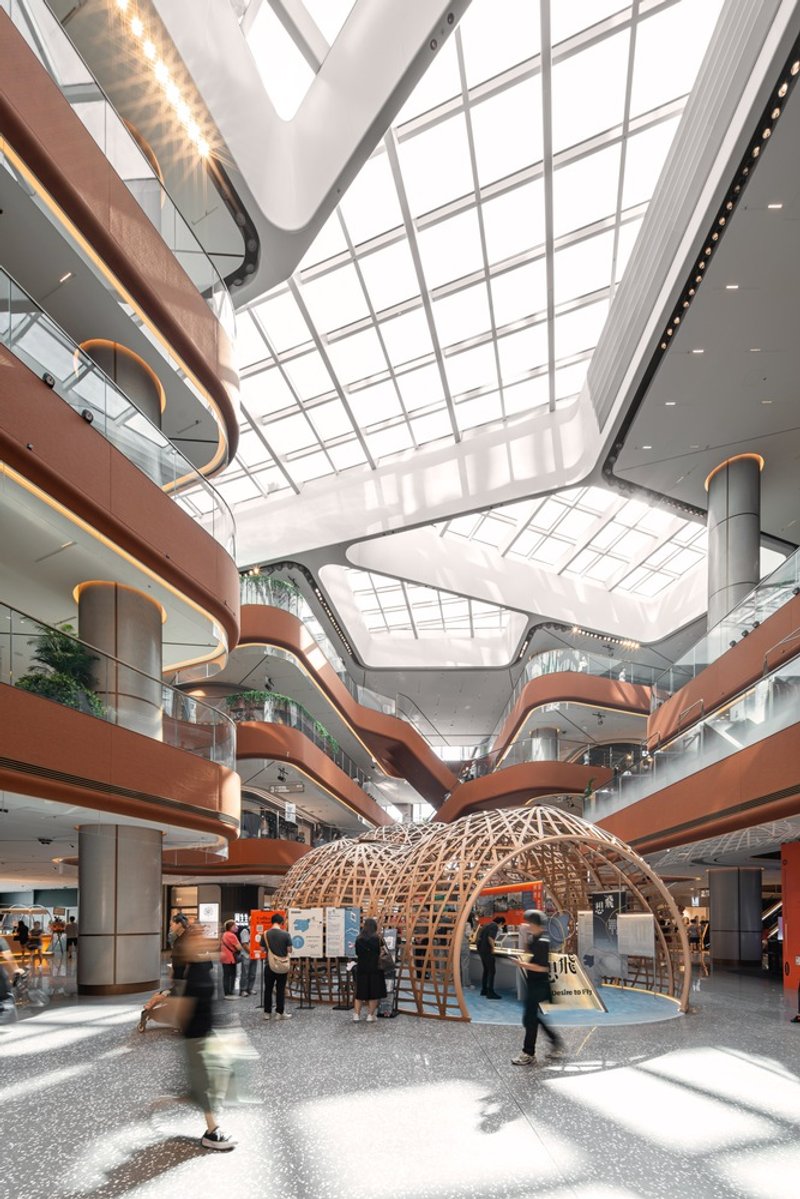
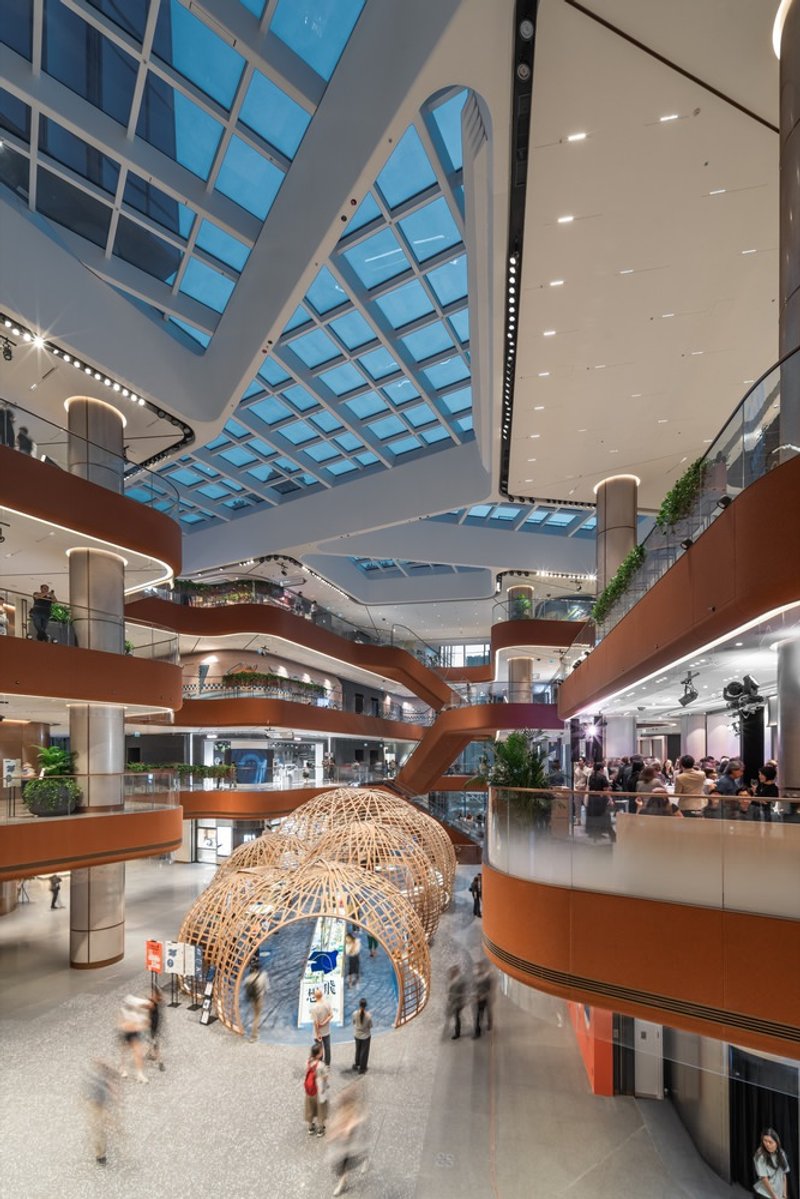
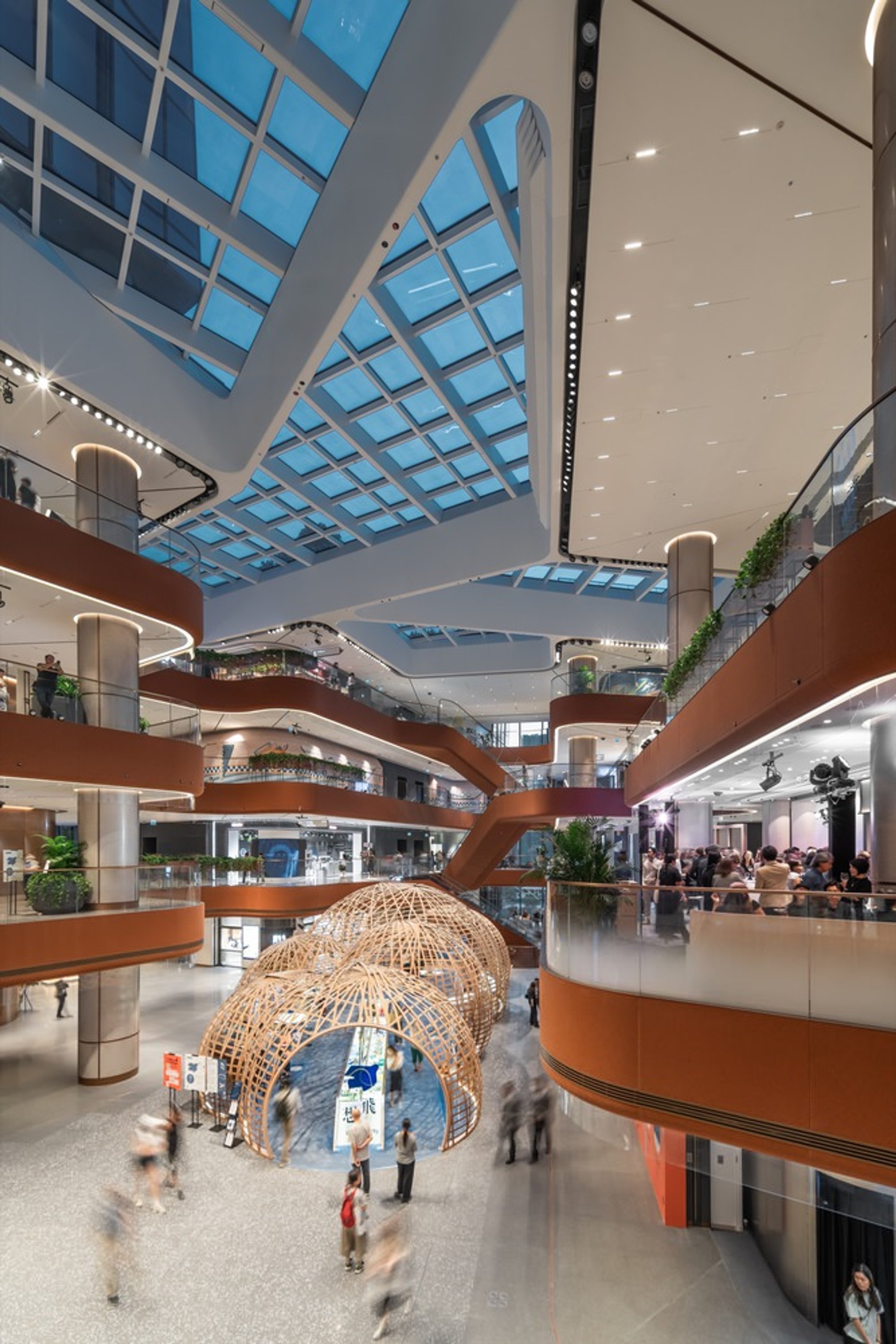
The heart of the podium is a central atrium stretching across roughly 60,000 square meters of retail space. Skylights flood the void with daylight, and curved bronze-toned balconies terrace down through the section, lending the interior the cadence of a canyon rather than a shopping mall. At the base sits a woven bamboo pavilion structure, a sculptural centerpiece that pulls the textile narrative indoors. The effect is atmospheric: visitors circulate through layered half-levels, never quite sure where commercial program ends and public gathering begins.
The spandrel panels in this atrium are made from upcycled woven textile produced from over 100,000 post-consumer plastic bottles. It is a detail most visitors will never notice, which is precisely the point. Sustainability in AIRSIDE is embedded in material choices, not broadcast through signage. Terrazzo flooring, micro-cement surfaces, and stainless steel with copper-bronze finishes round out a palette that feels rich without resorting to conspicuous luxury.
Landscape as Infrastructure
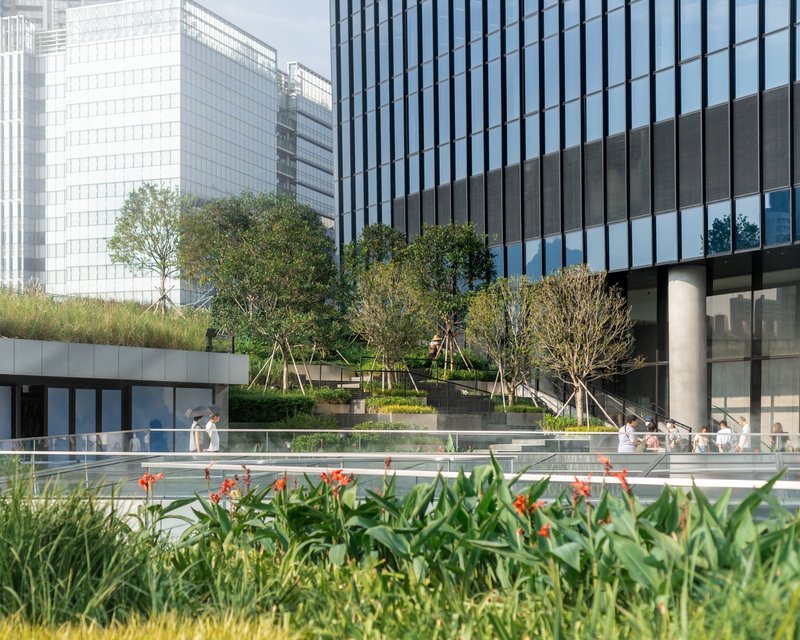
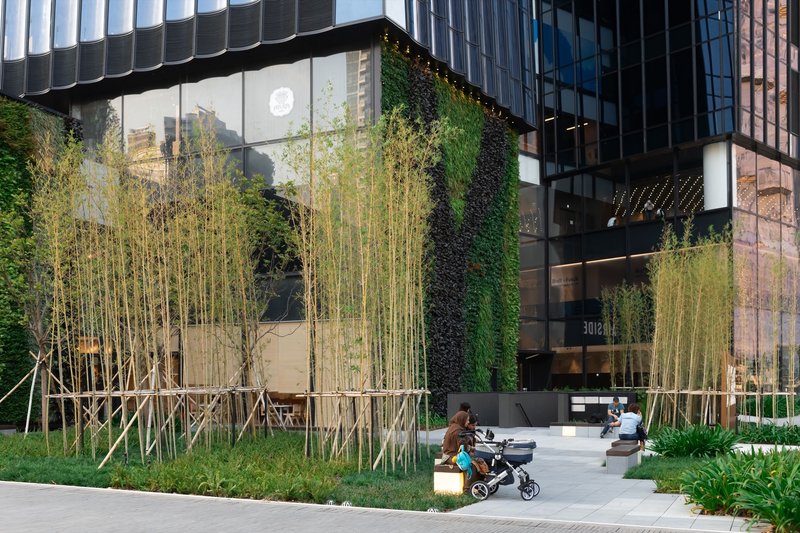
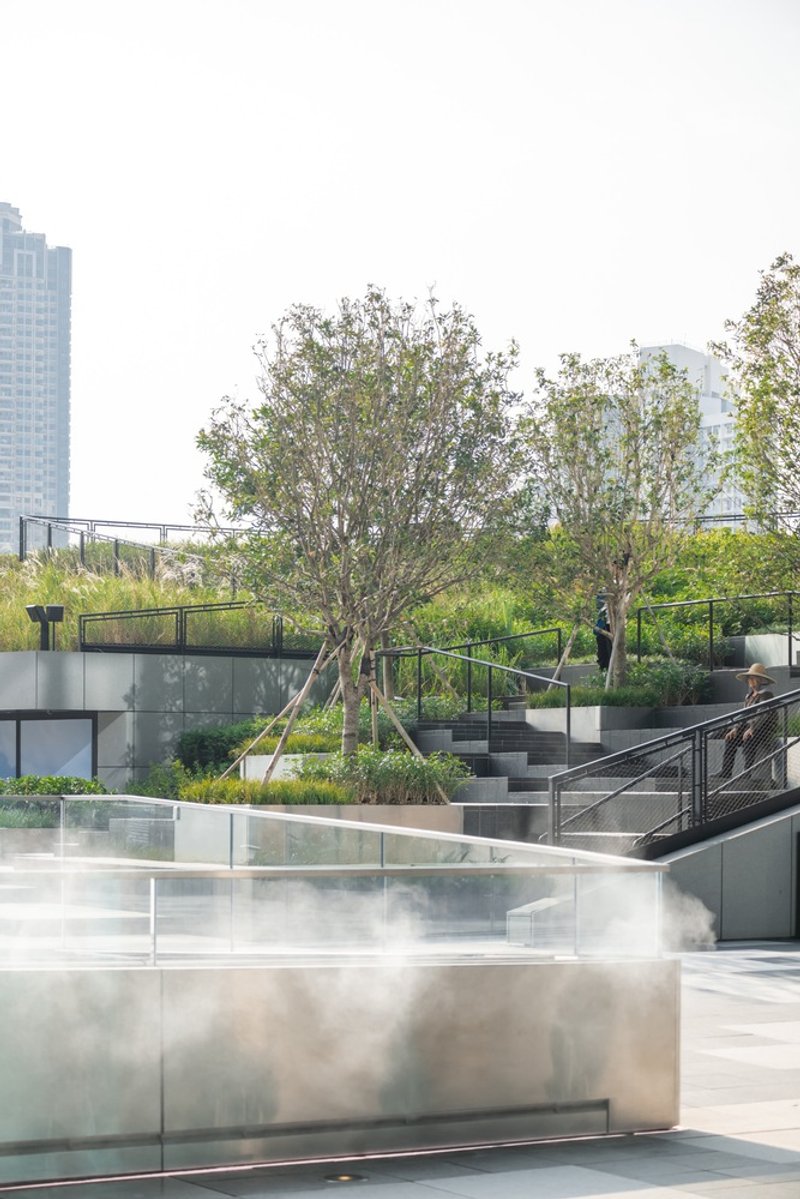
Thirty percent of AIRSIDE's site is covered in soft landscape, a figure that borders on the absurd for a commercial building in central Hong Kong. Snøhetta treats the ground plane as a series of folded surfaces, gently sloping walkways and planted terraces that spill from the building's base toward the river promenade. Native plant species dominate the planting palette, and steel planters equipped with misting systems help counteract the heat-island effect that plagues dense urban cores.
The planted courtyard, with its stepped terraces and young trees framed by vertical fin facades, already functions as a neighborhood park. Parents push strollers through bamboo groves at grade. Six hundred square meters of educational gardens and urban farms occupy the podium rooftops. These are not amenity decks for office tenants; they are publicly accessible spaces designed to draw the surrounding community into the building's orbit. The deliberate porosity between interior and exterior, between transit corridor and garden, is what separates AIRSIDE from the hermetically sealed megaprojects that defined the previous generation of Hong Kong development.
Art and Atmosphere at Ground Level
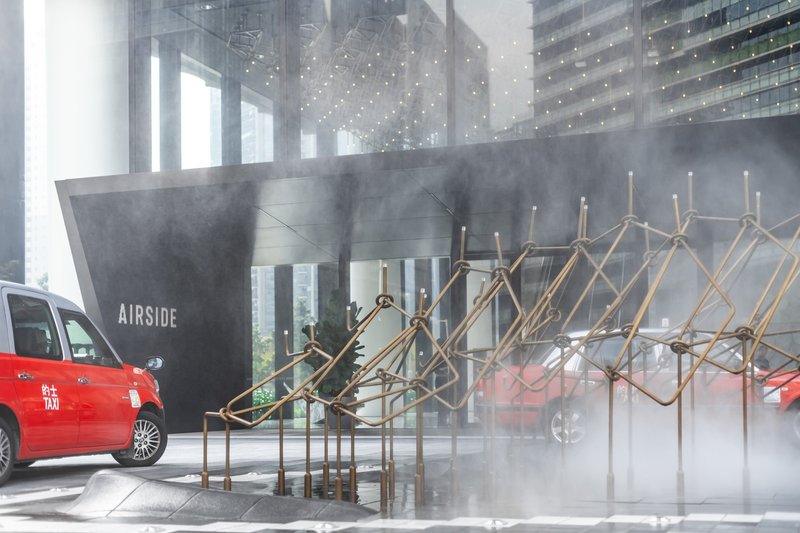
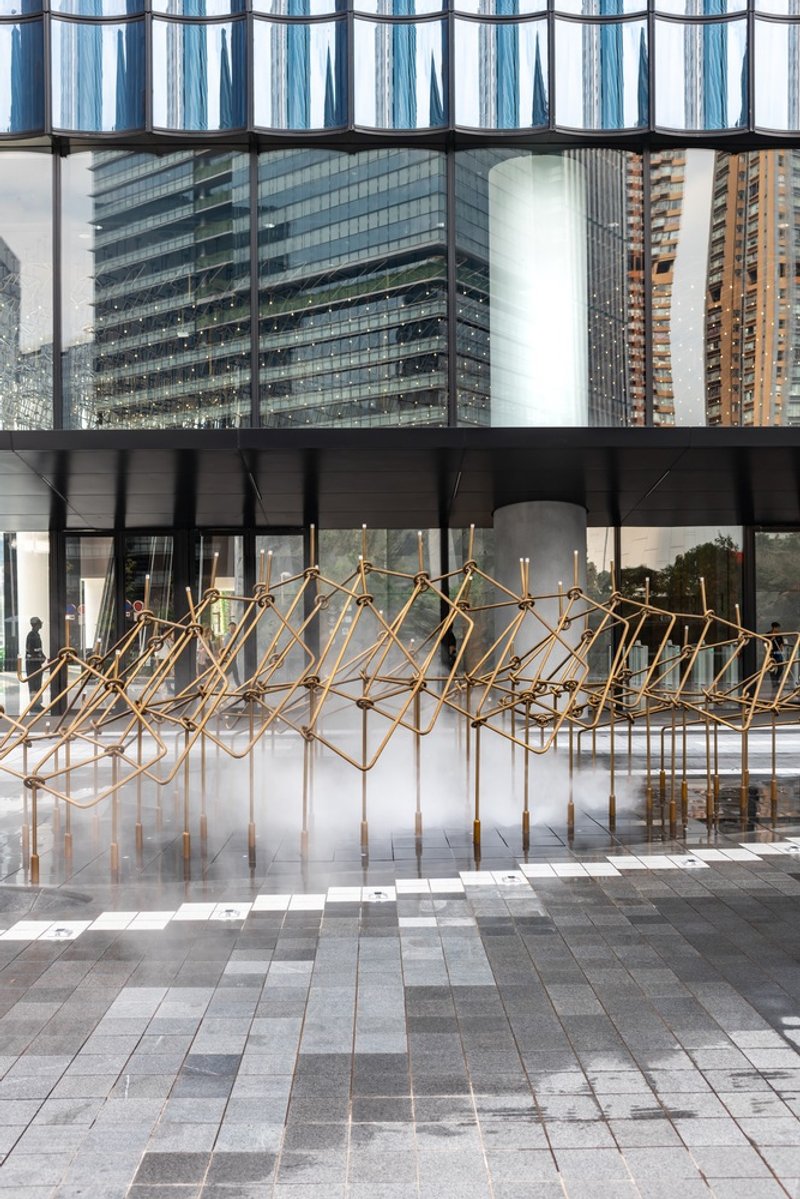
Scattered across the plazas are sculptural installations in brass rod and geometric metalwork, several of them integrated with misting mechanisms that blur the line between artwork and microclimate intervention. One piece, set against a dark concrete wall beneath a glass canopy, releases gentle clouds of vapor that cool the surrounding air while creating an almost theatrical tableau. Another, a faceted brass structure on the open plaza, catches light under the pedestrian bridge overhead. These moments are curated but not forced: they reward the pedestrian who pauses, without demanding attention from those simply passing through.
Material Detailing and Interior Finishes
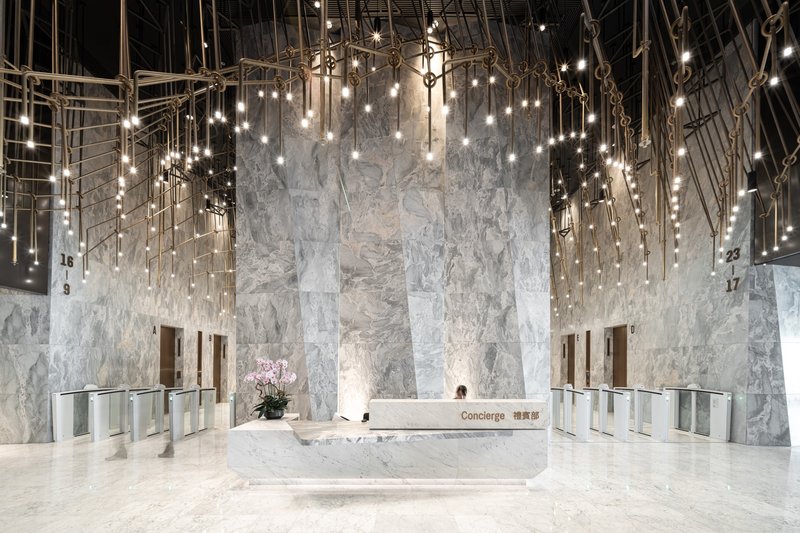
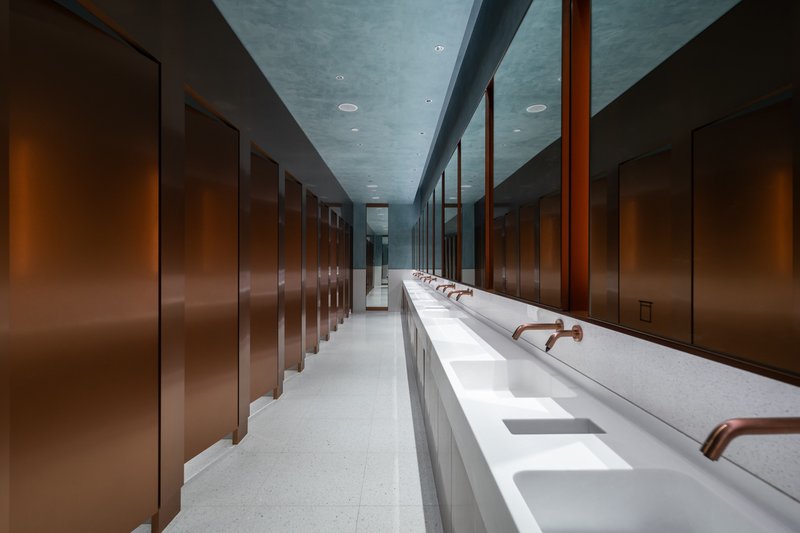
The lobby sets the tone with veined marble walls and cascading pendant lights that recall the warp and weft of the textile motif. It is restrained, relying on the interplay of stone veining and controlled artificial light rather than spectacle. Copper fixtures and bronze partition stalls extend the material language into the restrooms, an unusual level of follow-through for a commercial development. Too many mixed-use projects reserve their best materials for the marketing suite and let the rest of the building default to generic specifications. Here, Snøhetta maintains the palette down to the bathroom counter.
This consistency matters because it signals intention. When the same copper-bronze tone appears on the atrium balconies, the restroom hardware, and the exterior sculptures, the building reads as a single designed object rather than a collection of separately budgeted zones.
Engineering Sustainability at Scale
AIRSIDE is the first project in Hong Kong to hold five top-tier green building certifications simultaneously: LEED US Platinum, BEAM Plus New Building Final Platinum, WELL Building Standard Platinum, BEAM Plus Neighborhood Platinum, and China Green Building Design Label 3-Star. The list is impressive, but the mechanics behind it are more interesting. The building connects to the Kai Tak District Cooling System, which pipes chilled seawater from a central plant, eliminating the need for conventional chiller installations. Over 1,350 square meters of walkable photovoltaic panels cap the rooftop and podium levels, the largest PV farm on any commercial building in the city.
Below ground, Hong Kong's first automated bicycle parking system occupies the 23-meter-deep basement alongside automated waste sorting facilities and carpark levels. A hybrid semi-top-down construction sequence, building the superstructure and basement simultaneously, shaved seven months off the construction program. That technique is worth noting: in a city where construction timelines translate directly into financial pressure on surrounding neighborhoods, compressing the schedule is itself a form of civic responsibility.
Why This Project Matters
Hong Kong has no shortage of tall buildings or mixed-use complexes. What it lacks are large-scale developments that treat the public realm as something more than leftover space between profitable floor plates. AIRSIDE's most significant contribution is the seriousness with which it knits landscape, transit, and commercial program into a single urban sequence. The building does not sit on its site so much as grow out of it, stepping from river to tower through a continuous terrain of gardens, plazas, and atria. Snøhetta has demonstrated that density and generosity are not incompatible, even on one of the most constrained development sites in Asia.
The textile narrative could have been mere marketing gloss, but it generated real formal decisions: the sine-wave facade, the folded landscape, the chamfered volumes, and the upcycled woven spandrels. When a conceptual framework survives contact with engineering, budget, and program, it earns its place. AIRSIDE is evidence that a commercial megaproject can carry cultural memory, environmental ambition, and genuine public space in the same structure, and still stand as a viable business proposition.
AIRSIDE by Snøhetta. Location: Kai Tak, Hong Kong. Total area: 177,670 square meters. Year: 2023. Photography by Kevin Mak.
About the Studio
Share Your Own Work on uni.xyz
If projects like this are the kind of work you want to make, uni.xyz is a place to publish your own, find collaborators, and enter design competitions.



Popular Articles
Popular articles from the community

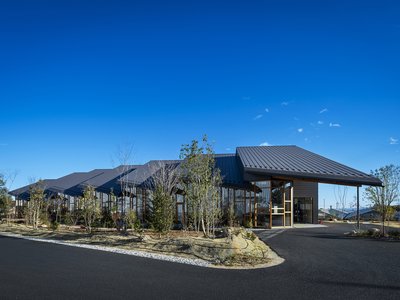
20 Most Popular Office Building Projects of 2025
From biophilic workspaces in India to net-positive energy offices in New Delhi, 20 office building projects that defined architecture in 2025.

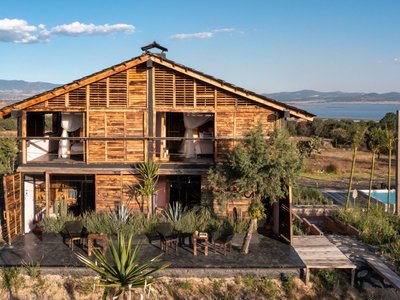
Fausto Terán and Toro Fuse Japanese Craft with Mexican Tradition in a Lakeside Retreat
Nakamura House pairs Shou-Sugi-Ban charred pine with handmade clay tile at the foot of Atlangatepec Lagoon in Mexico.
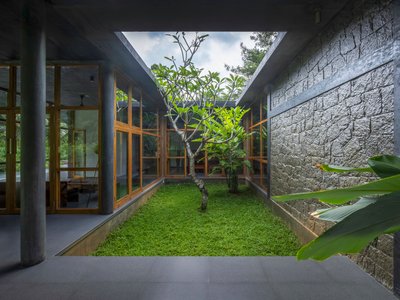
3dor Concepts Wraps a Kerala Home in Mirrored Concrete Arcs Around a Courtyard Tree
In the Western Ghats foothills of Thamarassery, a 270 m² single-story house uses two curved volumes to frame nature as its center.
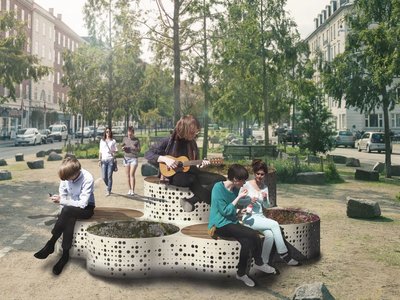
20 Most Popular Furniture Design Projects of 2025
Modular street systems, parametric benches, and insect hotels: the furniture design projects that captivated architects on uni.xyz in 2025.


Similar Reads
You might also enjoy these articles
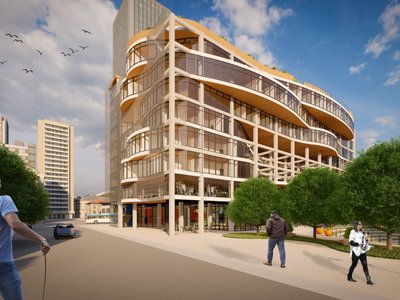
Olio Towers: A Mid-Rise for Performers That Fuses Housing, Rehearsal, and Stage
Located blocks from Houston's Theater District, this modular tower stacks living units around a central performance atrium.
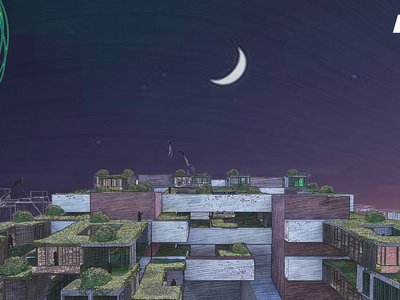
Oasis: Modular Green Housing Carved into Dhaka's Urban Fabric
A shortlisted Plugin Housing entry reclaims unauthorized settlements in Dhaka with stepped concrete volumes, green roofs, and ventilation-driven design.

Black Hole: A Floating Megastructure for the Post-Physical Era
Emiliano Mazzarotto envisions a spherical, self-scaling arena where e-sports, digital hotels, and holographic stadiums replace traditional public space.
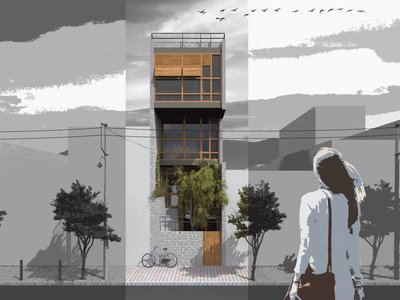
Compact & Sustainable Living in Piraeus: A Four-Level Family Home Built Around Light and Air
A narrow townhouse in one of Greece's densest port cities uses a central atrium and passive strategies to house three generations under one roof.


Explore Architecture Competitions
Discover active competitions in this discipline




The International Standard for Design Portfolios


The Global Benchmark for Architecture Dissertation Awards


The Global Benchmark for Graduation Excellence


Challenge to reimagine the Iron Throne
Comments (0)
Please login or sign up to add comments
No comments yet. Be the first to comment!