
KFA Arkitekter Nestles a Timber Guesthouse into Swedish Bedrock
A 25-square-meter attefallshus in Sweden proves that strict size limits can sharpen rather than shrink architectural ambition.

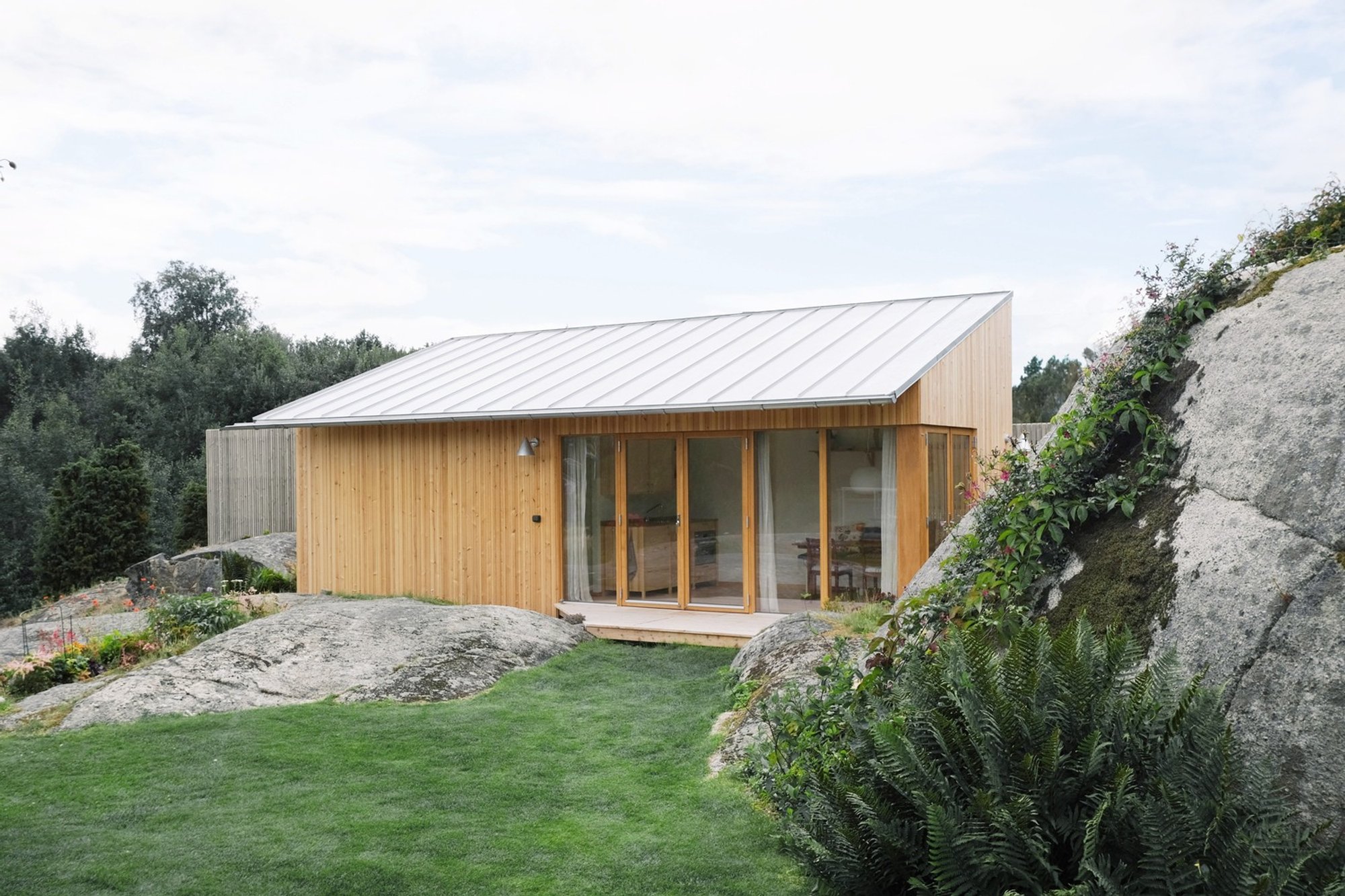
Sweden's attefallshus regulations let homeowners build a secondary dwelling of up to 25 square meters without a full planning permit. The rule was introduced in 2014 to ease housing pressure, but it also created a quiet laboratory for compact design. Most attefallshus are catalog sheds. This one, by Stockholm-based KFA Arkitekter, treats the constraint as a brief worth taking seriously: a garden guesthouse that sits on exposed granite outcrop, wrapped in vertical timber cladding and capped with a sloped metal roof that follows the terrain's own inclination.
What makes the project interesting is not its size but its posture. The building does not flatten its site or pretend the rock isn't there. It finds a seam between boulders, drops into it, and lets the stone do the work of anchoring the composition. The result is a structure that reads as geological rather than decorative, a timber box that earns its place by acknowledging the ground it sits on.
Terrain as Co-Author
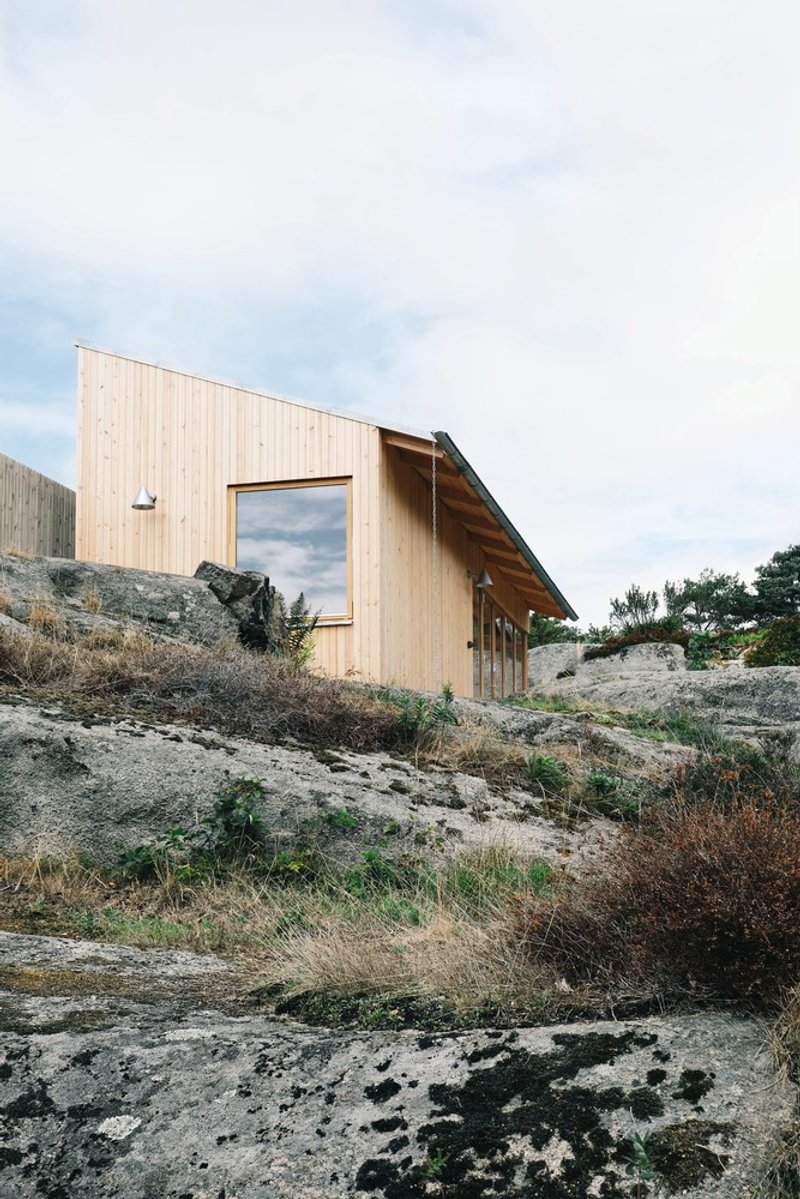
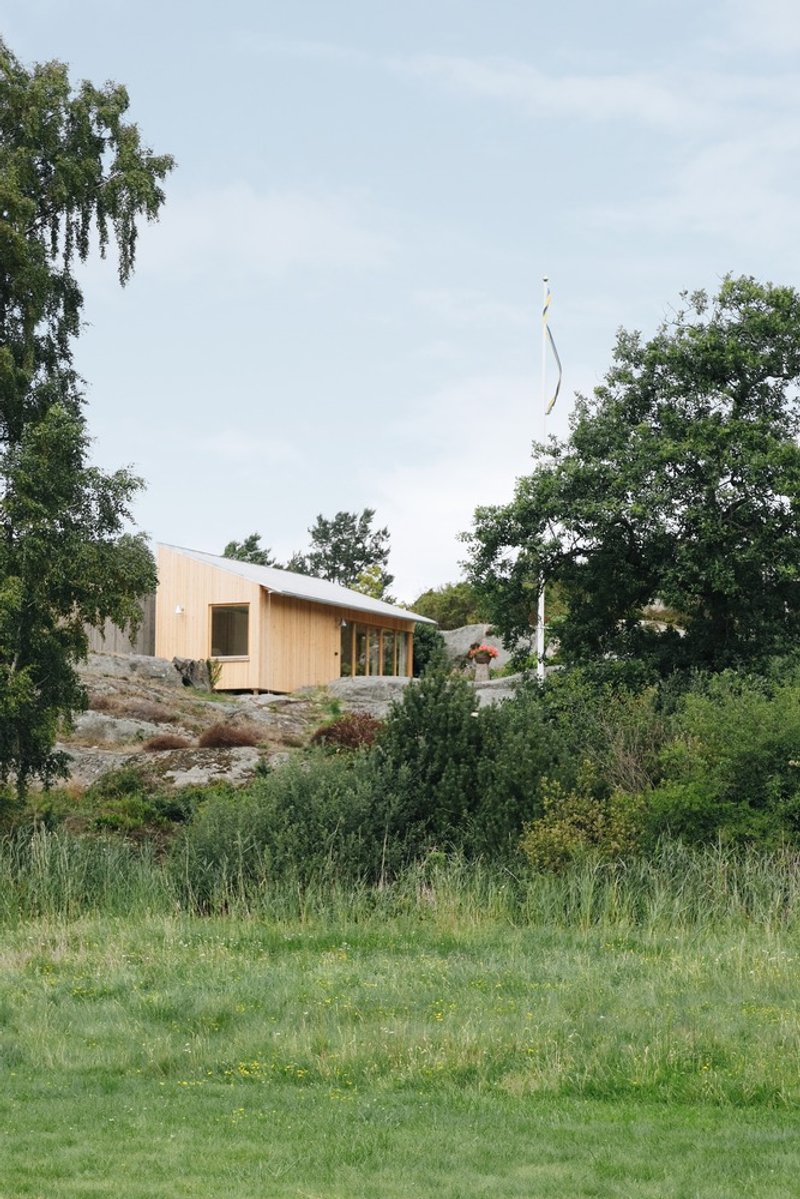
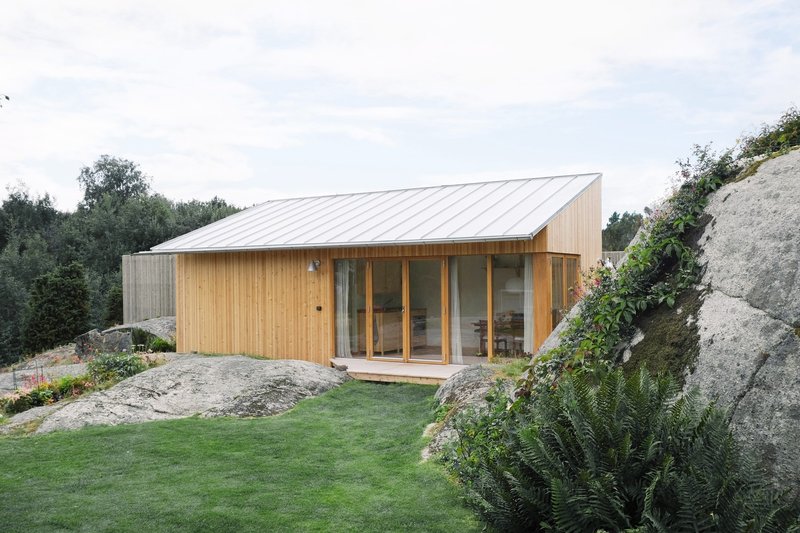
The guesthouse occupies a sloping patch of ground between exposed rock formations, mature trees, and a grass lawn. Rather than excavating a flat pad, KFA Arkitekter positioned the rectangular volume so that it threads between boulders, its floor level shifting with the terrain. The sloped roof echoes the angle of the adjacent granite, a decision that makes the building feel less imposed and more discovered.
From a distance the vertical timber cladding blends with the trunks of surrounding birch and pine. Up close, the zinc-edged eaves and precise glazing details signal that nothing here is accidental. The site strategy is straightforward: touch the ground as lightly as possible and let the rock tell you where the walls go.
A Linear Interior That Punches Above Its Weight
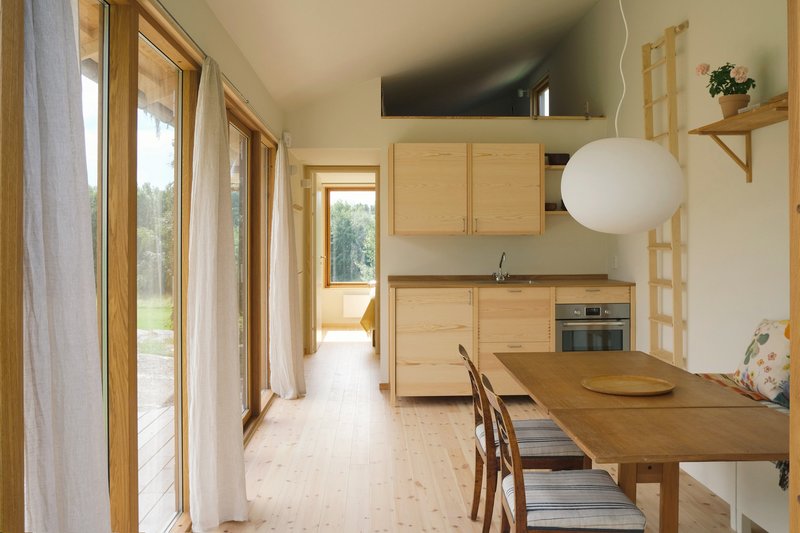
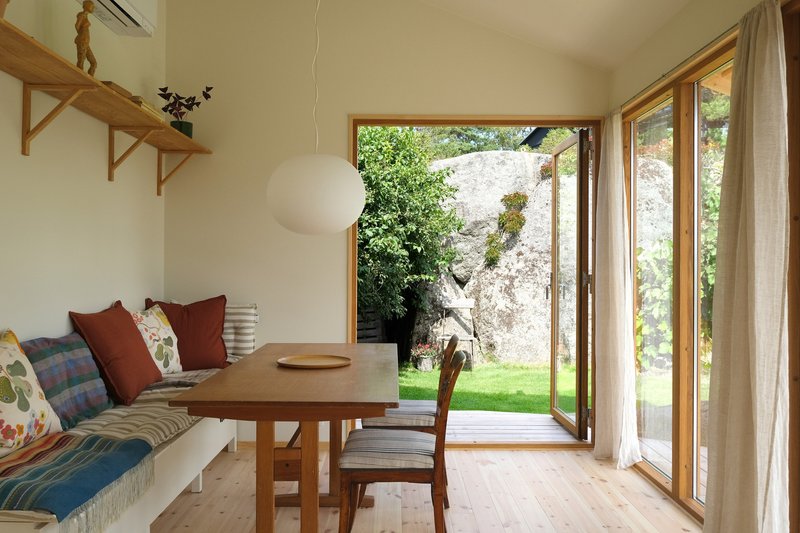
Inside, the plan is linear and disciplined. A continuous band of glazing along one wall floods the open kitchen and dining area with daylight while keeping the opposite wall solid for storage and services. Pale wood cabinetry runs unbroken beneath the window line, doubling as counter, shelf, and visual anchor. Built-in bench seating at the dining end saves floor area and frames a view directly onto a weathered boulder, turning the stone from obstacle into feature.
The palette is deliberately restrained: light timber, white plaster, no applied color. In a room this small, material consistency matters more than variety. Every surface pulls the same weight, which makes the 25 square meters feel calm rather than cramped.
Threshold and Transparency
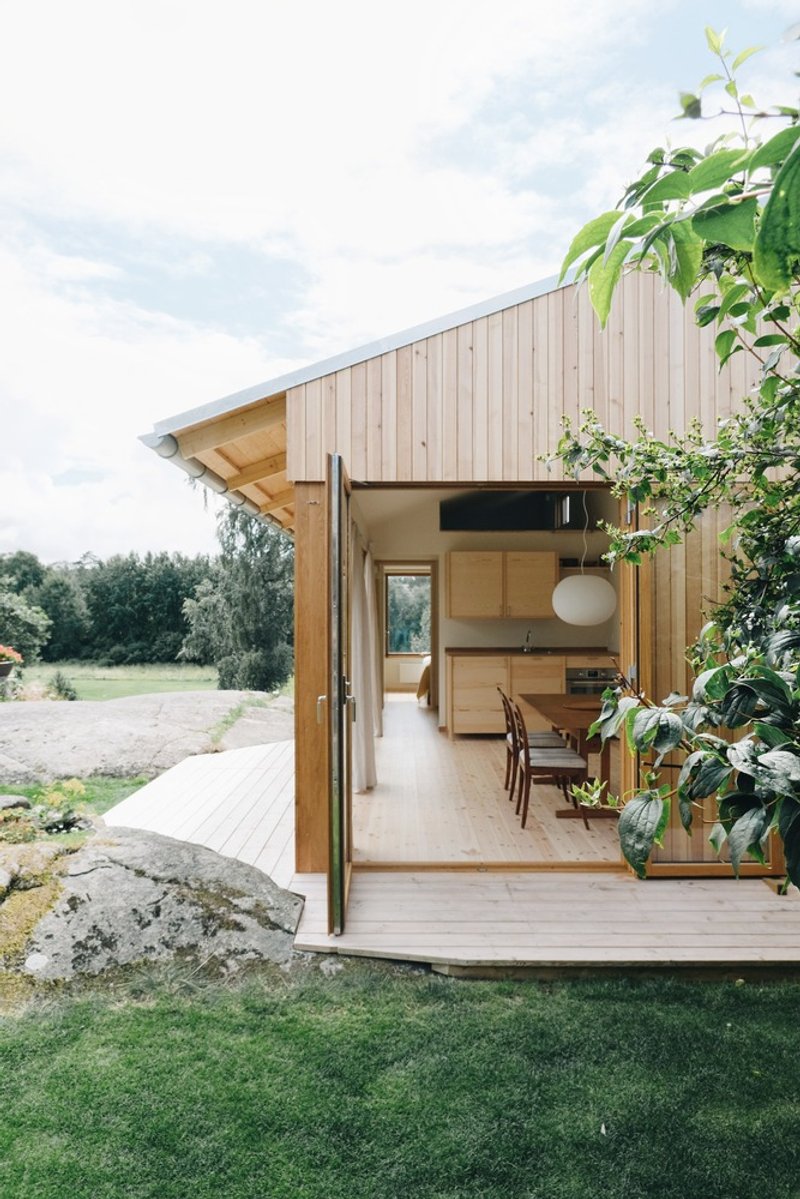
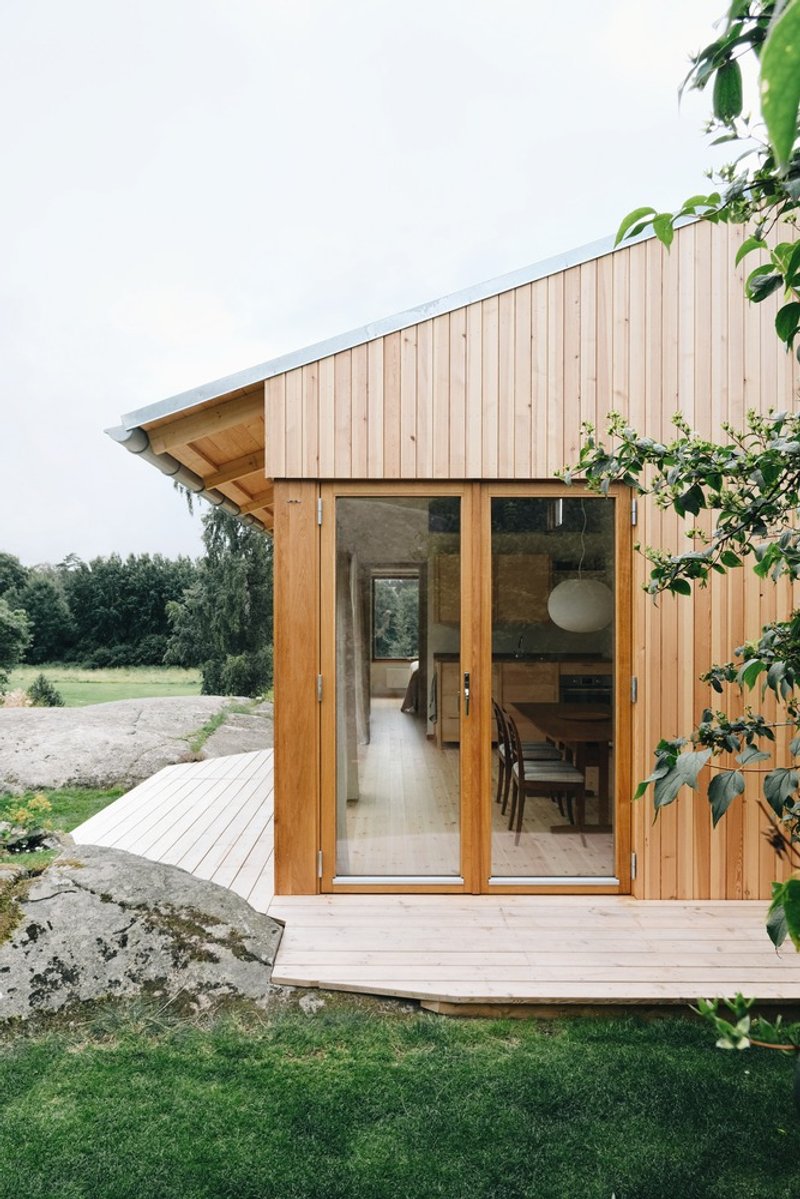
Bifold doors on the long elevation open the dining area entirely to the garden, collapsing the boundary between inside and out. A timber deck extends the floor plane into the landscape, and when the doors are folded back the guesthouse reads more as a pavilion than a building. On the opposite end, a smaller glazed door leads to a second deck tucked beside vegetation, giving the compact volume two distinct outdoor relationships: one expansive, one intimate.
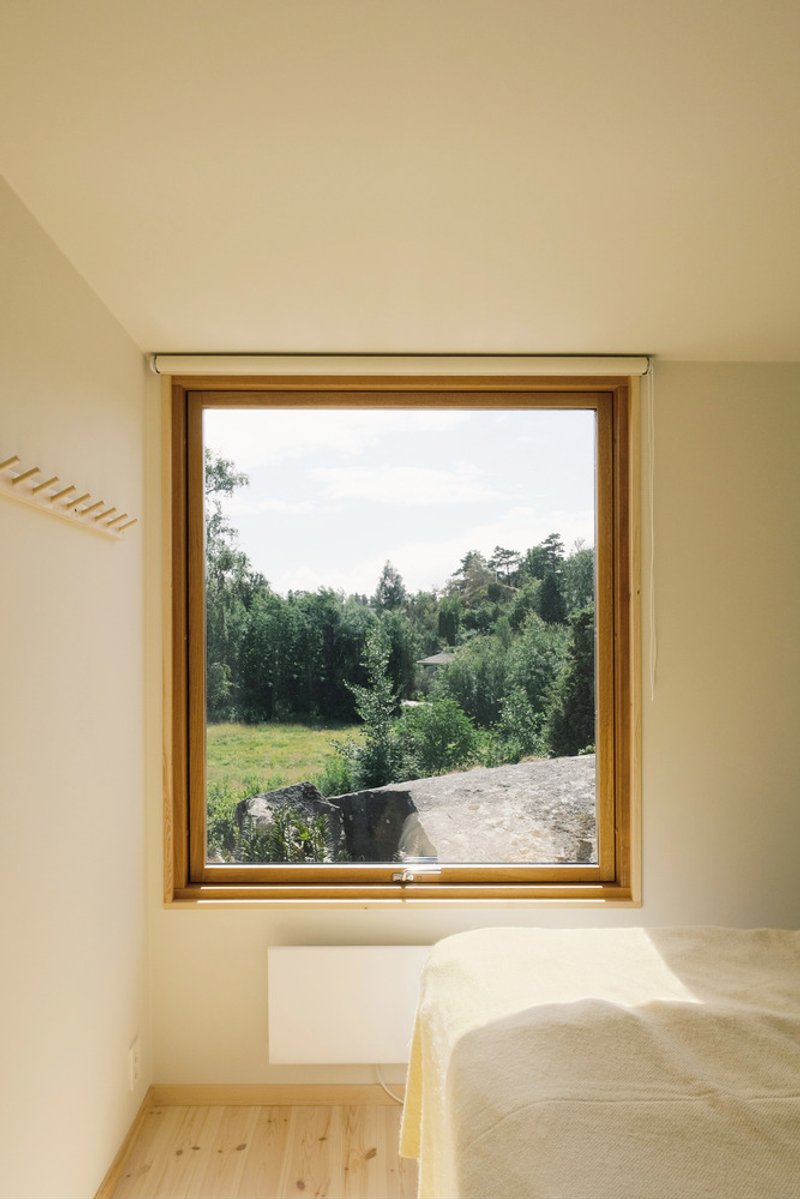
A square window on the end wall and a meadow-facing timber-framed opening provide cross-ventilation and secondary views. These are not picture windows; they are carefully sized apertures that control what you see. The overcast Swedish sky becomes a soft diffuser, and the grass meadow beyond stays at a comfortable middle distance.
Craft in the Details
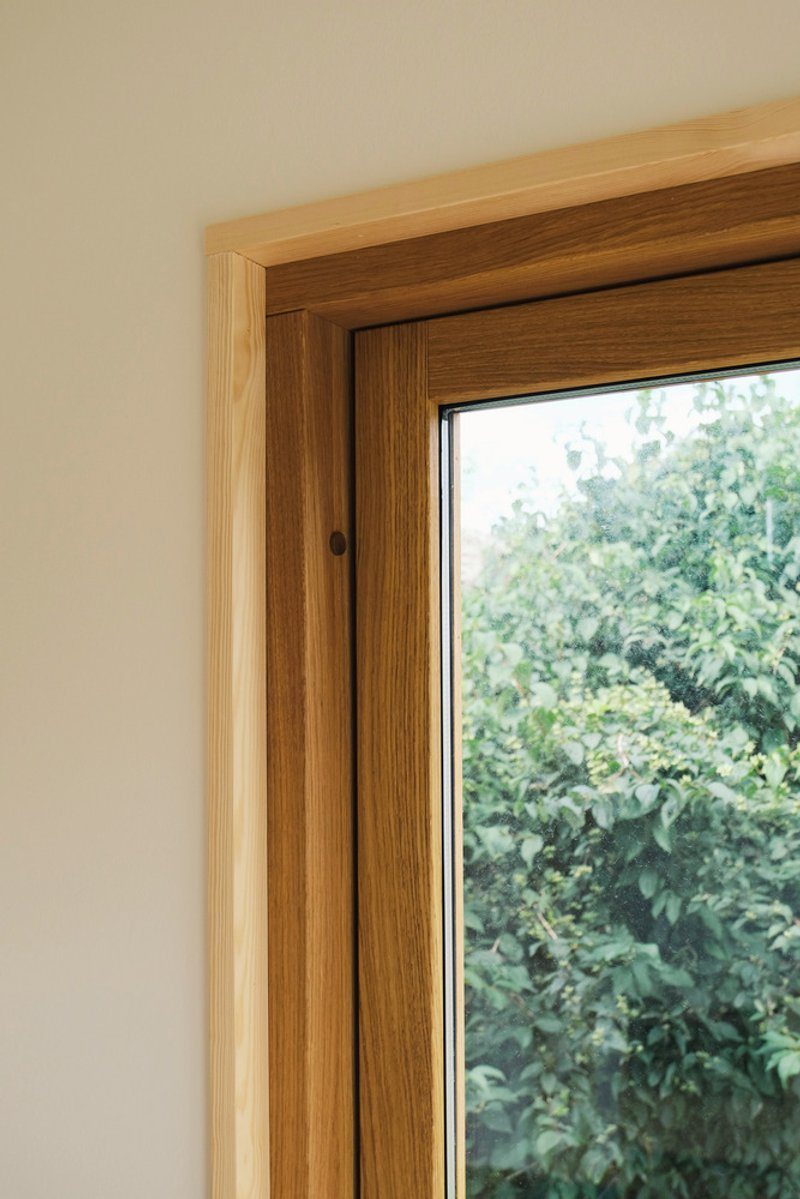
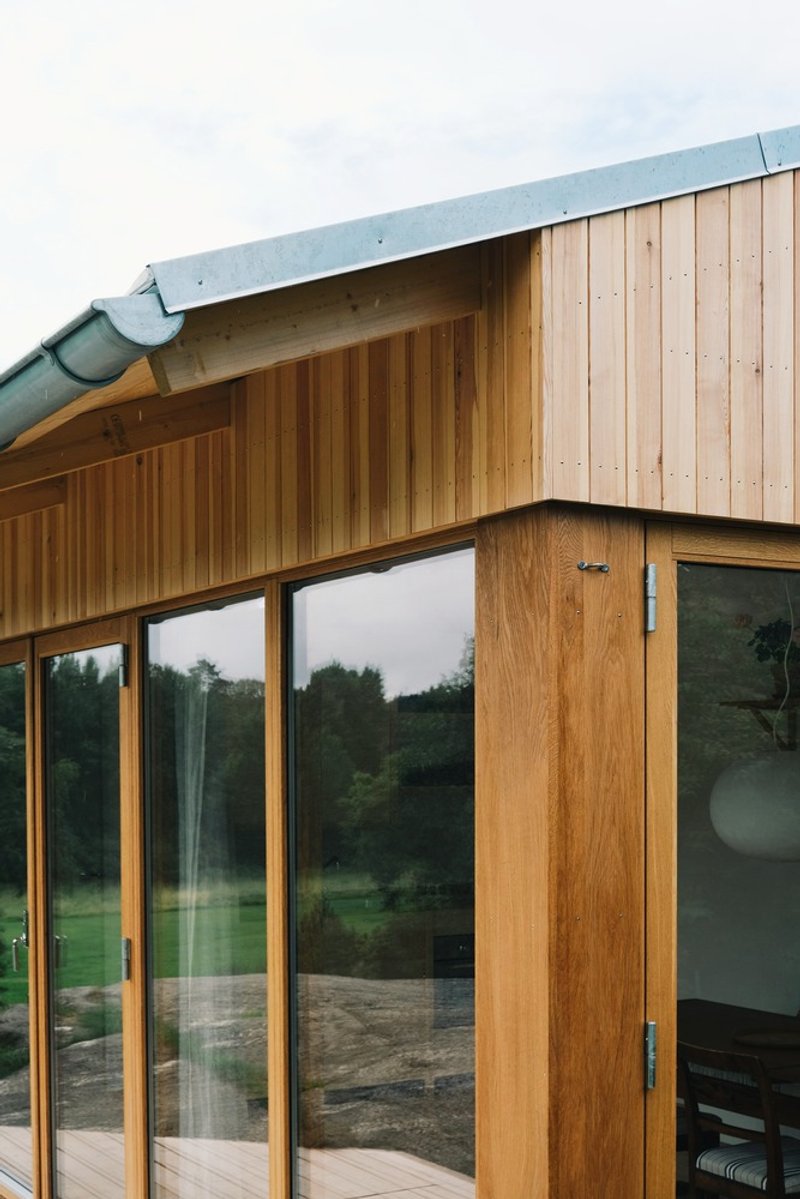
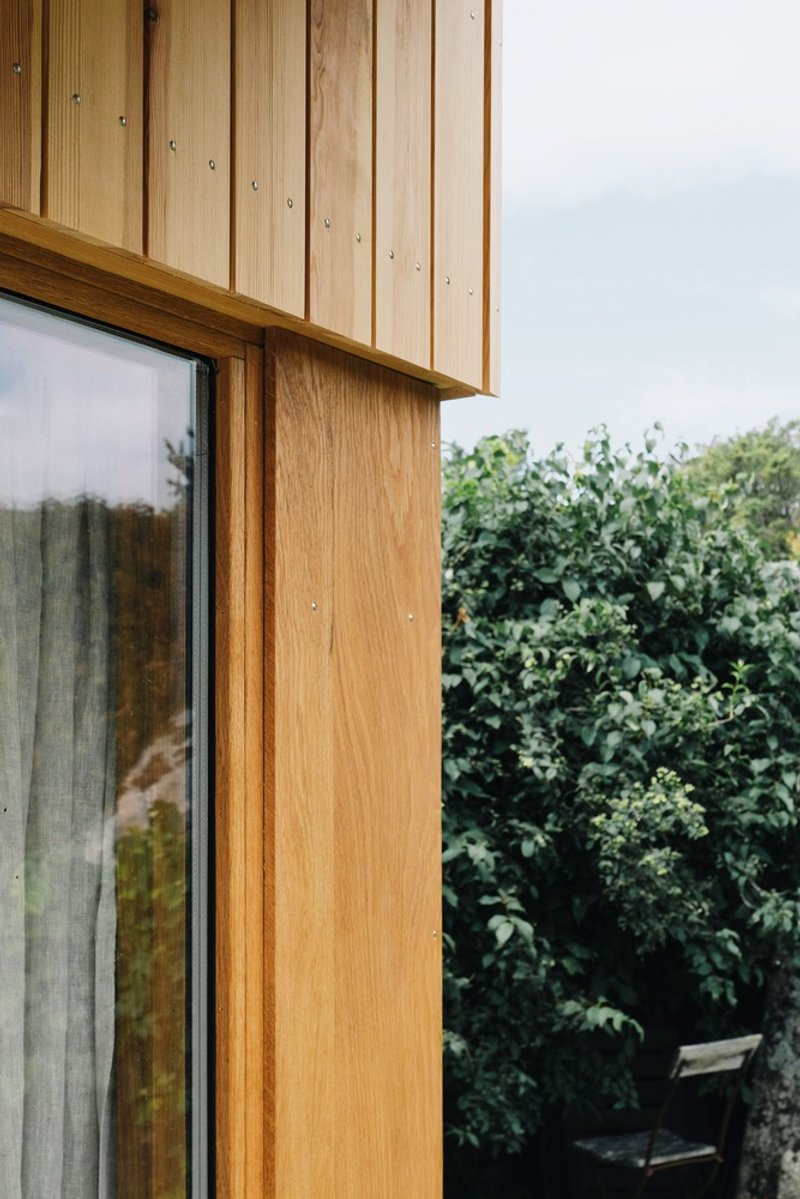
Close inspection reveals where the project's ambition actually lives. The timber jambs and transoms meet the plaster walls with a clean shadow gap that separates materials without a heavy trim. At the roof edge, a zinc cladding strip folds neatly over the vertical timber boards and tucks into a glazed corner, a joint that could easily have been clumsy but instead reads as sharp and inevitable.
These are not luxury details. They are craft details, moments where the architect and builder agreed on what precision means at a modest budget. In catalog attefallshus, these junctions are typically hidden behind standard flashings and trim. Here, they are exposed and celebrated, which signals that the building takes its own construction seriously.
The Quiet End Wall
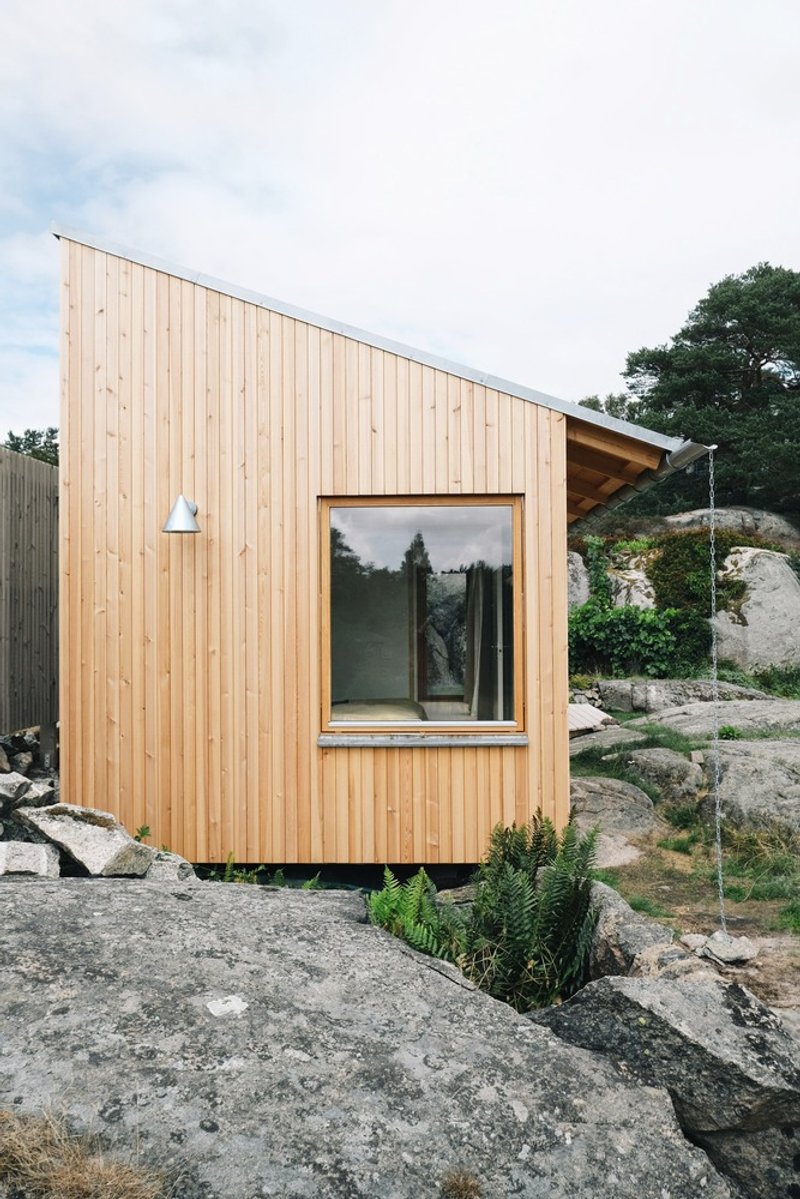
The gable elevation facing the rock outcrop is the simplest face of the building: vertical boards, a single square window, an exterior light fixture. It is deliberately mute. Where the glazed long wall shouts openness, this wall whispers privacy, protecting the bedroom zone from the exposed terrain beyond. The contrast between the two elevations gives the guesthouse a clear front and back without resorting to ornamental hierarchy.
Plans and Drawings
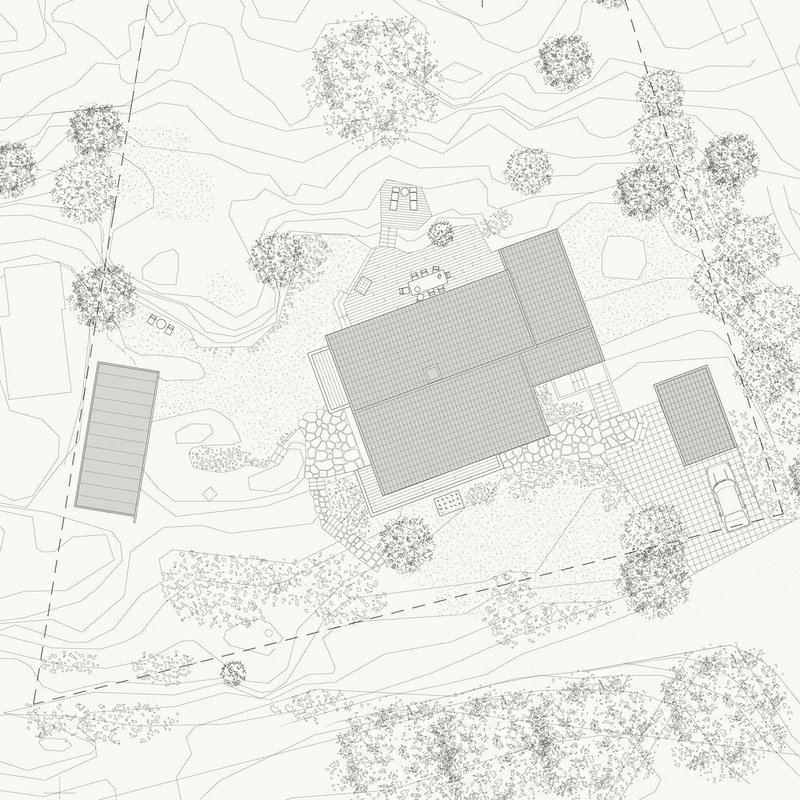
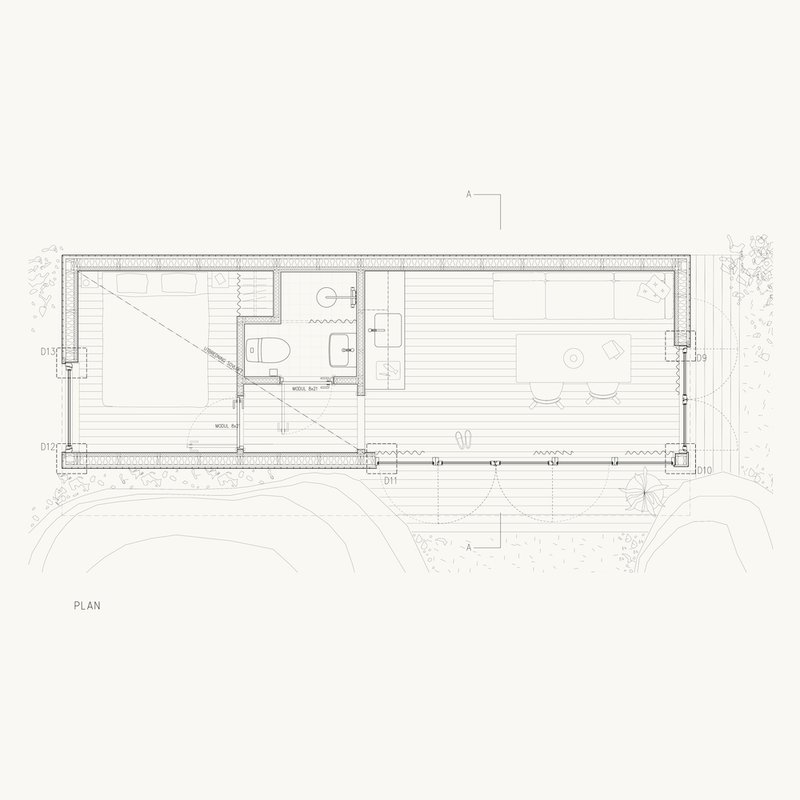
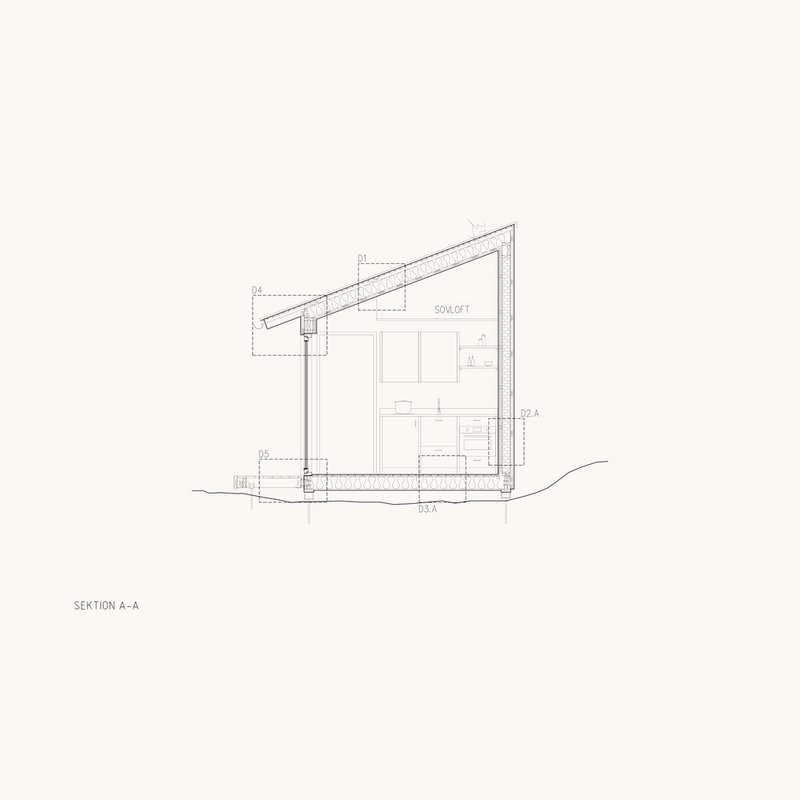
The site plan confirms the deliberate placement between mature trees and curving pathways, with the rectangular footprint oriented to thread between existing rock. The floor plan reveals the linear logic: bedroom and bathroom occupy the closed end, open living and kitchen stretch toward the glazed wall. A section drawing shows the sloped roof structure and a loft space above the main floor, squeezing extra usable volume from the permitted envelope. That loft is a smart move: it doesn't count against the 25-square-meter limit because it sits within the roof profile, effectively giving the guesthouse a bonus room without breaking the rules.
Why This Project Matters
Regulatory minimums tend to produce minimum architecture. The attefallshus category was designed for garden sheds and granny flats, not for buildings that anyone would photograph or write about. KFA Arkitekter's guesthouse demonstrates that a hard area cap can be a generative constraint rather than a limiting one. By investing thought in siting, material sequencing, and joinery, the studio turned a modest brief into a building that carries genuine architectural conviction.
The broader lesson is about where value resides. It is not in square meters or programmatic complexity. It is in the decision to place a building between two boulders instead of beside them, to expose a zinc edge instead of hiding it, to frame a rock through a dining window instead of grading it away. Those choices cost almost nothing but change everything about how the building feels. That is the argument this guesthouse makes, and it makes it convincingly.
Attefallshus Garden Guesthouse by KFA Arkitekter, Sweden. Photography by KFA arkitekter.
About the Studio
Share Your Own Work on uni.xyz
If projects like this are the kind of work you want to make, uni.xyz is a place to publish your own, find collaborators, and enter design competitions.




Popular Articles
Popular articles from the community

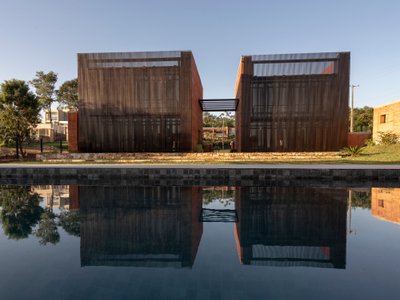
BAUEN Builds Two Rammed Earth Volumes in Paraguay Inspired by the Ovenbird's Nest
In San Bernardino, a house of compacted earth channels the instinct of a constructive bird to shelter life from the Paraguayan summer.
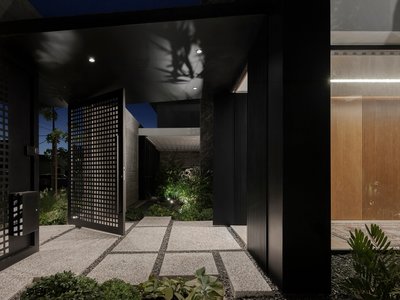
Constanti Architects Builds a Fortress of Privacy in Nicosia with House 345
A concrete and timber residence in Cyprus reinterprets the traditional introverted courtyard house for a new urban landscape.
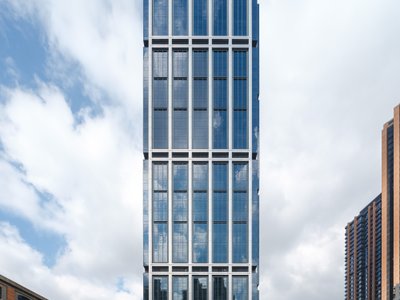
Foster + Partners Wraps a 200-Meter Shanghai Tower in Stainless Steel and Industrial Memory
The Suhe Centre Office Tower anchors a regenerated waterfront district in Shanghai with an all-steel structure that nods to local warehouse heritage.
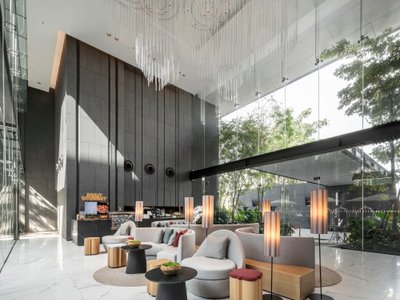
IDIN Architects Wraps a Hua Hin Hotel Around a Private Courtyard to Escape the City
Dusit D2 Hua Hin turns an urban infill site in Thailand's family vacation heartland into a self-contained resort through courtyard planning.


Similar Reads
You might also enjoy these articles

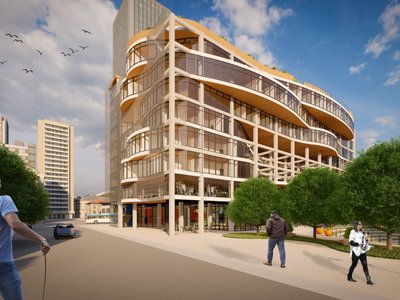
Olio Towers: A Mid-Rise for Performers That Fuses Housing, Rehearsal, and Stage
Located blocks from Houston's Theater District, this modular tower stacks living units around a central performance atrium.
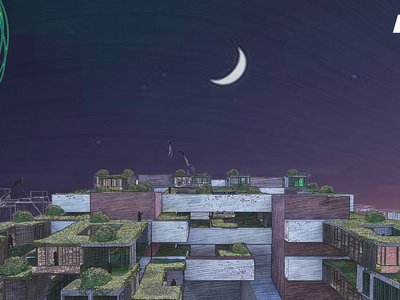
Oasis: Modular Green Housing Carved into Dhaka's Urban Fabric
A shortlisted Plugin Housing entry reclaims unauthorized settlements in Dhaka with stepped concrete volumes, green roofs, and ventilation-driven design.

Black Hole: A Floating Megastructure for the Post-Physical Era
Emiliano Mazzarotto envisions a spherical, self-scaling arena where e-sports, digital hotels, and holographic stadiums replace traditional public space.
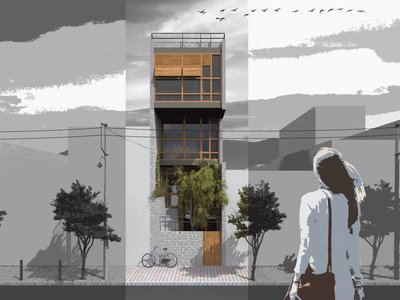
Compact & Sustainable Living in Piraeus: A Four-Level Family Home Built Around Light and Air
A narrow townhouse in one of Greece's densest port cities uses a central atrium and passive strategies to house three generations under one roof.


Explore Architecture Competitions
Discover active competitions in this discipline




The International Standard for Design Portfolios


The Global Benchmark for Architecture Dissertation Awards


The Global Benchmark for Graduation Excellence


Challenge to reimagine the Iron Throne
Comments (0)
Please login or sign up to add comments
No comments yet. Be the first to comment!