
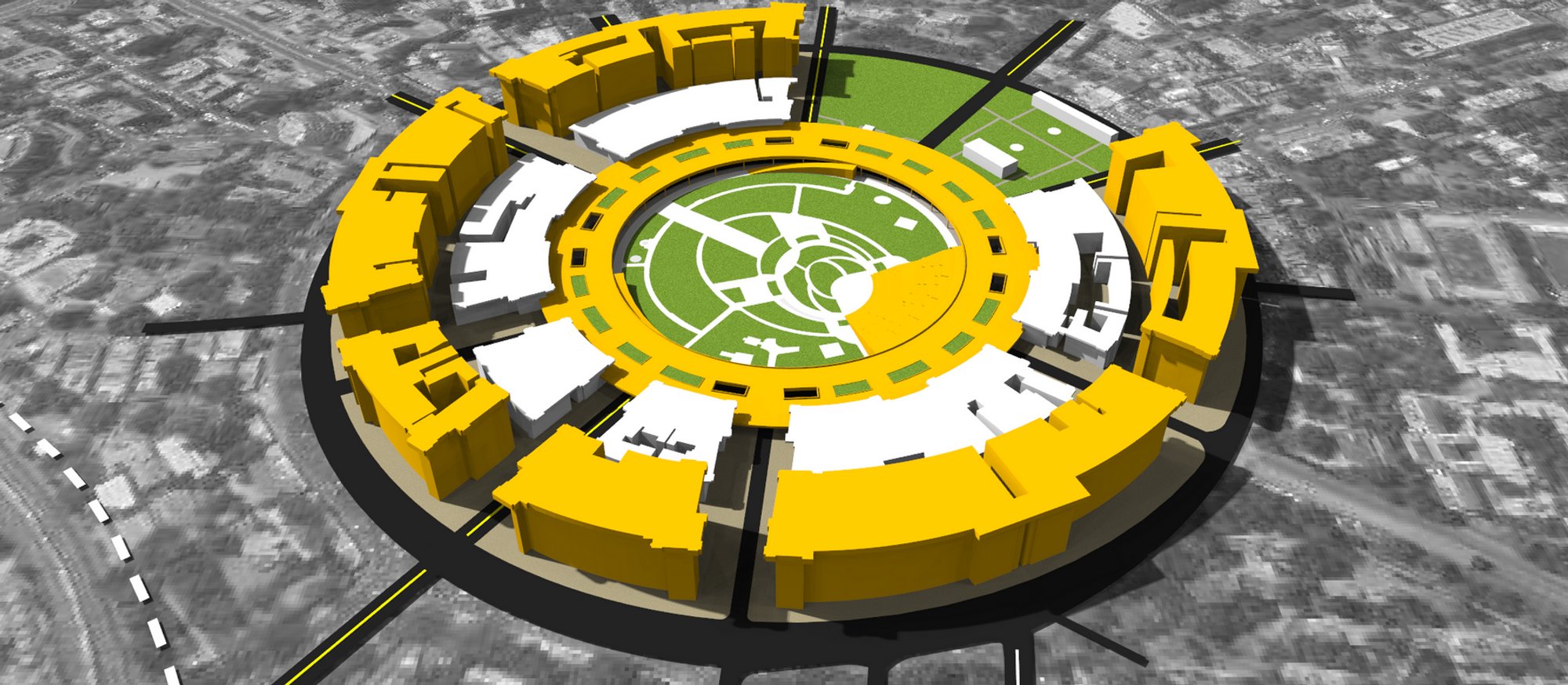
Connaught Plaza – A Landmark Vision in Urban Design Architecture
A transformative urban design architecture proposal reimagining Connaught Place as an inclusive, pedestrian-first public realm for all.

Connaught Place (CP) has long been celebrated as the cultural and commercial heart of New Delhi—a landmark that thrives on movement, interaction, and collective energy. In the spirit of William Whyte’s belief that “What attracts people most, it would appear, is other people,” the Connaught Plaza proposal seeks to amplify CP’s inherent vibrancy by reshaping it through innovative urban design architecture. Developed by Chinmay Kulkarni, Soumya Salini, and Amol Parab, this project redefines CP as a people-centric space that celebrates inclusivity, mobility, and civic life.
Understanding the Existing Urban Fabric
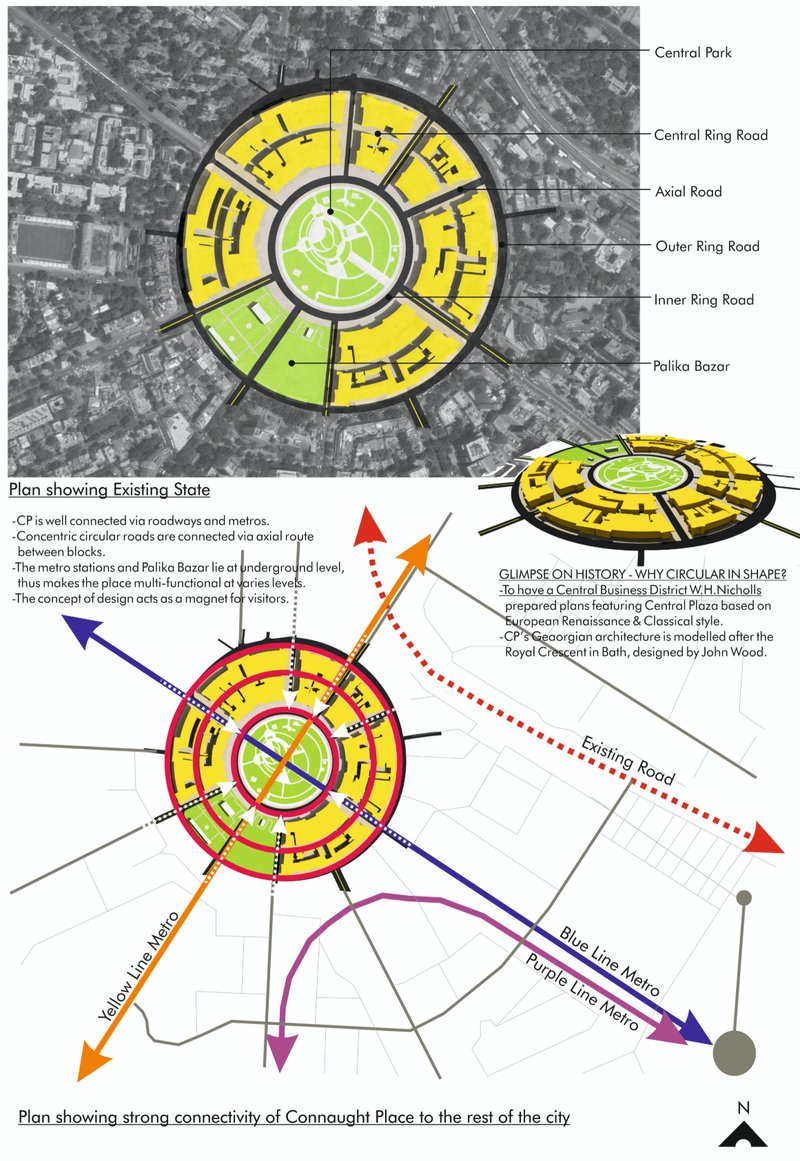
The current layout of Connaught Place is a unique concentric formation composed of:
- A central park anchoring the district
- Inner, outer, and radial roads linking commercial blocks
- Multi-level infrastructure including metro lines and Palika Bazar
This layered design makes CP one of India’s most complex yet accessible public realms. Its circular geometry, inspired by European Renaissance planning and Georgian architecture, echoes global precedents like the Royal Crescent in Bath designed by John Wood.
However, CP’s success as a public space has also led to challenges—pedestrian congestion, vehicular conflicts, limited green zones, and inadequate public-level transitions. The Connaught Plaza project addresses these through strategic architectural interventions.
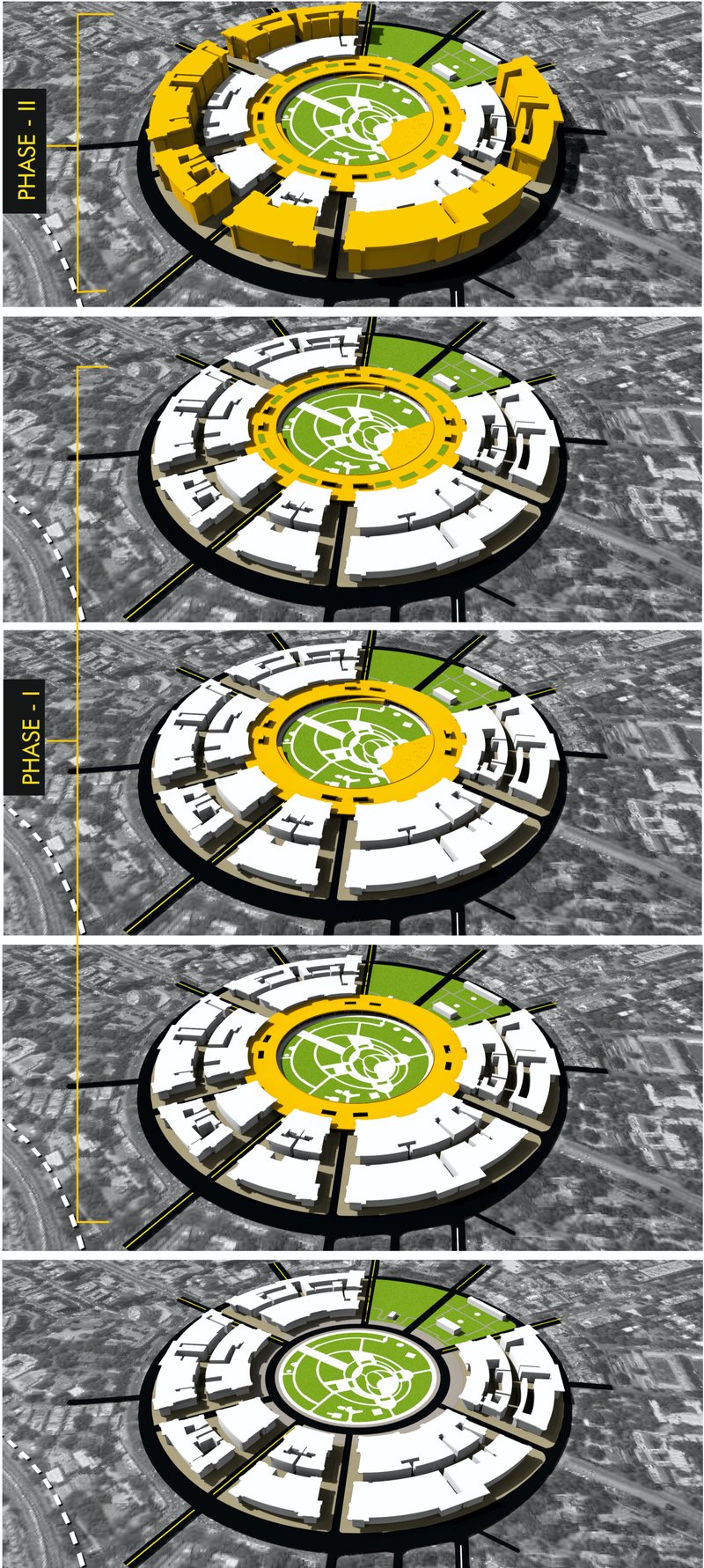
Phase I: Introducing the Raised Pedestrian Platform
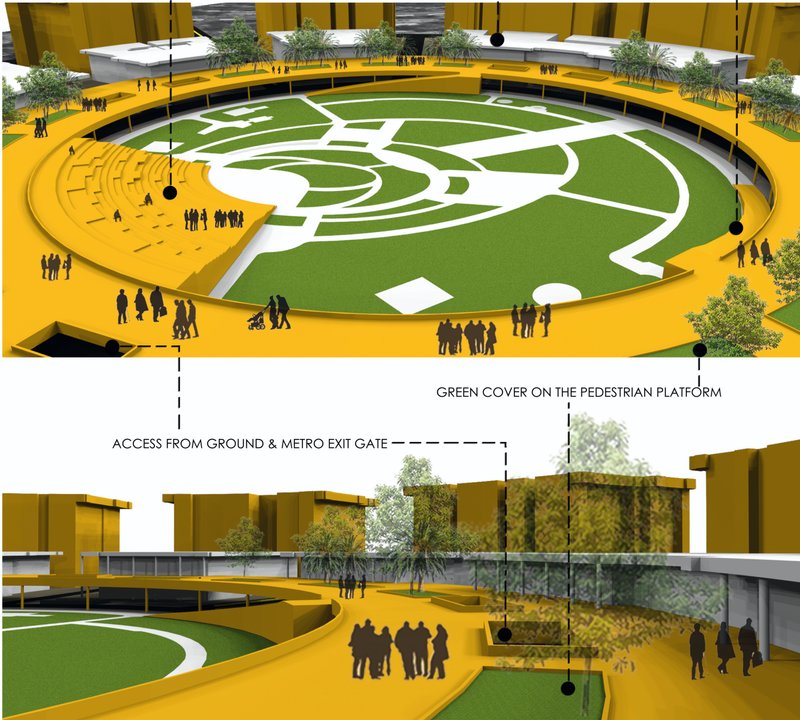
The foundation of the proposal lies in creating a new Raised Pedestrian Platform that unifies movement and encourages social engagement. This elevated ring functions as the primary pedestrian zone across the site.
Key objectives of Phase I:
- Ensure safe, uninterrupted pedestrian movement throughout CP
- Separate pedestrian and vehicular realms to reduce conflicts
- Activate retail and public activity zones along the elevated edges
- Improve connectivity from metro exits directly to the platform
The result is an inclusive and fluid circulation system that enhances both accessibility and urban experience.
Phase II: Green Integration and Public Activity Zones
In the second phase, the platform evolves into a multifunctional public layer that introduces:
- Extensive green cover over the elevated surface
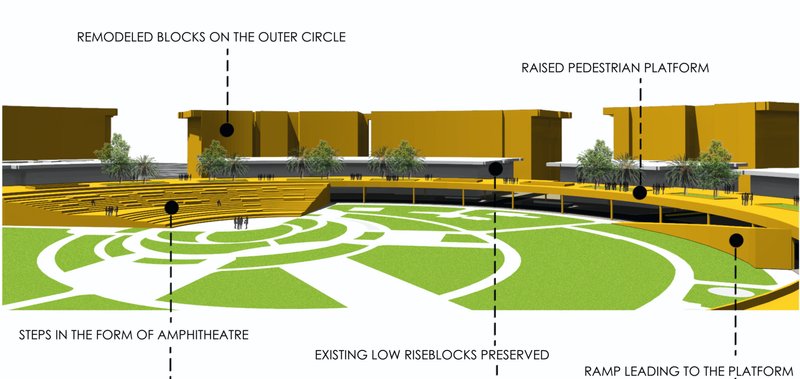
- Amphitheatre-like steps that descend into Central Park
- Landscape pockets for recreation, shade, and social gathering
- Remodeled outer-circle blocks supporting convention, exhibition, and commercial use
This phase strengthens environmental resilience by incorporating natural elements in a highly urbanized setting. It also enriches social life by creating new cultural and leisure zones.
Architectural Strategy and Built-Form Evolution
The proposal adopts a stepped built-form strategy, distributing building heights across four gradual levels. This maintains CP’s historic low-rise character while accommodating modern requirements.
Key architectural moves:
- Retaining low-rise structures along the inner ring to preserve heritage
- Introducing additional built mass toward the outer ring to optimize FSI
- Creating shaded walkways, viewing decks, and interconnected terraces
- Enhancing the skyline while respecting the site’s original geometry
This balanced approach honors CP’s architectural identity while preparing the precinct for future urban demands.
Circulation, Movement & Connectivity
The redesign reinforces CP’s status as one of Delhi’s most connected urban hubs.
Highlight features:
- Seamless access from Yellow, Blue, and Purple Line metro stations
- Improved pedestrian links through ramps, staircases, and plazas
- Redefined vehicular movement at ground level for reduced congestion
- Direct connections from Central Park to the elevated promenade
These enhancements support CP’s role as a public backbone of the city.
A Public Space That Belongs to Everyone
At its core, the Connaught Plaza project embodies a simple yet profound aspiration: to create an inclusive public environment that celebrates community interaction. By enhancing accessibility, expanding green zones, and prioritizing pedestrian movement, the project exemplifies the potential of urban design architecture to elevate everyday urban life.
The redesigned CP becomes a place where people gather, pause, explore, and connect—a true urban stage where the spirit of the city unfolds.
Connaught Plaza is more than a redesign proposal; it is a vision for the future of urban public spaces in India. Through thoughtful planning and sensitive architectural integration, the project transforms the historical Connaught Place into a dynamic, pedestrian-first environment. It responds to contemporary challenges with forward-thinking solutions that amplify inclusivity, sustainability, and human-centered design.
By merging heritage with innovation, the Connaught Plaza proposal stands as a powerful model for reimagining iconic urban districts through the lens of urban design architecture.



Popular Articles
Popular articles from the community

Treehouse Apartment: A Warm Timber Interior Blending Craft, Play, and Contemporary Living
Warm timber apartment with integrated treehouse, combining natural materials, craftsmanship, and playful design to create a flexible, family-oriented living environment.
Louis Malle Cinema: A Limestone Cultural Landmark Revitalizing Community Life in Prayssac
Limestone cinema extension with public forecourt, blending heritage and modern design to create flexible cultural spaces and strengthen community interaction.
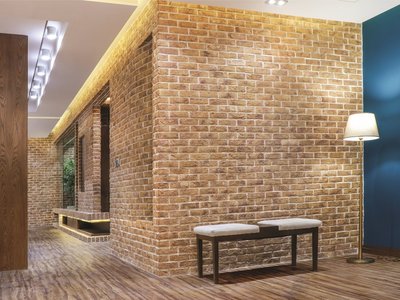
A Contemporary Take on Iranian Residential Architecture
A modern interior design in Mashhad that reinterprets brick, light, and spatial flow to create a warm, contemporary residential architecture.
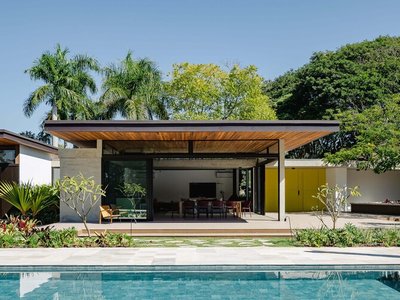
Flamboyant House by Juliana Camargo + Prumo Projetos
Modern Brazilian house integrating existing tree, pool, and volumes with glass, wood, and transitional spaces blending interior, exterior, and landscape seamlessly.


Similar Reads
You might also enjoy these articles

Digital Façade Design for our cities’ urban fronts
Prima Facie - Result Story
Protecting avian biodiversity: Bird observatories to help spread awareness & save rare bird species.
Results for ‘Fly’ - Landscape design competition out now
Connecting with nature: Forest interpretation center in Australia's Wollemi National Park
‘Asatti’ - Landscape design competition - Result story





Comments (0)
Please login or sign up to add comments
No comments yet. Be the first to comment!