
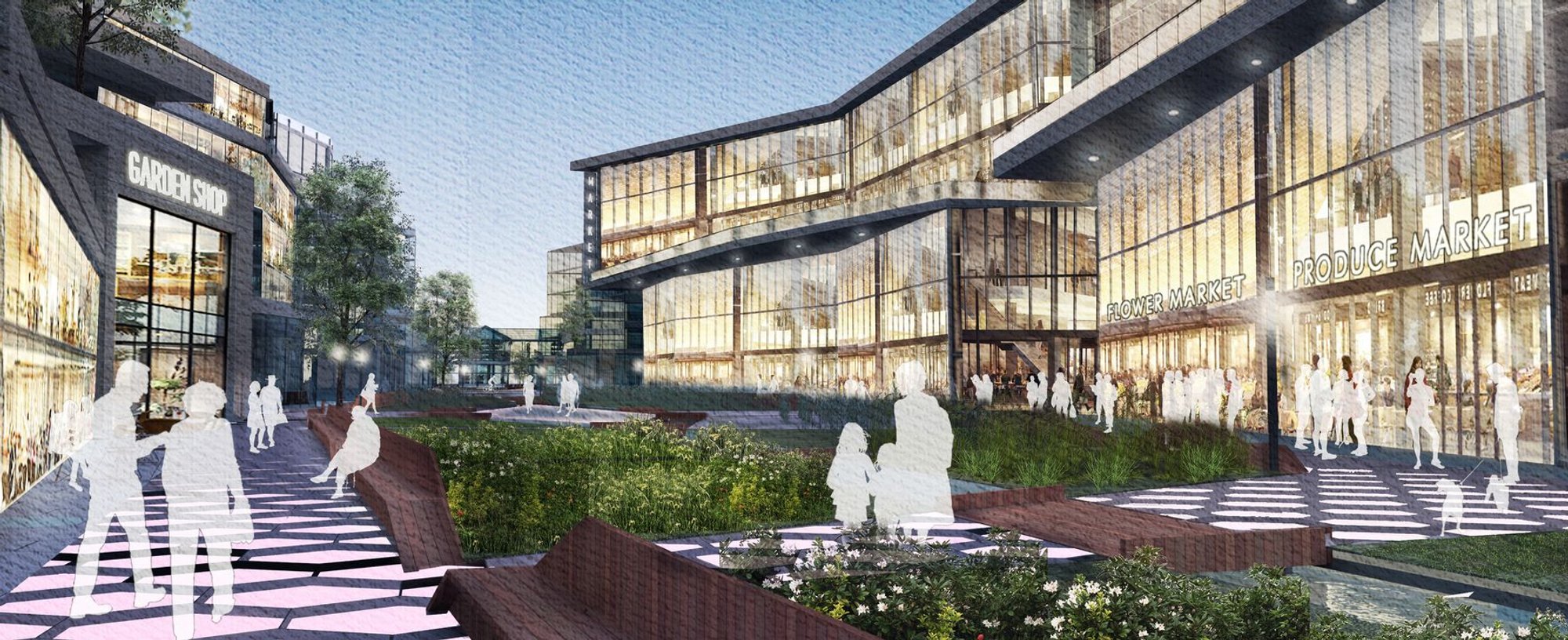
Covent Garden Eco-District: Redefining Sustainable Urban Architecture
A visionary model of sustainable urban architecture where farming, living, and community thrive together in harmony.

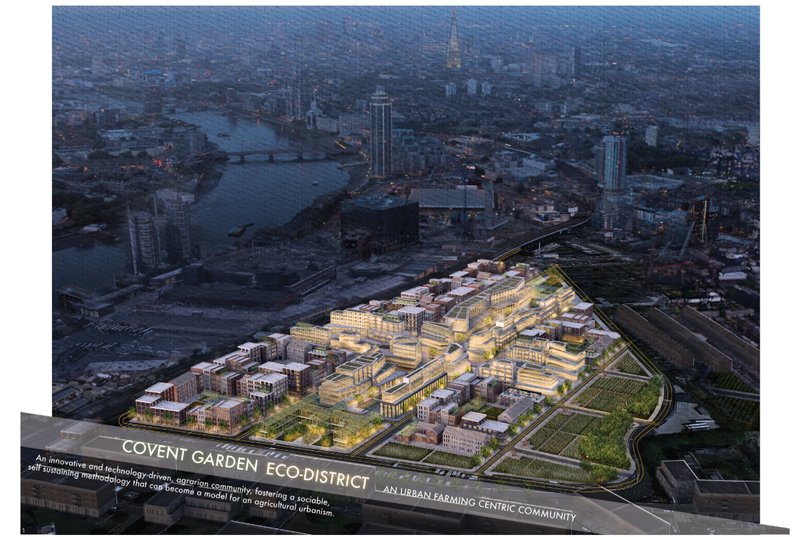
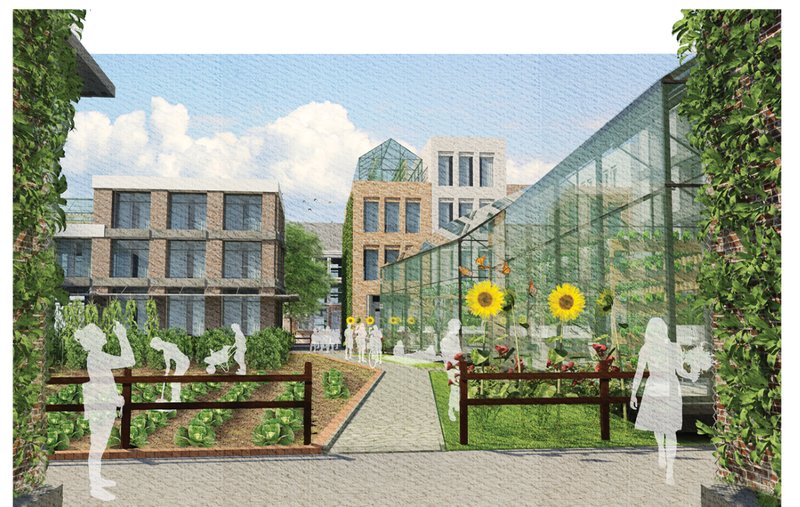
The Covent Garden Eco-District is an innovative proposal that reimagines London’s market legacy through the lens of sustainable urban architecture. Designed as a technology-driven, agrarian community, this Honorable Mention entry of the Urban Meal Mine competition by Camille Cortes and Frank Noska envisions a vibrant ecosystem that integrates food production, housing, research, and public engagement.
Sustainable Urban Architecture at the Heart
At its core, the Covent Garden Eco-District exemplifies the principles of sustainable urban architecture. The design transforms existing market structures into multifunctional hubs that bring together residential, commercial, and agricultural spaces. The project emphasizes renewable energy, eco-efficient systems, and reduced carbon footprints, making it a replicable model for future eco-districts worldwide.
An Integrated Community
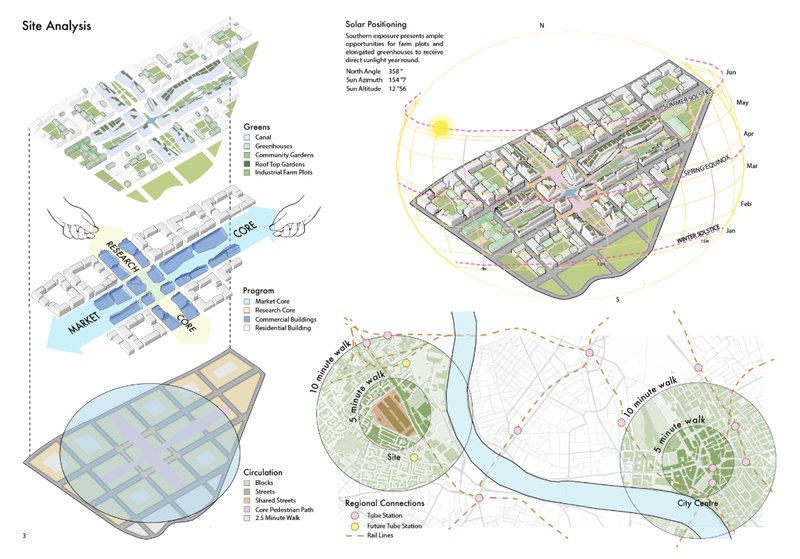
The proposal weaves together diverse functions – from civic greenhouses and community gardens to research centers and culinary workshops. By combining food production and everyday living, the district fosters a sociable, self-sustaining environment where residents actively participate in the cycles of growing, harvesting, selling, and sharing food. This model not only reduces dependency on external supply chains but also strengthens local identity and resilience.
Design Programme and Features
The Eco-District introduces a well-rounded program that reflects holistic planning:
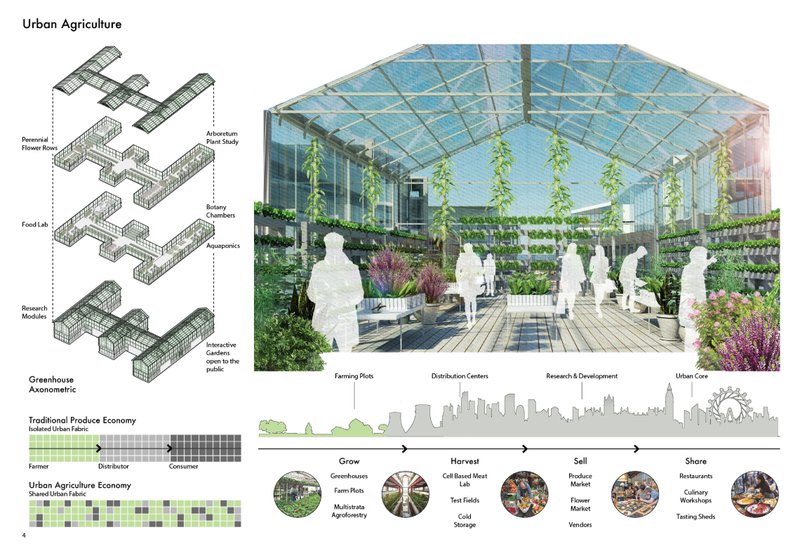
- Green Infrastructure: Civic greenhouses, arboretums, and farmland integrated into the urban fabric.
- Food Systems: Produce markets, interactive farms, artisan specialty stores, and culinary teaching kitchens.
- Innovation and Research: Cell-based meat laboratories, research centers, and testing fields.
- Public Life: Urban parks, restaurants, tasting sheds, and cultural workshops.
The masterplan emphasizes accessibility with new street connections, ensuring walkability and stronger urban connectivity. By reorganizing conventional mass into segmented, human-scale clusters, the district redefines how cities can grow food while living sustainably.
Urban Agriculture Economy
A major highlight is the transition from a traditional produce economy to a shared urban agriculture economy. Greenhouses, aquaponics systems, and interactive gardens allow for community-driven production, distribution, and consumption. This agricultural urbanism not only improves food security but also encourages education and public participation in farming.
Energy and Sustainability
The Eco-District integrates photovoltaic ground tiles, solar panel energy systems, graywater filtration, and fish farms. These measures drastically reduce the average resident’s carbon footprint compared to a conventional Londoner, making the project both ecologically and socially transformative.
Agrihood: Living with Food
The residential model introduces Agrihoods – neighborhoods where greenhouses grow high-yield produce year-round. Each residential greenhouse can generate significant income for families while enhancing community interaction. With mixed-use apartments, shared gardens, and convertible seasonal crop plots, the Agrihood concept makes farming an intrinsic part of urban living.
A Model for Future Cities
The Covent Garden Eco-District stands as a forward-looking example of sustainable urban architecture. By blending farming, research, and community life into one cohesive framework, it challenges conventional city-building and offers a replicable blueprint for global cities seeking to balance ecological responsibility with social vitality.




Popular Articles
Popular articles from the community

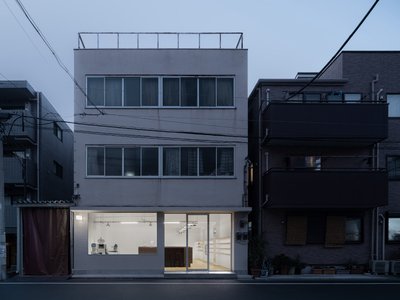
Atelier Macri Concept Store Interior Design by CASE-REAL
Atelier Macri store features a "ko" counter, walnut wood details, cork displays, blending retail, gallery, and seamless customer experiences.
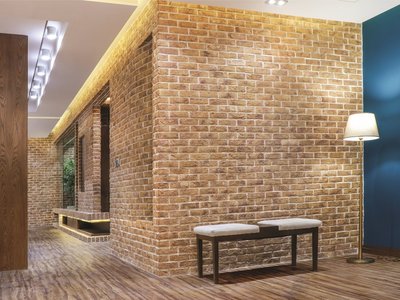
A Contemporary Take on Iranian Residential Architecture
A modern interior design in Mashhad that reinterprets brick, light, and spatial flow to create a warm, contemporary residential architecture.
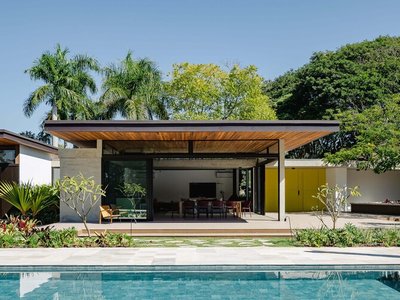
Flamboyant House by Juliana Camargo + Prumo Projetos
Modern Brazilian house integrating existing tree, pool, and volumes with glass, wood, and transitional spaces blending interior, exterior, and landscape seamlessly.
On the Brooks House by Monsoon Collective – A Contemporary Kerala Home Rooted in Tradition
Kerala home blending tradition and modernity with water-inspired design, brick architecture, courtyard planning, and sustainable rainwater harvesting strategies.


Similar Reads
You might also enjoy these articles

Digital Façade Design for our cities’ urban fronts
Prima Facie - Result Story
Protecting avian biodiversity: Bird observatories to help spread awareness & save rare bird species.
Results for ‘Fly’ - Landscape design competition out now
Connecting with nature: Forest interpretation center in Australia's Wollemi National Park
‘Asatti’ - Landscape design competition - Result story

Explore Urban Design Competitions
Discover active competitions in this discipline





Comments (0)
Please login or sign up to add comments
No comments yet. Be the first to comment!