
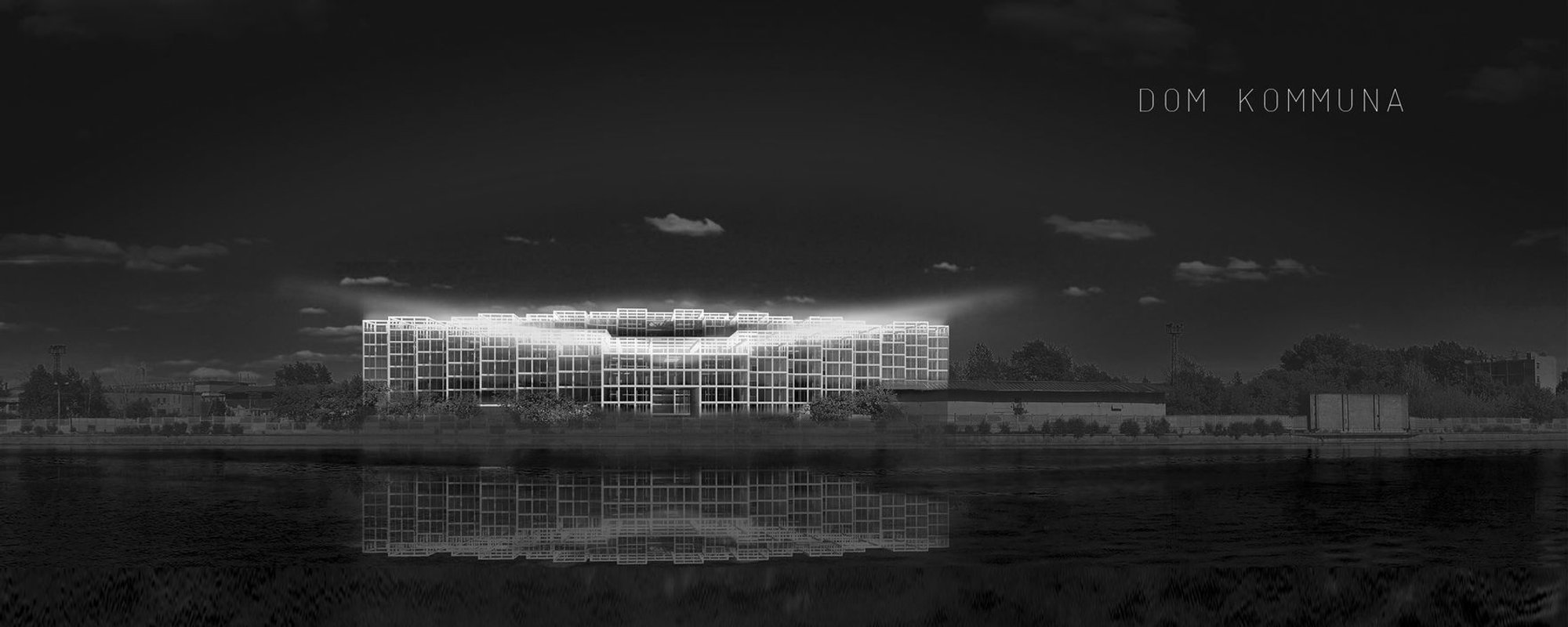
DOM KOMMUNA: A Modular Architecture Vision for Communal Living
A bold exploration of modular architecture that blends shared creativity, personal freedom, and adaptable living for future urban communities.

DOM KOMMUNA is a radical architectural experiment that challenges conventional ideas of how people live, create, and grow together. Built around the expanding possibilities of modular architecture, the project merges public vibrancy with private comfort, forming a dynamic habitat where life can evolve alongside its residents. Designed as a hybrid environment for co‑creation, communal support, and personal development, the project by Георгий Шведенко reimagines housing as a flexible social organism rather than a static built object.
At its core, DOM KOMMUNA investigates how architecture can nurture active public life while still preserving intimate personal spaces. The design introduces a scalable system of rental units, communal platforms, and super‑common zones, all arranged in a spiraling, growth‑oriented pattern. It is a home for every stage of life — from play to reflection, from collaboration to solitude.
The Concept: Maximum Public, Adjustable Private
The central idea behind DOM KOMMUNA is simple yet transformative: maximize public space, minimize rigid boundaries, and allow private space to expand or contract based on need.
In traditional housing, residents are locked into fixed spatial footprints. Here, the opposite is true. The amount of personal area one rents is fluid — it can grow, shrink, or reorganize as life circumstances change. This flexibility is the architectural equivalent of emotional and economic freedom.
Children ask: "Where to grow in life?" The project answers: "Everywhere — and yesterday."
Modular Architecture as a Catalyst for Low‑Cost, High‑Impact Living
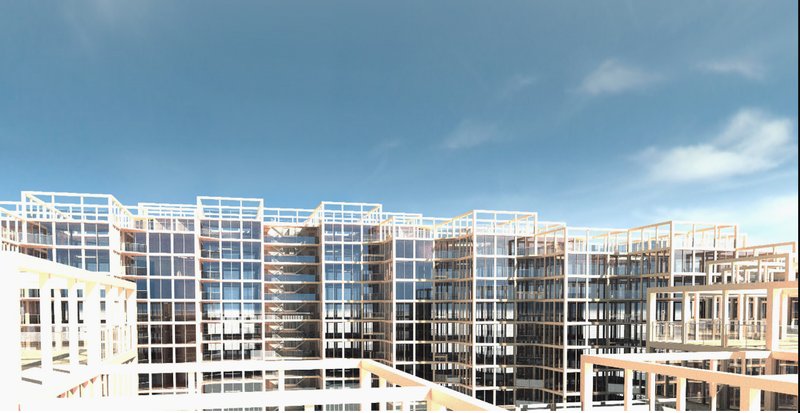
The project relies on a repeating grid of modular units, forming a scalable and cost-effective superstructure. These modules:
- reduce construction cost,
- allow infinite configurability,
- support both individual and collective needs,
- and create a variety of living conditions without architectural fragmentation.
Each module acts as a building block for:
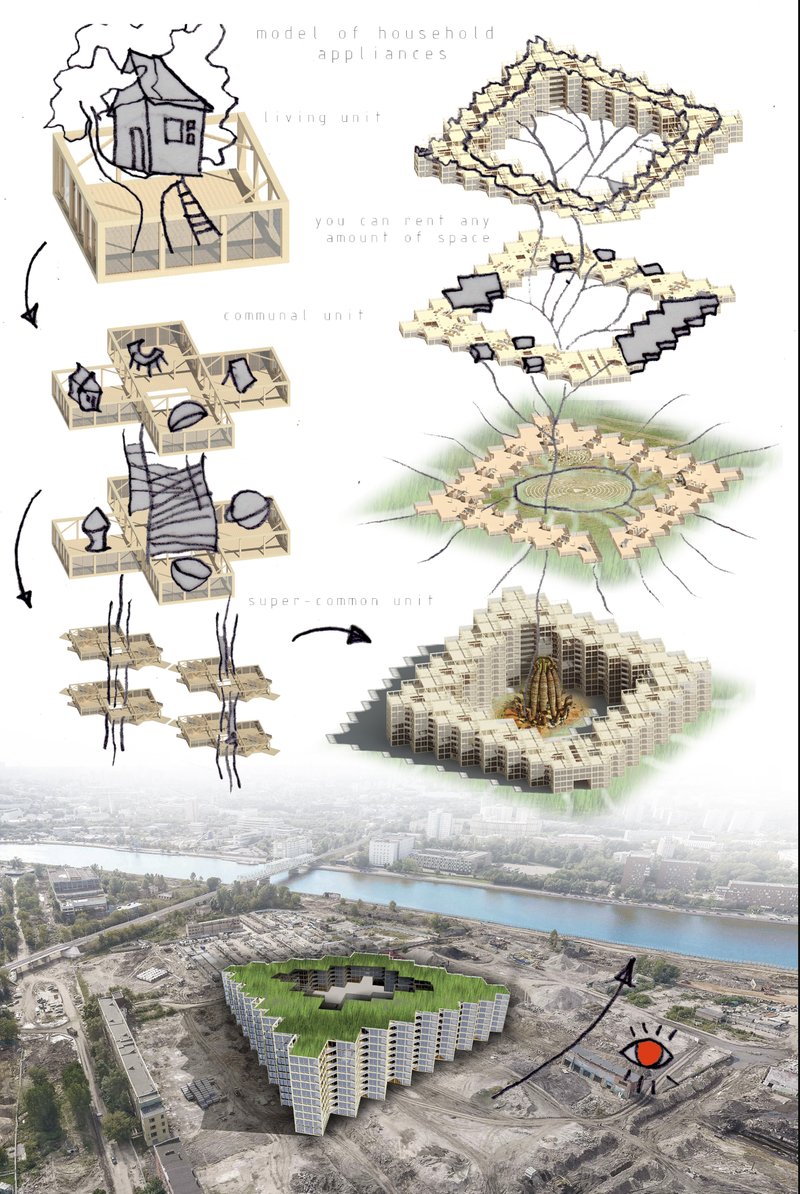
- Living Units: personal customizable apartments,
- Communal Units: shared kitchens, workshops, studios,
- Super‑Common Units: cultural plazas, green fields, and event spaces.
The result is an architectural organism where every module contributes to the social ecosystem.
Vertical Layers of Life
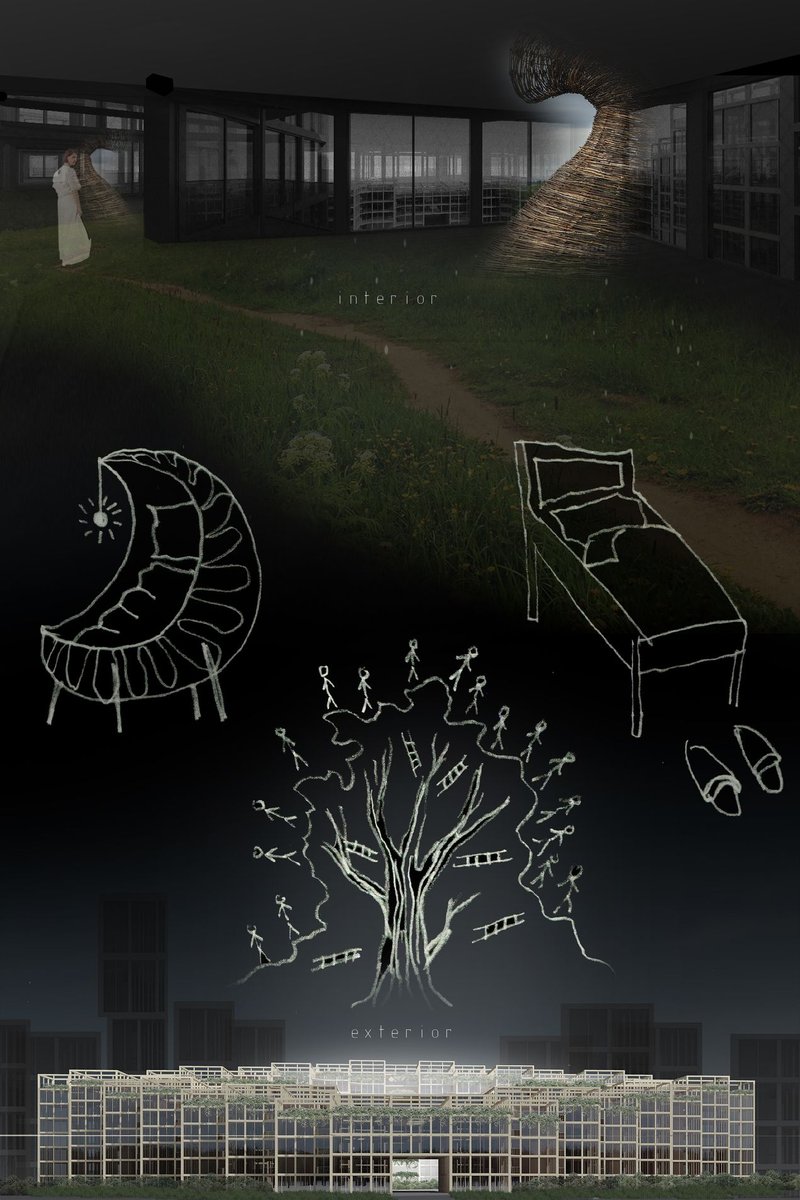
The design introduces a vertical progression of life activities, visually represented through sketches and layered diagrams:
1. Living Unit
A minimal but expressive space, inspired by simple household archetypes — a house, treehouse, or cabin set within a frame. These units reflect childhood symbols of "home," reinforcing emotional connection in a grown-up environment.
2. Communal Unit
Clusters of modules become shared facilities that expand daily life. Kitchens, maker spaces, resting spots, and creative labs weave residents together.
3. Super‑Common Unit
Below the communal layers lies an expansive public landscape with gardens, open-air plazas, and cultural gathering points. This is the social heart — where large-scale celebrations, markets, or performances bring the entire community together.
Development Model: A Growing Urban Spiral
The architectural drawings depict a development model based on rotational and incremental growth. The building expands outward like a blooming structure, integrating circulation paths and spatial extensions.
The evolving geometry creates:
- multiple courtyards,
- permeable edges,
- green roofs,
- and rhythmic facades.
This spiral growth pattern is not only aesthetic but symbolic: the community grows as its members grow.
A Building That Holds Stories
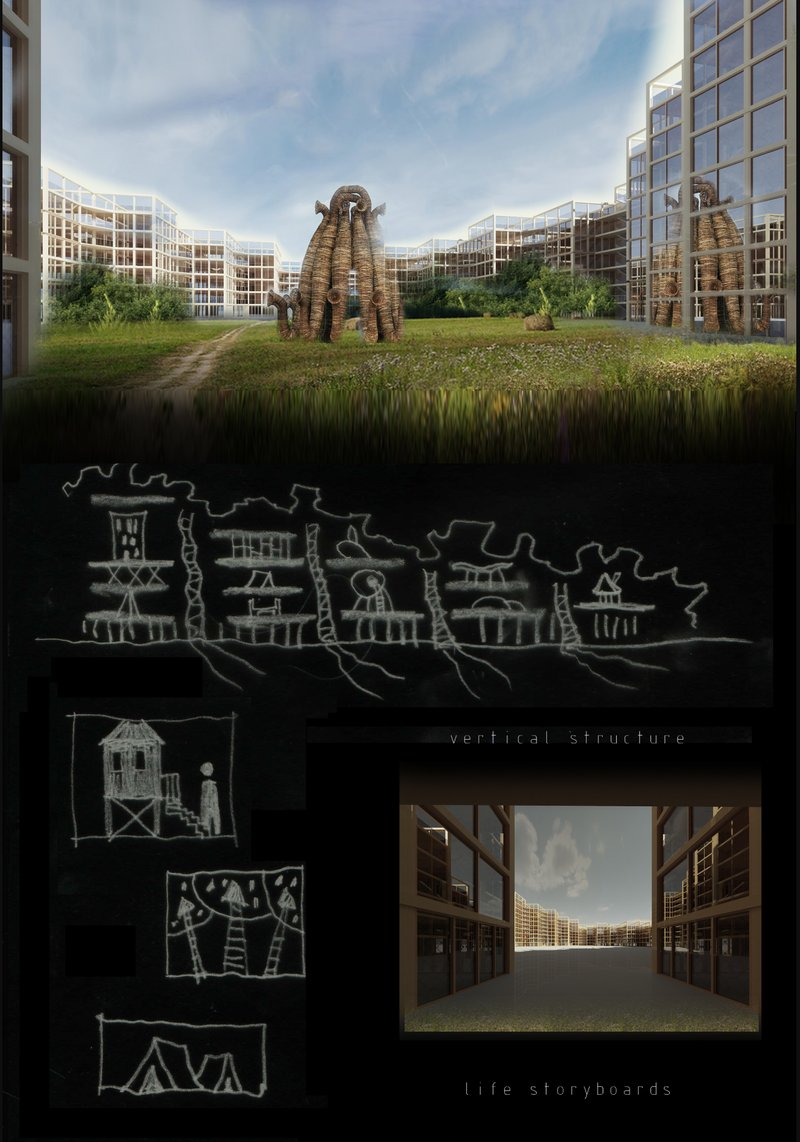
Life inside DOM KOMMUNA is narrated through intimate storyboard sketches.
Everyday scenes include:
- A child climbing into a treehouse-like room.
- Neighbors sharing tools and meals.
- Artists occupying flexible studios.
- Paths weaving through indoor meadows.
- Nighttime lights glowing through layers of transparent frames.
The architecture becomes a stage for memories, rituals, and evolving relationships.
Interior and Exterior Worlds Intertwined
The imagery reveals soft transitions between inside and outside. Grass expands into corridors, pathways blur between gardens and halls, and transparent facades erase the boundary between home and horizon.
Lighting installations — including large sculptural forms resembling woven roots or mammoth structures — create atmospheric depth at night, transforming the building into a dreamlike landscape.
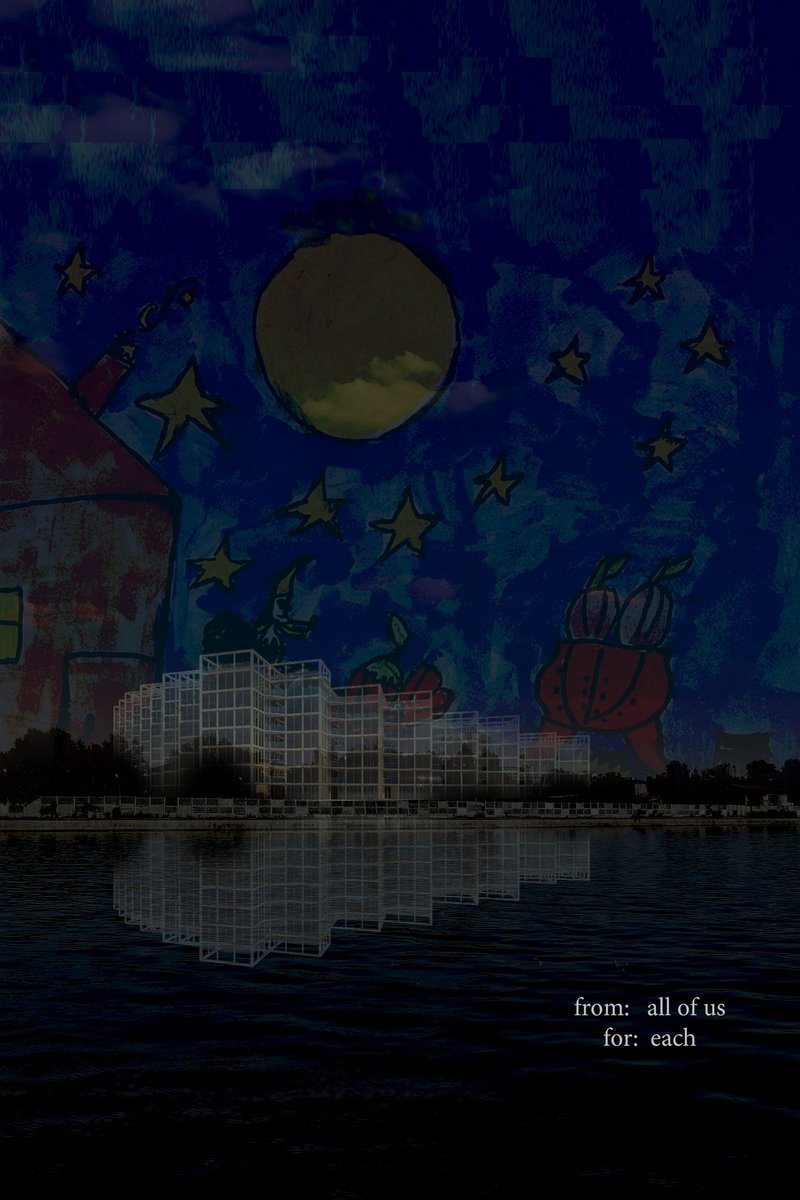
Children's drawings layered over nighttime imagery symbolize the emotional foundation of the project: from all of us, for each.
Community as Architecture, Architecture as Community
DOM KOMMUNA represents a shift from housing as commodity to housing as shared cultural infrastructure. It argues that architecture should:
- encourage creativity,
- support social mobility,
- accommodate change,
- and remain accessible.
This is not just a building — it is a living narrative where people grow, adapt, and belong.
A Future Built on Shared Imagination
By embracing modular architecture and communal principles, DOM KOMMUNA offers a compelling vision for the future of urban living. It is a place where private and public realms coexist in harmony, where affordability meets aspiration, and where architecture becomes a tool for collective happiness.
In a time when cities often feel rigid and isolating, DOM KOMMUNA reminds us that our homes can — and should — evolve with us.
From all of us. For each.



Popular Articles
Popular articles from the community

A Contemporary Take on Iranian Residential Architecture
A modern interior design in Mashhad that reinterprets brick, light, and spatial flow to create a warm, contemporary residential architecture.
On the Brooks House by Monsoon Collective – A Contemporary Kerala Home Rooted in Tradition
Kerala home blending tradition and modernity with water-inspired design, brick architecture, courtyard planning, and sustainable rainwater harvesting strategies.
Treehouse Apartment: A Warm Timber Interior Blending Craft, Play, and Contemporary Living
Warm timber apartment with integrated treehouse, combining natural materials, craftsmanship, and playful design to create a flexible, family-oriented living environment.
Atelier Macri Concept Store Interior Design by CASE-REAL
Atelier Macri store features a "ko" counter, walnut wood details, cork displays, blending retail, gallery, and seamless customer experiences.

Similar Reads
You might also enjoy these articles

Digital Façade Design for our cities’ urban fronts
Prima Facie - Result Story
Protecting avian biodiversity: Bird observatories to help spread awareness & save rare bird species.
Results for ‘Fly’ - Landscape design competition out now
Connecting with nature: Forest interpretation center in Australia's Wollemi National Park
‘Asatti’ - Landscape design competition - Result story

Explore Architecture Competitions
Discover active competitions in this discipline




The International Standard for Design Portfolios


The Global Benchmark for Architecture Dissertation Awards


The Global Benchmark for Graduation Excellence


Challenge to reimagine the Iron Throne
Comments (0)
Please login or sign up to add comments
No comments yet. Be the first to comment!