

How does a single-person dwelling confirm its normality and well-being?
Dwell One - Result Story, Embracing Solo


“How marvelous that when I am in a room with another. The mountains, trees, wind, and rain leave us for the mind, and the room becomes a world itself”.
Louis Kahn’s sketch, Architecture comes from The Making of a Room, portrays spatiality with only a person, whilst describing the room as a state of mind; a space under one’s authority, and for personal reflection. However, materiality and spatiality interpreted from sketches clearly demonstrate the room as organized in relation to society; the room has a clear geometrical center, with a fireplace to the right, defining the centrality of the room.
The door signifies the room’s connection to a wider world around, simultaneously extending an invitation to enter this space. Windows allow light and wind, creating an environment. The sketch shows a person and a chair by the window indicative of man’s desire to create space not only for him but also with the need to invite another into this space.
Demographic Research Journal’s issue says, Living Alone: One-person household in Asia (2015), addresses this type of household as the fastest growing living situation in the world, especially in Asia. The current social welfare system and institutions not only fall short of supporting the one-person household but the distribution and utilization of resources are known to be limited to and facilitated for an ideal family household.
“Table for one”, a request that is becoming an increasingly common occurrence amongst urban dwellers, especially and according to The Guardian in the European and North American. In East Asia, especially in South Korea and Japan, this phenomenon has manifested & exaggerated. Whereas in Japan, ramen cubicles for one is a trend, South Korea has even created a term for lone diners on an app. Yet, dining alone is associated with the abnormal, away from the usual practice and globally accepted notion of well-being.
Reflecting on the fact that there is an increase of single-person households, it has become imperative to imagine housing and dwelling outside of the ideal family household; single-person household, old age home, hospice, sanatorium, home for orphans, group home, etc.
How does a single-person dwelling confirm its normality and well-being? Sitting at the threshold of communal and private, or simultaneously confining and liberating, the single person dwelling is purposed as both: for isolation and production, shift between these two states of being.
Within the current urban situation, the notion of single-person dwelling is not limited to individuals outside of the ideal family, rather it has become essential questions towards the consciousness within individuals that how to be well-being without depending on the image of the ideal family.
Design Brief: Designing a single-person dwelling within a community, neighborhood, and/or an apartment/housing in which the dwelling is located. The dwelling may or may not include all basic functions for dwelling, such as kitchen, bathroom, and so on. Instead of designing self-sufficient dwellings, participants are encouraged to create a narrative that describes the supporting system & engagement to fulfill basic functions, thereby articulating the relationship between the dwelling & society.
Description: Relationship between the solo dwelling & society must portray the notion of individual subject contrasting from that of within a family home. The design of a single-person dwelling must confirm its spaces & materiality of interiors articulated with the subject lives in.
Sentently, the plan of a community, neighborhood, and/or apartment/housing establishes how single-person dwellings are part of a larger social structure.
The jury for the competition consisted of esteemed designers, professionals, and academicians from around the world. The Lead Jurors for the competitions were as follows:
Hideaki Kubo, Architect / CEO, Kubo Tsushima Architects, Japan
Yumi Tsushima, Architect / Partner, Kubo Tsushima Architects, Japan
Shuhei Aoyama, Founder & Director Architect, B.L.U.E. Architecture Studio, China

Some of the Best of competition projects are:
Winning Project: Seorang-Bersama
By: Chong XJ, Nicky Wong & JY Yew

Fig: 1 Section Plan
Description: "Individuals as a whole" Transformation of an existing terrace house into a co-living dwelling addressing single workers at the site featuring modular spaces for private living, working, and play.
------------------
People’s Choice: Living in the Cocoon

Fig: 2 Cover image
Description: The Cocoons area is primarily the place created for society, where you can meet new people, come with your friends, neighbors and enjoy being together.
--------------------
Editor’s Choice: The House and/or the Bed
By: Dayana Ludlow

Fig: 3 Site Plan and image
Description: "The bed is thus the individual space par excellence, the elementary space of the body…" We can live alone on a bed.
--------------------
Editor’s Choice: Dwell (every)One
By: Thinina Oussaîd & Riadh Hadir

Fig: 4 3D view
Description: Solo dwelling as a component of communal living.
--------------------
Editor’s Choice: Design of embracing solo
By: Hui Zhang & Jiaxin Zhang

Fig: 5 Floor Plan
Description: Not solo enough. I live with pets.
--------------------
Editor’s Choice: dwell one
By: Rong Nuomin, Chan Fett & Danhong Zhu

Fig: 6 3D view
Description: Our location is Tangxia which is in Tianhe District, Guangzhou City. Our design adds some Personalized functional spaces including a Green bar, a Variable ladder, Sinking in the living room and we design the Fabricated furniture and external refrigerator for living alone. The rich possibilities of people bring people happiness and eliminate feelings of loneliness.
--------------------
Editor’s Choice: dwell one
By: Nasim Goli

Fig: 7 3D Plan and Interior Image
Description: In this design, we created two responses for the lack of people in single dwellers' life: one is to encourage interaction with the outside community. The other is to interact with similar people in the same building with a digital neighborhood. So besides their interior world, dwellers will have two societies to interact with. Society to the power of two!
--------------------
Editor’s Choice: PENCIL DWELLING
By: Haoyu Wang

Fig: 8 Elevation Plan
Description: In an age of solo living, this project aims to reinvent the one-unit-per-floor paradigm of Tokyo pencil building typology upon the following questions: - what space do you want to keep completely to yourself? - which part of life would you like others to join? - when to be together and when to solo?
Follow us on social media: Facebook | Instagram | LinkedIn | Twitter | Youtube
References (3)


Popular Articles
Popular articles from the community

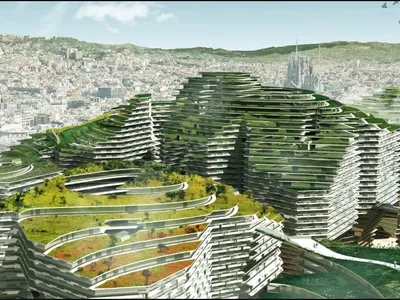
Manzana Morphosis: Stretching Barcelona's Grid into a Living Landscape for 2050
A radical reworking of the Eixample manzana turns density into a tool for generous public space, vertical ecology, and environmental performance.

Opera on the Sea: Driftwood Logic Shapes a Timber Opera House on Estonia's Coast
Trevor Orgill's opera house translates the entangled drift of floating timber into a civic building where wood, water, and music converge.

Cloaked Colonization: A Mobile Underwater Habitat That Moves Like a Fish
Micah Abaya's shortlisted EHC Pacific entry reimagines ocean settlement as a dispersed network of self-sustaining architectural organisms.
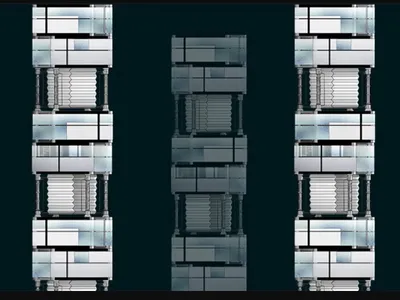
Tsunami Convergenics: Turning Catastrophic Ocean Forces into Underwater Housing Infrastructure
A speculative underwater settlement off the coast of Onagawa, Japan, treats tsunamis and typhoons as energy sources rather than threats.

Similar Reads
You might also enjoy these articles

Play: Fragments of Their World: Remembered Architecture Rebuilt as a Modular Playground for Refugee Camps
Tom Gardner abstracts domes, arches and towers from the homelands of displaced families into a kit of child-scaled play parts for camp settlements.
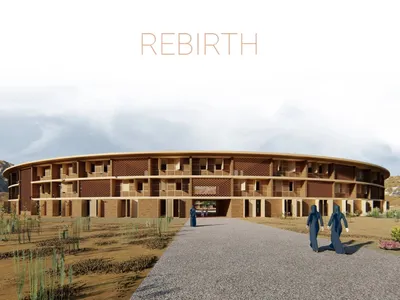
REBIRTH: A Circular Settlement Where Afghan Widows and Their Children Rebuild Life Together
A shortlisted Resile entry turns the circle into a protective ring of timber and brick, gathering homes, classrooms and gardens around a shared landscape.
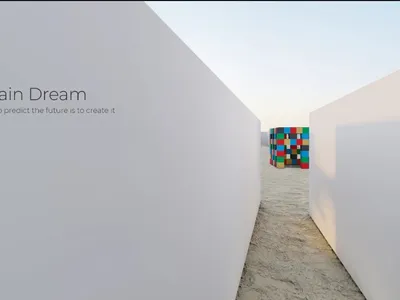
The Main Dream: A Recycled Plastic Kit That Lets Refugee Children Build Their Own Playground
Thirty-centimetre interlocking cubes that connect on three axes turn play into construction, letting children author the spaces they occupy.

Lunar Spiral: A Fibonacci-Driven Moon Settlement Rising from Shackleton Crater
Golden-spiral geometry organises buried infrastructure and orbiting habitable spheres into a lunar base designed to grow as life on the Moon expands.

Explore Shared Living Competitions
Discover active competitions in this discipline

Challenge to design luxury tourism on rails

VR headsets Storefront design competition

Designing a staircase for a client
Comments (0)
Please login or sign up to add comments
No comments yet. Be the first to comment!