
Guangzhou Baiyun Railway Station: A Landmark in Transit-Oriented Development Architecture
Guangzhou Baiyun Railway Station redefines transit-oriented development architecture, integrating transportation, public space, and urban functionality in a seamless design.


A New Era of Urban Mobility and Architecture
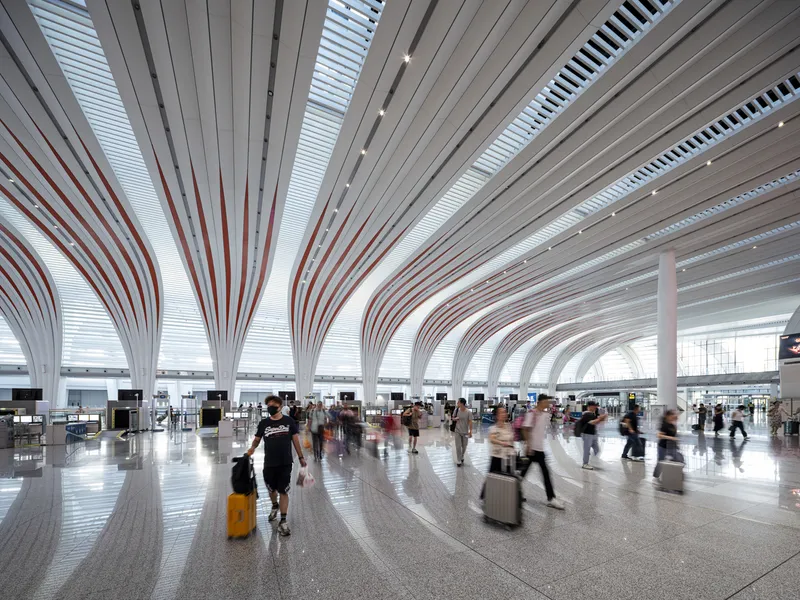
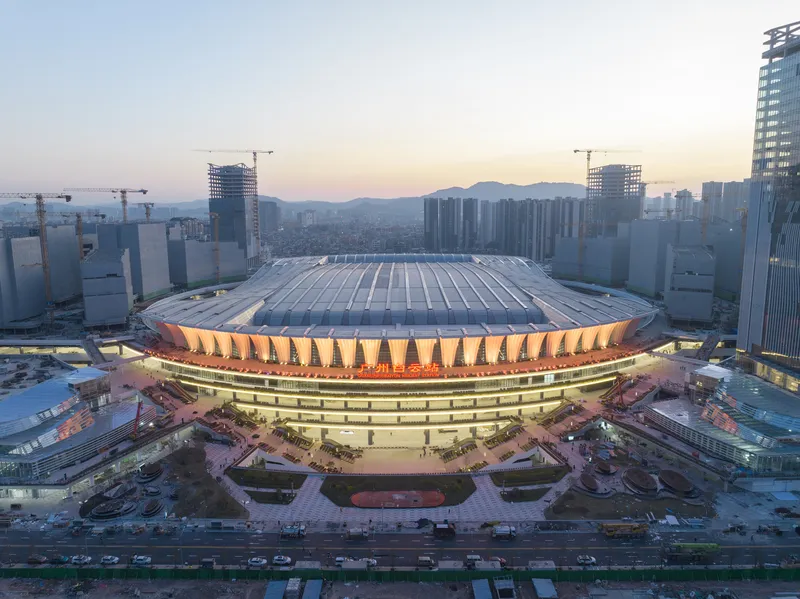
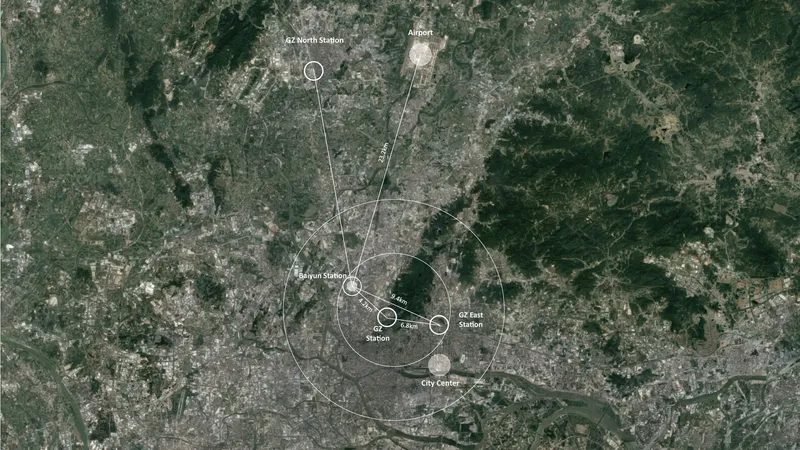
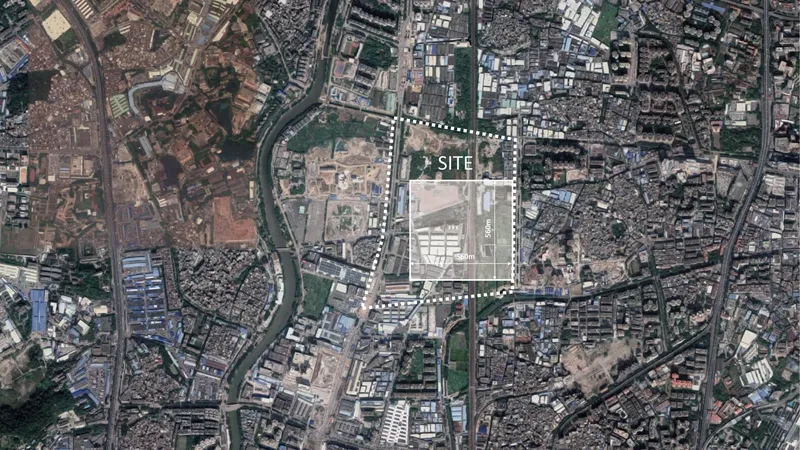
Guangzhou Baiyun Railway Station, designed by Nikken Sekkei, is a revolutionary example of transit-oriented development architecture. As a central hub in northern Guangzhou’s emerging CBD, this high-speed rail station integrates urban functionality with transportation, transforming the way people move through the city. More than just a station, it is an interconnected city within a city, seamlessly blending rail, subway, and bus transit with commercial, residential, and public spaces.
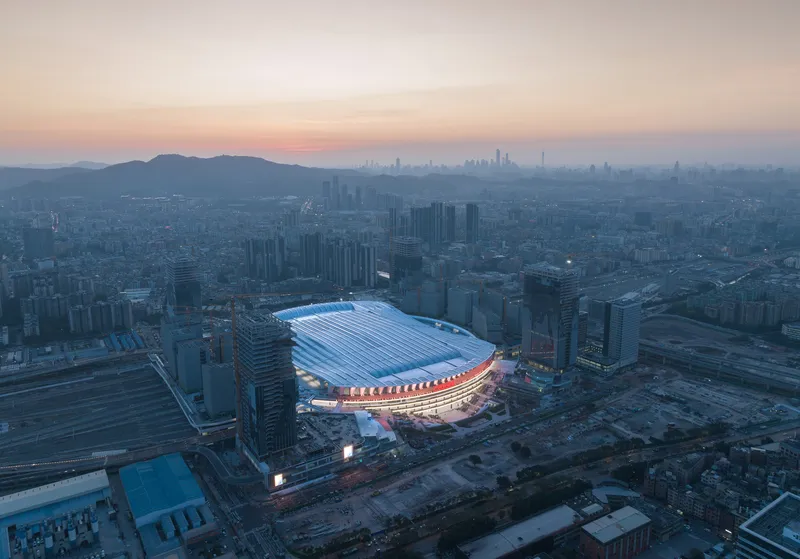
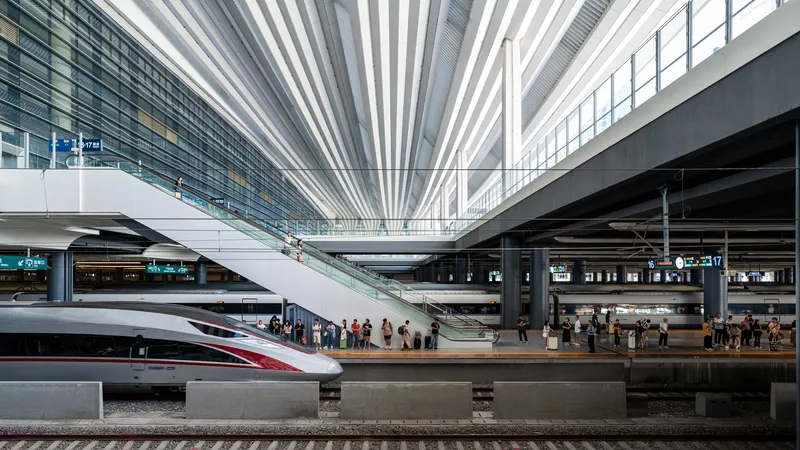
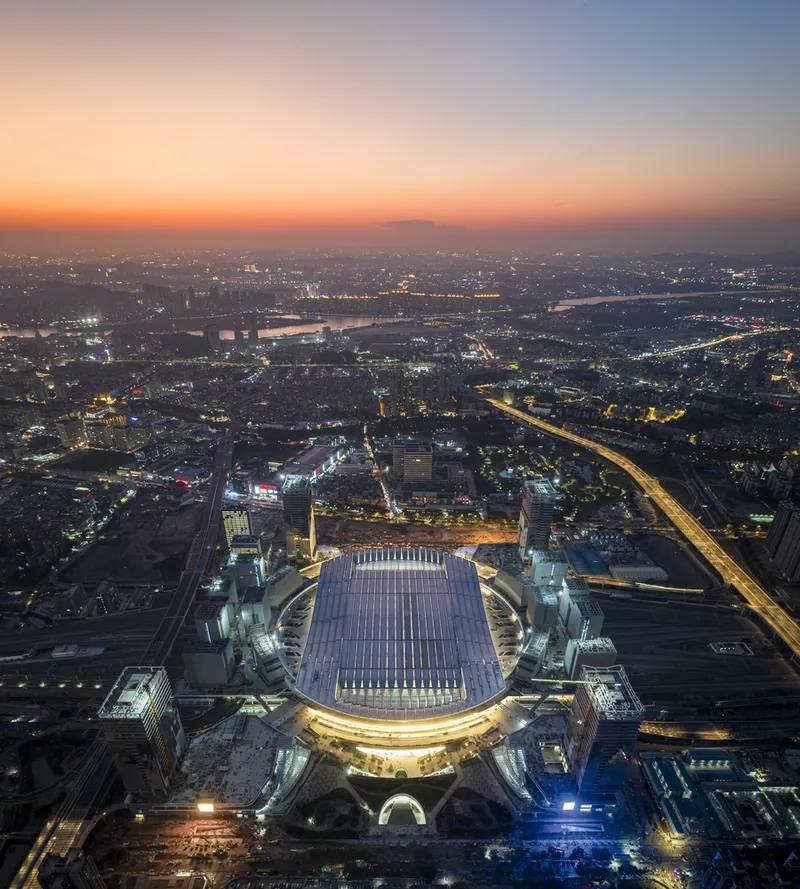
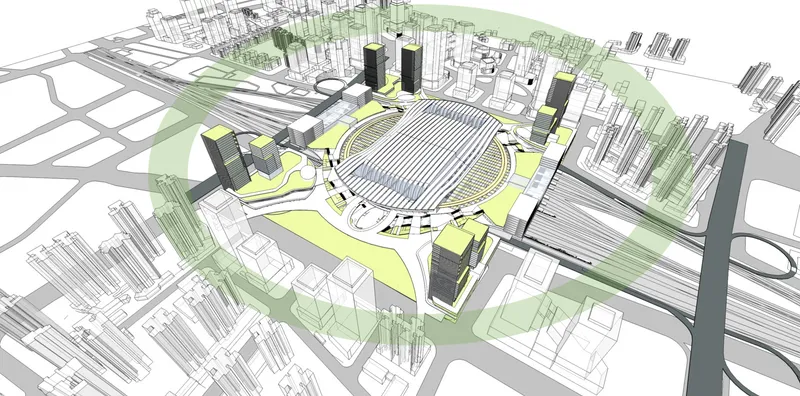
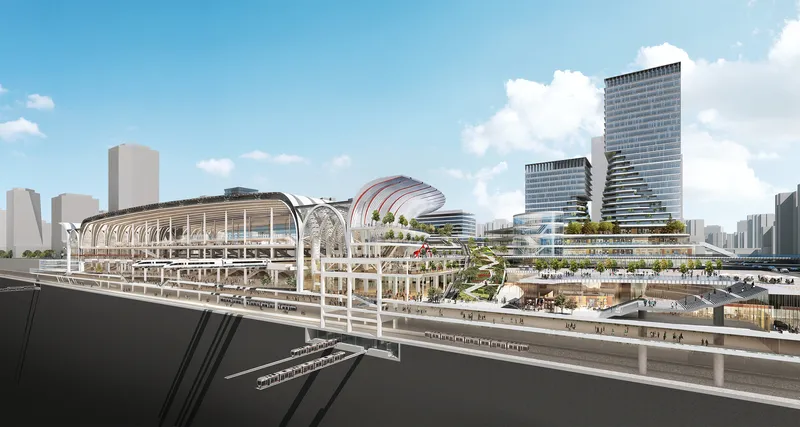
With 11 platforms, 24 tracks, six subway lines, and three bus terminals, Guangzhou Baiyun Railway Station is expected to accommodate over 360,000 people daily. The entire development spans 500,000 square meters, demonstrating a future-forward approach to efficient land use, sustainable urban planning, and integrated transportation systems.
The Transit Loop: Redefining Connectivity in Urban Design
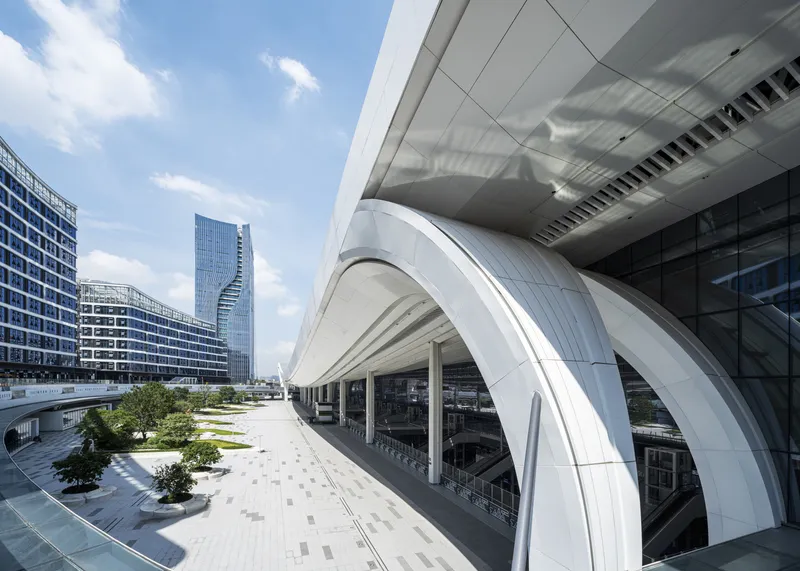
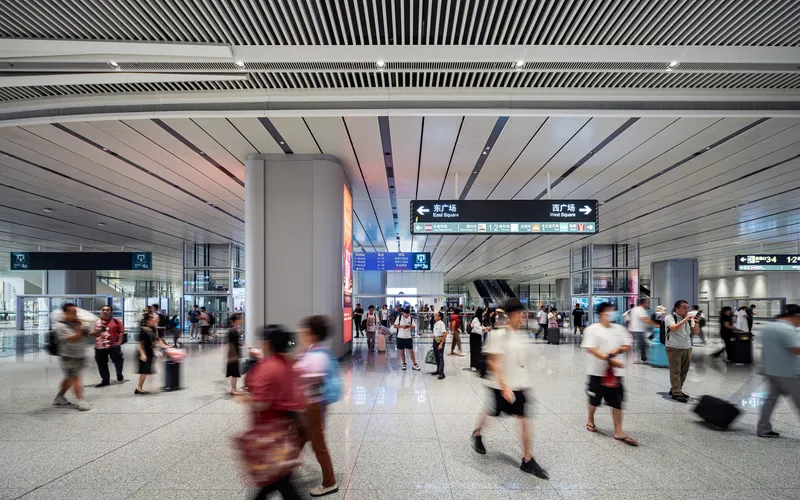
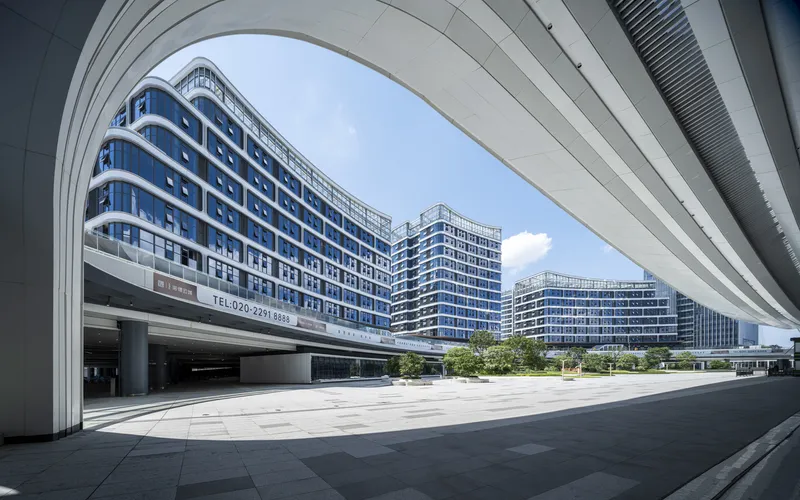
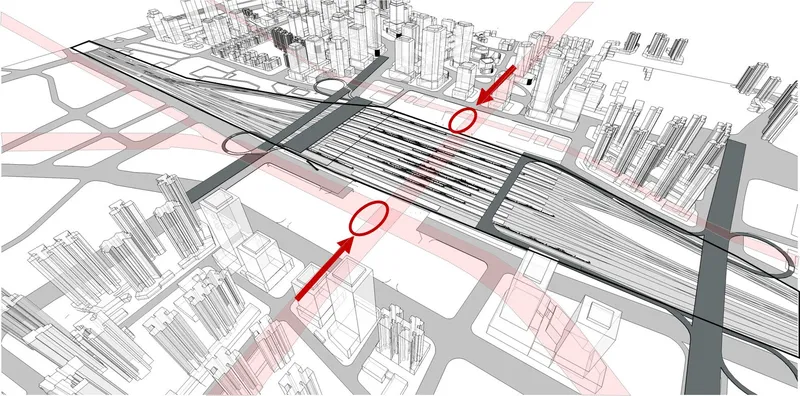
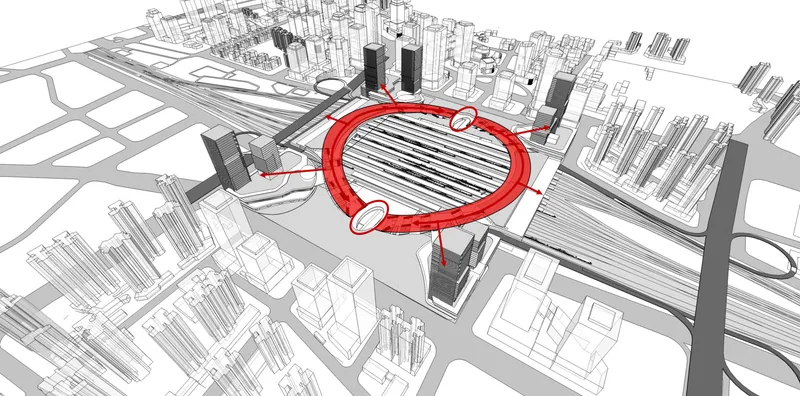
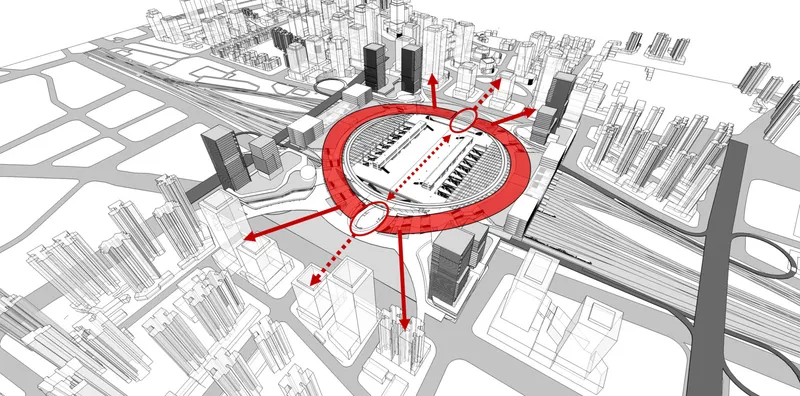
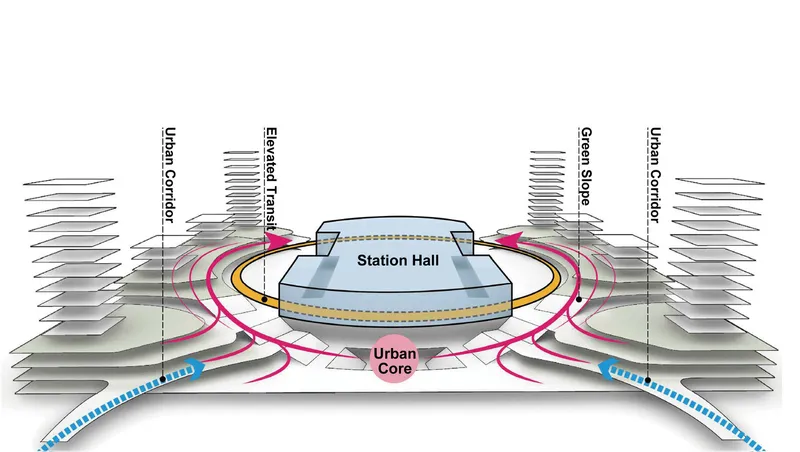
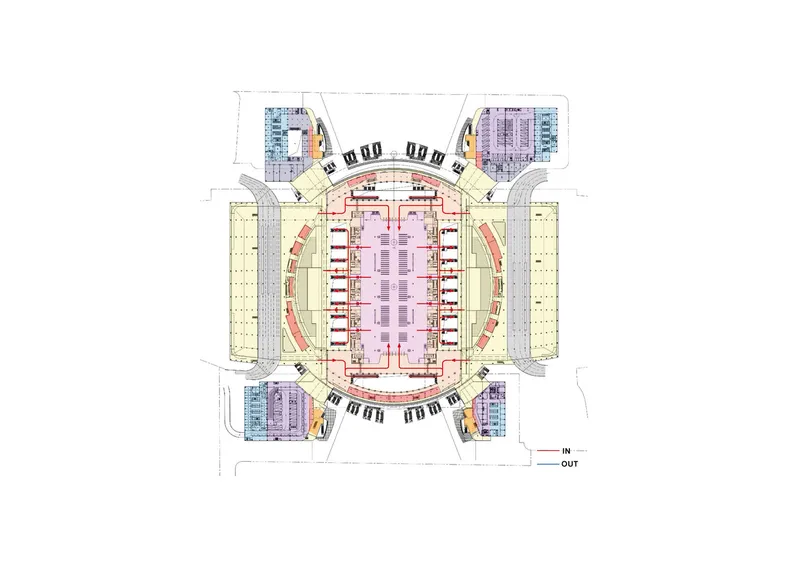
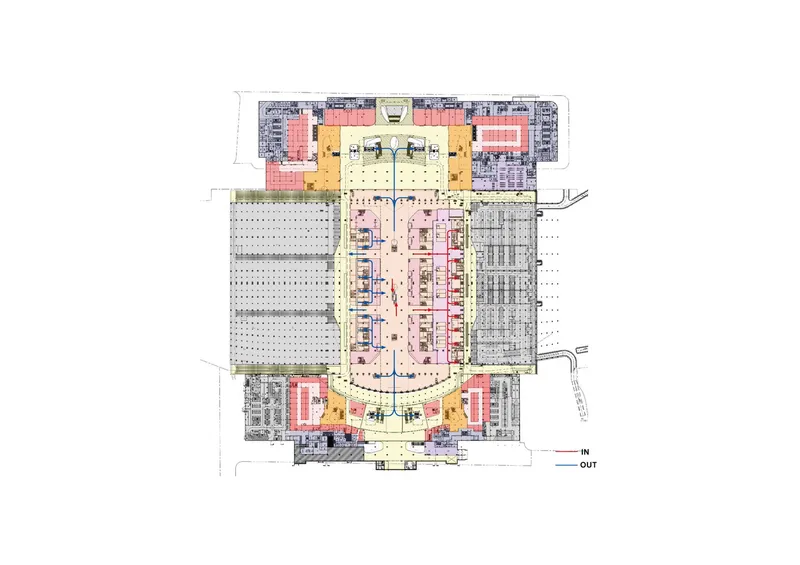
High-speed rail infrastructure often results in physical divisions within a city, creating barriers between communities. Guangzhou Baiyun Railway Station solves this challenge through its signature Transit Loop, a three-dimensional pedestrian network that bridges the urban fabric. This circular pedestrian corridor extends from the metro’s second basement level, rises above the high-speed rail tracks, and connects various public spaces.
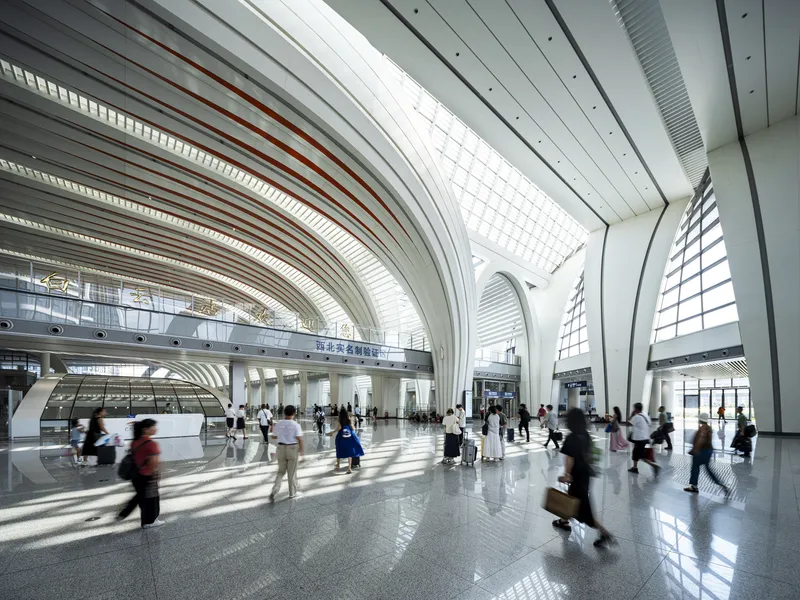
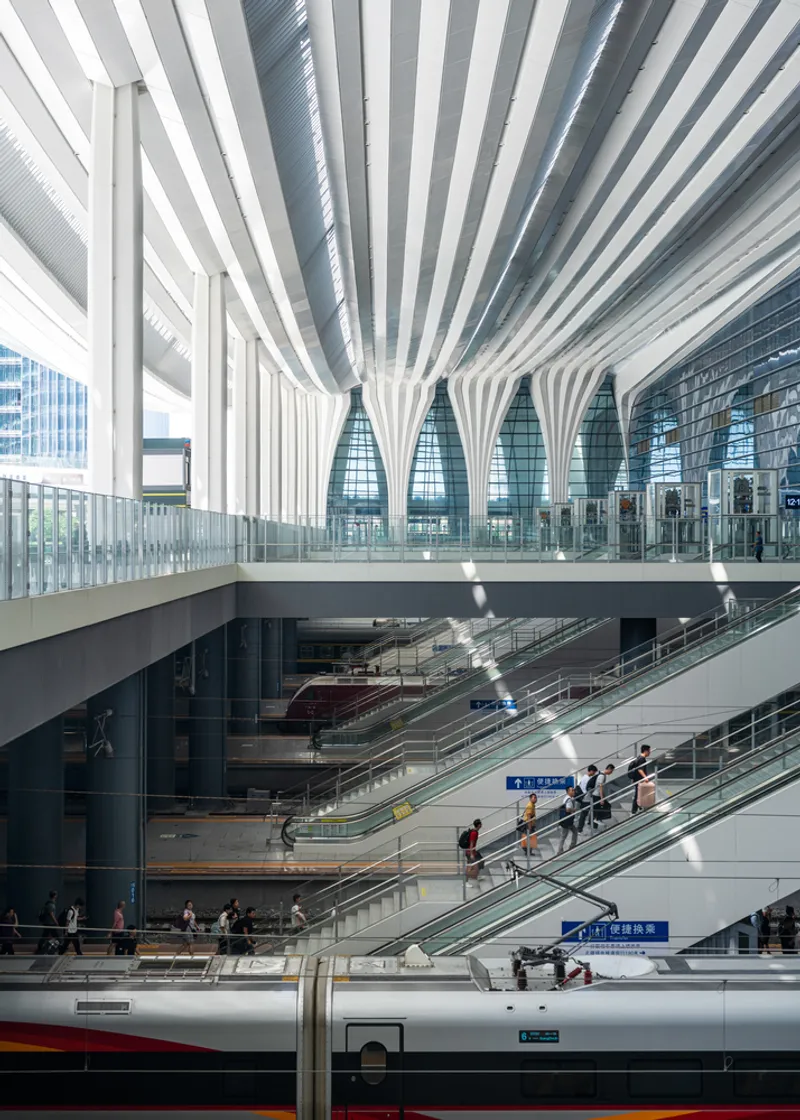
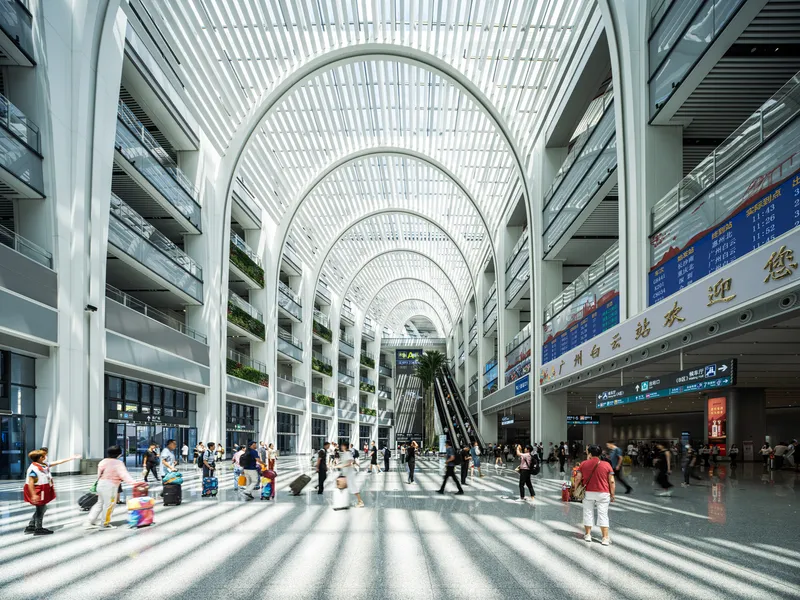
The Transit Loop follows an organic arc, allowing seamless navigation between different transportation modes while also incorporating rest areas and green spaces. With an elevation difference spanning five floors, the loop is not just a transit solution but an architectural intervention that reintegrates divided neighborhoods. Featuring tree-lined walkways, open plazas, and recreational areas, it transforms the station into a vibrant public space, encouraging both movement and social interaction.
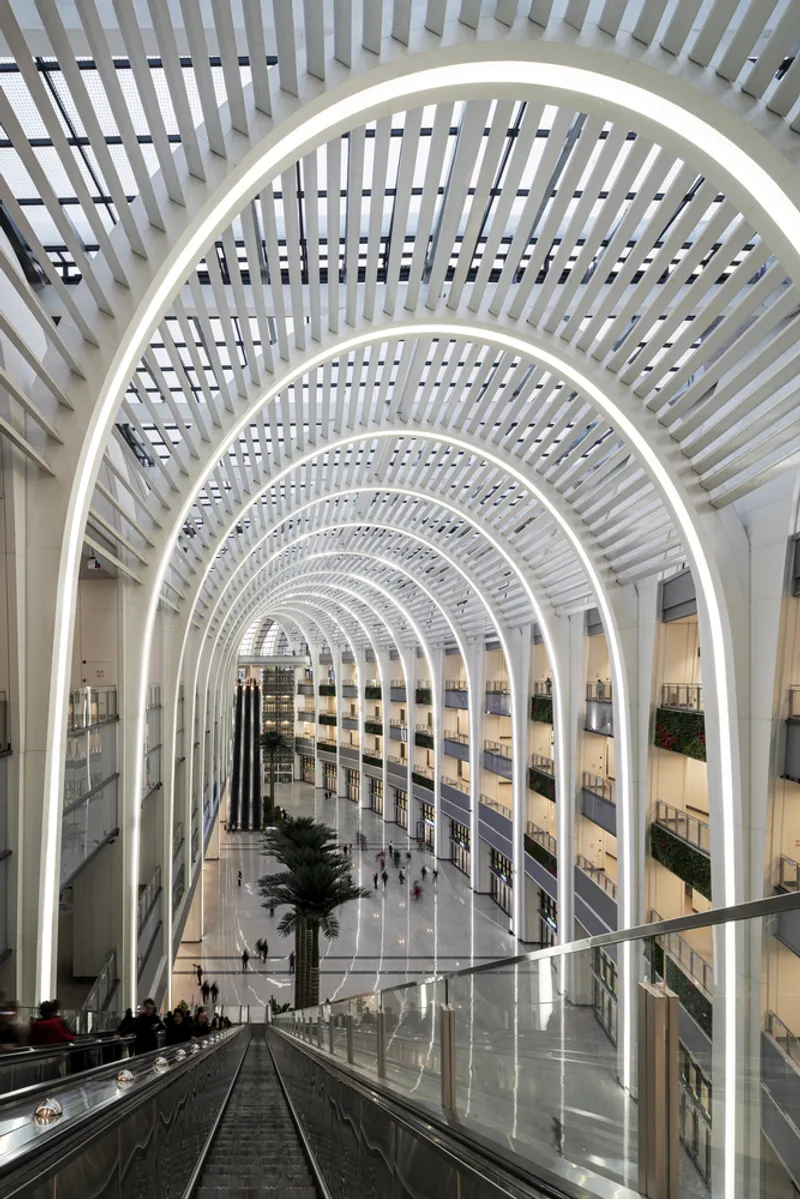
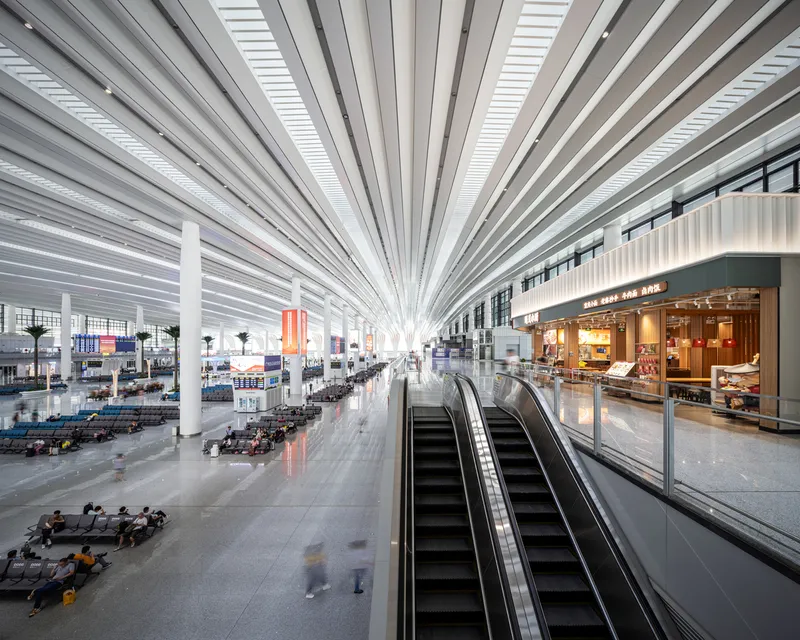
At its intersection with the metro and high-speed rail corridors, the loop forms Breathing Square, a multifunctional public space. During peak travel seasons, this plaza adapts to increased passenger flow, functioning as an extended station entrance. At other times, it serves as a dynamic venue for local events, reinforcing the station’s role as an active urban landmark.
The Grand Canopy: Merging Architectural Aesthetics with Functionality
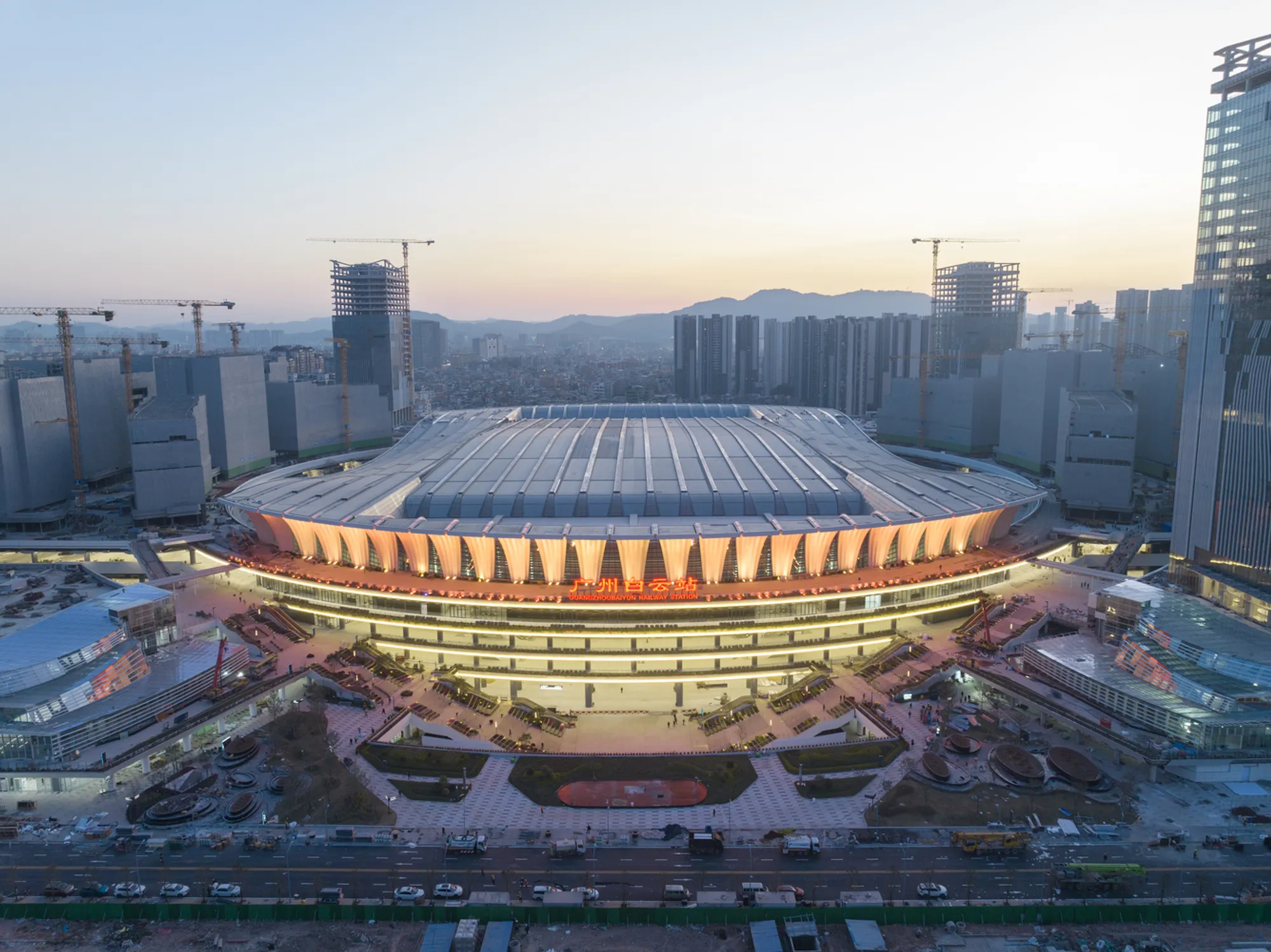
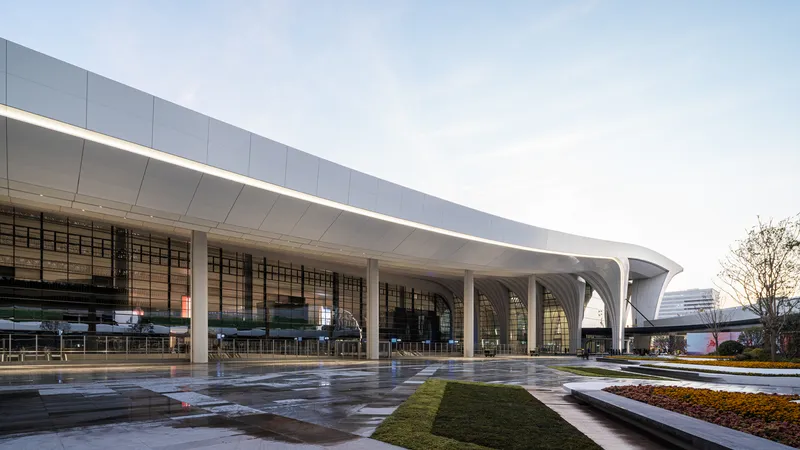
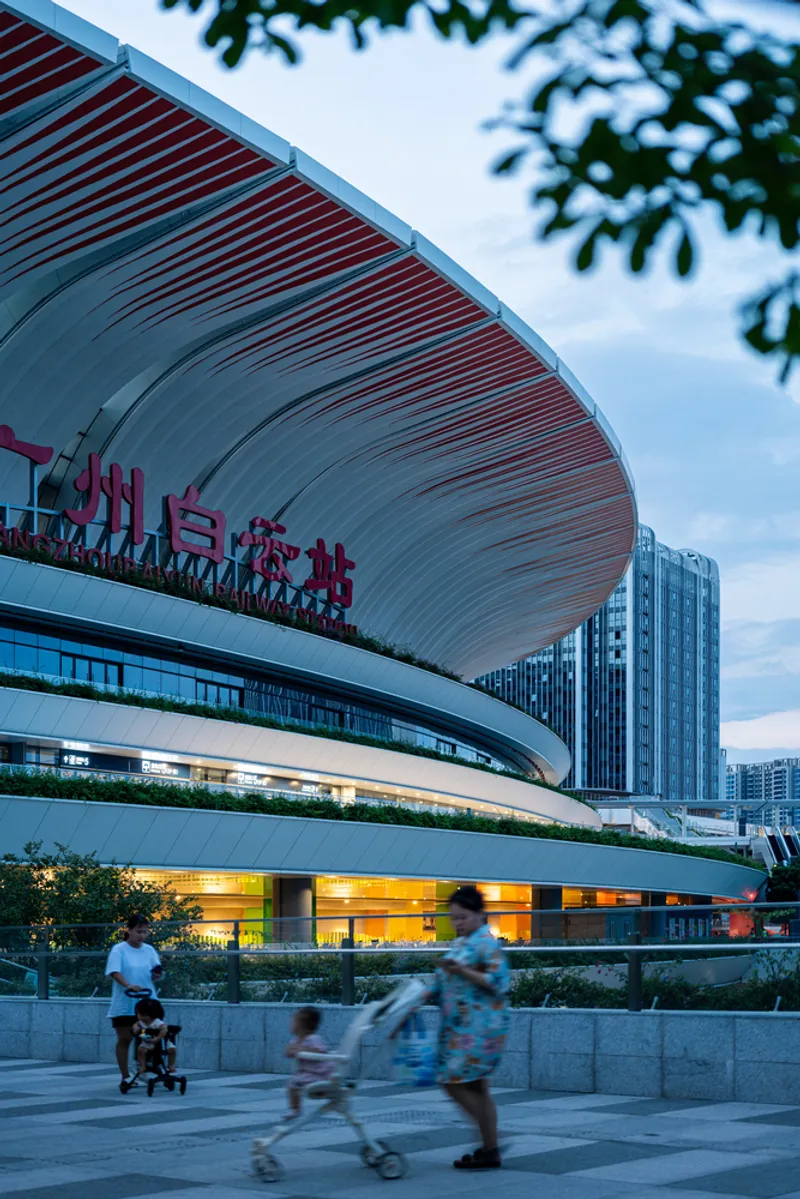
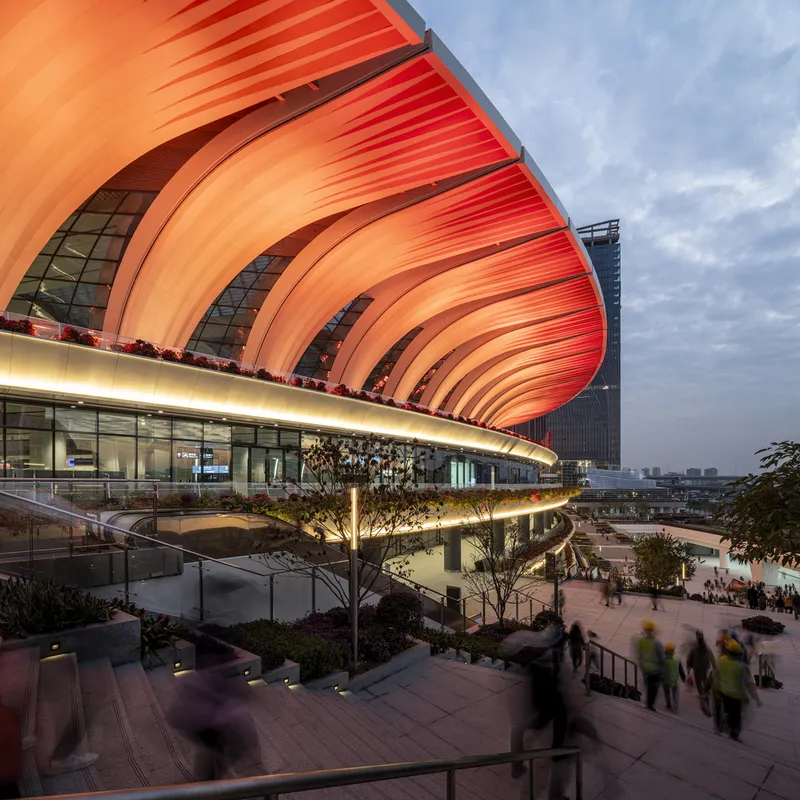
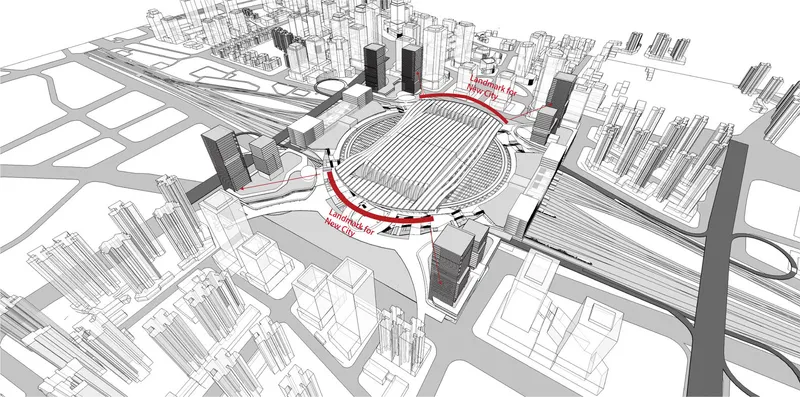
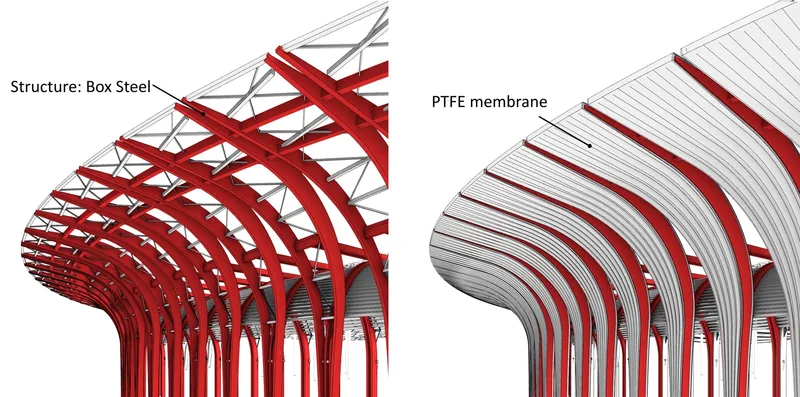
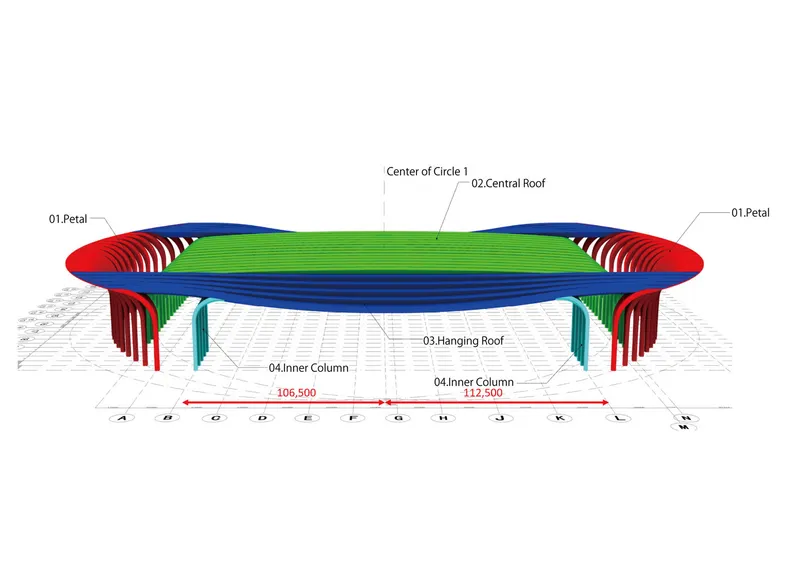
The architectural identity of Guangzhou Baiyun Railway Station is defined by its striking Grand Canopy. Inspired by Guangzhou’s iconic cotton flower, the canopy is composed of petal-like structures that extend 30 meters outward, sheltering the station’s entrance. More than a visual statement, this feature creates an inviting communal space beneath its expansive cover, serving as a plaza, promenade, and recreational area.
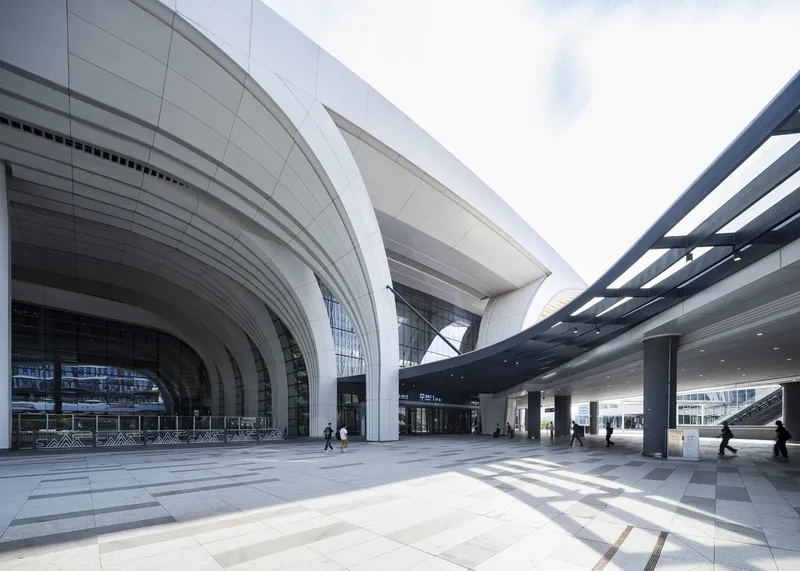
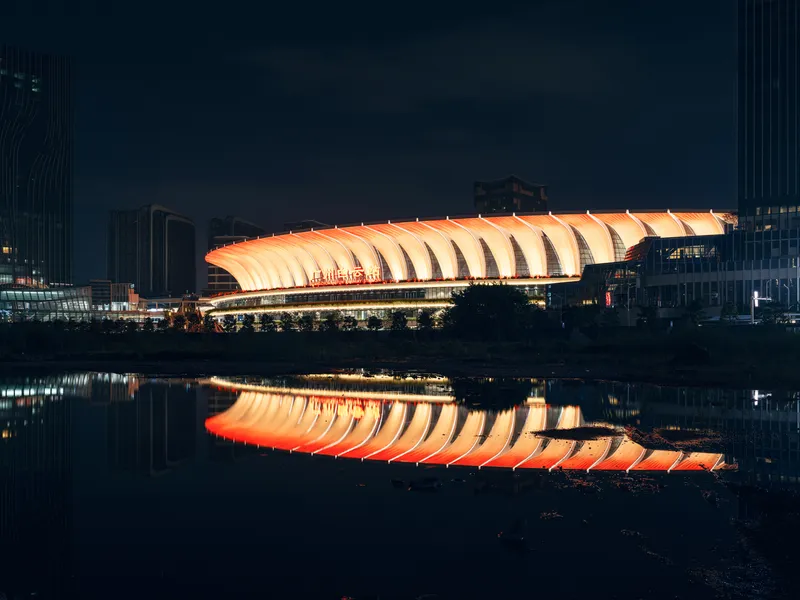
Constructed with a lightweight PTFE membrane, the canopy’s design balances structural efficiency with artistic expression. The supporting steel columns mirror the organic curvature of the petals, ensuring both aesthetic harmony and stability. At night, integrated lighting transforms the canopy into a luminous landmark, reinforcing the station’s presence within the cityscape.
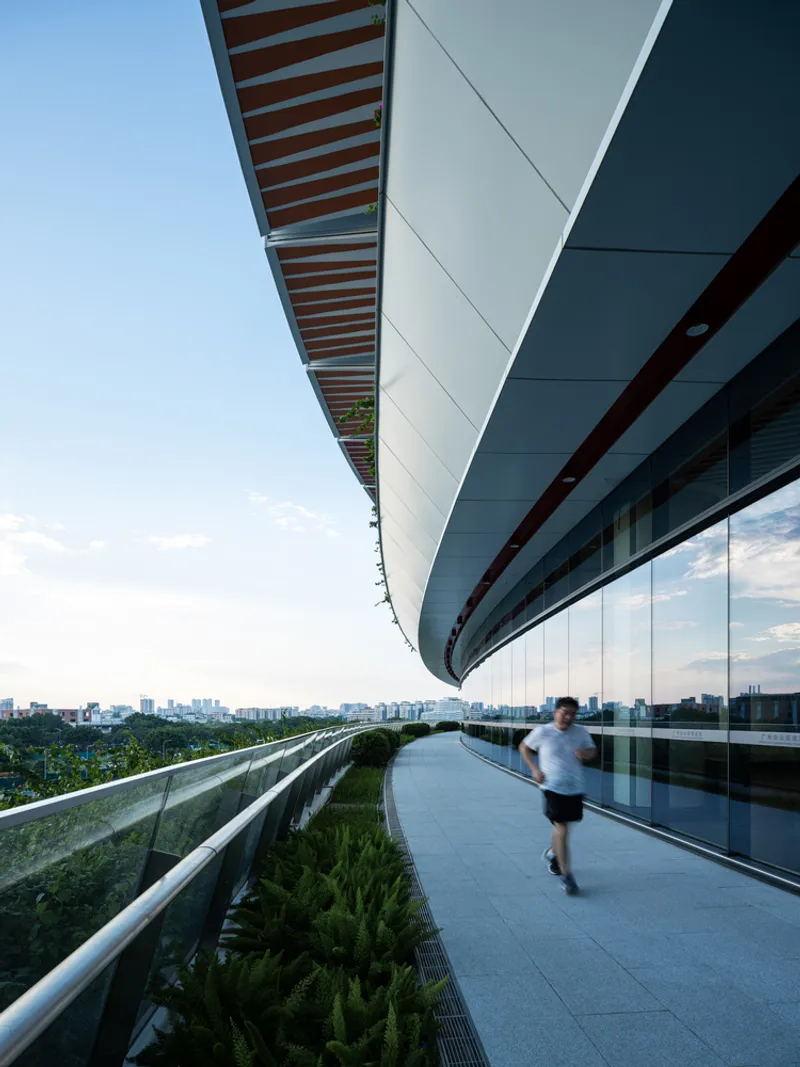
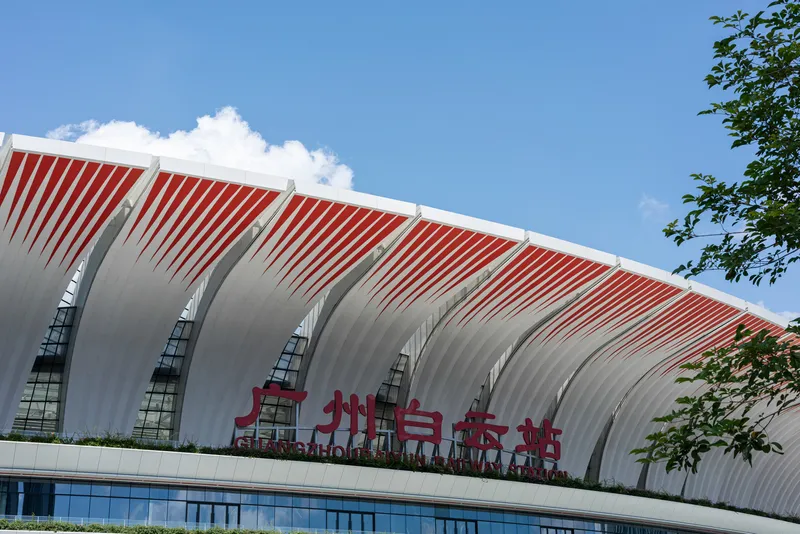
By merging functionality with symbolism, the Grand Canopy elevates transit-oriented development architecture, making Guangzhou Baiyun Railway Station not only a transportation hub but also a cultural and civic destination.
The Station Core: A Light-Filled Urban Atrium
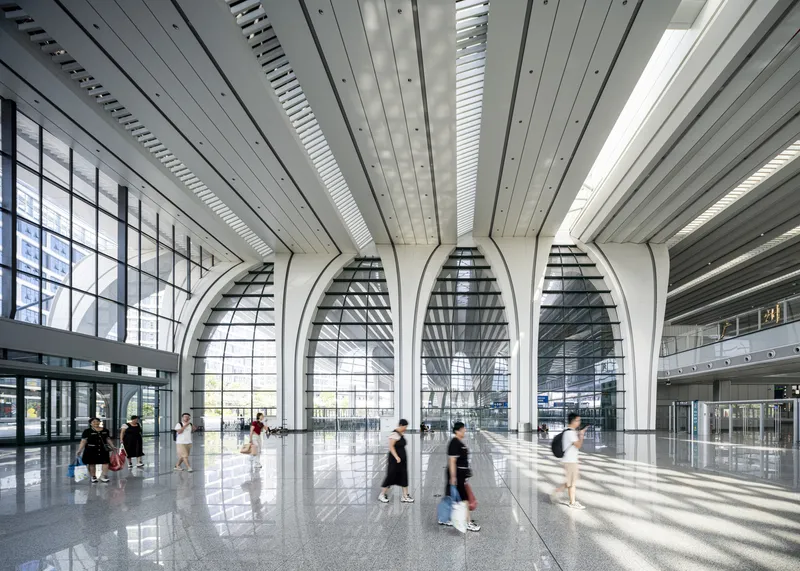
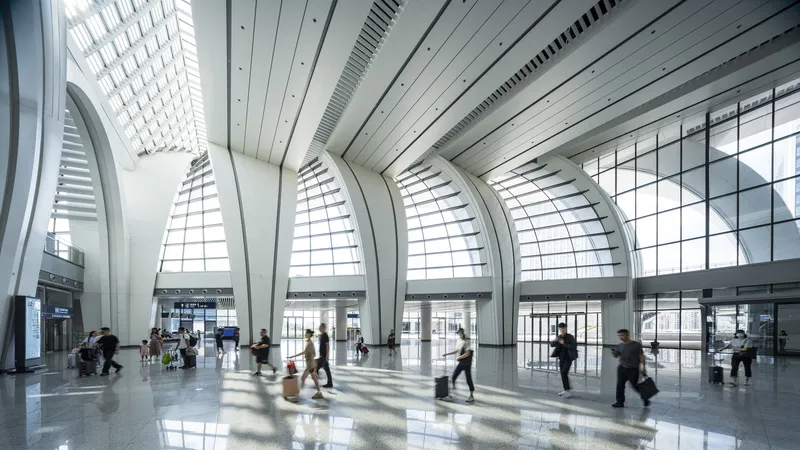
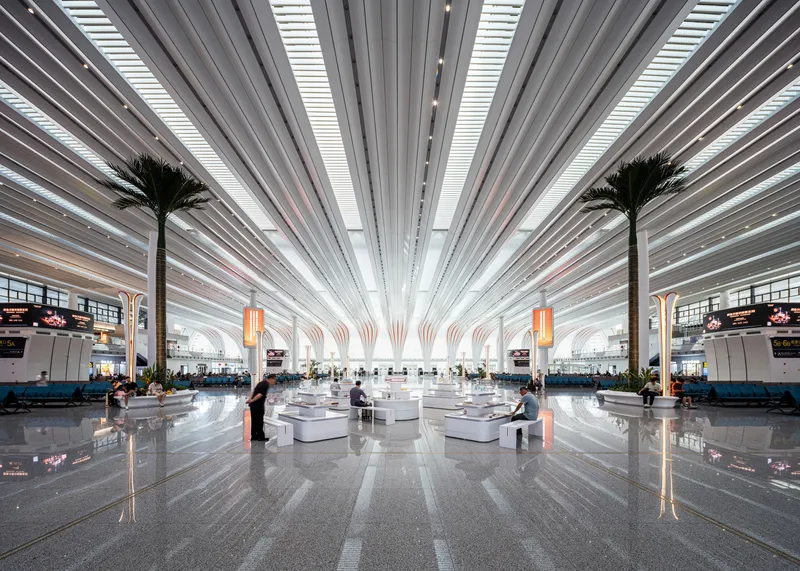
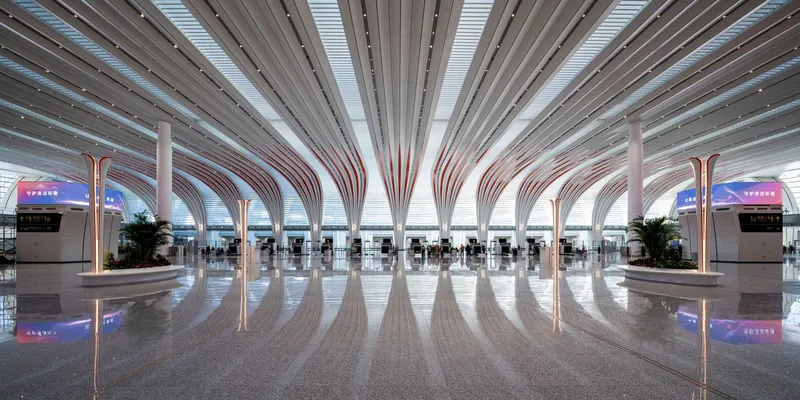
The Station Core, or Light Valley, is an open atrium that connects all levels of the station, ensuring fluid movement between transportation modes. Spanning from the underground public transit concourse to the upper levels, this space is designed to create a seamless travel experience.
A defining feature of the Light Valley is its strategic use of natural light. Sunlight filters through louvered openings, illuminating the interior while minimizing glare. The architectural design optimizes light distribution, ensuring brightness in circulation areas while providing shaded comfort in waiting zones. By integrating natural elements, the station fosters a sense of openness and relaxation, enhancing the daily commute.
The structural elegance of the Light Valley is reinforced by curved steel columns that counterbalance the forces exerted by the Grand Canopy. This blend of engineering precision and architectural refinement underscores the station’s role as a benchmark for transit-oriented development.
A Model for Future Transit-Oriented Development
Guangzhou Baiyun Railway Station represents the evolution of transit-oriented development architecture, demonstrating how integrated design can enhance mobility, sustainability, and urban life. Through the Transit Loop, it reconnects fragmented districts, promoting walkability and public interaction. The Grand Canopy transforms the station into a civic landmark, merging artistic inspiration with practical function. The Light Valley ensures an intuitive and comfortable passenger experience, reinforcing the station’s role as more than just a transport hub.
As cities worldwide face increasing population densities and transportation demands, Guangzhou Baiyun Railway Station provides a blueprint for future developments. By combining infrastructure with vibrant public spaces, it exemplifies a holistic approach to urban planning, setting a new standard for station-city integration.
All photographs are works of Yilong Zhao, Yang Min (mintwow)



Popular Articles
Popular articles from the community


Play: Fragments of Their World
Familiar architecture becomes modular playground design, creating safe spaces where displaced children can learn, connect, imagine and play.

Riyadh For All: Intergenerational Urban Design for Active Aging in Rabat
Riyadh For All reimagines urban design in Rabat with intergenerational co-living, adaptive courtyards, and Moroccan cultural exchange today.

The Ocean Hive: Sustainable Architecture for a Self-Sufficient Civilization at Sea
The Ocean Hive imagines sustainable architecture at sea, where modular habitats, algae, wave power and ocean waste sustain a growing colony.

Lunar Spiral: Space Architecture Shaped by the Mathematics of the Universe
Lunar Spiral reimagines space architecture through Fibonacci geometry, lunar regolith, levitating habitats, and self-sustaining Moon living.

Similar Reads
You might also enjoy these articles


Hodi-Mandai Geram
Project Function: Preservation and revitalization of the Intangible heritage and socio-spatial identity of the Hodi by Housing, Cultural Memory Center, Sacred Grove, landscape, local tourism economy


Olio Towers: A Mid-Rise for Performers That Fuses Housing, Rehearsal, and Stage
Located blocks from Houston's Theater District, this modular tower stacks living units around a central performance atrium.

Oasis: Modular Green Housing Carved into Dhaka's Urban Fabric
A shortlisted Plugin Housing entry reclaims unauthorized settlements in Dhaka with stepped concrete volumes, green roofs, and ventilation-driven design.

Black Hole: A Floating Megastructure for the Post-Physical Era
Emiliano Mazzarotto envisions a spherical, self-scaling arena where e-sports, digital hotels, and holographic stadiums replace traditional public space.

Explore Transit Station Competitions
Discover active competitions in this discipline



Challenge to reimagine the Iron Throne


Photograph architecture without architects


Illustrate the lost glory of Angkor Wat - Render Challenge


Design challenge to reuse E-waste
Comments (0)
Please login or sign up to add comments
No comments yet. Be the first to comment!