
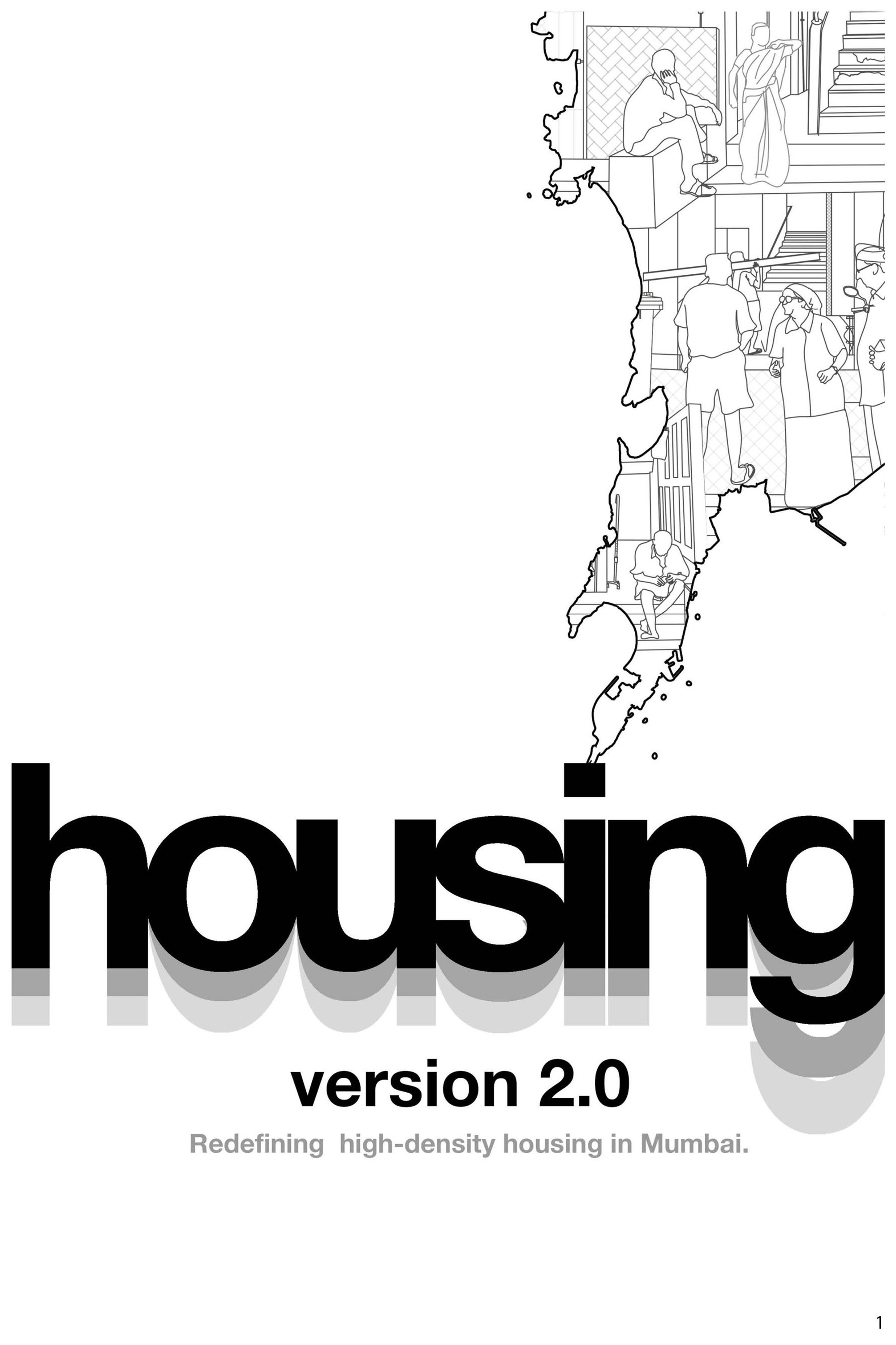
Housing Version 2.0: Reimagining Urban Living through Sustainable Architecture
Reimagining high-density living through sustainable, adaptable, and community-driven urban housing architecture for a changing cityscape.

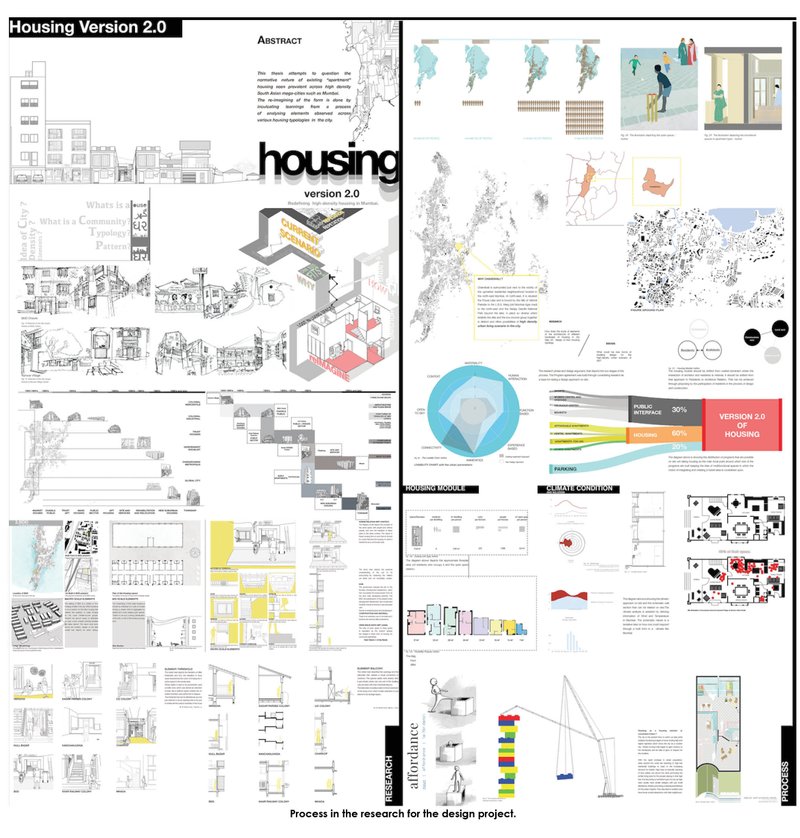
Housing Version 2.0 by Aishwarya Parab is a critical rethinking of the conventional housing typologies that dominate the skyline of high-density South Asian cities like Mumbai. The project examines the static nature of repetitive apartment blocks that often fail to respond to evolving socio-cultural and climatic contexts. Through an investigative and design-driven approach, it proposes an adaptable architectural model that embraces flexibility, community, and sustainability as central principles of urban living.
The thesis aims to create a system that bridges the gap between private and public realms—an architecture that grows organically with its users while accommodating diverse modes of living, working, and interacting. At its core, Housing Version 2.0 envisions a sustainable urban housing architecture that promotes resilience and inclusivity in the ever-changing fabric of contemporary cities.
Context and Intent
Set within the dense urban fabric of Mumbai, the project arises from a need to address housing as a dynamic, evolving system rather than a fixed typology. Mumbai’s housing landscape, characterized by homogenous apartment complexes, often overlooks the complexity of human interaction and community behavior within dense environments.
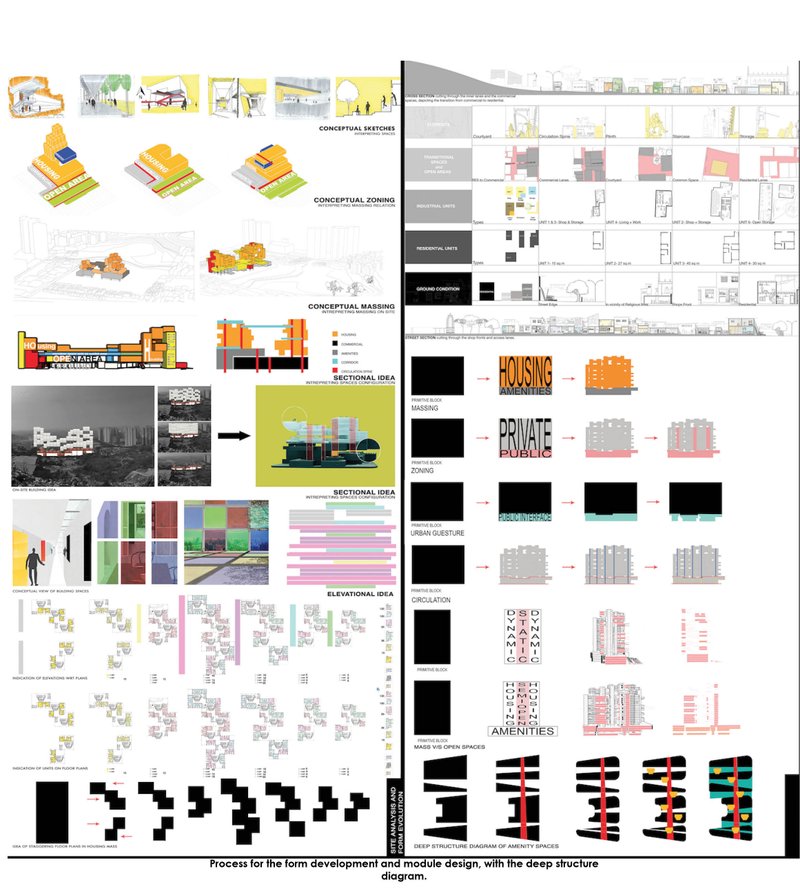
Parab’s approach redefines this by integrating lessons drawn from local housing typologies, informal settlements, and mixed-use urban neighborhoods. These insights are translated into spatial strategies that balance density and porosity, creating breathing spaces within compact vertical structures. The site plan illustrates this equilibrium, where accessibility and urban gestures merge seamlessly with open public zones.
Conceptual Framework
The research process for Housing Version 2.0 begins with an in-depth study of community patterns, spatial affordance, and climatic behavior across Mumbai’s diverse housing conditions. From chawls and cooperative housing societies to slum clusters and contemporary towers, each typology contributes to the project’s understanding of adaptable architecture.
This investigation leads to a design framework that organizes housing into distinct but interrelated layers:
- Ground Layer – A porous public platform integrating markets, workshops, and pedestrian-friendly open spaces.
- Transition Layer – Semi-public community spaces acting as buffers between active commercial zones and private residences.
- Private Layer – Modular residential blocks designed for flexibility, allowing occupants to alter and extend living units based on need.
The design not only ensures functional hierarchy but also fosters social sustainability, encouraging interaction between residents and the surrounding neighborhood.
Spatial Development and Design Process
The form development process, visible in the conceptual zoning and massing diagrams, emerges through iterative exploration of modular relationships. The idea is to generate vertical density while retaining horizontal connectivity—a spatial translation of Mumbai’s vibrant street life into a vertical habitat.
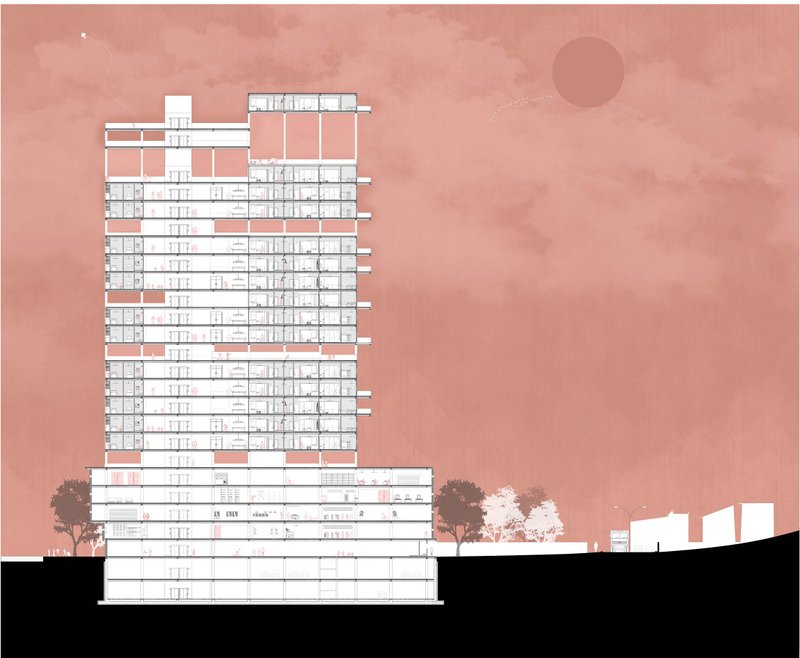
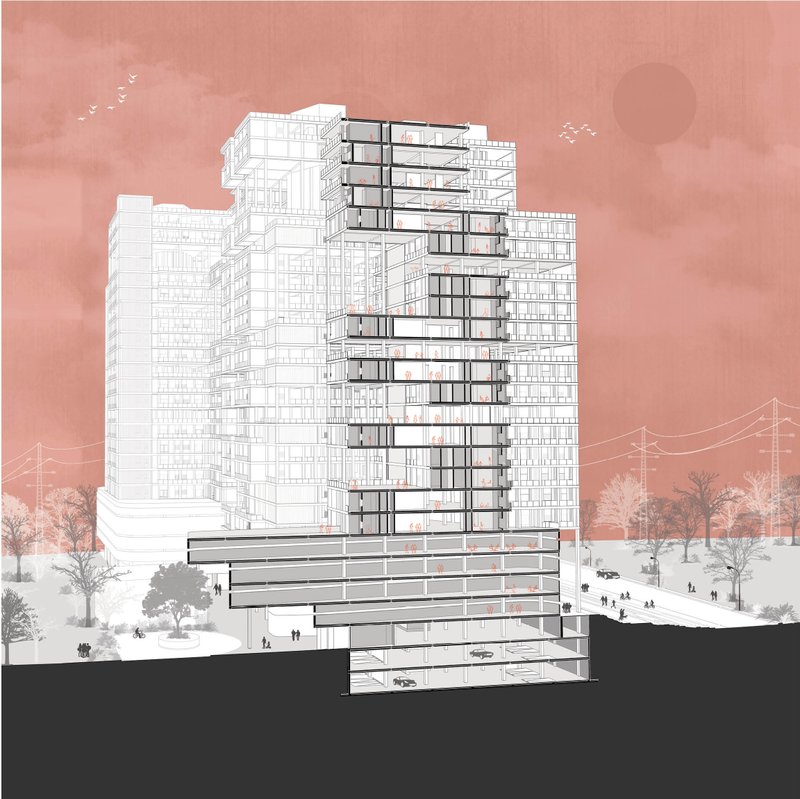
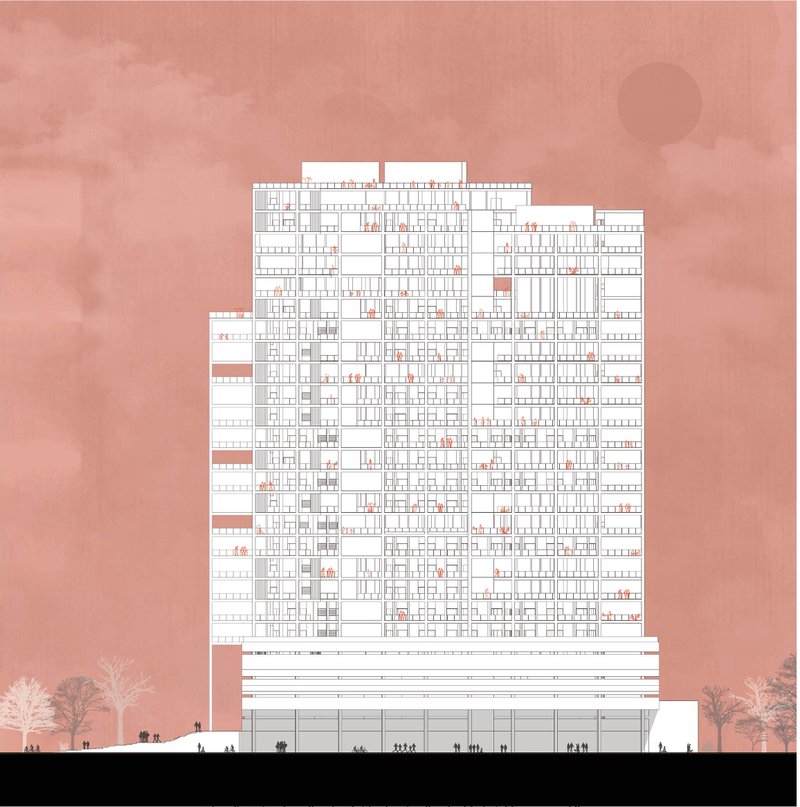
Through axonometric and sectional views, the design reveals how community, commerce, and habitation coalesce within the same architectural system. The sectional axonometric illustrates the relationship between the commercial podium, transitional community zones, and upper-level residential modules. Each layer operates as an independent ecosystem while contributing to the collective life of the tower.
A significant feature of the project is the incorporation of transitional terraces and shared courtyards that act as breathing spaces and visual connectors between floors. These terraces redefine the conventional boundaries of apartments, introducing a fluid, interconnected network of semi-open zones.
Structural and Technical Systems
The construction and services drawings emphasize a rational yet adaptable structure. Modular planning allows the building to evolve over time, accommodating infrastructural and social change. The project employs sustainable building systems, such as cross-ventilated corridors, double-height social decks, and energy-efficient facades that respond to Mumbai’s humid climate.
Wall and slab section details demonstrate the precision in balancing structural efficiency with environmental responsiveness. Each component—from façade modules to vertical cores—reflects a system designed for long-term adaptability.
Social and Environmental Vision
Beyond form and function, Housing Version 2.0 envisions housing as a collective framework for social resilience. The integration of community spaces, flexible apartment modules, and shared amenities nurtures an environment where people can coexist dynamically.
By reimagining verticality not as isolation but as layered coexistence, the project challenges conventional notions of density. It proposes an urban architecture where affordability, adaptability, and environmental responsibility converge, paving the way for a new paradigm of sustainable housing in global megacities.
Housing Version 2.0 stands as a manifesto for future-ready housing architecture—one that responds to both human and environmental needs. Aishwarya Parab’s work transcends aesthetic or typological boundaries, redefining the high-rise as a living organism within the city’s ecosystem. It invites architects, urban planners, and policymakers to rethink the relationship between density, community, and sustainability.
This thesis ultimately contributes to the discourse on sustainable urban housing by proposing an architecture that evolves with its inhabitants—reflecting a vision of cities that are not just built for people, but grow with them.




Popular Articles
Popular articles from the community

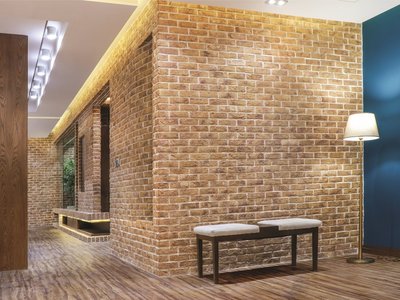
A Contemporary Take on Iranian Residential Architecture
A modern interior design in Mashhad that reinterprets brick, light, and spatial flow to create a warm, contemporary residential architecture.
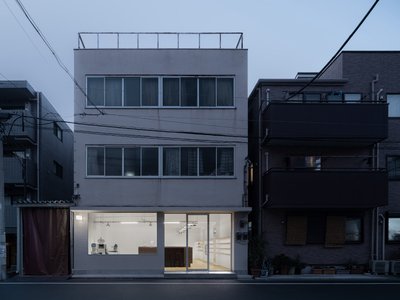
Atelier Macri Concept Store Interior Design by CASE-REAL
Atelier Macri store features a "ko" counter, walnut wood details, cork displays, blending retail, gallery, and seamless customer experiences.

Solar Steam: A Climate-Responsive Architecture That Redefines the Monument
A climate-responsive memorial architecture that transforms heat, decay, and time into a living system reflecting humanity’s ecological impact.
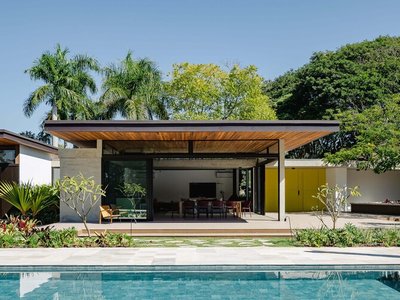
Flamboyant House by Juliana Camargo + Prumo Projetos
Modern Brazilian house integrating existing tree, pool, and volumes with glass, wood, and transitional spaces blending interior, exterior, and landscape seamlessly.


Similar Reads
You might also enjoy these articles

Digital Façade Design for our cities’ urban fronts
Prima Facie - Result Story
Protecting avian biodiversity: Bird observatories to help spread awareness & save rare bird species.
Results for ‘Fly’ - Landscape design competition out now
Connecting with nature: Forest interpretation center in Australia's Wollemi National Park
‘Asatti’ - Landscape design competition - Result story


Explore Research Competitions
Discover active competitions in this discipline




The International Standard for Design Portfolios


The Global Benchmark for Architecture Dissertation Awards


The Global Benchmark for Graduation Excellence


Challenge to reimagine the Iron Throne
Comments (0)
Please login or sign up to add comments
No comments yet. Be the first to comment!