

Designing space habitat for "Astro Miners"
Leap - Result Story | Space Habitat Design Competition


We are living at a moment of great promise. Humanity’s breakout into space is underway. Yet success is not inevitable. The Internet or Digital Economy that began in the last two decades, has been on an exponential growth ever since. Falling costs, new technologies, and a new generation of entrepreneurs are charting out a bold era of space development and space economy.
This bound to not only generate untold wealth - but also to make the environment greener. But how?
Space Economy is the commercial utilization of technology in space, and its potential is currently limited to satellite navigation, satellite television, and commercial satellite imagery. Private companies like Blue Origin, SpaceX, Rocket Lab, Planetary Resource are some of the few that are already preparing to make the space business thrive by exploring options.
Since the potential value of minerals in these asteroids is staggeringly large, space organizations have already begun their quest in developing the technology required to make it happen. Our solar system is filled with millions of asteroids.
The challenge here was to design a space habitat for 100 “Astro Miners” which comprises manufacturing units, and industrial habitats for mining.
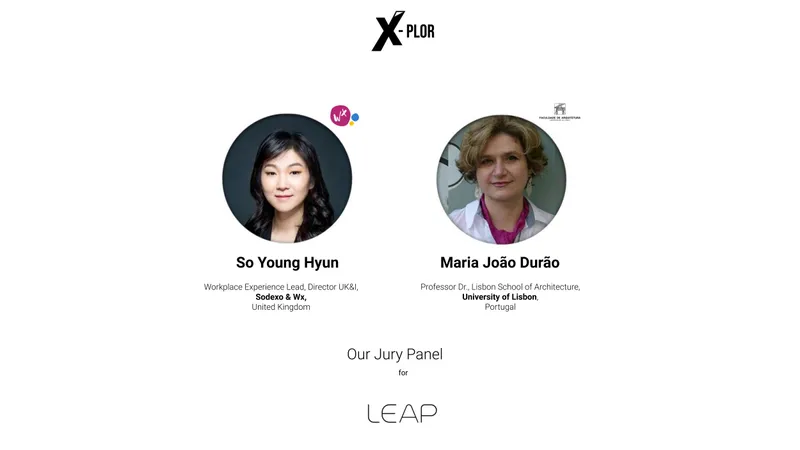
The jury for the competition consisted of esteemed designers, professionals, and academicians from around the world. The Lead Jurors for the competitions were as follows:
So Young Hyun, Workplace Experience Lead, Director UK&I, Sodexo & Wx, United Kingdom
Maria João Durão, Professor Dr., Lisbon School of Architecture, University of Lisbon, Portugal
Some of the Best of competition projects are:
Winning Project: CONQUEST
By: Nicole Li, Kolbie Fung, Tiana( Hyo Yeon )Lee
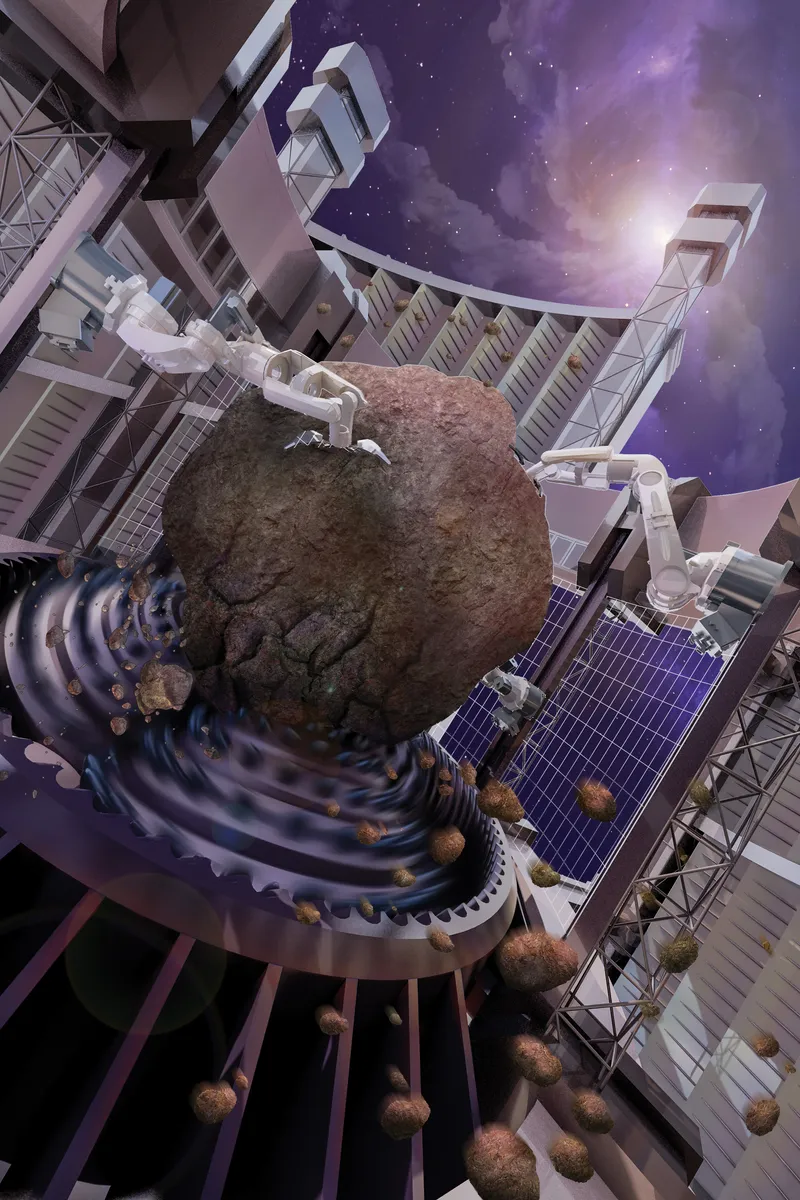
Description: Conquest aims to be a safe haven, self-sustaining, resource-rich environment that provides adequate work-life balance for all users. The main purpose to extract minerals from asteroids forms the core, while all supporting programs split into life and work wrap around it.
-----------------
Runner - Up: THE FORGE
By: Michael O'Reilly, Yaseen Bhatti, Jingsin Sun & YingYing Zhau
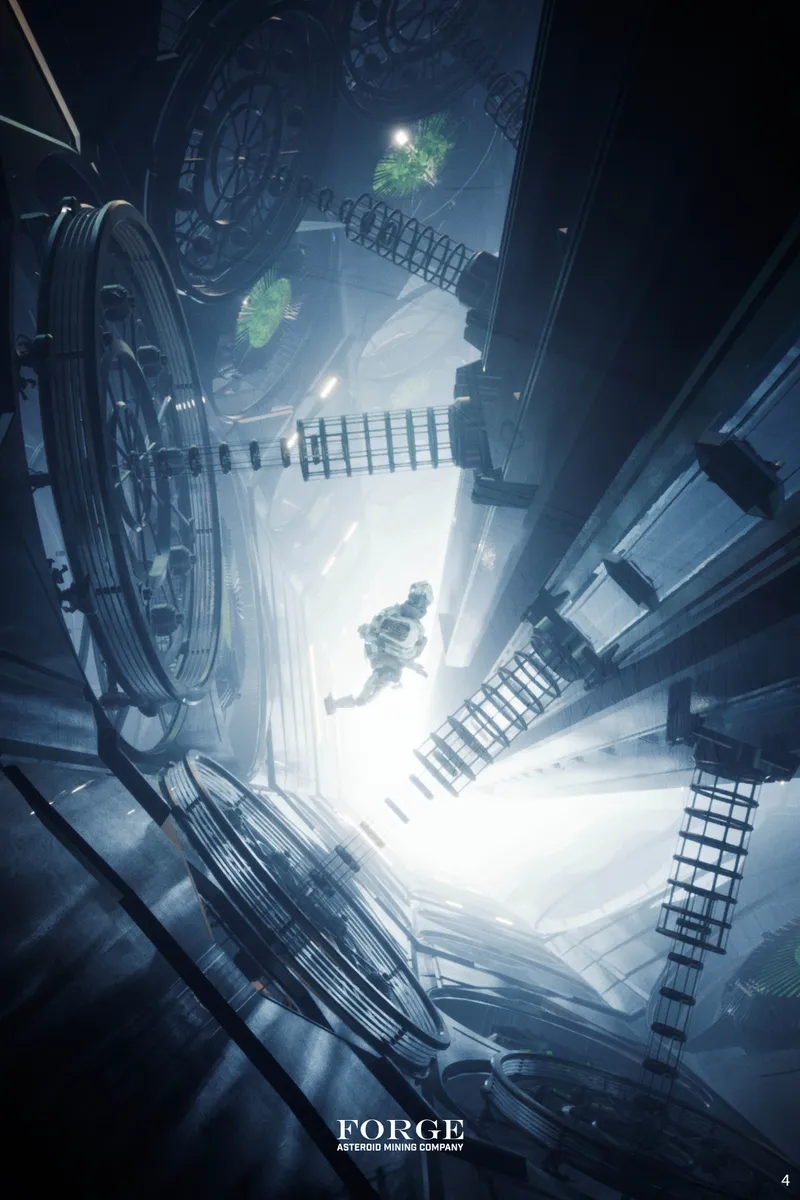
Description: Located on the asteroid belt, an asteroid mining station set in the near future is home to a community of asteroid miners. Our design takes a systematic approach to settlement design at a building and urban scale. We propose an adaptive aggregated system based on complex rules to determine the arrangement of typologies in four-dimensional space.
-----------------------
People’s Choice: Pangolin can help mining (Leap)
By: Misak Terzibasiyan

Description: The aim of the project is to design a space habitat for asteroid mining, while we also need a spacecraft as well. This brings us an idea of pulling and extracting mineral materials
--------------------
Editor’s Choice: EREBUS
By: Basilio Paredes
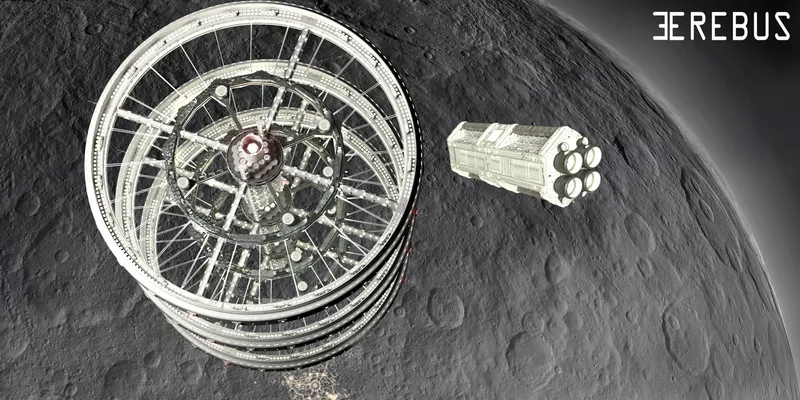
Description: The Erebus project conceives the colonization of the asteroid belt by proposing the installation of a habitable orbital station called Erebus and a robotic surface settlement called Hades. The orbital station will be comprised of three toroidal spacecraft that will be relieved one at a time each year and a half, avoiding isolation.
--------------------
Editor’s Choice: THE HIVE
By: Karina Kimura Oliveira
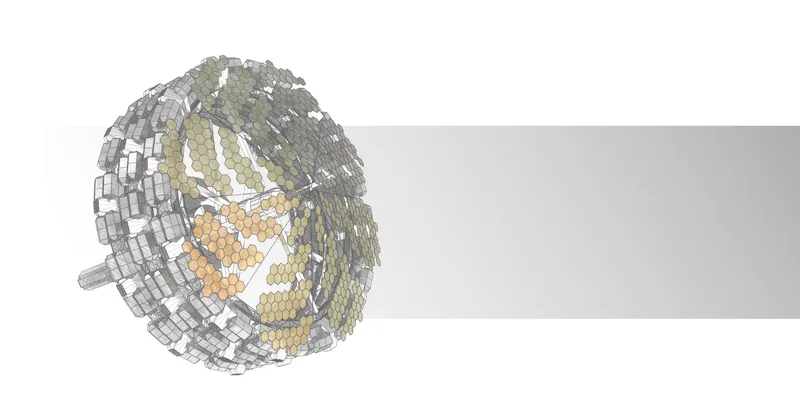
Description: Mankind stands right over the line of irreversible damage, they are forced into extreme environmental preservation laws and last-minute mitigation. They are now on the brink of catastrophe and in extreme need of resources. By 2032, as Earth's orbit matches Ceres orbit, humankind takes a LEAP of faith.
--------------------
Editor’s Choice: Frozen Station
By: Siddanth Rao & Harshad Manglori

Description: Frozen Station is developed from challenges faced by a mining expedition on an Extraterrestrial environment, which is turned into an opportunity in a way that makes living on Ceres safe & sustainable. The term Frozen Colony refers to the caves carved out of ice beneath the crust.
--------------------
Editor’s Choice: ORIGIN OF CIVILIZATION
By: Tingyu Yan & 达云姜

Description: General introduction This design is mainly divided into a housing module and mining module, the two can be flexibly assembled. By using reusable rocket technology, the unit modules are transported to space for assembly and then fly to the asteroid belt.
Discover the design brief here: https://uni.xyz/competitions/leap/info/about
Discover the full results here: https://uni.xyz/competitions/leap/entries
Follow us on social media: Facebook | Instagram | LinkedIn | Twitter | Youtube
Discover other design competitions to participate here: https://uni.xyz/competitions


Popular Articles
Popular articles from the community

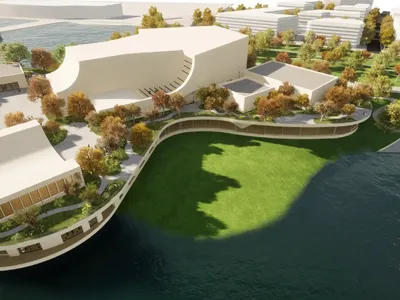
The Amber Palace Opera: A Geological Fiction Surfaces on Tallinn's Baltic Waterfront
Pierre Brillard reimagines a Baltic legend as a public landscape, opera house, and waterfront promenade rooted in Tallinn's coastal identity.


FCC Arquitectura Expands a Portuguese Granite House with a Board-Marked Concrete Wing
In Portugal, JV House pairs a cleaned-up whitewashed and granite dwelling with a timber-shuttered concrete extension, courtyards and a garden pool.

ETEH Reworks the Shared Spaces of São Domingos School in Brazil Around Timber, Color and Hanging Plants
At São Domingos School in Brazil, 436 m² of hall, refectory and library are recast with timber joinery, a yellow and blue code and trailing greenery.

Cube Design Draws an Ecological Corridor Between Two Shenzhen Hills with the Nankai Building
Beside Shenzhen's container docks, the Nankai Building pairs stacked balconies with a climbing green screen to connect two hillsides across its height.

Similar Reads
You might also enjoy these articles

Aquadapt: An Underwater Habitat That Rewrites Its Rooms by the Hour
Curved modules ring the seabed while one shell shifts from breakfast room to cinema, farm and football pitch as residents' needs change.

Play: Fragments of Their World: Remembered Architecture Rebuilt as a Modular Playground for Refugee Camps
Tom Gardner abstracts domes, arches and towers from the homelands of displaced families into a kit of child-scaled play parts for camp settlements.
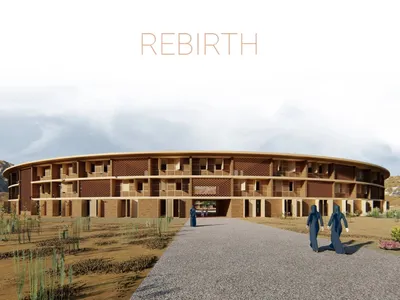
REBIRTH: A Circular Settlement Where Afghan Widows and Their Children Rebuild Life Together
A shortlisted Resile entry turns the circle into a protective ring of timber and brick, gathering homes, classrooms and gardens around a shared landscape.
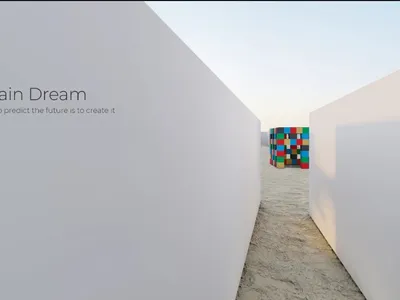
The Main Dream: A Recycled Plastic Kit That Lets Refugee Children Build Their Own Playground
Thirty-centimetre interlocking cubes that connect on three axes turn play into construction, letting children author the spaces they occupy.

Comments (0)
Please login or sign up to add comments
No comments yet. Be the first to comment!