

Little Library in Shakotan
New interpretation of the library in the age of digitisation


Idea
The main idea of the project was to create a modular, transformable object with a simple structure, made of local materials. The priority was to fit the building into the character of Shakotan, which is a small fishing village living in harmony with the rhythms of nature. The library was designed to strengthen social relations and become not only a place of tranquility, but also a meeting place for residents. It was also important to be able to replicate the project in other small towns similar to Shakotan in Hokkaido. The library space was calculated to accommodate sixty users, including one staff member who operates the building.
Development plan
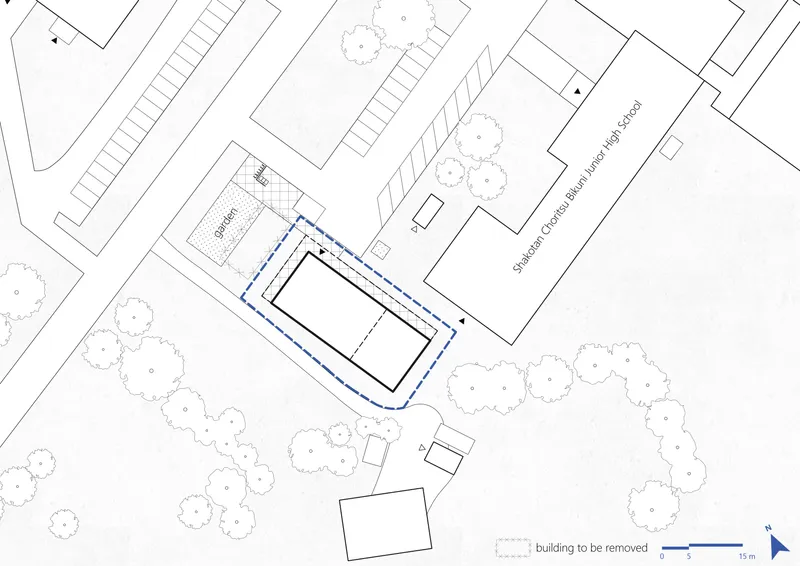
The project site is in the southern part of the small town of Shakotan located in Hokkaido Prefecture, Japan. Shakotan is situated in the centre of the west coast of Hokkaido. The project does not meet the height requirements. It was decided to raise the building in order to achieve the idea of a layered library. It was also decided to remove the building adjacent to the plot. The barrack obstructed the view of the project area and did not fit in with the landscape.
Form
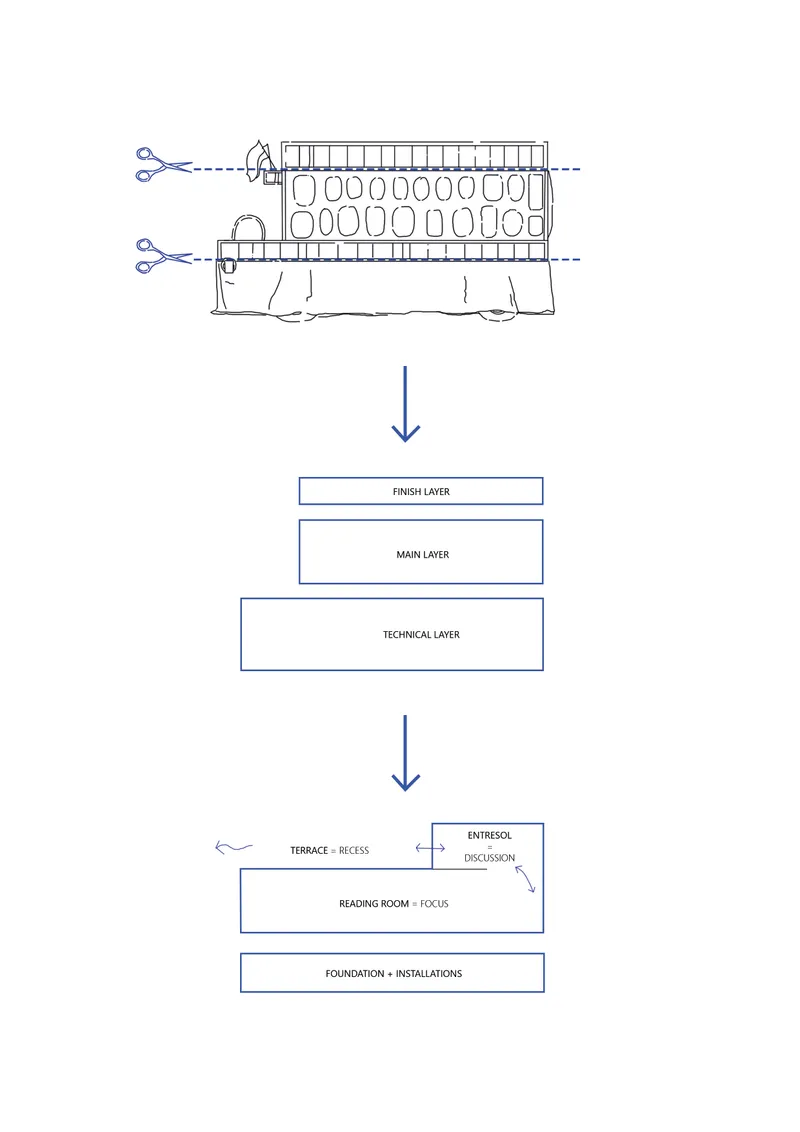
The inspiration during the design process came from one of the main festivities celebrated every summer in Shakotan. At the beginning of July, the Fire Festival is celebrated in this village. One of the rituals is the construction of a platform called dashi, which is then pushed and pulled through the streets of the town by a group of selected people called Tomosukai (meaning "those who light up"). The vehicle is made up of 3 parts: the car chassis, which enables the movement of the platform, the level intended for drummers and the top, where the sound equipment is placed. In addition to the undercarriage, the platform has a skeletal wooden structure and is decorated in festive colours, red and black. Moreover, the central part of the vehicle is covered with colourful decorations, such as brightly painted lanterns and masks.
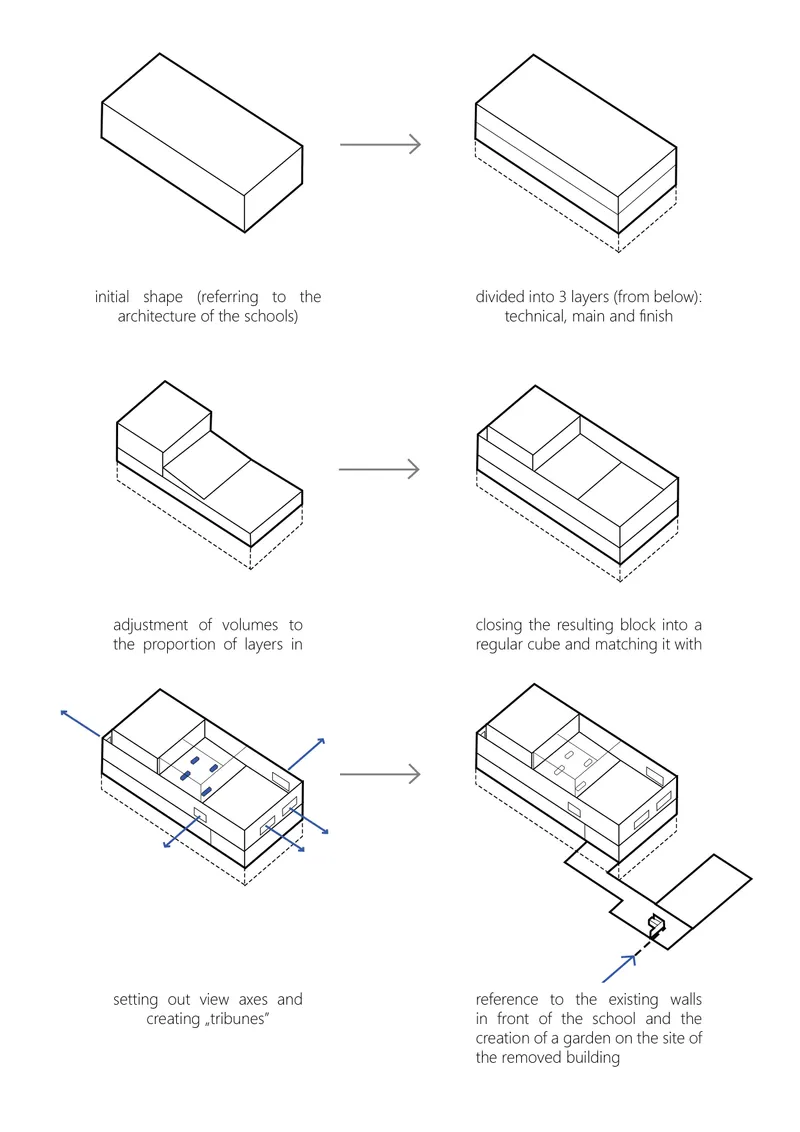
The idea of the designed building is a reference to dashi. Like a platform, the library can "wander" through the various small towns in Hokkaido. The purpose of the building is to bring light into the lives of the residents, by providing access to learning and enabling self-development. The library is also meant to relate to the platform in its form. The library building has been divided into 3 layers:
- the technical layer - which refers to the chassis of the platform and constitutes the foundation of the designed building with a technical space for the routing of the necessary installations;
- the main layer - which corresponds to the most decorated part of the dashi, dedicated to the drummers. In the library, on the other hand, this segment is intended to accommodate primarily the reading function of the building.
- the finish layer - which refers to the top of the festive vehicle. In this part of the designed building, an entresol floor has been placed for reading discussions. Like the upper segment of the dashi, the finish layer opens up to the ground floor and expands the functional area. In addition, the building has a terrace in this layer, which is a direct analogy to the inspiration.
Structural grid
The premise of the project was to understand as deeply as possible the culture and building arts that characterise the area of Shakotan city , but also the region of Hokkaido Island and Japan as a whole. The structural grid module of the building therefore refers to the Japanese tatami mats, which have been used both in the past and nowadays to cover usable surfaces in Japanese homes, but also in temples, shops and even offices. The mats are primarily made of rice straw. Such floor coverings are very well suited to the humid climate of Japan. They improve the quality of room use in terms of acoustics, air quality and humidity. The dimensions of tatami mats vary from region to region, so a 90 cm module was used in the design, which is similar to traditional size.
Materials and colours
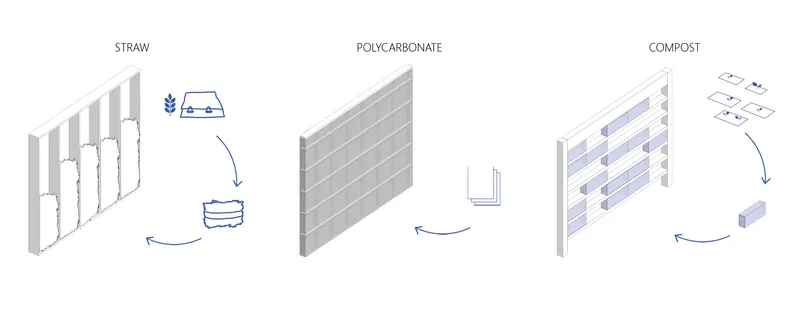
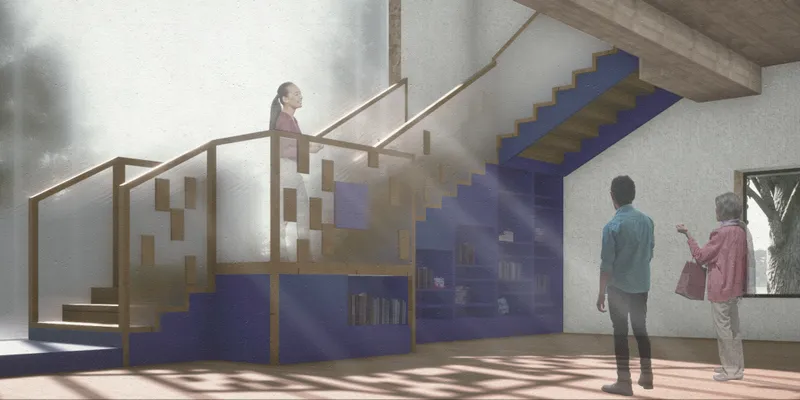
Prefabricated straw is used to construct the external walls. This solution is based on the traditional architecture of the Ainu people who lived in Hokkaido. There are also materials such as clay plaster and wood, which directly relate to local solutions. Polycarbonate has been used as an external, finishing material, whose character refers to the lanterns hung on the dashi. The panels are made from recycled material. The interior of the library has wooden elements and green tatami mats on the floor. There is also an 'interactive' curtain wall by a veranda on the ground floor. It consists of acrylic panels that the residents are asked to fill with compostable waste from the surrounding crops and gardens. The blocks, during a low-odor fermentation process called Bokashi, will generate the heat needed to warm the space during the winter. The wall technology is modelled on the projects "A recipe to live" by Masaki Ogasawara, Keisuke Tsukada and Erika Mikami of Waseda University and "Comploo" by the Bakoko Architect team.
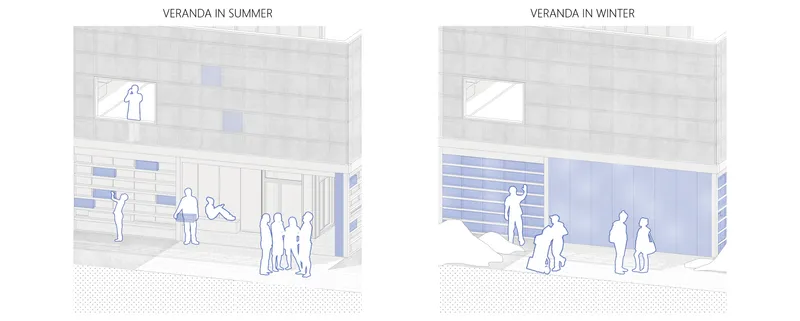
The library also uses a colour accent, the most important things are highlighted by Shakotan Blue. The choice directly refers to the unique colour of the water near the coast of the peninsula, which tourists come to see during the summer. Wooden paving appears in the building's surroundings. The designed building is intended to stand out from the neighbouring architecture, while blending in with the surrounding nature.

Popular Articles
Popular articles from the community


Manzana Morphosis: Stretching Barcelona's Grid into a Living Landscape for 2050
A radical reworking of the Eixample manzana turns density into a tool for generous public space, vertical ecology, and environmental performance.
Cloaked Colonization: A Mobile Underwater Habitat That Moves Like a Fish
Micah Abaya's shortlisted EHC Pacific entry reimagines ocean settlement as a dispersed network of self-sustaining architectural organisms.
Faces of the Soviet Avant-Garde: Turning Moscow's Street Names into an Open-Air Museum
A network of sculptural installations across a Moscow residential district transforms forgotten architect names into spatial encounters with cultural memor
Temporary Home for Dogs: A Reversed Zoo Rethinks Animal Shelter Architecture
In Bucharest, a sinuous corridor and freed landscape flip the logic of containment, designing a shelter that works to make itself unnecessary.

Similar Reads
You might also enjoy these articles

The Rhythm of Seasons
A Farmers' Market Connecting Nature and the City

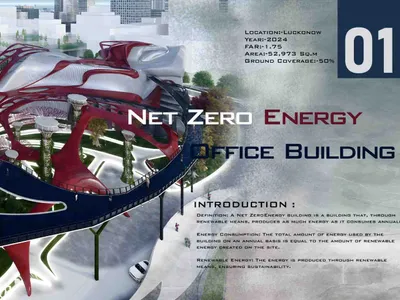
More Than a Building-Designing a Living System
More Than a Building-Designing a Living System
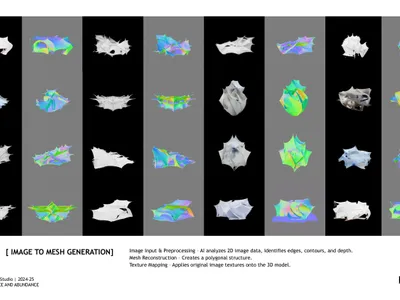
Base Beyond
DESERT COMPOUND ARID: TOURISM OF ABSENCE AND ABUNDANCE

Explore Reading Room Competitions
Discover active competitions in this discipline


Challenge to design locus for the upliftment of human rights

Design challenge to reuse E-waste
Comments (0)
Please login or sign up to add comments
No comments yet. Be the first to comment!