
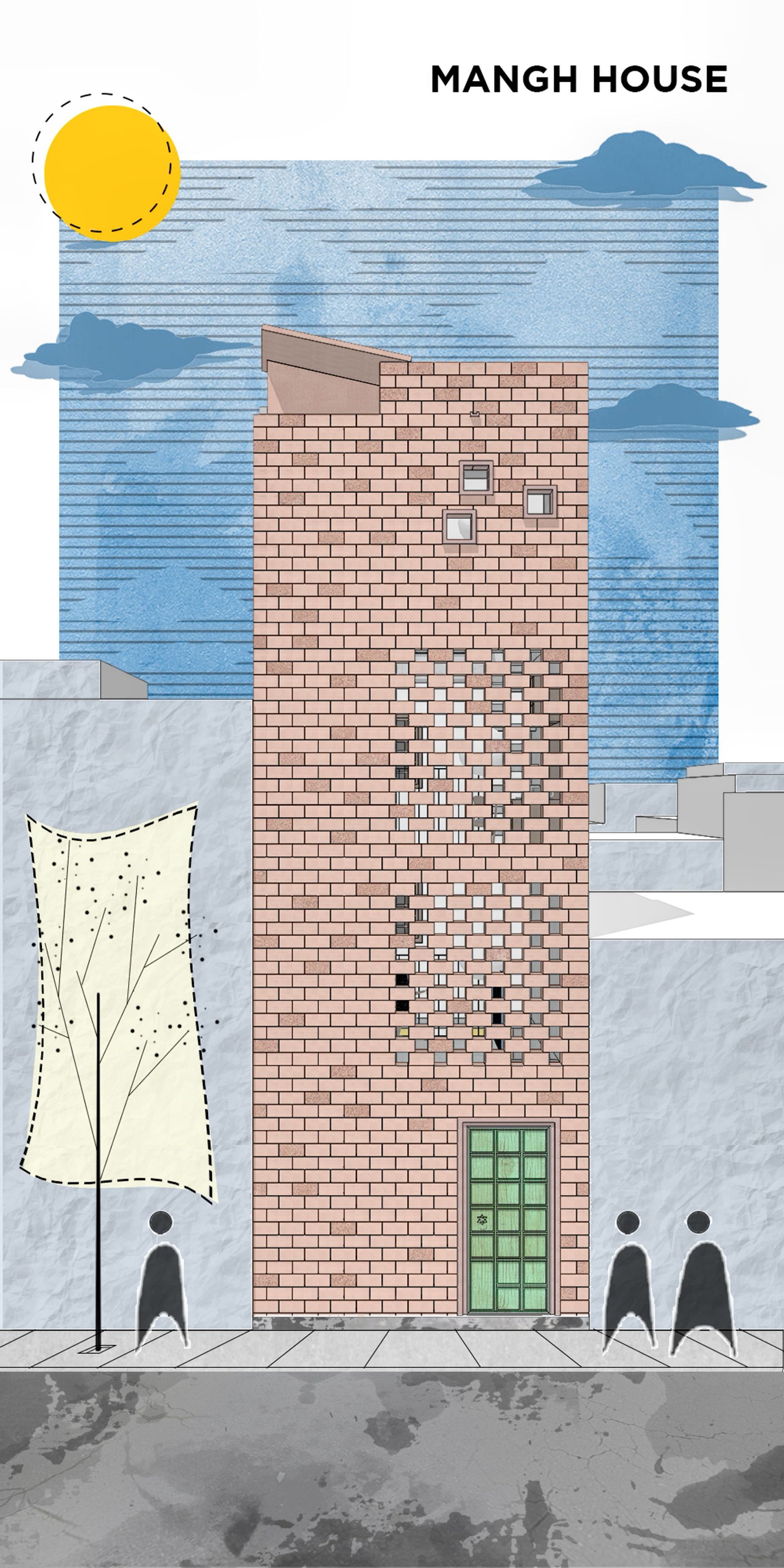
Mangh House: A Climate-Responsive Courtyard Home in Jodhpur's Historic Urban Fabric
Smart Density Meets Vernacular Wisdom: A Climate-Responsive Courtyard Home in Jodhpur’s Historic Urban Core

Project by Harshit Laddha and Niharika Pareek
Honorable Mention | Nano Nest 2020
In the dense, winding lanes of Jodhpur’s historic blue city, Mangh House emerges as a prototype for climate-responsive architecture that respects the past while adapting to the future. Designed for a family of six, this vertical residence reimagines vernacular strategies through a compact footprint, breathing life into an ancestral plot with modern needs.
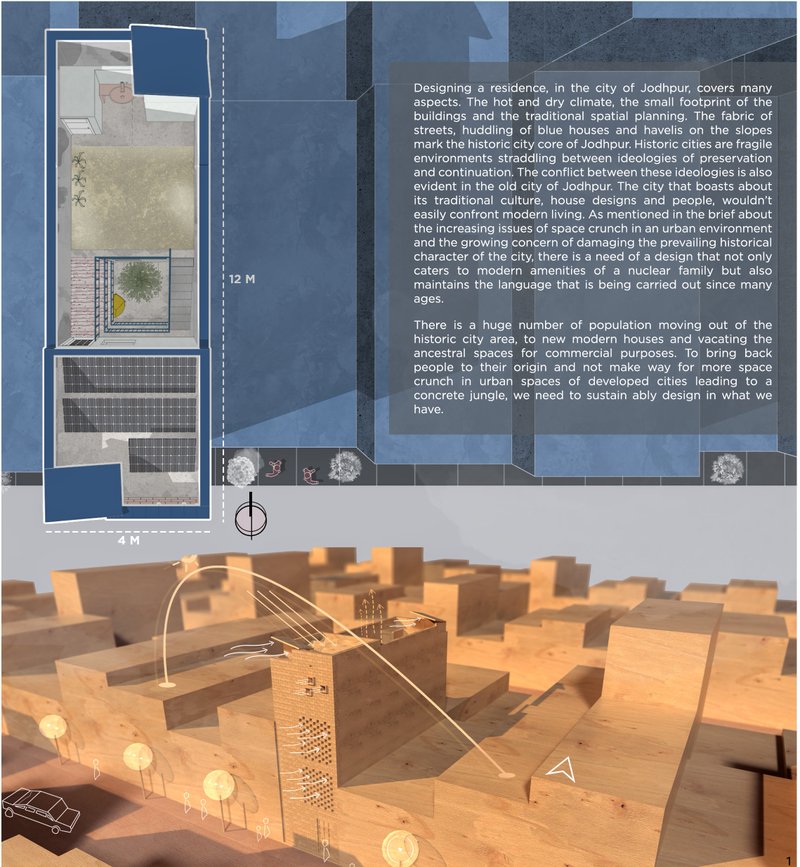
Contextual Heritage Meets Contemporary Constraints
Designing in Jodhpur’s old city is a dialogue between climate, culture, and context. With temperatures regularly soaring above 40°C and a hot-dry desert climate, passive cooling is essential. Additionally, the neighborhood’s compact fabric and socio-cultural traditions demand architectural solutions that maximize space, comfort, and identity without disrupting the historic grain.
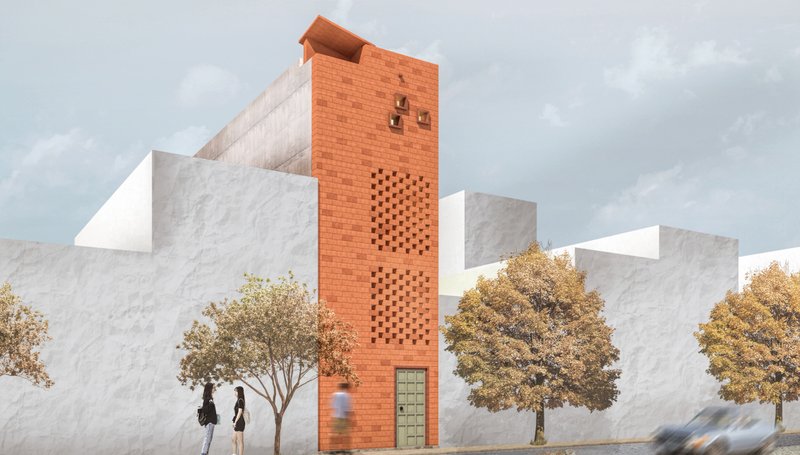
Mangh House respects the scale and texture of its surroundings by incorporating locally sourced stone, narrow facades, and jaali work. It acknowledges the vernacular logic of "living around a tree," with a central courtyard at its core. This age-old typology now serves not just as a gathering point, but as a thermal buffer and ventilation shaft.
A Sectional Strategy for Modern Living
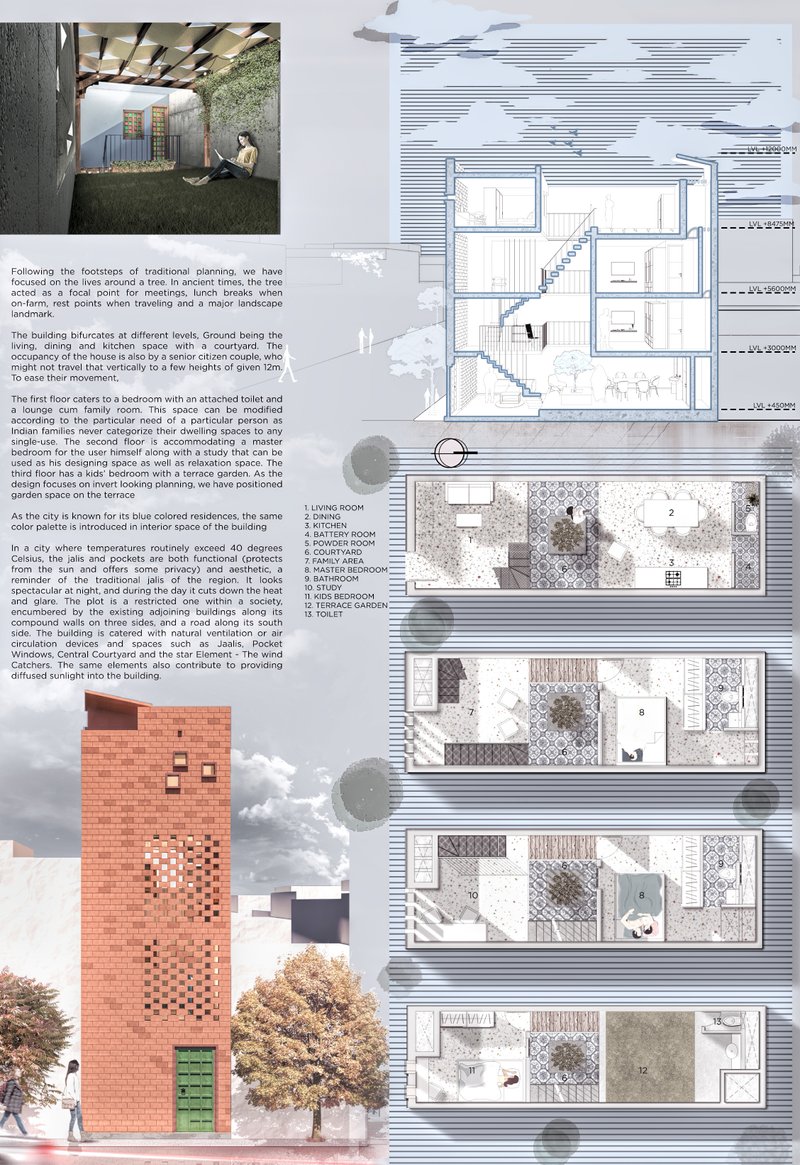
This four-storey dwelling uses verticality as its main design strategy. The spatial program is distributed across multiple levels to cater to different generations and activities:
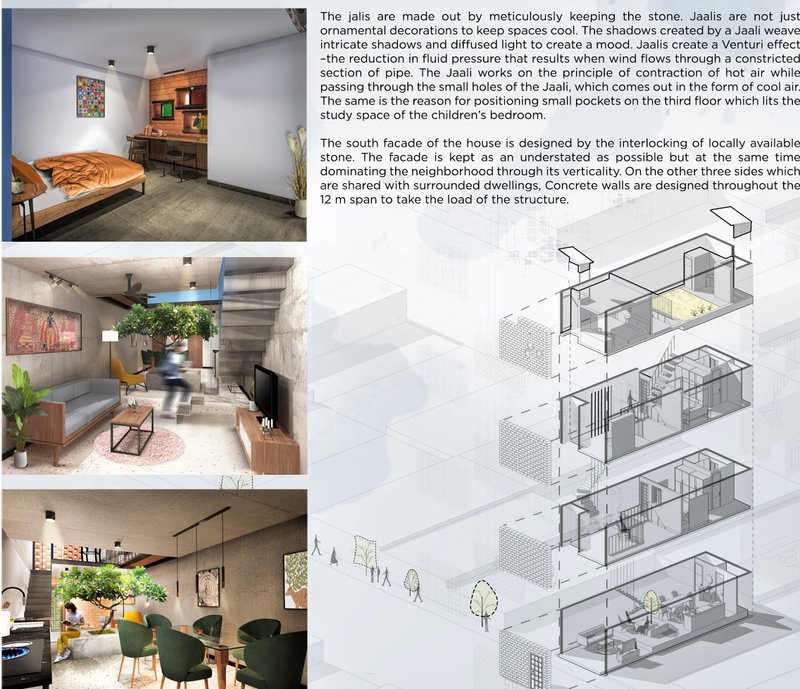
- Ground floor: Living, dining, and kitchen spaces open around a courtyard, accessible for the elderly couple in the household.
- First floor: A bedroom with attached toilet, lounge, and family room — modifiable based on lifestyle.
- Second floor: A master bedroom with a study, creating a hybrid space for work and rest.
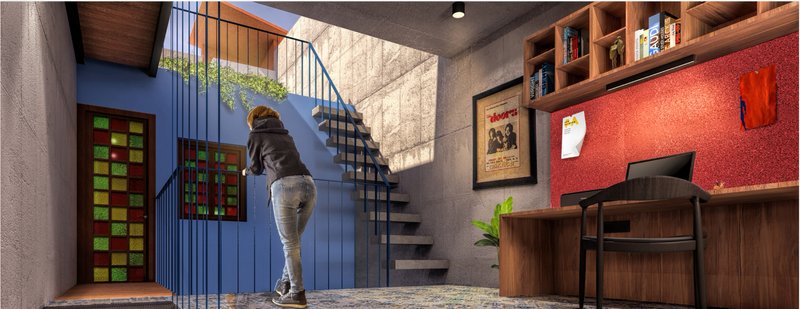
- Third floor: A children’s bedroom with terrace garden, optimizing open space at the top.
Each level is tailored with flexible layouts, reflecting the Indian ethos of multi-generational, multifunctional living. Despite a 4m x 12m footprint, the house feels spacious and fluid through sectional interconnectivity and natural light.
Passive Design Elements: Jaalis, Windcatchers, and Solar Panels
The building employs multiple passive design strategies to adapt to the climate. The meticulously crafted jaalis on the facade perform beyond ornamentation. Their intricate patterns cast diffused light, maintain privacy, and create the Venturi effect — a phenomenon where hot air is expelled through small perforations, inducing cooler airflow inside.
The use of traditional windcatchers (manghs) on the rooftop channels cool southwestern breezes into living spaces. Two such shafts ventilate the bedrooms and lounge, reducing the need for artificial cooling. Meanwhile, solar panels on the roof help power air conditioning systems during peak summer, generating around 200 kWh monthly — approximately 25% of household energy needs.
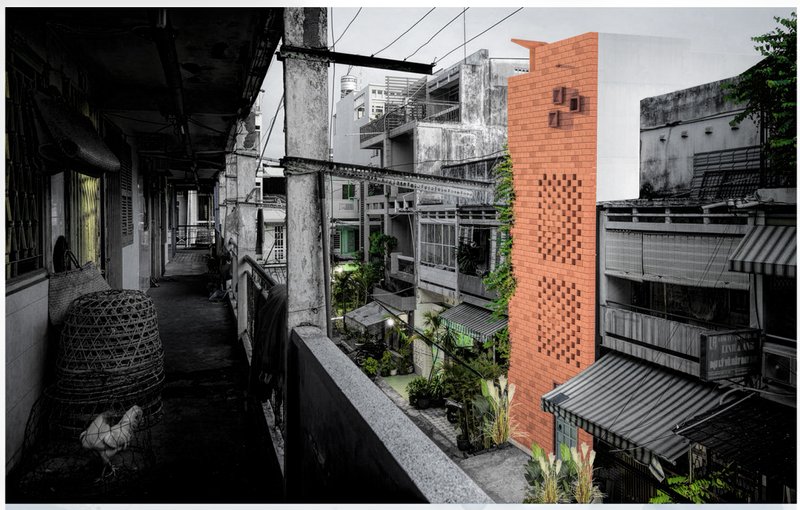
Revitalizing Ancestral Land Through Design
The project arises from the user’s deep roots in Jodhpur. A small-scale handicraft exporter and designer, the homeowner sought to reconnect with his familial neighborhood while balancing work and family life. His daily rhythm — from courtyard tea to small studio work — is embedded in the spatial configuration of the house.
The facade’s minimalism, using interlocked local stone, contrasts with the expressive jaali grid, subtly asserting presence within the urban tapestry. Shared walls on three sides and strategic punctures optimize thermal insulation, light ingress, and privacy.
Rethinking Urban Living Through Sustainable Infill
With rapid migration from historic cores to modern suburbs, projects like Mangh House offer a compelling alternative: urban infill housing that is sustainable, context-aware, and socially rooted. It avoids contributing to the concrete sprawl and instead leverages inherited plots for smarter density.
By synthesizing climate-responsive architecture with traditional wisdom, the project demonstrates how adaptive reuse and spatial ingenuity can help historic cities thrive amidst urban pressures.



Popular Articles
Popular articles from the community

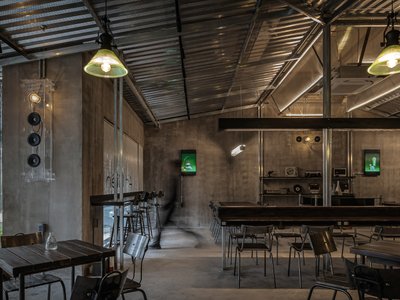
An Miên Lumière Cafe by xưởng xép, Ho Chi Minh City, Vietnam
An industrial-inspired café where layered steel and warm light create a dynamic, immersive environment shaped by reflection, depth, and perception.
On the Brooks House by Monsoon Collective – A Contemporary Kerala Home Rooted in Tradition
Kerala home blending tradition and modernity with water-inspired design, brick architecture, courtyard planning, and sustainable rainwater harvesting strategies.


The Ken Roberts Memorial Delineation Competition (Krob)
As the most senior architectural drawing competition currently in operation anywhere in the world, it draws hundreds of entries each year, awarding the very best submissions in a series of medium-based categories.
Louis Malle Cinema: A Limestone Cultural Landmark Revitalizing Community Life in Prayssac
Limestone cinema extension with public forecourt, blending heritage and modern design to create flexible cultural spaces and strengthen community interaction.

Similar Reads
You might also enjoy these articles
The Ken Roberts Memorial Delineation Competition (Krob)
As the most senior architectural drawing competition currently in operation anywhere in the world, it draws hundreds of entries each year, awarding the very best submissions in a series of medium-based categories.


Waterfront Redevelopment and Urban Revitalization in Mumbai: Forging a New Dawn for Darukhana
A transformative waterfront redevelopment project reimagining Darukhana’s shipbreaking heritage into an inclusive urban future.

OUT-OF-MAP: A Call for Postcards on Feminist Narratives of Public Space
Rhizoma Design and Research Lab invites artists, designers, architects, researchers, and students to reflect on how feminist perspectives can reshape public space. Selected works will be exhibited in Barcelona, October 2026. Submissions open until 15 April 2026.


Documentation Work on Buddhist Wooden Temple
Architectural syncretism and cultural hybridity: A comparative study of the Buddhist temples in Chattogram Hill tracks

Explore Housing Competitions
Discover active competitions in this discipline





Comments (0)
Please login or sign up to add comments
No comments yet. Be the first to comment!