

Nordøstmager School: A New Paradigm for Educational Architecture
Exploring Nordøstmager School's innovative design, integrating educational spaces with community engagement in Copenhagen's urban landscape.


Unveiling an Innovative Learning Environment in Copenhagen
Nordøstmager School, designed by Christensen & Co Architects, is a beacon of modern educational architecture in Copenhagen, Denmark. Spanning an impressive area of 11,500 m² and completed in 2023, the school embodies a forward-thinking approach to educational spaces, prioritizing flexibility, community integration, and innovative learning environments.


Architectural Vision: Beyond Walls
A Seamless Integration with the City
At the heart of Nordøstmager School's design is the desire to meld the school with its urban surroundings, creating a space that is both open and inviting. The architects have achieved this through the strategic placement of leisure zones and outdoor staircases that not only connect the school to the city but also serve as communal gathering points. These areas, functioning as both seating plateaus and workout spaces, encourage interaction between the school and the wider community.


The Leisure Zone: A Community Hub
The leisure zone epitomizes the school's ethos of learning intertwined with community life. This space, woven into the urban fabric, invites passersby to engage with the school, fostering a sense of belonging and interaction. The zone's multifunctionality highlights the school's role as a communal architecture, blending educational purposes with community use.


Interior Design: A New Learning Landscape
Flexibility and Movement
The interior design of Nordøstmager School is characterized by its flow and versatility, embodying a contemporary understanding of learning spaces. The ground floor, home to the playing zone and open auditorium, exemplifies the integration of movement and flexibility within the school's architecture. This approach facilitates a dynamic learning environment, where spaces are adaptable to various educational activities.


The City Garden: An Urban Oasis
Above the hustle and bustle of city life, the school's exterior stairs lead to a city garden, a tranquil space where the community can enjoy nature amidst the urban landscape. This area, equipped with playsets and climbing walls, offers an escape for both children and adults, symbolizing the school's commitment to providing a holistic educational experience.


A Hub for After-School Activities
Nordøstmager School transcends traditional educational boundaries by doubling as a center for after-school activities. The ground floor houses facilities for a wide range of pursuits, including a gymnasium, workshops, maker spaces, and an auditorium. This multipurpose design ensures that the school remains a vibrant social environment beyond school hours, catering to the entire community.


The Unifying Staircase: A Symbol of Connectivity
At the core of the school's design is a unifying staircase, bathed in natural daylight, which connects the various levels of the building. This architectural feature not only facilitates physical movement but also represents the school's philosophy of connectivity and openness. By situating younger pupils away from the busy streets, the school ensures a safe and nurturing environment for all.
Nordøstmager School by Christensen & Co Architects stands as a testament to the evolving landscape of educational architecture. Through its innovative design and community-focused approach, the school redefines the parameters of learning environments, offering a blueprint for future educational facilities. As educational architecture continues to embrace flexibility, community integration, and innovative design, Nordøstmager School will undoubtedly serve as an inspiration for architects and educators alike.


All photographs are work of Niels Nygaard


Popular Articles
Popular articles from the community

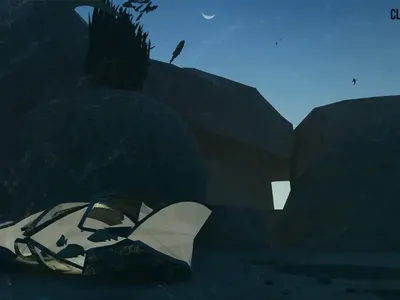
Cloaked Colonization: A Mobile Underwater Habitat That Moves Like a Fish
Micah Abaya's shortlisted EHC Pacific entry reimagines ocean settlement as a dispersed network of self-sustaining architectural organisms.

The Amber Palace Opera: A Geological Fiction Surfaces on Tallinn's Baltic Waterfront
Pierre Brillard reimagines a Baltic legend as a public landscape, opera house, and waterfront promenade rooted in Tallinn's coastal identity.
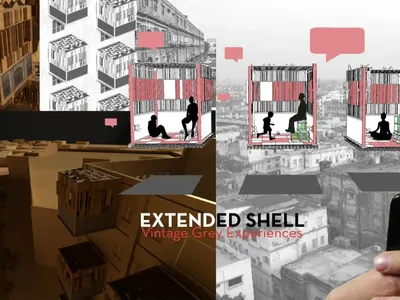
Extended Shell: Retrofitting Kolkata's Balconies as Living Urban Thresholds
A modular retrofit system recovers the social and environmental intelligence of Kolkata's historic verandas for contemporary Park Street residents.
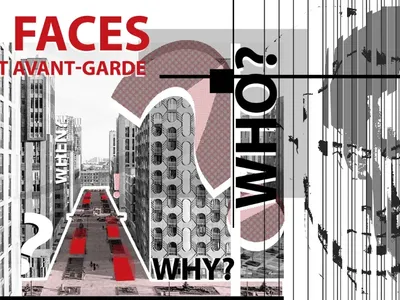
Faces of the Soviet Avant-Garde: Turning Moscow's Street Names into an Open-Air Museum
A network of sculptural installations across a Moscow residential district transforms forgotten architect names into spatial encounters with cultural memor

Similar Reads
You might also enjoy these articles


Hodi-Mandai Geram
Project Function: Preservation and revitalization of the Intangible heritage and socio-spatial identity of the Hodi by Housing, Cultural Memory Center, Sacred Grove, landscape, local tourism economy


Olio Towers: A Mid-Rise for Performers That Fuses Housing, Rehearsal, and Stage
Located blocks from Houston's Theater District, this modular tower stacks living units around a central performance atrium.

Oasis: Modular Green Housing Carved into Dhaka's Urban Fabric
A shortlisted Plugin Housing entry reclaims unauthorized settlements in Dhaka with stepped concrete volumes, green roofs, and ventilation-driven design.

Black Hole: A Floating Megastructure for the Post-Physical Era
Emiliano Mazzarotto envisions a spherical, self-scaling arena where e-sports, digital hotels, and holographic stadiums replace traditional public space.

Explore Nordic Sustainable Architecture Competitions
Discover active competitions in this discipline

Challenge to reimagine the Iron Throne

Photograph architecture without architects

Illustrate the lost glory of Angkor Wat - Render Challenge

Design challenge to reuse E-waste
Comments (0)
Please login or sign up to add comments
No comments yet. Be the first to comment!