
Of Trees and Gods and Mud: A Celebration of Vernacular Mud House Architecture in Kerala
A soulful Kerala home using vernacular mud architecture to embody trees, gods, memory, and sustainable slow living.

A House Rooted in Sacred Land and Cultural Memory
In the sacred backwaters of Paravur, Kochi, a new home by Urava Architecture redefines the possibilities of vernacular mud house architecture. Completed in 2025 and spanning 1800 square feet, this house is more than a dwelling—it is a tribute to land, mythology, and the timeless connection between people and nature. Titled Of Trees and Gods and Mud, the home evokes Kerala’s deep spiritual and ecological sensibilities through its materiality, form, and lived experience.
Architecture in Dialogue with Trees
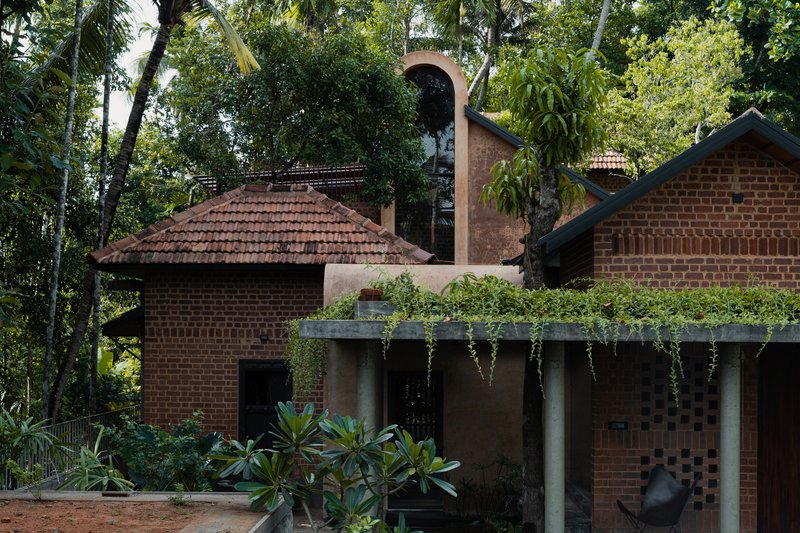
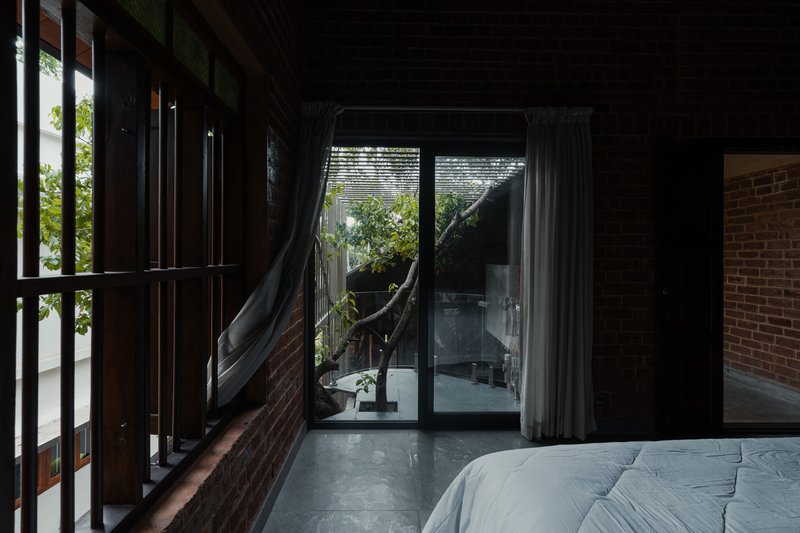
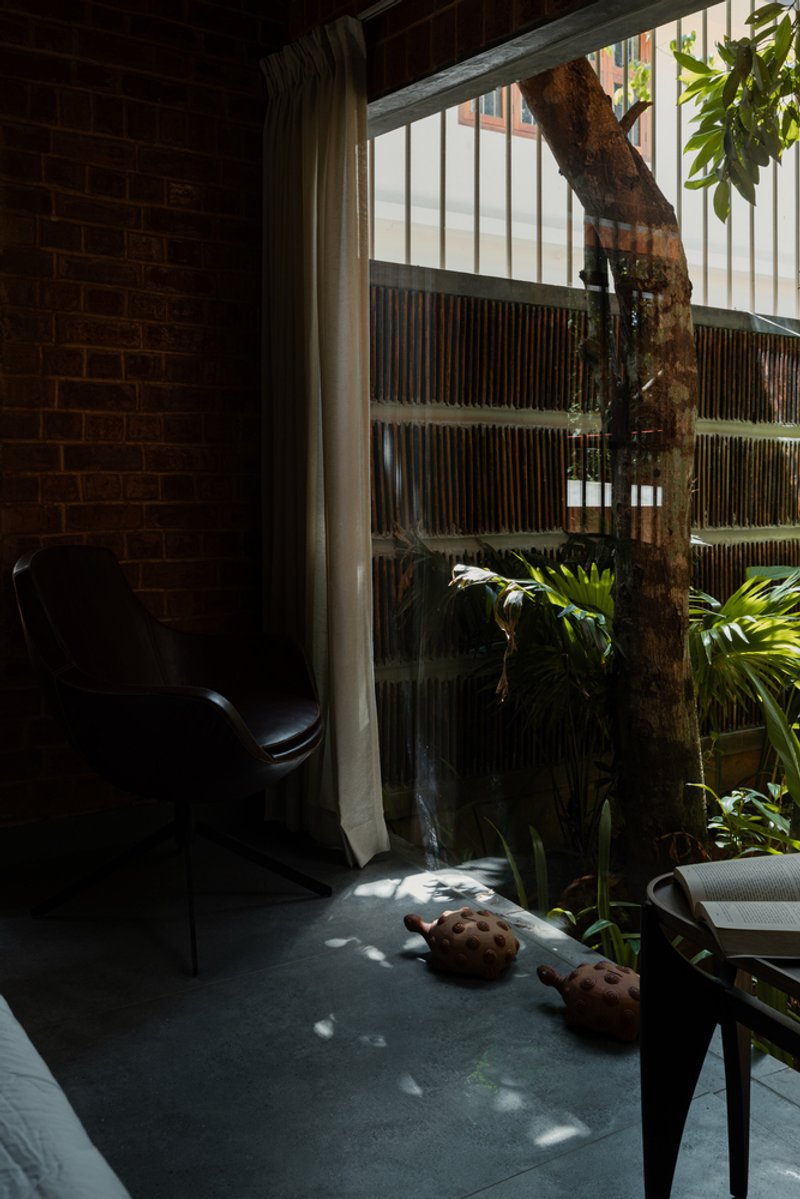
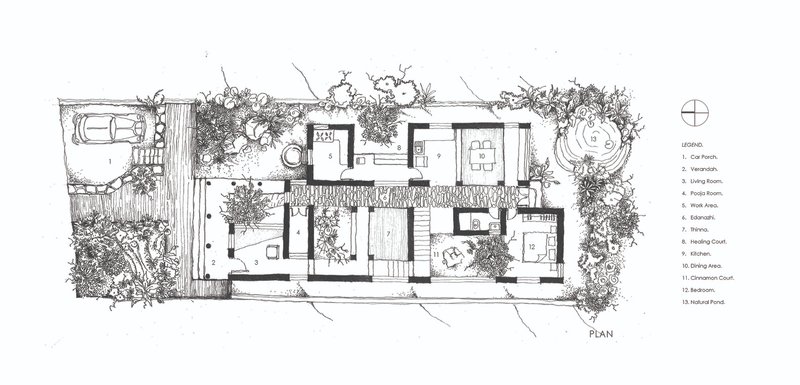
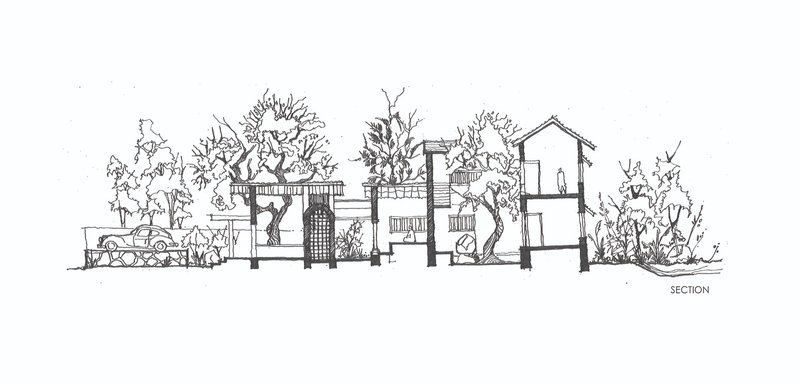
Four trees define the spatial organization of the home, with architecture carefully composed around their presence. The first—a medicinal Kuruttu Pala—guides the entry sequence. A Mango tree anchors the sit-out, where water, seating, and shade come together. A Cinnamon tree has been incorporated into the central staircase, its branches extending into the bedroom balcony above. Another Mango tree shapes a verandah for everyday life—where traditional activities like cutting jackfruit and tapioca unfold. In this home, trees are not landscaping—they are ancestors, protectors, and co-habitants. This reverence for flora is fundamental to the soul of the design.
Sacred Geometry and Symbolism in Everyday Life
Spirituality is embedded into every architectural gesture. The design draws inspiration from Kerala’s ‘Kaavus’—sacred groves—and nearby temples. Stone lintels echo temple passages. Two brick vaults rise like miniature temple towers or 'Gopurams', referencing mountains in Indian cosmology. A long central passage, the "Idanaazhi", represents the spiritual path of life. Even the humble tortoise—found at a nearby pond—emerges as a recurring motif, reminding us of myths where the tortoise carries the world. This architectural language blends daily ritual with cosmic symbolism, allowing everyday life to flow with spiritual presence.
A Home Built with Earth, for the Earth
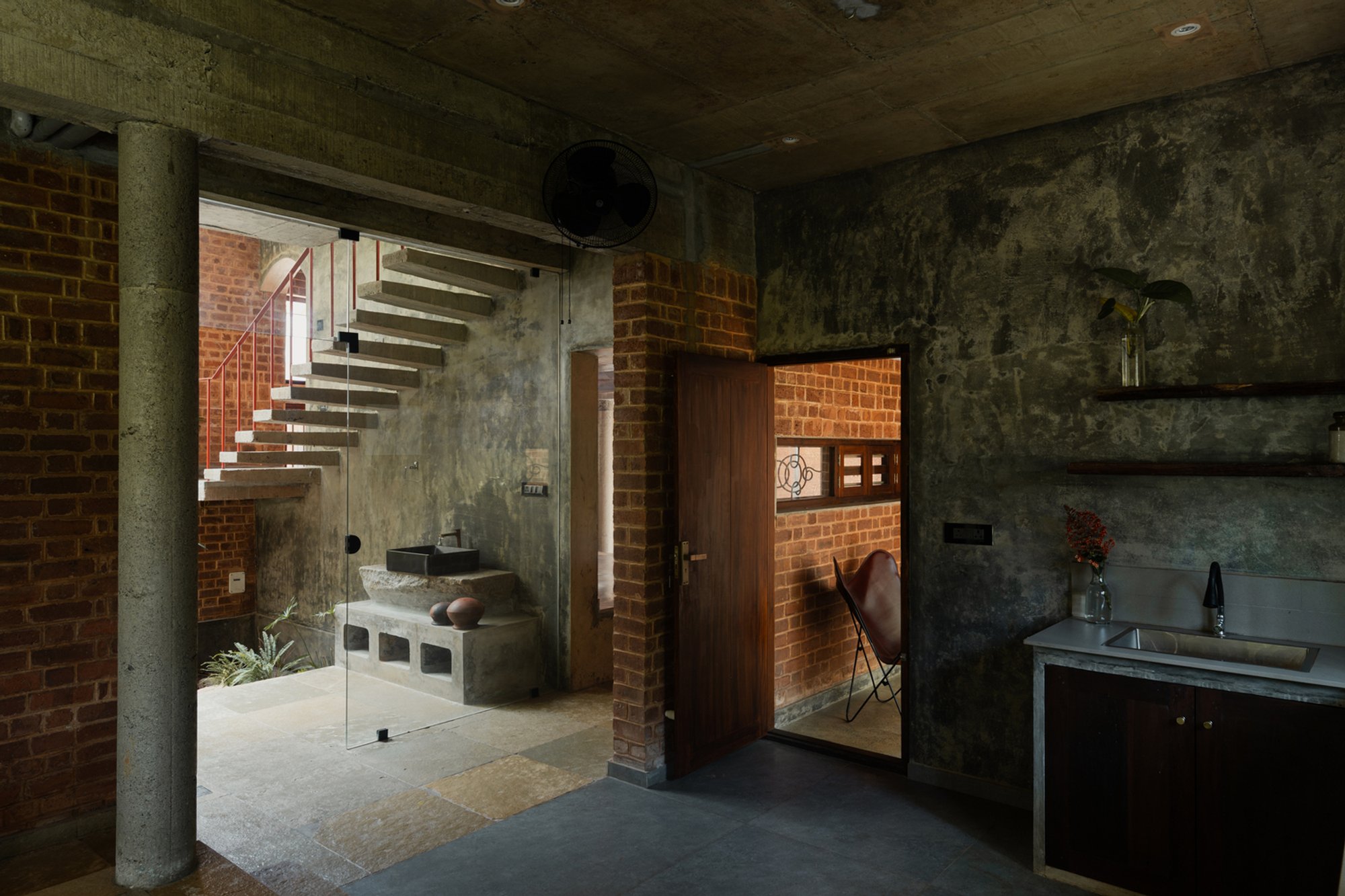
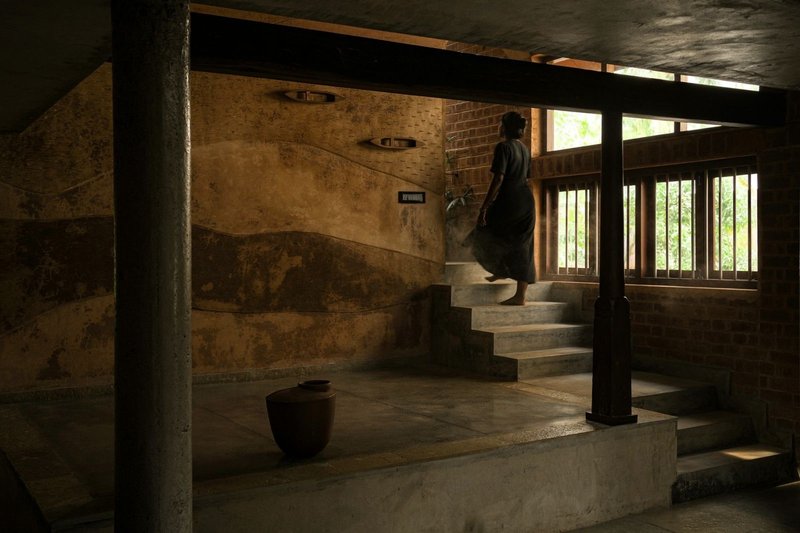
The house is a masterclass in vernacular mud house architecture, utilizing stabilized mud plaster, filler slabs with mud bricks, and reclaimed stone and wood. The exterior breathes with earthen warmth, rejecting chemical-laden finishes for natural oxide plasters. A handcrafted mud mural beside the traditional ‘Thinna’ platform narrates Paravur’s aquatic history, abstracting its backwaters and ancient trade routes. This mural, made with native soils, is more than ornament—it is cultural storytelling in raw material.
Circular Living Through Adaptive Reuse
Rather than sourcing new materials, the architects embraced circularity. Large stone blocks—reclaimed from demolished ancestral homes—are repurposed into furniture and in-built elements. Wood, too, is salvaged and reimagined. The result is a home with soul—one that remembers, respects, and reincarnates history through architecture. This approach not only reduces the building’s carbon footprint but also weaves memory into the materiality.
A Space Designed for Slow Living and Growing Up
Conceived for a family with working parents and a young child, the home supports a lifestyle centered on health, imagination, and slow living. By avoiding toxic materials and creating naturally ventilated, light-filled spaces, the architects prioritize wellness. Varied ceiling heights—from 8 to 15 feet—shape moods, mark transitions, and create sensory richness. Raised platforms allow for flexible, wall-free zones for family rituals and daily life. In every corner, the home nurtures memory, imagination, and connection to place.
Reclaiming Vernacular Wisdom for Contemporary Living
Of Trees and Gods and Mud stands as a poetic and practical reimagining of vernacular mud house architecture. It doesn’t merely revive old techniques—it evolves them into a deeply personal, ecological, and spiritual architecture. This is not nostalgia—it is a living narrative, where ancient belief systems, ecological intelligence, and intimate design coalesce into one holistic experience. In every wall of mud, in every carved stone, in every leaf that brushes a window, the house tells a quiet story—a story of Kerala, of Earth, of faith, and of family.
All Photographs are works of Marc Frames


Popular Articles
Popular articles from the community

A Contemporary Take on Iranian Residential Architecture
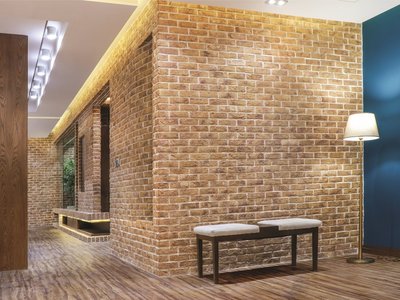
A modern interior design in Mashhad that reinterprets brick, light, and spatial flow to create a warm, contemporary residential architecture.
Flamboyant House by Juliana Camargo + Prumo Projetos
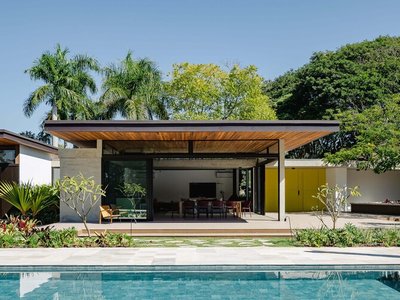
Modern Brazilian house integrating existing tree, pool, and volumes with glass, wood, and transitional spaces blending interior, exterior, and landscape seamlessly.
Solar Steam: A Climate-Responsive Architecture That Redefines the Monument
A climate-responsive memorial architecture that transforms heat, decay, and time into a living system reflecting humanity’s ecological impact.
Treehouse Apartment: A Warm Timber Interior Blending Craft, Play, and Contemporary Living
Warm timber apartment with integrated treehouse, combining natural materials, craftsmanship, and playful design to create a flexible, family-oriented living environment.

Similar Reads
You might also enjoy these articles


The Ken Roberts Memorial Delineation Competition (Krob)
As the most senior architectural drawing competition currently in operation anywhere in the world, it draws hundreds of entries each year, awarding the very best submissions in a series of medium-based categories.

Waterfront Redevelopment and Urban Revitalization in Mumbai: Forging a New Dawn for Darukhana
A transformative waterfront redevelopment project reimagining Darukhana’s shipbreaking heritage into an inclusive urban future.
OUT-OF-MAP: A Call for Postcards on Feminist Narratives of Public Space
Rhizoma Design and Research Lab invites artists, designers, architects, researchers, and students to reflect on how feminist perspectives can reshape public space. Selected works will be exhibited in Barcelona, October 2026. Submissions open until 15 April 2026.

Documentation Work on Buddhist Wooden Temple
Architectural syncretism and cultural hybridity: A comparative study of the Buddhist temples in Chattogram Hill tracks
Explore Architecture Competitions
Discover active competitions in this discipline




The International Standard for Design Portfolios


The Global Benchmark for Architecture Dissertation Awards


The Global Benchmark for Graduation Excellence


Challenge to reimagine the Iron Throne
Comments (0)
Please login or sign up to add comments
No comments yet. Be the first to comment!