
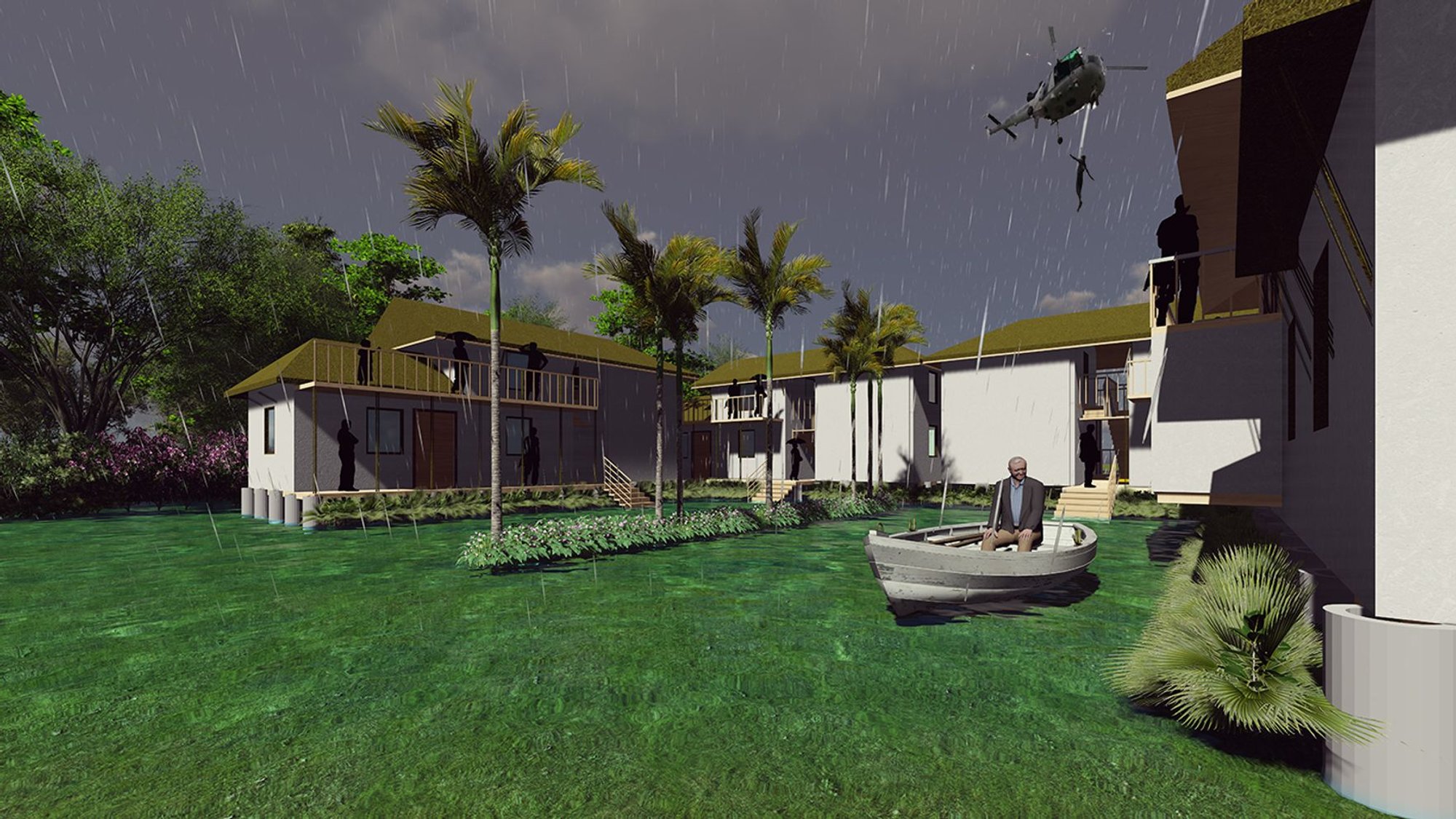
Plug & Spread Housing: Flood-Resilient Architecture for Kerala’s Future
Building flood-resilient architecture in Kerala through sustainable, adaptive, and community-centered housing solutions for a safer future.

Natural disasters continue to reshape lives and environments across the world. According to UNISDR, more than 600,000 people have lost their lives in the 21st century alone due to disasters, with countless more displaced. The devastating 2018 floods in Kerala, India, destroyed thousands of homes, displacing families and exposing the urgent need for flood-resilient architecture. Addressing this challenge, architects Prachi Metawala and Isha Deshpande developed the Plug & Spread Housing model, a regenerative commune designed specifically for flood-affected households in Kerala.
Shortlisted entry of HEAL+
The Concept: Plug & Spread Housing
The Plug & Spread approach redefines post-disaster housing solutions. It is built around the Plug House—a modular, elevated housing unit designed to withstand floods and adapt to different contexts. Rather than treating housing as isolated units, this model creates a community-oriented system of shared infrastructure, sustainable living practices, and adaptive design.
Key features include:
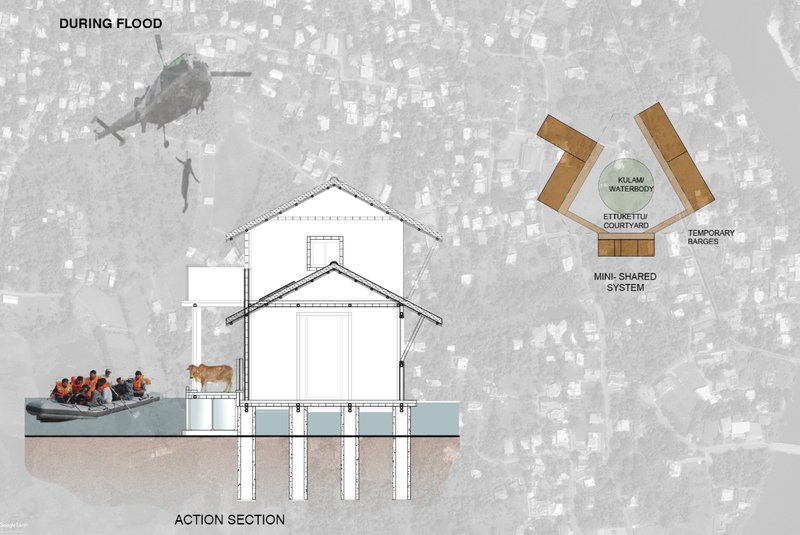
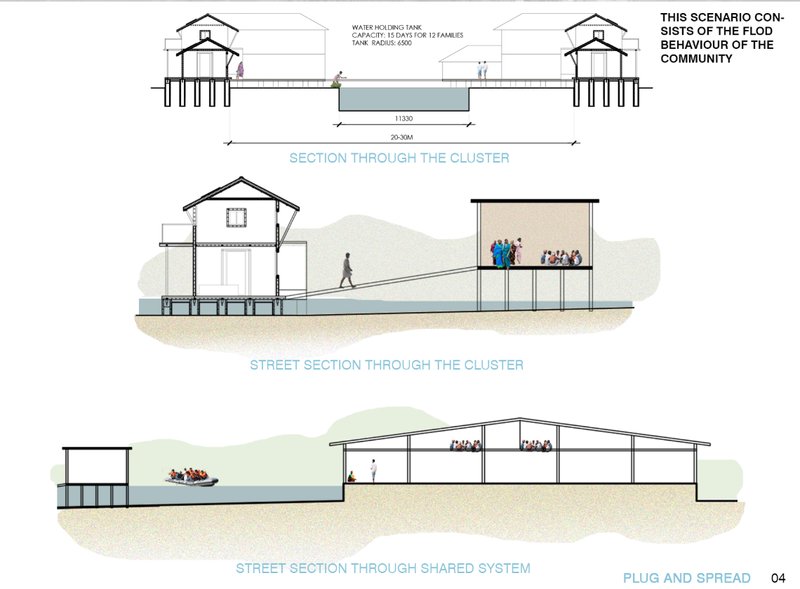
- Raised Structures: Built on stilts, allowing water to flow underneath during floods.
- Shared Systems: Communal spaces, bamboo-structured warehouses, and cooperative building workshops for resilience and social integration.
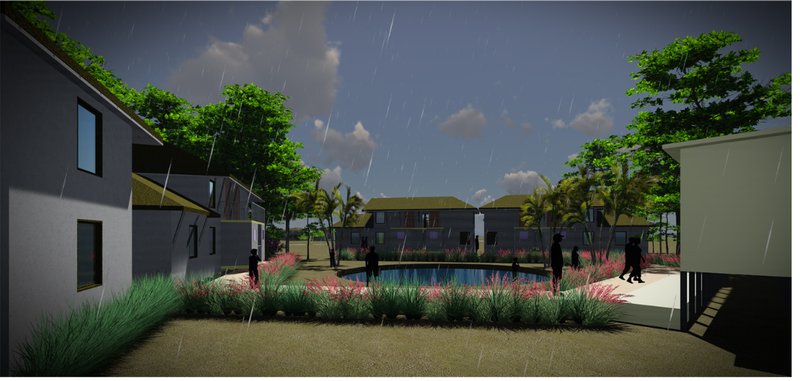
- Plug Points for Sustenance: Phytoremediation ponds, floating farms, and biogas plants integrated into neighborhoods for food and energy security.
- Mitigative Landscaping: Bamboo and mangrove plantations that reduce environmental vulnerability and restore ecological balance.
Action Plan for Resilient Communities
The proposal is designed as a phased regeneration plan:
- Action Plan 1 (2019–20): Immediate replacement of destroyed homes with Plug Houses, while partially damaged houses are strengthened using low-cost debris wall repairs.
- Action Plan 2 (2020–21): Expansion of the shared system to meet the community’s construction and disaster resilience needs.
- Action Plan 3 (2025–26): Fully developed clusters of Plug Houses, integrated with shared infrastructure, ensuring long-term resilience and self-sufficiency.
This staged growth ensures that communities rebuild not just houses, but also sustainable social and ecological systems.
Sustainable Materials and Local Resources
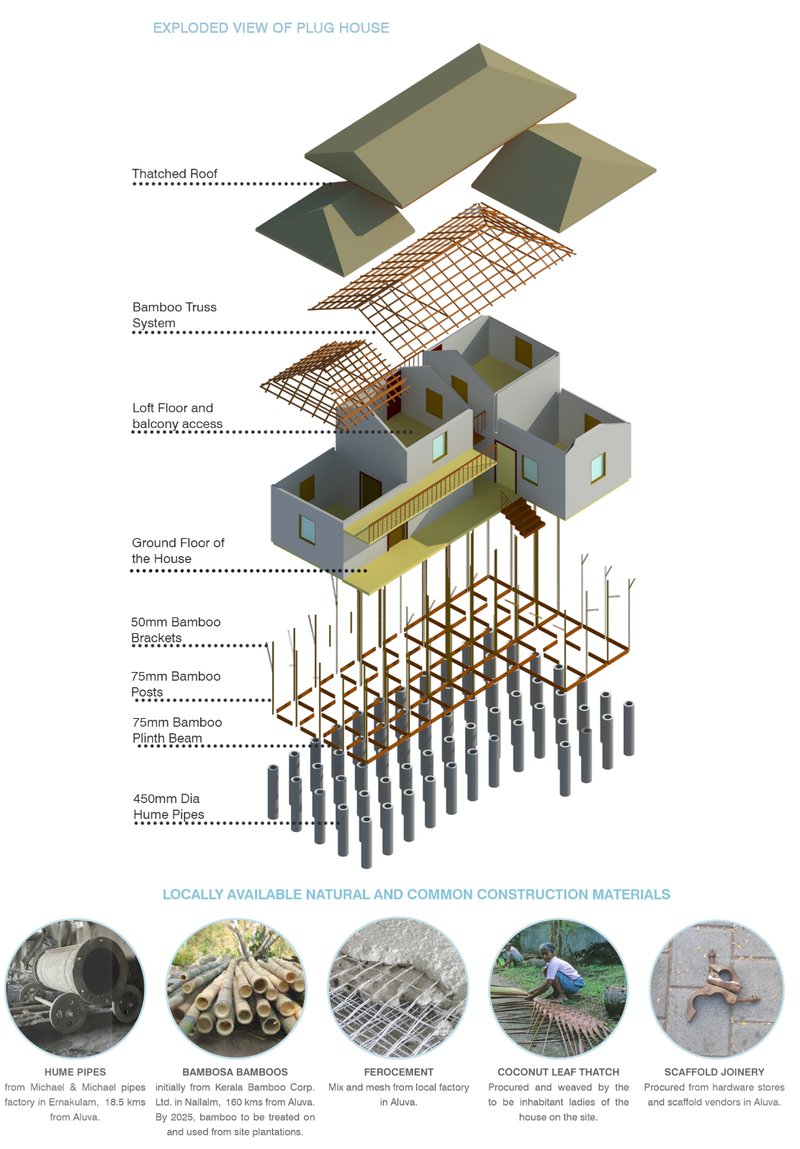
A central principle of the project is vernacular architecture—design that respects local culture, climate, and materials. The Plug House incorporates:
- Bamboo truss systems and posts for structural stability.
- Hume pipes for pile foundations.
- Ferrocement walls reinforced with wire mesh for durability.
- Coconut leaf thatch and locally procured scaffolding materials.
These elements are affordable, accessible, and environmentally responsible, making the Plug House replicable across flood-prone regions.
Architectural Design of the Plug House
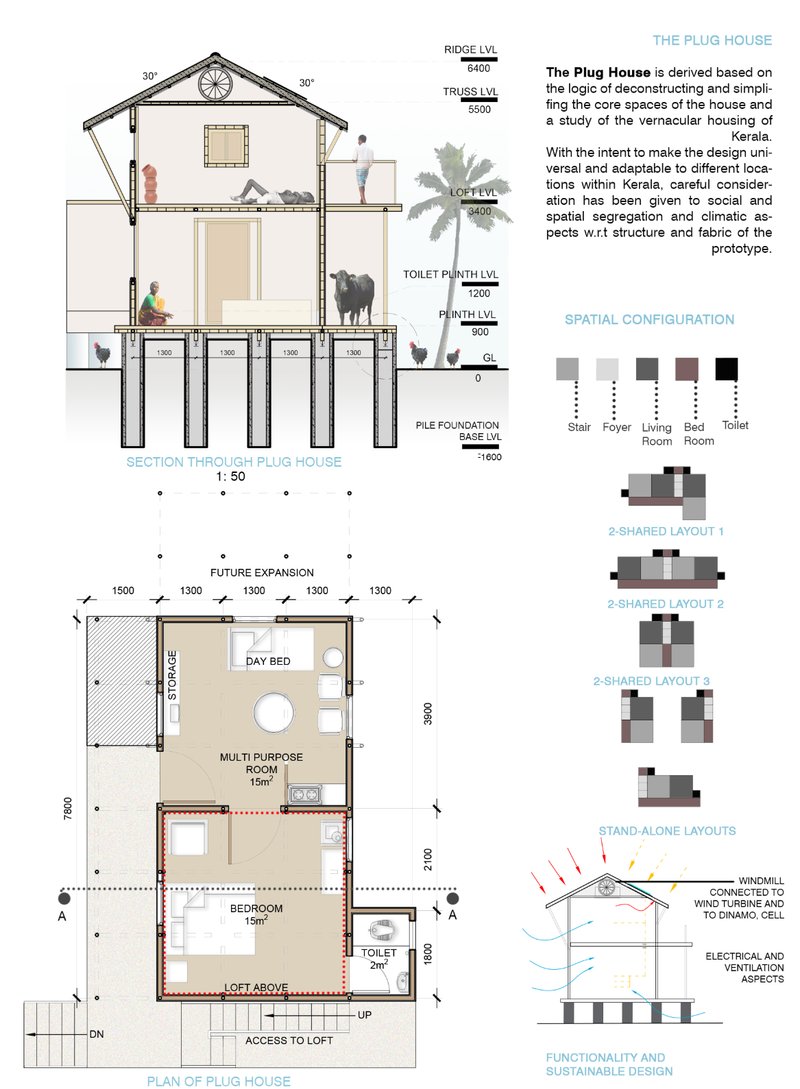
The Plug House embodies simplicity and adaptability:
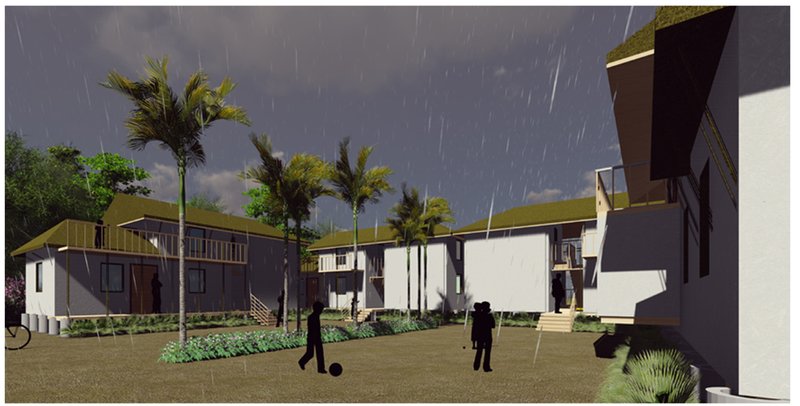
- Core Living Unit: A multipurpose ground floor, bedroom, loft, and basic sanitation.
- Flexibility: Modular layouts allow expansion into clusters or shared community structures.
- Climate Responsiveness: Natural ventilation, raised plinths, and integration with renewable energy systems such as wind turbines and solar energy.
- Flood Safety: Elevated structures protect residents while offering safe storage and livestock accommodation.
Community-Centered Resilience
More than just architecture, Plug & Spread is about building communities. Shared systems strengthen social bonds, cooperative construction empowers locals, and ecological interventions ensure long-term adaptability. The design integrates housing with collective sustenance strategies, turning vulnerable households into resilient neighborhoods.
The Plug & Spread Housing project is a forward-looking example of sustainable and flood-resilient architecture. By combining vernacular building wisdom, local resources, and adaptive strategies, it not only addresses disaster recovery but also sets a precedent for resilient urban and rural futures. As climate change continues to intensify natural disasters, such community-driven, regenerative housing models will play a vital role in safeguarding lives and livelihoods.



Popular Articles
Popular articles from the community


Solar Steam: A Climate-Responsive Architecture That Redefines the Monument
A climate-responsive memorial architecture that transforms heat, decay, and time into a living system reflecting humanity’s ecological impact.
Inverted Architecture Installation by Studio Link-Arc: Exploring the Intersection of Architecture and Living Organisms
Inverted Architecture Installation by Studio Link-Arc blends mycelium, sustainability, inverted design, ecological cycles, and urban adaptive architecture in Shenzhen.
Gads Hill Early Learning Center by JGMA: Adaptive Reuse Shaping Community-Focused Educational Architecture
Adaptive reuse transforms fragmented structure into vibrant early learning center with playful façade, natural light, and community-focused sustainable design.
A Contemporary Take on Iranian Residential Architecture
A modern interior design in Mashhad that reinterprets brick, light, and spatial flow to create a warm, contemporary residential architecture.


Similar Reads
You might also enjoy these articles

Digital Façade Design for our cities’ urban fronts
Prima Facie - Result Story
Protecting avian biodiversity: Bird observatories to help spread awareness & save rare bird species.
Results for ‘Fly’ - Landscape design competition out now
Connecting with nature: Forest interpretation center in Australia's Wollemi National Park
‘Asatti’ - Landscape design competition - Result story
Explore Low Cost Design Competitions
Discover active competitions in this discipline





Comments (0)
Please login or sign up to add comments
No comments yet. Be the first to comment!