
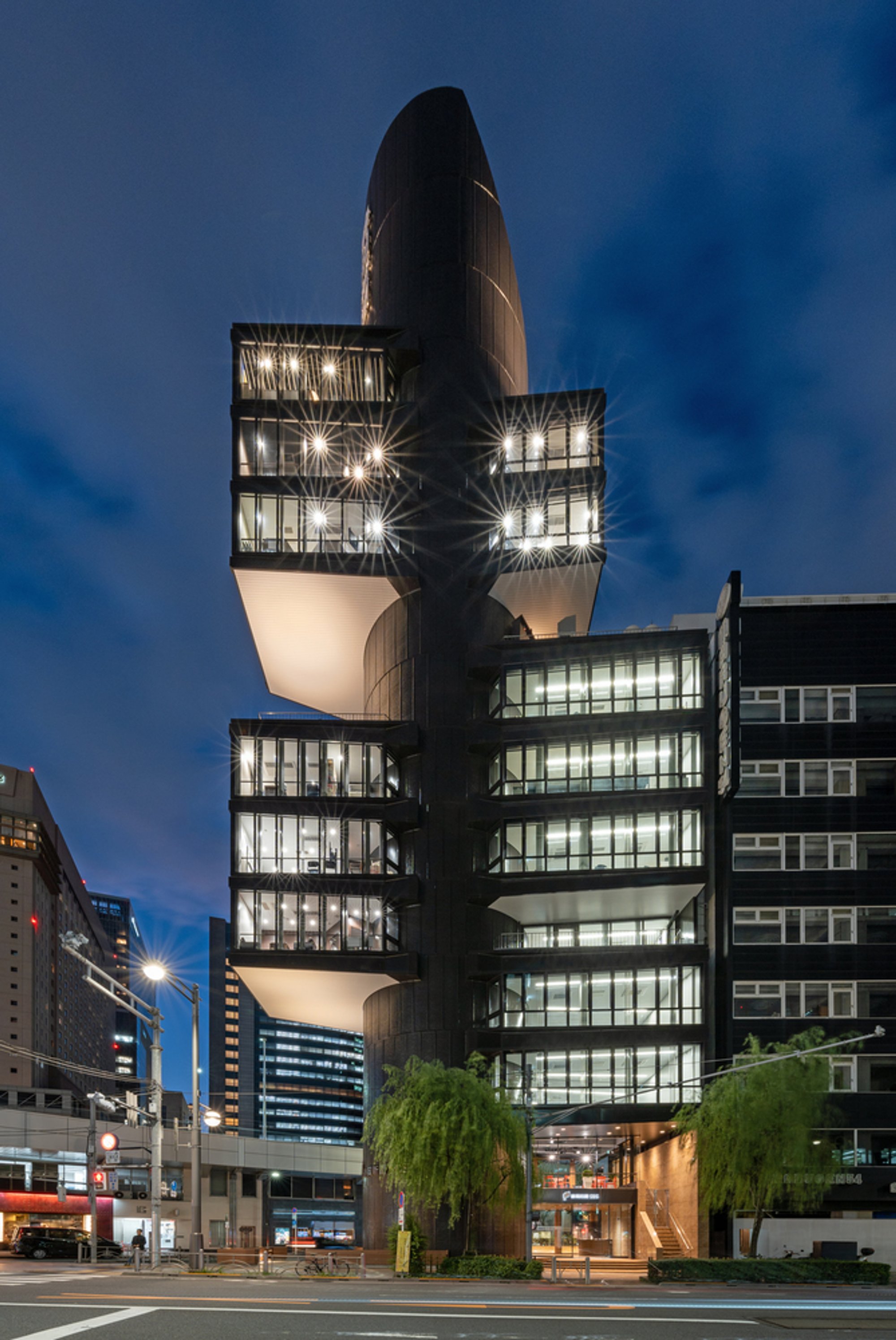
TAISEI DESIGN Renovates Kenzo Tange's Iconic Metabolism Tower in Ginza Without Losing a Single Cantilever
A seismic retrofit and interior overhaul breathe new life into the 1967 Shizuoka Shimbun Tokyo Branch Office on its triangular Ginza site.

Few buildings in Tokyo communicate an architectural idea as bluntly as the Shizuoka Shimbun Tokyo Branch Office. Kenzo Tange designed it in 1967 as a literal diagram of Metabolism: a 57-meter cylindrical concrete core, 7.7 meters in diameter, with thirteen office modules cantilevered outward in asymmetric clusters. The core carries stairs, two elevators, kitchens, and bathrooms. The boxes carry the program. The whole thing sits on a 189-square-meter triangular plot hemmed by traffic arteries and the Tokaido express rail line, a compressed site that made the vertical stacking strategy not just poetic but necessary.
Fifty-five years later, TAISEI DESIGN Planners Architects & Engineers completed a renovation that reads less as a transformation and more as a careful act of forensic care. The 2022 project asked a deceptively simple question: what do you keep, what do you fix, and how do you record everything before you touch it? The answer involved carbon fiber reinforcement, 3D scanning, paint archaeology, and a full interior refresh, all threaded through the constraint that the building's singular silhouette could not be altered. The result is a tower that performs to contemporary seismic and accessibility standards while looking, from the street, almost exactly as Tange intended.
The Metabolism Silhouette, Intact
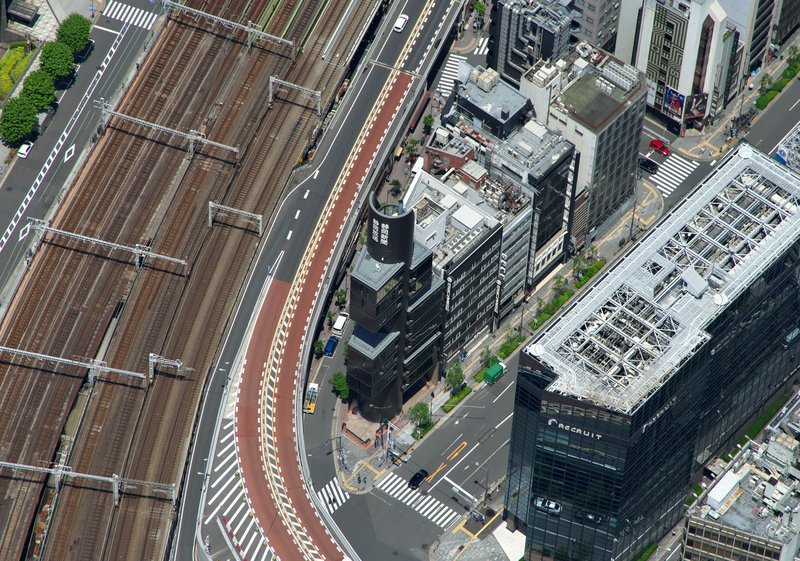
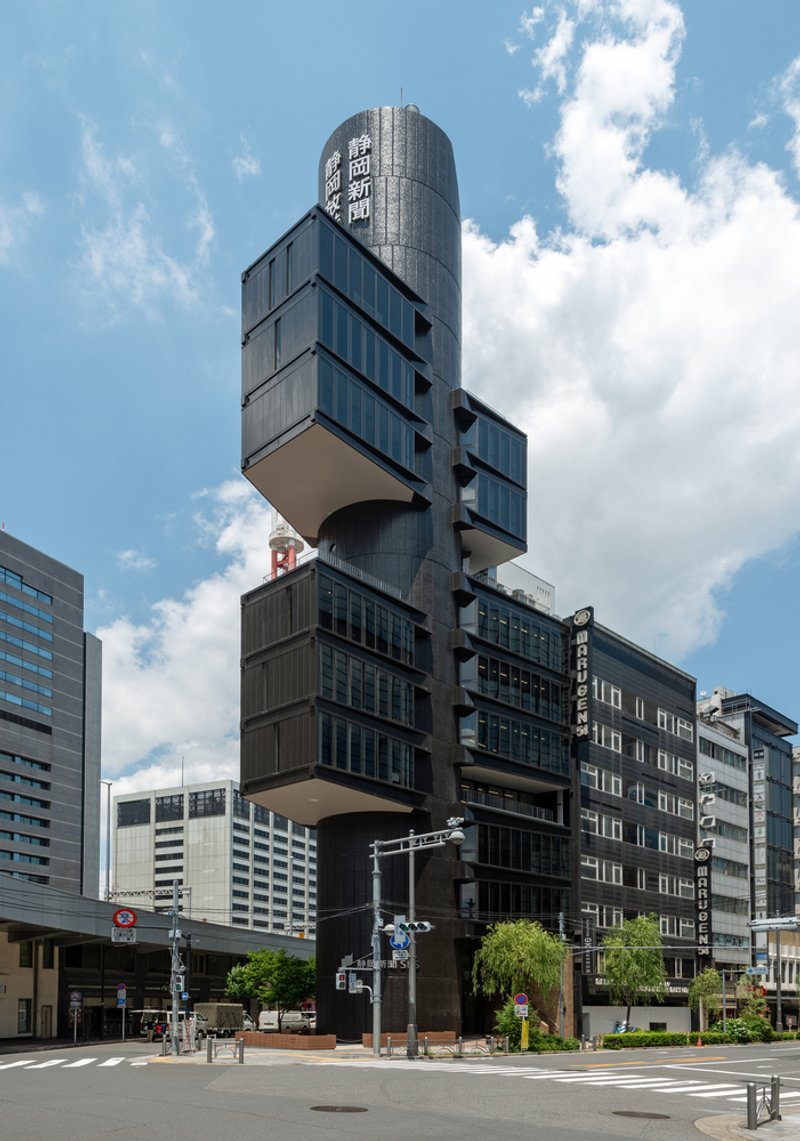
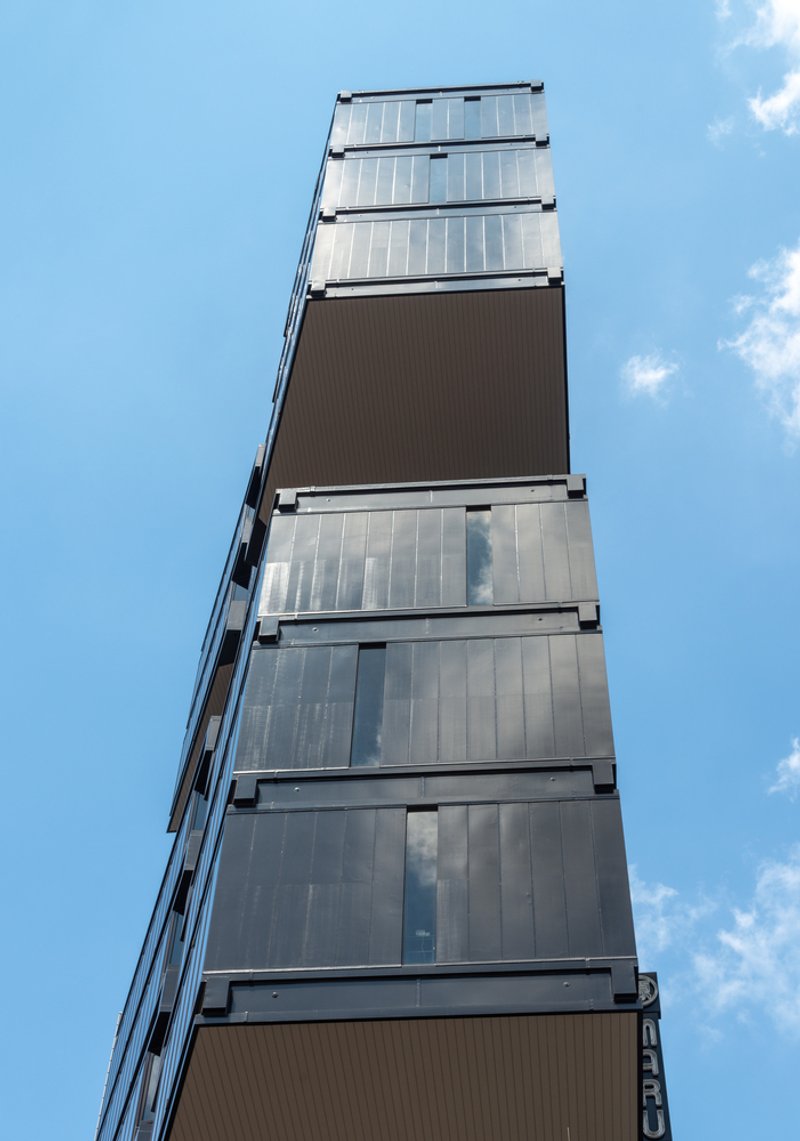
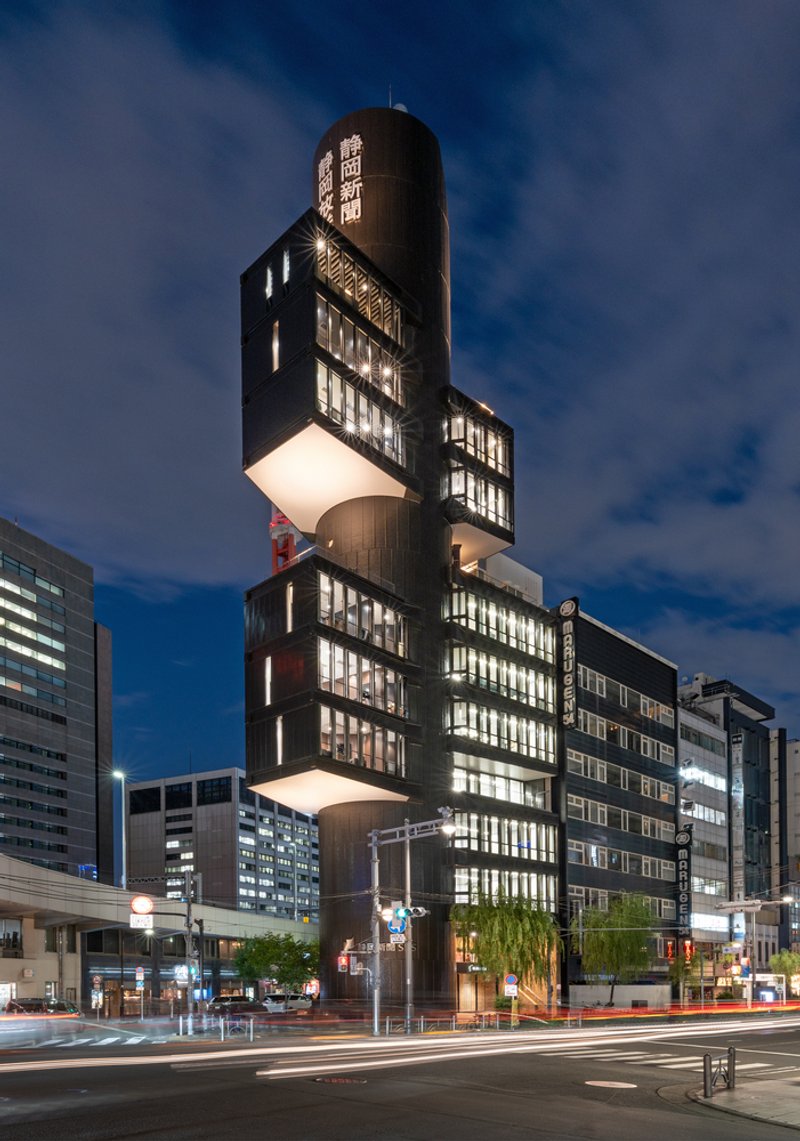
Tange's composition reads best from a distance. The thirteen office modules, each projecting 3.5 meters from the core, are arranged in five groups of two or three, stacked asymmetrically so the building never settles into a repetitive rhythm. Each unit stands 3.46 meters tall. The idea was that additional plug-in units could be added over time, a Metabolist aspiration that was never realized but that gave the form its open-ended logic. Seen from above, the core is unmistakable: a clean cylinder punched by the cantilevers, the structural diagram exposed.
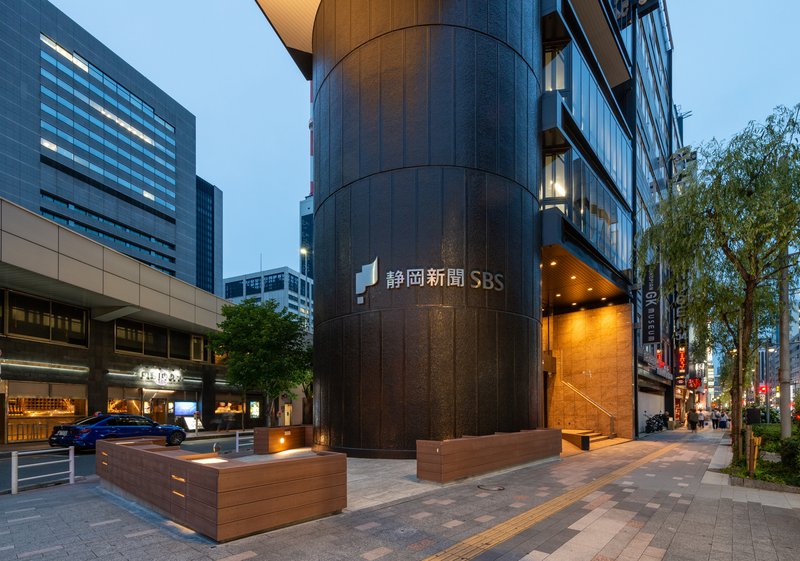
The aerial and street-level views confirm that TAISEI's intervention left the massing untouched. Aluminum plates originally used as formwork and left in place as the exterior finish still define the surface texture. The grey tones, the corrugated metal, the glass banding: all present, all original in character. Renovations in 1993 and 1999 had already addressed paintwork and some interior systems, but the 2022 scope was far more comprehensive.
Urban Compression on a Triangular Plot
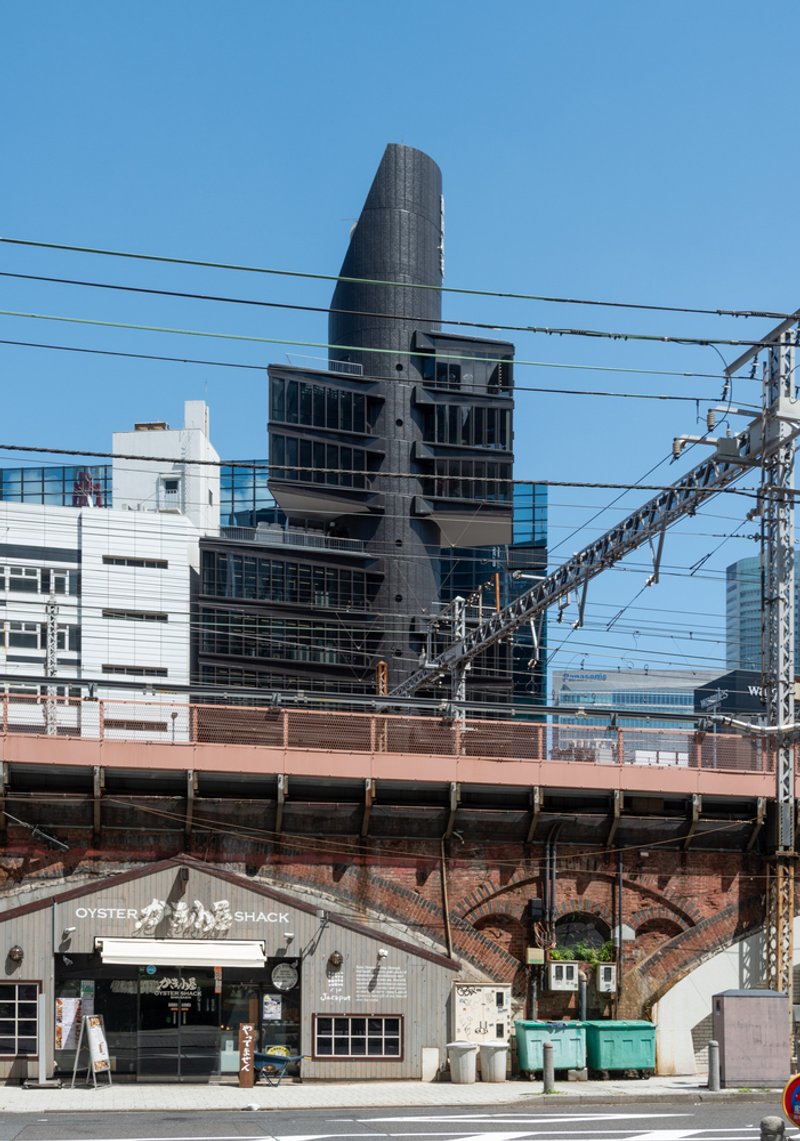
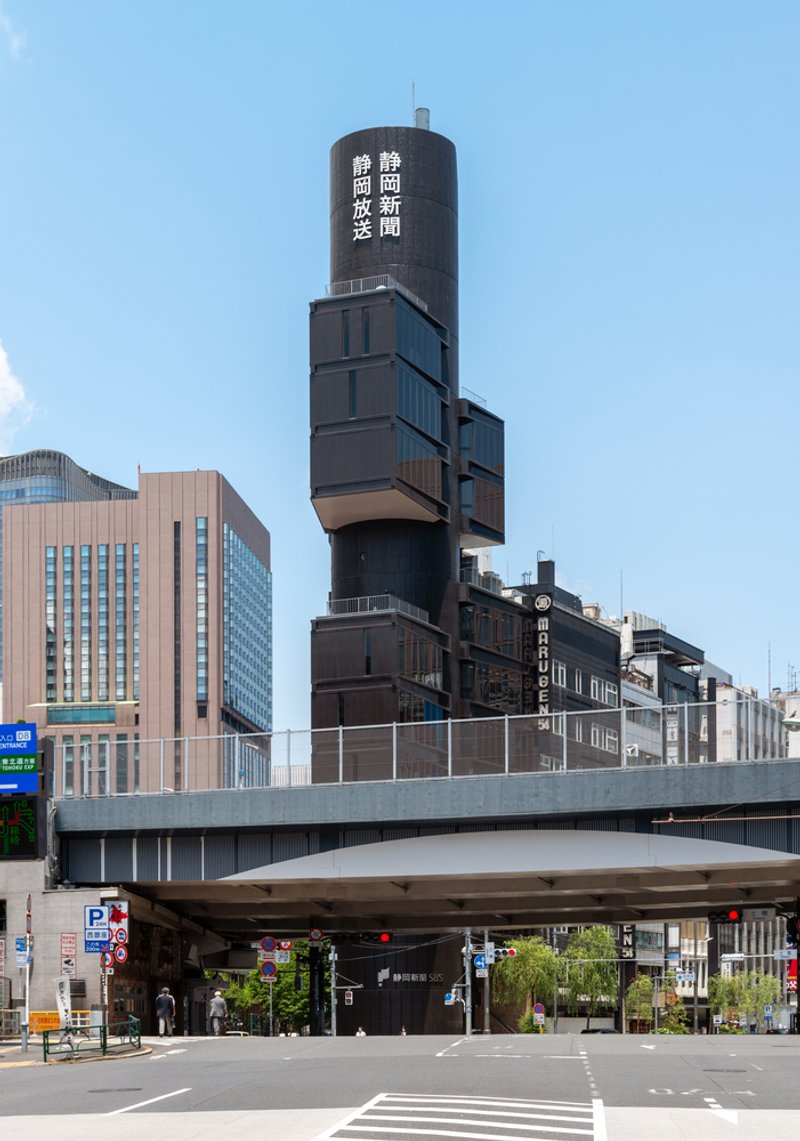
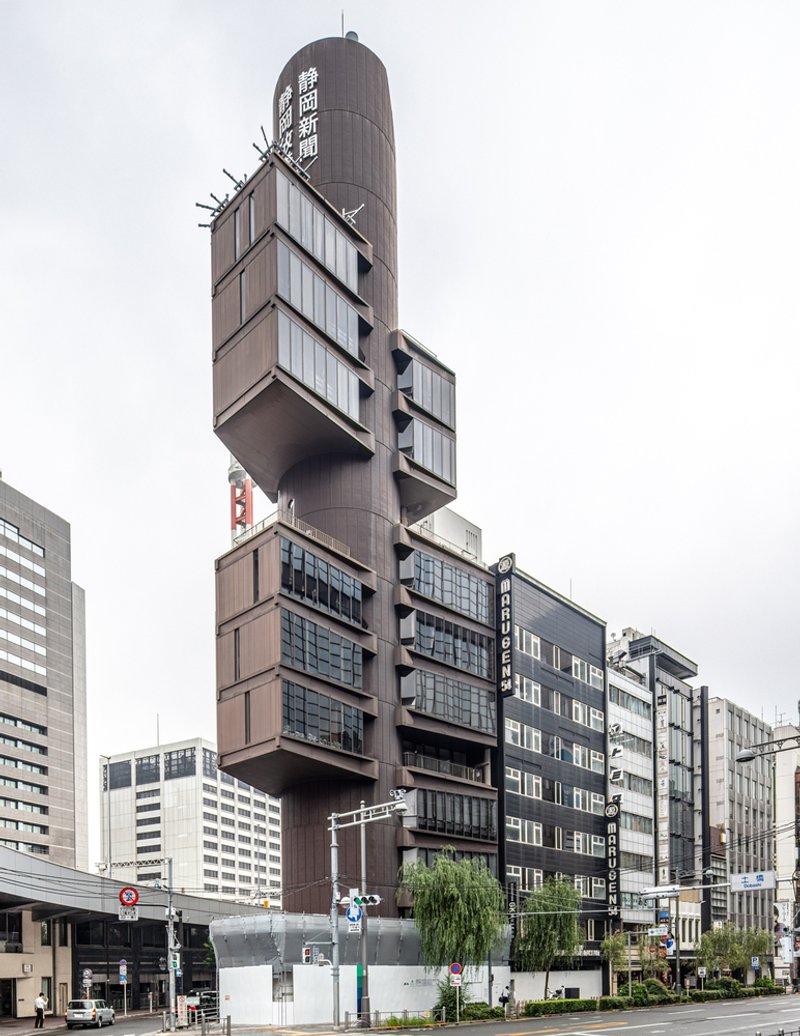
Context matters enormously here. The tower occupies a sliver of land near an elevated highway and the Shinkansen tracks. From certain angles it appears almost squeezed between infrastructure: railway viaduct arches at its base, high-rises crowding behind. The triangular site gave Tange no room for a podium, no lobby forecourt, no landscape buffer. The core-and-cantilever strategy was a direct spatial response, maximizing floor area by going vertical and radial rather than spreading horizontally.
That compression makes the building's survival all the more impressive. Every renovation decision had to be executed within extremely tight physical tolerances. There is no staging area, no generous perimeter. The engineers worked, essentially, inside a tube.
Seismic Reinforcement Hidden Inside the Core
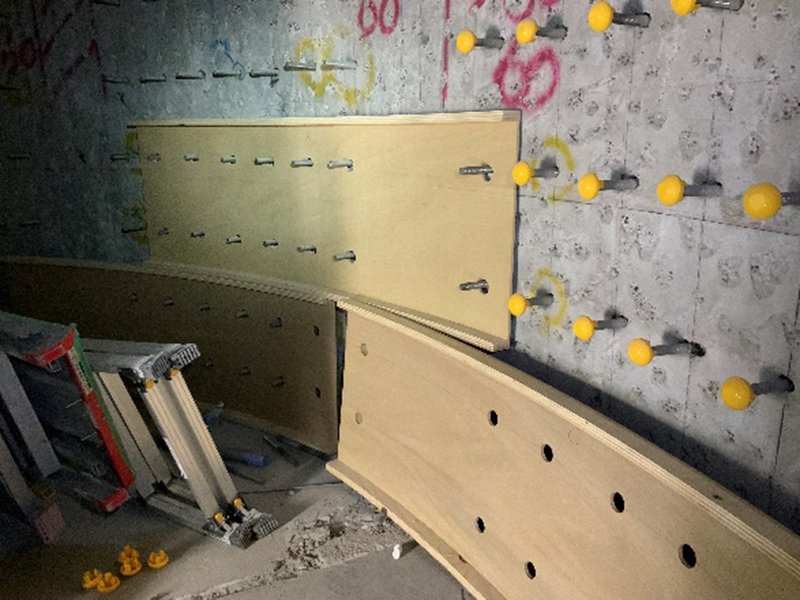
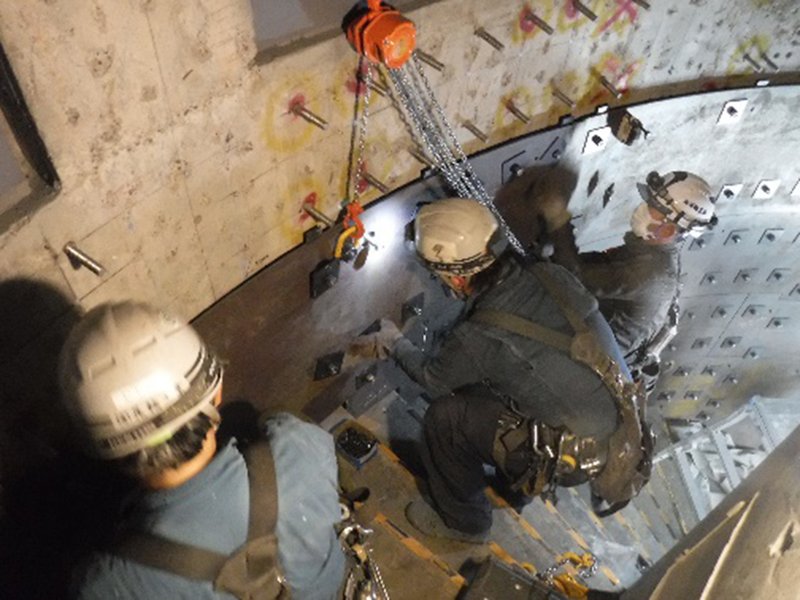
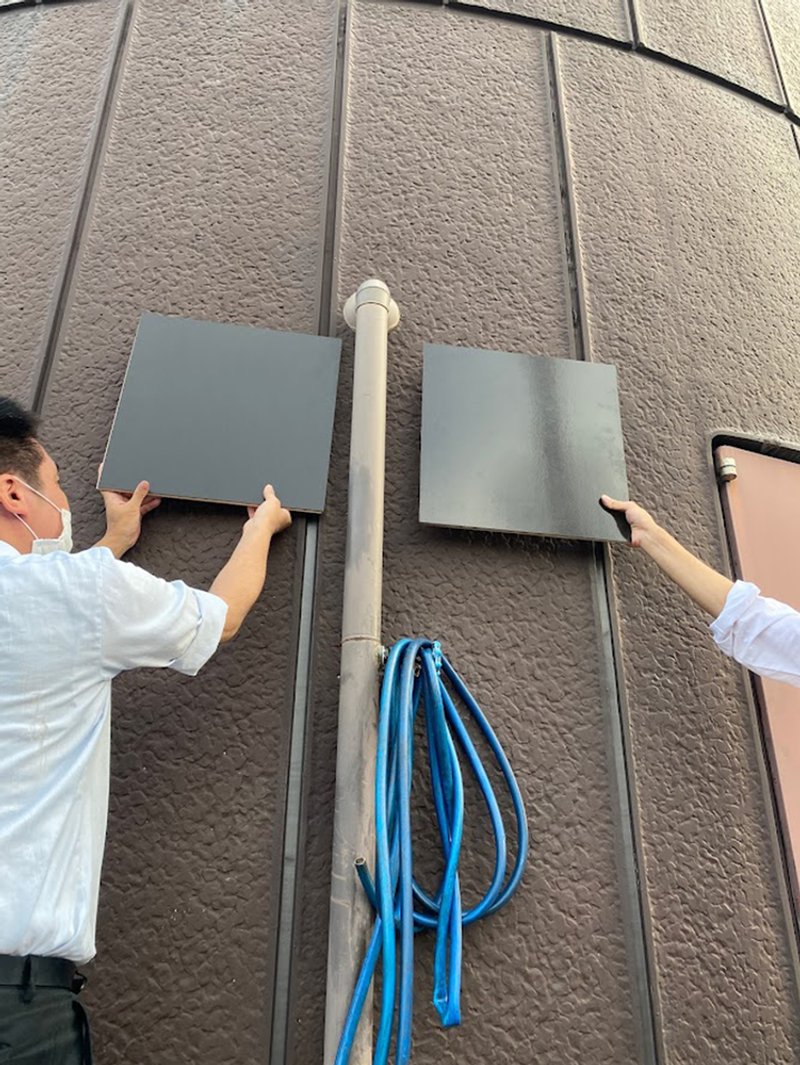
The structural upgrade is the renovation's most technically demanding achievement, and it is almost entirely invisible. TAISEI's engineers conducted a full seismic response analysis to map the building's weak points. The cylindrical core's ground-floor legs received carbon fiber sheets bonded to their interior faces, providing bending reinforcement without adding bulk to the exterior. From the first to the fifth floors, thin steel plates were installed as shear reinforcement, again applied from the inside.
The construction images reveal the reality of this work: workers threading metallic ceiling panels through confined spaces with chain hoists, grey facade panels being positioned by hand against marked concrete surfaces. 3D scanning was used to map the existing geometry so that drilling positions for new reinforcement could be precisely coordinated with the as-built structure. This is conservation engineering at a high level, the kind of work that requires digital precision applied to mid-century concrete tolerances.
Color Archaeology and the Night Facade
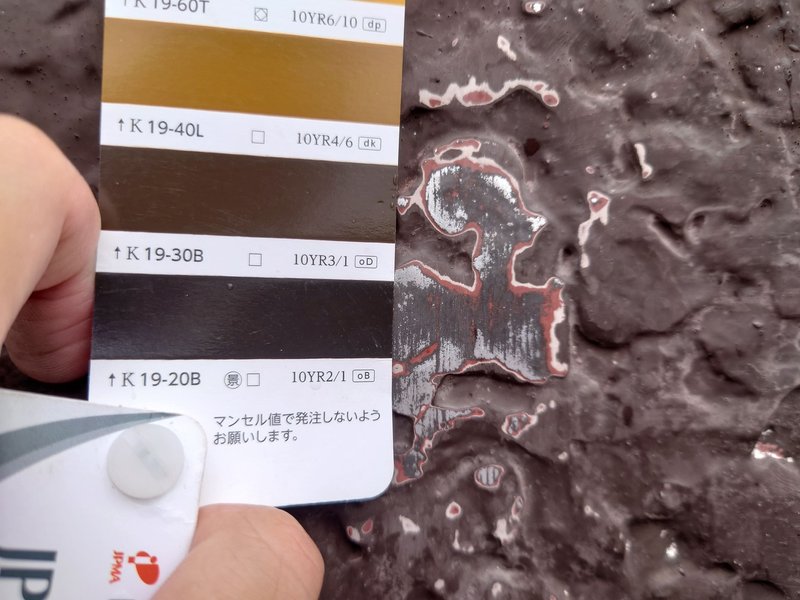
One of the renovation's quieter ambitions was to recover the building's original color palette. Paint inspections compared existing layers against historical photographs and documented color schemes from 1967, peeling back decades of maintenance coats to identify the authentic hues. A photograph of a hand holding a color sample card against raw concrete captures this process perfectly: material decisions made at the surface, one swatch at a time.
The nighttime transformation is the renovation's most publicly visible upgrade. LED lighting now illuminates the underside of the eaves and traces the cylindrical core, giving the tower a lantern-like presence after dark. The cantilevered offices glow warmly through their glazing, and the curved bronze-paneled column at street level is washed with soft light. Ginza's neon context makes this subtlety count: the building reads as precise, not flashy.
A Lobby and Circulation That Honor the Cylinder
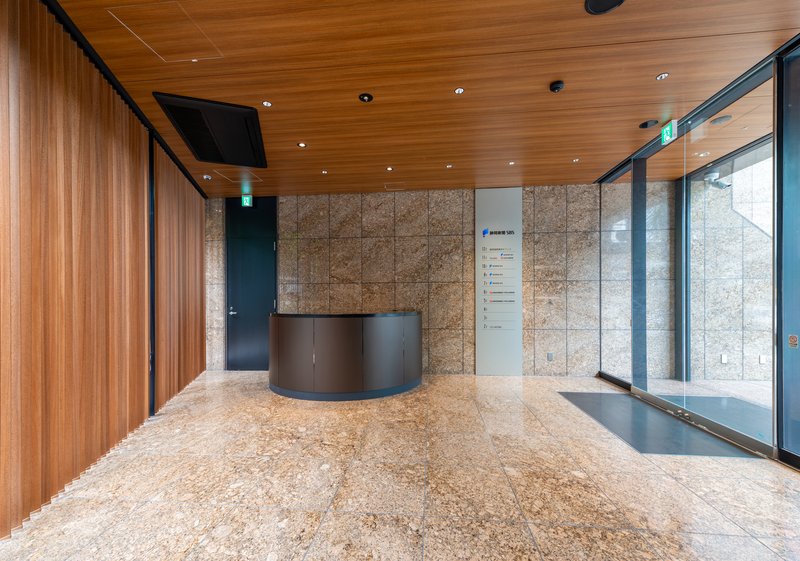
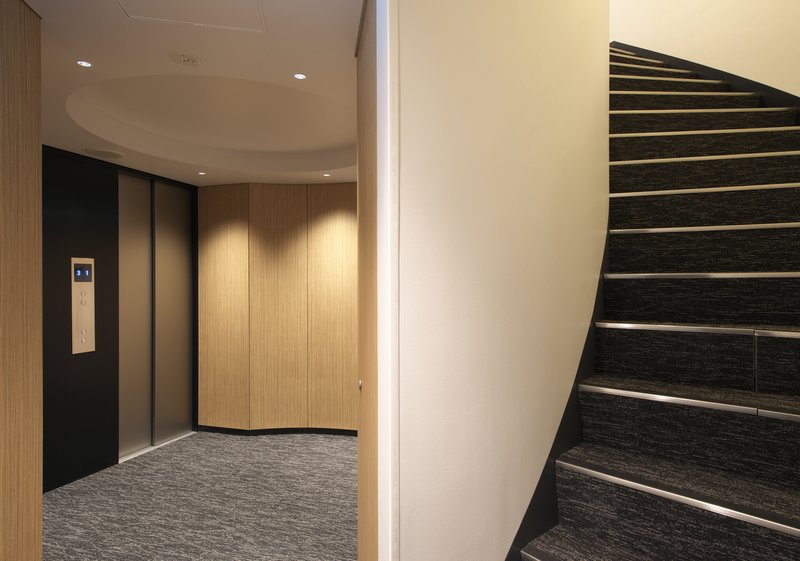
Inside the core, the renovation reveals itself most clearly. The ground-floor lobby features a curved reception desk set beneath timber ceiling panels, with a textured stone wall providing material warmth. The elevator lobbies on upper floors received dark wood-paneled walls and circular recessed ceiling details that echo the core's geometry, a simple move that links interior finish to structural form.
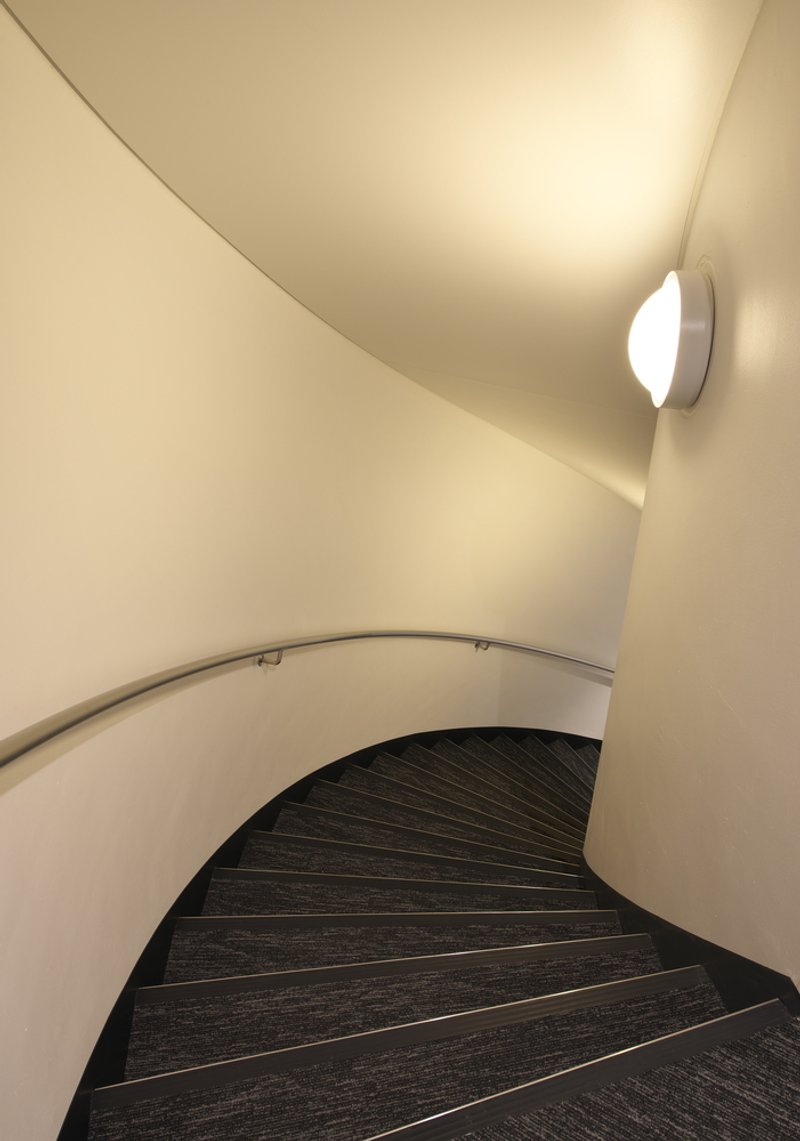
The staircase is the building's secret pleasure. Curving upward within the cylinder's shell, the white-walled stairwell with its circular handrail and wall-mounted sconces feels almost nautical: a helix of movement inside a concrete tube. The stairs are narrow, intimate, and entirely shaped by the core's diameter. You cannot forget, climbing them, that you are inside a structural element.
Workspaces Pushed to the Perimeter
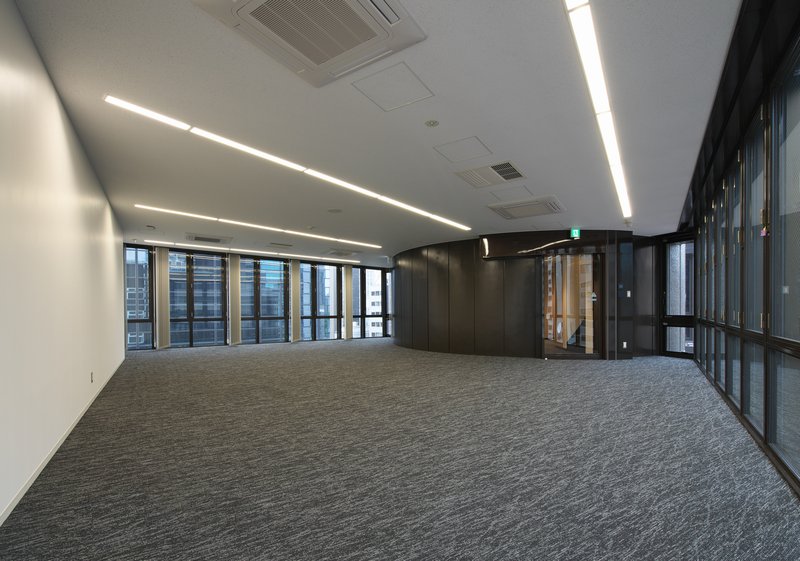
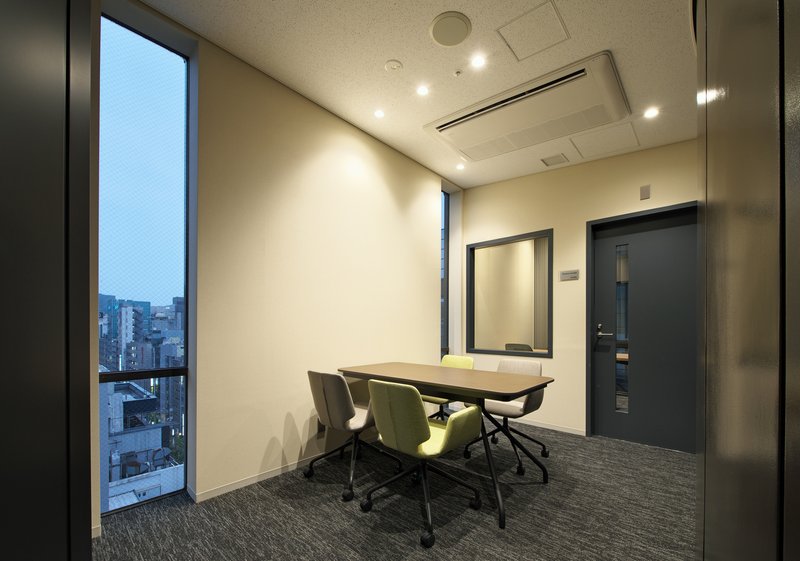
The office floors demonstrate the cantilever logic at the scale of a desk. Standard floors offer grey carpet, linear recessed lighting, and continuous perimeter glazing that wraps the full width of each module. At 3.5 meters of projection from the core, these are not deep floor plates; they are compact, daylit workspaces where every seat has a city view. The conference room on the tenth floor looks out over Ginza at dusk through tall windows, a room that earns its verticality.
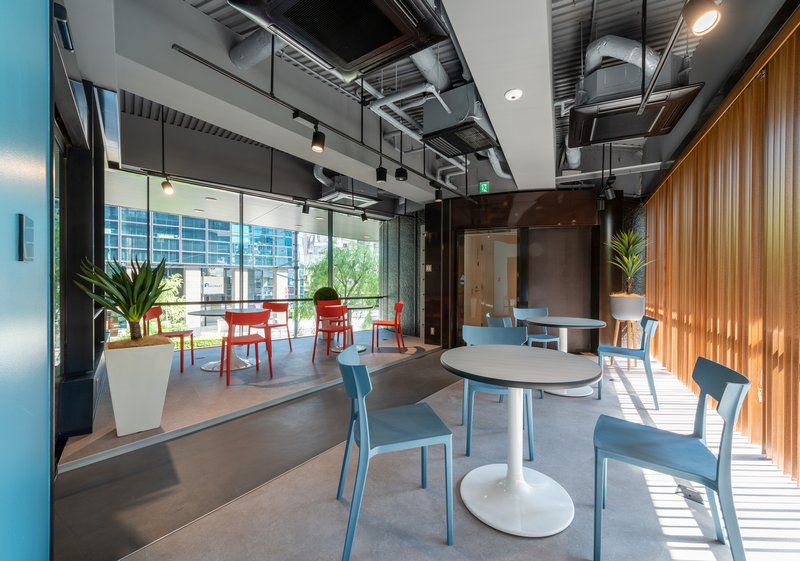
Break areas and refresh rooms on the upper floors introduce color, with blue and red chairs against exposed mechanical ceilings, potted plants at the glass line, and generous views that remind occupants they are suspended above the rail corridor. Barrier-free access was added throughout, and shared spaces were reconfigured to encourage collaboration, a concession to contemporary workplace expectations that Tange's modular plan accommodates without strain.
The Rooftop and Hidden Thresholds
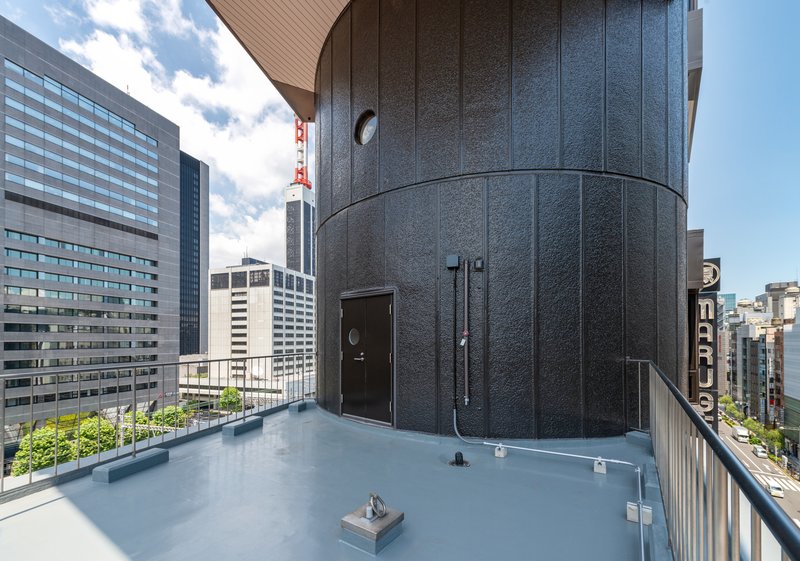
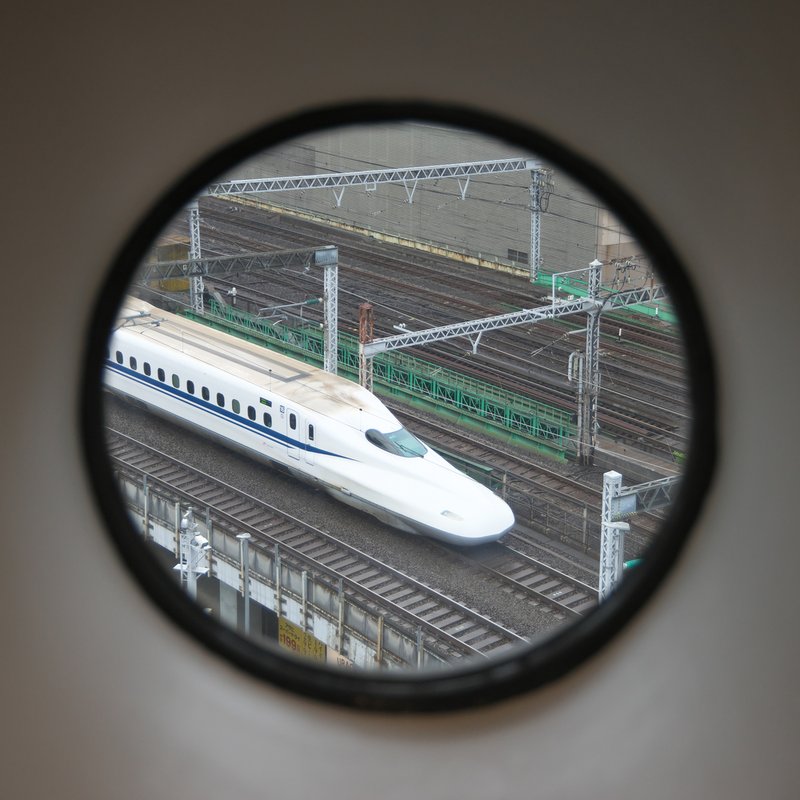
The rooftop terrace, surfaced with the same charcoal-paneled cylinder rising through its center, provides a multi-purpose outdoor space surrounded by the high-rise fabric of Ginza. It is modest in scale but effective as a pressure valve for a building with such compact floor plates. A circular window opening frames the Shinkansen tracks below, turning infrastructure into spectacle: bullet trains pass through a concrete porthole, a view that collapses the distance between Tange's 1960s optimism and the city's ongoing velocity.
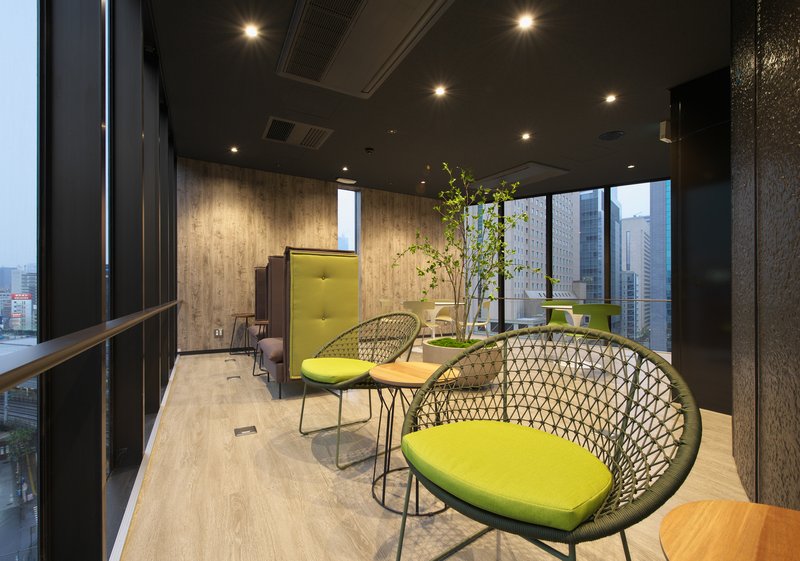
An interior lounge area with woven wire chairs on light wood flooring sits under a dark ceiling, a space whose material restraint feels deliberate. The renovation's interior palette, timber, stone, dark metal, muted upholstery, consistently avoids competing with the architectural idea. The building is the furniture.
Plans and Drawings
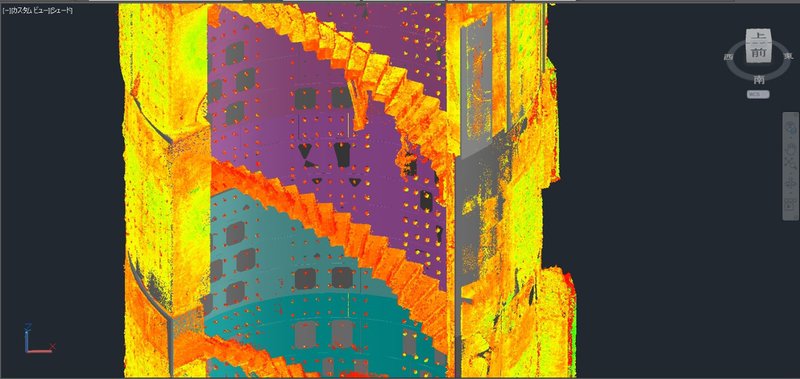
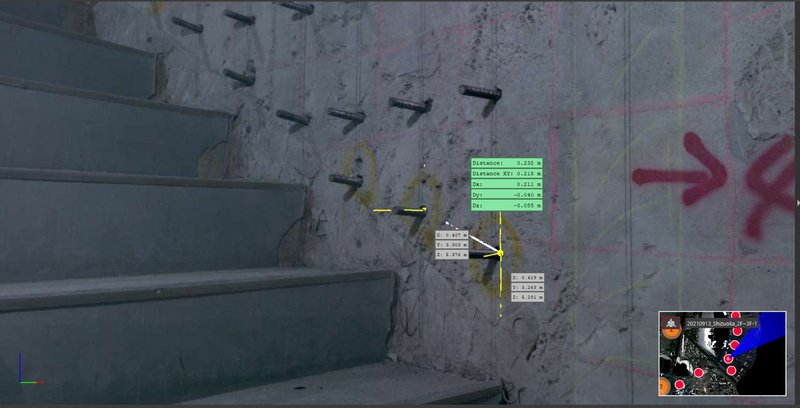
The digital survey documentation reveals the rigor behind the renovation. A point cloud rendering maps the interior stair volumes with color-coded elevation data, while measurement annotations overlaid on the concrete stairwell wall show the precision required to coordinate new reinforcement with existing anchor points. These are not conventional architectural drawings; they are forensic records, the kind of documentation that a Metabolism building demands when it is being retrofitted rather than replaced. The 3D scanning campaign ensured that every drilling position was adjusted to the actual geometry, not the 1967 shop drawings.
Why This Project Matters
Metabolism produced some of the twentieth century's most photographed buildings but also some of its most vulnerable. Kisho Kurokawa's Nakagin Capsule Tower, the movement's most famous residential example, was demolished in 2022, the same year this renovation was completed. The parallel is hard to ignore. One Metabolism landmark fell; another was saved. The difference came down to structural feasibility, client commitment, and engineering imagination. TAISEI's work proves that a 57-meter concrete cylinder with cantilevered steel-and-glass boxes can meet current seismic codes without sacrificing its formal identity.
The broader lesson is about method. Recording history before intervention, using 3D scanning to reconcile digital models with aging concrete, conducting paint archaeology to recover original color: these are not heroic gestures, they are disciplined ones. The Shizuoka Shimbun tower will outlast the renovation team precisely because the team understood that the building's value lies in its specificity, its proportions, its silhouette, its stubborn refusal to be a normal office tower. Preserving that required not creativity but restraint, and that restraint is the project's real achievement.
Shizuoka Shimbun Shizuoka Broadcasting System Tokyo Branch Office Renovation, by TAISEI DESIGN Planners Architects & Engineers. Ginza, Tokyo, Japan. Originally designed by Kenzo Tange, 1967. Renovation completed 2022. Photography by Taisei Corporation.
About the Studio
Share Your Own Work on uni.xyz
If projects like this are the kind of work you want to make, uni.xyz is a place to publish your own, find collaborators, and enter design competitions.



Popular Articles
Popular articles from the community

gru.a Builds a 70 m² Timber Shelter That Opens Like a Farm Door in Brazil's Valley of the Vines
In the mountainous region near Rio de Janeiro, a compact retreat uses plywood panels and deep eaves to blur the line between inside and out.
Constanti Architects Builds a Fortress of Privacy in Nicosia with House 345
A concrete and timber residence in Cyprus reinterprets the traditional introverted courtyard house for a new urban landscape.
VEIVE Architects Builds a Mountain Hostel That Disappears into a Hangzhou Hillside
On the Huihang Ancient Trail in Xiangjian Village, a shelter of wood, steel, and rammed earth roots itself in the rural landscape.
BAUEN Builds Two Rammed Earth Volumes in Paraguay Inspired by the Ovenbird's Nest
In San Bernardino, a house of compacted earth channels the instinct of a constructive bird to shelter life from the Paraguayan summer.

Similar Reads
You might also enjoy these articles

Olio Towers: A Mid-Rise for Performers That Fuses Housing, Rehearsal, and Stage
Located blocks from Houston's Theater District, this modular tower stacks living units around a central performance atrium.
Oasis: Modular Green Housing Carved into Dhaka's Urban Fabric
A shortlisted Plugin Housing entry reclaims unauthorized settlements in Dhaka with stepped concrete volumes, green roofs, and ventilation-driven design.

Black Hole: A Floating Megastructure for the Post-Physical Era
Emiliano Mazzarotto envisions a spherical, self-scaling arena where e-sports, digital hotels, and holographic stadiums replace traditional public space.
Compact & Sustainable Living in Piraeus: A Four-Level Family Home Built Around Light and Air
A narrow townhouse in one of Greece's densest port cities uses a central atrium and passive strategies to house three generations under one roof.


Explore Architecture Competitions
Discover active competitions in this discipline




The International Standard for Design Portfolios


The Global Benchmark for Architecture Dissertation Awards


The Global Benchmark for Graduation Excellence


Challenge to reimagine the Iron Throne
Comments (0)
Please login or sign up to add comments
No comments yet. Be the first to comment!