
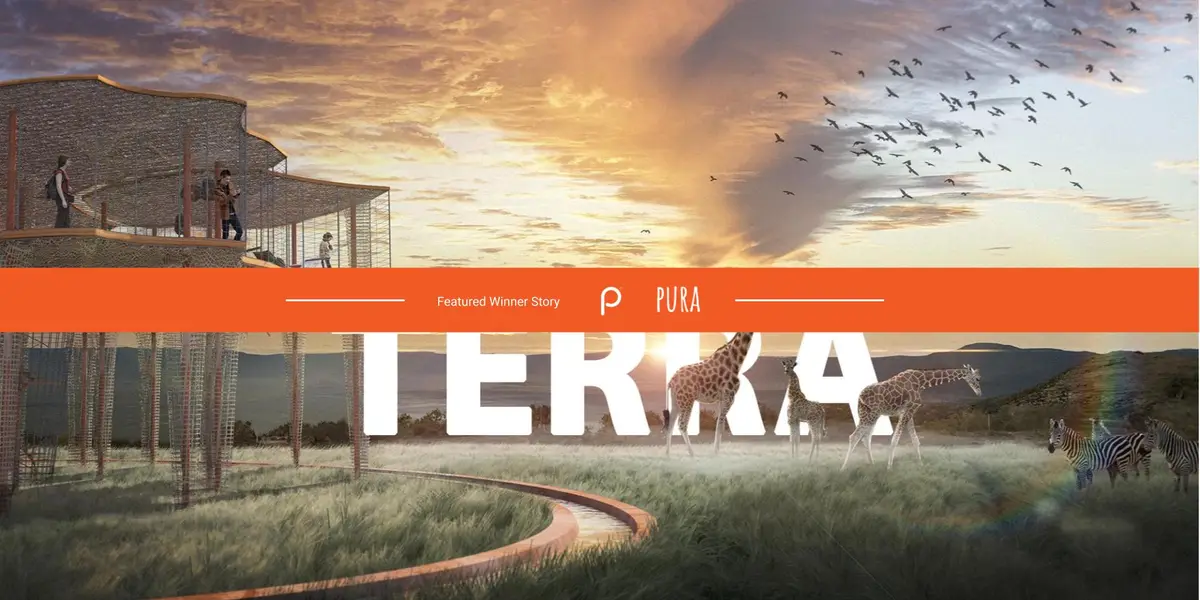
Designing safe interfaces between humans and nature
Pura - Result Story


The evolution and origination of humankind have been cradled by planet earth and its range of living species. We formed a part of the ecosystem which coexisted with all other forms of fauna that had emanated from the same. Since the period of evolution began, humans attained complete consciousness in a shorter span. With this emerged an inevitable era of development, changing the scenario of the natural environment and humans that had been prevailing for centuries.
Gradually the changing relationships of the elements, namely ecosphere and humans reiterated their composition in the environment. There was a detachment established in the wake of development. The alliance we shared was not symbiotic anymore, creating invisible barriers that had never existed previously. The distance that grew with the thriving urban domain has now asymmetrically depleted the wildlife and its diversity.
The virtual walls that built two different environments have in a way protected and preserved the wildlife. Should the disassociation that has been built parallelly be existing as well?
The subconscious learning that takes place due to an interaction with nature and its components is essentially invaluable. When we started building civilizations and began living in clusters, their contact with nature remained closely knit, until the past five decades. The encroachments of land for food and living became indispensable.
Eventually, the unprecedented growth leads to the creation of a barrier that protected them from their depleting habitat. It was necessary to maintain limits to prevent a complete override by humans. The growth trajectory of humankind that we see today is inevitable which initiated this shift in the ecosystem.
National Parks, Wildlife sanctuaries are refuge created for preserving the Fauna and Flora where the Animal diversity thrives. Such regions also house unplanned interfaces to allow us to percolate which are commonly human-centric that need to change.
A permanent solution to balance nature and mankind needs to be re-established without keeping a man as the center of the design intervention. Instead, we need to suggest a common ground for all i.e. an-Architecture and Nature. Can this be a converging point between the two acting as a virtual podium for them to blend in the environment while they interact silently?
The intervention is expected to be sensitive to the environment it has been placed in. It must ensure an open dialogue without disturbing the reserved area. Space can be an open deck, viewing center, pavilion, or observation center where the visitors can absorb the constituents of the natural habitat and its residents.
The things that are now being built in the consciousness of the situation can be a balance of both? The participants are free to add any programmatic function to their design idea that resonates with the narrative.
The jury for the competition consisted of esteemed designers, professionals, and academicians from around the world. The Lead Jurors for the competitions were as follows:
Faith Okuma, Principal, Surroundings Studio, United States
Michel Lefevre, Partner architect, Label architecture, Belgium
Richard Bennett, Director, rbmp, United Kingdom

Some of the Best of competition projects are:
Winning Project: PURA
By: Szymon Król

Cover image of project Pura
Description: Viewing deck with a watchtower.
-----------------
People’s Choice: Mashika
By: Tanya Prevezentseva, Anastasia Endovitskaya, Anastasia Volkova & Edgar Sarkisyan

Site plan of project Mashika
Description: The project is based on 7 principles. MIGRATION of animals is the configuration of the observation deck. ADAPTIVE exterior. SUSTAINABLE architecture. HI-TECH technologies used. INITIATED point of the journey. KNOWLEDGE about the animals of the park and residents. AUTHENTIC design details.
-----------------
Editor’s Choice: Expanding nature

Cover image of project Expanding nature
Description: Designing safe interfaces between humans and nature.
--------------------
Editor’s Choice: Maji
By: David Mayer
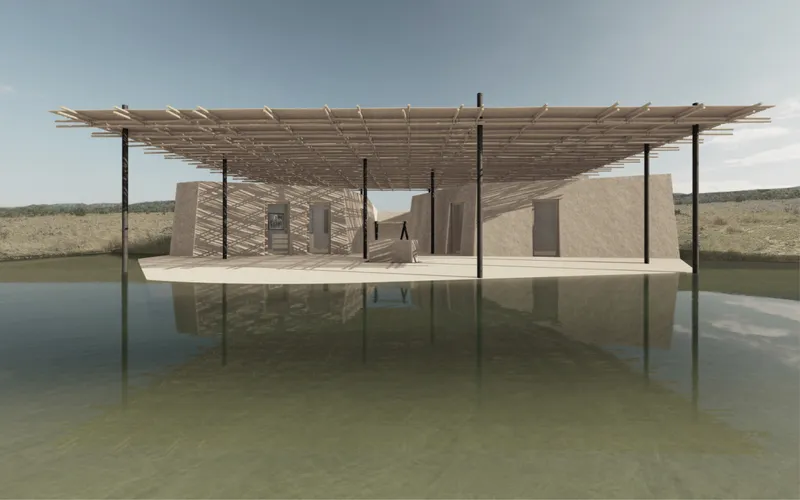
Cover image of project Maji
Description: Can we use water as a nature-inspired barrier instead of raising walls?
-----------------------
Editor’s Choice: The wild bird in Serengeti

Serengeti National Park
Description: Inspired by an abstract wild bird, the observation deck-bridge is supposed to be located on the Grumeti River, among the vegetation. The location is due to the migration routes of wild animals, which will be convenient and comfortable. Easily erected structures ensure a careful introduction into nature, production efficiency and environmental friendliness.
-----------------------
Editor’s Choice: TERRA
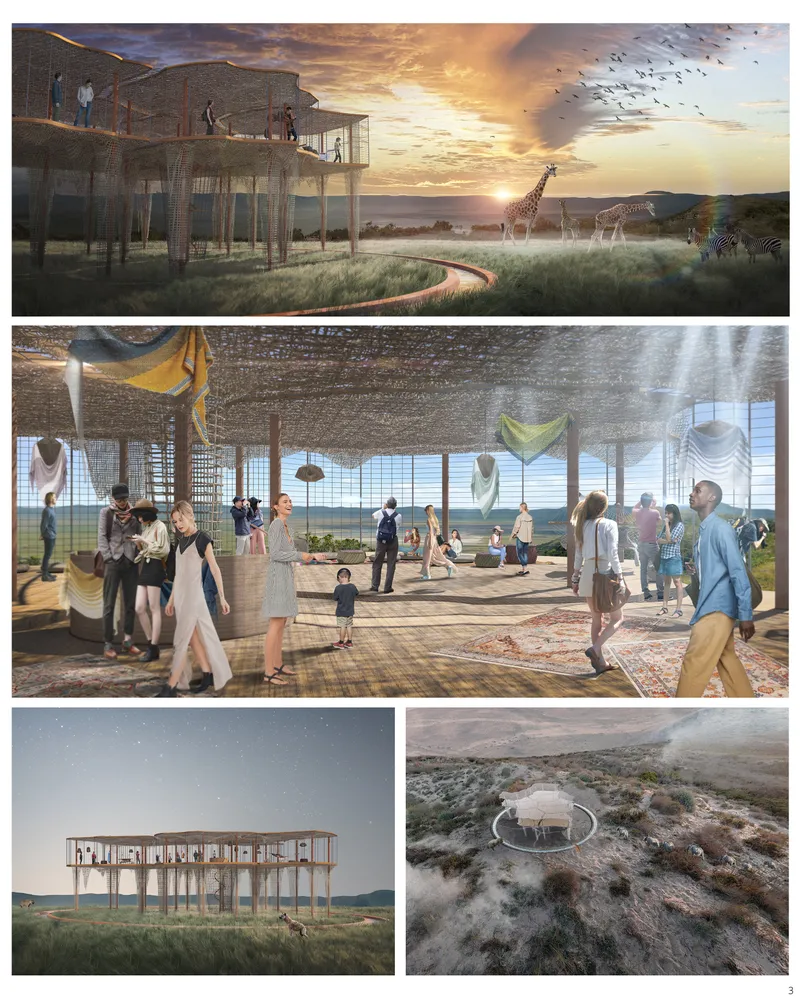
Caption
Description: The atmosphere of the location of the object being placed takes our emotions into the world of antiquity and primitiveness, filled with dangers. This world quickly returns us to the natural instincts that fill us with vivid emotions. One of these instincts is the need for water. This need has become the key to shaping our concept.
Follow us on social media: Facebook | Instagram | LinkedIn | Twitter | Youtube
References (3)


Popular Articles
Popular articles from the community

SCENTLAND: An Animal Shelter Designed Through the Nose of a Dog
Winner of Strays 2020, this proposal uses scent mapping to generate circulation, form, and program for a sensory-driven shelter.

Faces of the Soviet Avant-Garde: Turning Moscow's Street Names into an Open-Air Museum
A network of sculptural installations across a Moscow residential district transforms forgotten architect names into spatial encounters with cultural memor

Extended Shell: Retrofitting Kolkata's Balconies as Living Urban Thresholds
A modular retrofit system recovers the social and environmental intelligence of Kolkata's historic verandas for contemporary Park Street residents.

Opera by the Sea Estonia: Three Shells Dissolving Architecture into Tallinn's Coastline
A winning opera house proposal replaces monumental form with interconnected shells that blur the boundary between building, park and Baltic Sea.

Similar Reads
You might also enjoy these articles

Tsunami Convergenics: Turning Catastrophic Ocean Forces into Underwater Housing Infrastructure
A speculative underwater settlement off the coast of Onagawa, Japan, treats tsunamis and typhoons as energy sources rather than threats.
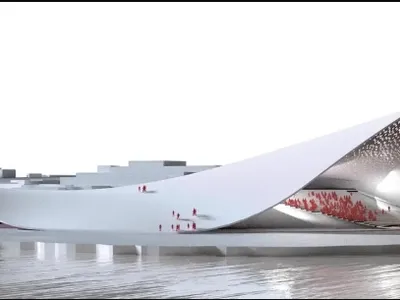
Sound Waves: An Opera House That Opens Its Stage to the Baltic Sea
A shortlisted proposal for Tallinn's waterfront dissolves the boundary between auditorium, public hill, and Baltic horizon.
Cloaked Colonization: A Mobile Underwater Habitat That Moves Like a Fish
Micah Abaya's shortlisted EHC Pacific entry reimagines ocean settlement as a dispersed network of self-sustaining architectural organisms.
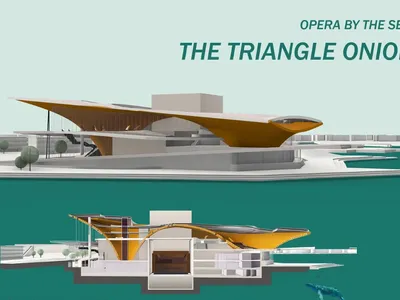
The Triangle Onion: Peeling Back Layers to Find an Opera House Inside a Public Landscape
A shortlisted opera house proposal stacks triangular planes into an explorable terrain of ramps, terraces, and curved performance volumes.

Comments (0)
Please login or sign up to add comments
No comments yet. Be the first to comment!