

Survival in the city: Affordable housing designs in the UK to tackle homelessness.
‘Living Hub’ - Low Cost design competition - Result story


Lack of proper housing has been one of the biggest problems that the world has faced overall. Whether it is the areas that are ridden with natural disasters or the most developed ones. This problem has infected most of the countries. And the severity of this problem is ranging across the world.
There are various reasons why the housing crisis exists around the world. But what is common in all is the fact that they're unaffordable. The basic requirement of a shelter is often unaffordable to millions across the world. People stay either in small temporary houses or on the streets where they are provided with nothing. This has been observed in the best of the cities to the developing ones.
There will be an eventual rise in this issue as is it estimated that a huge population is going to migrate towards these cities by the year 2050.
The United Kingdom is one of the many names that we hear when there is a listing of the places where the cost of living is very high; which is not possible for everyone to meet and is causing a large number of people to get homeless amidst a well-developed city.
In the UK itself, it is estimated that about a million people today reside on the roadsides and in public spaces. The people aren't able to withstand the cost of living in the main cities. And there is no other choice left for them but to move to the streets. There is less moderate-level housing that offers refuge to these people at a lower cost. And as there are no measures taken it is causing this problem to increase to a considerable level and is estimated to increase as people migrate more.
Understanding the multidimensional nature of the issue, what can architecture do to address it?
Brief: This challenge aimed to create an affordable housing design that provides people with a basic livable facility for people.
One of the ways to mitigate this problem is only possible by creating solutions that are made in consideration of the poor. Who wants a shelter but simply cannot afford it.
The design was aimed to provide the basic spaces that are needed for survival in the city. Along with other necessary spaces that are accommodated in the affordable price range.
Spaces are meant to be affordable and provide the basic necessity of a house to a large number of people; thus trying to mitigate the problem by a certain percentage.
The jury for the competition consisted of esteemed designers, professionals, and academicians from around the world. The Lead Jurors for the competitions were as follows:
Luke Tozer, Director, Pitman Tozer Architects, United Kingdom
Some of the Best competition projects are as follows:
Winning Project: Living-hub. YOUNG G. London
By: Teodora Pascu
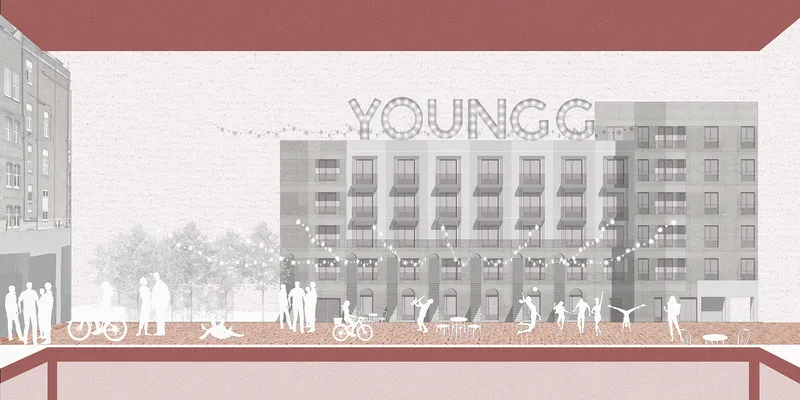
Fig: 1 Concept. Yard. Community Young G.
Description: The proposal “Young G” Yard presents the community of young generations who will gather around the concept of sharing common indoor and outdoor spaces, participating actively in taking care of the provided spaces, and activating them with both private and public events.
Jury Comment: A well-thought-through and interesting proposal, delightfully presented. While there are elements of communal activity (cycle storage and refuse/recycling) that are part of the communal living experience that could have been more developed, overall this is a well-considered proposal that makes interesting urbanism out of small dwellings (1b1p & 1b2p). It would be interesting to see how this could be developed as an idea on other sites.
-----------------------
People’s Choice: Living-hub
By: Julia Sliwka & Renata Wacławowicz
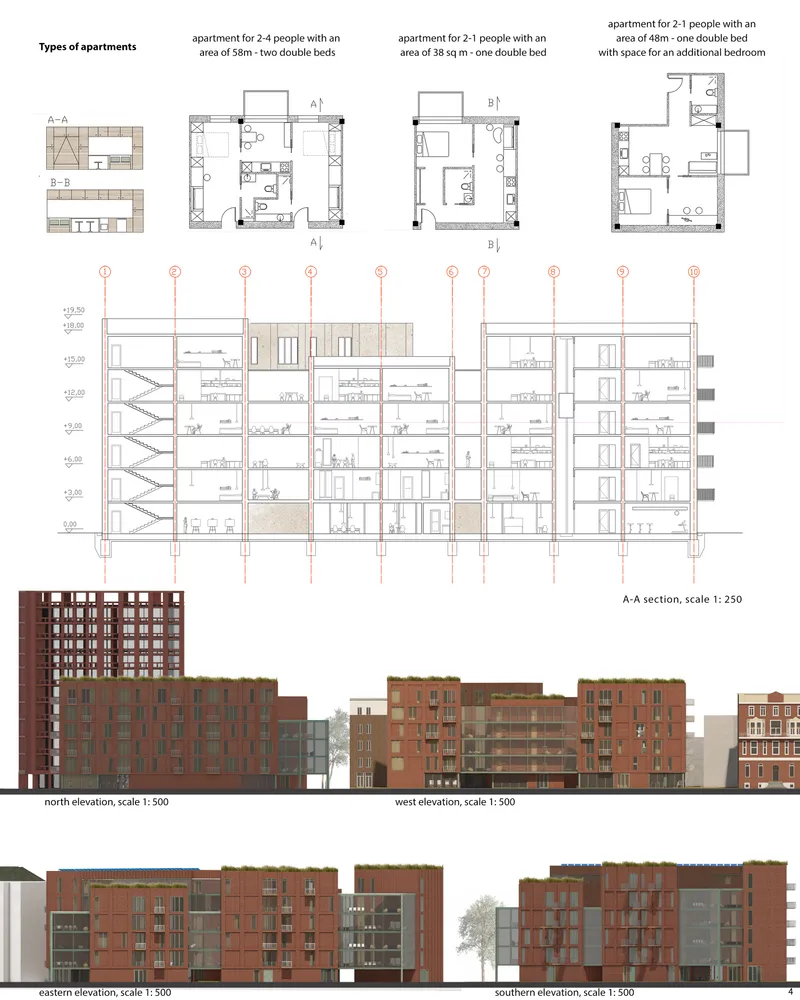
Fig: 2 Section and Elevation Plan
Description: The project includes small housing units adapted for people aged 18-40, designed in the spirit of co-living. The body of the building is adapted to the intersection of the streets with the atrium in the center, allowing for additional illumination of the apartment.
Jury Comment: Good ideas about the central space and the quality of the circulation and the ability to use it as part of the narrative of the building. The tyranny of the structural grid has been perhaps taken too far as a restriction to the extent that it has subsumed some of the potential of the homes to be joyful places to live. It would have been nice to see some of the quality of the homes, as well as the communal spaces.
---------------------
Editor’s Choice: Rhythm Hub
By: Medina Karimova & Furkan ISKAR

Fig: 3 Section and Front view
Description: Rhythm Hub is a monoblock affordable housing project around the "hub" concept. The aim of the project is to reduce the cost of living for users as well as construct the building in the most efficient way. Therefore, the accommodation units are designed as rooms with minimum sizes, while social areas and kitchens are designed separately for communal usage.
------------------------
Editor’s Choice: LIVING - HUB
By: Anri Iluridze
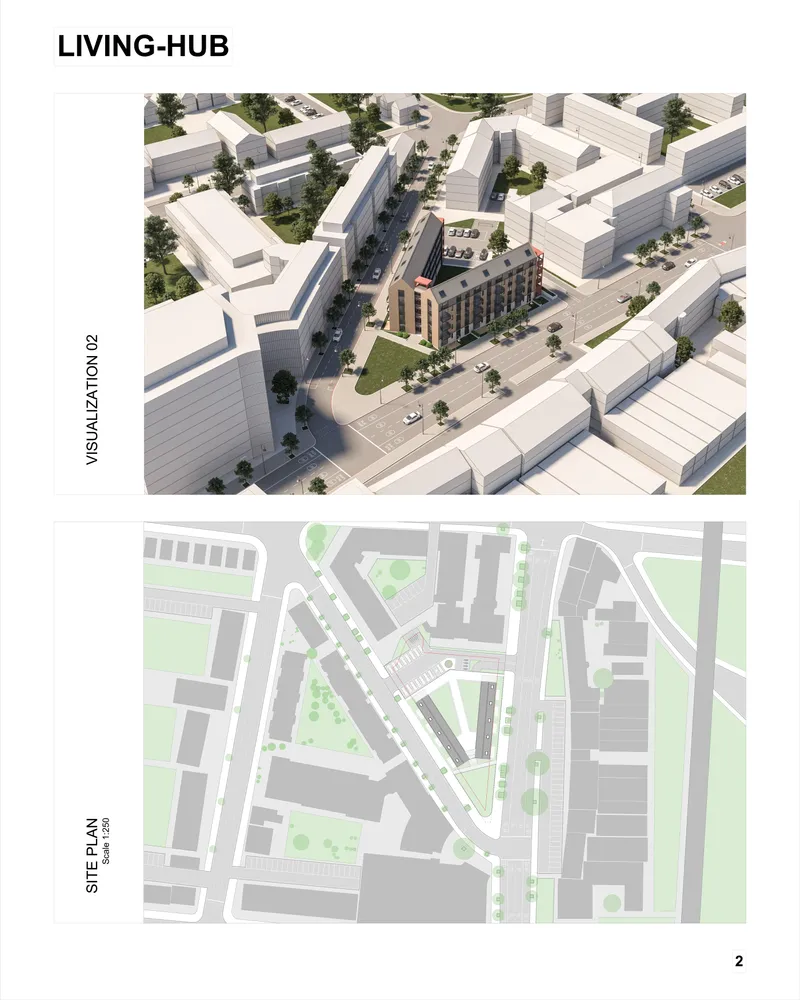
Fig: 4 Site Plan and visualization
Description: Affordable housing design project in London, UK. The site is a triangle in shape, holds a direct connection from two main roads, and is surrounded by industrial and four to five-floor-story residential buildings. The concept behind the project was to understand and fulfill the basic needs of the people who are searching for a home on a survival level.
Jury Comment: More joy and more focus on the experience of the inhabitants would have elevated the design and made the proposal more compelling. Urban affordable housing tends not to have such high levels of car use and a sustainable future should be designed for lower, not higher car use.
------------------------
Editor’s Choice: Affordable homes design contest
By: Shravan Patel
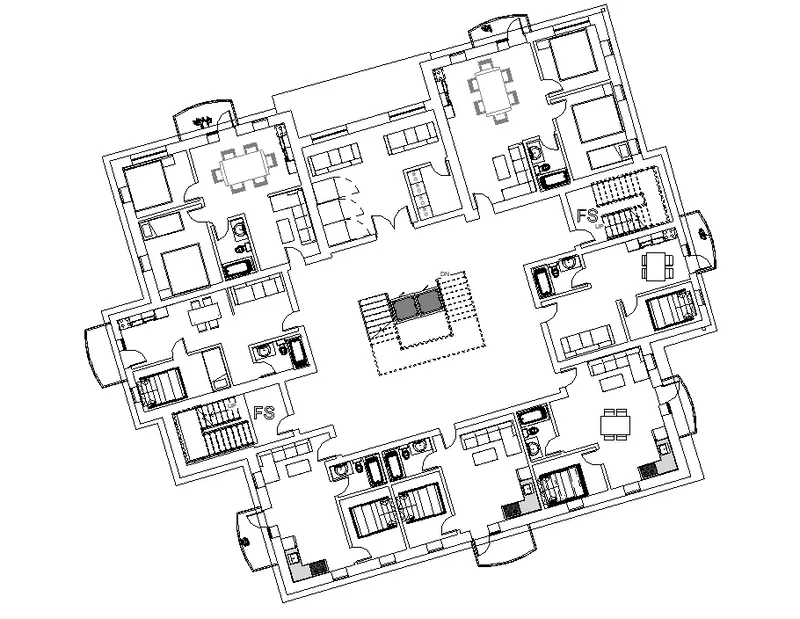
Fig: 5 Site Plan
Description: The Affordable homes design contest project is about Empathy, Affordability, and Affordability. This project is an excellent example of the current condition where everything is getting expensive when affordability plays a significant role. The design phase opened many opportunities for me because living in states learning stuff about different regions…
------------------------
Editor’s Choice: Habitat Solis
By: Robert Maskos & Oskar Michalski

Fig: 6 Floor Plan and view from gallery
Description: The habitat is designed to deliver space for both social and individual needs. Each floor is connected to a community hub located in the center. While building in the center houses common spaces, like a washing room, sound, and a party hall.
Jury Comment: A joyful and vibrant presentation, filled with interesting ideas. But with little grasp of the fundamental difficulties of providing affordable housing at an affordable cost. To truly address the crisis in affordable housing we need to find ways to make homes at a lower cost or provide different models of living.

Follow us on social media: Facebook | Instagram | LinkedIn | Twitter | Youtube
References (3)


Popular Articles
Popular articles from the community

Tsunami Convergenics: Turning Catastrophic Ocean Forces into Underwater Housing Infrastructure
A speculative underwater settlement off the coast of Onagawa, Japan, treats tsunamis and typhoons as energy sources rather than threats.

The Amber Palace Opera: A Geological Fiction Surfaces on Tallinn's Baltic Waterfront
Pierre Brillard reimagines a Baltic legend as a public landscape, opera house, and waterfront promenade rooted in Tallinn's coastal identity.
Temporary Home for Dogs: A Reversed Zoo Rethinks Animal Shelter Architecture
In Bucharest, a sinuous corridor and freed landscape flip the logic of containment, designing a shelter that works to make itself unnecessary.

Opera on the Sea: Driftwood Logic Shapes a Timber Opera House on Estonia's Coast
Trevor Orgill's opera house translates the entangled drift of floating timber into a civic building where wood, water, and music converge.

Similar Reads
You might also enjoy these articles
The Amber Palace Opera: A Geological Fiction Surfaces on Tallinn's Baltic Waterfront
Pierre Brillard reimagines a Baltic legend as a public landscape, opera house, and waterfront promenade rooted in Tallinn's coastal identity.
Dynamic Modules Shelter: A Telescopic Ring for Mountain Pilgrimage
A circular modular framework of steel, bamboo, and fabric grows vertically with demand, wrapping communal ground in adaptable shelter.

Singing Woman: Contemporary Architecture Inspired by Estonia’s Voice and the Sea
Singing Woman turns Estonia’s song culture into flowing opera house architecture, blending public life, landscape, sea, and national memory.
HYPERBLOCK: Flexible Urban Design for Barcelona’s Future City
HYPERBLOCK reimagines Barcelona as flexible urban design, layering density, daylight, public space and adaptable housing above Cerdà’s grid.

Comments (0)
Please login or sign up to add comments
No comments yet. Be the first to comment!