

The Anahuacalli Museum Extension by Taller Mauricio Rocha in Mexico City, Mexico is a unique and fascinating building
The new addition to the museum is a beautiful sight, and it's sure to draw in even more visitors.


The extension of the Anahuacalli Museum in Mexico City, built by Taller Mauricio Rocha, sits on the city's lava fields, surrounded by a collection of utopian visions. On February 20, 1943, the Paricutín volcano erupted on the Quitzocho plain in the state of Michoacán, destroying the town of San Juan Parangaricutiro and leaving only the altar, part of the facade, and a tower of the town's church standing.
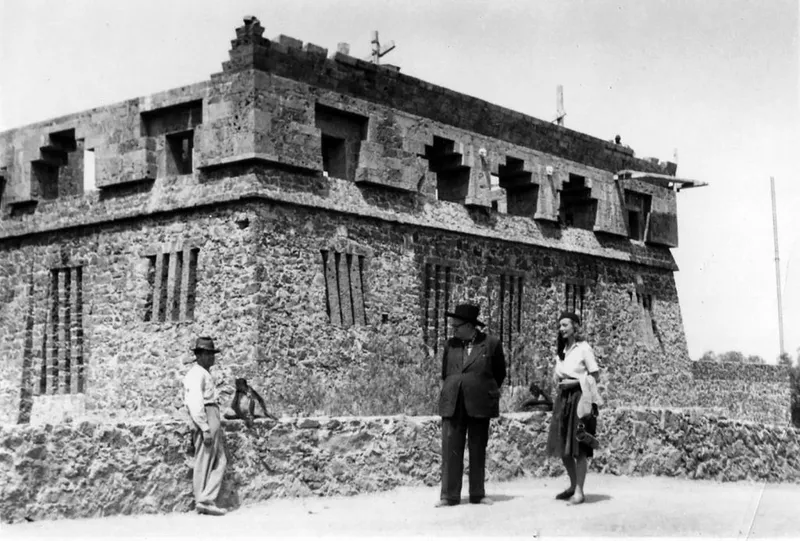
These remains are now revered as a miracle, and processions visit the site to offer mass on the barren, rocky terrain. These lava fields, known as malpaíses or "badlands," are formed from solid basalt and represent the violent volcanic activity of Central Mexico.

In the country's cultural consciousness, there is a connection between these desolate areas and the Mexican people, as if the rough, crumpled landscape holds a mysterious, spiritual power.
As the Paricutín volcano erupted, Gerardo Murillo, also known as Dr Atl, moved to a nearby cabin and began creating an extensive collection of paintings and drawings depicting the volcanic activity. A renowned artist, author, and occasional admirer of Nazism, Dr Atl was fascinated by the Mexican landscape and the idea of building an ideal city, Olinka, in the midst of it. Inspired by Nietzsche's philosophy, Olinka would be a place where an intellectual, artistic, and scientific aristocracy could form a new, uncorrupted society. Throughout his life, Dr Atl proposed various locations for this city, including preliminary designs by architect Jacobo Königsberg. However, Olinka remained a utopian dream and was never actually built.

In the mid-20th century, Dr Atl was part of a group of Mexican avant-garde figures who sought to modernize their semi-rural country and create a utopian society. This group, which included Luis Barragán, Diego Rivera, Frida Kahlo, Armando Salas Portugal, José Clemente Orozco, Chucho Reyes, Juan O’Gorman, and Max Cetto, often visited the basaltic landscape created by the eruption of the Xitle volcano in southern Mexico City, which occurred between 245 and 315 CE. These individuals were drawn to this otherworldly place as they pursued their dreams of transformation.

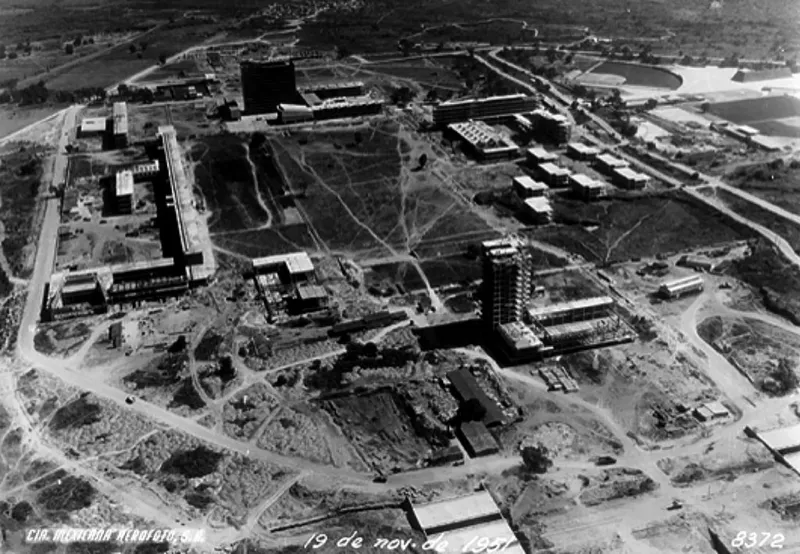
Two significant modern Mexican urban and architectural projects were built in a volcanic ecosystem: El Pedregal (also known as the Pedregal Gardens), a residential development designed in 1945 by investors including Barragán, which became one of the most prestigious places to live in the city; and Ciudad Universitaria, the campus of the largest university in Latin America, which saw the participation of nearly every modern architect working in Mexico City in the 1950s.
The architecture of Ciudad Universitaria and the houses in Pedregal Gardens, designed by Cetto, Artigas, and Attolini, showcase two different approaches to working with the stone terrain of the area. Some projects, like the modern buildings at Ciudad Universitaria, feature concrete, metal, and glass structures that stand out against the wild landscape. Others, like the work of Barragán in El Pedregal, incorporate traditional pre-Hispanic techniques and blend systems seamlessly into the terrain, using subtle shaping and elements like walls or stairs to create intimate enclosures. The Olympic Stadium at Ciudad Universitaria, designed by Augusto Pérez Palacios, Jorge Bravo Jimenez, and Raúl Salinas in 1952, is an example of the latter approach, rising from the topography to form an asymmetric bowl that blends into the surroundings. The handball courts by Alberto T. Arai from the same year and the Espacio Escultórico added in 1979 also adopted this approach, using stone slopes and a circle of concrete pieces to enhance and define the natural lava landscape.
The Anahuacalli was a unique project initiated by artist Diego Rivera in the malpaís area. In 1942, Rivera purchased four hectares of land in San Pablo Tepetlapa with the intention of building a museum to house his collection of over 50,000 pre-Columbian pieces. However, he also wanted to create a Ciudad de las Artes or City of the Arts, which would be a utopia similar to Dr Atl's but with a more socially conscious focus. The Anahuacalli was to be the main building of this architectural complex, which was to be centred around a large plaza with a stage in the centre and surrounded by portals leading to artisan workshops and various spaces dedicated to architecture, music, and dance. Rivera always saw this project as his legacy, a place where the general public could view the collection he had amassed throughout his lifetime. These developments, both public and private, were significant collective processes.
The Anahuacalli is an architectural wonder that defies modern architectural standards; it is an intimidating building that elicits fear rather than tranquillity. It is a unique representation of pre-Hispanic architecture, a blend of Toltec, Mexica, and Mayan influences mixed with the artist's fanciful imagination, a creation of what pre-Hispanic life would be like in the modern world. It could be considered the first postmodern building in Mexico, despite not having any intention of being so.

The Anahuacalli building, located in Mexico, represents a symbolic journey through the Underworld to the levels of Life and Paradise. Despite being made of stone, its relationship to the surrounding environment is more abstract than physical, as it stands out as a monumental and ironic presence. The inner ceilings of the building are adorned with colourful mosaics, a technique that was later used by O'Gorman, who worked with Rivera on the design, of the facades of the Ciudad Universitaria Central Library. In contrast, O'Gorman's own house, located nearby, seamlessly integrates stone into the natural landscape, with nature seemingly taking precedence over human-made structures. Overall, the Anahuacalli serves as a way to transmit the cultural significance of the past, much like the rough terrain that surrounds it.
Rivera died before Anahuacalli was completed. It was finished by O’Gorman, Ruth Rivera and Heriberto Pagelson. The official opening was in 1964.
Before the completion of Anahuacalli, Rivera passed away. O’Gorman, Ruth Rivera, and Heriberto Pagelson finished the project. The official opening took place in 1964.
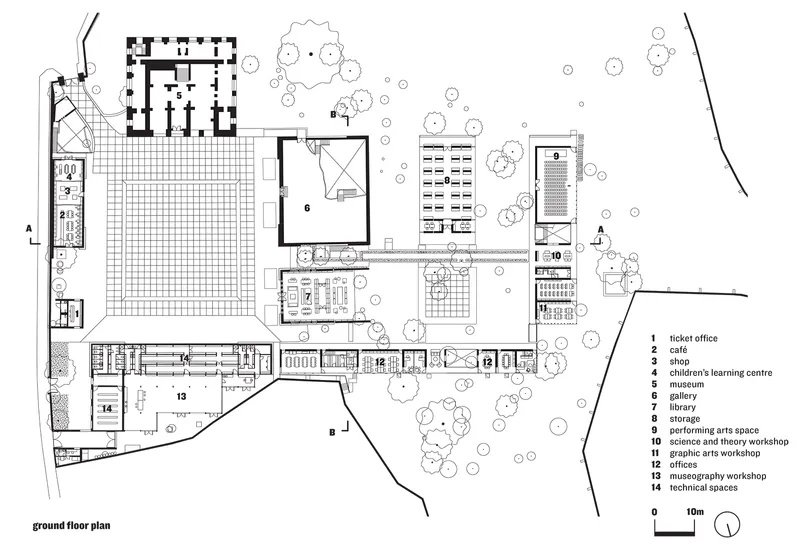
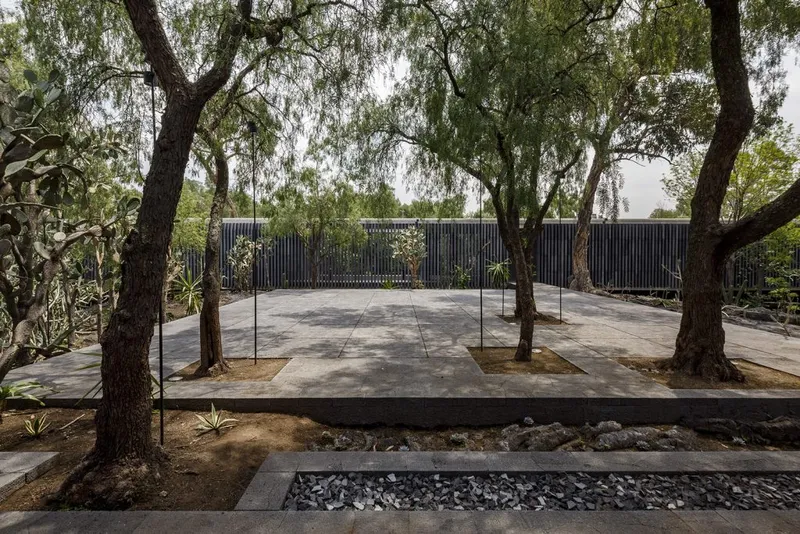
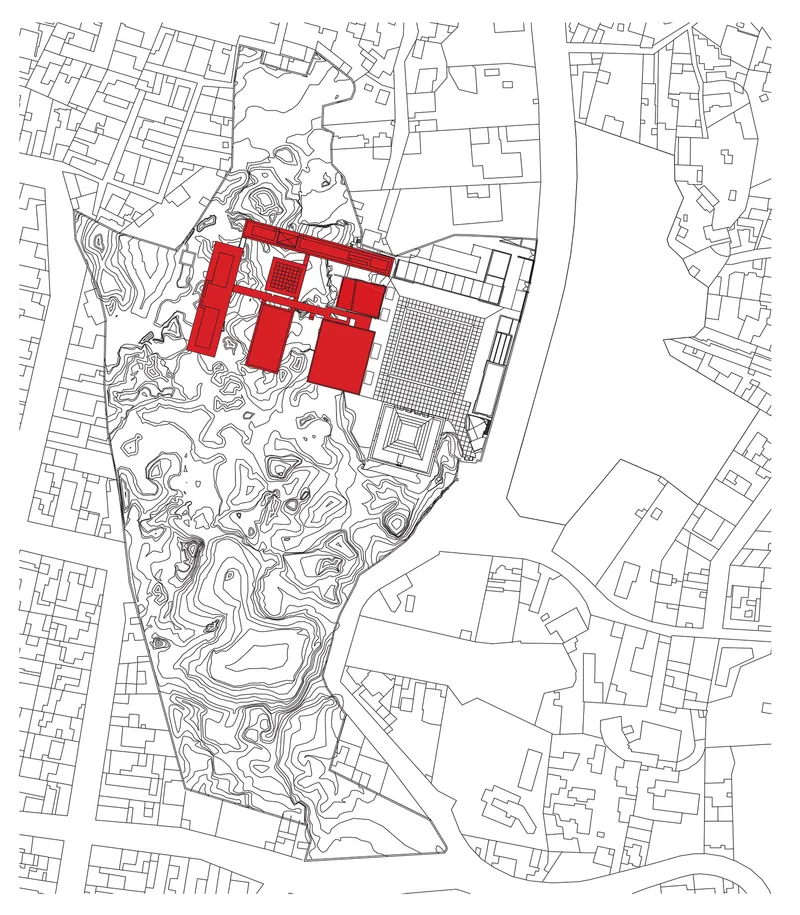
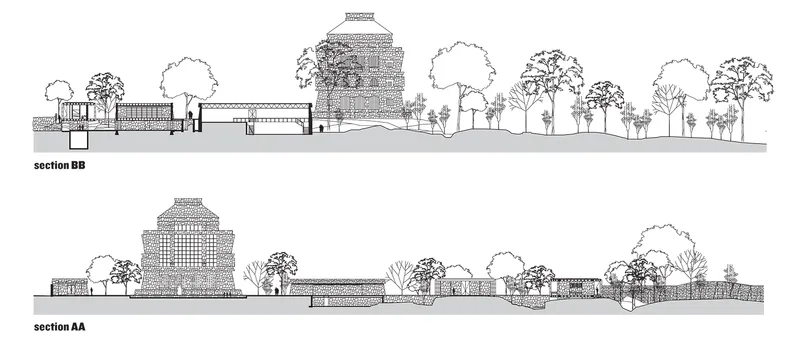
It has been a challenge to complete the utopian vision of Diego Rivera, particularly when it involves the Anahuacalli building. For many years, the Anahuacalli complex only consisted of the main building, plaza, and two auxiliary buildings designed by O'Gorman, while the rest of the Ciudad de las Artes was neglected. However, recently, a competition was held for the extension of the complex, which was won by Mauricio Rocha's firm. The construction was completed in 2021. Rocha opted for a more subtle approach in his proposal, seeking to solve the issue by creating multiple volumes that could potentially be expanded in the future. The extension aims to maintain the original spirit of the project, with plazas serving as the central focus around which the pavilions, including a library, collection warehouse, workshops, offices, and services, are arranged.
 Captured by artists in drawings and paintings, including this 1946 sketch by Dr Atl, the basaltic malpaís create an abrupt and Stoney landscape
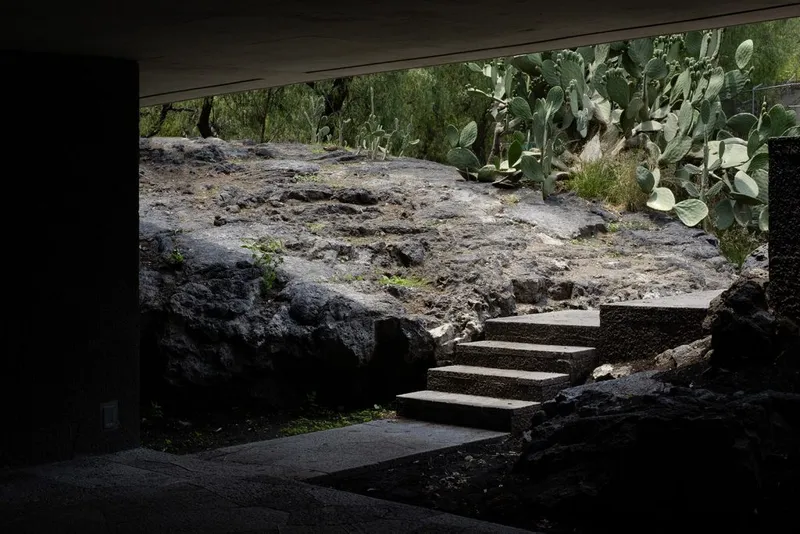
Rocha's project stands out due to its subtle incorporation of modernist techniques, specifically in the way the buildings are placed on the ground with minimal impact. The use of basalt stone as a structural element, both in the vertical columns and the stone lattices on the facade, pays homage to Anahuacalli's window design. The pavilions are elevated slightly above the rough terrain, giving the appearance of floating stones within the natural surroundings. This approach recognizes the power of nature, allowing the rocks, vegetation, and lava to speak for themselves while the architecture serves as a passive observer.

Diego Rivera collected around 50,000 prehispanic objects and pieces of art during his lifetime, only 2,000 of which were on display in the original museum
Credit:Frida Kahlo & Diego Rivera Archives / Bank of Mexico, Fiduciary in the Diego Rivera and Frida Kahlo Museum Trust
It is possible that modernity has taught us to not believe in any utopian ideas. The names "Ciudad Ideal" and "Ciudad de las Artes" may sound exciting, but history has shown us how these types of projects often end in failure, leaving us with barren landscapes and destruction. Instead of seeking miraculous solutions, it may be more practical to focus on simple and effective solutions. Maybe the true miracle is the realization that sometimes, silence is the best course of action.
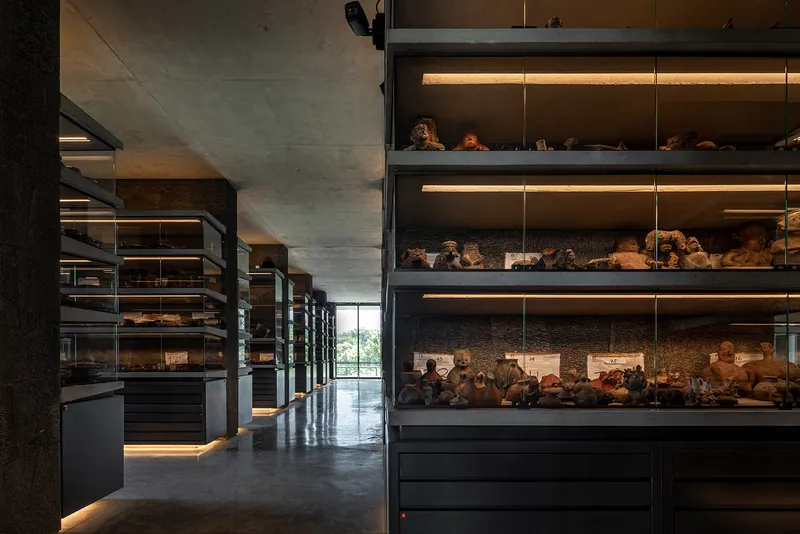
A new repository contains concrete shelves and drawers to display and store thousands more
Credit:Onnis Luque
References (1)


Popular Articles
Popular articles from the community


The Earth Pod: 3D Printed Homes for Resilient Refugee Communities
The Earth Pod reimagines refugee housing through 3D printed homes made from clay, combining resilience, self-sufficiency, and rapid shelter.

Co-Life: Senior Housing Design That Reconnects Older Adults With the City
Co-Life reimagines senior housing design through healing gardens, shared streets, workshops, and a sustainable community across generations.

The Musturak Paradise: Senior Living Architecture for a Connected Future in Temara, Morocco
The Musturak Paradise reimagines senior living architecture in Temara via private homes, social spaces, culture, community, and shared care.

Lunar Spiral: Space Architecture Shaped by the Mathematics of the Universe
Lunar Spiral reimagines space architecture through Fibonacci geometry, lunar regolith, levitating habitats, and self-sustaining Moon living.


Similar Reads
You might also enjoy these articles
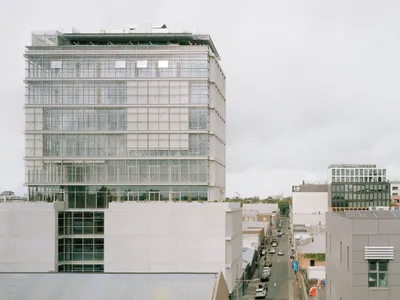
116 Rokeby Building, Collingwood
Sustainable Collingwood office building featuring double-skin façade, natural ventilation, rooftop amenities, and carbon-neutral design focused on wellbeing and longevity.
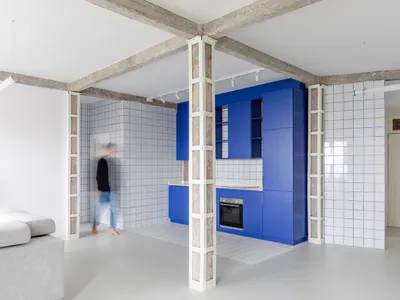
Contemporary Apartment Renovation in Spain: RV House by BIAN Opens Up to the Sea
A minimalist 1930s apartment in Santander is transformed into a flexible, sea-facing home through contemporary Spanish renovation.
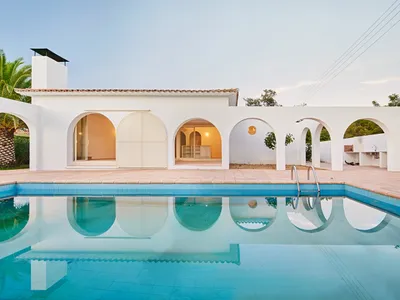
3 Marías House: A Contemporary Mediterranean Courtyard Retreat by Bajet Giramé + Burckhardt
Mediterranean courtyard home blending traditional architecture with modern design, terracotta flooring, flexible interiors, sustainable climate strategies, and garden integration.
NZ10 Apartment by auba studio: Adaptive Reuse in Palma de Mallorca
Adaptive reuse apartment transforms bakery into light-filled home with patios, privacy layers, and wood interiors enhancing urban living experience.

Explore Cultural Architecture Competitions
Discover active competitions in this discipline




Challenge to reimagine the Iron Throne


Photograph architecture without architects


Illustrate the lost glory of Angkor Wat - Render Challenge

Bring back Drive In's
Comments (0)
Please login or sign up to add comments
No comments yet. Be the first to comment!