
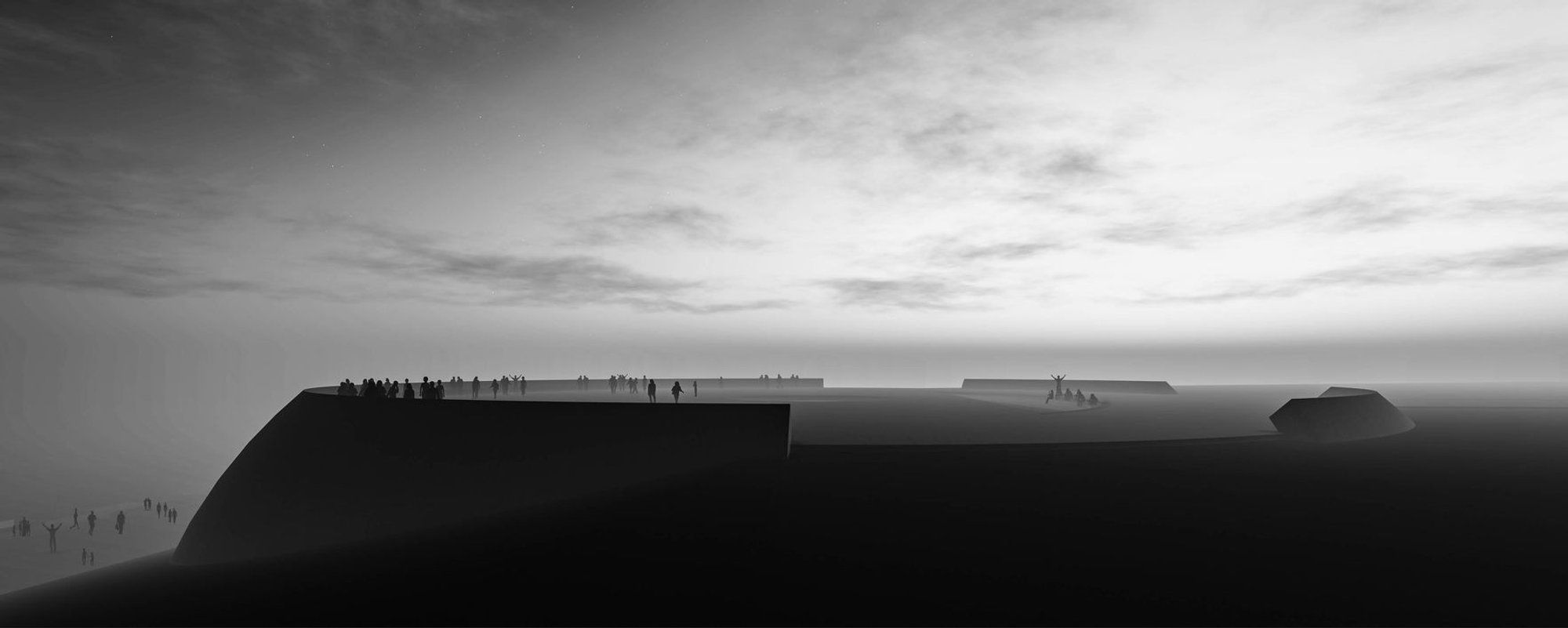
The Black Taj – Presence in Absence
A poetic exploration of architectural symbolism that reimagines the Taj Mahal through presence, absence, and the void of reflection.

Winner entry by Pranav – The Black Taj Competition
“Presence in Absence” is an architectural intervention that reinterprets the Taj Mahal not as a static monument, but as a living symbol of duality — a dialogue between what is seen and unseen, form and void, history and imagination. The project "The Black Taj - Presence in Absence - GPPB50"reflects on Shah Jahan’s poetic vision of love and eternity, translating it into a spatial narrative that merges myth, materiality, and metaphysical thought.
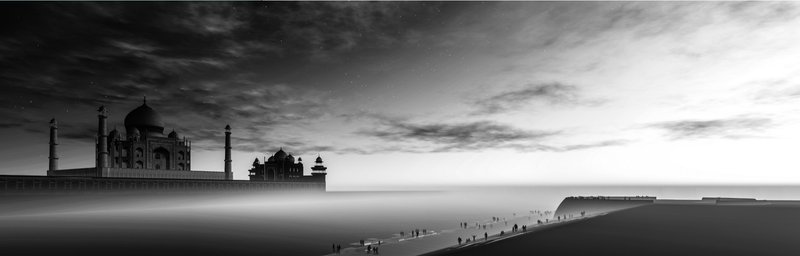
While the Taj Mahal stands as a radiant symbol of presence — solid, symmetrical, and luminous — its speculative twin, the Black Taj, embodies the invisible and the intangible. Pranav’s design imagines this mythical counterpart as an “invisible manifestation” across the Yamuna River — a space where architecture transcends its material form to become pure emotion and reflection.
Architectural Symbolism: From Presence to Emptiness
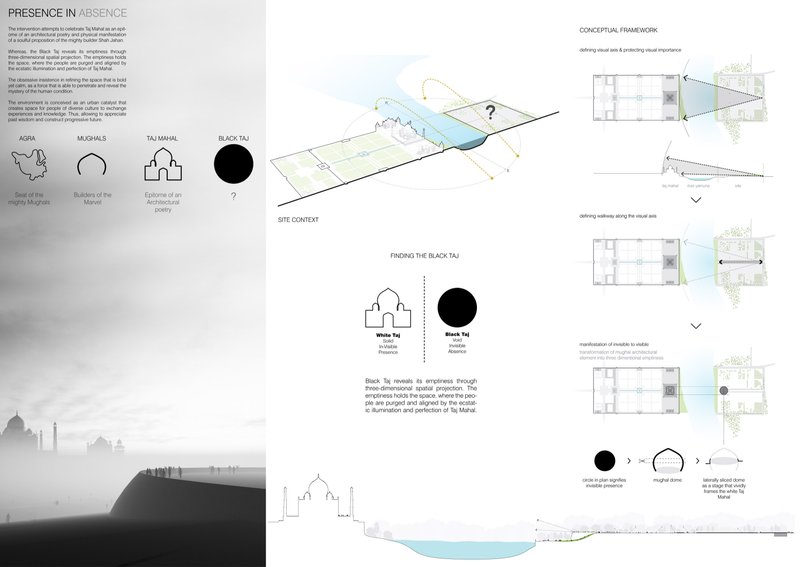
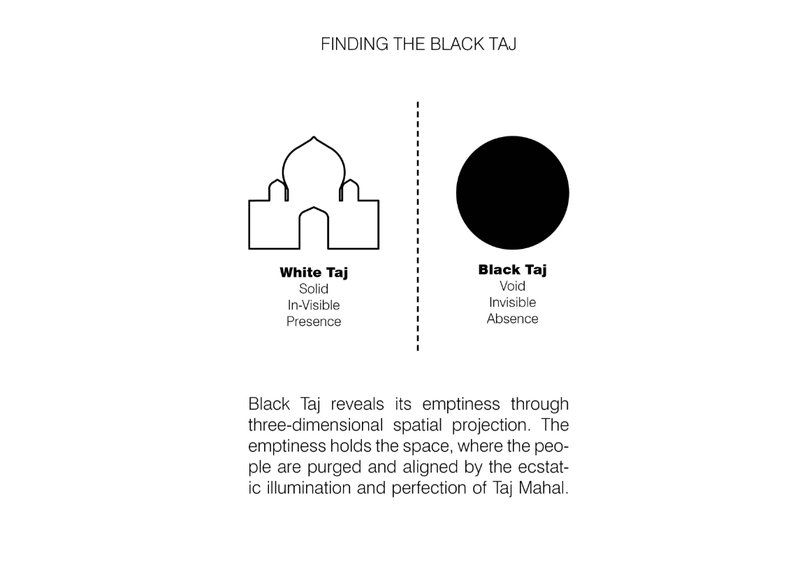
The project situates the Taj Mahal as the protagonist and the Black Taj as its metaphysical mirror. The core idea emerges from an exploration of architectural symbolism in contemporary design, redefining the Mughal narrative through spatial inversion.
The White Taj represents visible presence — solidity, permanence, and the weight of history. In contrast, the Black Taj expresses invisible absence — emptiness, transience, and the unknown. This polarity generates an immersive experiential field, allowing visitors to engage with absence as a form of presence.
Through controlled geometry, visual alignment, and site-sensitive interventions, the design frames the Taj Mahal not merely as a monument but as an eternal source of illumination — the light against which the void finds meaning.
Site Context: Reimagining the Yamuna Edge
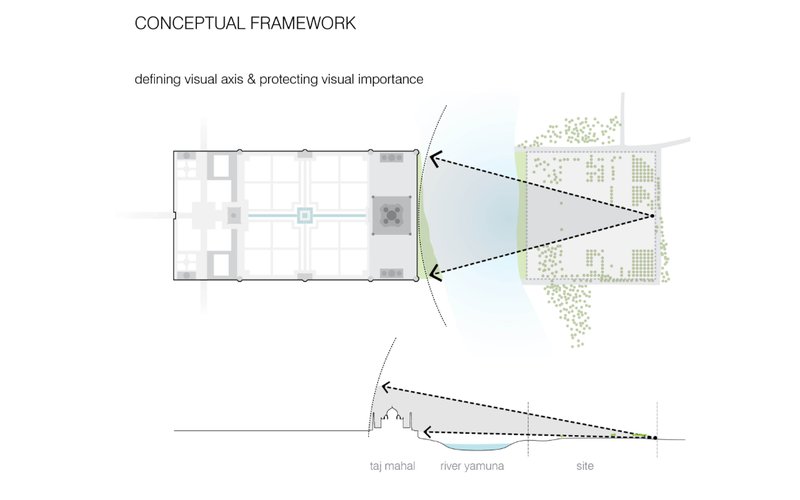
Set along the northern bank of the Yamuna River in Agra, the project extends the visual and spiritual axis of the Taj Mahal. The site across the river — long speculated as the resting place for Shah Jahan’s envisioned Black Taj — becomes the stage for a spatial inversion.
Rather than building a tangible replica, the intervention manifests absence. The design defines sightlines that protect and amplify the Taj’s visual prominence while sculpting an urban edge that acts as a contemplative interface between land, water, and sky.
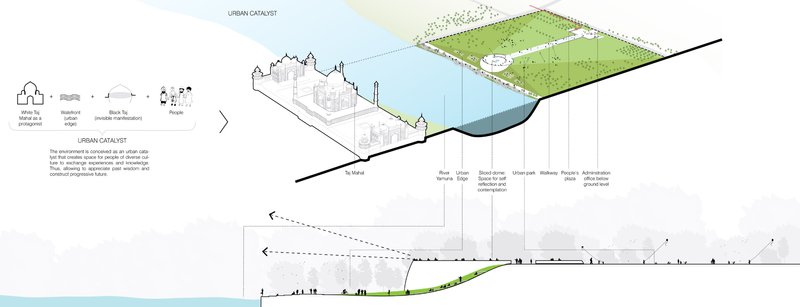
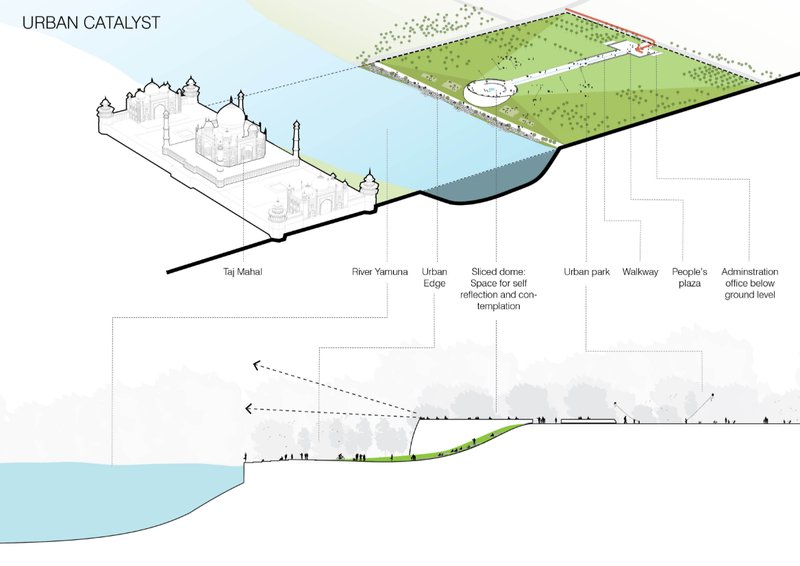
By redefining this edge, the project transforms the void across the Yamuna into an urban catalyst, inviting people to walk, reflect, and rediscover the Taj Mahal’s eternal dialogue with light and shadow.
Conceptual Framework: Manifesting the Invisible
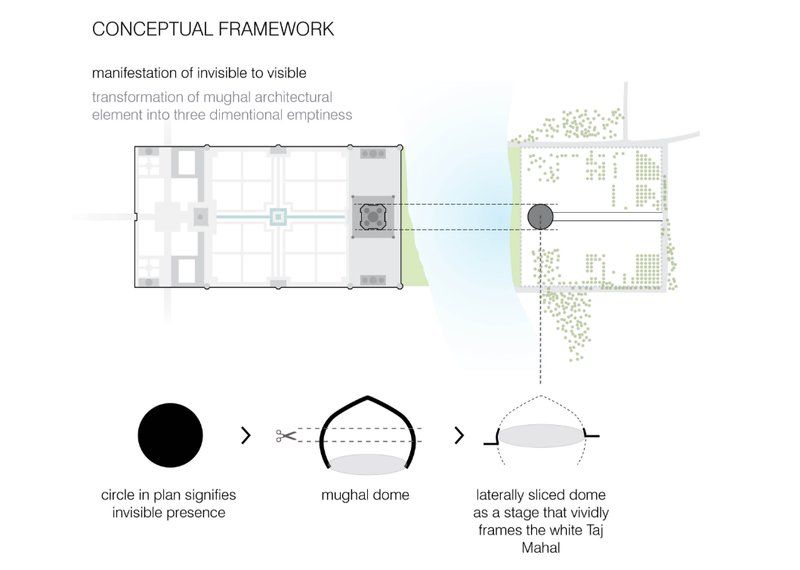
The conceptual diagrams trace how Mughal architectural vocabulary evolves from form to void. The process begins with the circle — symbolizing invisible presence — which transforms into a Mughal dome, and then into a laterally sliced form framing the Taj Mahal across the river.
This transformation turns absence into architecture — a three-dimensional spatial projection that holds emptiness as an active force. The sliced dome becomes both a stage and a lens — an experiential threshold where the viewer perceives the White Taj through the architecture of the unseen.
Every spatial gesture aligns with the visual and metaphysical axis of the Taj Mahal, preserving its sanctity while expanding its narrative into the realm of abstraction. The result is not a competing structure but a silent counterpart — a reflection that celebrates impermanence as deeply as permanence.
The Urban Catalyst: Architecture as Cultural Dialogue
Beyond its conceptual symbolism, the project serves as an urban catalyst — a civic space that reactivates the relationship between the Taj Mahal and Agra’s people.
Through a network of walkways, riverfront plazas, and contemplative zones, the site invites social and cultural exchange. It becomes a platform for reflection and collective memory, where people of diverse backgrounds engage in dialogue between heritage and modernity.
By merging historical reference with contemporary architectural thinking, the proposal transforms an unbuilt myth into a public realm for emotional and cultural engagement.
A Poetic Legacy of the Mughals
“Presence in Absence” extends the Mughal legacy beyond material grandeur into the philosophy of space. It invites visitors to experience architecture not as an object, but as an atmosphere — one defined by silence, geometry, and the unseen.
The project bridges centuries of architectural evolution, transforming the speculative myth of the Black Taj into a living meditation on memory, light, and time.
Architecture Beyond Form
Through minimalist expression and conceptual clarity, Pranav’s “Presence in Absence” dissolves the boundary between monument and landscape. It stands as a profound reflection on how architecture can embody both presence and void, both history and imagination.
The design’s power lies in its restraint — its ability to communicate through what it withholds rather than what it constructs. In doing so, it continues the Taj Mahal’s legacy not by replicating its beauty, but by revealing the unseen architecture of emotion that lies beneath it.




Popular Articles
Popular articles from the community

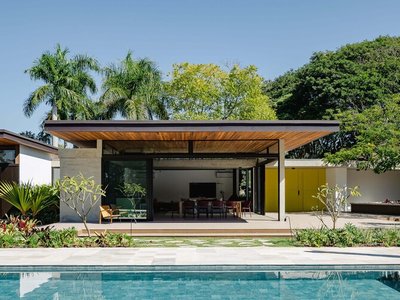
Flamboyant House by Juliana Camargo + Prumo Projetos
Modern Brazilian house integrating existing tree, pool, and volumes with glass, wood, and transitional spaces blending interior, exterior, and landscape seamlessly.

Solar Steam: A Climate-Responsive Architecture That Redefines the Monument
A climate-responsive memorial architecture that transforms heat, decay, and time into a living system reflecting humanity’s ecological impact.
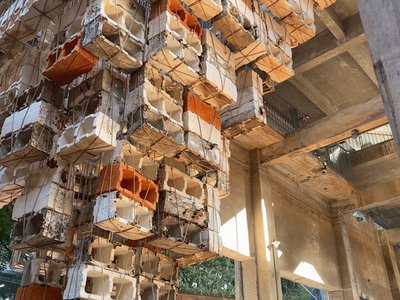
Inverted Architecture Installation by Studio Link-Arc: Exploring the Intersection of Architecture and Living Organisms
Inverted Architecture Installation by Studio Link-Arc blends mycelium, sustainability, inverted design, ecological cycles, and urban adaptive architecture in Shenzhen.
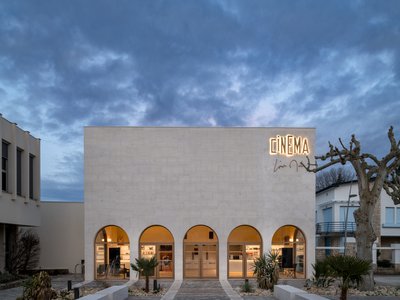
Louis Malle Cinema: A Limestone Cultural Landmark Revitalizing Community Life in Prayssac
Limestone cinema extension with public forecourt, blending heritage and modern design to create flexible cultural spaces and strengthen community interaction.

Similar Reads
You might also enjoy these articles

Digital Façade Design for our cities’ urban fronts
Prima Facie - Result Story
Protecting avian biodiversity: Bird observatories to help spread awareness & save rare bird species.
Results for ‘Fly’ - Landscape design competition out now
Connecting with nature: Forest interpretation center in Australia's Wollemi National Park
‘Asatti’ - Landscape design competition - Result story


Explore Architecture Competitions
Discover active competitions in this discipline




The International Standard for Design Portfolios


The Global Benchmark for Architecture Dissertation Awards


The Global Benchmark for Graduation Excellence


Challenge to reimagine the Iron Throne
Comments (0)
Please login or sign up to add comments
No comments yet. Be the first to comment!