
The Green Link: Reimagining Urban Infrastructure through Sustainable Transit Architecture
Bridging mobility and ecology, The Green Link transforms Andheri Station into a sustainable urban corridor that connects people, place, and planet.

Winner entry of Hyperlocal
In the heart of Mumbai, one of the busiest and most congested cities in the world, The Green Link project proposes a visionary model for urban redevelopment. Designed by Alan Abraham, Arancha Alvear, Vineet Hingorani, Natasha Joseph, Aishwarya Singh, and Vatsal Mistry, this architectural intervention reimagines the Andheri and Vile Parle railway stations as integrated urban parks, creating a symbiotic relationship between mobility, ecology, and public life.
Concept: Connecting People through Green Infrastructure
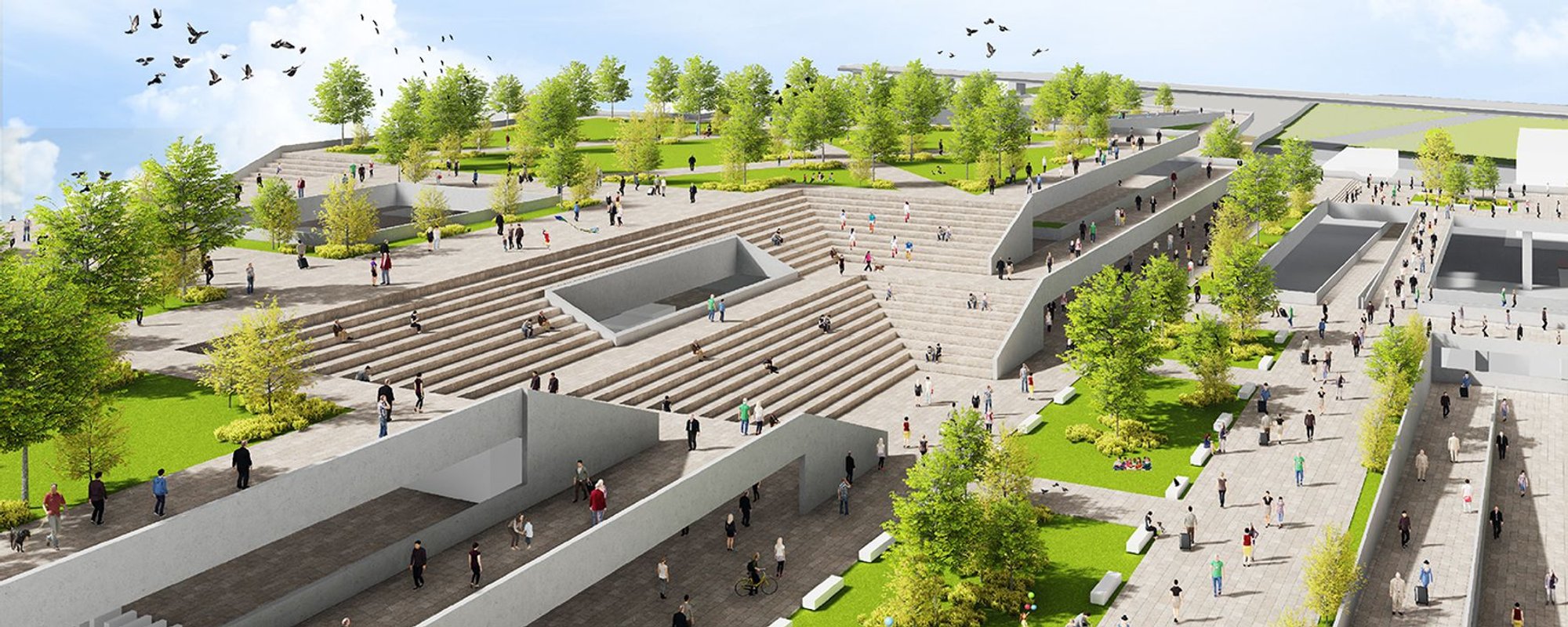
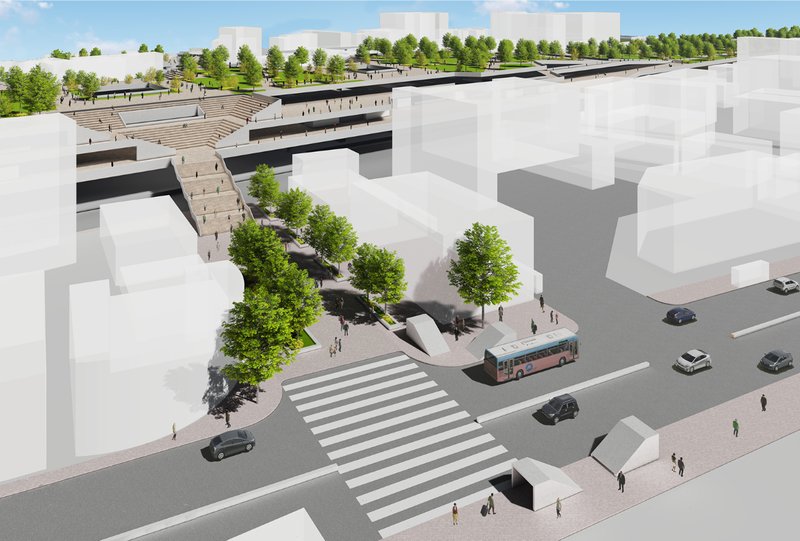
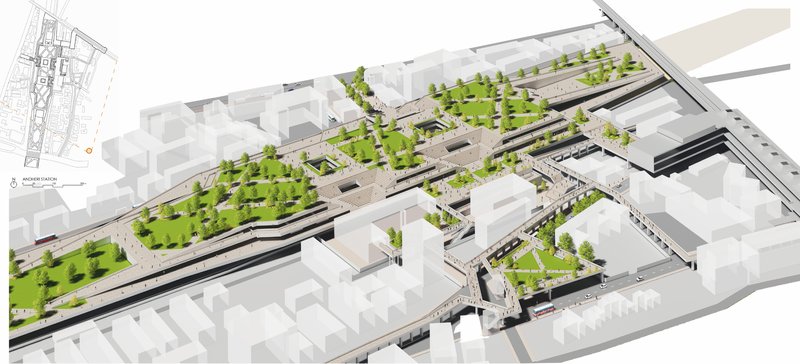
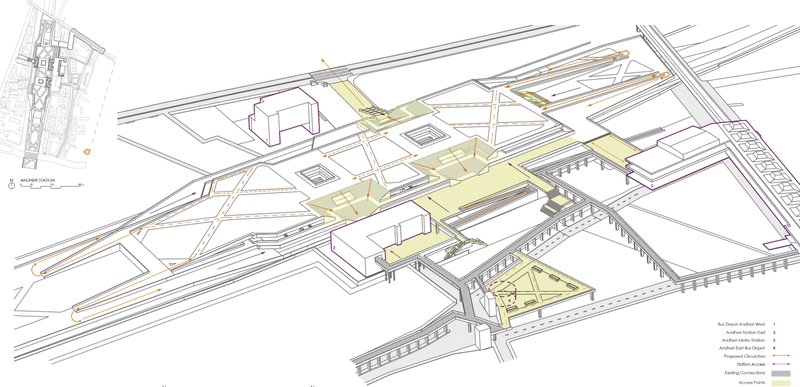
The proposal, titled The Green Link, envisions the development of a continuous urban park built above the existing railway lines. This elevated green spine functions as a multi-level transit hub and a public recreation zone, merging ecological restoration with everyday urban functionality. It provides seamless mobility between east and west Mumbai, bridging the physical and social divide caused by the railway corridor.
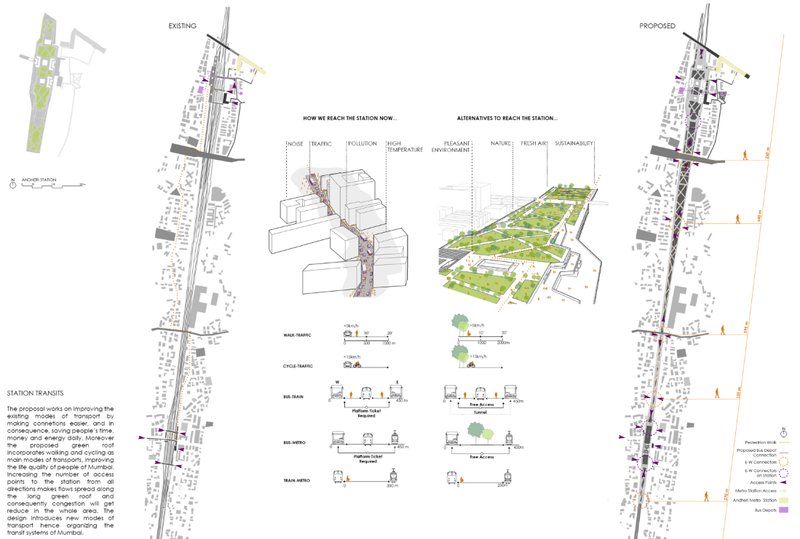
At its core, the design introduces a new system of mobility—a walkable and cyclable route that connects train, metro, and bus networks through green corridors. The concept is grounded in the belief that architecture should not only facilitate movement but also nurture community well-being and urban resilience.
Multi-Scale Strategy: Network, Prototype, and Detail Levels
The Green Link operates at three interconnected scales:
- Network Level – The design redefines Andheri’s role within the broader city fabric, integrating existing transport systems with new greenways and pedestrian routes. By connecting multiple neighborhoods, it establishes a continuous ecological and social network.
- Prototype Level – The Andheri Station serves as a prototype for similar sustainable interventions across Mumbai’s transit hubs. It demonstrates how green infrastructure can be layered over existing systems without disrupting the city’s pulse.
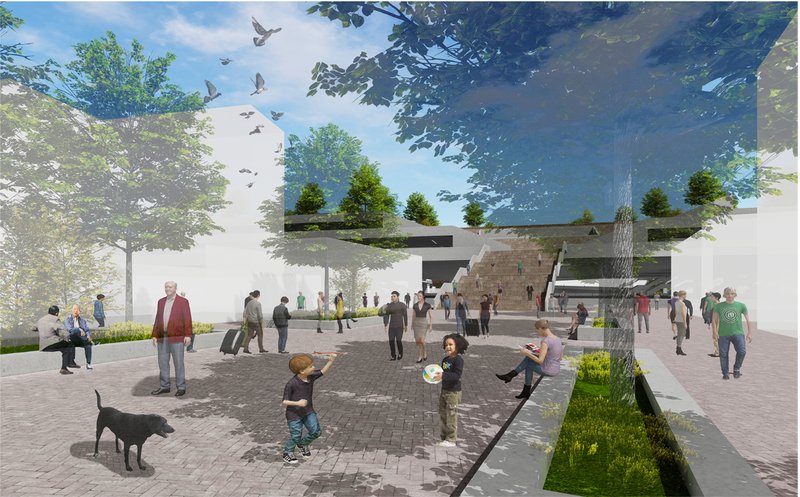
- Detail Level – At the micro level, the project explores spatial relationships between circulation, landscape, and built form. The detailed design includes amphitheaters, open plazas, light shafts, and public staircases that encourage human interaction while ensuring accessibility and safety.
Spatial Experience: From Transit to Transformation
Unlike traditional station complexes that prioritize efficiency over experience, The Green Link transforms the act of transit into an architectural journey. As commuters move across various levels—platforms, plazas, and elevated parks—they engage with spaces that promote leisure, social interaction, and reflection.
- Walking Tracks and cycling lanes redefine movement as a healthy, environment-friendly experience.
- Light and ventilation shafts naturally illuminate and cool the multi-tiered station, minimizing energy use.
- Public staircases and ramps connect multiple levels, improving pedestrian flow while maintaining accessibility.
- Open plazas and skywalks become civic stages—spaces for gatherings, performances, and daily life.
This multi-functional design blurs boundaries between transportation and urban life, making infrastructure a catalyst for community engagement.
Sustainable Design and Environmental Integration
The architecture employs several green design principles aligned with the goals of sustainable urbanism:
- Green Roof Systems help mitigate heat and improve air quality.
- Rainwater Harvesting and Drainage Integration enhance the site’s ecological performance.
- Native Planting Strategies reinforce biodiversity while reducing maintenance costs.
- Material Optimization and Reuse contribute to a lower carbon footprint.
The elevated park not only reconnects fragmented urban areas but also acts as a carbon sink, transforming the railway corridor into a living, breathing ecosystem. It is a clear statement on how sustainable urban architecture can become both functional and restorative.
Human-Centric Mobility and Accessibility
The proposal emphasizes inclusivity through its focus on universal accessibility. Every level—platforms, plazas, or podium gardens—is connected via ramps, escalators, and elevators, ensuring equitable mobility for all. The design introduces bus tunnels and intermodal connections that allow commuters to move from train to metro to bus seamlessly.
The project’s success lies in how it transforms mobility from an act of necessity to an experience of belonging. It invites the people of Mumbai to reclaim public space—not as passersby, but as participants in an evolving urban ecosystem.
The Andheri Station as an Urban Park
At Andheri Station, The Green Link becomes a vibrant urban landscape. The elevated green plaza hosts seating, cultural spaces, and sports areas, while the lower levels accommodate transport functions. By reimagining this infrastructural node as a civic park, the architects demonstrate that urban density and open space need not be mutually exclusive.
The integration of transport and landscape establishes a new urban typology—one that celebrates coexistence rather than separation. This strategy makes the design both visionary and replicable across other Indian cities facing similar infrastructural and environmental challenges.
The Green Link is more than a transport project—it is a manifesto for sustainable urban architecture. It transforms the Andheri-Vile Parle corridor from a fragmented transit zone into a continuous green artery of life, leisure, and mobility. By merging ecological design with public infrastructure, the architects propose a future where cities breathe, move, and thrive as unified ecosystems.



Popular Articles
Popular articles from the community

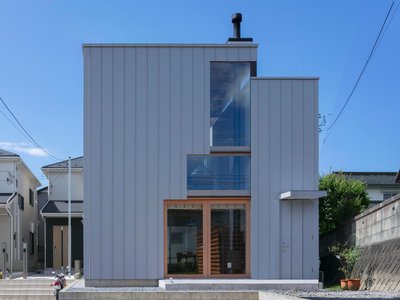
Split House: A Compact Urban Home Blending Privacy, Light, and Flexible Living in Japan
Compact Japanese home featuring DOMA space, flexible café potential, passive lighting, privacy zoning, and sustainable urban living design.
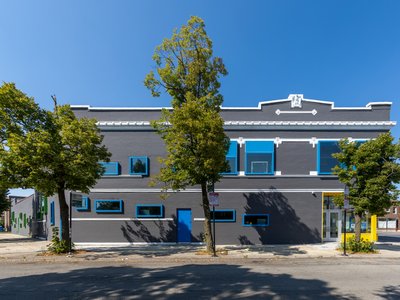
Gads Hill Early Learning Center by JGMA: Adaptive Reuse Shaping Community-Focused Educational Architecture
Adaptive reuse transforms fragmented structure into vibrant early learning center with playful façade, natural light, and community-focused sustainable design.

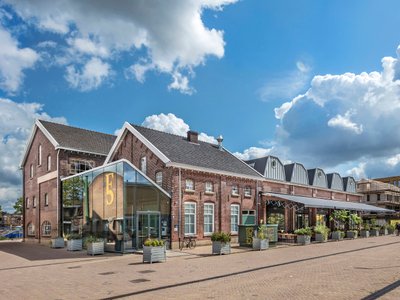
Fifth NRE Jazz Club – De Bever Architecten: Eindhoven’s Revitalized Cultural Hub
Historic gas factory transformed into Fifth NRE Jazz Club blending modern sustainability, jazz culture, dining, and heritage architecture seamlessly.


Similar Reads
You might also enjoy these articles

Digital Façade Design for our cities’ urban fronts
Prima Facie - Result Story
Protecting avian biodiversity: Bird observatories to help spread awareness & save rare bird species.
Results for ‘Fly’ - Landscape design competition out now
Connecting with nature: Forest interpretation center in Australia's Wollemi National Park
‘Asatti’ - Landscape design competition - Result story

Explore Infrastructure Design Competitions
Discover active competitions in this discipline




The Global Benchmark for Architecture Dissertation Awards

Challenge to design locus for the upliftment of human rights

Challenge to design a learning and healing center

Challenge to re-imagine a department store in present times
Comments (0)
Please login or sign up to add comments
No comments yet. Be the first to comment!