

The Ribbon
The concept of a modular bus stop which adapts to the different locations around the world

The Idea
The main concept of our project was to create several bus stop modules that can be freely combined depending on the needs of a specific location or the number of passengers who will depart from a given place. It was also important for us to limit ourselves to a small amount of materials in order to create a universal form that will work well in different regions of the world. Finally, we created a form of a bus stop, the leitmotif of which is a ribbon that adapts to the surroundings.
Modules and how to connect them
We have created two basic modules, one of which is open on three sides, while the other one is open on two sides. Combining these elements allows you to expand along. In addition, a third module was created to ensure the possibility of changing the direction of expanding the series of modules. Combining these three parts with each other in various combinations allows us to create complex and personalized loops of stations or bus stations.
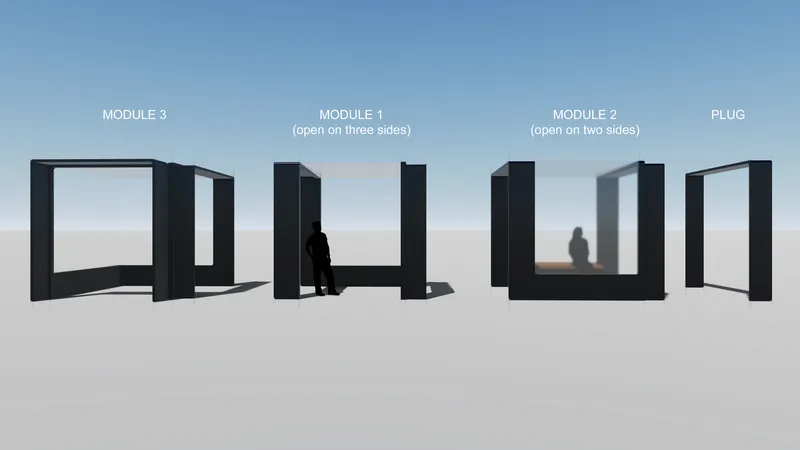
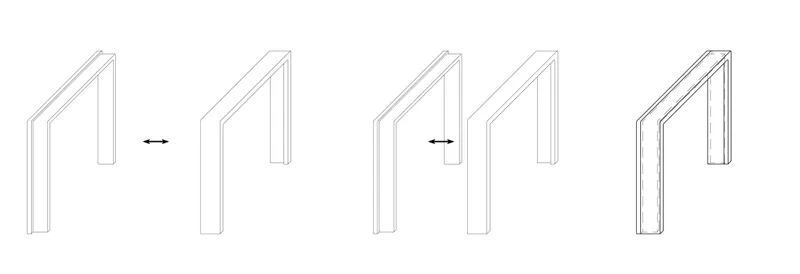
The elements are joined with an overlap, which allows us to extend and modify the stop position practically endlessly. When we want to finish our set of bus stops or use a single module in a given location, another element was created - a plug. Thanks to this, we maintain the consistency of the form, avoiding the duplication of adjacent walls when putting together subsequent modules.
The connection system is based on the 'coming on' of subsequent elements. Each of the modules on one side is undercut on the inside and undercut on the outside on the other side, thanks to that we have the freedom to create any configuration we need.
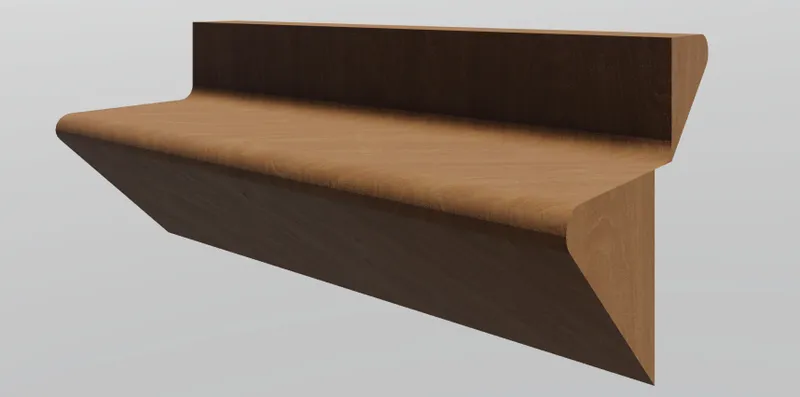
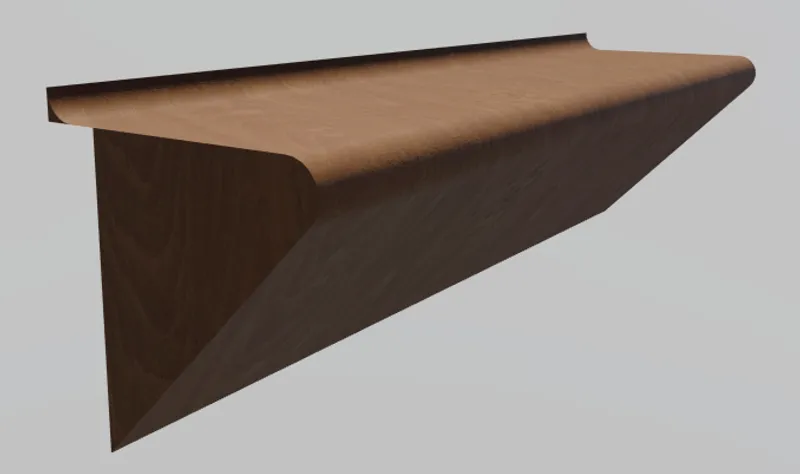
As a form complementing the basic requirements for stops, we have created a bench and a high seat, which are also universal. They can be placed in each of the modules depending on the users' needs and the traffic volume in a given location. What is more, the form of the benches and the high seats gives us an opportunity to install them both inside and outside of the stop stand. In addition to adaptation to throughput, the choice of seats may also depend on the type of users. High seats are good for older people because it allow them to approach the oncoming bus more comfortably and faster. They are also convenient for people with prams.
Materials and technical solutions
When analyzing the requirements of material solutions adapted to different locations in the world, we assumed that a good concept would be to create a bus stop whose selection and variability would be flexible. This will help with a better fit to the situation (location). In addition, it is important that the materials which are being used are resistant to vandalism and difficult weather conditions.
When designing a bus stop for the urban space that we know, we chose the aluminum ribbon material, powder coated on a chrome base, because it allows the use of different colors, which can also have an additional communication function and emphasize the color identification of a given area. For example in the location that we presented we wanted to refer to our university in terms of color. Moreover, our second goal was to emphasize that the bus stop also works well at night.
The panes will be made of 8 mm triple toughened glass, which allows them to function as showcases where the timetable can be placed. We also assume the possibility of using interactive monitors as part of a dynamic passenger information system. These solutions give us a cheaper and more expensive example of presenting passenger information, of which interactive monitors would meet the assumptions of the smart city concept. Colorless cellular or tinted polycarbonate is a roof structure that will provide protection from sun and rain. The benches and high seats have been finished with impregnated wood.
As the finishing elements, linear LED lighting can be used, which could extend along the ribbon, giving not only an interesting artistic experience, but also serving as lighting for the surroundings.
We dealt with the problem of draining rainwater from the roof by using a gentle curve of the roof so that it could flow freely.
When designing the modules, we wanted them to fit into a different climate. For example, when we have a cold climate with strong winds, a more closed module can be used. When the climate is warm, the opened module would suit better. In addition, we proposed appropriate materials for the roof so that it does not heat up and could also provide shelter from the sun.
Additional equipment
An additional artistic value of the object could be the use of screen printing on the glazing. Different patterns could be created to make the bus stop more individual and allow it to meet the needs of the character of each location. Such procedure also increases the safety values - the glazing is visible from a distance. What is more, in the right climate, solar panels can be placed on the roofs to make the facility more ecological. Other accessories that would be welcome in this space is for example a rubbish bin. All these elements would be mounted directly on the ribbon.

Popular Articles
Popular articles from the community


LT2A and OPEN Architectes Thread a Brick and Glass High School Through a Wooded Belgian Campus
In Braine-l'Alleud, a 3,000 m² wing for Collège Cardinal Mercier pairs pale brick with a glazed colonnade, deferring to a small chapel and a dense wood.


Singing Woman: An Opera House That Performs Before the Curtain Rises
Ovidiu Cristian Pavel's conceptual opera house translates Estonia's choral identity into a sculpted waterfront landmark facing the Baltic Sea.

Cube Design Draws an Ecological Corridor Between Two Shenzhen Hills with the Nankai Building
Beside Shenzhen's container docks, the Nankai Building pairs stacked balconies with a climbing green screen to connect two hillsides across its height.

FCC Arquitectura Expands a Portuguese Granite House with a Board-Marked Concrete Wing
In Portugal, JV House pairs a cleaned-up whitewashed and granite dwelling with a timber-shuttered concrete extension, courtyards and a garden pool.

Similar Reads
You might also enjoy these articles
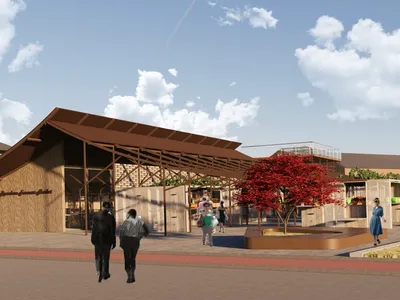
The Rhythm of Seasons
A Farmers' Market Connecting Nature and the City
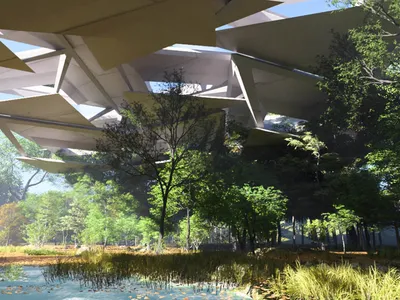

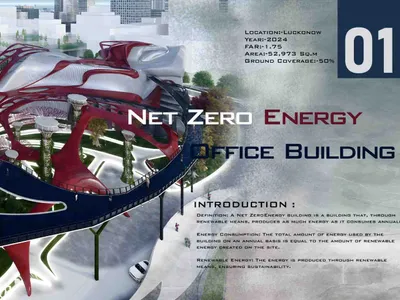
More Than a Building-Designing a Living System
More Than a Building-Designing a Living System
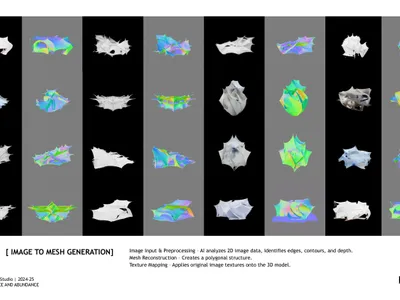
Base Beyond
DESERT COMPOUND ARID: TOURISM OF ABSENCE AND ABUNDANCE

Explore Modular Design Competitions
Discover active competitions in this discipline


Challenge to reimagine the Iron Throne

Photograph architecture without architects

Illustrate the lost glory of Angkor Wat - Render Challenge

Design challenge to reuse E-waste
Comments (0)
Please login or sign up to add comments
No comments yet. Be the first to comment!