
Underground Renewal Path
A therapeutic wellness centre based on biophilic principles in Melbourne

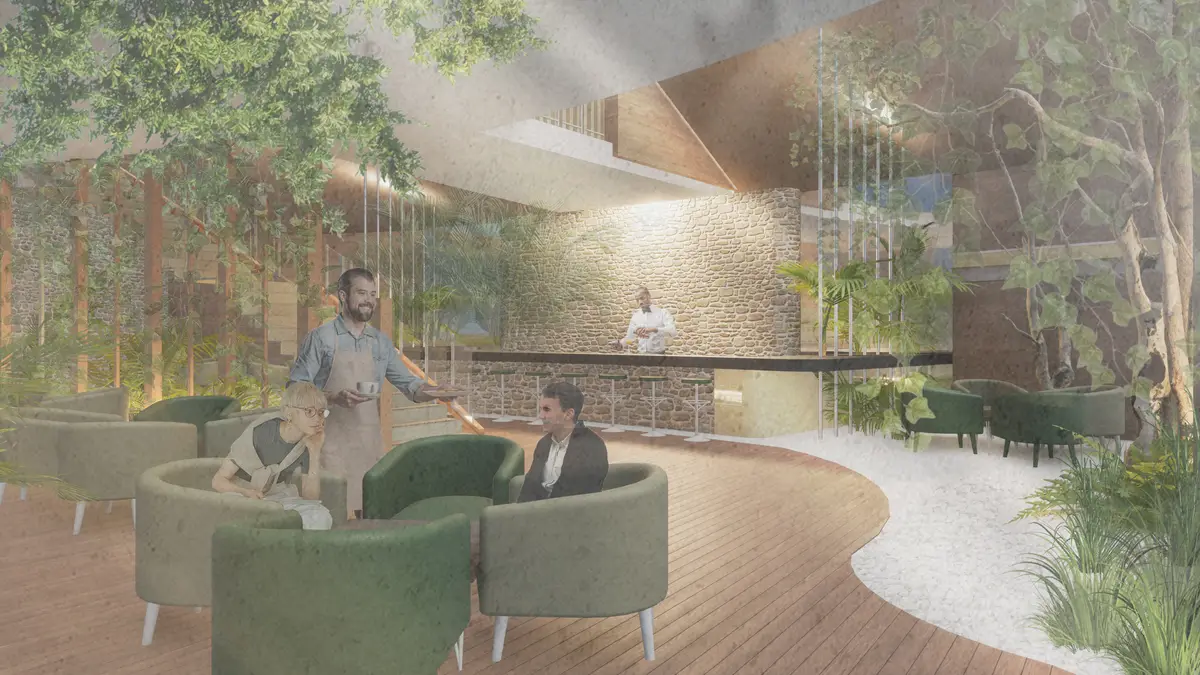
The aim of the study is to design a therapeutic centre which, through the use of natural materials and vegetation, is intended to help maintain the emotional and physiological wellbeing. Thanks to the connection with nature, the introduction of different types of therapy, and the 'disconnection' from the outside world, the centre allows people to fully calm down and focus on their needs.
Connection with nature, escape from the world
The building takes advantage of the natural terrain. It is located in a hollow in the plot and disappears under a green embankment becoming unnoticeable from the outside. It blends in with its surroundings. Hiding from the world protects patients from the hustle and bustle, allowing them to calm down and focus on their needs.
Therapeutic areas
Seven wellness zones have been designed, which are arranged in a two-circle plan. Users can move freely between the zones. Each zone makes use of the health-enhancing effects of biophilia.
Eco-solutions
The facility is environmentally friendly and uses modern installation solutions. It is important to bear in mind not only the comfort of patients, but also the environment. For this reason, the project uses perovskite panels and an air source heat pump. The structure of the building is made of CLT panels.
Biophilia
Biophilic principles have been applied throughout the building, and the greenery in the interior blends with the greenery of the courtyards. Natural materials such as wood and stone have been used and care has been taken to make use of: light reflections, the presence of water, and interesting spaces.


Popular Articles
Popular articles from the community


Manzana Morphosis: Stretching Barcelona's Grid into a Living Landscape for 2050
A radical reworking of the Eixample manzana turns density into a tool for generous public space, vertical ecology, and environmental performance.

Tsunami Convergenics: Turning Catastrophic Ocean Forces into Underwater Housing Infrastructure
A speculative underwater settlement off the coast of Onagawa, Japan, treats tsunamis and typhoons as energy sources rather than threats.

Faces of the Soviet Avant-Garde: Turning Moscow's Street Names into an Open-Air Museum
A network of sculptural installations across a Moscow residential district transforms forgotten architect names into spatial encounters with cultural memor

Temporary Home for Dogs: A Reversed Zoo Rethinks Animal Shelter Architecture
In Bucharest, a sinuous corridor and freed landscape flip the logic of containment, designing a shelter that works to make itself unnecessary.

Similar Reads
You might also enjoy these articles

Day and Night Park: A Time-Based Urban Newsstand in Beijing
A temporary urban newsstand in Beijing blending travel, light, and reading through poetic colors, compact form, and community-focused design.

Modernist Patio Renovation in El Masnou, Barcelona by Oliver Segura Arquitectura + Cebrià Arquitectura
Modernist patio renovation blending tradition and innovation with a movable pool, leveled floors, and Catalan materials in El Masnou.
Alto Residencial Coop: Cooperative Housing Development in Santiago de Compostela by Carbajo Barrios Arquitectos
A linear cooperative housing complex blending white volumes and perforated metal façades, enhancing community living, natural light, privacy, and urban integration.
Vil Genis School by BPA ARCHITECTURE – Massy, France
Vil Genis School in Massy, France, features sustainable design, south-facing classrooms, community integration, accessible spaces, and modern educational architecture.

Comments (0)
Please login or sign up to add comments
No comments yet. Be the first to comment!