

Unveiling the Charm of Terracotta in Retail Design: A Case Study of Fortune Farm Store by MuseLAB
Exploring the Fortune Farm Store's innovative terracotta retail interior design by MuseLAB, which transforms jewelry shopping into an immersive sensory experience.


In the bustling streets of Ahmedabad, India, lies a hidden gem that transcends the conventional boundaries of retail design—Fortune Farm Store, designed by the visionary team at MuseLAB. This article dives deep into how terracotta has been leveraged to create a retail interior that not only serves as a space to display jewelry but as a sensory journey that captivates and delights.


The Allure of Terracotta in Retail Spaces
Embracing Terracotta's Warmth
At the heart of Fortune Farm Store's design lies the extensive use of terracotta. This material, known for its rustic charm and warmth, sets the stage for a retail experience that is both inviting and intriguing. The choice of terracotta is a nod to sustainable and natural materials, aligning with contemporary design trends that prioritize environmental consciousness and aesthetic value.

Terracotta's Versatility in Design
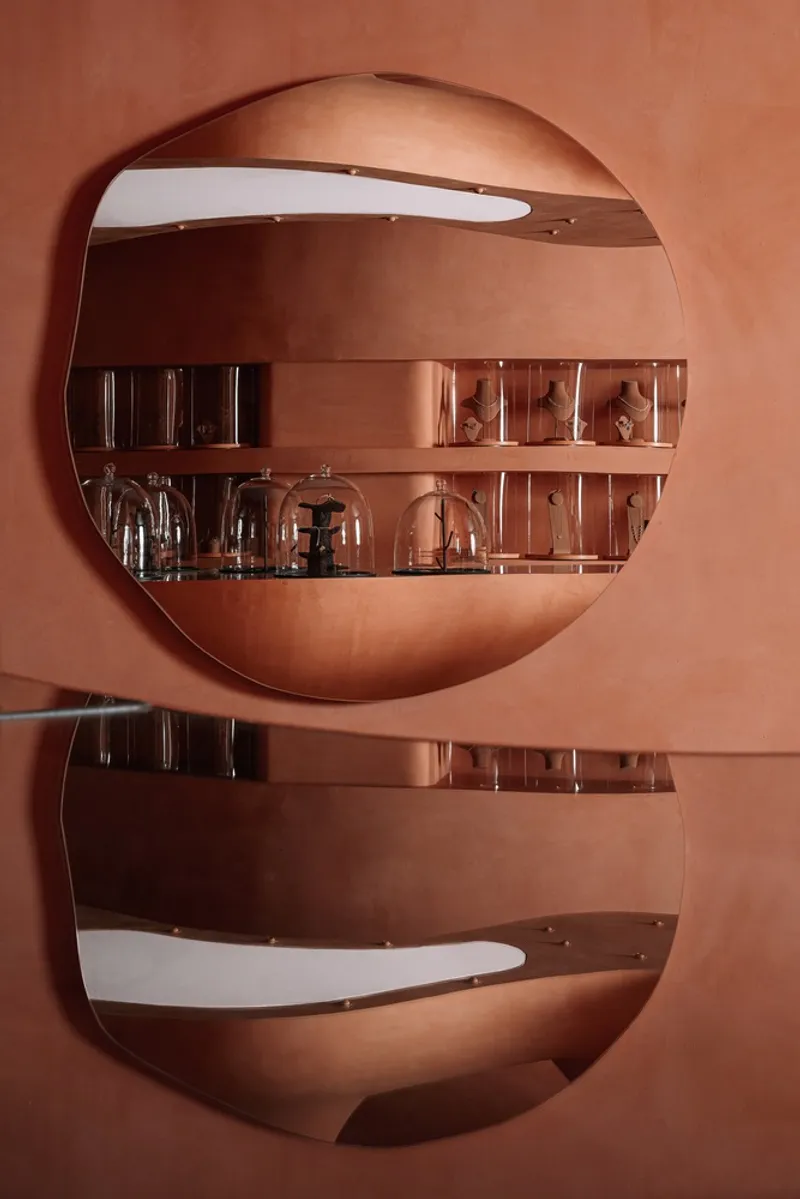
Terracotta's versatility is showcased through the store's dynamic walls and features, which undulate to create a landscape that is both earthly and otherworldly. This application of terracotta speaks to its ability to be molded into various forms, making it a perfect candidate for retail spaces looking to break the mold and offer unique customer experiences.

Innovating Beyond Tradition: The Store Layout
A Journey of Discovery
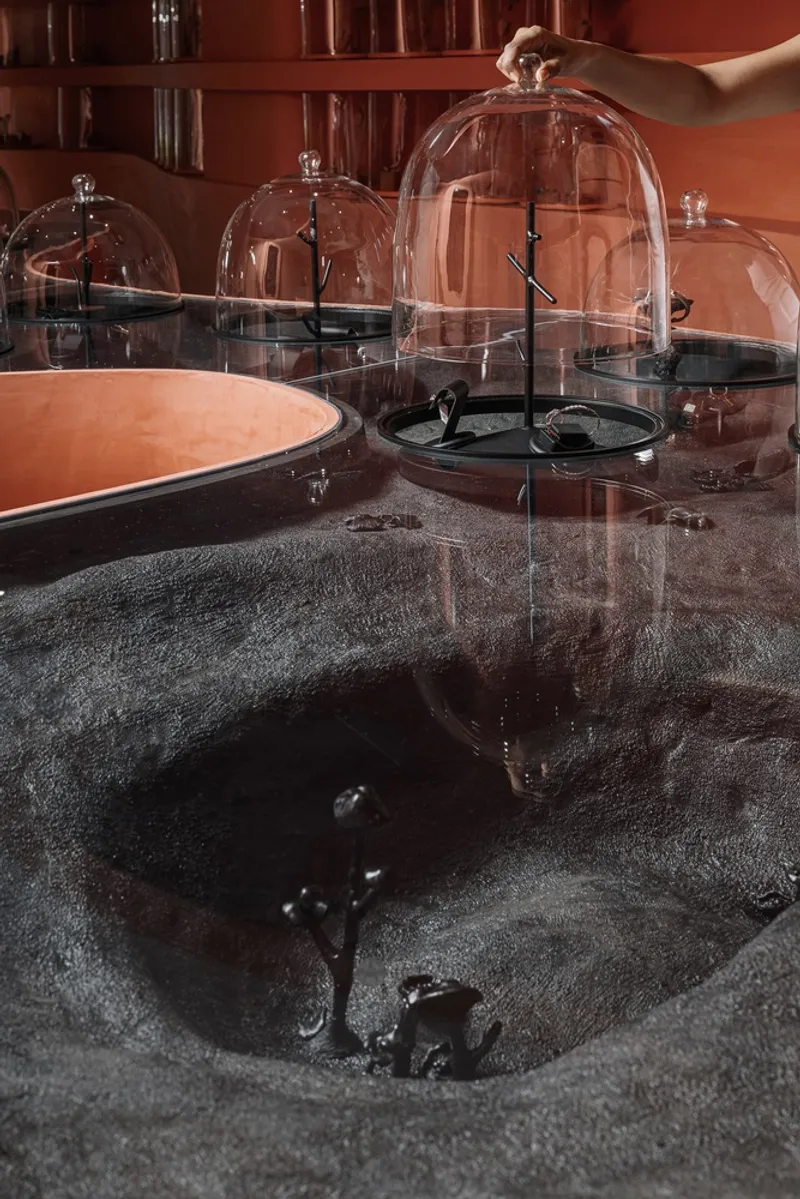
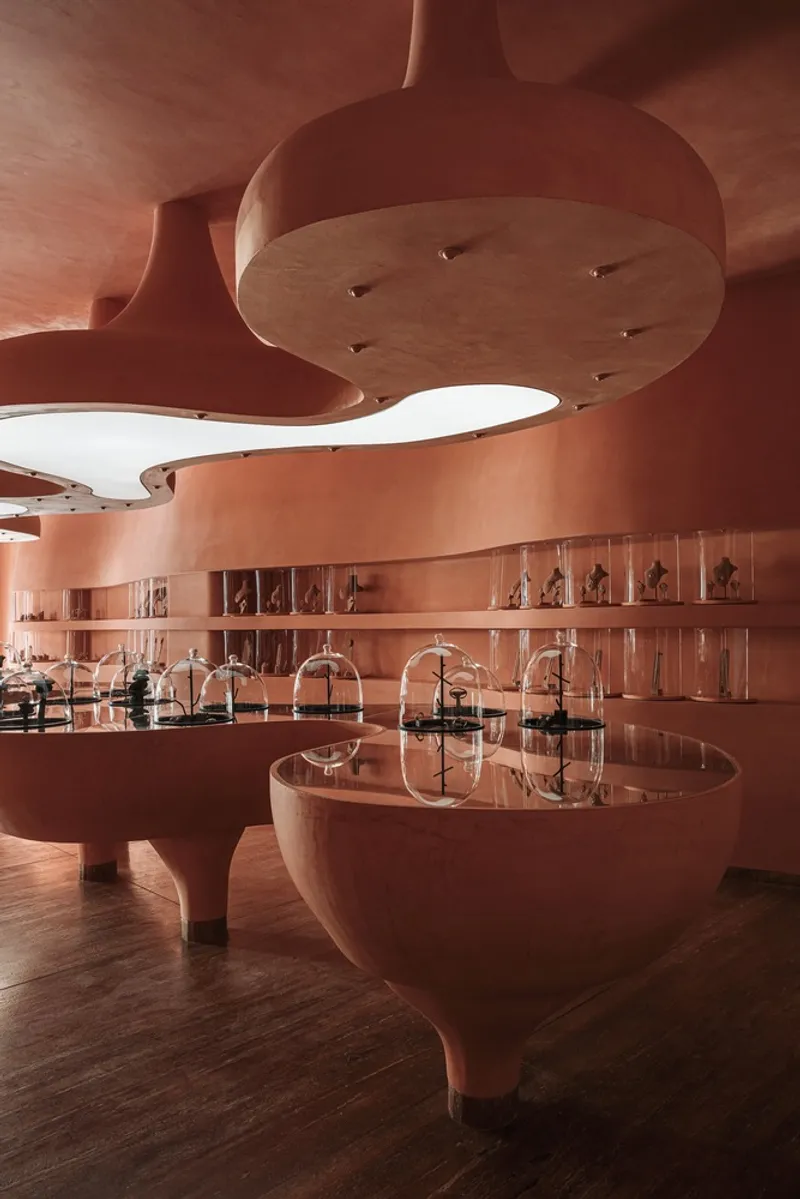
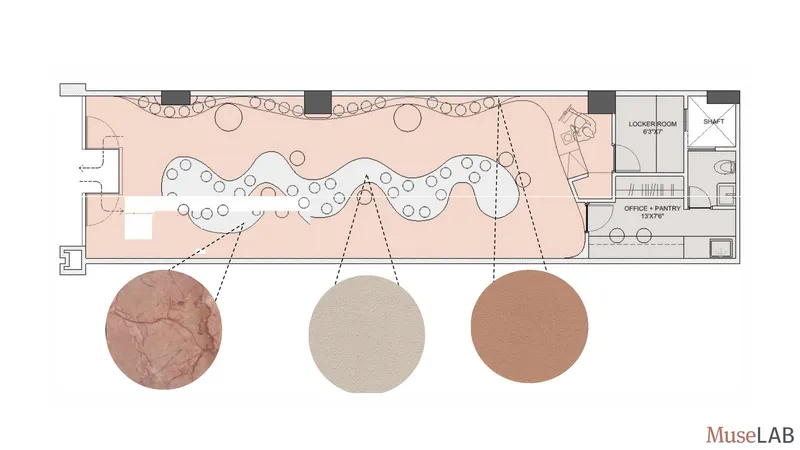
Moving away from the traditional transactional retail layout, MuseLAB has introduced a concept where the customer's journey through the store is a narrative in itself. The layout is centered around a 'discovery island,' a sinuous terracotta feature that encourages exploration and interaction with the jewelry pieces. This approach transforms shopping from a mere transaction to an immersive experience.


The Role of Light and Reflection
Complementing the terracotta elements are bespoke pendant lights and strategically placed amoebic mirrors. These elements play with light and reflection, enhancing the tactile qualities of the terracotta and adding depth to the space. The lighting design, in particular, is a testament to the thoughtful integration of form and function, illuminating the jewelry pieces in a way that entices and engages.

The Future of Retail Design
The Fortune Farm Store by MuseLAB is a pioneering example of how traditional materials like terracotta can be reimagined to create retail spaces that are not only visually striking but also emotionally resonant. This project stands as a beacon for future retail interiors, showcasing the potential of terracotta retail interior design to create environments that are sustainable, innovative, and deeply connected to human experiences.
In the realm of retail design, the Fortune Farm Store sets a new benchmark, illustrating that the future lies in spaces that dare to dream and design beyond the conventional. Terracotta, with its earthy allure and versatile nature, emerges as a key player in this revolution, offering endless possibilities for creating retail interiors that charm, captivate, and inspire.
This exploration into the Fortune Farm Store's use of terracotta not only highlights the material's aesthetic and functional benefits but also its potential to redefine retail spaces as realms of wonder and engagement. As we look towards the future, the integration of materials like terracotta in retail interior design will undoubtedly play a pivotal role in crafting spaces that resonate with customers on a deeper level.


All the photographs are work of MuseLab




Popular Articles
Popular articles from the community


Riyadh For All: Intergenerational Urban Design for Active Aging in Rabat
Riyadh For All reimagines urban design in Rabat with intergenerational co-living, adaptive courtyards, and Moroccan cultural exchange today.

The Musturak Paradise: Senior Living Architecture for a Connected Future in Temara, Morocco
The Musturak Paradise reimagines senior living architecture in Temara via private homes, social spaces, culture, community, and shared care.

Play: Fragments of Their World
Familiar architecture becomes modular playground design, creating safe spaces where displaced children can learn, connect, imagine and play.

Conexión: Biophilic Design Reimagines High-Rise Living in Hong Kong
Conexión reimagines high-rise living in Hong Kong through biophilic design, green facades, shared spaces, daylight, water and nature within.


Similar Reads
You might also enjoy these articles


FAMM Arquitectura Organizes Ten Villas Around Courtyards and Jungle in Nosara, Costa Rica
El Molino pairs two elongated volumes with deep overhangs and timber louvers to build a compact coastal community five minutes from the beach.
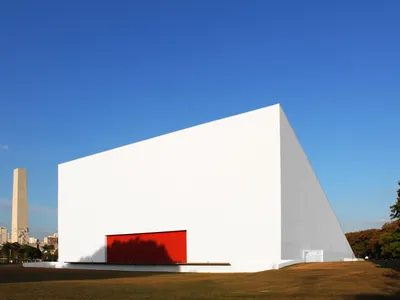
Oscar Niemeyer's Ibirapuera Park Pavilions Define São Paulo's Cultural Identity in Concrete and Curve
A constellation of modernist volumes set within São Paulo's most important urban park, conceived for the city's 400th anniversary in 1954.
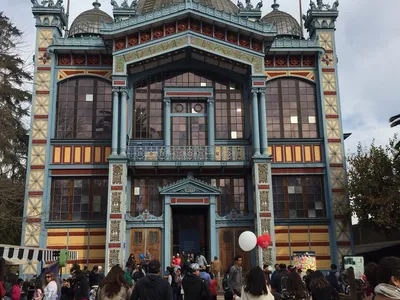
How Henri Picq's 1889 Paris Pavilion Traveled 11,000 Kilometers to Become Santiago's Artequín Museum
A prefabricated iron and glass pavilion built for the Paris Universal Exposition found a second life as a children's art museum in Chile.
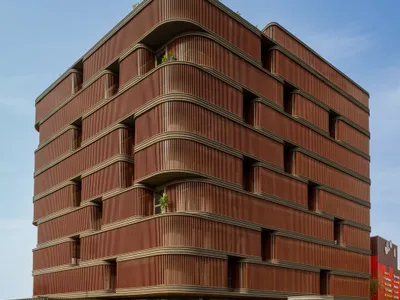
Sanjay Puri Architects Wraps a Jaipur Office Tower in Capsule-Shaped Green Buffers
A nine-level climate-responsive workplace near Jaipur Airport uses stacked planter terraces and aluminium screens to fight 40°C heat.


Explore Architecture Competitions
Discover active competitions in this discipline



Challenge to reimagine the Iron Throne


Photograph architecture without architects


Illustrate the lost glory of Angkor Wat - Render Challenge


Design challenge to reuse E-waste
Comments (0)
Please login or sign up to add comments
No comments yet. Be the first to comment!