
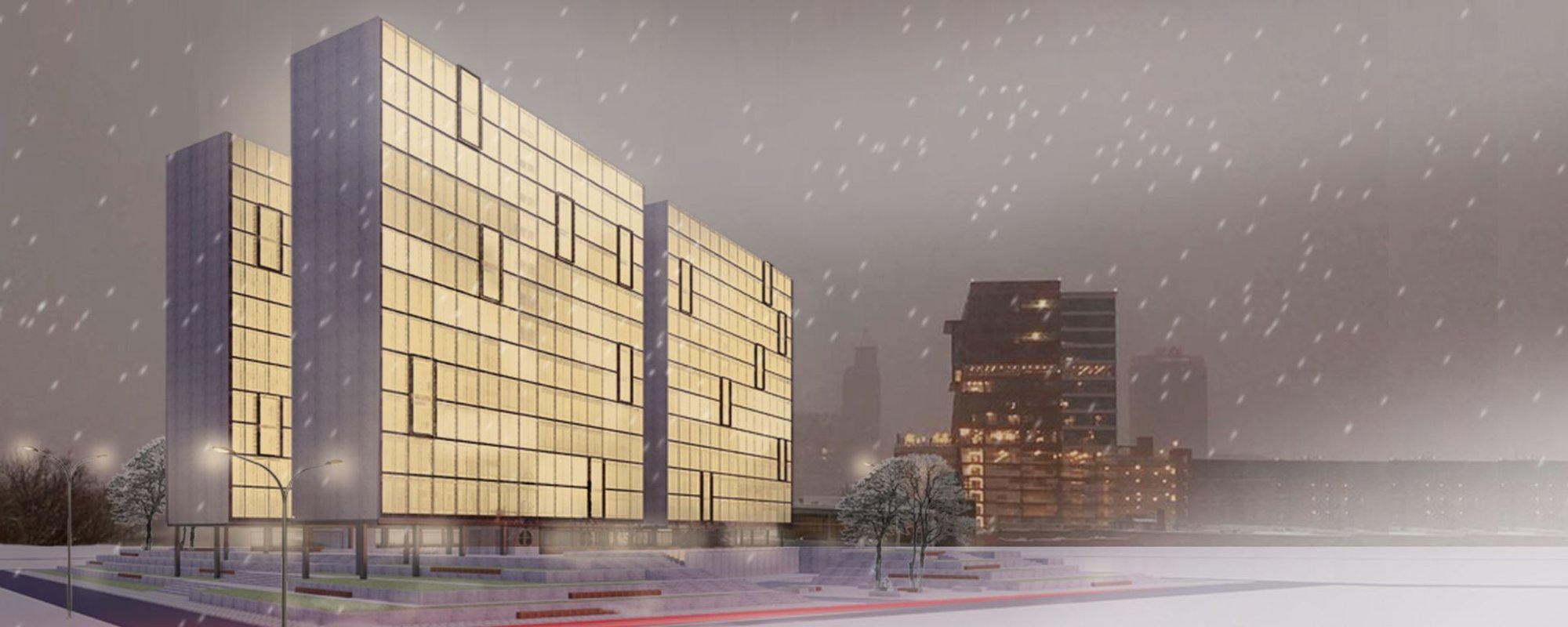
Urban Farming Architecture: The Future of Sustainable Housing
Where sustainability, affordable housing, and urban farming unite to redefine modern living for eco-conscious young professionals.

Farm/House, A Hustle Hub for Young Hustler is a groundbreaking architectural concept that merges housing and urban farming to provide a sustainable and flexible living solution for young professionals. This innovative model is especially tailored for urban dwellers who aim to balance affordable living with eco-consciousness.
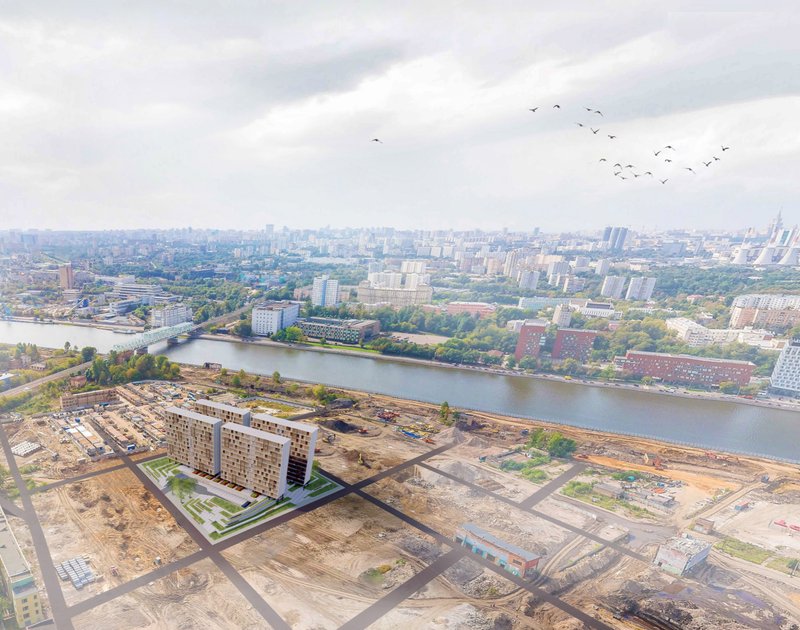
This project, designed by Amelia Aussie and Daniel, was a shortlisted entry in the prestigious Hustle Hub 2019 competition. The idea centers on creating a community where the unused spaces of residential units are transformed into urban farms, allowing tenants to engage in food production while enjoying a cost-effective housing solution.
Features of Farm/House
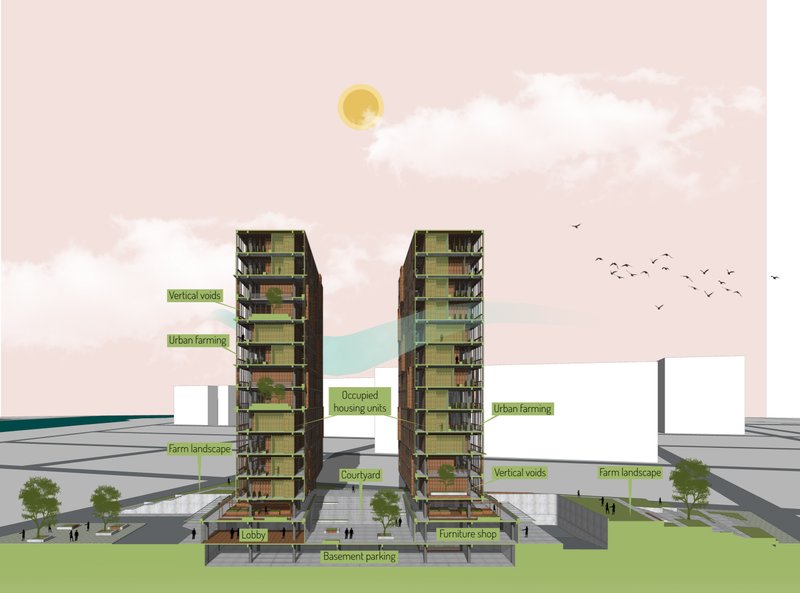
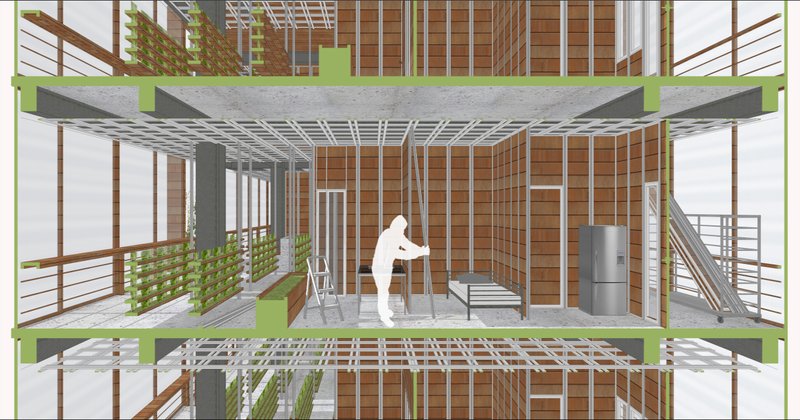
- Adaptable Housing Units: Tenants can start with a minimal housing unit and expand as their needs and budget grow. This flexibility ensures that the system accommodates a wide range of income levels and lifestyle needs.
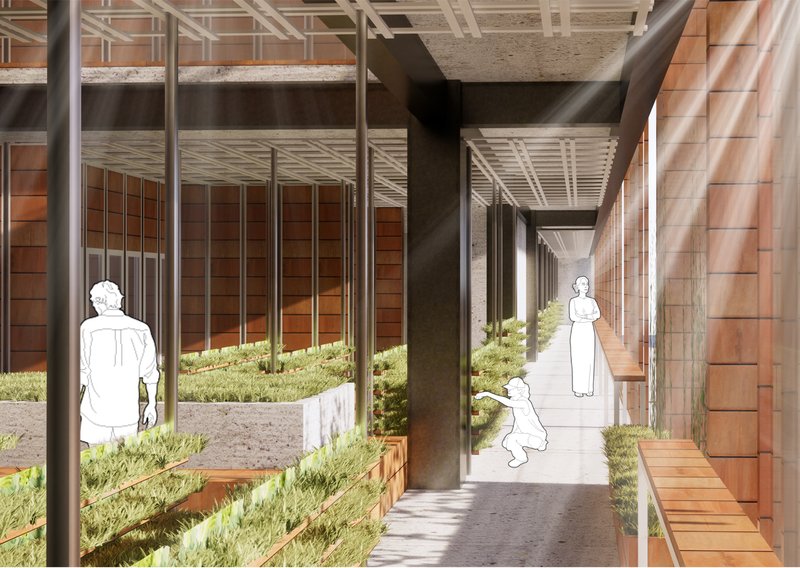
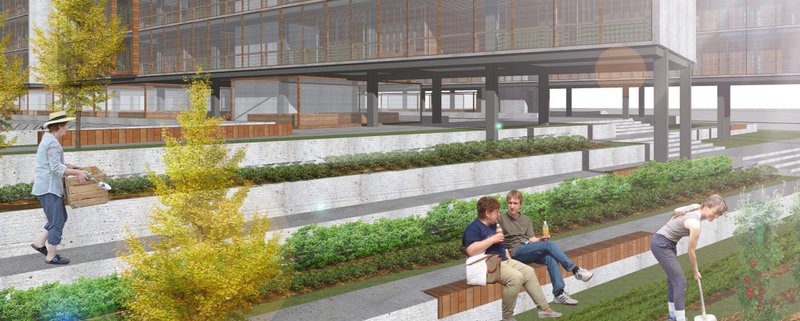
- Urban Farming Integration: Unrented spaces are converted into farming zones where fresh produce is cultivated. Residents can participate in farming activities, either for personal use or as a source of supplementary income.
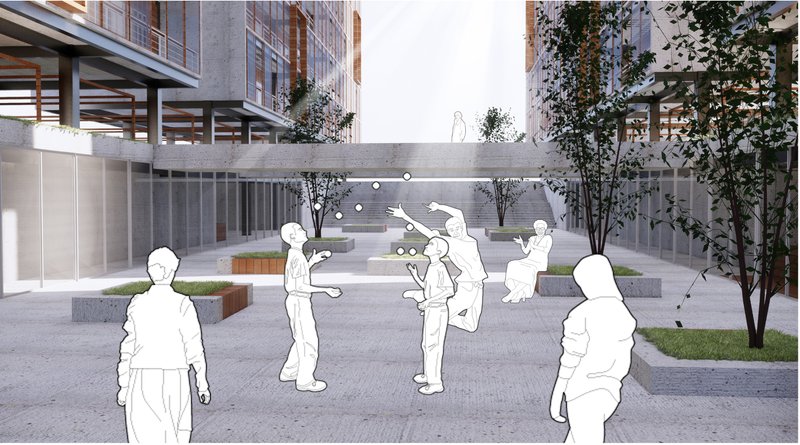
- Community-Centric Design: The project fosters a sense of community through shared spaces such as courtyards, fresh markets, and farming landscapes. These areas encourage interaction and collaboration among residents.
- Circular Economy: The design incorporates a circular economy model, ensuring profitability for property owners while promoting sustainability for renters.
Why "Urban Farming Architecture" is the Future
The fusion of housing and urban farming represents a shift toward resilient and self-sufficient urban environments. By maximizing the use of limited city space, this concept addresses the growing need for affordable housing and local food production. It also offers environmental benefits, such as reducing the carbon footprint associated with traditional farming and housing models.
Key Benefits
- Affordable Living: The flexible rental system allows young professionals to manage costs effectively.
- Eco-Friendly: Urban farming reduces food miles and promotes sustainable practices.
- Community Building: Shared farming and market spaces enhance social connections and cooperation.
Project Highlights
- Designed by Amelia Aussie and Daniel
- Shortlisted entry of Hustle Hub 2019
- Seamlessly blends housing with urban farming
Farm/House is more than just a place to live—it's a vision for a sustainable urban future. With its innovative approach to "Urban Farming Architecture," it sets the stage for cities to embrace eco-friendly and community-driven living solutions.



Popular Articles
Popular articles from the community

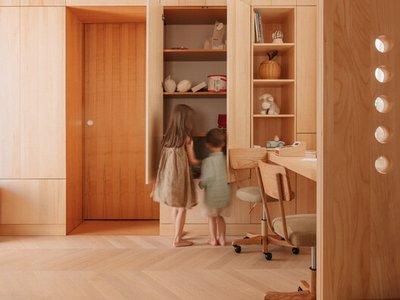
Treehouse Apartment: A Warm Timber Interior Blending Craft, Play, and Contemporary Living
Warm timber apartment with integrated treehouse, combining natural materials, craftsmanship, and playful design to create a flexible, family-oriented living environment.
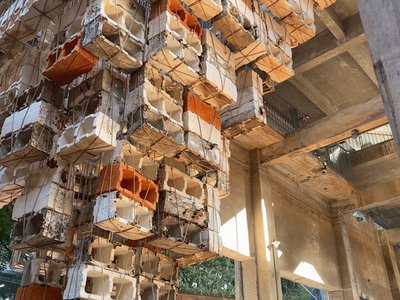
Inverted Architecture Installation by Studio Link-Arc: Exploring the Intersection of Architecture and Living Organisms
Inverted Architecture Installation by Studio Link-Arc blends mycelium, sustainability, inverted design, ecological cycles, and urban adaptive architecture in Shenzhen.
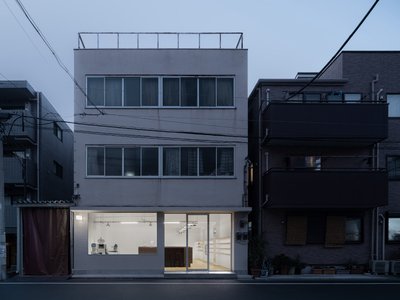
Atelier Macri Concept Store Interior Design by CASE-REAL
Atelier Macri store features a "ko" counter, walnut wood details, cork displays, blending retail, gallery, and seamless customer experiences.
On the Brooks House by Monsoon Collective – A Contemporary Kerala Home Rooted in Tradition
Kerala home blending tradition and modernity with water-inspired design, brick architecture, courtyard planning, and sustainable rainwater harvesting strategies.
Similar Reads
You might also enjoy these articles


The Ken Roberts Memorial Delineation Competition (Krob)
As the most senior architectural drawing competition currently in operation anywhere in the world, it draws hundreds of entries each year, awarding the very best submissions in a series of medium-based categories.

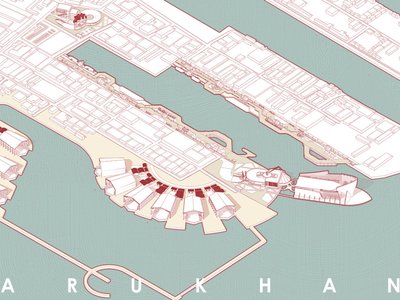
Waterfront Redevelopment and Urban Revitalization in Mumbai: Forging a New Dawn for Darukhana
A transformative waterfront redevelopment project reimagining Darukhana’s shipbreaking heritage into an inclusive urban future.
OUT-OF-MAP: A Call for Postcards on Feminist Narratives of Public Space
Rhizoma Design and Research Lab invites artists, designers, architects, researchers, and students to reflect on how feminist perspectives can reshape public space. Selected works will be exhibited in Barcelona, October 2026. Submissions open until 15 April 2026.

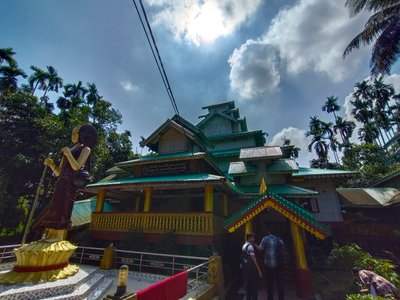
Documentation Work on Buddhist Wooden Temple
Architectural syncretism and cultural hybridity: A comparative study of the Buddhist temples in Chattogram Hill tracks




Comments (0)
Please login or sign up to add comments
No comments yet. Be the first to comment!