

Villa Vernacular - Kerala
Rural villa project in Kerala for a family of 4 people.
The concept of our architectural project was developed based on the following input data: the task was to design a house for a family of 4 people, where all family members can live all year round and work/study comfortably from home. It was also necessary not to cross the line and preserve the charm of life in the countryside in the project. We are confident that we have succeeded.
The clients are a Russian family, where the father is a practicing architect, the mother is a food blogger, the son (17 years old) loves computer games, finishes school, the daughter (15 years old) is engaged in painting and studies at school, labrodoro.
In general, the family is athletic, the son is engaged in cycling, the father runs every morning, and the mother practices yoga, the daughter sometimes joins her. Therefore, we found it necessary to organize the space so that there would be a lot of free space in the sun and in the shade, where you can calmly meditate or do fitness. And also allocated a place for a gym.
Our clients are from Russia, where there is usually little sun, in India they are in order to replenish their vitamin d reserves and enjoy the good weather. Therefore, the rooms should be designed so that the sun's rays illuminate the space. Panoramic glazing lets in a lot of sunlight without hindrance and opens up a great view of the surrounding landscape. We have also provided for the case when you want to protect yourself from the sun's rays. The three-layer glazing system protects against UV rays. This design reflects up to 58% of the sun's energy, and also protects the glass from heat loss. The longer service life of such glass also benefits.
When choosing materials, our team relied on the following qualities: environmental friendliness and durability. As the main material, we chose concrete. Concrete is so plastic that even as a result of excessive loads, such as earthquakes, microcracks are formed in the concrete, which are not visible to the armed eye. As a result of oxidation, these cracks shrink and almost disappear, thanks to the formation of polymers. Such a structure, built using flexible concrete, serves perfectly in regions with difficult climatic conditions. Such a building requires much less repair costs.
In hot countries, the design of buildings with atriums is common in construction. When developing the plan, our team took this into account. We got an open space with verandas and terraces, and the courtyard resembles an atrium.
The architecture of our project is organized so that the family can spend time together, but also to retire to their rooms/offices, because we all know how important personal space is. The idea of such a division is embodied in the building plan: the kitchen, as a meeting place for the whole family during breakfast, lunch and dinner, is placed separately from the general group of rooms, but nevertheless remains one with the house, if you look at the facades.
We have arranged the rooms so that the bedrooms and the study get the least light, which allows you to work and relax in comfort and coolness.
While researching the local architectural traditions, we identified several interesting distinctive features that we used in the project. Undoubtedly, the shape of the pointed arch is one of the most frequent and recognizable elements of Indian architecture, so we carefully introduced this form into our project. We also interpreted the multi-level and stepped composition of the monuments in the stepped columns on the facade, which create an interesting deepening effect. Metal decorative grilles are designed according to our individual sketches. We decided to pay special attention to this detail: the grid pattern is made up of Indian symbols: an octagon, a square, a star, including a lotus, which is considered a sacred flower and a symbol of enlightenment.
The building is light and elegant, thanks to the glazing and light geometric facade.
The exterior walls of glass provide sufficient lighting, which allows you to significantly save energy.
Sliding glass structures are particularly advantageous in this regard. In the project, we used frame glazing, as it allows us to change the space as we want, depending on the weather conditions or mood. For example, the kitchen is combined with a veranda. In good weather, it is possible to take out the table, for example, closer to the pool, and have lunch near the water.
It is planned to install solar panels on the roofs, which allows for complete autonomy of the house.
As the basis of the general plan, we took the form of a circle - one of the fundamental forms of our universe, and in India one of the sacred symbols.
We suggest using solar-powered lanterns on the site to ensure minimal energy costs.
Through the round spacious garden, where you can walk and frolic with the dog, we come to a two-story lounge area with barbecue. Going up to the second floor, we can enjoy a beautiful view of the river flowing near our plot.

Popular Articles
Popular articles from the community


longwave studio Reorganizes a 112 m² Tainan Apartment Around the Daily Routines of a Family and Two Cats
In Tainan, Taiwan, birch plywood, rust-red furniture and a freestanding plaster wall link arrival, storage, work and family life in one apartment.

GROUP A Strips a 1969 Rotterdam Harbor Headquarters to Its Frame and Wraps It in Timber Louvers
In Rotterdam's M4H harbor district, Ferro Offices reuses a 1969 frame, adds one timber storey and reaches BREEAM-NL Outstanding.

Jaramillo Van Sluys Arquitectura and Urbanismo Turn a Demolished Registry Lot in Quito into an Orchard Plaza
In Quito's Centro Histórico, a 2,800 m² plaza exposes the San Agustín convent wall and redraws its lost Augustinian orchard in volcanic stone.

David Ortega Stacks a Two-Story Mexico City Penthouse Around a Steel Stair and a Pergola-Shaded Roof Terrace
In Colonia Roma, a 300 m² penthouse uses oak joinery, a planted steel stair and a slatted roof pergola to make a new-build apartment feel like a house.

Similar Reads
You might also enjoy these articles

The Rhythm of Seasons
A Farmers' Market Connecting Nature and the City

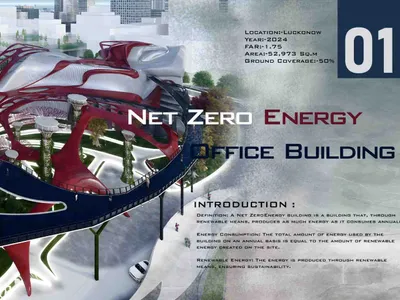
More Than a Building-Designing a Living System
More Than a Building-Designing a Living System
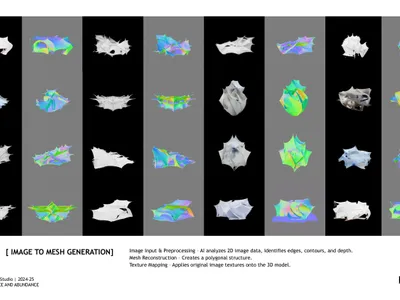
Base Beyond
DESERT COMPOUND ARID: TOURISM OF ABSENCE AND ABUNDANCE

Explore Villa Vernacular Competitions
Discover active competitions in this discipline


Challenge to design mud housing for contemporary communities

Challenge to reimagine the Iron Throne

Photograph architecture without architects

Illustrate the lost glory of Angkor Wat - Render Challenge
Comments (0)
Please login or sign up to add comments
No comments yet. Be the first to comment!