

130 William High-Rise Residential Tower by Adjaye Associates
A sculptural residential tower in Lower Manhattan, blending hand-cast concrete, arched windows, and vertical community living.


A Vertical Microcity Rooted in Manhattan’s Masonry Heritage
Rising prominently from the dense fabric of Lower Manhattan, 130 William stands as a powerful reinterpretation of New York’s historic high-rise typology. Designed by Adjaye Associates, the 66-story, 800-foot-tall (244 meters) residential tower marks the firm’s first high-rise residential project in the United States. More than a luxury condominium, 130 William is conceived as a vertical microcity—a layered urban ecosystem that integrates public space, amenities, and private residences within a singular architectural expression.


Situated in the Financial District, an area defined by early skyscrapers, mercantile buildings, and masonry façades, the project responds sensitively to its context while asserting a bold contemporary identity. Developed by Lightstone with Hill West Architects as Architect of Record, the building introduces a sculptural presence to the skyline, distinguished by its hand-cast concrete façade, arched openings, and bronze detailing.
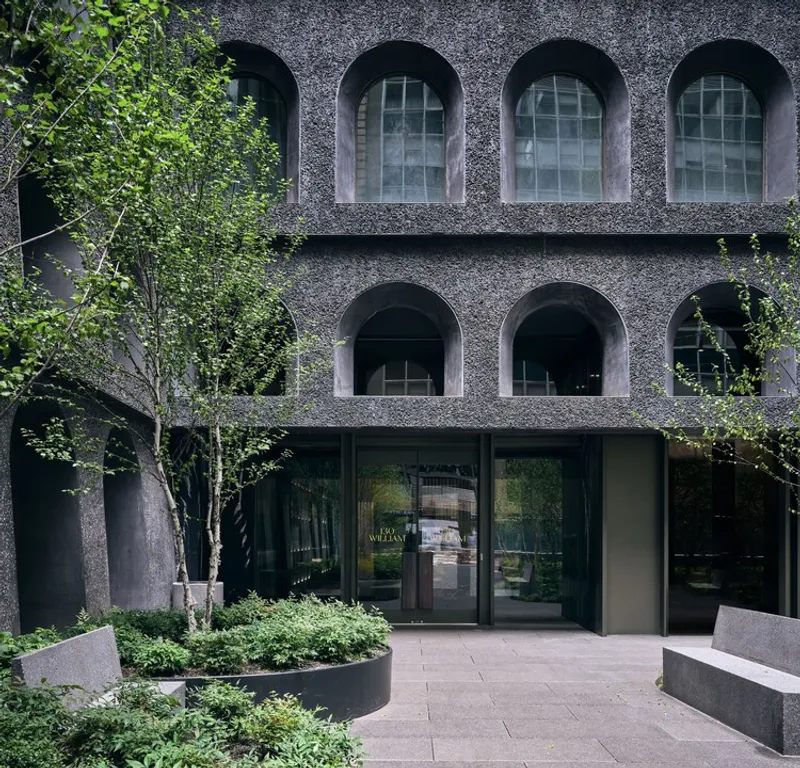

Contextual Architecture in a Historic Urban Landscape
Lower Manhattan is a place where architectural history is etched into stone, brick, and concrete. From early 20th-century commercial towers to robust industrial buildings, the neighborhood’s character is defined by weight, texture, and craftsmanship. Adjaye Associates’ design draws deeply from this lineage, reinterpreting historic architectural language through modern construction techniques and spatial innovation.

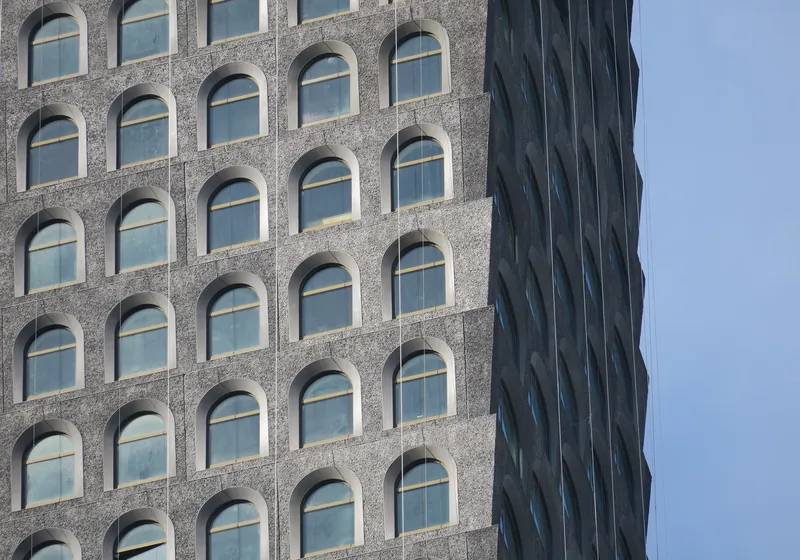
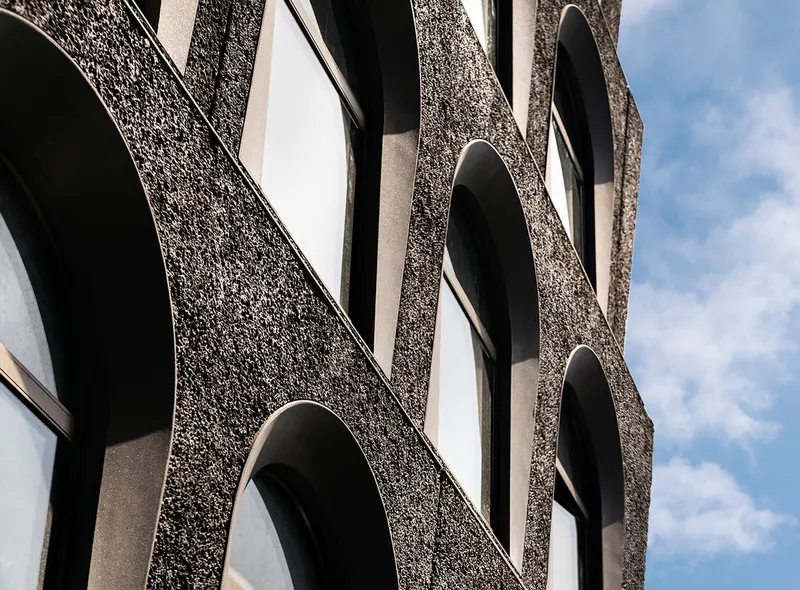
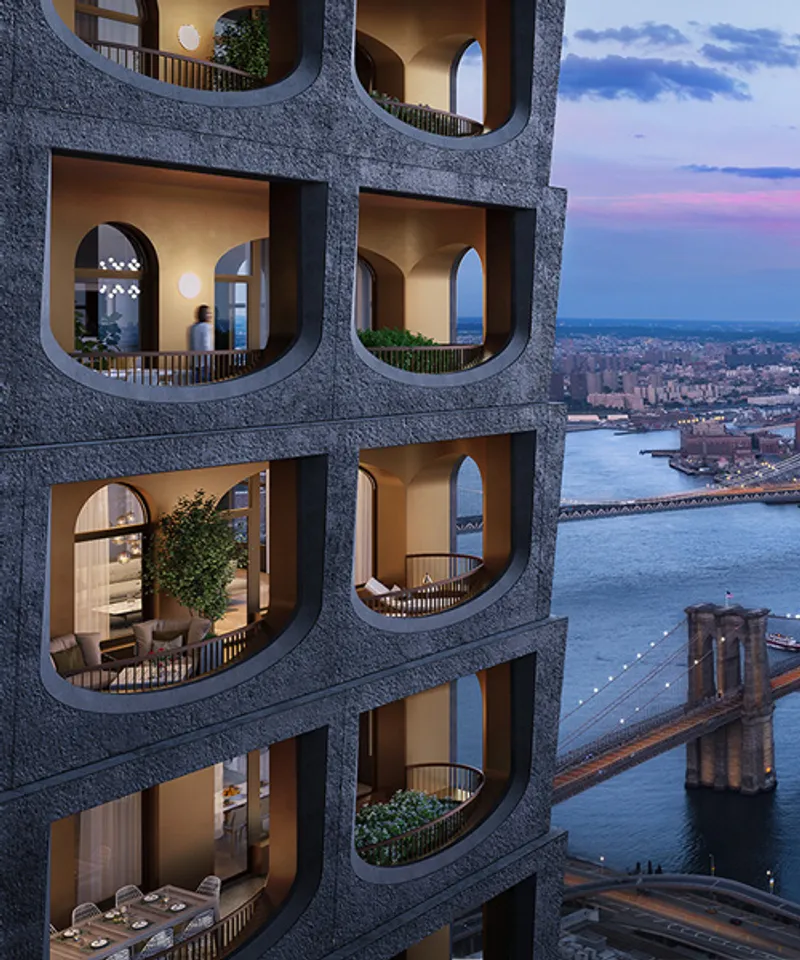
Rather than adopting the glass-heavy aesthetic typical of contemporary residential towers, 130 William embraces mass and materiality. Its façade is composed of bespoke, hand-cast concrete panels, tinted and textured to evoke the weathered masonry of surrounding historic buildings. The rough, tactile surfaces are deliberately expressive, reinforcing a sense of permanence and grounding the tower within its urban context.
Smooth bronze detailing provides contrast and refinement, accentuating window frames, balconies, and architectural transitions. This interplay between rough and smooth, heavy and delicate, gives the building a nuanced visual depth that changes with light and weather conditions.
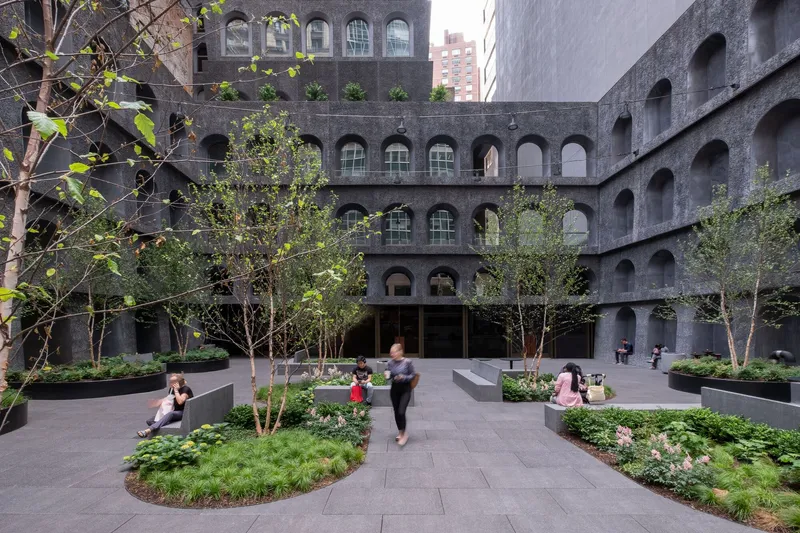
A Sculpted Silhouette Defined by Arches
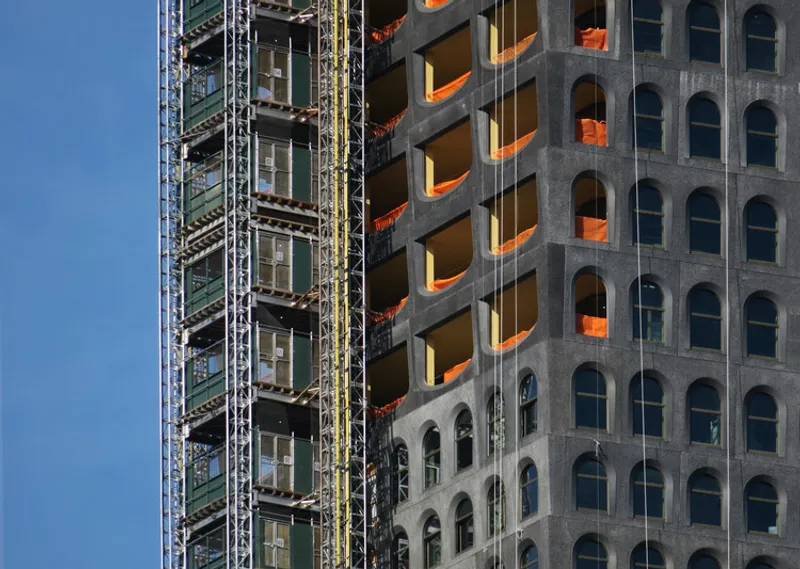
One of the tower’s most distinctive features is its series of large-scale arched windows, a contemporary abstraction inspired by the mercantile architecture that once dominated Lower Manhattan. These arches establish a strong rhythmic pattern across the façade, lending the building a sculptural quality that sets it apart from its rectilinear neighbors.


As the tower rises, its form subtly tapers and shifts, carving a dynamic silhouette against the skyline. The arches become more pronounced at key levels, reinforcing verticality while maintaining visual cohesion. This sculpted profile allows the building to stand confidently among Manhattan’s iconic skyscrapers without resorting to overt monumentality.
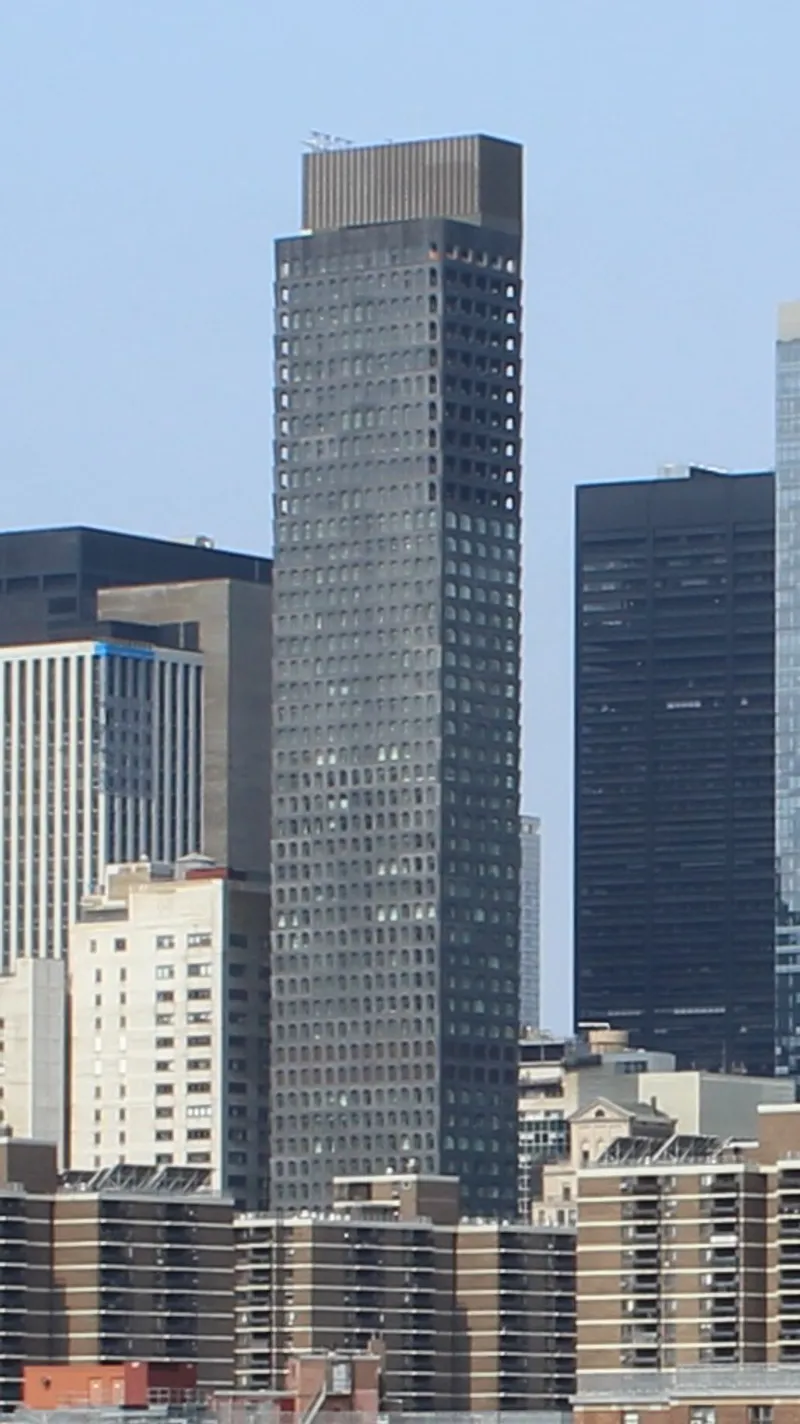
The arched openings are not merely aesthetic gestures; they play a critical role in shaping interior spaces. By allowing generous daylight penetration and expansive views, they enhance spatial quality while framing the city as an ever-present backdrop to daily life.

The Vertical Microcity Concept
At its core, 130 William is envisioned as a self-contained vertical neighborhood. The program extends beyond residential units to include a rich mix of shared spaces that foster community and support contemporary urban living.


The building incorporates:
- A new public plaza park at ground level
- Ground-floor retail, activating the street edge
- Two extensive floors of amenities
- A diverse range of residential layouts
- A rooftop observatory deck with panoramic views
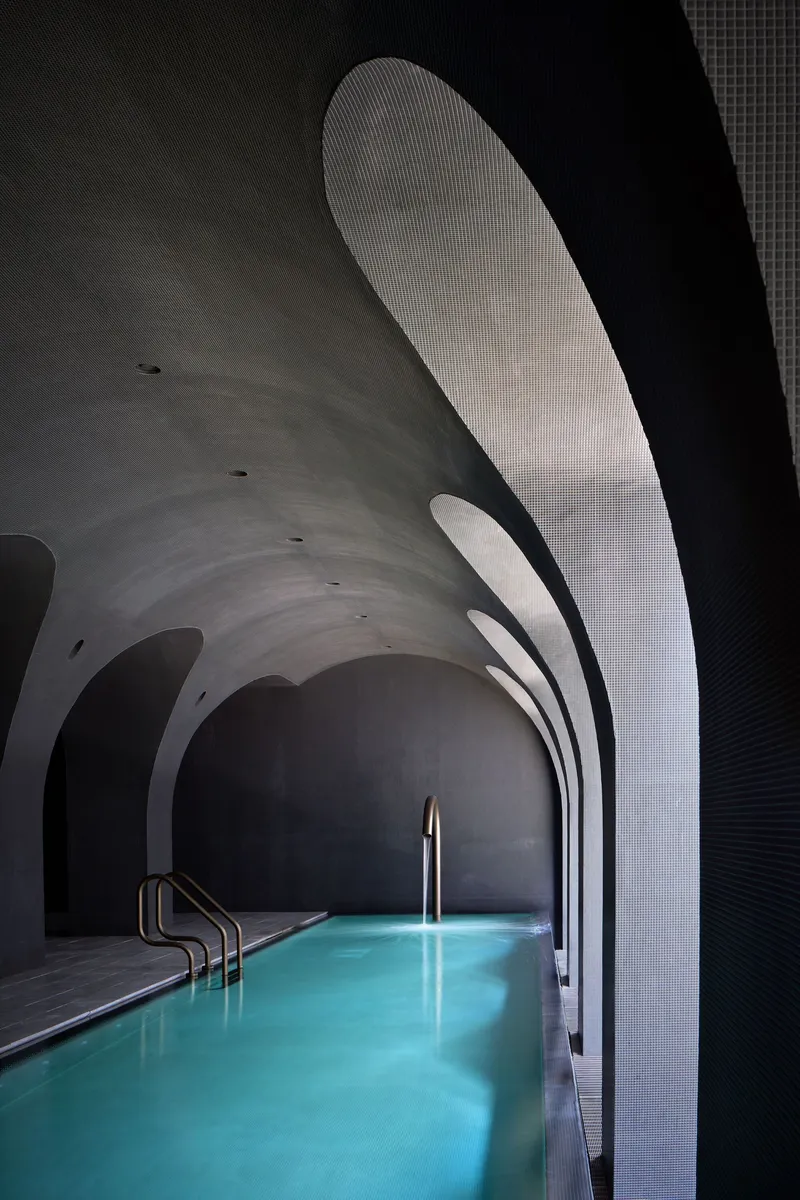
This layered program allows residents to move seamlessly between public, communal, and private realms, redefining the experience of high-rise living in New York.
Public Plaza as Urban Threshold
Uniquely for a luxury residential tower, 130 William introduces a generous public plaza at its base. This space serves as a transitional zone between the intensity of the city and the calm of the residential interiors. Landscaped by William Weintraub Diaz, the plaza contributes to urban placemaking by offering a moment of pause within the dense streetscape of the Financial District.

The plaza enhances pedestrian experience, softens the building’s interface with the city, and reinforces the project’s civic presence. It reflects Adjaye Associates’ broader architectural philosophy, where buildings are not isolated objects but active participants in the public realm.


Amenities as Extensions of Domestic Life
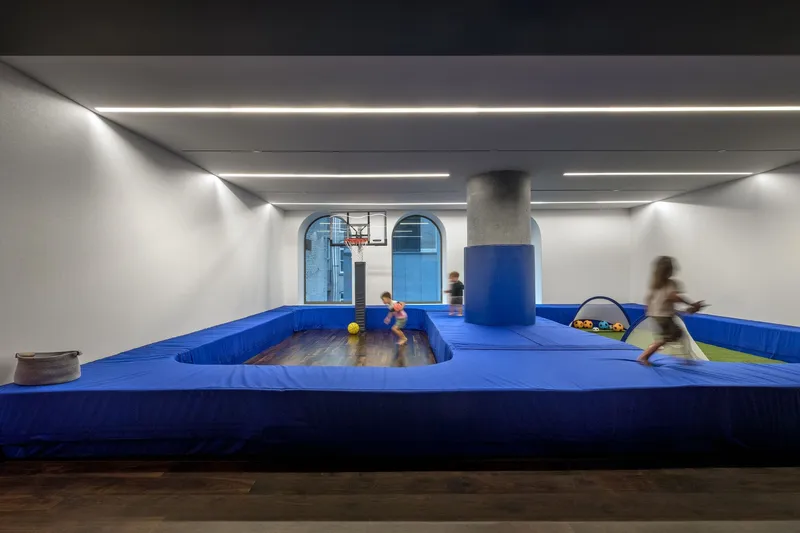
Two full floors of amenities are dedicated to wellness, leisure, and social interaction. These spaces are designed not as generic luxury offerings but as carefully considered extensions of domestic life.


Amenities include:
- A health club and fitness center
- A movie theater
- Resident lounges and social spaces
- Outdoor terraces with city views
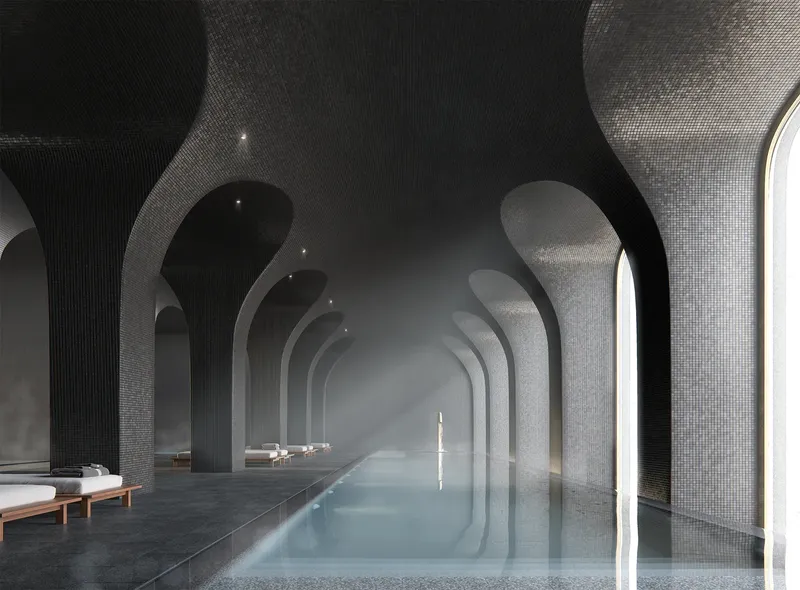
Natural light, material continuity, and carefully framed vistas create environments that feel both expansive and intimate. The amenities foster community while offering residents places for retreat, recreation, and connection.

Residences Defined by Space, Light, and Craft
The residential units at 130 William range from one- to four-bedroom layouts, each designed with an emphasis on spatial generosity, natural light, and material quality. Interiors reflect the building’s architectural language, balancing warmth and restraint.
Large arched windows frame expansive views of Manhattan, the East River, and the Hudson River, transforming the city into a living panorama. The highest-level residences feature double-height loggias, blurring the boundary between interior and exterior living. These semi-outdoor spaces provide shelter while allowing residents to engage directly with the skyline, offering a rare luxury in high-rise urban living.

Interior finishes are refined yet understated, allowing architecture and views to take precedence. The calm, tactile material palette reinforces the idea of the home as a sanctuary amid the city’s intensity.
Structural and Technical Excellence
Behind its expressive façade, 130 William is supported by a robust technical framework. McNamara Salvia served as Structural Engineer, ensuring the tower’s stability and performance at significant height. AKRF Engineering PC led electrical engineering, while Longman Lindsey provided acoustical design, addressing the challenges of urban noise in a dense environment.

Lighting design by Brian Orter Lighting Design (BOLD) enhances both interior and exterior architectural expression, emphasizing texture, depth, and material transitions. These technical collaborations ensure that the building performs as elegantly as it appears.
Redefining Luxury Through Architectural Integrity
Rather than relying on overt opulence, 130 William redefines luxury through craft, context, and spatial quality. The building’s success lies in its ability to merge historical reference with contemporary living, offering residents a deeply rooted yet forward-looking architectural experience.


As Scott Avram, Senior Vice President of Development at Lightstone, notes, the project represents “a new benchmark for residential living,” reflecting both architectural ambition and market response. The overwhelmingly positive reception from residents underscores the value of thoughtful, design-driven development in shaping the future of urban housing.

A New Landmark for Lower Manhattan
130 William is more than a residential tower; it is a landmark that contributes meaningfully to New York City’s architectural narrative. By honoring the material heritage of Lower Manhattan while introducing innovative spatial concepts, Adjaye Associates has crafted a building that feels timeless yet distinctly contemporary.
As cities continue to grow vertically, projects like 130 William demonstrate how high-rise architecture can foster community, engage the public realm, and maintain a strong sense of place. In doing so, the tower stands as a compelling model for the next generation of urban residential architecture.
All the Photographs are works of James Wang, Dror Baldinger, Ivane Katamashvili, Gael Georges


Popular Articles
Popular articles from the community


Opera on the Sea: Driftwood Logic Shapes a Timber Opera House on Estonia's Coast
Trevor Orgill's opera house translates the entangled drift of floating timber into a civic building where wood, water, and music converge.
Opera by the Sea Estonia: Three Shells Dissolving Architecture into Tallinn's Coastline
A winning opera house proposal replaces monumental form with interconnected shells that blur the boundary between building, park and Baltic Sea.

Faces of the Soviet Avant-Garde: Turning Moscow's Street Names into an Open-Air Museum
A network of sculptural installations across a Moscow residential district transforms forgotten architect names into spatial encounters with cultural memor

Singing Woman: An Opera House That Performs Before the Curtain Rises
Ovidiu Cristian Pavel's conceptual opera house translates Estonia's choral identity into a sculpted waterfront landmark facing the Baltic Sea.

Similar Reads
You might also enjoy these articles


Hodi-Mandai Geram
Project Function: Preservation and revitalization of the Intangible heritage and socio-spatial identity of the Hodi by Housing, Cultural Memory Center, Sacred Grove, landscape, local tourism economy


Olio Towers: A Mid-Rise for Performers That Fuses Housing, Rehearsal, and Stage
Located blocks from Houston's Theater District, this modular tower stacks living units around a central performance atrium.

Oasis: Modular Green Housing Carved into Dhaka's Urban Fabric
A shortlisted Plugin Housing entry reclaims unauthorized settlements in Dhaka with stepped concrete volumes, green roofs, and ventilation-driven design.

Black Hole: A Floating Megastructure for the Post-Physical Era
Emiliano Mazzarotto envisions a spherical, self-scaling arena where e-sports, digital hotels, and holographic stadiums replace traditional public space.

Explore High Rise Building Competitions
Discover active competitions in this discipline

Challenge to design mud housing for contemporary communities

Challenge to reimagine the Iron Throne

Photograph architecture without architects

Illustrate the lost glory of Angkor Wat - Render Challenge
Comments (0)
Please login or sign up to add comments
No comments yet. Be the first to comment!