

2C House by Baquio Arquitectura: A Harmonious Blend of Privacy and Connectivity
2C House by Baquio Arquitectura blends privacy and connectivity with sustainable materials, featuring C-shaped blocks, wooden structures, and Japanese influence.


Nestled in the picturesque valleys of Quito, Ecuador, 2C House by Baquio Arquitecturais a contemporary single-family residence that seamlessly integrates privacy, connectivity, and sustainable materials. Designed by lead architect Jose Granda, the project explores a dynamic interplay between architectural form and function, resulting in a modern dwelling that harmonizes with its surroundings.
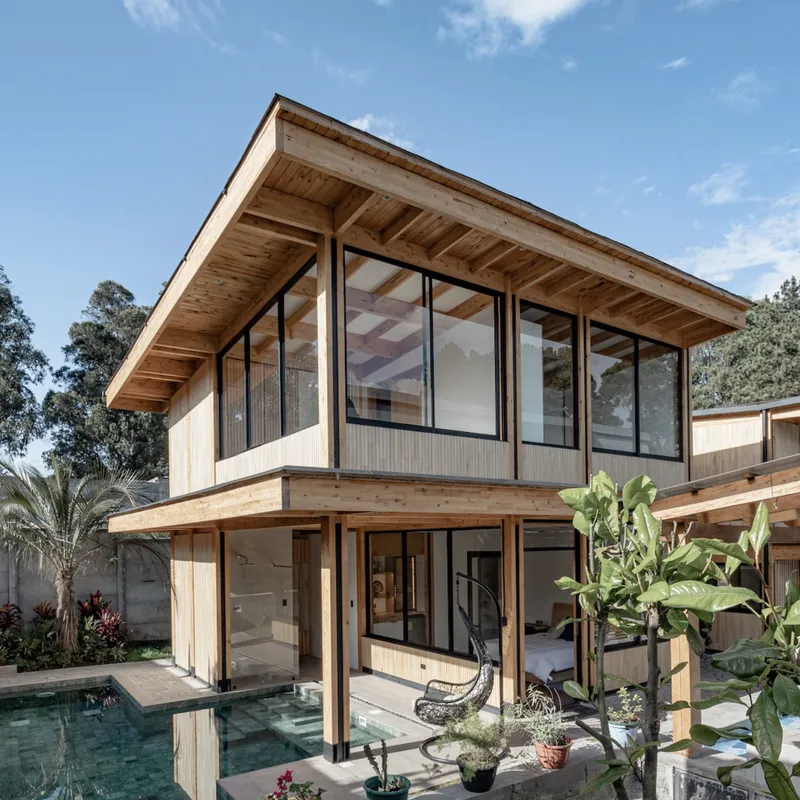
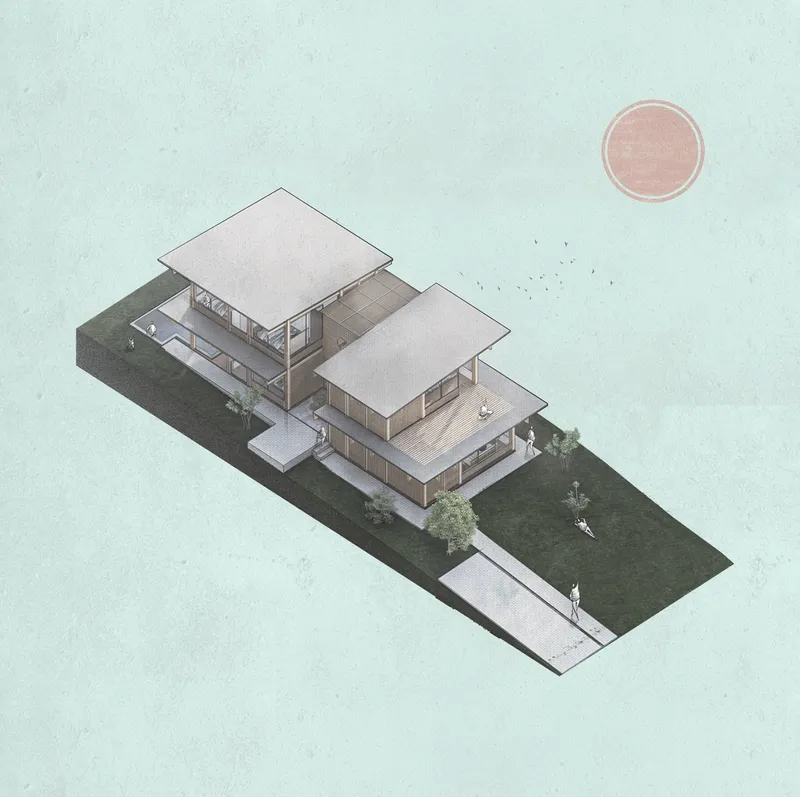
Architectural Concept and Design Strategy The conceptual foundation of 2C House stems from two primary objectives: establishing a harmonious relationship with a neighboring project and ensuring privacy for independent spatial functions. These objectives materialize through a dual-block structure, strategically separated by a connecting axis that fosters openness while maintaining a distinct spatial identity.
Each block adopts a "C"-shaped configuration, effectively enclosing private spaces while maintaining selective connectivity. This unique design approach not only fosters a seamless indoor-outdoor relationship but also contributes to the residence’s name—2C House, derived from the two mirrored "C" shapes that define its spatial organization.
Functional Zoning and Spatial Organization The residence comprises two distinct yet interconnected blocks, each dedicated to specific functions:
- Block A (Social and Private Spaces): The ground floor accommodates communal areas, including the living room, dining space, and kitchen, fostering interaction and family engagement. On the upper floor, the master bedroom is strategically positioned to enhance privacy by eliminating direct interaction with the neighboring residence.
- Block B (Family-Oriented Spaces): The ground floor hosts a bedroom with a direct relationship to the adjacent project, alongside a shared wet zone for collective use. On the upper floor, two additional bedrooms facilitate multigenerational living, creating a strong bond between grandparents and grandchildren.
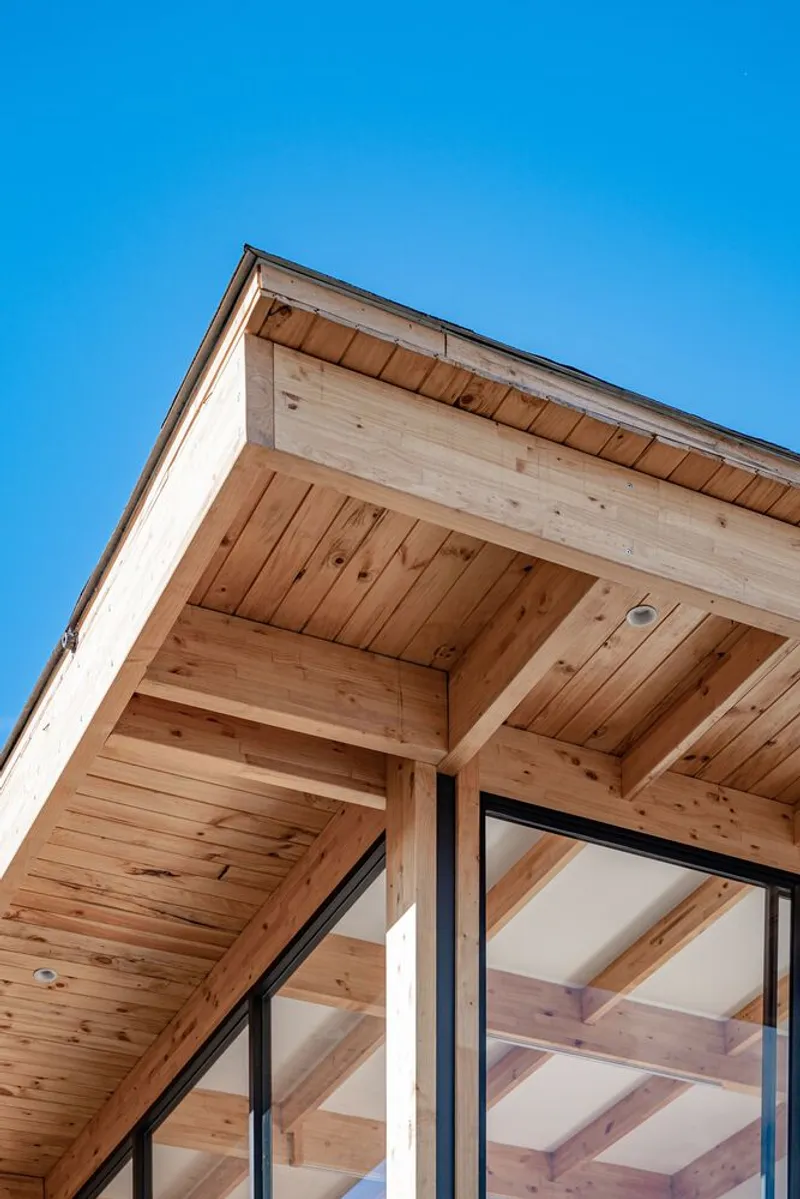
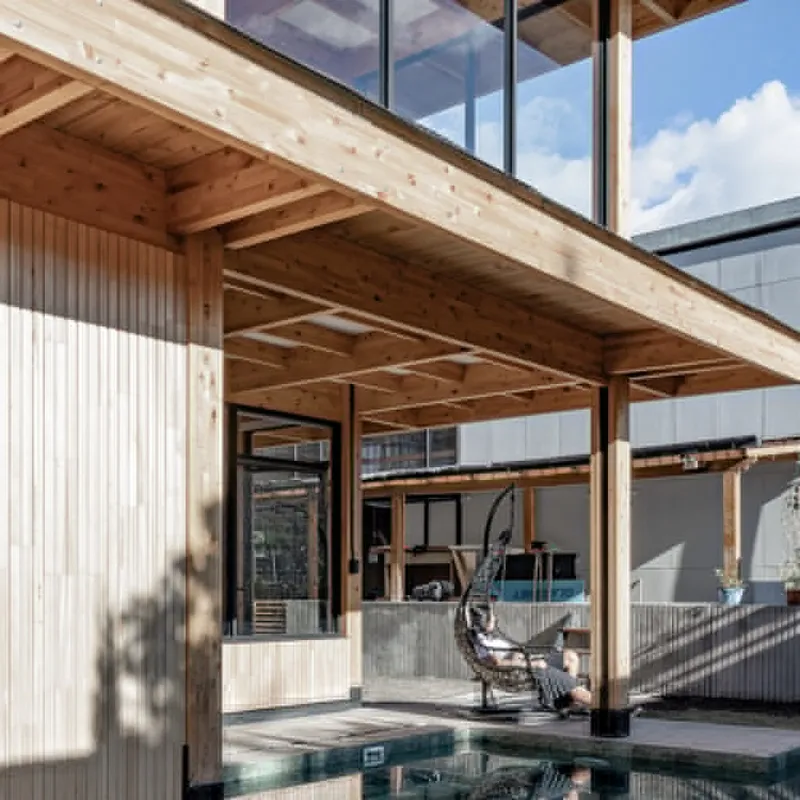
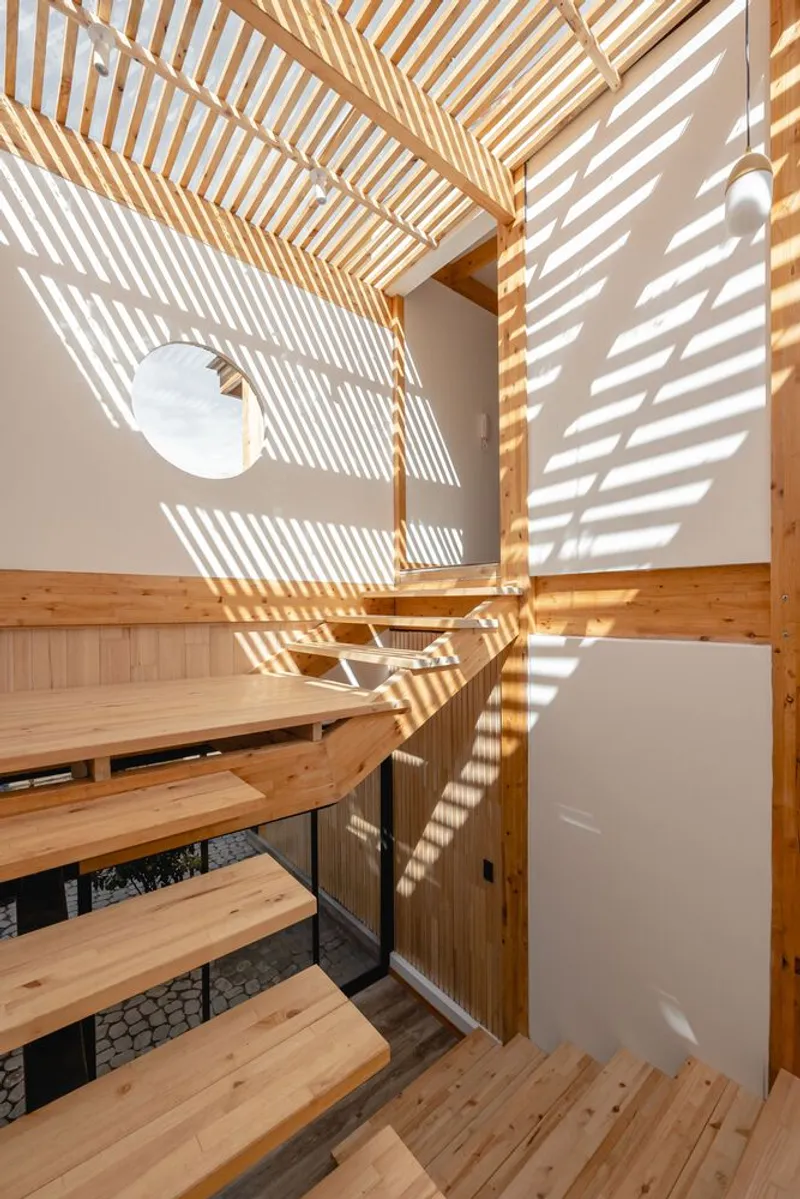
Materiality and Structural Innovation Emphasizing sustainability and traditional craftsmanship, the project prominently features laminated pine wood as its primary structural material. The composite columns and beams are carefully designed to balance structural integrity while incorporating 1.2-meter cantilevers, which serve both functional and aesthetic purposes. These overhangs provide essential protection against rain and sun, thereby extending the lifespan of the wooden structure.
Wood and Metal: A Complementary Material Palette
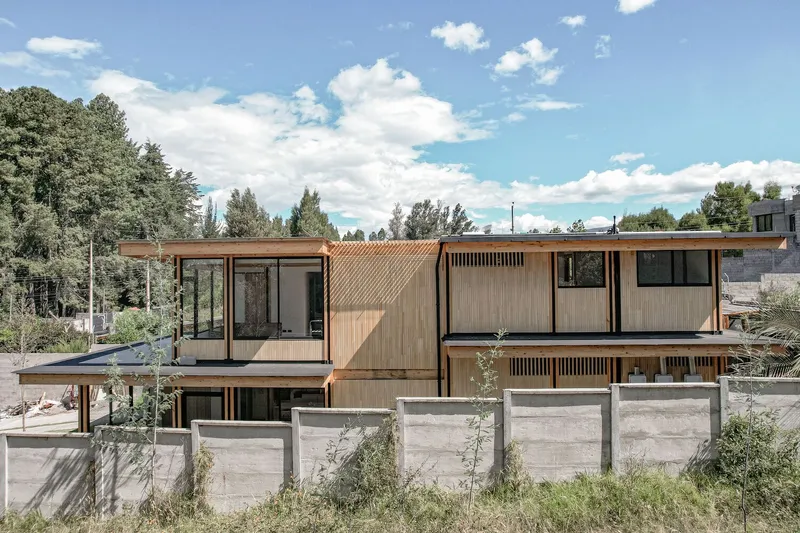
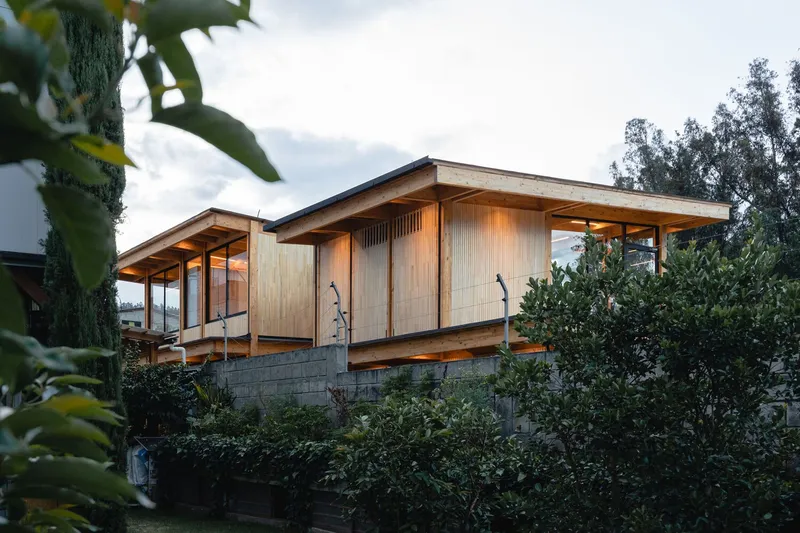
The façade treatment underscores the project’s commitment to durable and eco-conscious materials. Palm wood is selected for its porous nature, which enhances lacquer absorption—a key factor in prolonging its durability while minimizing maintenance. Metal accents are thoughtfully integrated to resolve structural junctions, reinforce floor finishes, and enhance overall weather resistance.
Japanese Influence and Traditional Architectural Values
Beyond material choices, 2C House draws inspiration from Japanese architecture, particularly in its emphasis on natural materials, structural clarity, and craftsmanship. The thoughtful use of wooden joinery and an open yet intimate spatial arrangement reflects traditional Japanese aesthetics, seamlessly blended with modern design sensibilities.
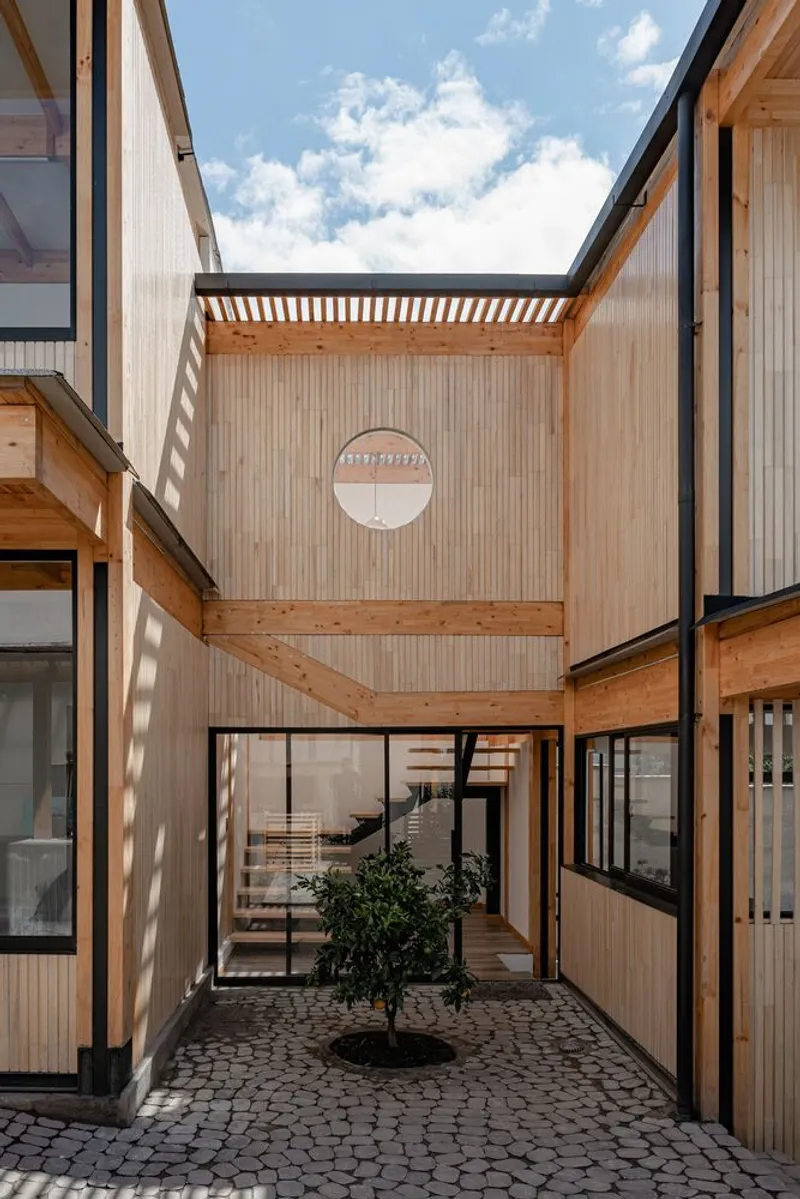
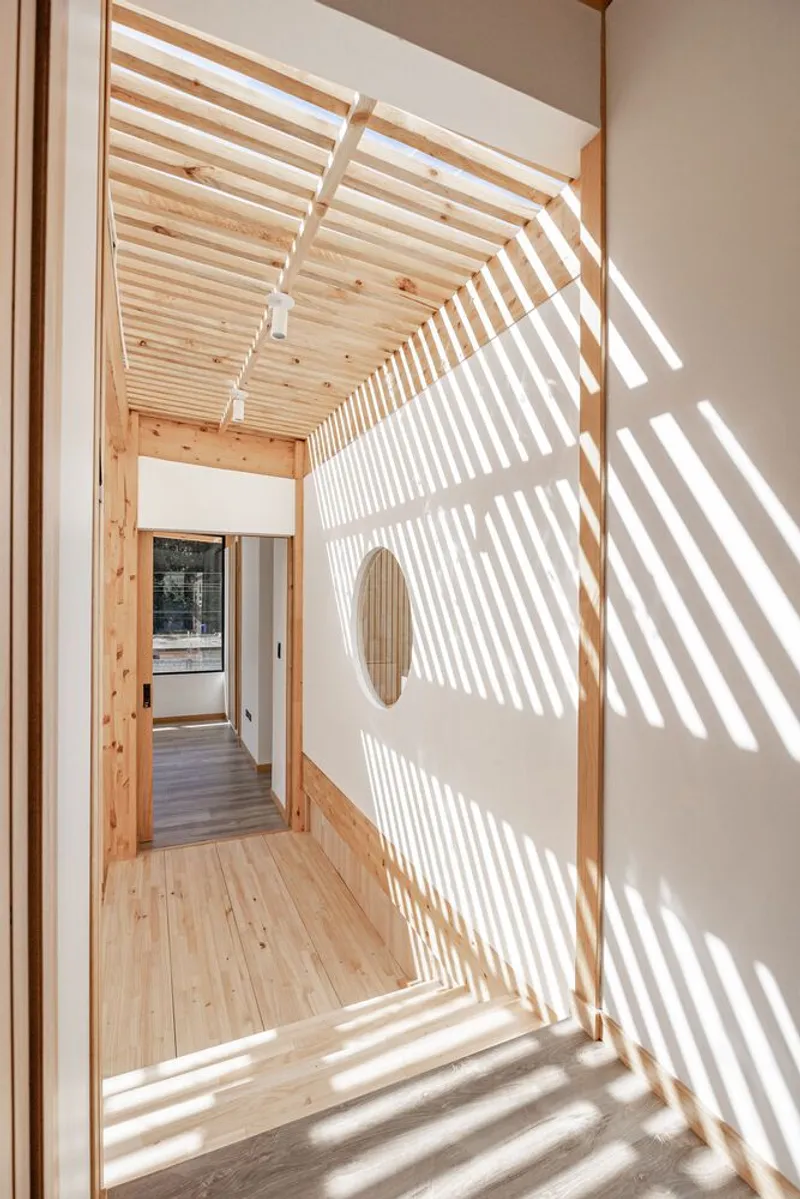
Sustainability and Environmental Considerations Sustainability is at the core of 2C House, with design strategies aimed at reducing environmental impact. The reliance on locally sourced wood, passive shading techniques, and a well-ventilated layout ensures thermal comfort while reducing reliance on artificial climate control systems. The integration of metal components further enhances durability, reinforcing the project’s commitment to long-lasting architecture with minimal environmental footprint.
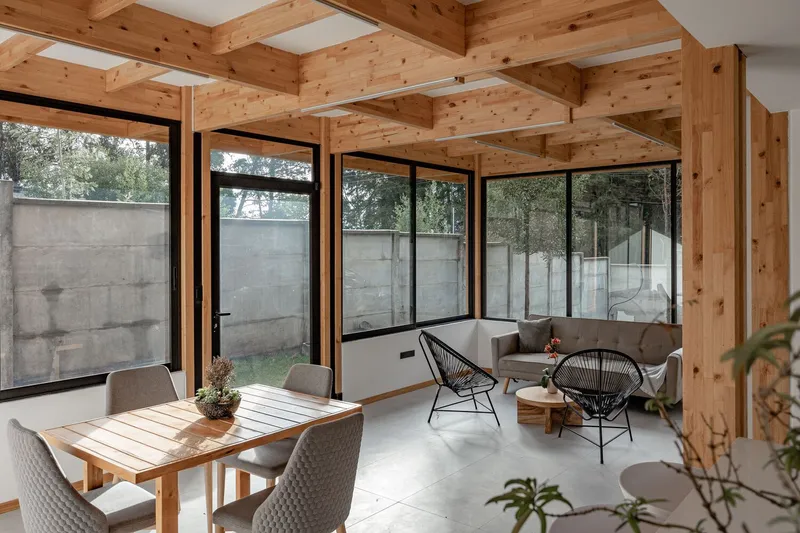
With its thoughtful spatial zoning, sustainable material selection, and harmonious balance between privacy and openness, 2C House by Baquio Arquitectura exemplifies modern residential design at its finest. Through its innovative C-shaped configuration, the residence successfully fosters family connectivity, functional independence, and a deep respect for natural materials—making it a benchmark for contemporary urban housing in Ecuador.


Popular Articles
Popular articles from the community


Singing Woman: An Opera House That Performs Before the Curtain Rises
Ovidiu Cristian Pavel's conceptual opera house translates Estonia's choral identity into a sculpted waterfront landmark facing the Baltic Sea.

Aquadapt: An Underwater Habitat That Rewrites Its Rooms by the Hour
Curved modules ring the seabed while one shell shifts from breakfast room to cinema, farm and football pitch as residents' needs change.

Manzana Morphosis: Stretching Barcelona's Grid into a Living Landscape for 2050
A radical reworking of the Eixample manzana turns density into a tool for generous public space, vertical ecology, and environmental performance.


Cube Design Draws an Ecological Corridor Between Two Shenzhen Hills with the Nankai Building
Beside Shenzhen's container docks, the Nankai Building pairs stacked balconies with a climbing green screen to connect two hillsides across its height.

Similar Reads
You might also enjoy these articles


Hodi-Mandai Geram
Project Function: Preservation and revitalization of the Intangible heritage and socio-spatial identity of the Hodi by Housing, Cultural Memory Center, Sacred Grove, landscape, local tourism economy


Olio Towers: A Mid-Rise for Performers That Fuses Housing, Rehearsal, and Stage
Located blocks from Houston's Theater District, this modular tower stacks living units around a central performance atrium.

Oasis: Modular Green Housing Carved into Dhaka's Urban Fabric
A shortlisted Plugin Housing entry reclaims unauthorized settlements in Dhaka with stepped concrete volumes, green roofs, and ventilation-driven design.

Black Hole: A Floating Megastructure for the Post-Physical Era
Emiliano Mazzarotto envisions a spherical, self-scaling arena where e-sports, digital hotels, and holographic stadiums replace traditional public space.

Explore 2X1 Architects Competitions
Discover active competitions in this discipline

Challenge to reimagine the Iron Throne

Photograph architecture without architects

Illustrate the lost glory of Angkor Wat - Render Challenge

Design challenge to reuse E-waste
Comments (0)
Please login or sign up to add comments
No comments yet. Be the first to comment!