
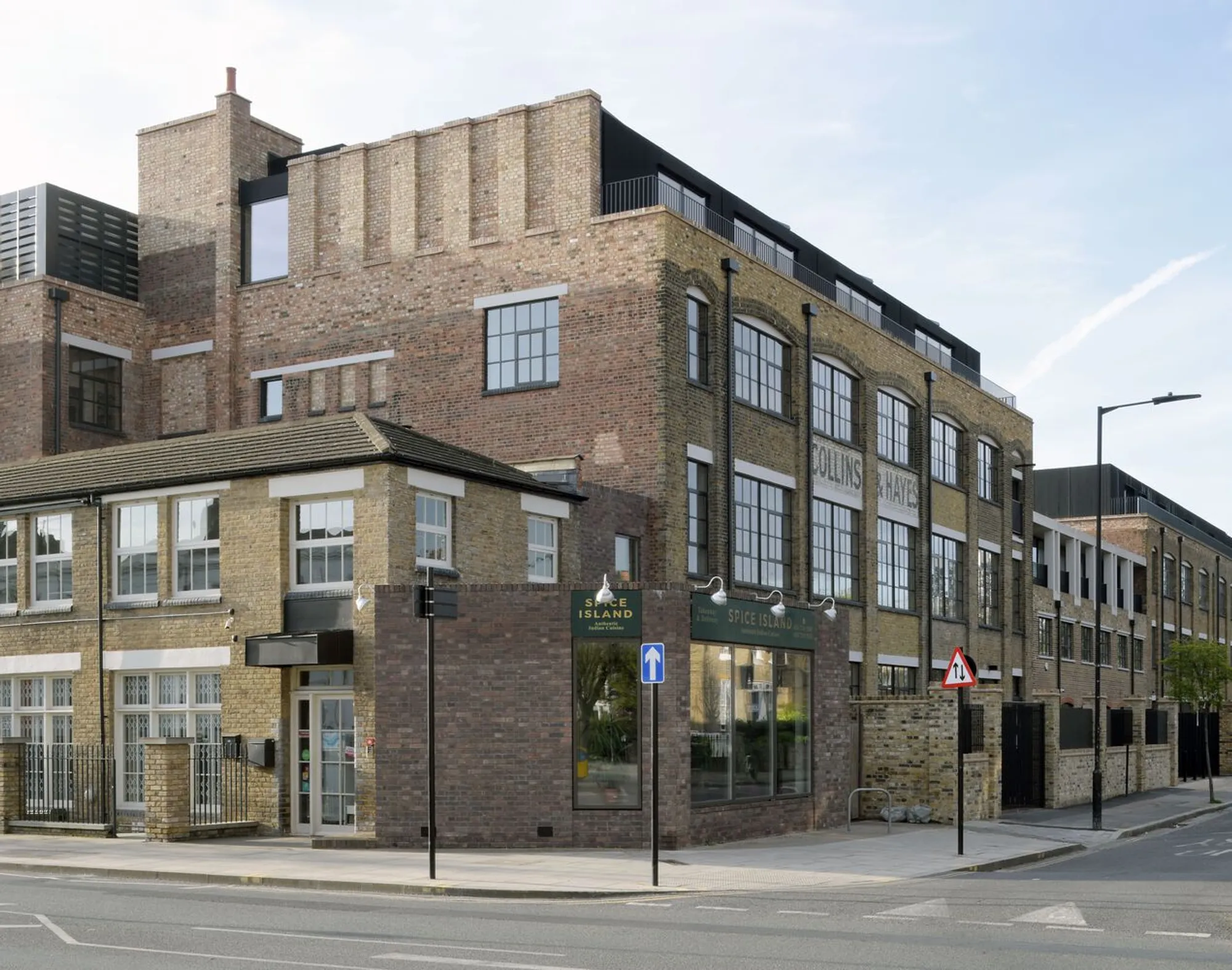
98–100 De Beauvoir Road: Adaptive Reuse by Henley Halebrown
98–100 De Beauvoir Road by Henley Halebrown is a sustainable adaptive reuse project transforming historic industrial buildings into modern, low-carbon workspaces.


Revitalizing Historic Architecture for Modern Workspaces
Henley Halebrown continues its innovative approach to adaptive reuse with the transformation of 98–100 De Beauvoir Road, a project that reimagines early 20th-century industrial buildings in Hackney, London. Following successful interventions like De Beauvoir Block, Laszlo, and The Poppy Factory, this project preserves architectural heritage while creating low-carbon workspaces designed for long-term sustainability.
Preserving Architectural Integrity
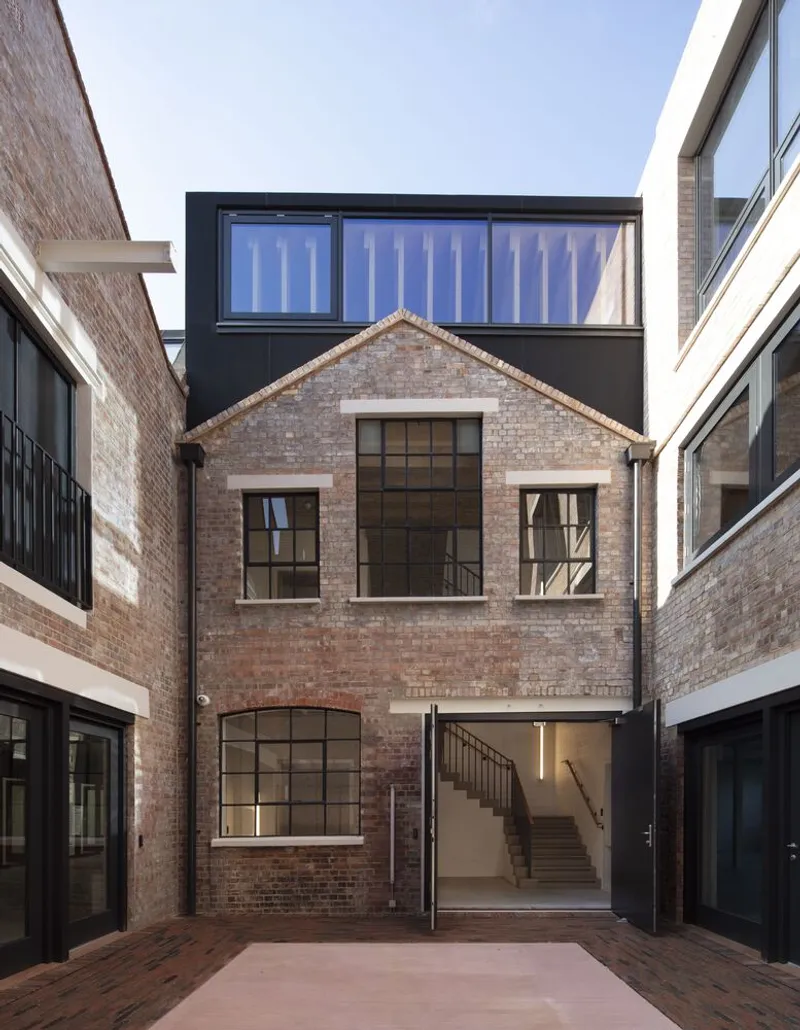
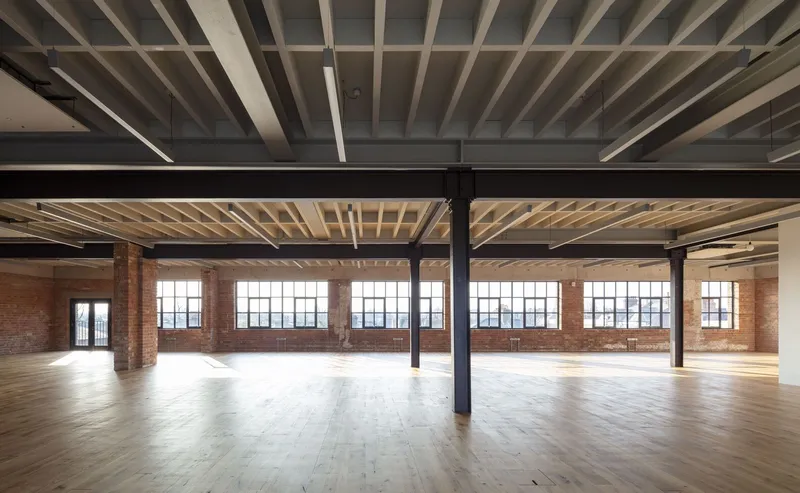
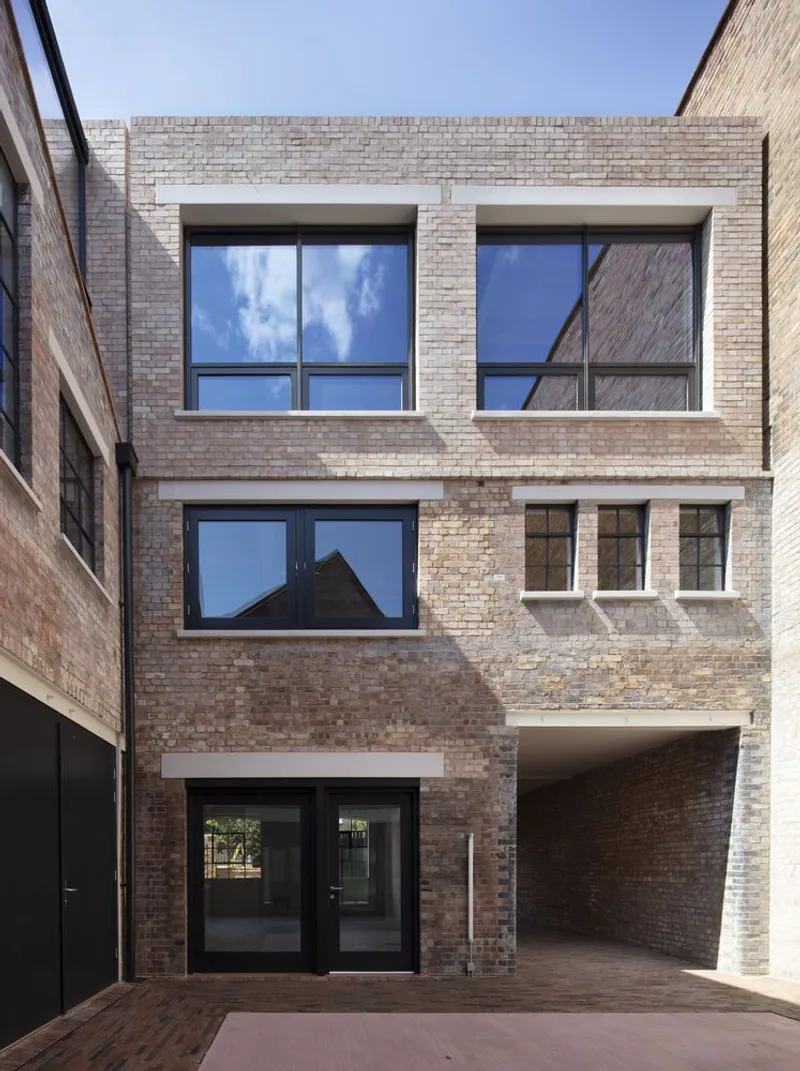
Located west of De Beauvoir Square, the buildings retain their Neo-Jacobean character, with original brick façades, timber structures, and in-situ concrete frames forming the foundation of the retrofit. By integrating natural ventilation, daylight optimization, and flexible spatial layouts, Henley Halebrown has crafted an energy-efficient office campus that aligns with contemporary sustainability goals.
A Thoughtful Approach to Space and Circulation
Previously fragmented by a century of modifications, the site has been carefully reconfigured to enhance connectivity and create a cohesive workspace campus. The design introduces:
- New staircases, lifts, and WC cores for improved circulation
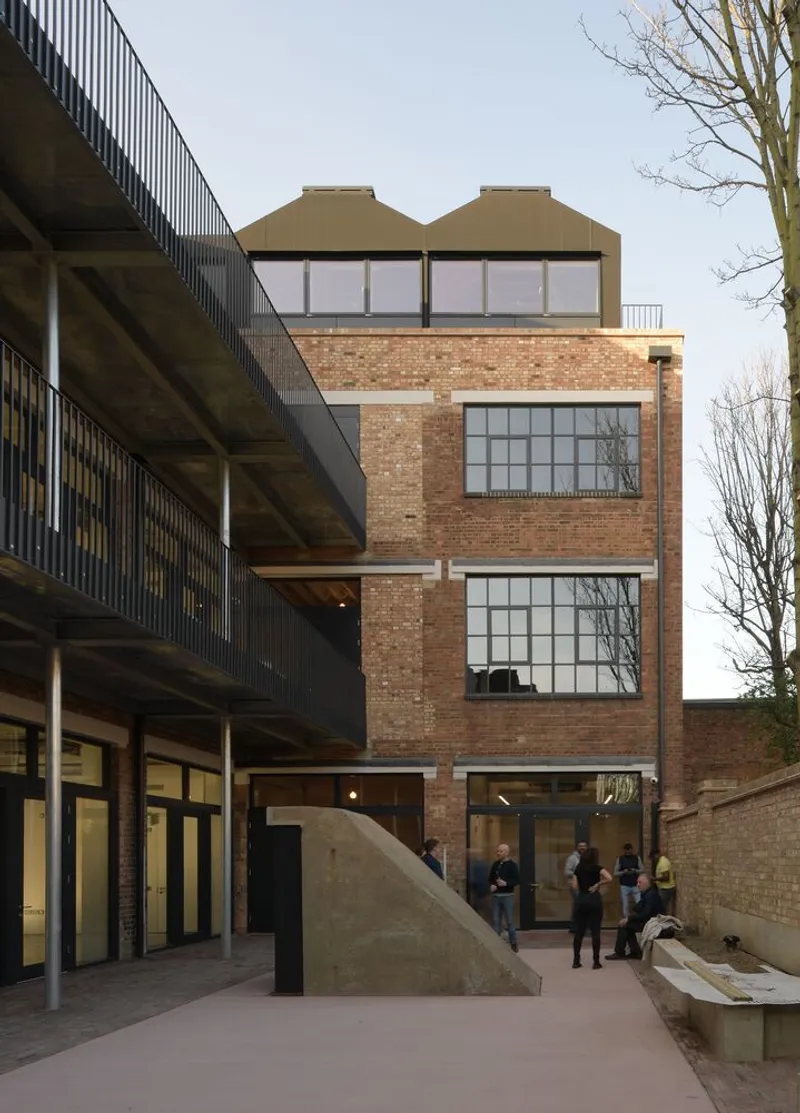
- Two landscaped courtyards, framed by pink fletton brick walls and brushed pink concrete floors
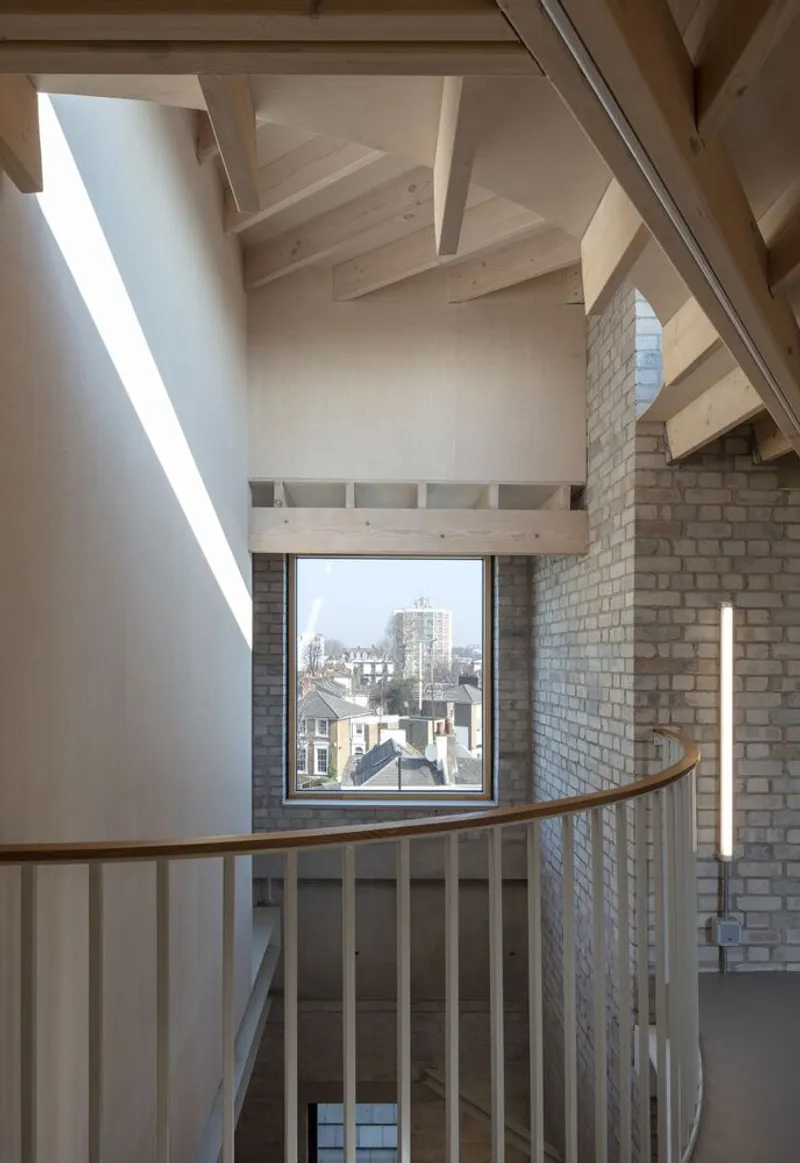
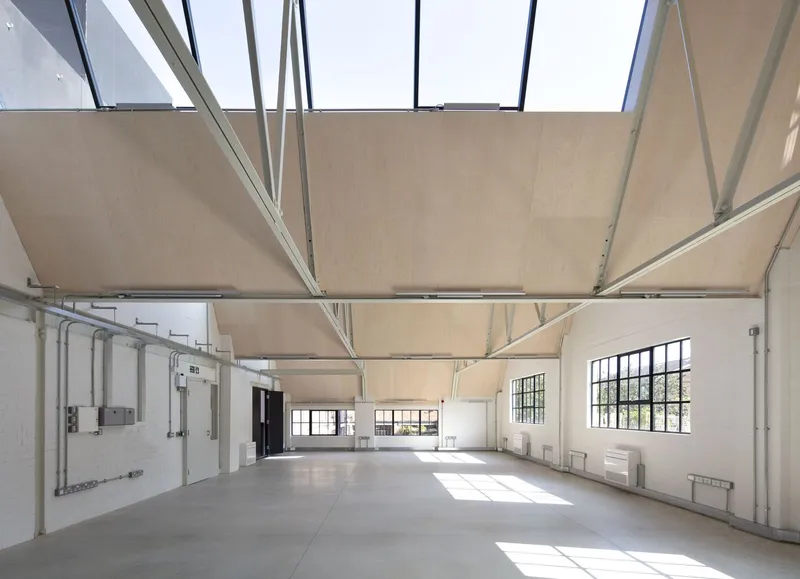
- A three-story, top-lit volume, connecting studios via cantilevered concrete galleries
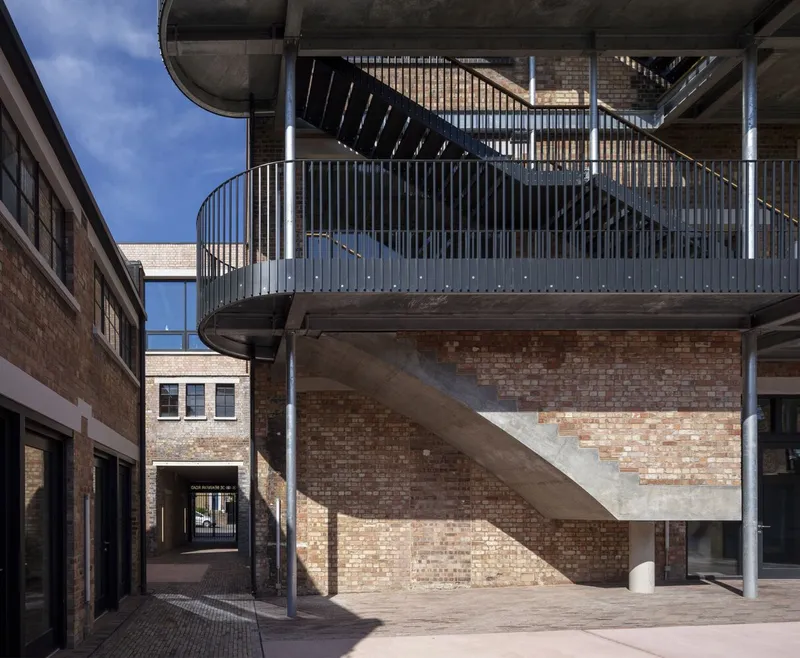
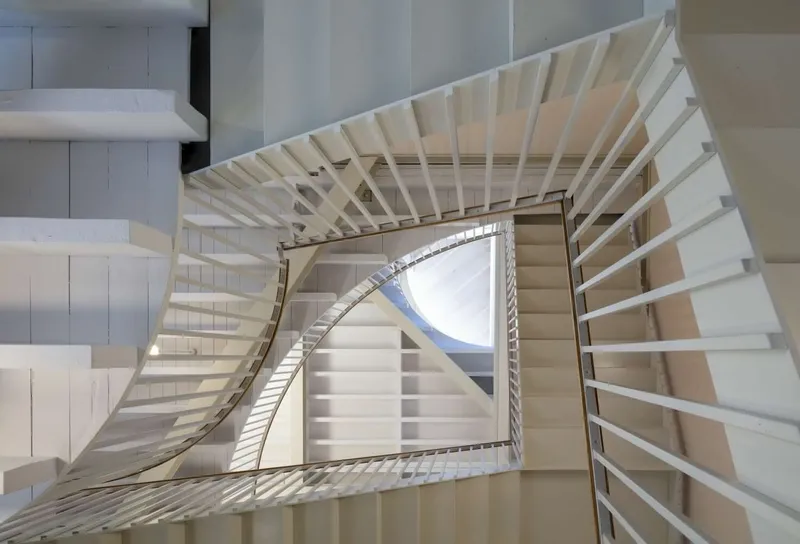
At 98 De Beauvoir Road, a cast-concrete staircase rises within a new brick and timber framework. Meanwhile, 100 De Beauvoir Road draws inspiration from the radical "Anarchitecture" movement, introducing suspended steel staircases and carefully framed voids to reveal the original timber floors and structural elements.
Sustainable Innovation and Expansion
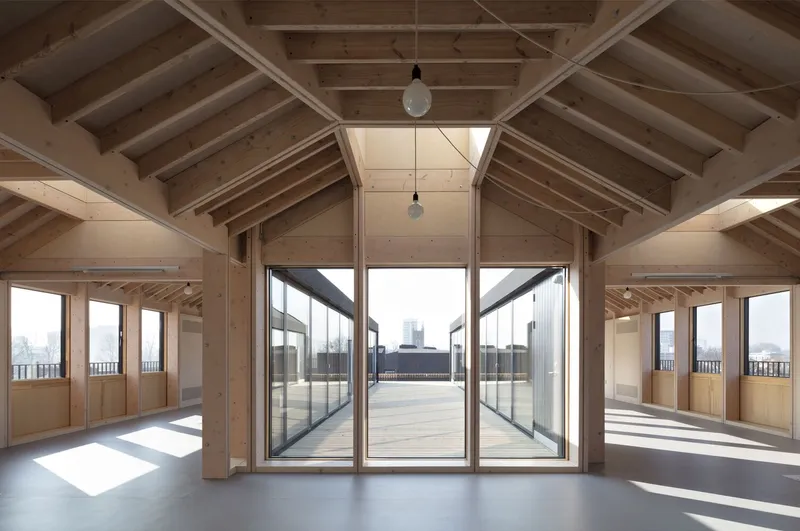
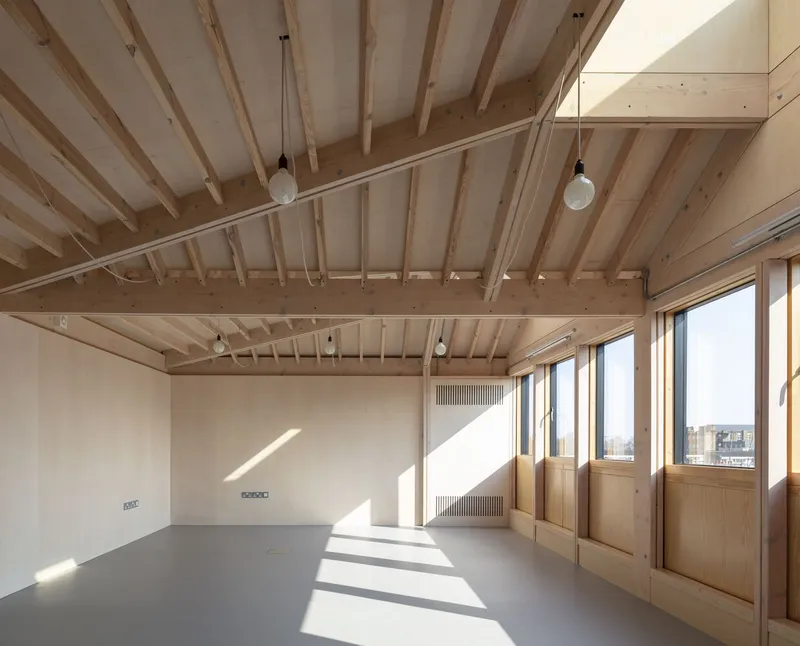
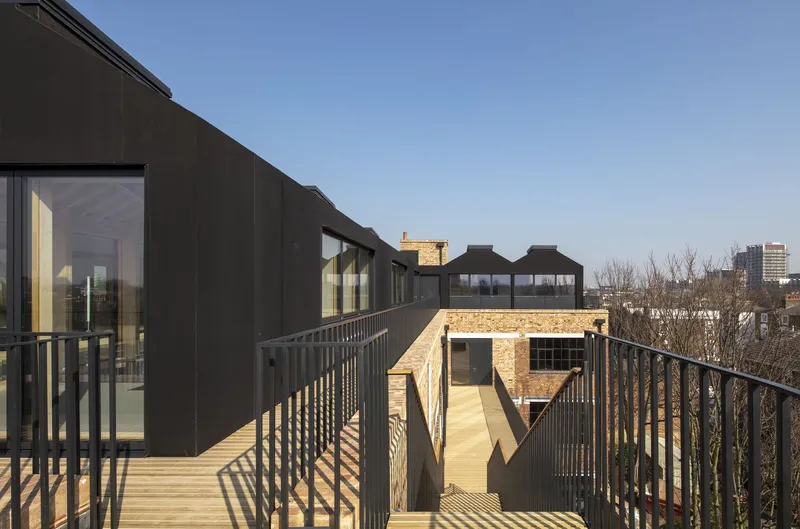
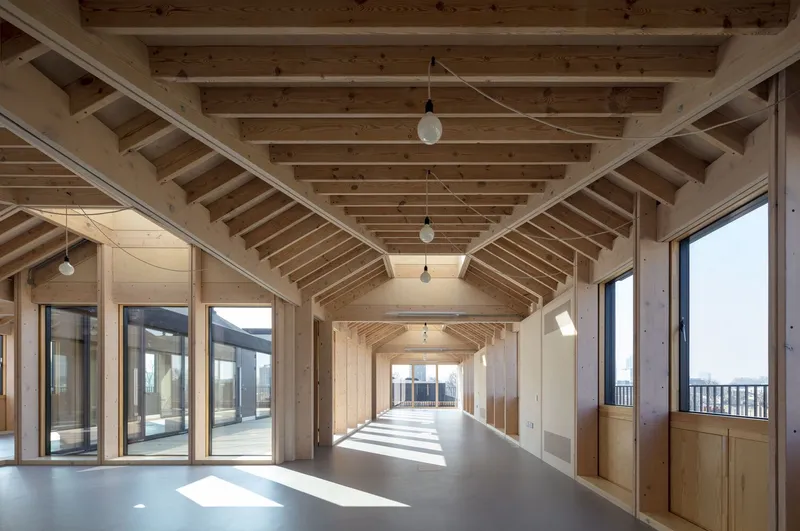
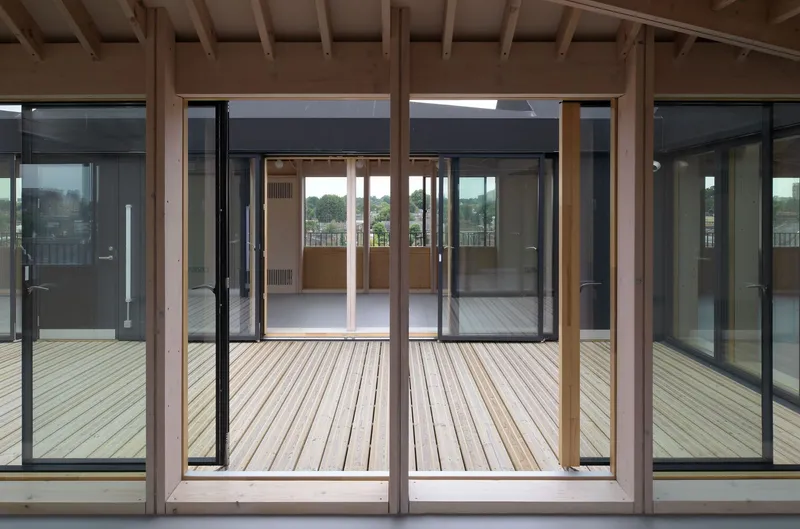
The project embraces low-carbon construction techniques, ensuring durability with minimal maintenance. To maximize natural light and thermal efficiency, Henley Halebrown added glazed steel and timber structures, shaded by precast concrete loggias. The rooftop pavilion at 100 De Beauvoir Road offers striking city views, while its interiors feature an expressed timber structure, wrapped externally in black EPDM rubber for a bold, contemporary aesthetic.
A Model for Adaptive Reuse
98–100 De Beauvoir Road stands as a testament to sensitive architectural restoration, balancing heritage preservation with modern functionality. By retaining embodied carbon and utilizing craft-based, low-tech construction methods, the project demonstrates how existing buildings can be reimagined for the future of work.




Popular Articles
Popular articles from the community


Conexión: Biophilic Design Reimagines High-Rise Living in Hong Kong
Conexión reimagines high-rise living in Hong Kong through biophilic design, green facades, shared spaces, daylight, water and nature within.

The Musturak Paradise: Senior Living Architecture for a Connected Future in Temara, Morocco
The Musturak Paradise reimagines senior living architecture in Temara via private homes, social spaces, culture, community, and shared care.

The Ocean Hive: Sustainable Architecture for a Self-Sufficient Civilization at Sea
The Ocean Hive imagines sustainable architecture at sea, where modular habitats, algae, wave power and ocean waste sustain a growing colony.

The Earth Pod: 3D Printed Homes for Resilient Refugee Communities
The Earth Pod reimagines refugee housing through 3D printed homes made from clay, combining resilience, self-sufficiency, and rapid shelter.


Similar Reads
You might also enjoy these articles


Hodi-Mandai Geram
Project Function: Preservation and revitalization of the Intangible heritage and socio-spatial identity of the Hodi by Housing, Cultural Memory Center, Sacred Grove, landscape, local tourism economy


Olio Towers: A Mid-Rise for Performers That Fuses Housing, Rehearsal, and Stage
Located blocks from Houston's Theater District, this modular tower stacks living units around a central performance atrium.

Oasis: Modular Green Housing Carved into Dhaka's Urban Fabric
A shortlisted Plugin Housing entry reclaims unauthorized settlements in Dhaka with stepped concrete volumes, green roofs, and ventilation-driven design.

Black Hole: A Floating Megastructure for the Post-Physical Era
Emiliano Mazzarotto envisions a spherical, self-scaling arena where e-sports, digital hotels, and holographic stadiums replace traditional public space.


Explore Office Building Competitions
Discover active competitions in this discipline



Challenge to reimagine the Iron Throne


Photograph architecture without architects


Illustrate the lost glory of Angkor Wat - Render Challenge


Design challenge to reuse E-waste
Comments (0)
Please login or sign up to add comments
No comments yet. Be the first to comment!