
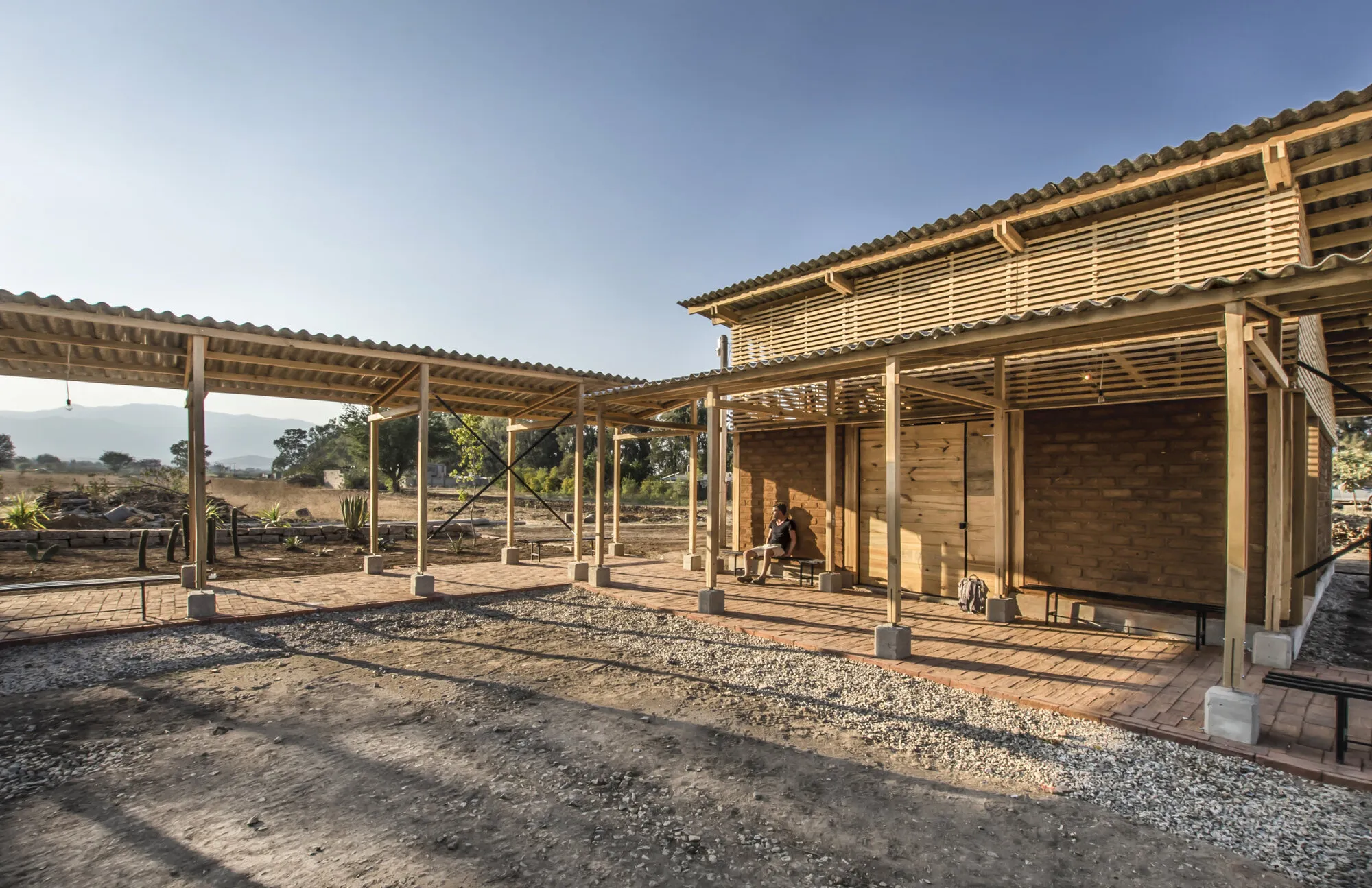
A Coalition of Students and Villagers Builds a Cultural Center in Oaxaca's Central Valleys
In Santa Catarina Quiané, a community fighting land dispossession constructs its own gathering place from low-tech, earthquake-resistant timber frames.


For over a decade, the community of Santa Catarina Quiané in Oaxaca's Central Valleys has been fighting threats of land dispossession. The Quiané Center for Culture and Ecology is the built expression of that resistance: a place where 400 to 500 people can gather, dance, cook, learn, and organize. Phase I, completed in 2019, delivers a large hall and a sanitary building linked by a covered gallery, with a constructed wetland for wastewater treatment. The ambition extends far beyond what stands today. Future phases envision six halls, dry toilets, cisterns, photovoltaic arrays, a sports field, workshops, gardens, a composting operation, a kitchen, and a dining room.
What makes this project worth attention is not a single design gesture but the alignment of means with meaning. Twenty-one architecture and civil engineering students from the Munich University of Applied Sciences worked alongside the Comunidad de Santa Catarina Quiané, CAMPO, Frente por la Defensa de la Tierra, students from La Salle University in Oaxaca, and Atarraya Arquitects from Ecuador. Every structural decision responds to a permanent seismological hazard with low-cost, low-tech, and ecologically minded techniques. The result is an architecture that reads as simultaneously provisional and deeply rooted.
Timber Frames Against the Sky
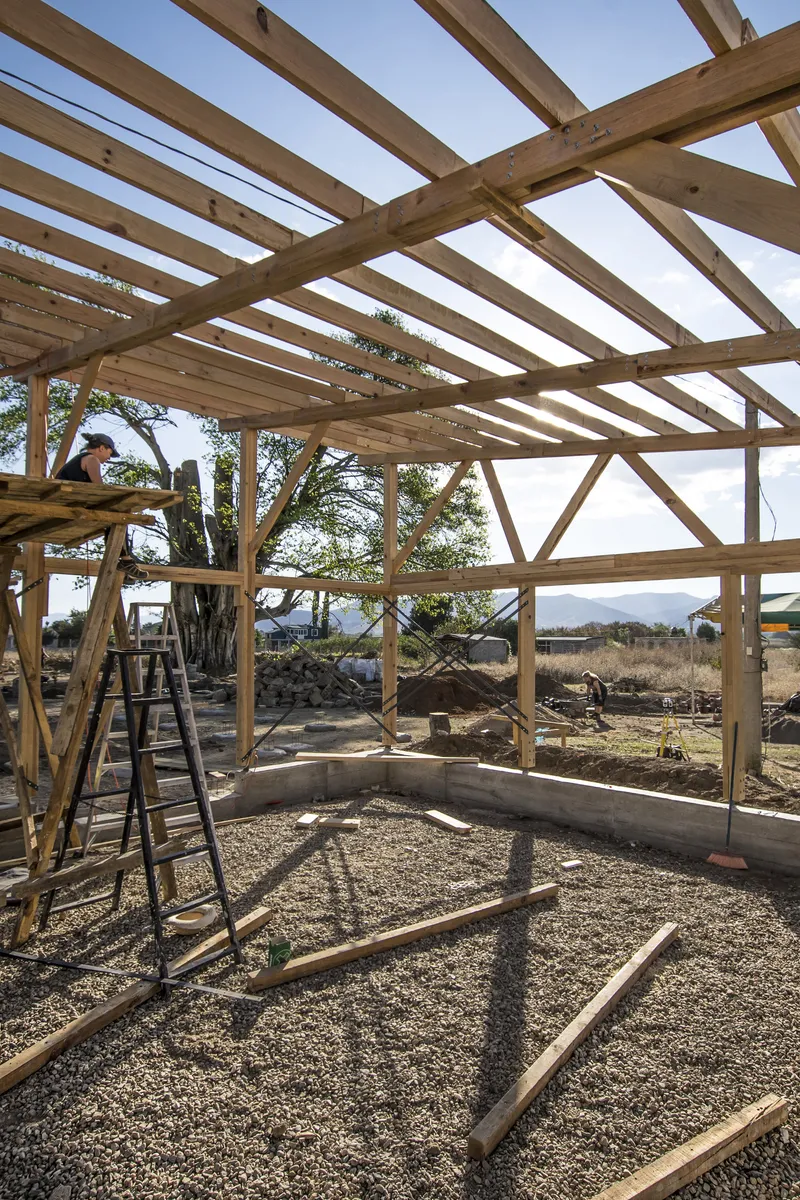
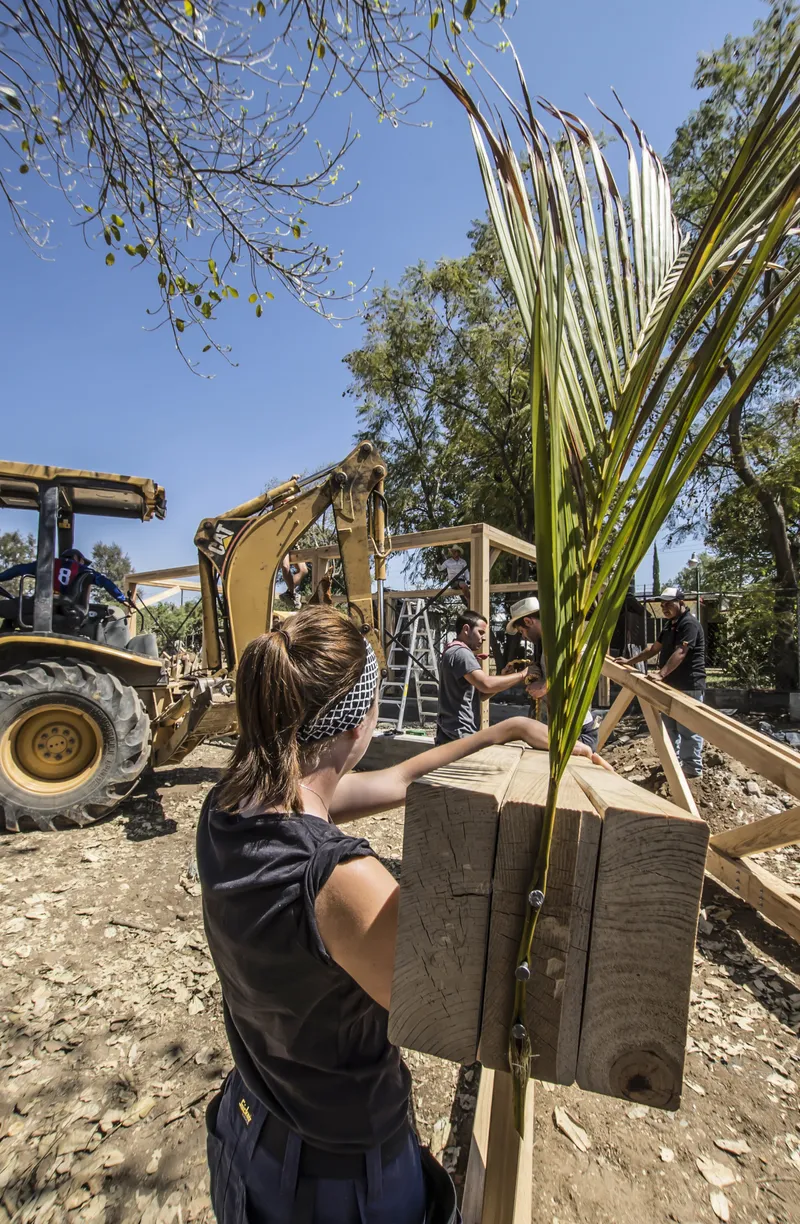
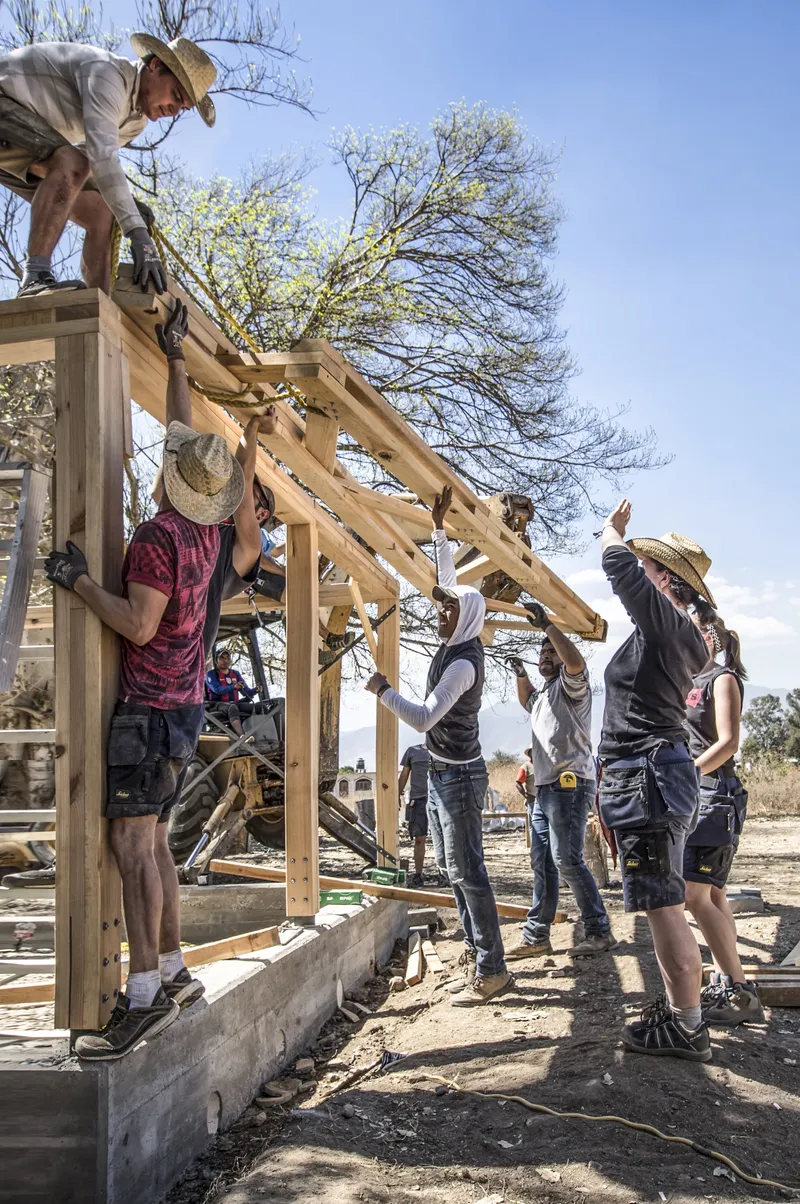
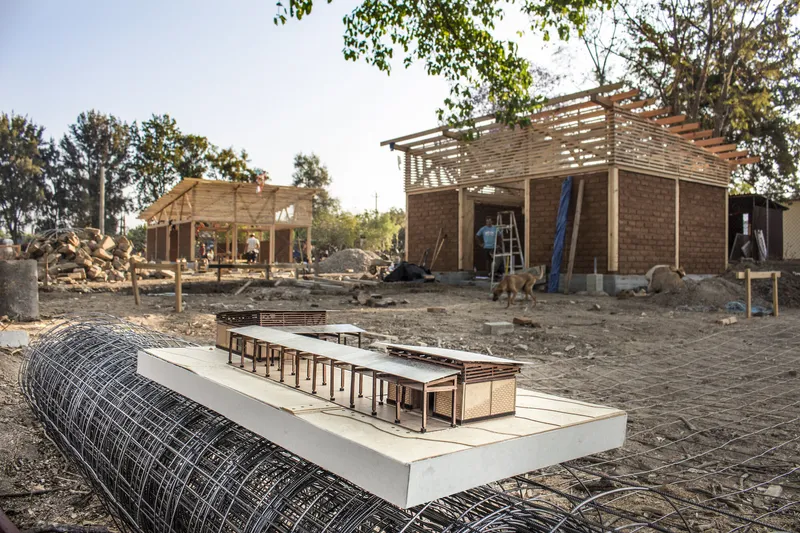
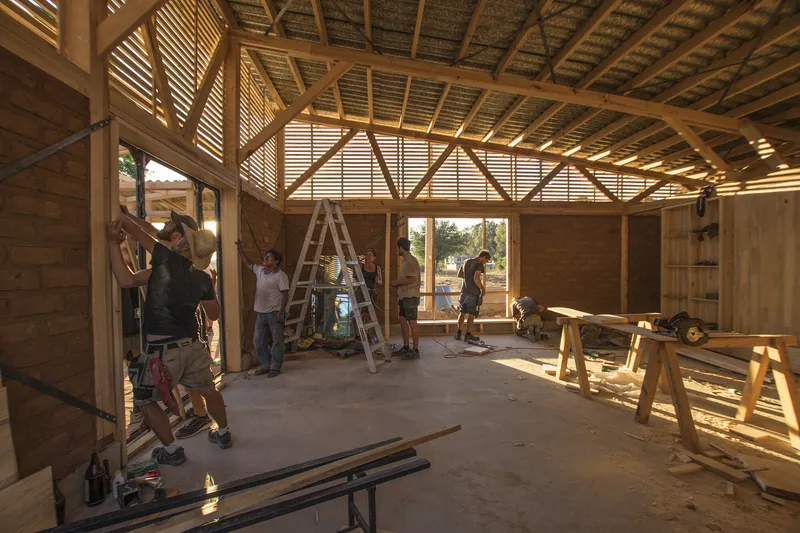
The construction photographs tell a story that most finished building images try to erase. Workers lift beams by hand under open sky, assembling diagonal bracing that gives the timber skeleton its earthquake resistance. There are no cranes, no heavy machinery. The structural logic is legible to anyone watching: triangulated frames, bolted connections, repeated bays. It is engineering reduced to first principles.
This legibility is not incidental. When a community builds its own cultural center, the construction process is inseparable from the architecture's purpose. Every person who helped raise a beam understands how the building works and, more importantly, claims a stake in what happens inside it.
Rammed Earth and Brick: A Material Palette Drawn from the Ground
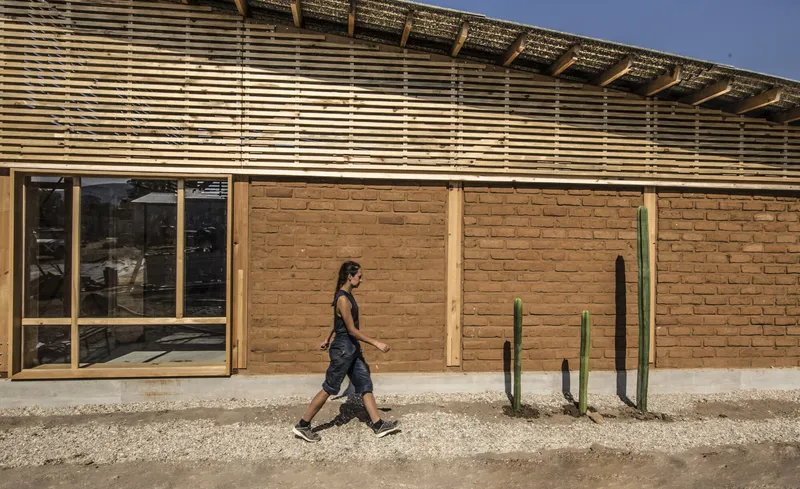
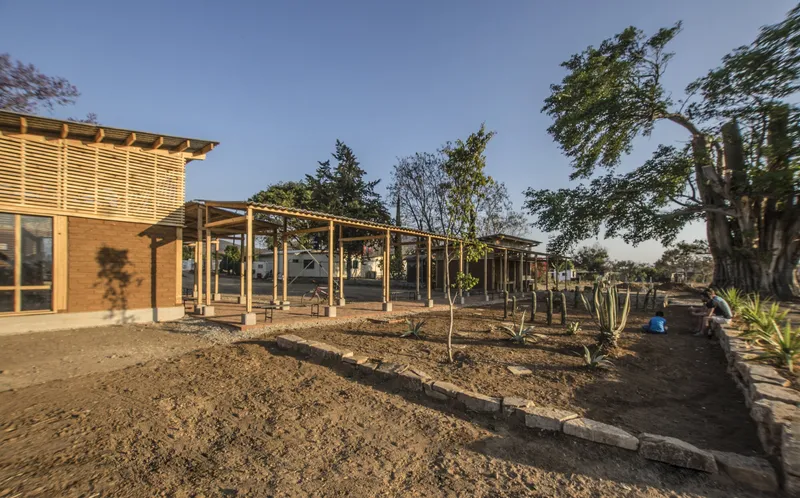
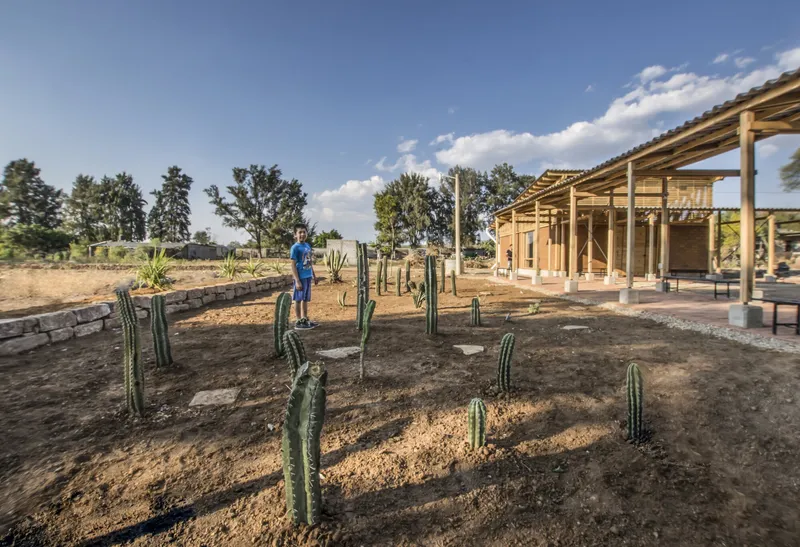
The facades oscillate between rammed earth walls and timber louver screens. The rammed earth at the base carries weight and thermal mass. Horizontal slats above filter light and encourage ventilation, a straightforward response to the warm, dry climate of the Central Valleys. Cacti planted in the surrounding dry earth extend the palette outward, blurring the boundary between architecture and terrain.
Brick pavers appear throughout the walkways and courtyards, providing a durable surface that local labor can lay and repair without specialized equipment. The brick pavilion extending into the courtyard hints at the campus-like organization the masterplan envisions, where multiple structures will eventually be scattered across the site in a loose constellation rather than a single monolithic form.
The Gallery as Spine
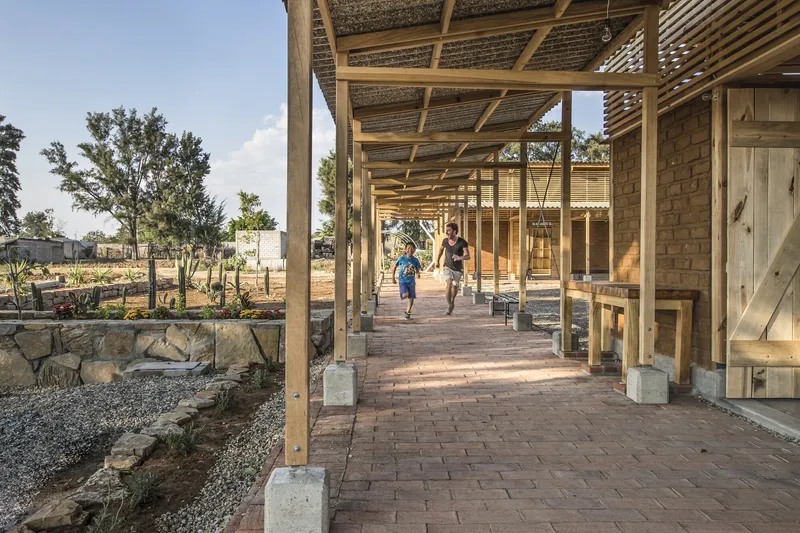
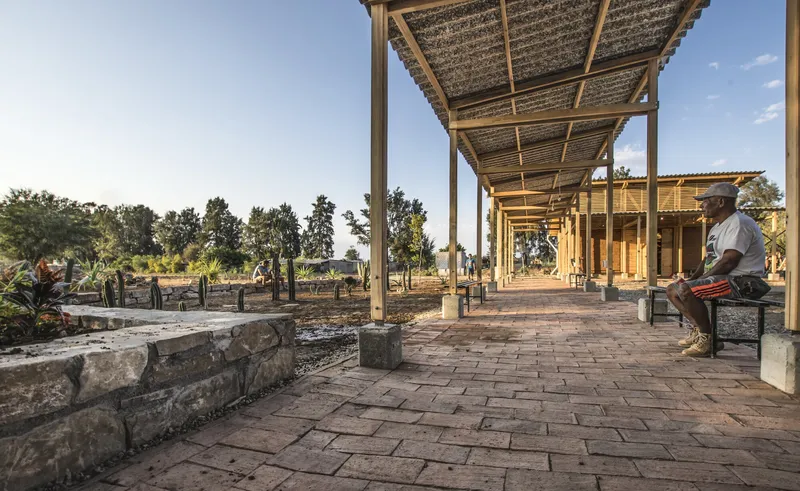
A covered colonnade links the hall to the sanitary building. It is the simplest element in the project and arguably the most important. In a rural settlement where communal life happens outdoors, the gallery provides shade and a sense of threshold without enclosure. Children run through it. Workers rest beneath it. It is neither inside nor outside, and it does not pretend to be architecture with a capital A. It is just a roof held up by columns, doing its job.
The proportions are generous enough to host informal gathering, and the slatted roof filters sunlight into rhythmic stripes that animate the floor throughout the day. Steel diagonal bracing appears at the connections to the enclosed volumes, marking the transitions with a slight tonal shift from wood to metal.
Light Through Structure
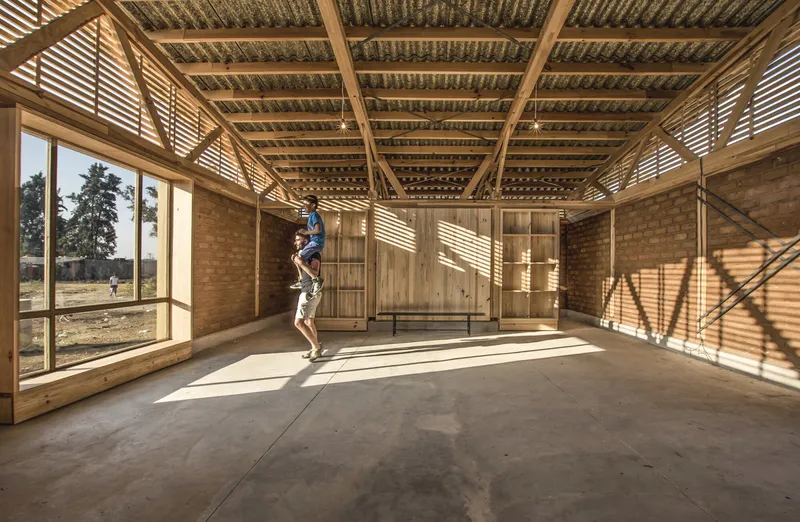
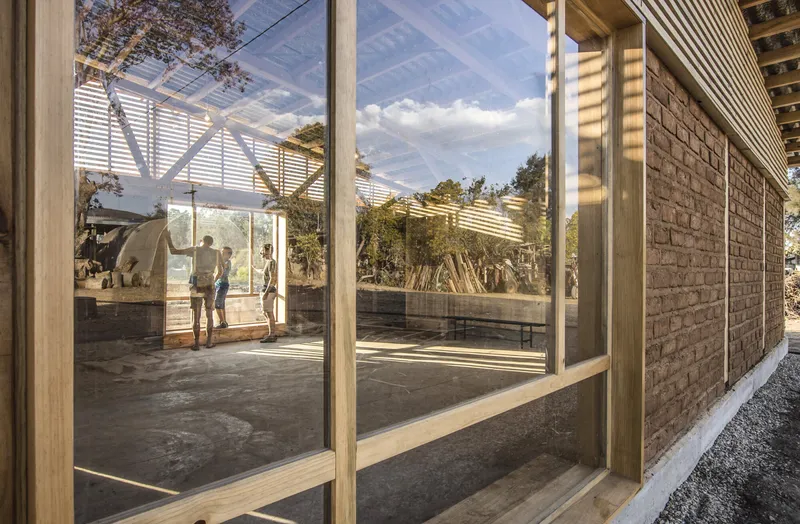
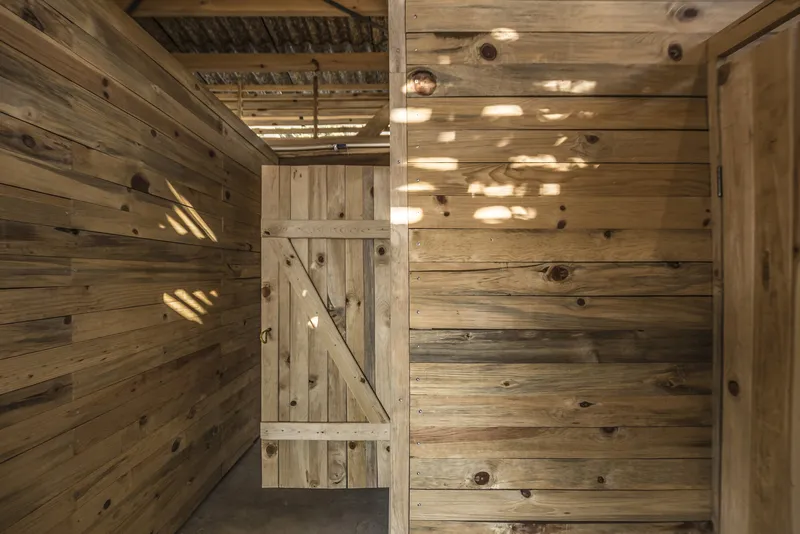
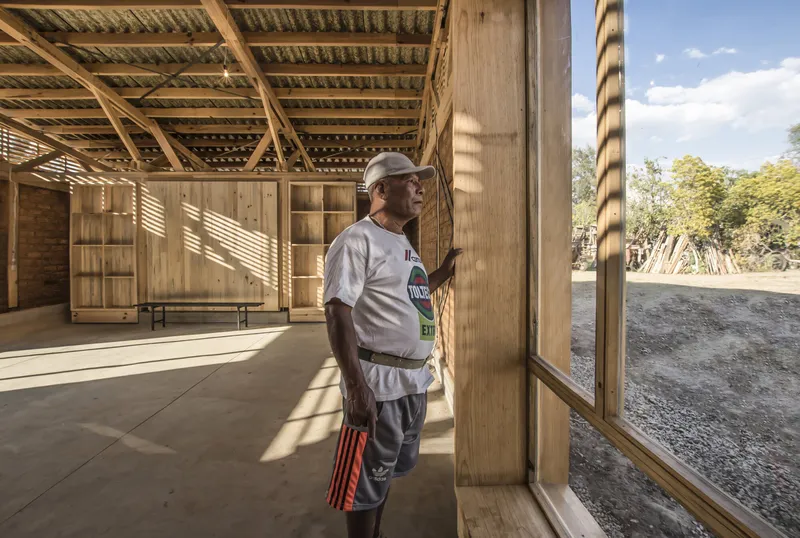
Interior spaces are defined less by walls than by the quality of light passing through them. A woven bamboo ceiling in one room casts dappled shadows that shift with the sun, producing a visual texture that no applied finish could replicate. Glass corridors with slatted overhangs create striped shadow patterns on concrete floors, turning circulation into a sensory experience.
The reclaimed wood barn doors with diagonal bracing are treated with the same structural honesty as the main frame. They slide and swing, letting the building breathe. When everything is open, the distinction between hall and courtyard nearly dissolves.
Building as Process
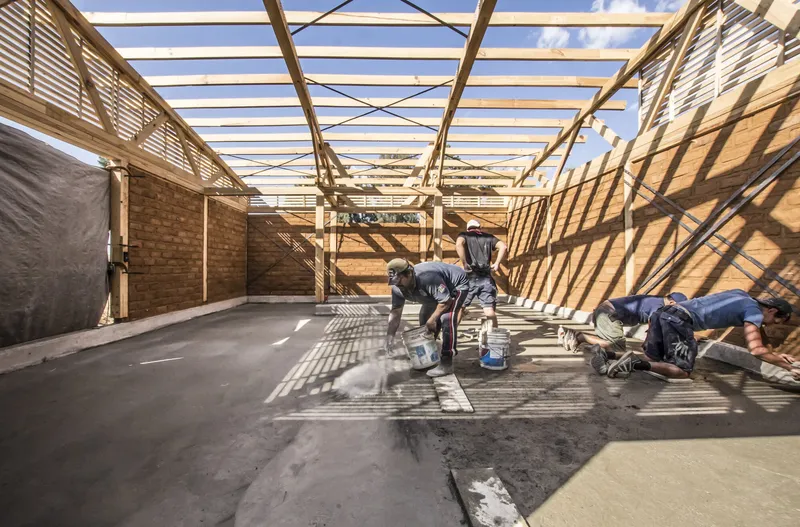
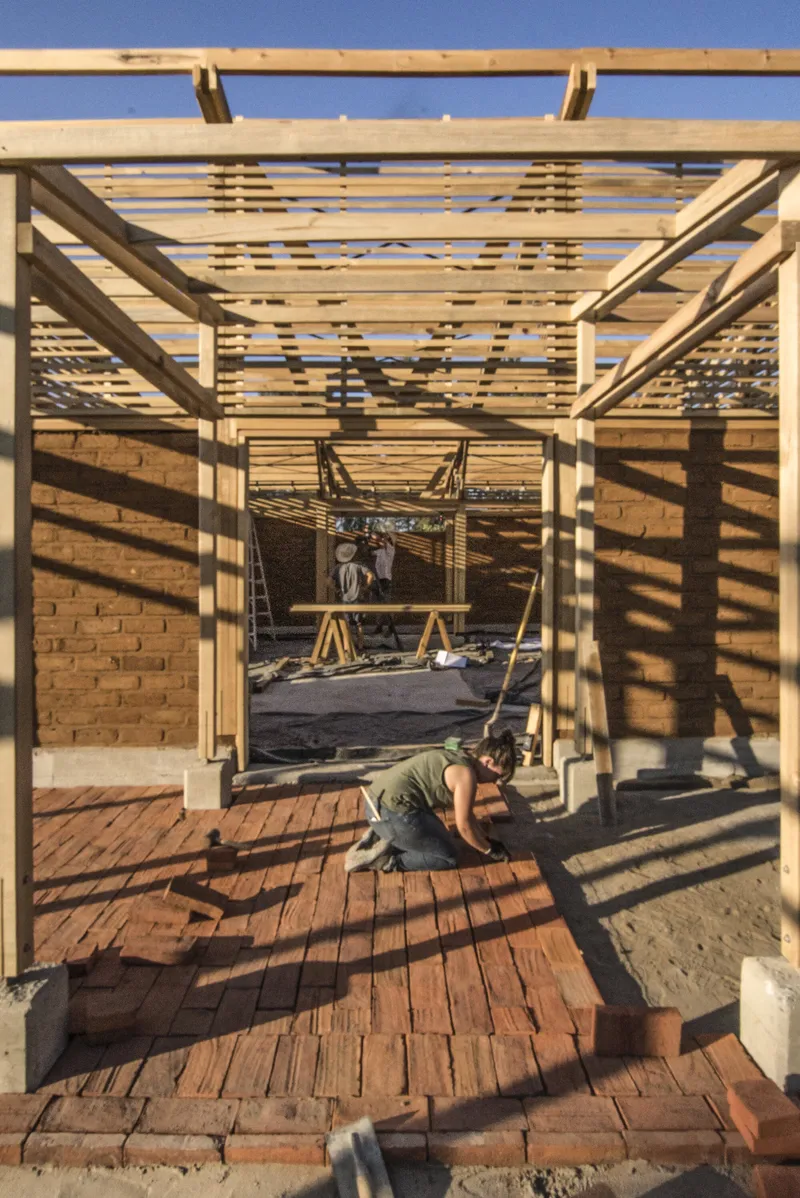
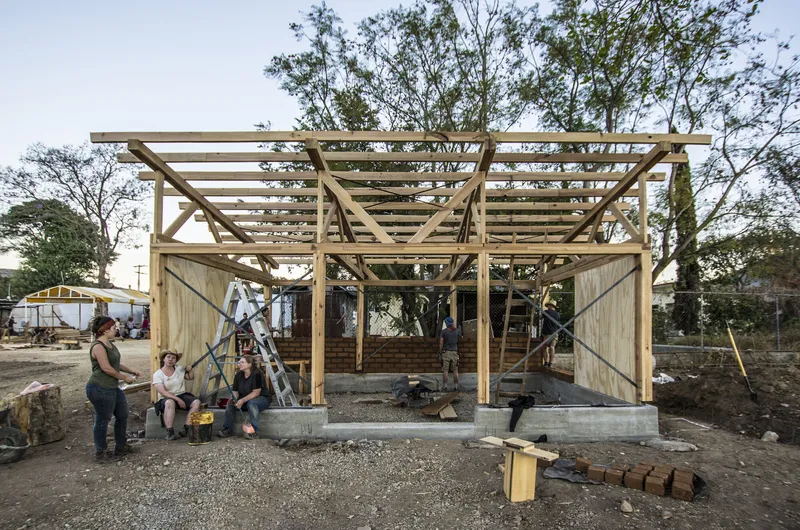
Images of workers applying concrete floor finishes, laying brick, and resting in the shade of the structure they are building convey something that polished completion photography cannot. The project was designed to be built by the hands that would use it. Every material choice, from rammed earth to timber framing, reflects that constraint. Earthquake resistance is achieved not through reinforced concrete and engineered steel but through geometry, triangulation, and redundancy: techniques that can be understood, taught, and replicated without industrial supply chains.
The physical model sitting on the construction site is a telling detail. It suggests a design process that happened in real time, with the community present, rather than being delivered as a finished set of drawings from a distant office.
Dusk and Landscape
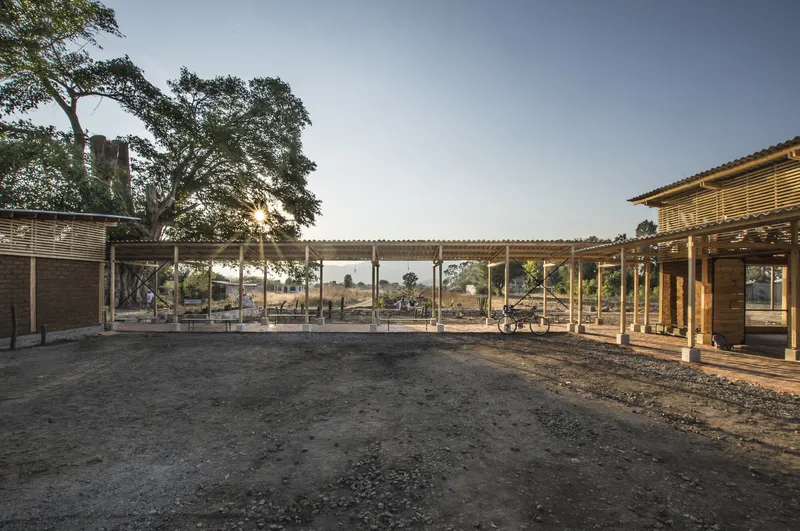
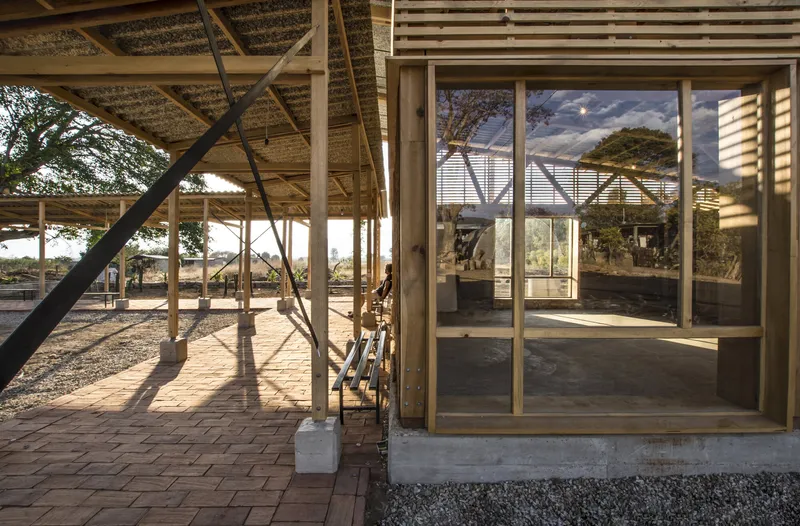
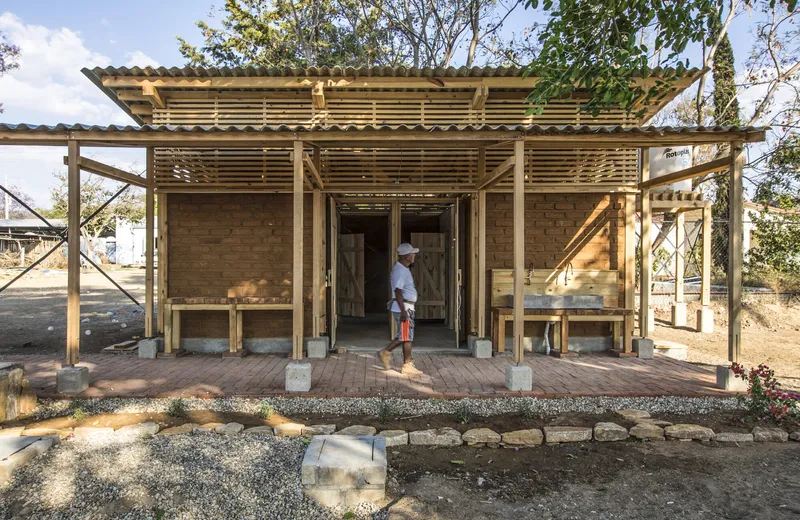
The building comes alive at dusk. The corrugated metal roof, prosaic by day, catches the last warm light and reads as a thin luminous plane floating above the timber columns. Interior lighting reverses the daytime relationship between solid and void: the enclosed volumes glow while the gallery recedes into darkness. Against the surrounding landscape of low hills and scattered trees, the center holds its ground without competing for attention.
Glass walls and open thresholds keep the landscape visually continuous through the building. Standing inside, you see cacti, dry earth, and distant ridgelines framed by the structural bays. The architecture positions itself as a lens onto the territory the community is fighting to keep.
Infrastructure as Architecture
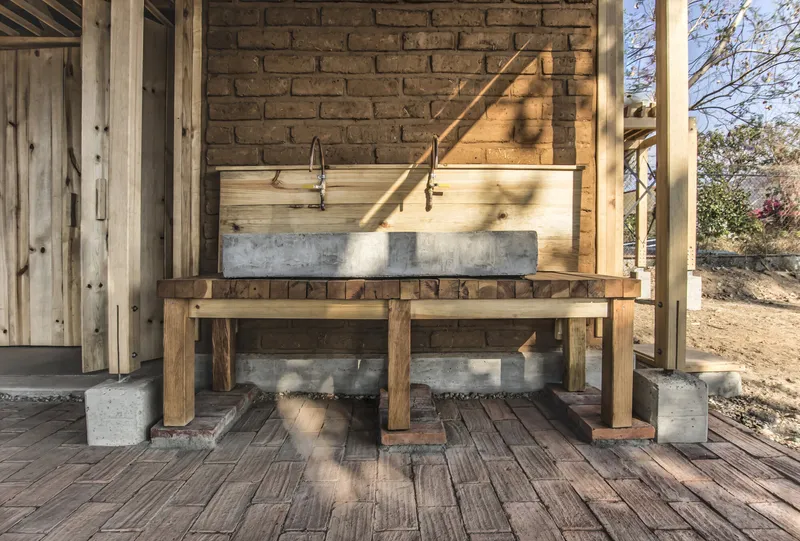
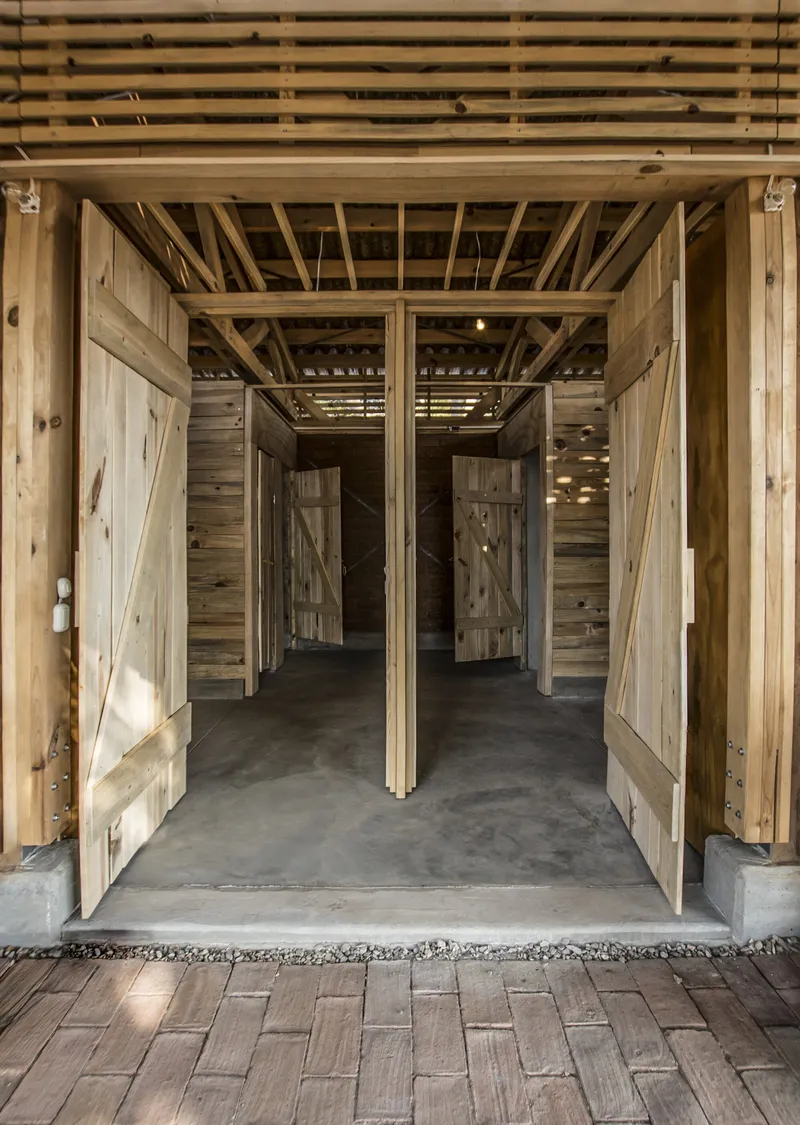
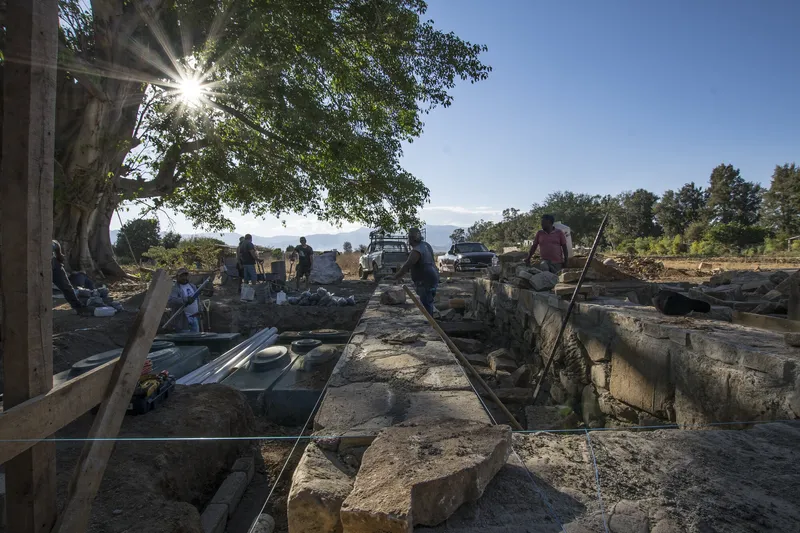
The sanitary building with its connected constructed wetland is designed as ecological infrastructure rather than a utilitarian afterthought. An outdoor sink with a concrete basin sits openly within the timber frame, treated with the same care as the main hall. Stone foundation blocks and timber formwork photographed during construction show how even the hidden parts of the building follow the same material logic as the visible ones.
Phase I's inclusion of sewage treatment signals the larger project's priorities. Before you build six halls and a sports field, you build the systems that let a gathering of 500 people function sustainably. The sequence of construction is itself a design decision.
Plans and Drawings
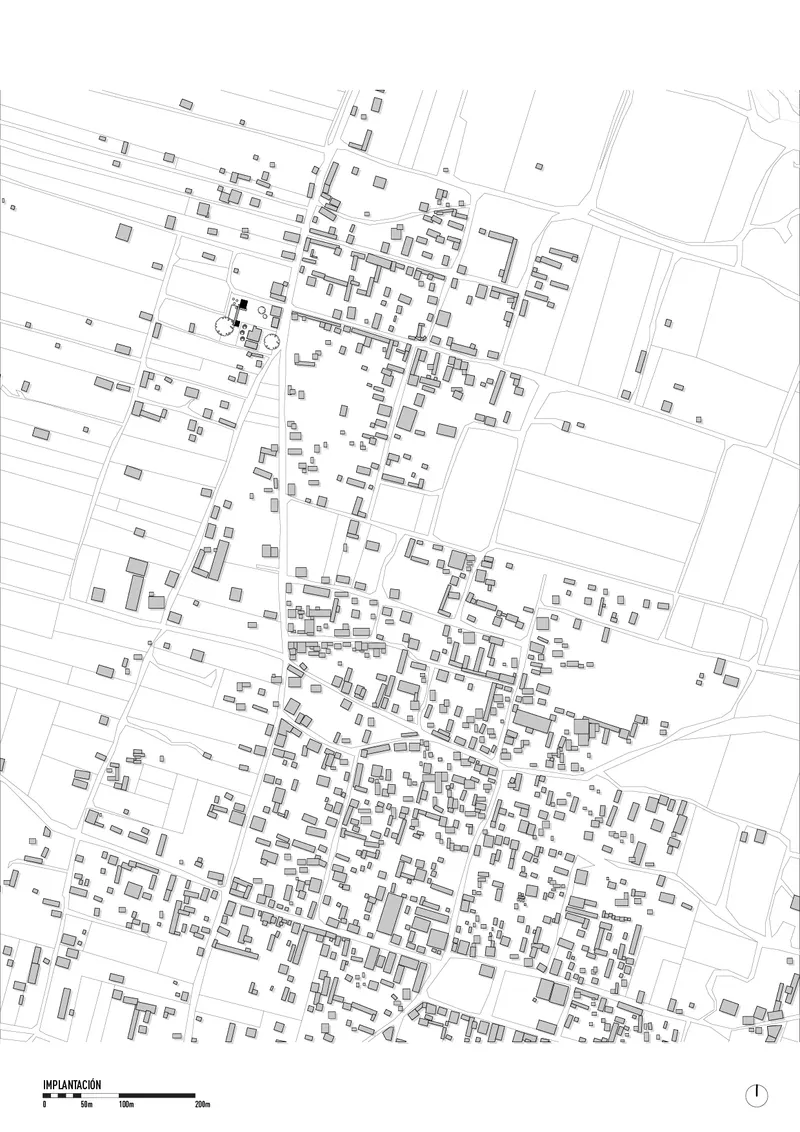
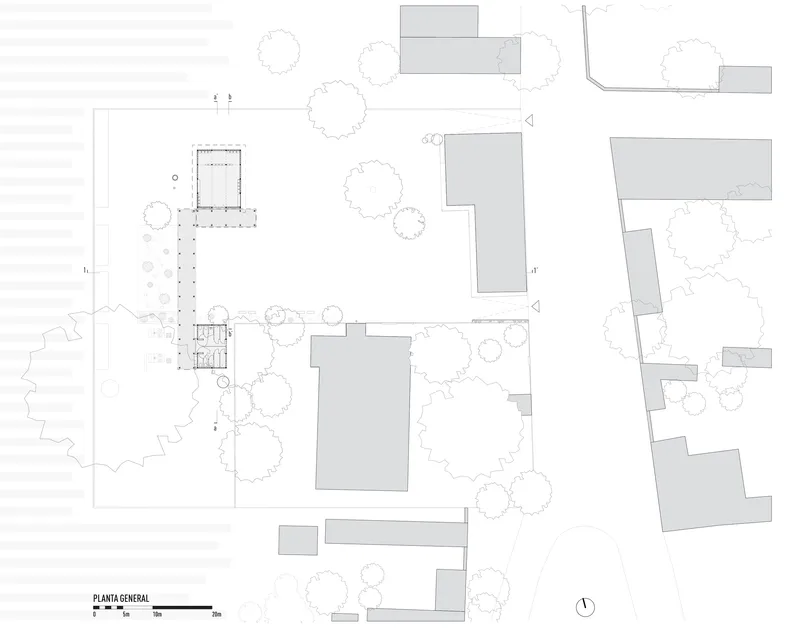
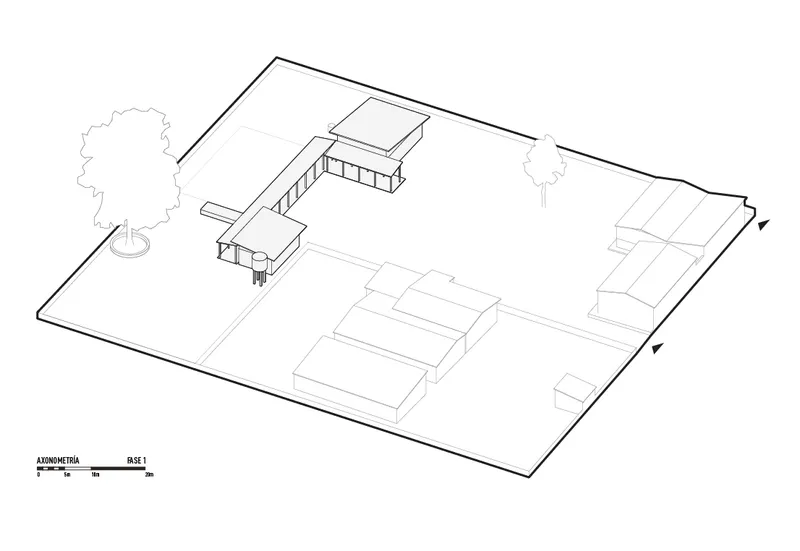
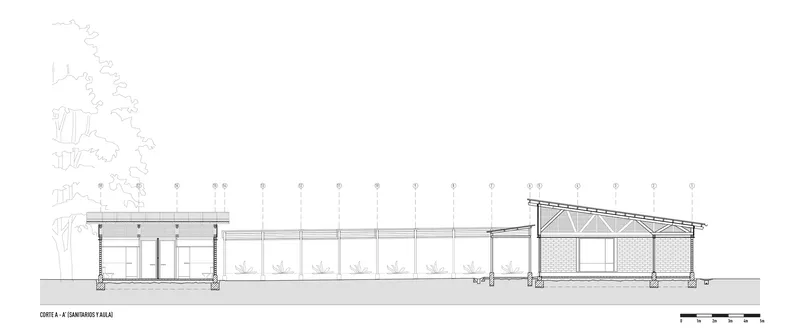
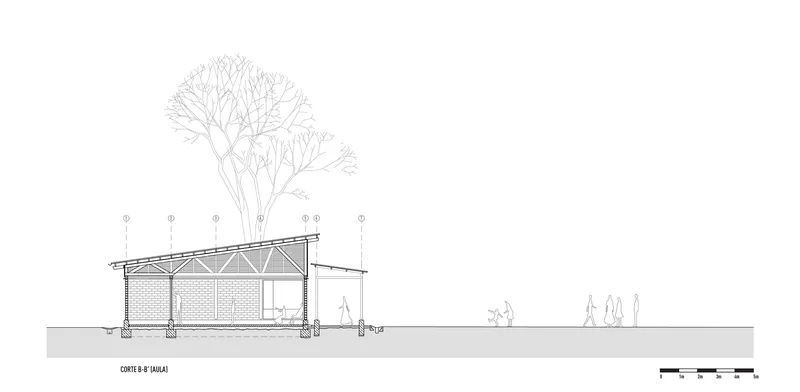
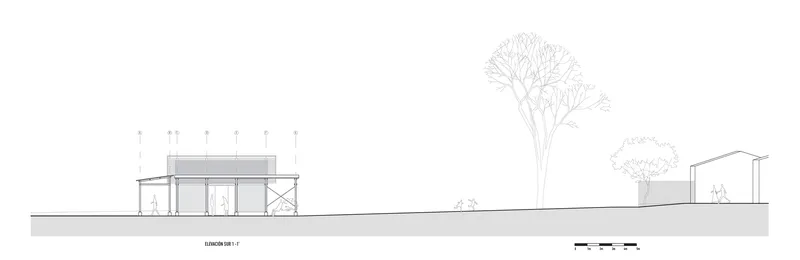
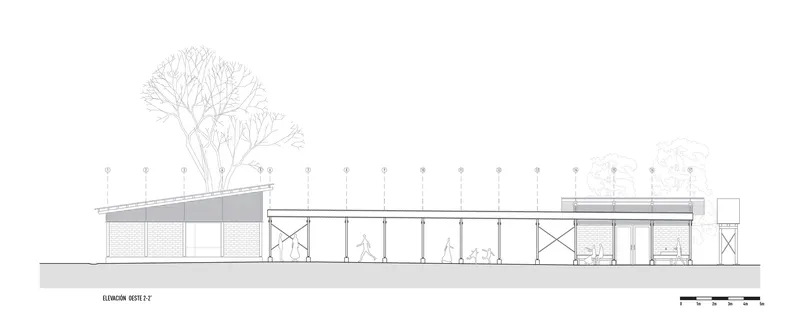
The site plan reveals how the center sits within the existing settlement: not as an isolated campus but as a new node in an already organic pattern of buildings, paths, and tree canopies. The axonometric drawing makes the scattered pavilion strategy explicit, showing how future phases will populate the site as a loose cluster rather than a single mass. Sections confirm the straightforward structural approach: timber trusses spanning between masonry bearing walls, with the colonnade providing continuity at a lower datum.
The elevations are honest about scale. These are low, single-story structures, deliberately modest in profile. The repeating columns and consistent roofline give the project coherence without rigidity, and the tree canopies drawn alongside the buildings suggest that the landscape is understood as co-equal to the architecture.
Why This Project Matters
The Quiané Center matters because it demonstrates that design-build pedagogy can serve political agency. This is not a service-learning exercise where students parachute in, pour some concrete, and fly home with portfolio images. The collaboration between a Bavarian university, a Mexican community, a local NGO, and an Ecuadorian practice produced a building that addresses real structural threats (earthquakes, land dispossession) with real structural means (timber triangulation, communal ownership). Phase I is modest in area, 220 square meters, but the masterplan's ambition is scaled to the community's needs rather than to a grant budget.
In a discipline that frequently conflates complexity with value, this project argues the opposite. Every joint is visible. Every material is local or reclaimed. Every decision can be explained to someone without an architecture degree. That transparency is not a limitation; it is the architecture's core achievement. When a community can understand, maintain, and extend the building it inhabits, the building becomes a genuine instrument of self-determination rather than a gift from elsewhere.
Quiané Center for Culture and Ecology, Phase I. Designed and built by Universidad de Ciencias Aplicadas de Múnich, Frente por la Defensa de la Tierra, Comunidad de Santa Catarina Quiané, and CAMPO. Santa Catarina Quiané, Oaxaca, Mexico. 220 m². Completed 2019. Photography by Paulina Ojeda.
About the Studio
Share Your Own Work on uni.xyz
If projects like this are the kind of work you want to make, uni.xyz is a place to publish your own, find collaborators, and enter design competitions.



Popular Articles
Popular articles from the community


The Earth Pod: 3D Printed Homes for Resilient Refugee Communities
The Earth Pod reimagines refugee housing through 3D printed homes made from clay, combining resilience, self-sufficiency, and rapid shelter.

Co-life: Sustainable Architecture for Age-Friendly Community Living
Co-life reimagines sustainable architecture for seniors through courtyards, rammed earth, shared gardens, and spaces designed for belonging.

Hill & Cross Opera: Sculptural Opera House Architecture Shaped by Tallinn’s Landscape and Identity
Hill & Cross Opera reimagines opera house architecture in Tallinn through its sculptural hill, civic plaza, glass wave and a luminous cross.

Play: Fragments of Their World
Familiar architecture becomes modular playground design, creating safe spaces where displaced children can learn, connect, imagine and play.


Similar Reads
You might also enjoy these articles

Bao Huynh Watercolor Atelier: A Serene Art Retreat in Hội An
Bao Huynh Watercolor Atelier in Hội An blends multifunctional art spaces, sustainable design, local materials, and family-friendly living in a serene environment.

Atelier Macri Concept Store Interior Design by CASE-REAL
Atelier Macri store features a "ko" counter, walnut wood details, cork displays, blending retail, gallery, and seamless customer experiences.

Manuel Vargas Izquierdo Stadium and High-Performance Sports Center: Architectural Excellence in Jalpa de Méndez
The Manuel Vargas Izquierdo Stadium blends sustainable design, inclusive sports facilities, and cultural-inspired architecture, revitalizing Jalpa de Méndez’s public spaces.

KAKR Buluh Awar Hall: Revitalizing Community and Ecology Through Bamboo Architecture
Community built bamboo hall revitalizes Buluh Awar village, empowering youth, restoring ecology, celebrating vernacular craftsmanship through sustainable architecture and culture.

Explore Sustainable Design Competitions
Discover active competitions in this discipline



Challenge to reimagine the Iron Throne


Photograph architecture without architects


Illustrate the lost glory of Angkor Wat - Render Challenge


Design challenge to reuse E-waste
Comments (0)
Please login or sign up to add comments
No comments yet. Be the first to comment!