

A Haven for Australia: Sustainable Architecture for Koala Conservation and Climate Resilience
A redeployable koala sanctuary where sustainable architecture, modular design, and wildlife conservation unite for a resilient future.


Project by Emily Newmarch and Ged Finch
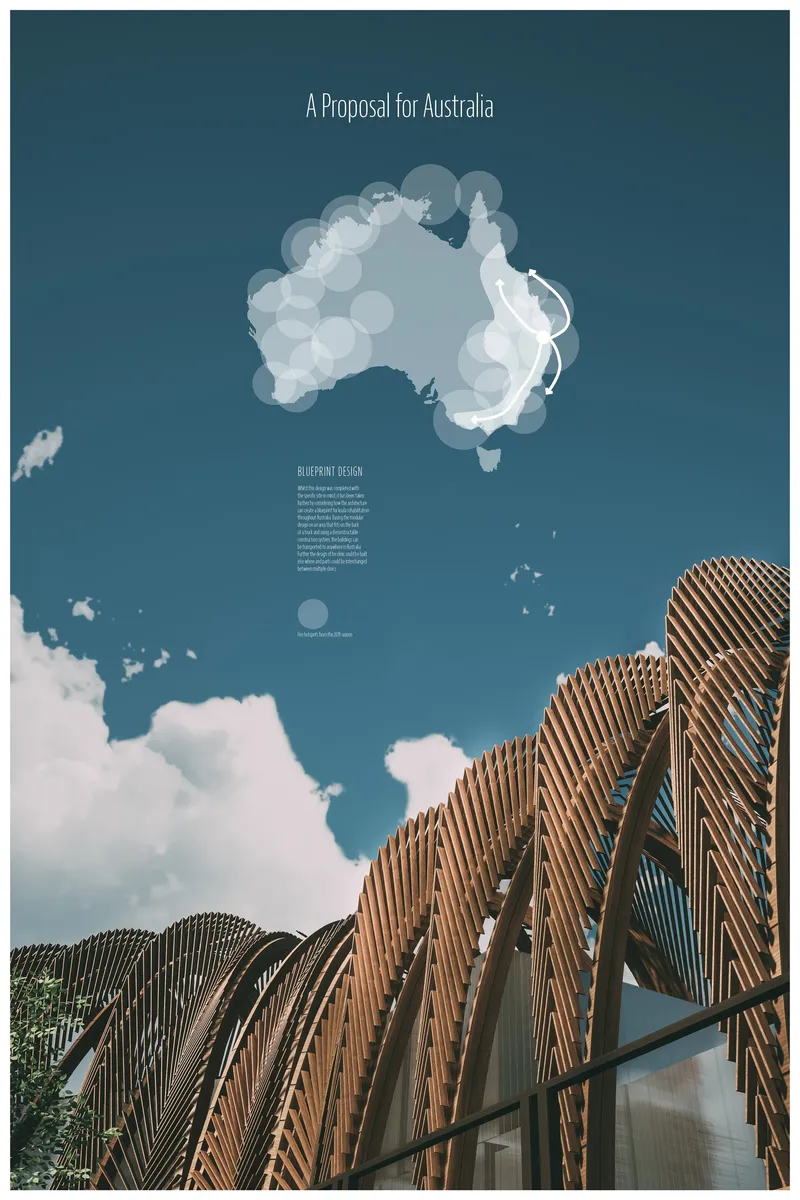
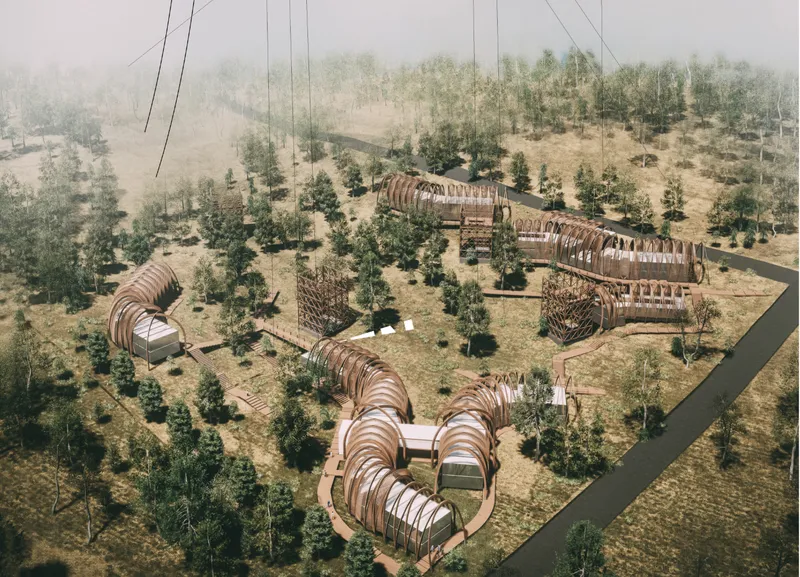
Australia's devastating bushfire seasons have highlighted the urgent need for innovative solutions that protect both wildlife and ecosystems. A Haven for Australia responds to this challenge through an ambitious vision for sustainable architecture that combines ecological sensitivity, modular construction, and wildlife rehabilitation. Designed as a state-of-the-art koala rehabilitation and visitor center, the project introduces a fully redeployable architectural system capable of being dismantled, transported, and reassembled within a single day.
Rather than creating a permanent intervention that alters the landscape, the proposal embraces adaptability. It demonstrates how architecture can become a flexible environmental asset, responding to changing ecological conditions while supporting wildlife recovery and public education.
Editor's Choice Entry of Haven 2020
Reimagining Sustainable Architecture for Wildlife Recovery
The foundation of the project lies in its commitment to sustainable architecture. Following the catastrophic Australian bushfires of 2019-2020, many wildlife habitats were destroyed, exposing the vulnerability of fixed infrastructure in disaster-prone regions.
The design proposes a rehabilitation center that can move when needed. This mobility ensures that valuable veterinary facilities, visitor spaces, and rehabilitation environments remain operational regardless of future environmental challenges.
The project envisions architecture not as a static object but as a living system capable of adapting alongside nature. By embracing modularity and circular economy principles, the proposal establishes a new model for ecological resilience.
A Modular Rehabilitation Center Designed for the Future
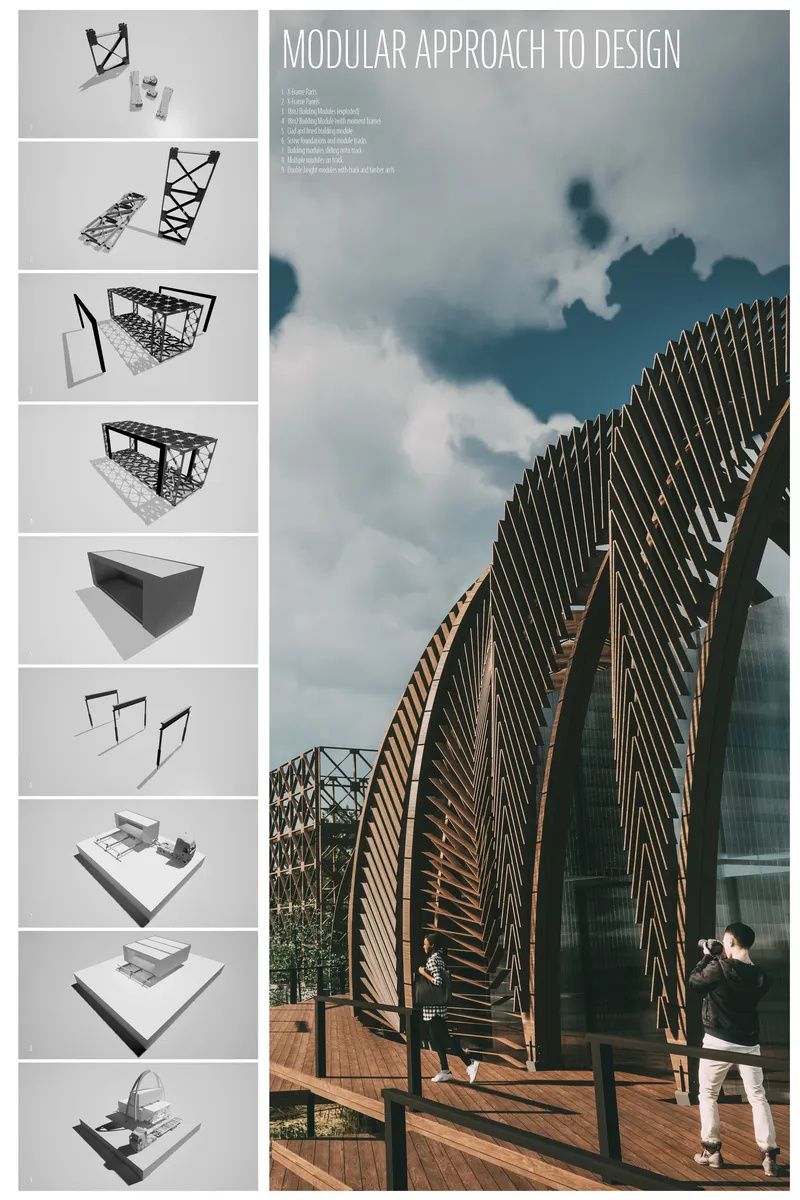
At the heart of the project is a sophisticated modular building strategy based on the innovative X-Frame structural system.
The rehabilitation center consists of prefabricated modules manufactured off-site and assembled on location with minimal environmental disruption. Each module is designed to be transported efficiently and connected into larger functional spaces as needed.
This approach offers numerous benefits:
- Rapid deployment during environmental emergencies.
- Reduced construction waste.
- Minimal site disturbance.
- Flexible future expansion.
- Easy relocation to safer locations when required.
The modular system allows veterinary clinics, rehabilitation facilities, administration spaces, visitor centers, and exhibition areas to operate independently while remaining connected through an integrated site strategy.
Architecture That Respects the Natural Habitat
One of the most compelling aspects of the proposal is its light-touch relationship with the landscape.
Rather than imposing itself upon the site, the architecture gently hovers above the ground using elevated rail systems and screw pile foundations. This strategy minimizes excavation and allows local wildlife to move freely beneath and around the structures.
Timber walkways connect various buildings throughout the site, creating a network of pathways that blend seamlessly with the surrounding forest environment.
The elevated design preserves natural water flow, vegetation growth, and wildlife movement patterns while reducing the ecological footprint of the development.
This sensitive approach demonstrates how sustainable architecture can coexist with fragile ecosystems without compromising environmental integrity.
A Purpose-Built Environment for Koala Rehabilitation
Unlike conventional veterinary facilities designed for domestic animals, the rehabilitation center is specifically tailored to the treatment and recovery needs of koalas.
The facility follows a carefully planned progression:
- Emergency admission.
- Medical treatment.
- Clinical observation.
- Rehabilitation.
- Gradual reintroduction to nature.
Specialized rehabilitation zones are strategically positioned near treatment facilities, allowing continuous monitoring while reducing stress for recovering animals.
Semi-outdoor rehabilitation spaces create transitional environments where koalas can gradually reconnect with natural conditions before being released back into the wild.
Larger outdoor rehabilitation areas provide opportunities for physical recovery while remaining separated from public spaces to ensure privacy and safety.
The Iconic Timber Superstructure
A defining architectural feature of the project is its dramatic engineered timber canopy system.
Sweeping timber arches create a visually striking identity while serving important environmental functions. The superstructure shades the modular buildings below, reducing solar heat gain and lowering cooling requirements.
Beyond its environmental performance, the timber framework creates a memorable visitor experience. Visitors move through a series of sculptural spaces that celebrate both architecture and Australia's natural heritage.
The flowing geometry echoes organic forms found in forests and landscapes, reinforcing the project's connection to the environment.
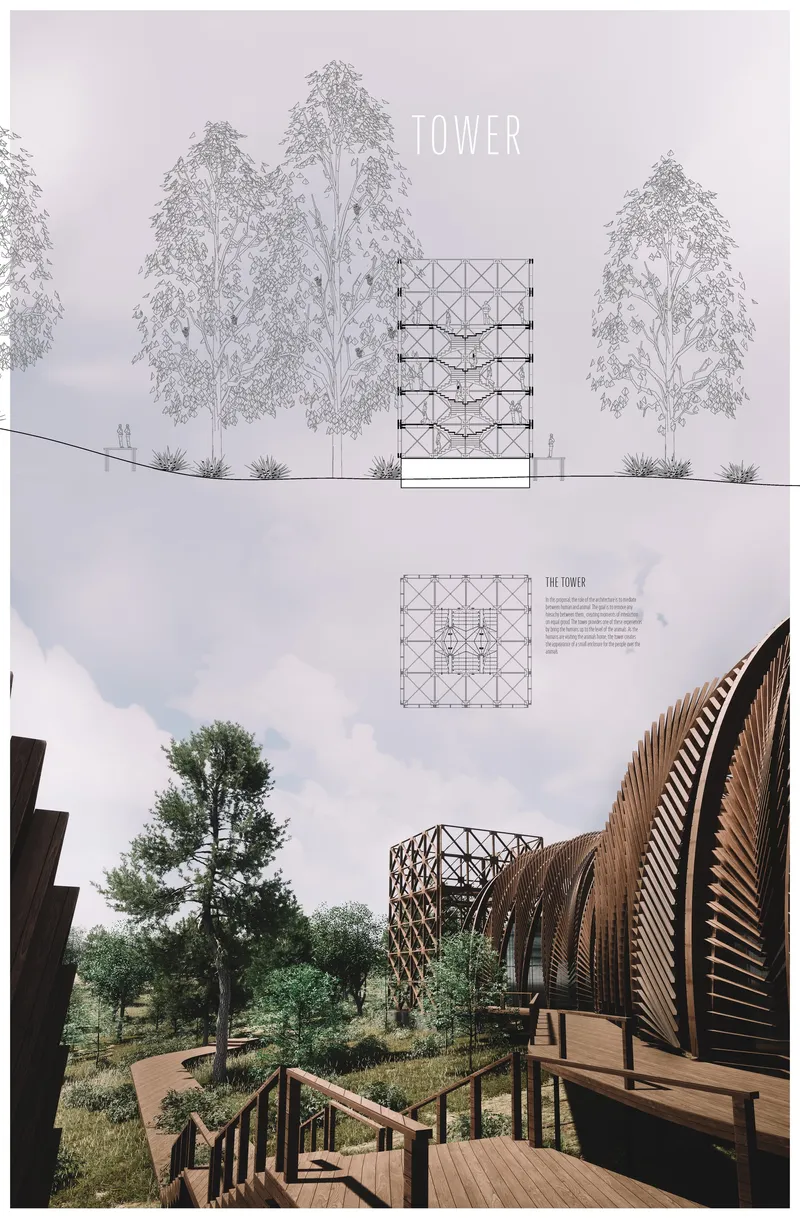
Viewing towers integrated within the masterplan provide opportunities for visitors to observe rehabilitation areas from a respectful distance while learning about conservation efforts.
Circular Economy Principles in Architecture
The project fully embraces circular economy thinking through every aspect of its design.
Buildings are conceived as reusable assets rather than permanent constructions. Components can be removed, repaired, upgraded, and redeployed throughout their lifecycle.
This strategy significantly reduces waste and extends the useful life of the built environment.
The X-Frame system enables:
- Disassembly without demolition.
- Material recovery and reuse.
- Flexible interior adaptation.
- Long-term building resilience.
By prioritizing adaptability, the project challenges traditional assumptions about permanence in architecture and demonstrates how buildings can evolve alongside changing environmental and social needs.
Sustainable Materials and Carbon Sequestration
Material selection plays a critical role in the environmental performance of the project.
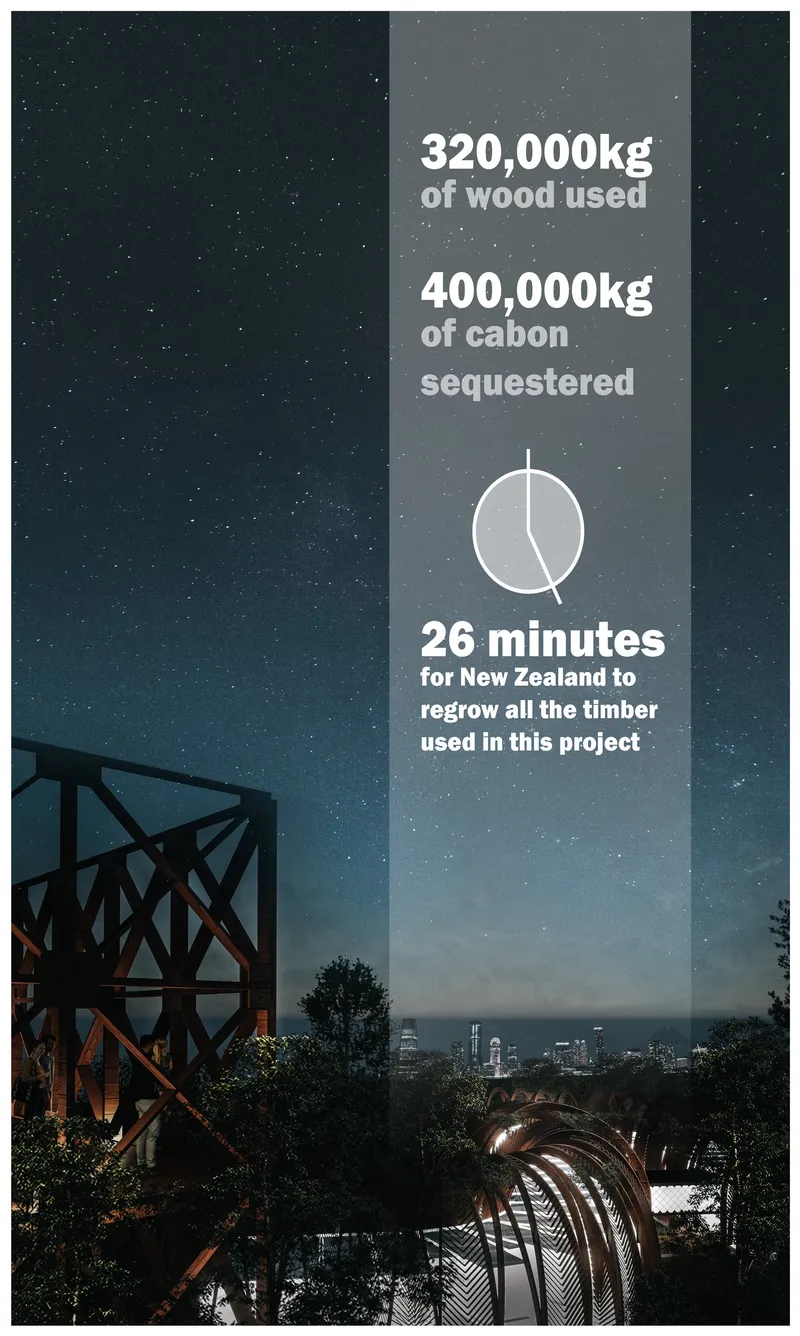
The proposal utilizes approximately 320,000 kilograms of FSC-certified Australian Pinus Radiata timber. This timber acts as a carbon sink, storing nearly 400,000 kilograms of carbon dioxide within the structure.
Additional sustainable strategies include:
- Engineered timber construction.
- Thermally modified softwood materials.
- Recyclable polypropylene cladding.
- Rainwater harvesting systems.
- Greywater recycling systems.
- Passive shading technologies.
- High-performance insulation systems.
Combined, these measures significantly reduce operational energy demand while supporting long-term environmental sustainability.
The project demonstrates how architecture can move beyond carbon reduction and actively contribute to carbon sequestration.
Visitor Education and Public Engagement
Education is a central component of the proposal.
The visitor center provides opportunities for the public to learn about koala conservation, habitat restoration, and climate resilience. Exhibition spaces, observation towers, and interpretive pathways transform the site into an immersive educational environment.
Rather than separating conservation from public engagement, the project integrates both objectives into a cohesive architectural experience.
Visitors become active participants in understanding Australia's environmental challenges and the role architecture can play in addressing them.
A Blueprint for Resilient Wildlife Architecture
A Haven for Australia presents a powerful vision for the future of sustainable architecture. Through modular design, ecological sensitivity, renewable materials, and innovative rehabilitation facilities, the project establishes a new benchmark for wildlife-focused architecture.
The proposal demonstrates that buildings can be flexible, environmentally responsible, and deeply connected to the ecosystems they serve.
As climate change continues to reshape landscapes across the world, projects like this offer valuable lessons in resilience, adaptability, and coexistence. By creating a fully redeployable sanctuary for wildlife recovery, Emily Newmarch and Ged Finch have redefined what sustainable architecture can achieve in the face of environmental uncertainty.
The result is more than a rehabilitation center. It is a model for a future where architecture protects, restores, and evolves alongside nature.


Popular Articles
Popular articles from the community

Tsunami Convergenics: Turning Catastrophic Ocean Forces into Underwater Housing Infrastructure
A speculative underwater settlement off the coast of Onagawa, Japan, treats tsunamis and typhoons as energy sources rather than threats.

Opera by the Sea Estonia: Three Shells Dissolving Architecture into Tallinn's Coastline
A winning opera house proposal replaces monumental form with interconnected shells that blur the boundary between building, park and Baltic Sea.

Singing Woman: Contemporary Architecture Inspired by Estonia’s Voice and the Sea
Singing Woman turns Estonia’s song culture into flowing opera house architecture, blending public life, landscape, sea, and national memory.
Temporary Home for Dogs: A Reversed Zoo Rethinks Animal Shelter Architecture
In Bucharest, a sinuous corridor and freed landscape flip the logic of containment, designing a shelter that works to make itself unnecessary.

Similar Reads
You might also enjoy these articles

Eco Chapel: A Green Architecture Pavilion Designed in Symbiosis with the Forest
Eco Chapel uses green architecture to weave prayer, learning and reuse into a forest pavilion shaped by modular hexagonal canopies for life.
Kaffeebühnen: Coffee Shop Architecture Designed as a Civic Stage Between Vienna’s City and Park
Kaffeebühnen turns coffee shop architecture into a civic stage, linking Vienna’s park edge, urban life, warm timber yards, and coffee craft.
Healing Façade: Sustainable Architecture for Reforestation, Community, and Sacred Ecology in Ethiopia
Healing Façade reimagines sustainable architecture as a living wall that restores soil, catches water and renews Ethiopia's forest churches.


Urban Forest: A Vertical Ecosystem for 5,000 Workers in Singapore's Changi Business Park
Radially stacked pods and layered green decks turn a 7-acre plot into 47 acres of ecological workspace projected for 2040.

Comments (0)
Please login or sign up to add comments
No comments yet. Be the first to comment!