
A Library for All
An educative place welcoming every member of society

A powerful society is a wise one; hence, it is necessary for those in power to provide for its needs to become more knowledgeable.
Since the very beginning of civilization, humans carved their experiences and knowledge on stone, known as petroglyphs, which by the invention of the alphabetic systems and paper evolved into books.
Books are the best means of tutoring compared to other methods of education; they are always a reliable source of information whether you have access to electricity and the internet or living in a less affordable part of the world.
Developing societies such as African countries –Ghana in this particular case– require not only the grown-up communities, but also the younger generations to understand more in order to help their societies grow into a successful one. This is when books come in help. Public libraries are made to lay the groundwork for everyone to learn and interact with each other and share their knowledge.
The project “A Library for All” pursues the goal of building a center not only utilizable as a self-tutoring hub for those who seek erudition, but also as an educative place for people who look to extend their ability of learning –using experienced tutors– and as a forum for those willing to interact and be taught more.
The diversity of Ghana’s ethnic groups as well as the objectives mentioned above, the ability to be hospitable to all generations, and envisioning horizontal and vertical connections of the areas causing various changes in both floor plans and the building mass, lead to the final outcome which is seen in the sheets of the project of the same name.
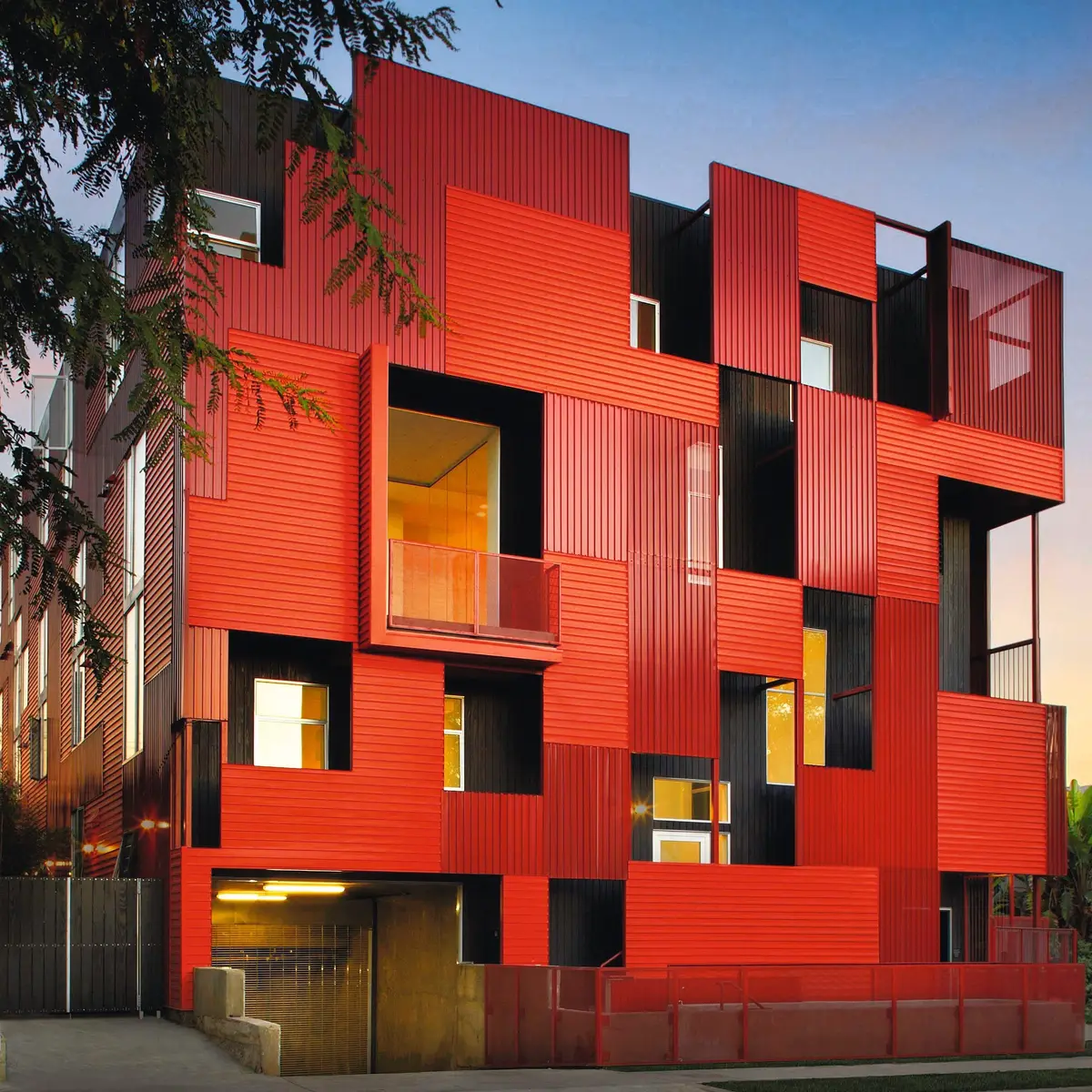
The building’s façade is divided in several blocks representing all ethnic groups of the country; the blocks’ widths demonstrate the receptivity of the educational center for all majorities and minorities of the population and their height difference speak for the availability of the library to serve for every age group.
Considering the regional studies of Kumasi, this library and educational hub is expected to become a collaborative place especially for students since being close to several schools and educational buildings.
Two main materials were chosen for this building. Concrete as a more available and affordable material is set to be left exposed on both outside and inside of the building, showing the library’s simplicity for welcoming everyone and also hinting the open-ended possibilities within. Glass is chosen to demonstrate the clarity of the ongoing activities in the building and invite the community passing by, to join and collaborate in the educational activeness.
The sunken courtyard around the structure –The Agora– is expected to be an inviting element for both showing all four levels of the building and being a possible gathering area to socialize and conceive collaborative and interactive ideas as well as hosting exhibitions.
This educational center is designed in every aspect to increase the interactivity of the growing society of Ghana. Located in the lowest level of the building: the café and the amphitheater, both opening to The Agora, are providing facilities to make The Agora more receiving and raise its activity.
Following the idea of being hospitable to every single member of the society, the stage of the amphitheater is equipped with a handicapped lift to express the intention to let them be heard and not feeling to be neglected by the society. Also, the designed ramps advancing into The Agora, by all means is appealing them to collaborate in every social activity occurring in the library.
The multipurpose rooms for interactive and collaborative workshops are located in the ground floor to be observable for the visitors and newcomers to share the educational building’s will to welcome more people as the permanent users of its services.
The Researchers’ Hub and The Chatting Hub in the 3rd level is meant to develop the ability for group chatting and socializing along with learning and sharing experiences.
This library and educational center is planning to teach every generation of the country not only to learn, but to share their knowledge, accept all the minorities, become more able to interact with the “physically” disabled, leading the society to a bright future with intellect individuals and a more accepting society.
We hope this building becomes a meritorious model to get the population to observe future buildings providing both educational and collaborative activities.
“Knowledge has power. It controls access to opportunity and advancement.”
-Peter Drucker-

Popular Articles
Popular articles from the community

Tsunami Convergenics: Turning Catastrophic Ocean Forces into Underwater Housing Infrastructure
A speculative underwater settlement off the coast of Onagawa, Japan, treats tsunamis and typhoons as energy sources rather than threats.
Extended Shell: Retrofitting Kolkata's Balconies as Living Urban Thresholds
A modular retrofit system recovers the social and environmental intelligence of Kolkata's historic verandas for contemporary Park Street residents.
Faces of the Soviet Avant-Garde: Turning Moscow's Street Names into an Open-Air Museum
A network of sculptural installations across a Moscow residential district transforms forgotten architect names into spatial encounters with cultural memor

The Amber Palace Opera: A Geological Fiction Surfaces on Tallinn's Baltic Waterfront
Pierre Brillard reimagines a Baltic legend as a public landscape, opera house, and waterfront promenade rooted in Tallinn's coastal identity.

Similar Reads
You might also enjoy these articles
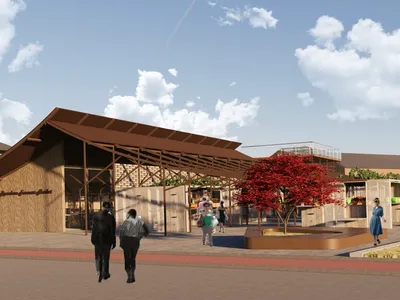
The Rhythm of Seasons
A Farmers' Market Connecting Nature and the City
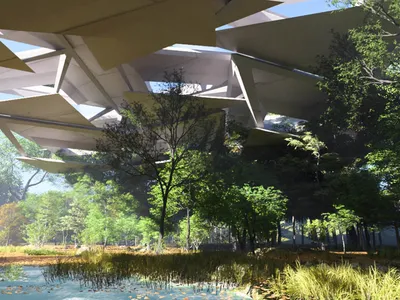

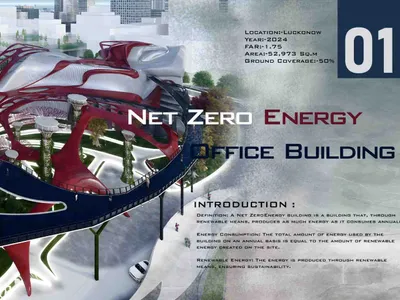
More Than a Building-Designing a Living System
More Than a Building-Designing a Living System
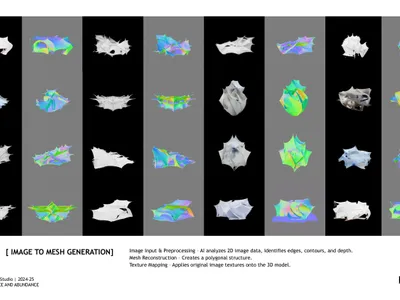
Base Beyond
DESERT COMPOUND ARID: TOURISM OF ABSENCE AND ABUNDANCE

Explore Architecture for all Competitions
Discover active competitions in this discipline


Challenge to reimagine the Iron Throne

Photograph architecture without architects

Illustrate the lost glory of Angkor Wat - Render Challenge

Design challenge to reuse E-waste
Comments (0)
Please login or sign up to add comments
No comments yet. Be the first to comment!