
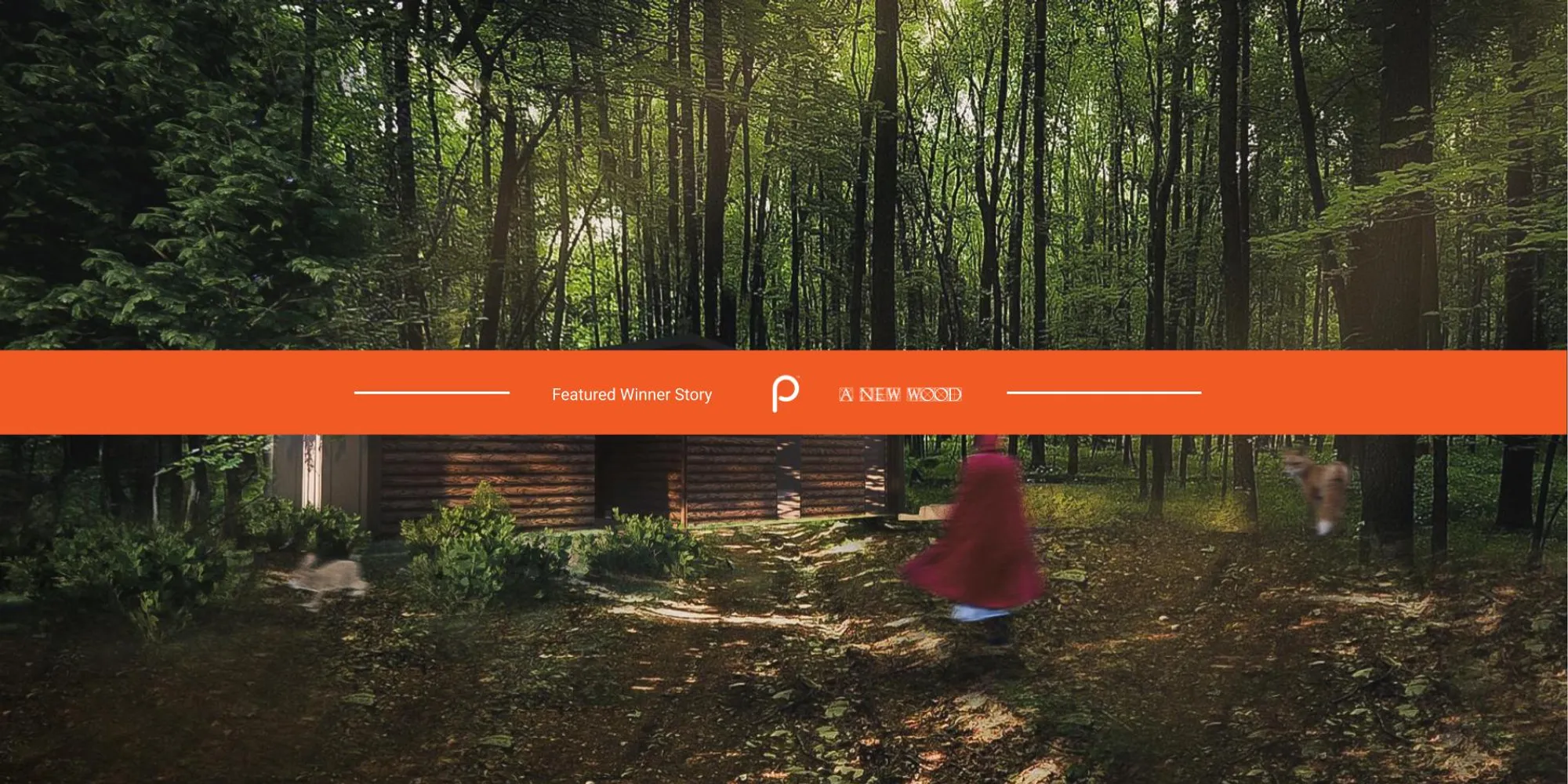
Re-imagining Red Riding Hood’s Journey through Architecture
A New Wood - Result Story


The spontaneous and natural tangle of forest formations is the exact opposite of the organized reality of built and urbanized spaces, dictated by reason and therefore perfectly decodable by it. NATURE AND META-NATURE.
In its double symbolism, the nocturnal one of impenetrable, disturbing, hostile and dangerous and diurnal, luxuriant teeming with life and uncontaminated, pleasant and restful, the woods are both: the place of nothing, the labyrinth or the labyrinthine inner loss and the place of transitions. The place of life and that of death.
Between the physical forest and the inner forest is the woods in the fairy tale of Little Red Riding Hood even if according to the original fairy tale, the forest is necessarily a transition point to get, avoiding the dangers, to the grandmother's house. If the wood is to be understood as a smaller and perhaps more “domestic” physical place than that of the forest, the inner woods can be cataloged in some places such as that of contemplation and quiescence of loss, an imaginative place (due to intermittent darkness) without rules and place of maturation and knowledge.
The tale of Little Red Riding Hood, following the mother's instructions, invites us to experience the woods as something to run away from, a place where you don't have to entertain yourself in order to arrive, without detours and dangers, directly to the grandmother's house which is "apparently" their goal of the story.
But the forest is then necessary, the inner journey is therefore also, symbolized by the forest, necessary. The objective, the aim cannot be separated from the path that anticipates it and together they constitute a single body, the body of human beings and that of nature which cannot be separated.
The path therefore in its various imaginary sequences (being a fairy tale) can become the element on which to focus the maximum attention, overturning the very meaning of the story, that is to say, concentrating on the idea of the path as a short text " Der Feldberg” by Martin Heidegger suggests ".
Design Brief - The competition is about re-imaging a novel: a new wood and wooden house for little red riding hood.
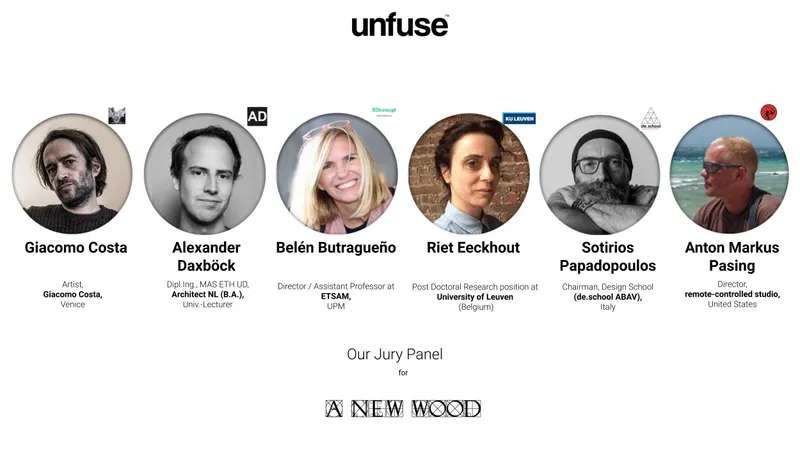
The jury for the competition consisted of esteemed designers, professionals, and academicians from around the world. The Lead Jurors for the competitions were as follows:
Giacomo Costa, Artist, Giacomo Costa, Venice
Alexander Daxböck, Dipl.Ing., MAS ETH UD, Architect NL (B.A.), Univ.-Lecturer
Belén Butragueño, Director / Assistant Professor at ETSAM, UPM
Riet Eeckhout, Post Doctoral Research position at University of Leuven (Belgium)
Sotirios Papadopoulos, Chairman, Design School (de.school ABAV), Italy
Anton Markus Pasing, Director, remote-controlled studio, United States
Some of the Best of competition projects are:
Winning Project: The Intimacy of the Forest
By: Antonia Stanev

Description: Little Red follows a journey to find her inner wanderer. She is enacting a new narrative from the original fairytale; one of the nomads and one of the dwellers in the comfort of her home. Along the way she experiences the intimacy of the forest, connecting with space through its tactility, human scale, and in turn finding familiarity in the unknown wood.
-----------------
People’s Choice: A New Wood - A Spiritual Journey
By: Beomi Labio
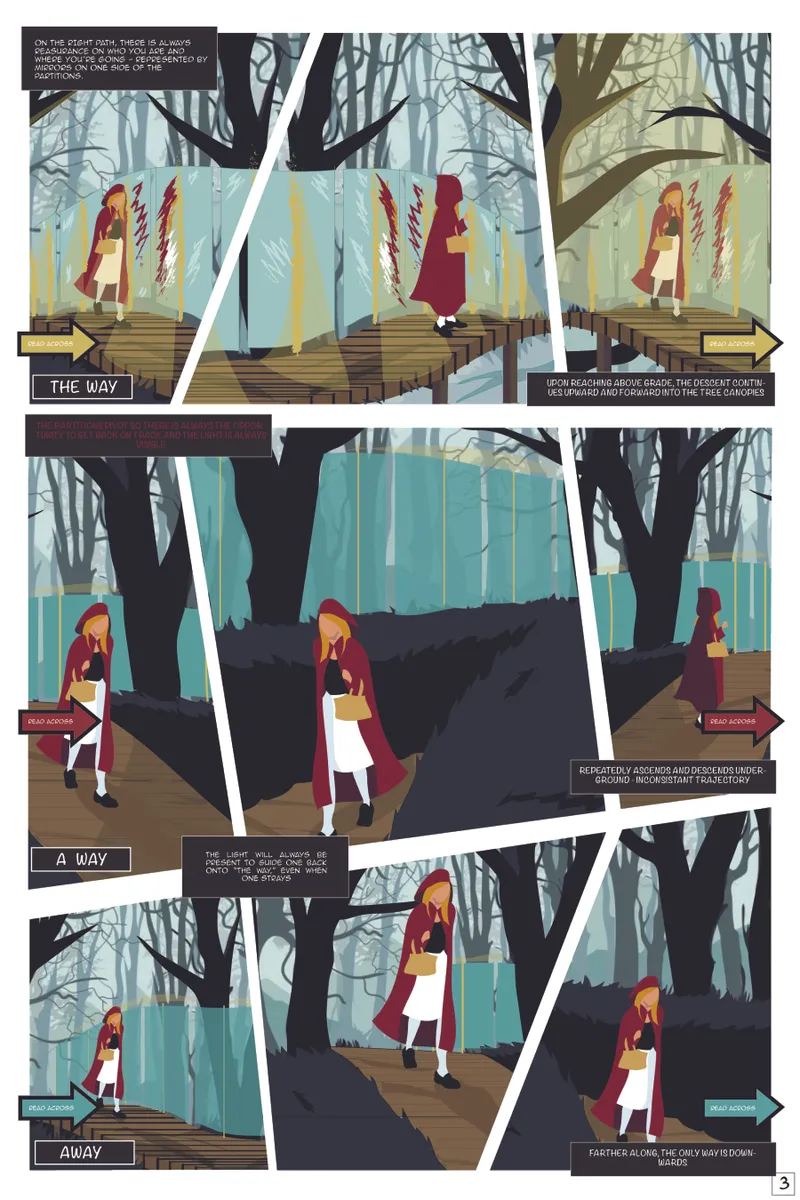
Description: This is a Christian's perspective on the story of Little Red Riding Hood. The design of this three-part elevated wooden walkway aims to portray the principle of multiple “aions”. This refers to the multiple ways a person’s life can play out according to the decisions they make and the actions they take. Choose your path, follow the designated arrows.
----------------
Editor’s Choice: Looping tale
By: Rossignol Gregoire
Description: Reimagined little red riding hood journey
--------------------
Editor’s Choice: Little Red Riding Hood
By: Sanad Wir
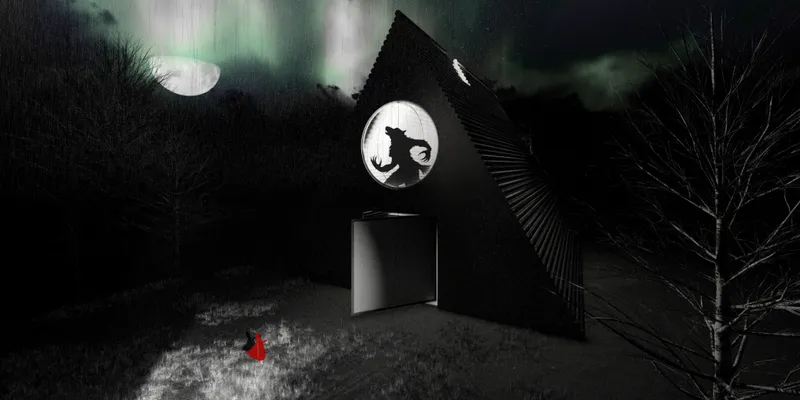
Description:An interpretation of the journey of Little Red as she journeys to her grandmother's house. This project constantly questions the semiotics of the narrative and what we mean when we talk about the signifier and the signified in order to construct the sign itself.
--------------------
Editor’s Choice: Would you rather?
By: Raveena Batham & Vaishnavi Desai
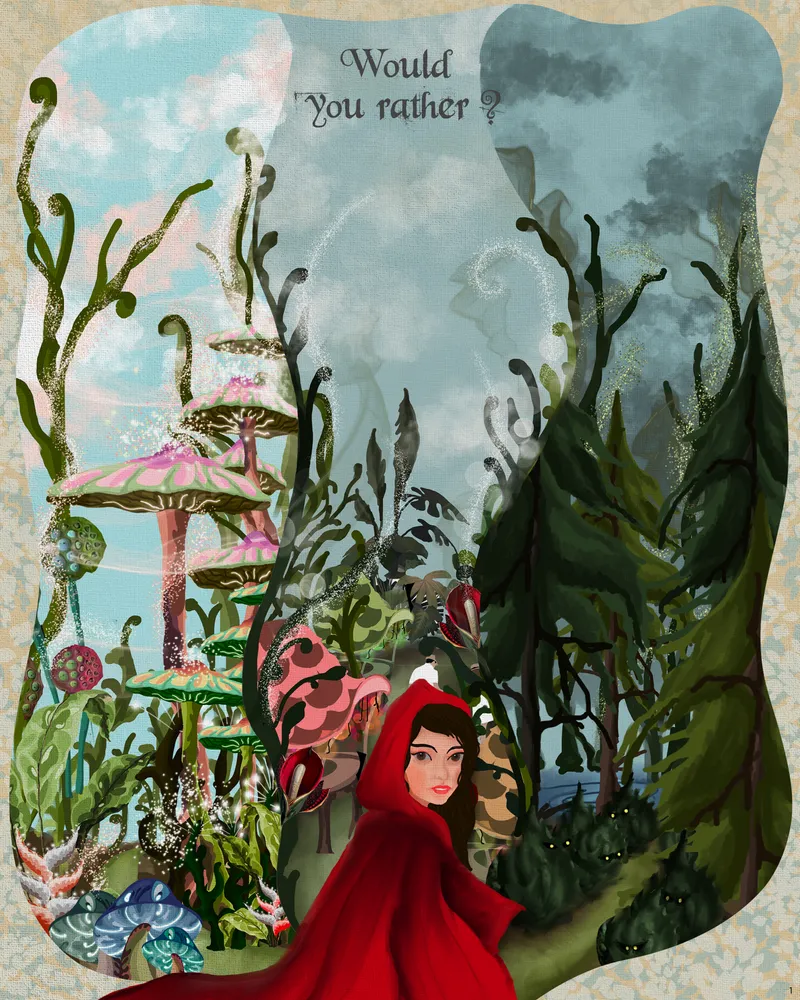
Description: A new wood
--------------------
Organizer’s Choice: Imposition
By: Kelvin Hoang

Description: Imposition explores the themes of uncertainty, deception, and perception in the tale, Little Red Riding Hood. The path Little Red takes and her grandmother's house is meticulously designed with the idea of deceit in mind. Other ideas expressed through the design consist of decision making and consequences.
Discover the design brief here: https://uni.xyz/competitions/a-new-wood/info/about
Discover the full results here: https://uni.xyz/competitions/a-new-wood/entries
Follow us on social media: Facebook | Instagram | LinkedIn | Twitter | Youtube
Discover other design competitions to participate here: https://uni.xyz/competitions



Popular Articles
Popular articles from the community


Conexión: Biophilic Design Reimagines High-Rise Living in Hong Kong
Conexión reimagines high-rise living in Hong Kong through biophilic design, green facades, shared spaces, daylight, water and nature within.

Hill & Cross Opera: Sculptural Opera House Architecture Shaped by Tallinn’s Landscape and Identity
Hill & Cross Opera reimagines opera house architecture in Tallinn through its sculptural hill, civic plaza, glass wave and a luminous cross.
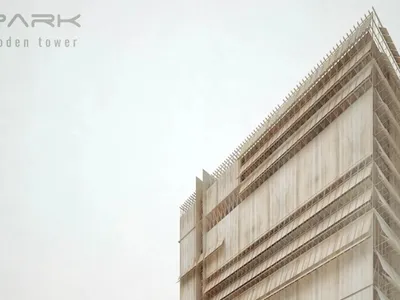
EW PARK: Sustainable Architecture Reimagines the Future of Urban Parking
EW PARK reimagines city parking as a modular wooden tower combining automation, solar energy, electric mobility, and adaptable urban design.

Co-Life: Senior Housing Design That Reconnects Older Adults With the City
Co-Life reimagines senior housing design through healing gardens, shared streets, workshops, and a sustainable community across generations.

Similar Reads
You might also enjoy these articles

The Musturak Paradise: Senior Living Architecture for a Connected Future in Temara, Morocco
The Musturak Paradise reimagines senior living architecture in Temara via private homes, social spaces, culture, community, and shared care.

The Leaf Center: Cultural Center Architecture for Social Integration in Amsterdam
Cultural center architecture becomes a bridge at The Leaf Center, connecting international students with Amsterdam through art and exchange.
Conexión: Biophilic Design Reimagines High-Rise Living in Hong Kong
Conexión reimagines high-rise living in Hong Kong through biophilic design, green facades, shared spaces, daylight, water and nature within.

Wander to Wonder: Modular Playground Design for Children in Kutupalong Refugee Camp
Wander to Wonder uses modular playground design to create flexible, imaginative play spaces for children in Kutupalong refugee camp.

Comments (0)
Please login or sign up to add comments
No comments yet. Be the first to comment!