

A resistance through art

Introduction to the Cause
“Nearly three weeks into their invasion, Russian forces are intensifying attacks on civilian targets in a number of Ukrainian cities …Residential neighborhoods in Ukraine’s capital, Kyiv, have been hit by repeated Russian airstrikes in recent days, as Russian forces have slowly gained ground across the country.”
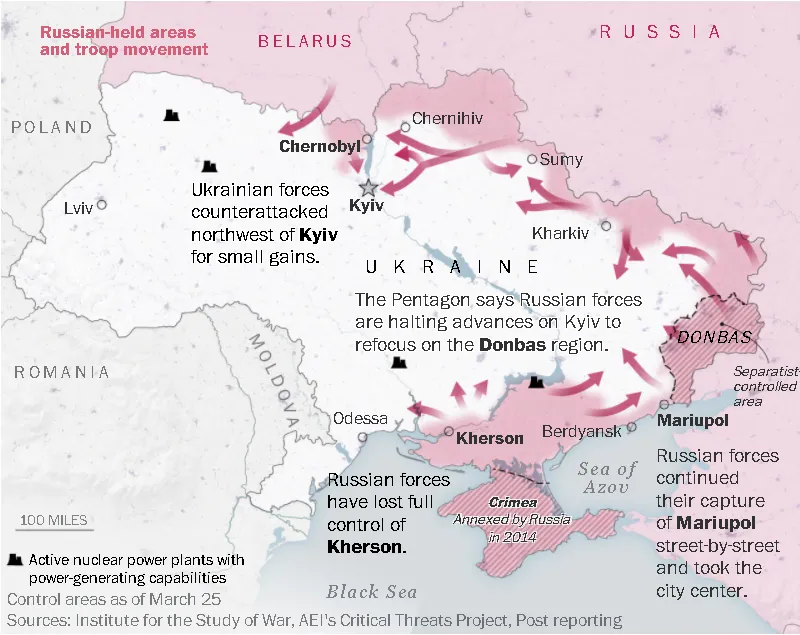
As Russia’s invasion of Ukraine continues, many Ukrainians face a refugee crisis. In the cities where Russia’s incursion has been particularly severe, many underground spaces have become extremely valuable. The spaces being - parking garages, bomb shelters made during the cold war, cellars and metro stations. The civilians who had been forced to leave their homes are now seeking refuge underground. As the displaced civilians await peace, Ukraine’s violinists have taken it upon themselves to uplift spirits.
Understanding the people
Our design story began by trying to understand how even in such hard times, a community and its artists can find a way to boost morale. Ukrainian violinists who found solace in music had not only found a way to comfort themselves but had become a part of something much more meaningful, an act of resistance. This is a marker of Ukrainian resilience. Their homes have perished yet they still cling on to hope.
People underground have found solace in art. Ukraine’s civilians have started adapting to a new lifestyle set on the backdrop of war and conflict. Orchestras are being conducted on the stairs, as if the staircase is an amphitheater.
Our research and design seeks to explore the following ideas and questions:
- How can we make art the driving force of our design intervention?
- How do we celebrate these actors and musicians?
- How will people be made an essential part of the design?
- What will be the site selection criteria?
- How will the Ukrainians adapt to situations caused by war?
For example; If an intervention is designed, how will it be accessed? How will it be viewed? What is the scale? What are the material related limitations while designing in a war-torn region?
- Will this design intervention be temporary, permanent or ever changing?
Design Strategy
Our design category is Remember. Our main theme revolves around the idea of murals and their impact on a passerby. A thought provoking piece of art on the street can become the center of attention for a passerby. Though they’re less permanent than sculptures and memorial buildings, murals also serve as landmarks. Our design challenges the idea that murals can only be large scale paintings on the side of buildings or free standing walls. This living mural aims to evoke hope and solidarity among the current residents of the metro stations. Instead of composing a painting we have broken down our understanding of Ukraine’s metro station bomb shelters to tell a story. The design program is based on the following activities
Remembering the lost lives
The map of Kyiv has been broken down into its districts and these districts stick out of the wall. This wall is a 3D representation of the river that divides Kyiv’s districts. These serve as spaces where the civilians can place objects or notes remembering their loved ones who may have died in an air strike or bombing in that particular district. These are spaces where vigils can also be held.
Paying tribute to the artists
The free standing wall also consists of a symbolic representation of violinists and their role in boosting morale.
A living mural
This sculptural wall also consists of some playground equipment that allows children and adults to play with the wall. It also consists of a staircase sourced from a bombed site. This staircase leads to the top of the violinist’s head and allows people to sit on it, making it a sitting space. This type of interaction activates the area where the wall is placed on the platform and gives it a communal quality.
In this way the people become an active part of this interactive mural and the mural stays incomplete without the intervention of humans. We believe that in such uncertain times when the situation seems to be so out of control, a participatory approach can give the people a sense of autonomy over their lives.
Is it Permanent?
No, we are proposing that each part is either precast or has been sourced from bombed public spaces in Kyiv. If the Russian invasion comes to a halt in the future and the trains start running again, the parts can be removed and then reassembled at a different location. If this mural does not become an obstruction to the passengers getting on trains then it can continue to stay where it is and will serve as a memorial. To have the people of Kyiv make this decision on their own also contributes to the idea of freedom and autonomy. The memorial goes against the ideas of stagnation and rigidness.
References (1)

Popular Articles
Popular articles from the community


The Musturak Paradise: Senior Living Architecture for a Connected Future in Temara, Morocco
The Musturak Paradise reimagines senior living architecture in Temara via private homes, social spaces, culture, community, and shared care.

Little Red Riding Hood: Architectural Design as a Journey Through Fear, Light, and Storytelling
Little Red Riding Hood reimagines the fairy tale through architectural design shaped by fear, light, scale, memory, uncertainty, and choice.

ALGAL REALM: A Bio-Integrated Lunar Habitat Design for Life Beyond Earth
ALGAL REALM reimagines lunar habitat design with algae-powered life support, 3D-printed regolith, and vertical living for a lunar future.

Conexión: Biophilic Design Reimagines High-Rise Living in Hong Kong
Conexión reimagines high-rise living in Hong Kong through biophilic design, green facades, shared spaces, daylight, water and nature within.

Similar Reads
You might also enjoy these articles

Day and Night Park: A Time-Based Urban Newsstand in Beijing
A temporary urban newsstand in Beijing blending travel, light, and reading through poetic colors, compact form, and community-focused design.

Modernist Patio Renovation in El Masnou, Barcelona by Oliver Segura Arquitectura + Cebrià Arquitectura
Modernist patio renovation blending tradition and innovation with a movable pool, leveled floors, and Catalan materials in El Masnou.

Alto Residencial Coop: Cooperative Housing Development in Santiago de Compostela by Carbajo Barrios Arquitectos
A linear cooperative housing complex blending white volumes and perforated metal façades, enhancing community living, natural light, privacy, and urban integration.
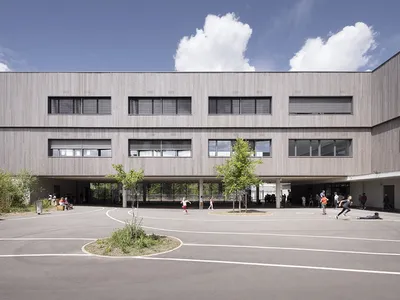
Vil Genis School by BPA ARCHITECTURE – Massy, France
Vil Genis School in Massy, France, features sustainable design, south-facing classrooms, community integration, accessible spaces, and modern educational architecture.


Comments (0)
Please login or sign up to add comments
No comments yet. Be the first to comment!